
1.INTRODUCTION

Food borne diseases-(intoxications and
   infections) covers illnesses acquired
   through consumption of contaminated
   food-i.e food poisoning
Food borne disease outbreaks-occurrence of 2
   or more cases of similar illness resulting
   from ingestion of common food OR when
   observed number of paticular disease
   exceeds expected number
Most cases-sporadic but need investigations
   for control
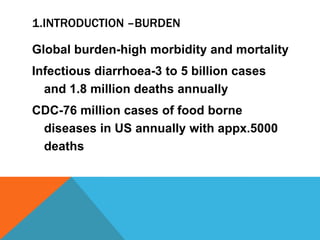
1.INTRODUCTION –BURDEN

Global burden-high morbidity and mortality
Infectious diarrhoea-3 to 5 billion cases
  and 1.8 million deaths annually
CDC-76 million cases of food borne
 diseases in US annually with appx.5000
 deaths
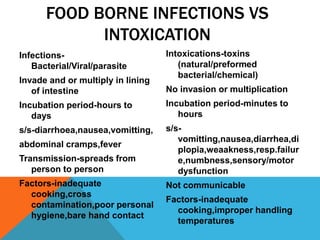
FOOD BORNE INFECTIONS VS
            INTOXICATION
Infections-                        Intoxications-toxins
   Bacterial/Viral/parasite           (natural/preformed
                                      bacterial/chemical)
Invade and or multiply in lining
   of intestine                    No invasion or multiplication
Incubation period-hours to         Incubation period-minutes to
   days                               hours
s/s-diarrhoea,nausea,vomitting,    s/s-
                                      vomitting,nausea,diarrhea,di
abdominal cramps,fever
                                      plopia,weaakness,resp.failur
Transmission-spreads from             e,numbness,sensory/motor
   person to person                   dysfunction
Factors-inadequate                 Not communicable
  cooking,cross
                                   Factors-inadequate
  contamination,poor personal
                                     cooking,improper handling
  hygiene,bare hand contact
                                     temperatures
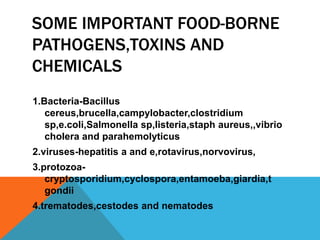
SOME IMPORTANT FOOD-BORNE
PATHOGENS,TOXINS AND
CHEMICALS
1.Bacteria-Bacillus
   cereus,brucella,campylobacter,clostridium
   sp,e.coli,Salmonella sp,listeria,staph aureus,,vibrio
   cholera and parahemolyticus
2.viruses-hepatitis a and e,rotavirus,norvovirus,
3.protozoa-
   cryptosporidium,cyclospora,entamoeba,giardia,t
   gondii
4.trematodes,cestodes and nematodes
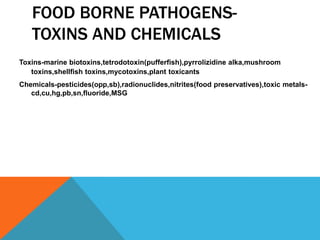
FOOD BORNE PATHOGENS-
   TOXINS AND CHEMICALS
Toxins-marine biotoxins,tetrodotoxin(pufferfish),pyrrolizidine alka,mushroom
   toxins,shellfish toxins,mycotoxins,plant toxicants
Chemicals-pesticides(opp,sb),radionuclides,nitrites(food preservatives),toxic metals-
   cd,cu,hg,pb,sn,fluoride,MSG
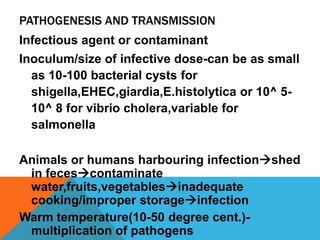
PATHOGENESIS AND TRANSMISSION
Infectious agent or contaminant
Inoculum/size of infective dose-can be as small
  as 10-100 bacterial cysts for
  shigella,EHEC,giardia,E.histolytica or 10^ 5-
  10^ 8 for vibrio cholera,variable for
  salmonella

Animals or humans harbouring infectionshed
 in fecescontaminate
 water,fruits,vegetablesinadequate
 cooking/improper storageinfection
Warm temperature(10-50 degree cent.)-
 multiplication of pathogens
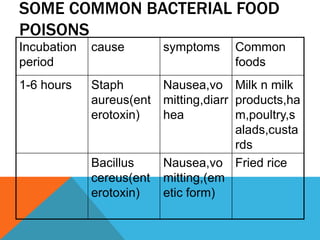
SOME COMMON BACTERIAL FOOD
POISONS
Incubation   cause       symptoms    Common
period                               foods
1-6 hours    Staph      Nausea,vo Milk n milk
             aureus(ent mitting,diarr products,ha
             erotoxin)  hea           m,poultry,s
                                      alads,custa
                                      rds
             Bacillus   Nausea,vo Fried rice
             cereus(ent mitting,(em
             erotoxin)  etic form)
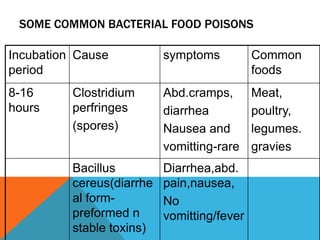
SOME COMMON BACTERIAL FOOD POISONS

Incubation Cause           symptoms          Common
period                                       foods
8-16      Clostridium      Abd.cramps,       Meat,
hours     perfringes       diarrhea          poultry,
          (spores)         Nausea and        legumes.
                           vomitting-rare    gravies
          Bacillus         Diarrhea,abd.
          cereus(diarrhe   pain,nausea,
          al form-         No
          preformed n      vomitting/fever
          stable toxins)
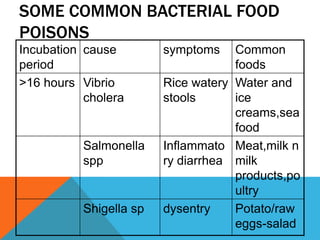
SOME COMMON BACTERIAL FOOD
POISONS
Incubation cause        symptoms    Common
period                              foods
>16 hours Vibrio        Rice watery Water and
           cholera      stools      ice
                                    creams,sea
                                    food
          Salmonella    Inflammato Meat,milk n
          spp           ry diarrhea milk
                                    products,po
                                    ultry
          Shigella sp   dysentry    Potato/raw
                                    eggs-salad
EARLY DIAGNOSIS AND
INVESTIGATIONS
1.Initial assessment of cases-Detailed clinical
  history including time of onset,duration of
  illness,symptoms,h/o travel,recent
  meals,cooking and refrigeration,details of
  others with similar complaints


2.Detailed clinical examination-vitals and
  degree of dehydration,systemic signs
LAB DIAGNOSIS
Main objectives-
a)To confirm clinical diagnosis by isolation of
  causative agent from proper samples,eg-
  stool,vomitus/gastric aspirate,food
  specimens
b)Ensure proper identification of disease
c)Determine causative agent if present in food
  sources with relevant epidemiological
  markers-eg Biotyping,serotyping,pcr,phage
  typing etc
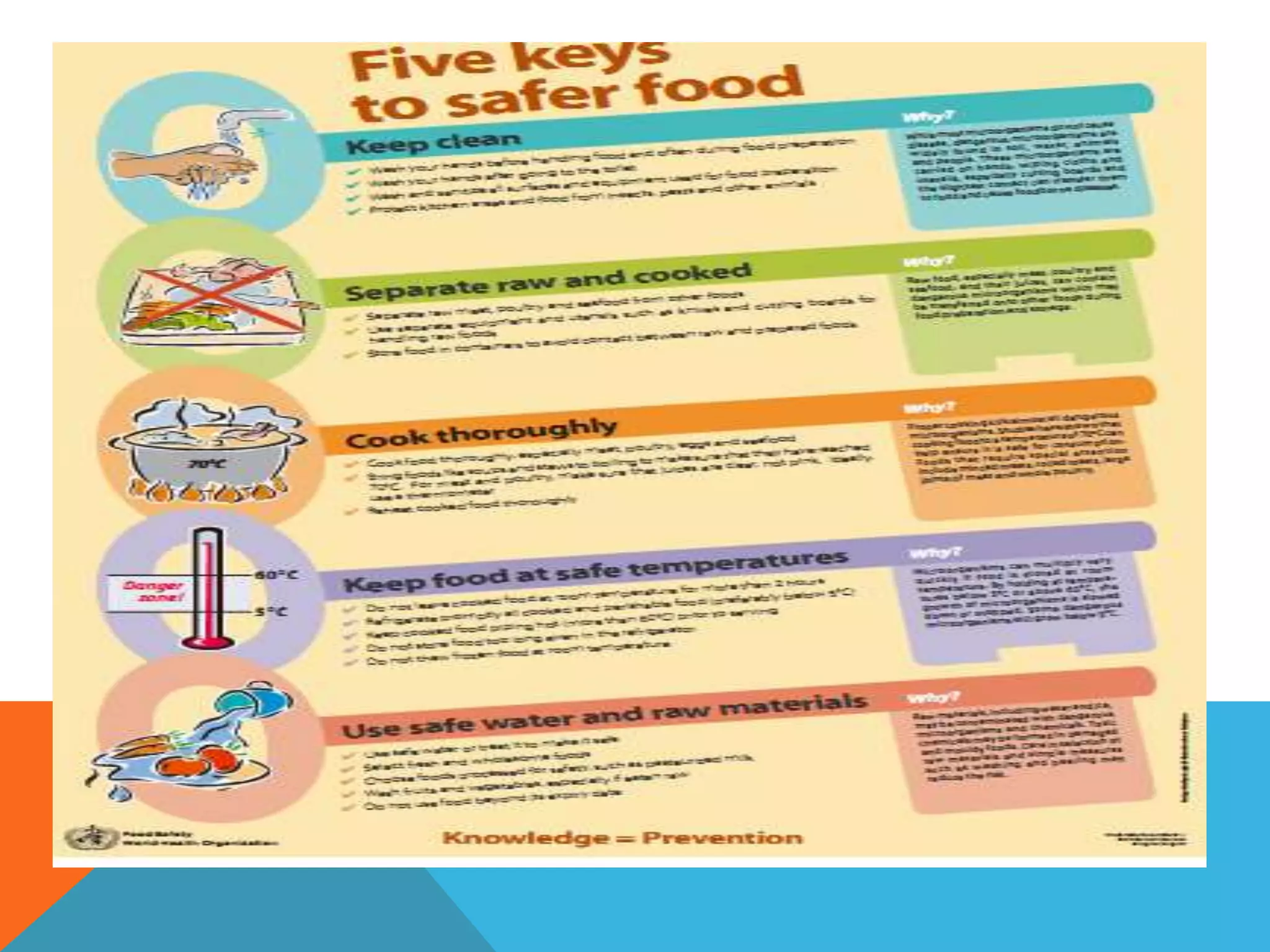
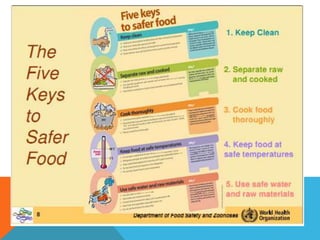
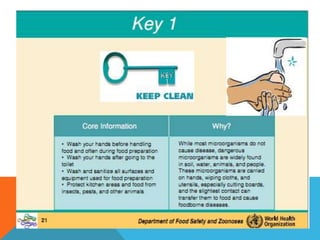
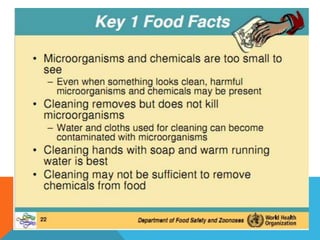
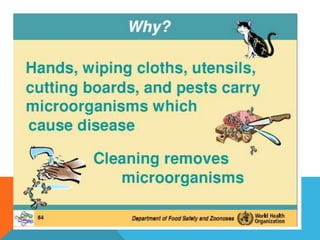
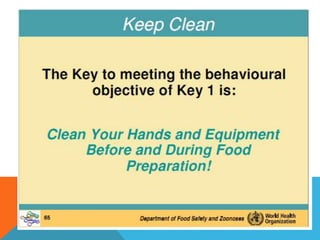
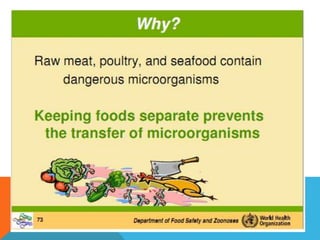
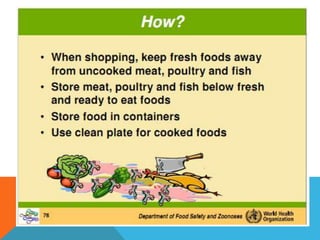
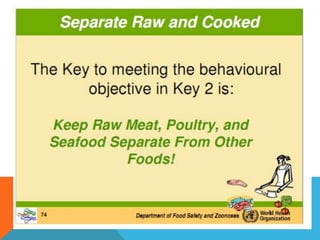
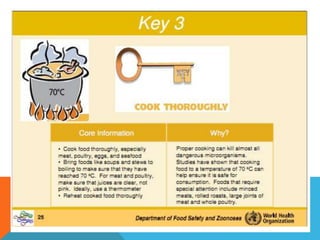
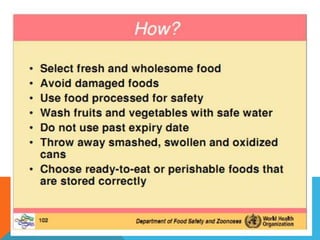
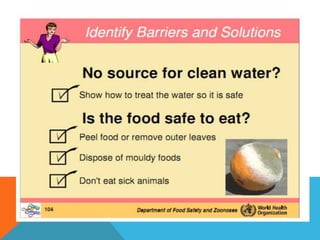
THE SOLUTION!!
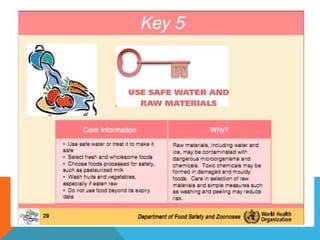
Five keys
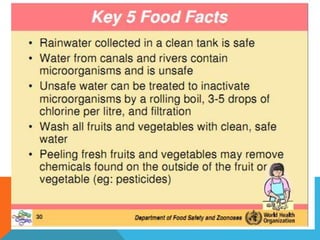
Five keys
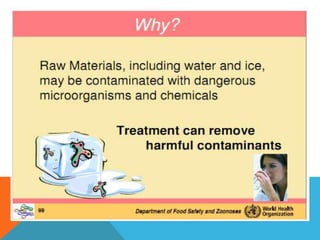
Five keys
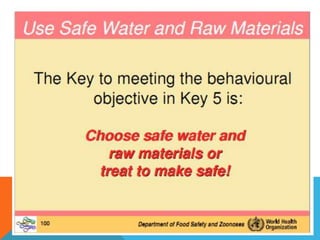
Five keys
Five keys
Five keys
Five keys
Five keys
Five keys
Five keys
Five keys
Five keys
Five keys
Five keys
Five keys
Five keys
Five keys
Five keys
Five keys
Five keys
Five keys
Five keys
Five keys
Five keys
Five keys
Five keys
Five keys
Five keys
Five keys
Five keys
Five keys
Five keys
Five keys

Five keys

  • 4.
    1.INTRODUCTION Food borne diseases-(intoxicationsand infections) covers illnesses acquired through consumption of contaminated food-i.e food poisoning Food borne disease outbreaks-occurrence of 2 or more cases of similar illness resulting from ingestion of common food OR when observed number of paticular disease exceeds expected number Most cases-sporadic but need investigations for control
  • 5.
    1.INTRODUCTION –BURDEN Global burden-highmorbidity and mortality Infectious diarrhoea-3 to 5 billion cases and 1.8 million deaths annually CDC-76 million cases of food borne diseases in US annually with appx.5000 deaths
  • 6.
    FOOD BORNE INFECTIONSVS INTOXICATION Infections- Intoxications-toxins Bacterial/Viral/parasite (natural/preformed bacterial/chemical) Invade and or multiply in lining of intestine No invasion or multiplication Incubation period-hours to Incubation period-minutes to days hours s/s-diarrhoea,nausea,vomitting, s/s- vomitting,nausea,diarrhea,di abdominal cramps,fever plopia,weaakness,resp.failur Transmission-spreads from e,numbness,sensory/motor person to person dysfunction Factors-inadequate Not communicable cooking,cross Factors-inadequate contamination,poor personal cooking,improper handling hygiene,bare hand contact temperatures
  • 7.
    SOME IMPORTANT FOOD-BORNE PATHOGENS,TOXINSAND CHEMICALS 1.Bacteria-Bacillus cereus,brucella,campylobacter,clostridium sp,e.coli,Salmonella sp,listeria,staph aureus,,vibrio cholera and parahemolyticus 2.viruses-hepatitis a and e,rotavirus,norvovirus, 3.protozoa- cryptosporidium,cyclospora,entamoeba,giardia,t gondii 4.trematodes,cestodes and nematodes
  • 8.
    FOOD BORNE PATHOGENS- TOXINS AND CHEMICALS Toxins-marine biotoxins,tetrodotoxin(pufferfish),pyrrolizidine alka,mushroom toxins,shellfish toxins,mycotoxins,plant toxicants Chemicals-pesticides(opp,sb),radionuclides,nitrites(food preservatives),toxic metals- cd,cu,hg,pb,sn,fluoride,MSG
  • 9.
    PATHOGENESIS AND TRANSMISSION Infectiousagent or contaminant Inoculum/size of infective dose-can be as small as 10-100 bacterial cysts for shigella,EHEC,giardia,E.histolytica or 10^ 5- 10^ 8 for vibrio cholera,variable for salmonella Animals or humans harbouring infectionshed in fecescontaminate water,fruits,vegetablesinadequate cooking/improper storageinfection Warm temperature(10-50 degree cent.)- multiplication of pathogens
  • 10.
    SOME COMMON BACTERIALFOOD POISONS Incubation cause symptoms Common period foods 1-6 hours Staph Nausea,vo Milk n milk aureus(ent mitting,diarr products,ha erotoxin) hea m,poultry,s alads,custa rds Bacillus Nausea,vo Fried rice cereus(ent mitting,(em erotoxin) etic form)
  • 11.
    SOME COMMON BACTERIALFOOD POISONS Incubation Cause symptoms Common period foods 8-16 Clostridium Abd.cramps, Meat, hours perfringes diarrhea poultry, (spores) Nausea and legumes. vomitting-rare gravies Bacillus Diarrhea,abd. cereus(diarrhe pain,nausea, al form- No preformed n vomitting/fever stable toxins)
  • 12.
    SOME COMMON BACTERIALFOOD POISONS Incubation cause symptoms Common period foods >16 hours Vibrio Rice watery Water and cholera stools ice creams,sea food Salmonella Inflammato Meat,milk n spp ry diarrhea milk products,po ultry Shigella sp dysentry Potato/raw eggs-salad
  • 13.
    EARLY DIAGNOSIS AND INVESTIGATIONS 1.Initialassessment of cases-Detailed clinical history including time of onset,duration of illness,symptoms,h/o travel,recent meals,cooking and refrigeration,details of others with similar complaints 2.Detailed clinical examination-vitals and degree of dehydration,systemic signs
  • 14.
    LAB DIAGNOSIS Main objectives- a)Toconfirm clinical diagnosis by isolation of causative agent from proper samples,eg- stool,vomitus/gastric aspirate,food specimens b)Ensure proper identification of disease c)Determine causative agent if present in food sources with relevant epidemiological markers-eg Biotyping,serotyping,pcr,phage typing etc
  • 15.