CHARDI
Definition
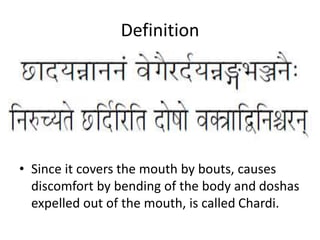
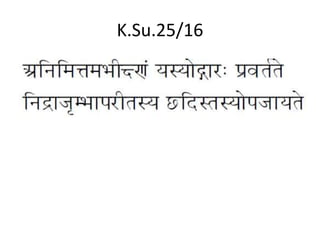
• Since it covers the mouth by bouts, causes
discomfort by bending of the body and doshas
expelled out of the mouth, is called Chardi.
Aetiology
Pathogenesis
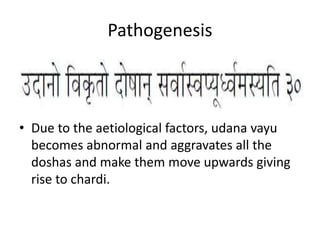
• Due to the aetiological factors, udana vayu
becomes abnormal and aggravates all the
doshas and make them move upwards giving
rise to chardi.
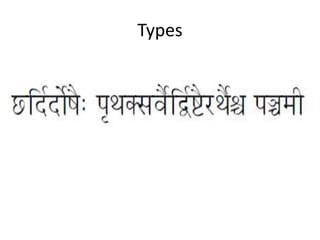
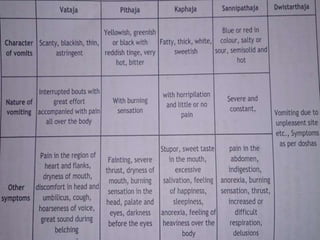
Types
• photo
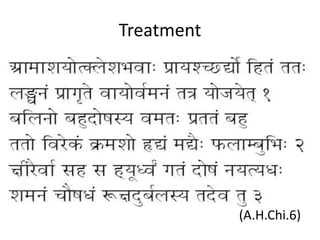
Treatment
(A.H.Chi.6)
• Langhana is ideal in the beginning itself except
in Vataja
• Vamana is indicated in those who are strong,
have increase of doshas and who vomits large
quantities repeatedly using wine, fruit juice or
milk
• Shamana oushadhas should be administered
for those who are dry and debilitated
• In associated fever decotion with Jwaraghna
oushadhas can be administered
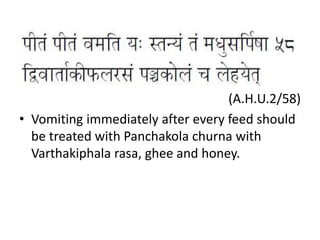
(A.H.U.2/58)
• Vomiting immediately after every feed should
be treated with Panchakola churna with
Varthakiphala rasa, ghee and honey.
K.Su.25/16
• Laja vilwadi – preferably as Phanta kashaya
can be used in all types of vomiting
• Marichadi churna can be used along with
honey (ARKD)
Vomiting
• Vomiting encompasses all retrograde ejection
of gastrointestinal contents from the mouth.
Causes of vomiting in Neonatal period
• Necrotizing enterocolitis
• Meconium plug
• Gastro esophageal reflux
• Inborn errors of metabolism
• Generalized infection
• Bacterial meningitis
• Birth asphyxia
• Hydrocephalus
• Faulty feeding technique
Causes of vomiting in Infancy
• Congenital hypertrophic
pyloric stenosis
• Malrotation
• Volvulus
• Intursusception
• Gastro esophageal reflux
• Gastroenteritis
• CNS infection
• Peritonitis
• CNS space occupying
lesion
• Hydrocephalus
• Subdural hematoma
• Inborn errors of
metabolism
• Uraemia
• Cow milk protein allergy
• Over feeding
• Faulty feeding technique
Causes of vomiting in Childhood
• Intestinal obstruction
• Intursusception
• Gastro esophageal
reflux
• Gastroenteritis
• UTI
• Hepatitis
• Pneumonia
• Peritonitis
• CNS space occupying
lesion
• Hydrocephalus
• Diabetic ketoacidosis
• Uraemia
• Toxins
• Postnatal dribbling
• Psychogenic
Approach
• Arrive at a correct diagnosis – most imp
• Ask abt duration, frequency, presence of
blood or bile in the vomits, abdominal pain,
recent changes in feeding pattern or colour of
urine, drug consumption, presence of fever
and altered sensorium.
• Occasional vomit at the onset of acute fevers
– disregarded
• Vomiting due to benign non-organic causes
does not lead to dehydration or loss of weight
Features indicating organic causes
• Persistent forceful vomiting
• Abdominal distension
• Palpable mass / visible peristalsis
• Failure to gain weight
• Altered sensorium
• Bulging fontanel
• Persistent irritability in an infant with vomiting
Site of lesion
• Esophagus – infant has excessive frothing soon after birth, choking
on attempted feeding, swallowed milk returned promptly often
relatively undigested and unchanged
• Stomach – child may vomit immediately or after some hours.
Vomiting is not very forceful. Milk is curdled but is not bile stained.
• Intestine – vomitus is bile stained, greenish if the obstruction is
beyond ampulla of water
• Central causes – vomiting is often sudden, unexpected and forceful.
Persistent headache and signs of increased ICP is evident
Management
• Recognition and treatment of the primary causes of vomiting in
addition to symptomatic therapy and correction of dehydration.
• Symptomatic – stomach wash (neonates and infants), withholding oral
fluids for few hrs and gradually restarting in sips.
• Sips of cold and clear fluids are better tolerated than the hot beverages
like coffee and tea.
• If the child is persistently vomiting and dehydrated or has electrolyte
imbalances, IV fuilds are necessary

CHARDI.pptx

  • 1.
  • 2.
    Definition • Since itcovers the mouth by bouts, causes discomfort by bending of the body and doshas expelled out of the mouth, is called Chardi.
  • 3.
  • 4.
    Pathogenesis • Due tothe aetiological factors, udana vayu becomes abnormal and aggravates all the doshas and make them move upwards giving rise to chardi.
  • 5.
  • 6.
  • 7.
  • 8.
    • Langhana isideal in the beginning itself except in Vataja • Vamana is indicated in those who are strong, have increase of doshas and who vomits large quantities repeatedly using wine, fruit juice or milk • Shamana oushadhas should be administered for those who are dry and debilitated • In associated fever decotion with Jwaraghna oushadhas can be administered
  • 9.
    (A.H.U.2/58) • Vomiting immediatelyafter every feed should be treated with Panchakola churna with Varthakiphala rasa, ghee and honey.
  • 10.
  • 11.
    • Laja vilwadi– preferably as Phanta kashaya can be used in all types of vomiting • Marichadi churna can be used along with honey (ARKD)
  • 12.
    Vomiting • Vomiting encompassesall retrograde ejection of gastrointestinal contents from the mouth.
  • 13.
    Causes of vomitingin Neonatal period • Necrotizing enterocolitis • Meconium plug • Gastro esophageal reflux • Inborn errors of metabolism • Generalized infection • Bacterial meningitis • Birth asphyxia • Hydrocephalus • Faulty feeding technique
  • 14.
    Causes of vomitingin Infancy • Congenital hypertrophic pyloric stenosis • Malrotation • Volvulus • Intursusception • Gastro esophageal reflux • Gastroenteritis • CNS infection • Peritonitis • CNS space occupying lesion • Hydrocephalus • Subdural hematoma • Inborn errors of metabolism • Uraemia • Cow milk protein allergy • Over feeding • Faulty feeding technique
  • 15.
    Causes of vomitingin Childhood • Intestinal obstruction • Intursusception • Gastro esophageal reflux • Gastroenteritis • UTI • Hepatitis • Pneumonia • Peritonitis • CNS space occupying lesion • Hydrocephalus • Diabetic ketoacidosis • Uraemia • Toxins • Postnatal dribbling • Psychogenic
  • 16.
    Approach • Arrive ata correct diagnosis – most imp • Ask abt duration, frequency, presence of blood or bile in the vomits, abdominal pain, recent changes in feeding pattern or colour of urine, drug consumption, presence of fever and altered sensorium.
  • 17.
    • Occasional vomitat the onset of acute fevers – disregarded • Vomiting due to benign non-organic causes does not lead to dehydration or loss of weight
  • 18.
    Features indicating organiccauses • Persistent forceful vomiting • Abdominal distension • Palpable mass / visible peristalsis • Failure to gain weight • Altered sensorium • Bulging fontanel • Persistent irritability in an infant with vomiting
  • 19.
    Site of lesion •Esophagus – infant has excessive frothing soon after birth, choking on attempted feeding, swallowed milk returned promptly often relatively undigested and unchanged • Stomach – child may vomit immediately or after some hours. Vomiting is not very forceful. Milk is curdled but is not bile stained. • Intestine – vomitus is bile stained, greenish if the obstruction is beyond ampulla of water • Central causes – vomiting is often sudden, unexpected and forceful. Persistent headache and signs of increased ICP is evident
  • 20.
    Management • Recognition andtreatment of the primary causes of vomiting in addition to symptomatic therapy and correction of dehydration. • Symptomatic – stomach wash (neonates and infants), withholding oral fluids for few hrs and gradually restarting in sips. • Sips of cold and clear fluids are better tolerated than the hot beverages like coffee and tea. • If the child is persistently vomiting and dehydrated or has electrolyte imbalances, IV fuilds are necessary