Volunteer Management
Training: Engaging Staff
to Utilize and Value
Volunteers
Greg Shelley
Volunteer Coordinator/Staff Ombudsman
Harris County Long-term Care Ombudsman Program
What I Have Seen
• Over 30 years in the
workforce, 13+ of those in a
management capacity
• 5 years as a volunteer
coordinator and staff
ombudsman
• 7+ years volunteering
• 47+ years of observation,
introspection and
extrospection
What I Have Learned
• Actions speak louder than words,
although words can hurt
Easy to say you are Volunteer-driven, but….
• Over-supervising causes turnover
Consider experience levels and remember the saying, “People don’t quit
companies, they quit people.”
• Under-supervising causes turnover
Lack of engagement can give the impression of apathy. Make sure
volunteers feel like they are a good fit, are making a contribution.
• Recognition and respect are often freebies
Have I told you lately…? “Be kinder than necessary….”
Ombudsman Program
• Long-term care ombudsmen advocate for residents in
nursing homes and assisted living facilities. We protect
resident rights.
• Residents have a variety of rights, from the right to quality
care to the freedom to make their own choices. Every
resident deserves to have a voice.
• Ombudsmen are independent from facility management,
which means we can effectively fulfill our responsibility to
advocate on behalf of residents.
Ombudsman Program
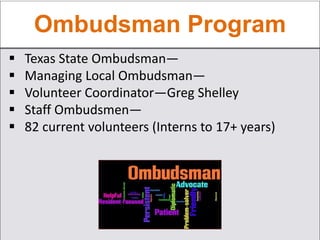
 Texas State Ombudsman—
 Managing Local Ombudsman—
 Volunteer Coordinator—Greg Shelley
 Staff Ombudsmen—
 82 current volunteers (Interns to 17+ years)
Ombudsman Program
• 30-Hour, 3-month internship
(adjustable)
• Assigned typically to one nursing
home
• Weekly, 2-hour (avg) visits
• Consult assigned staff ombudsman
• Submit monthly report
• Attend continuing education events
• Annual Rounds
Challenges?
• Other staff communication with
volunteers
• Confusion over reporting structure
• Capturing the work volunteers do
(Hours and beyond)
• Getting feedback from volunteers
Negative Communication
“I’m here to make sure you do things right.”
“Just a volunteer”
“I’m in charge of you.”
“You need to….”
“I would never volunteer to do this.”
Others?
Positive Communication
 “Couldn’t do this without you.”
 “We’re in this together.”
 “What can I do to help.”
 “I’m truly grateful for the time you give.”
 Others?
Who Does What?
What is the volunteer accountable for?
What are you accountable for?
To whom do I go for assistance?
To whom do you go for assistance?
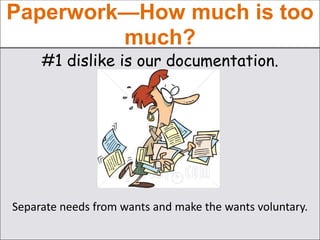
Paperwork—How much is too
much?
#1 dislike is our documentation.
Separate needs from wants and make the wants voluntary.
Isolated Volunteers
What Causes Isolation?
Reporting directly to a single individual
Little or nor contact with other staff
Feedback/Input seldom sought and not respected
Feeling disconnected from the team/community
What Happens as a Result?
Volunteer quits without saying why
Volunteer speaks poorly of the experience to others
Organization loses—potentially constructive
feedback, valuable volunteer hours and more….
Successful Models
The program meets its goals and volunteers play a key
role in that success.
Some Contributing Factors:
Solid recruitment strategy—varied
Structured training program
Clear expectations—understanding levels of success
Volunteer directed—don’t waste willingness to help
Culture of positive communication—and modeling
Accounting for volunteer contributions
Actively seeking feedback—keeping pathways open
Recruiting
Take advantage of the free stuff first:
Online advertising:
VolunteerHouston.org
VolunteerMatch.org
Energizeinc.com
Idealist.org
Social Media:
Facebook, Twitter, LinkedIn
Find opportunities to share your mission:
Civic groups, churches, corporations
Contact newspaper editors:
Develop press releases
Checkout TV and Radio Programs:
Some might deliver content to your intended audience.
Structured Training
Tell, Show, Assist, Observe, Praise
• Tell them what and how
• Show them what and how
• Assist them with doing it
• Observe them doing it until
successful
• Praise them for the success
Defined Success
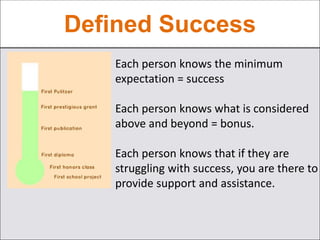
Each person knows the minimum
expectation = success
Each person knows what is considered
above and beyond = bonus.
Each person knows that if they are
struggling with success, you are there to
provide support and assistance.
Be Volunteer Directed
If someone has a willingness to help and the
time to spare, put them to work.
Can the role be modified?
Are there opportunities to create new roles?
Are there legitimate reasons why things are being done a
certain way?
What’s Your Culture, Really?
Do your actions reflect a positive model for volunteers and
staff?
Change a language, change a culture. Do your words and
other communications match your intended culture?
Are goals and successes regularly mentioned and recognized?
Accounting for Contributions
How do you account for volunteer
contributions?
What do you do with the information?
How frequently do you review it?
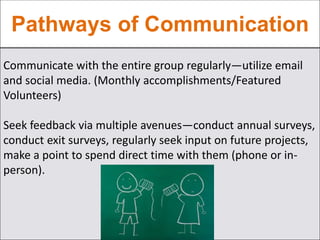
Pathways of Communication
Communicate with the entire group regularly—utilize email
and social media. (Monthly accomplishments/Featured
Volunteers)
Seek feedback via multiple avenues—conduct annual surveys,
conduct exit surveys, regularly seek input on future projects,
make a point to spend direct time with them (phone or in-
person).
Why Do Volunteers Quit?
Don’t feel as though they are making a difference
(Contribution/Competence)
Don’t feel as though their skills are being adequately utilized
Overcommitted/Life Changes/Overwhelmed
Don’t feel appreciated
Served out initial commitment
Conflict Avoidance
Need an Ombudsman?
Opportunity to provide and receive confidential
feedback.
Only acted upon with consent.
Provides opportunity for anonymous complaint
resolution.
Ensures volunteer knows alternative routes for
conflict resolution.
All the Right Answers
Each person and situation is truly different
so there is no one-size-fits-all.
Be willing to help.
Be responsive.
Be a roadway/not a roadblock.
And, your actions will speak louder than
your words….
Something to Ponder
Volunteers are often not treated as the valuable contributors
they are, and employees are often not treated as the
“volunteers” they are.
If people feel competent in what they are doing, that their
actions do make a difference, and that they are connected to
a larger community or mission, then Good things tend to
happen.
Questions?
Resources
http://volunteerhouston.org/
http://www.volunteerhub.com/
https://www.energizeinc.com/
Contact Information:
Greg Shelley
Greg.K.Shelley@uth.tmc.edu
713-500-9932
LinkedIn: www.linkedin.com/in/gkshelley
Twitter: @TheLTCOmbudsman
Facebook: www.facebook.com/LTCOmbudsmen
Thanks for you and all that you do!

Volunteer Coord March 2015 Publishable

  • 1.
    Volunteer Management Training: EngagingStaff to Utilize and Value Volunteers Greg Shelley Volunteer Coordinator/Staff Ombudsman Harris County Long-term Care Ombudsman Program
  • 2.
    What I HaveSeen • Over 30 years in the workforce, 13+ of those in a management capacity • 5 years as a volunteer coordinator and staff ombudsman • 7+ years volunteering • 47+ years of observation, introspection and extrospection
  • 3.
    What I HaveLearned • Actions speak louder than words, although words can hurt Easy to say you are Volunteer-driven, but…. • Over-supervising causes turnover Consider experience levels and remember the saying, “People don’t quit companies, they quit people.” • Under-supervising causes turnover Lack of engagement can give the impression of apathy. Make sure volunteers feel like they are a good fit, are making a contribution. • Recognition and respect are often freebies Have I told you lately…? “Be kinder than necessary….”
  • 4.
    Ombudsman Program • Long-termcare ombudsmen advocate for residents in nursing homes and assisted living facilities. We protect resident rights. • Residents have a variety of rights, from the right to quality care to the freedom to make their own choices. Every resident deserves to have a voice. • Ombudsmen are independent from facility management, which means we can effectively fulfill our responsibility to advocate on behalf of residents.
  • 5.
    Ombudsman Program  TexasState Ombudsman—  Managing Local Ombudsman—  Volunteer Coordinator—Greg Shelley  Staff Ombudsmen—  82 current volunteers (Interns to 17+ years)
  • 6.
    Ombudsman Program • 30-Hour,3-month internship (adjustable) • Assigned typically to one nursing home • Weekly, 2-hour (avg) visits • Consult assigned staff ombudsman • Submit monthly report • Attend continuing education events • Annual Rounds
  • 7.
    Challenges? • Other staffcommunication with volunteers • Confusion over reporting structure • Capturing the work volunteers do (Hours and beyond) • Getting feedback from volunteers
  • 8.
    Negative Communication “I’m hereto make sure you do things right.” “Just a volunteer” “I’m in charge of you.” “You need to….” “I would never volunteer to do this.” Others?
  • 9.
    Positive Communication  “Couldn’tdo this without you.”  “We’re in this together.”  “What can I do to help.”  “I’m truly grateful for the time you give.”  Others?
  • 10.
    Who Does What? Whatis the volunteer accountable for? What are you accountable for? To whom do I go for assistance? To whom do you go for assistance?
  • 11.
    Paperwork—How much istoo much? #1 dislike is our documentation. Separate needs from wants and make the wants voluntary.
  • 12.
    Isolated Volunteers What CausesIsolation? Reporting directly to a single individual Little or nor contact with other staff Feedback/Input seldom sought and not respected Feeling disconnected from the team/community What Happens as a Result? Volunteer quits without saying why Volunteer speaks poorly of the experience to others Organization loses—potentially constructive feedback, valuable volunteer hours and more….
  • 13.
    Successful Models The programmeets its goals and volunteers play a key role in that success. Some Contributing Factors: Solid recruitment strategy—varied Structured training program Clear expectations—understanding levels of success Volunteer directed—don’t waste willingness to help Culture of positive communication—and modeling Accounting for volunteer contributions Actively seeking feedback—keeping pathways open
  • 14.
    Recruiting Take advantage ofthe free stuff first: Online advertising: VolunteerHouston.org VolunteerMatch.org Energizeinc.com Idealist.org Social Media: Facebook, Twitter, LinkedIn Find opportunities to share your mission: Civic groups, churches, corporations Contact newspaper editors: Develop press releases Checkout TV and Radio Programs: Some might deliver content to your intended audience.
  • 15.
    Structured Training Tell, Show,Assist, Observe, Praise • Tell them what and how • Show them what and how • Assist them with doing it • Observe them doing it until successful • Praise them for the success
  • 16.
    Defined Success Each personknows the minimum expectation = success Each person knows what is considered above and beyond = bonus. Each person knows that if they are struggling with success, you are there to provide support and assistance.
  • 17.
    Be Volunteer Directed Ifsomeone has a willingness to help and the time to spare, put them to work. Can the role be modified? Are there opportunities to create new roles? Are there legitimate reasons why things are being done a certain way?
  • 18.
    What’s Your Culture,Really? Do your actions reflect a positive model for volunteers and staff? Change a language, change a culture. Do your words and other communications match your intended culture? Are goals and successes regularly mentioned and recognized?
  • 19.
    Accounting for Contributions Howdo you account for volunteer contributions? What do you do with the information? How frequently do you review it?
  • 20.
    Pathways of Communication Communicatewith the entire group regularly—utilize email and social media. (Monthly accomplishments/Featured Volunteers) Seek feedback via multiple avenues—conduct annual surveys, conduct exit surveys, regularly seek input on future projects, make a point to spend direct time with them (phone or in- person).
  • 21.
    Why Do VolunteersQuit? Don’t feel as though they are making a difference (Contribution/Competence) Don’t feel as though their skills are being adequately utilized Overcommitted/Life Changes/Overwhelmed Don’t feel appreciated Served out initial commitment Conflict Avoidance
  • 22.
    Need an Ombudsman? Opportunityto provide and receive confidential feedback. Only acted upon with consent. Provides opportunity for anonymous complaint resolution. Ensures volunteer knows alternative routes for conflict resolution.
  • 23.
    All the RightAnswers Each person and situation is truly different so there is no one-size-fits-all. Be willing to help. Be responsive. Be a roadway/not a roadblock. And, your actions will speak louder than your words….
  • 24.
    Something to Ponder Volunteersare often not treated as the valuable contributors they are, and employees are often not treated as the “volunteers” they are. If people feel competent in what they are doing, that their actions do make a difference, and that they are connected to a larger community or mission, then Good things tend to happen.
  • 25.
  • 26.
  • 27.
    Thanks for youand all that you do!

Editor's Notes

  • #3 Visit: http://son.uth.tmc.edu/
  • #4 Visit: http://son.uth.tmc.edu/