Sp10ConcreteBSCI 2400April 25, 2010Visual Dictionary
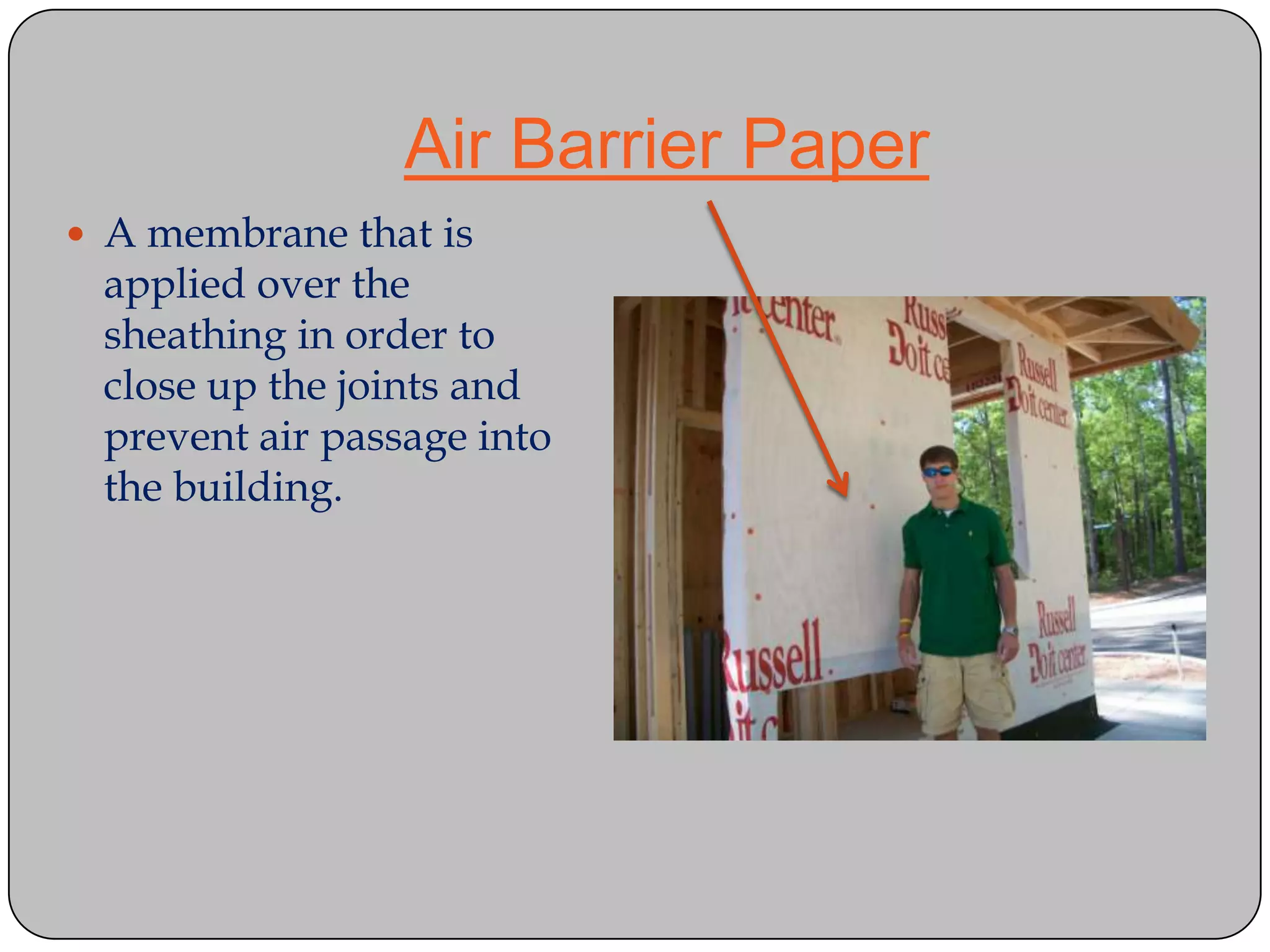
Air Barrier PaperA membrane that is applied over the sheathing in order to close up the joints and prevent air passage into the building.
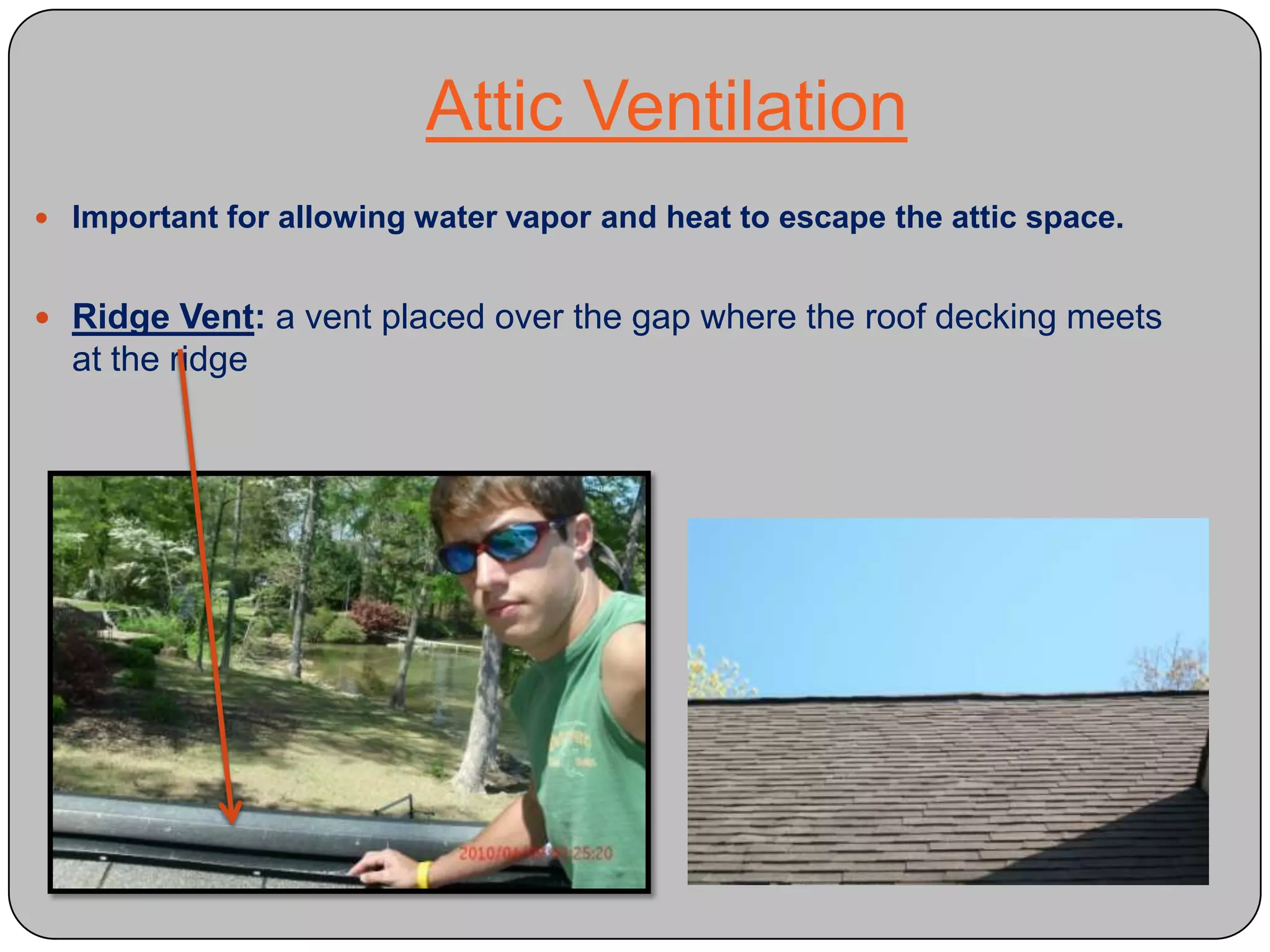
Attic Ventilation Important for allowing water vapor and heat to escape the attic space.Ridge Vent: a vent placed over the gap where the roof decking meets at the ridge
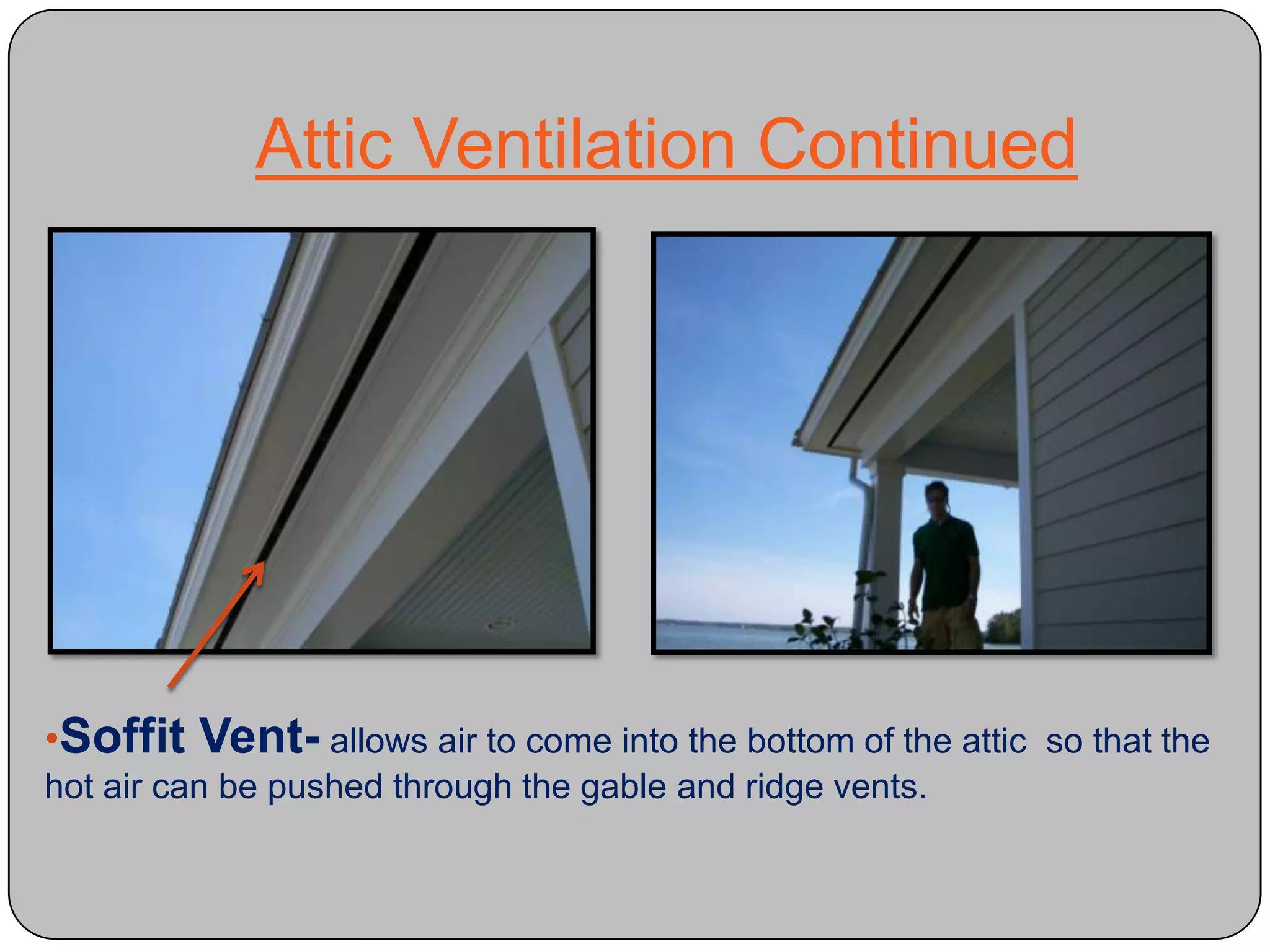
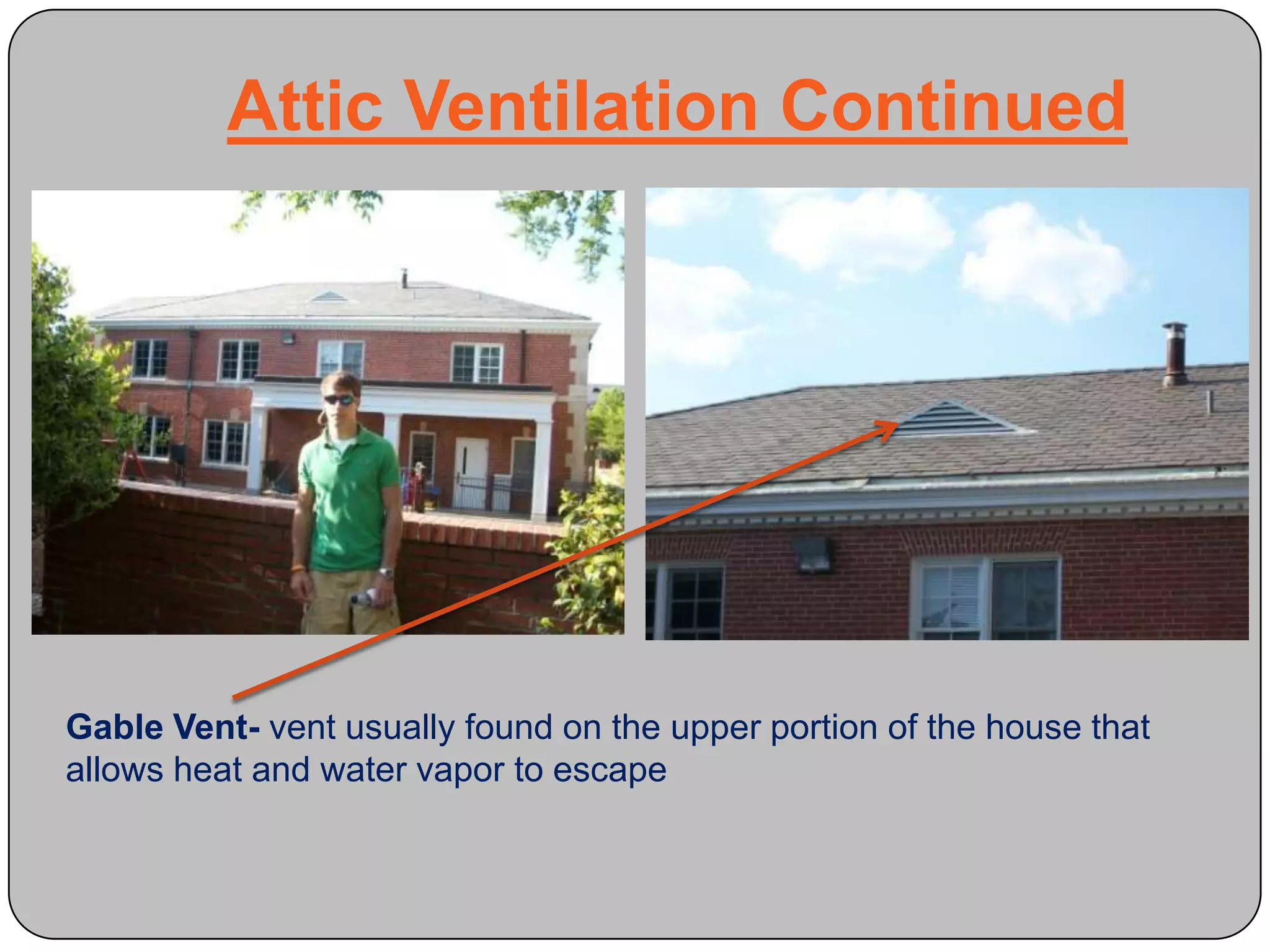
Attic Ventilation ContinuedSoffit Vent- allows air to come into the bottom of the attic  so that the hot air can be pushed through the gable and ridge vents.Attic Ventilation ContinuedGable Vent- vent usually found on the upper portion of the house that allows heat and water vapor to escape
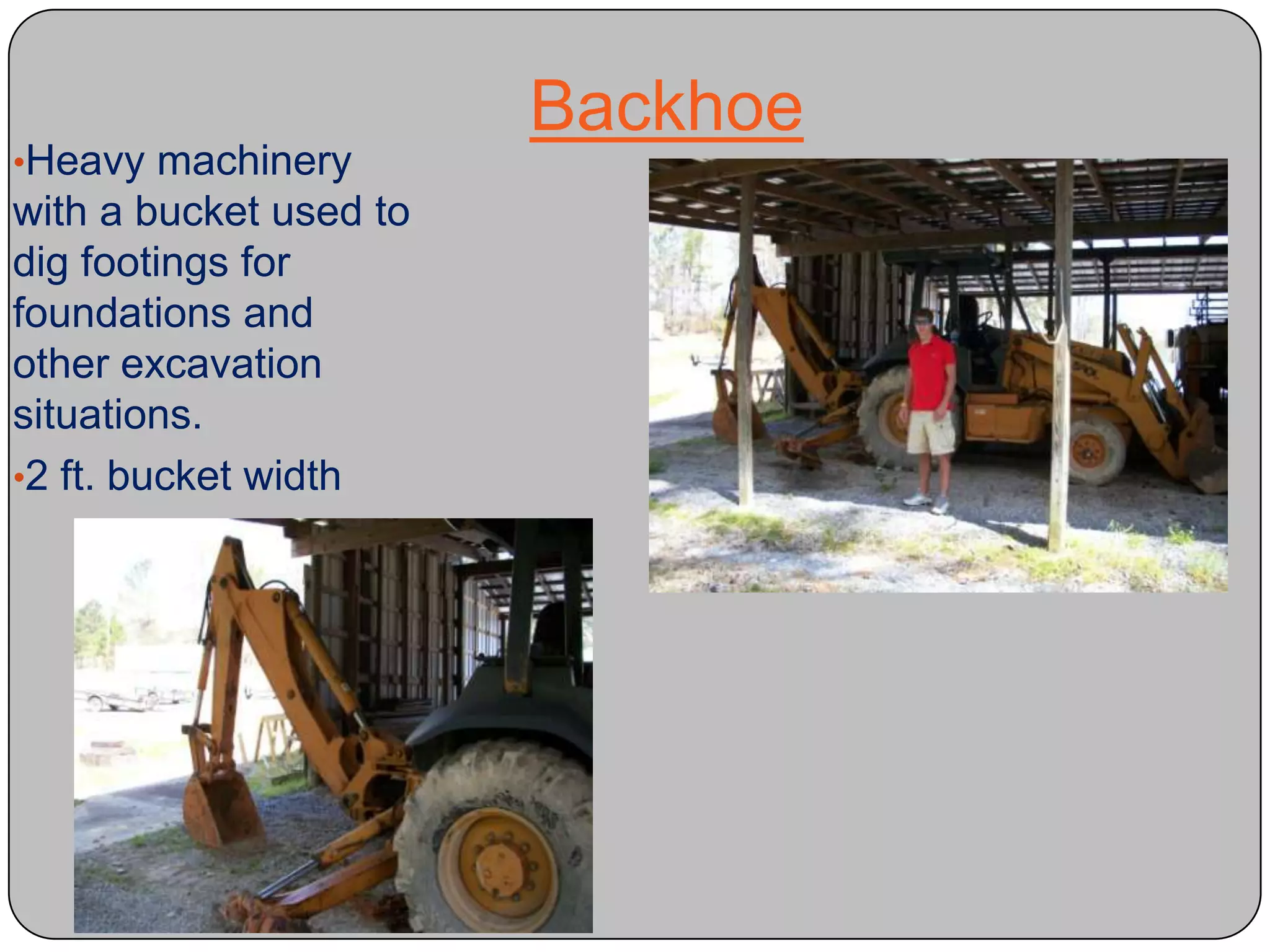
BackhoeHeavy machinery with a bucket used to dig footings for foundations and other excavation situations.
2 ft. bucket widthBatter BoardsDefinition:Boards used during the rough site work and excavation period to create the temporary outline of where  the building will be constructed. Helps ensure the building footings will be square and straight.
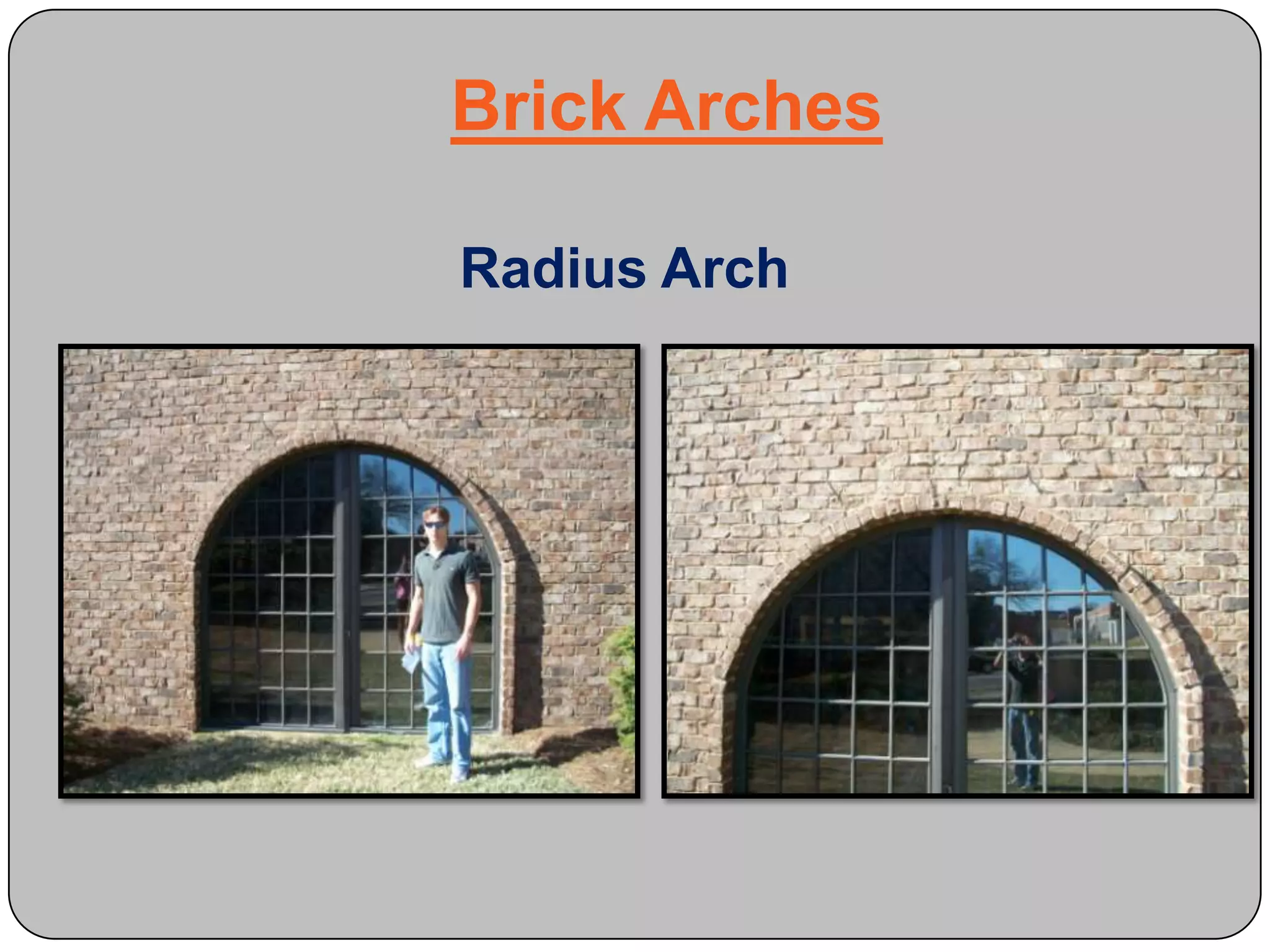
Brick ArchesRadius Arch
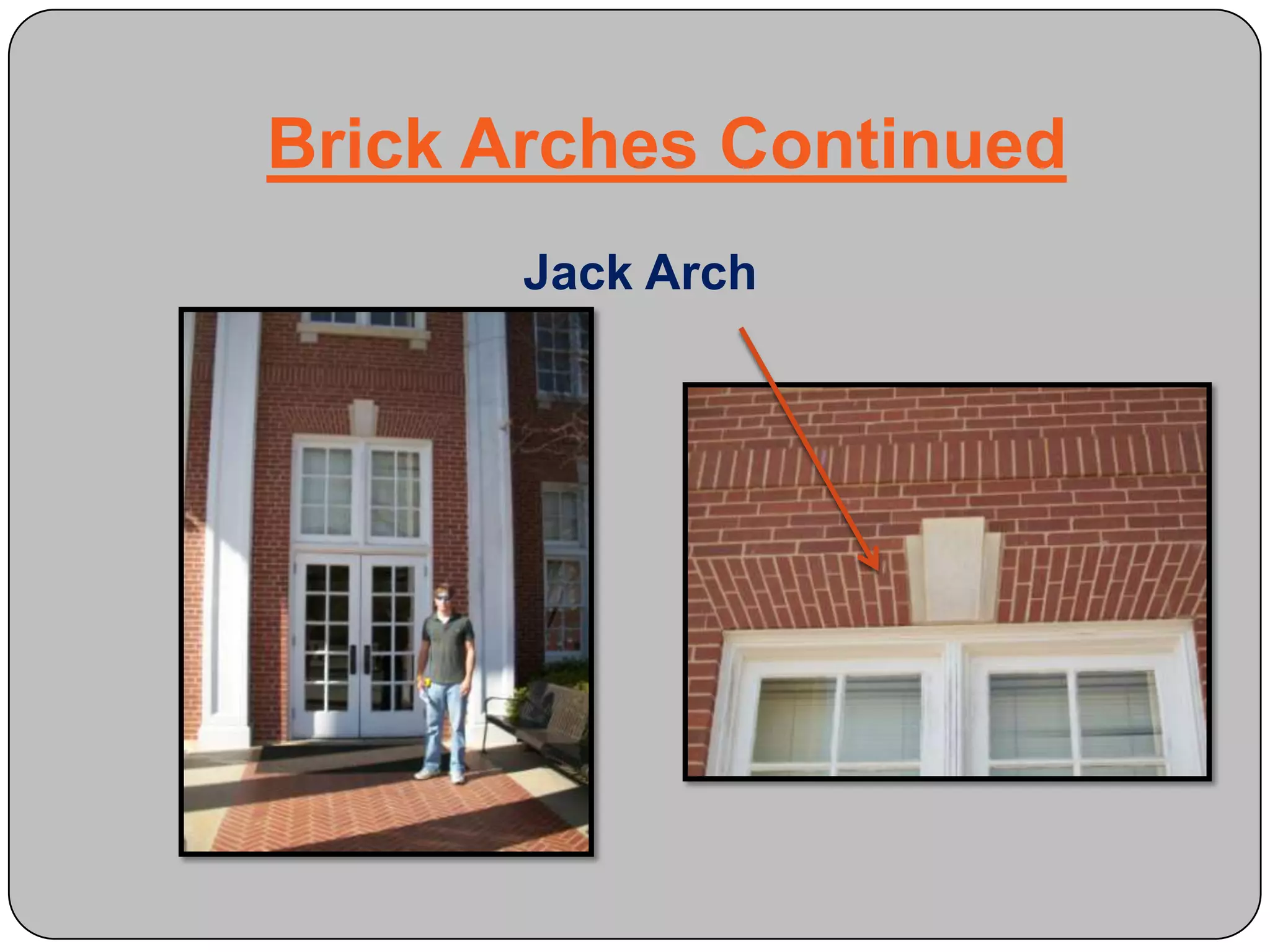
Brick Arches ContinuedJack Arch
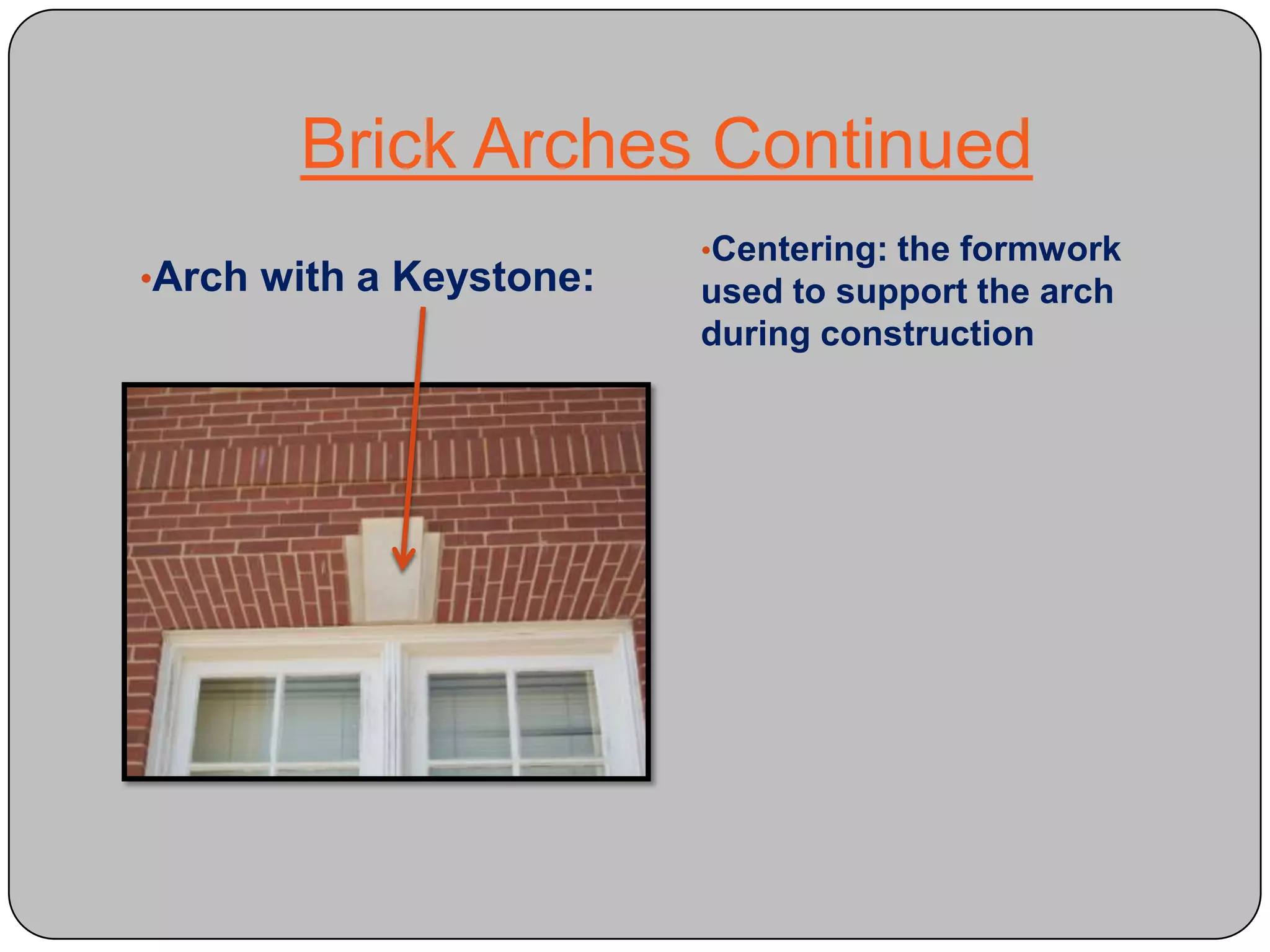
Brick Arches ContinuedArch with a Keystone:
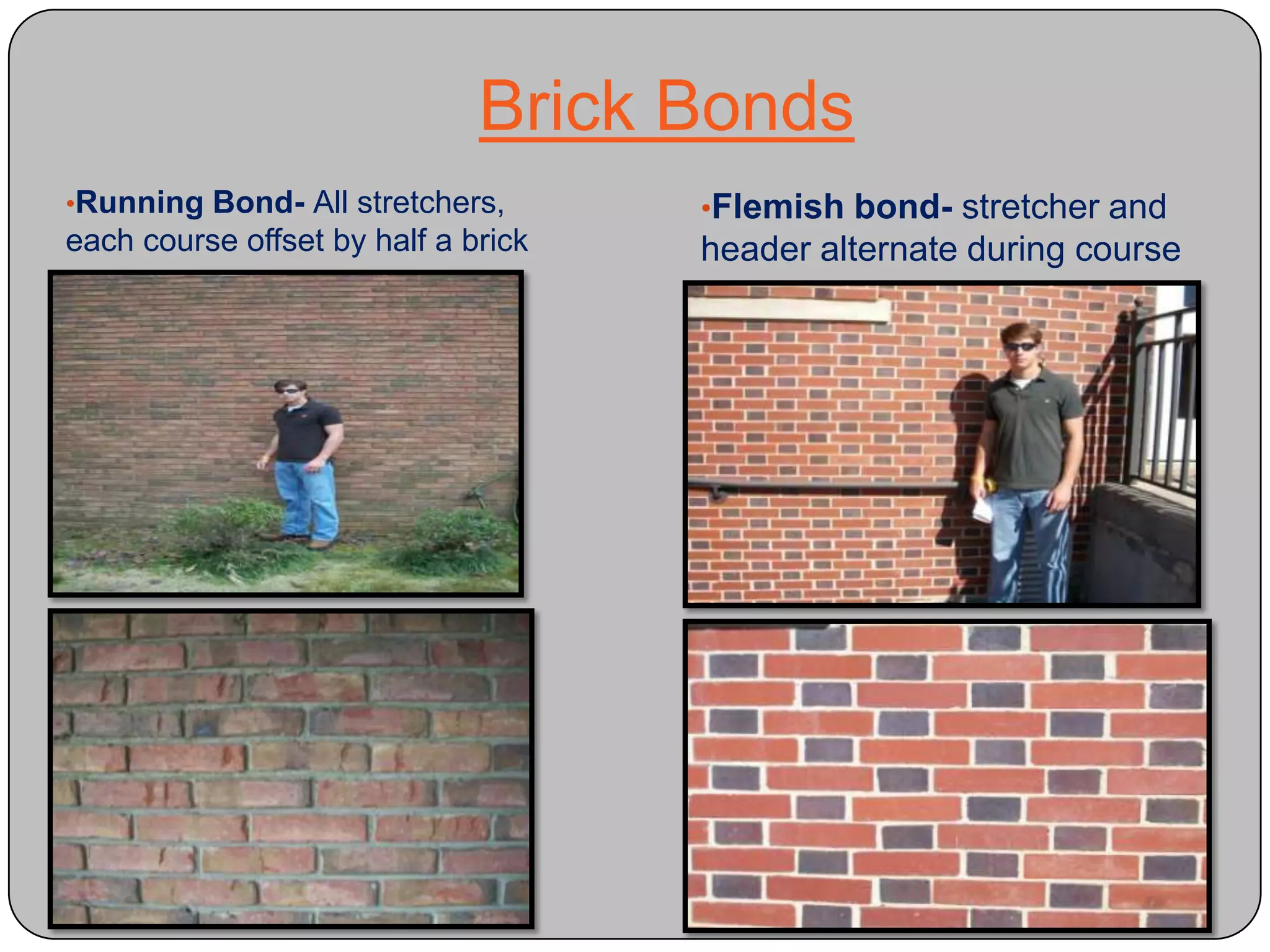
Centering: the formwork used to support the arch during constructionBrick BondsRunning Bond- All stretchers, each course offset by half a brick
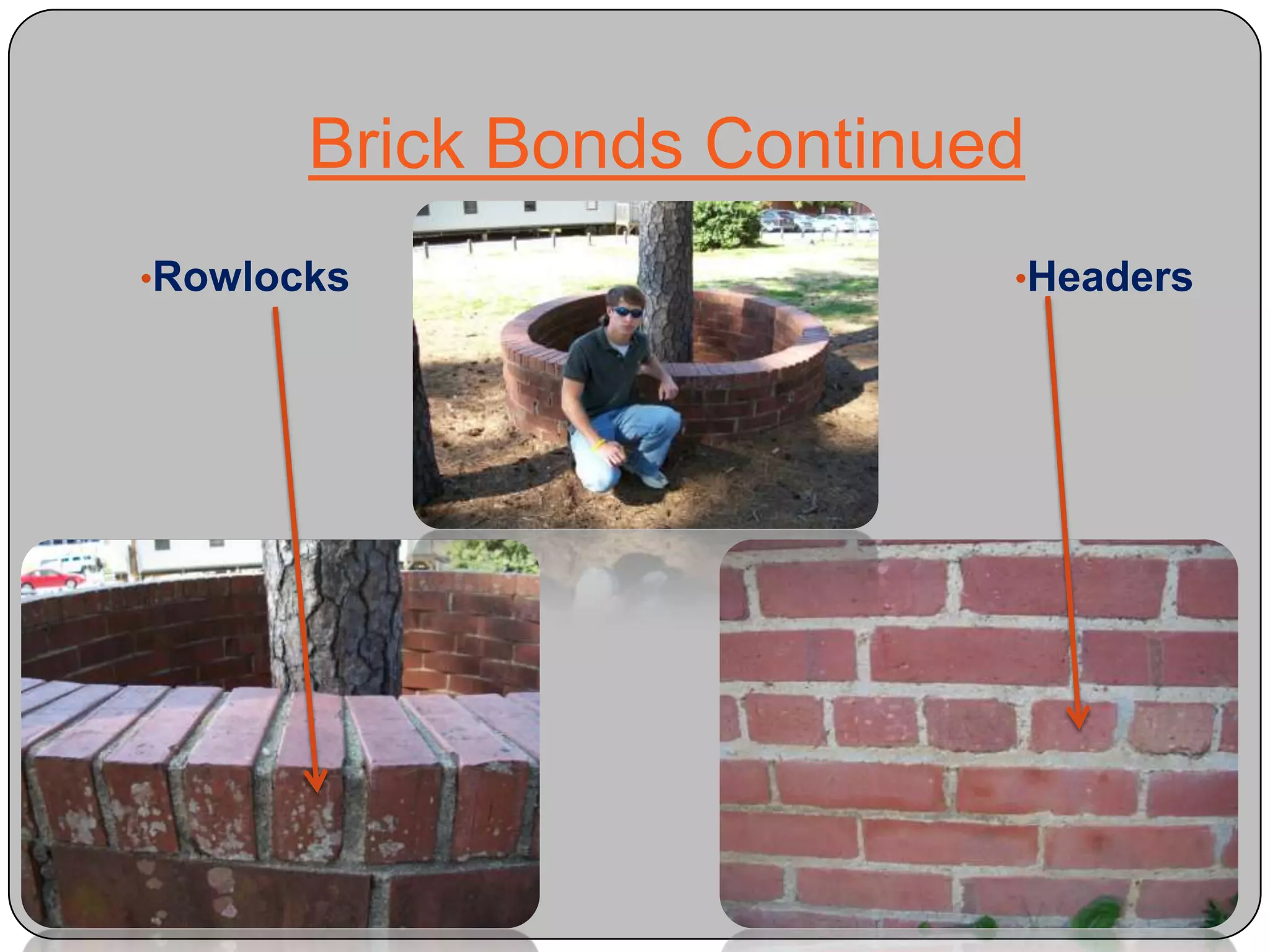
Flemish bond- stretcher and header alternate during courseBrick Bonds ContinuedRowlocks
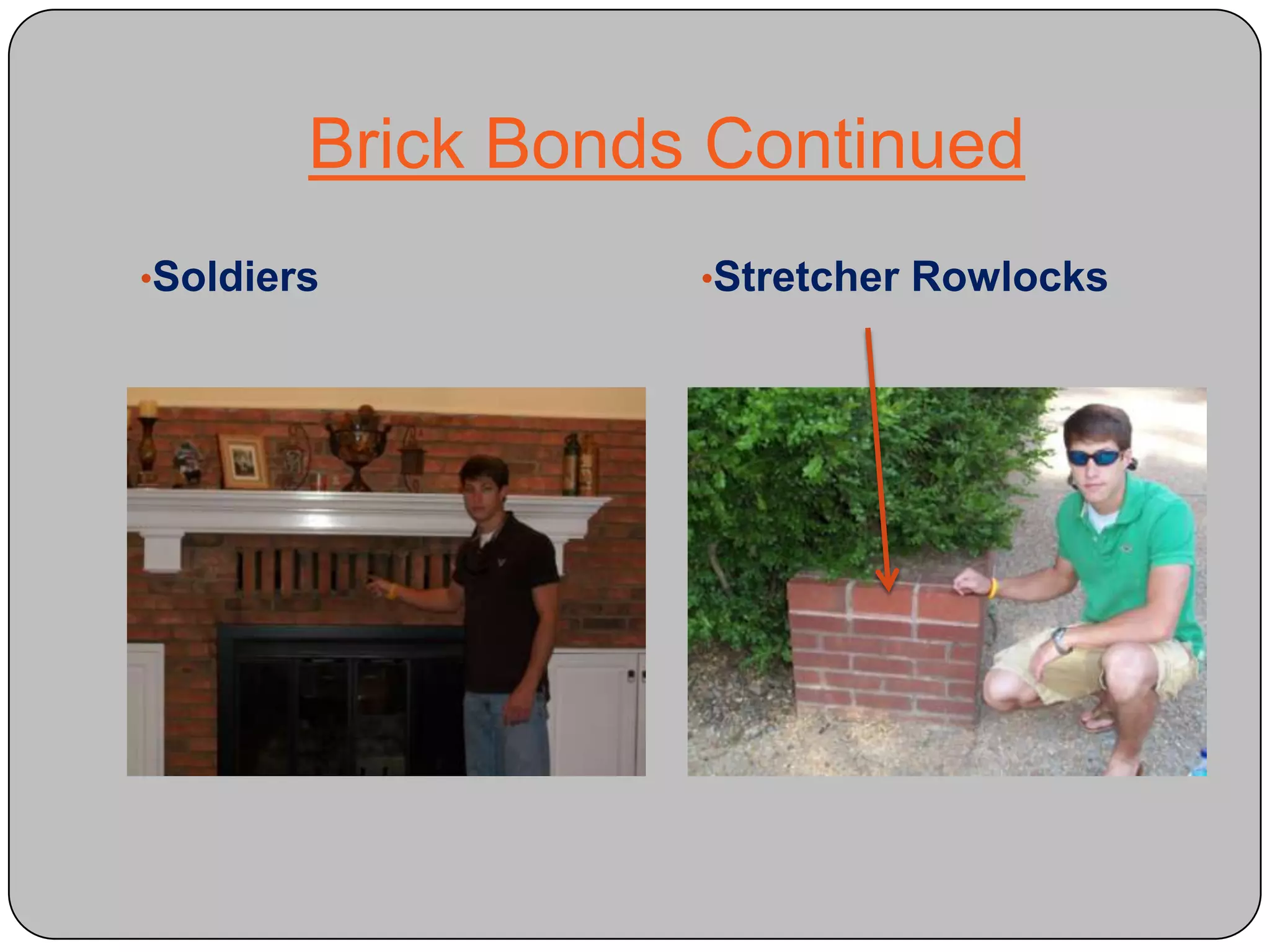
HeadersBrick Bonds ContinuedSoldiers
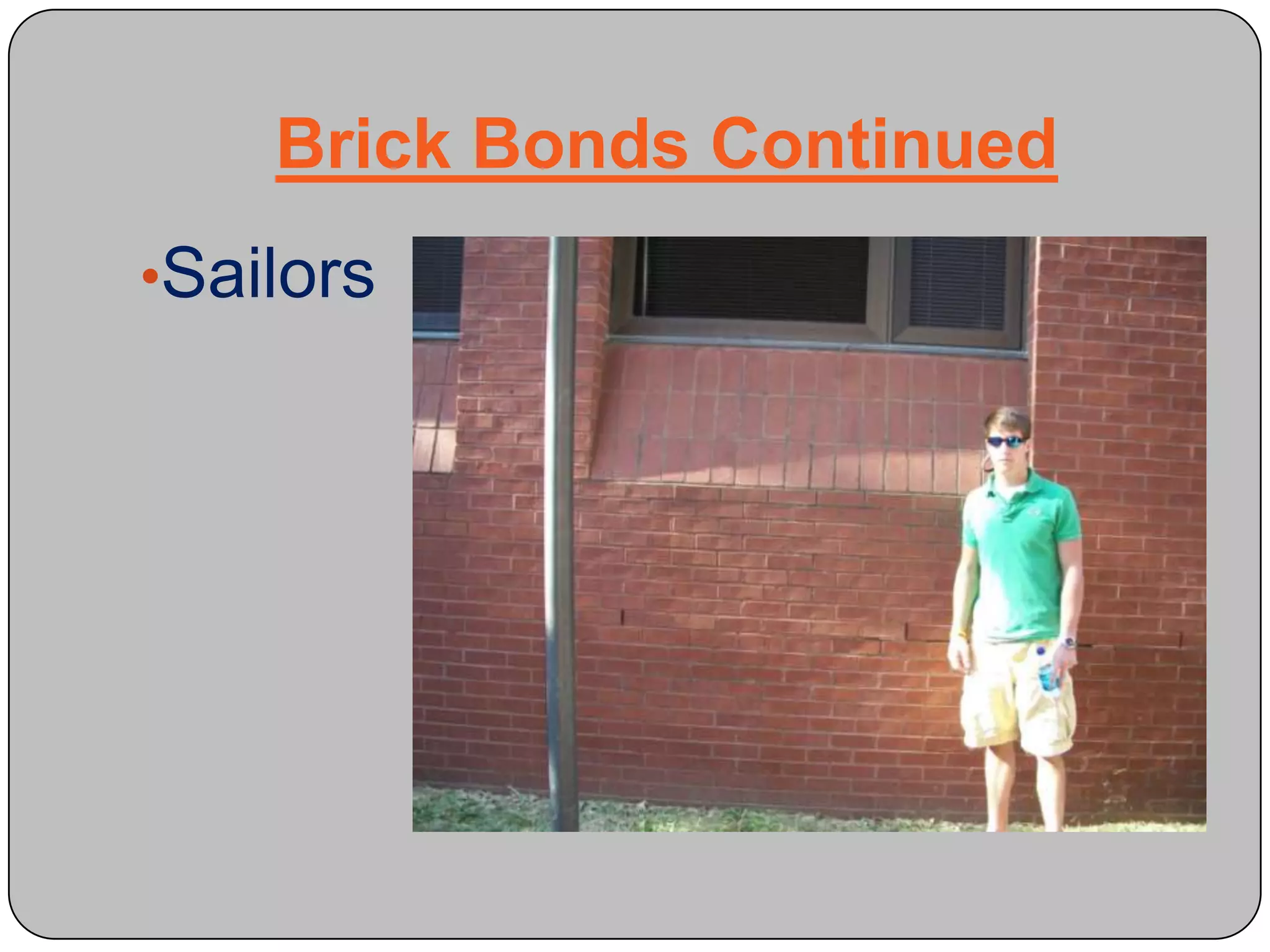
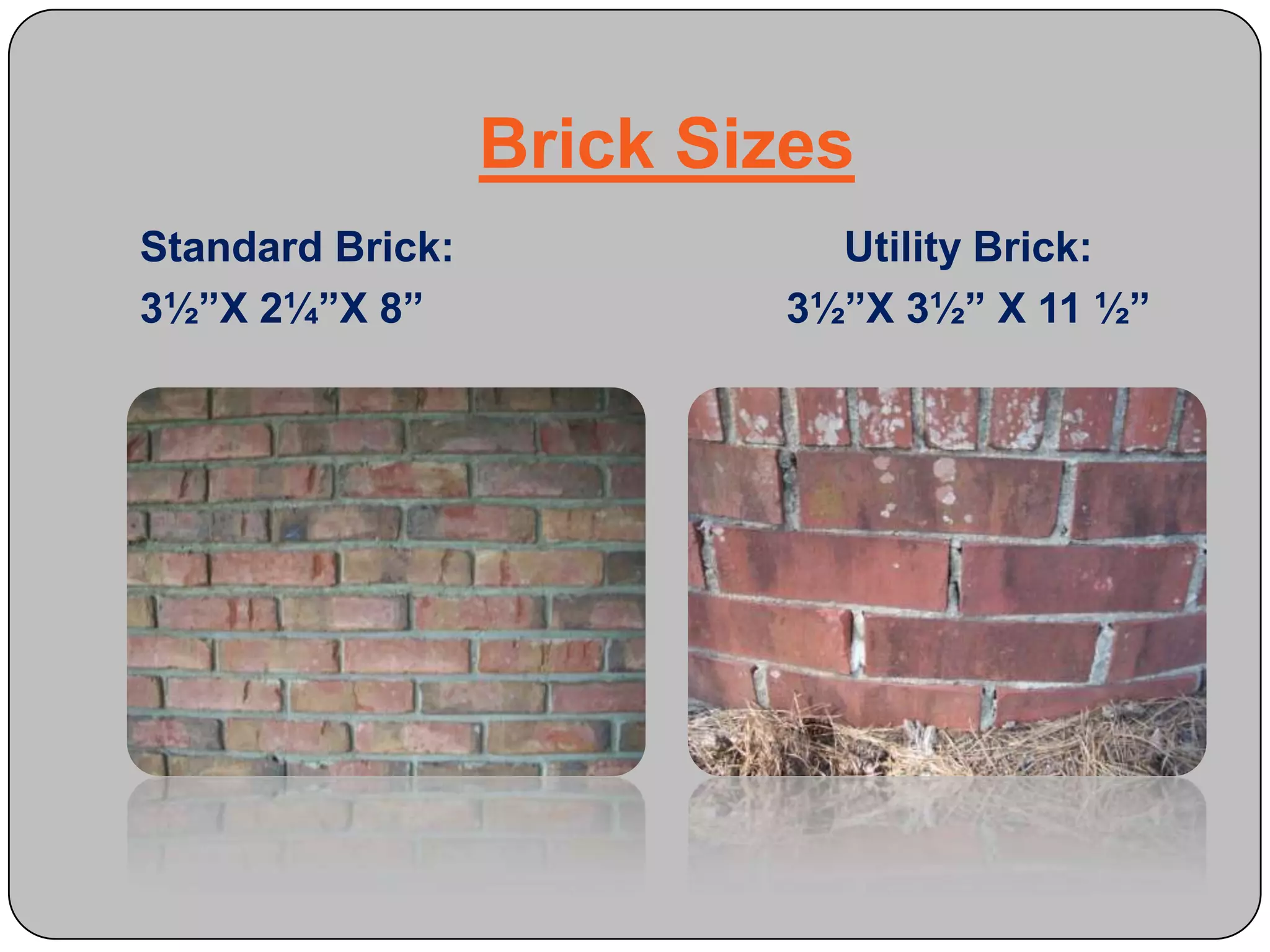
Stretcher RowlocksBrick Bonds ContinuedSailorsBrick SizesStandard Brick:3½”X 2¼”X 8”  Utility Brick:3½”X 3½” X 11 ½”
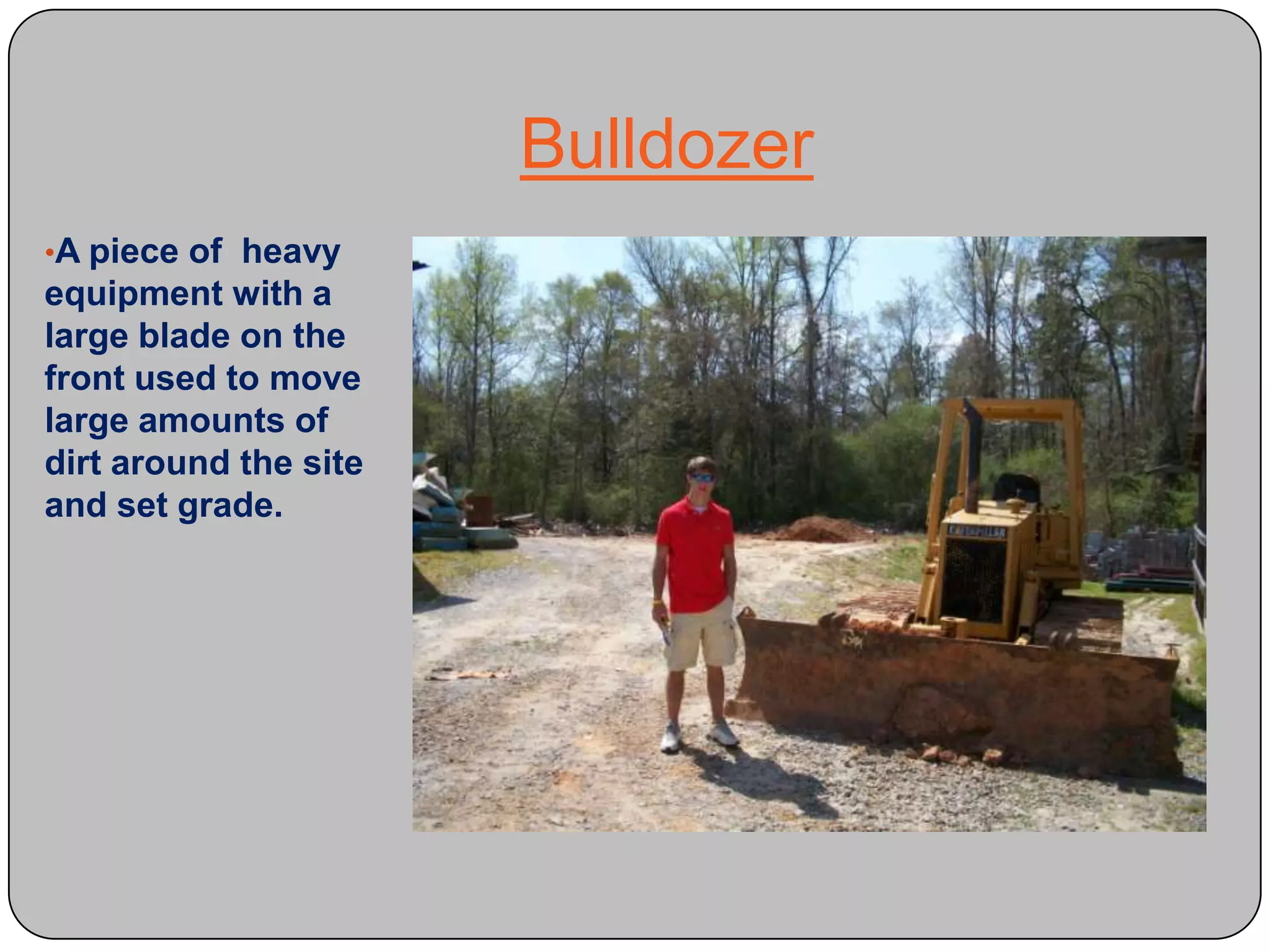
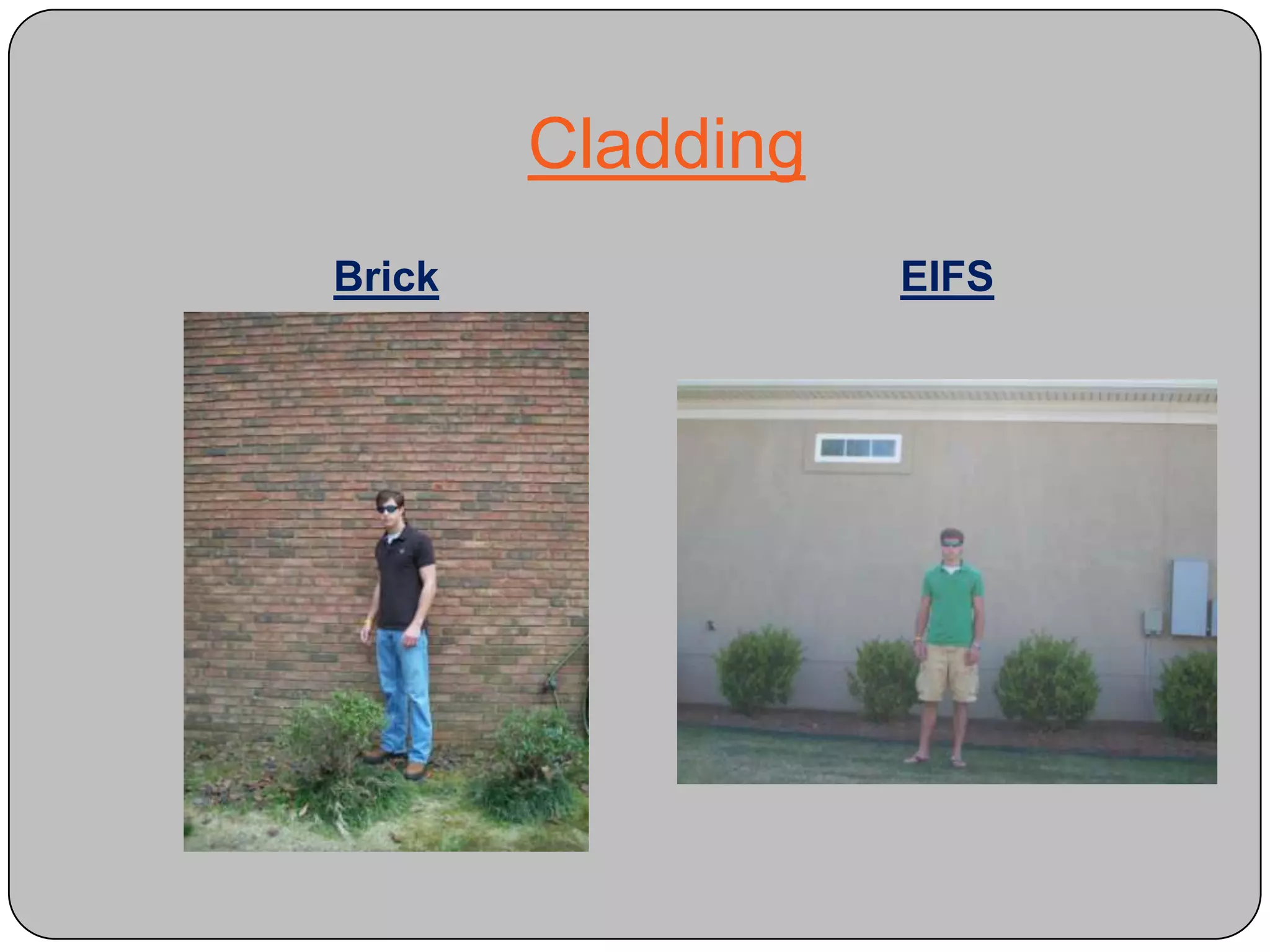
BulldozerA piece of  heavy equipment with a large blade on the front used to move large amounts of dirt around the site and set grade.CladdingBrickEIFS
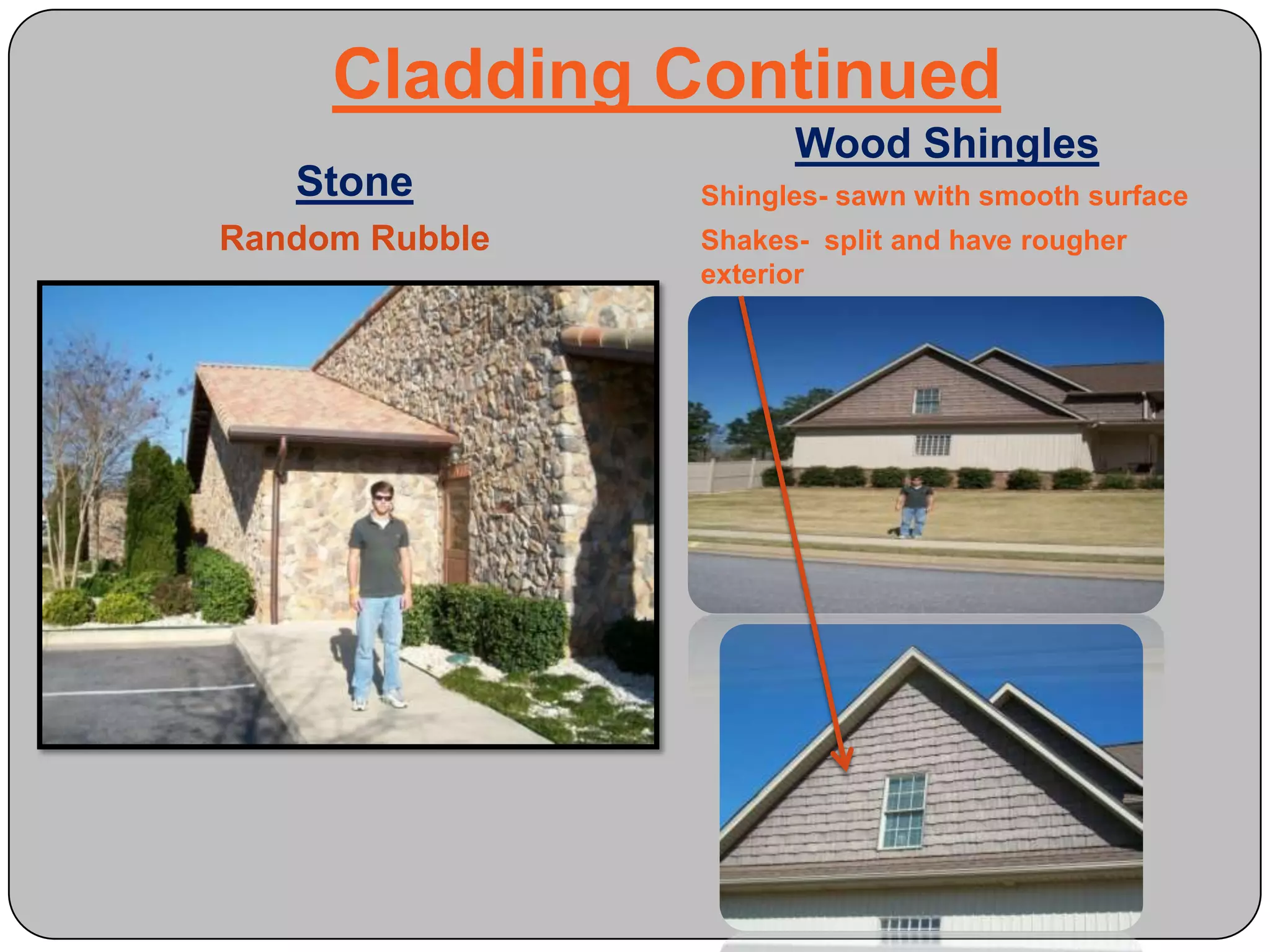
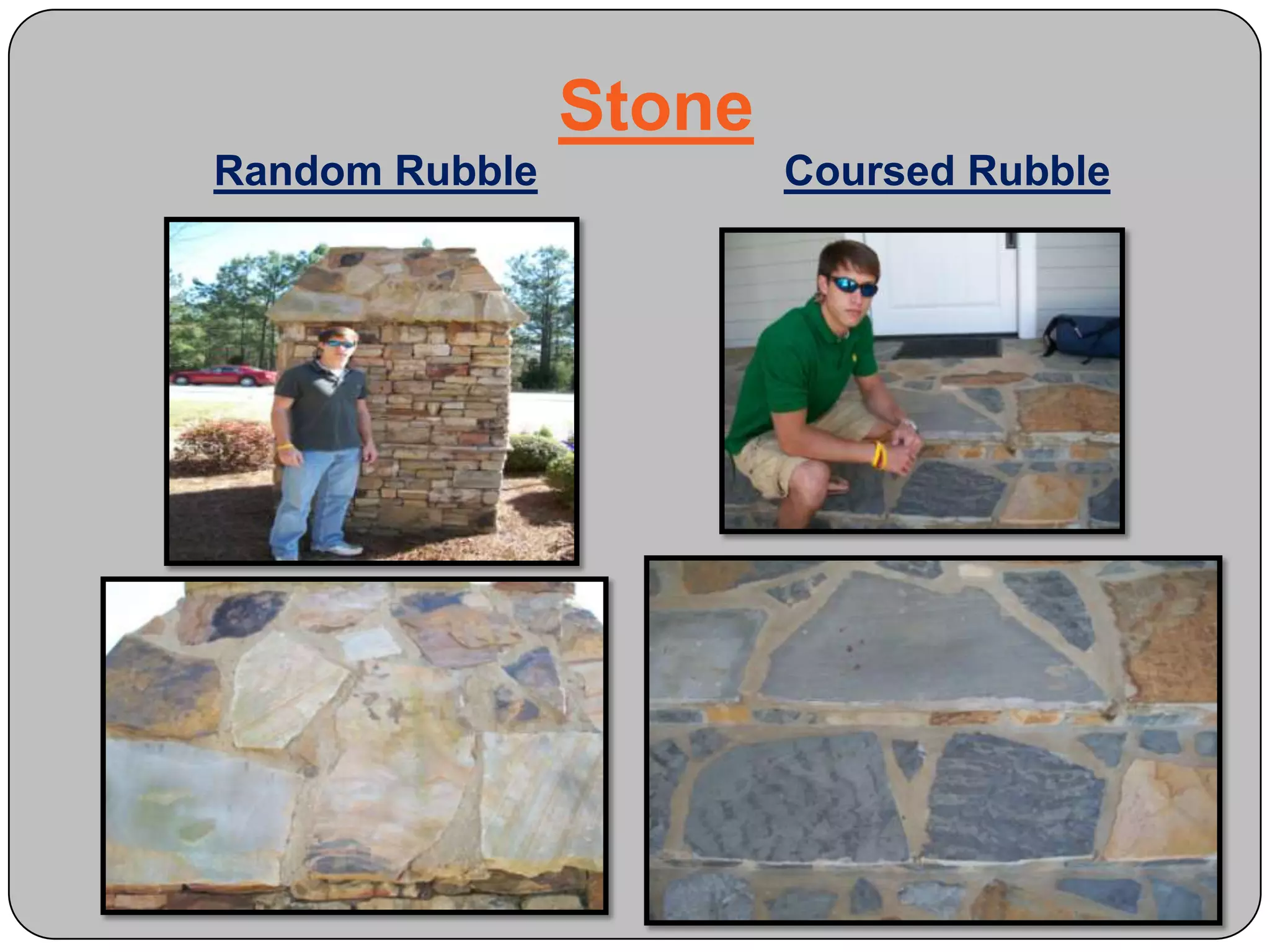
Cladding ContinuedWood ShinglesShingles- sawn with smooth surfaceShakes-  split and have rougher exterior StoneRandom Rubble
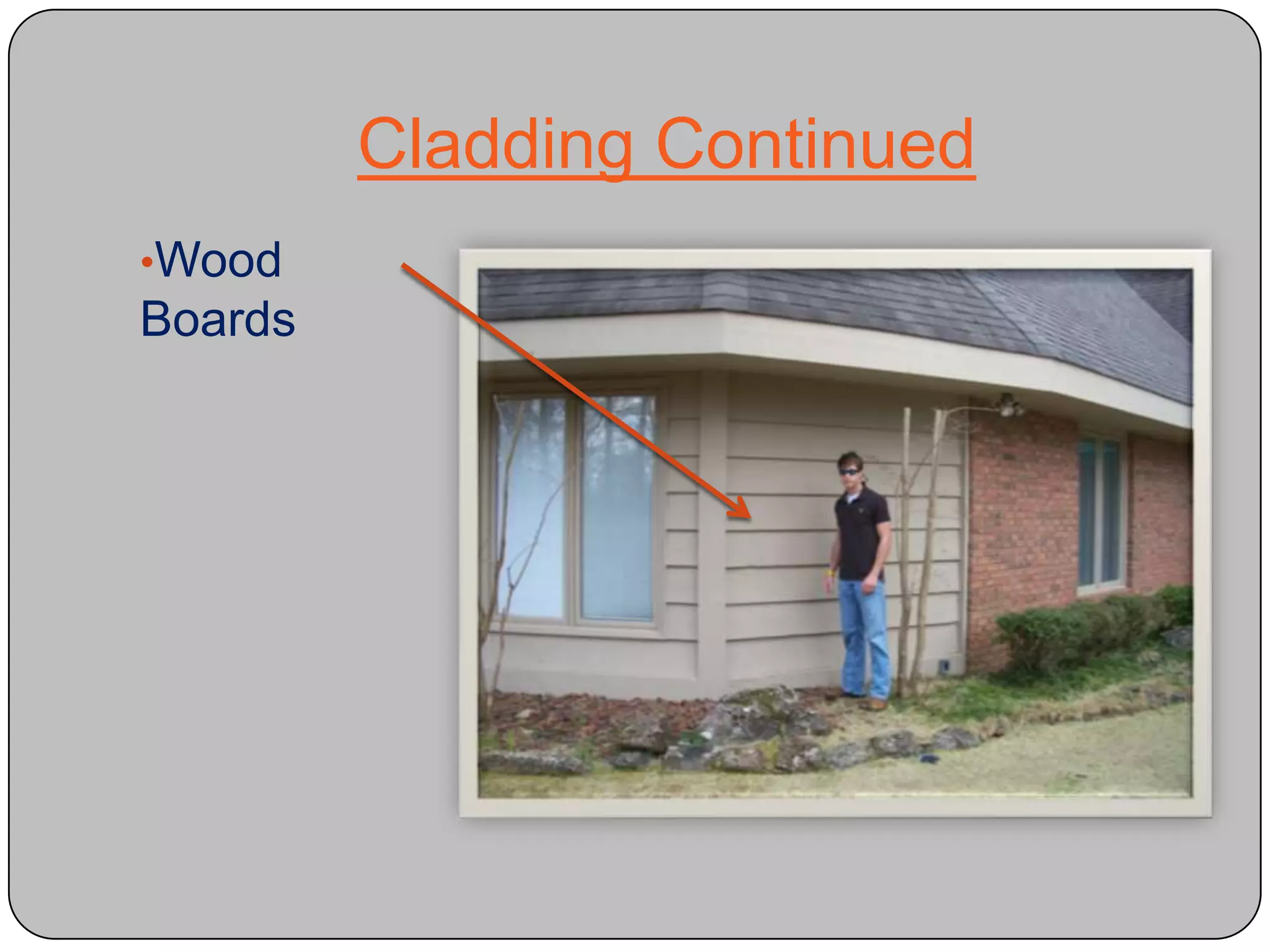
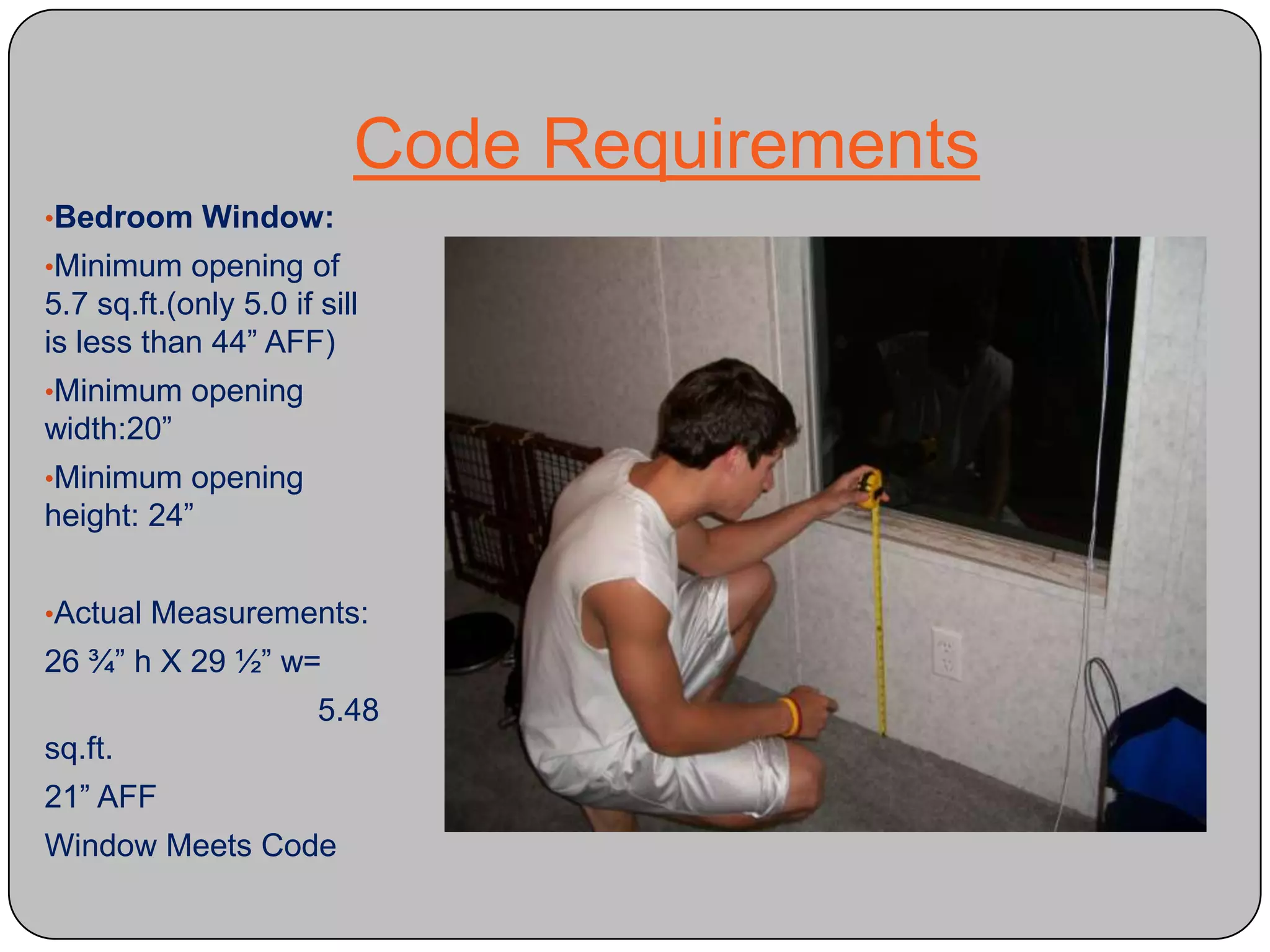
Cladding ContinuedWood BoardsCode RequirementsBedroom Window:
Minimum opening of 5.7 sq.ft.(only 5.0 if sill is less than 44” AFF)
Minimum opening width:20”
Minimum opening height: 24”
Actual Measurements: 26 ¾” h X 29 ½” w=                               5.48 sq.ft.21” AFF Window Meets Code
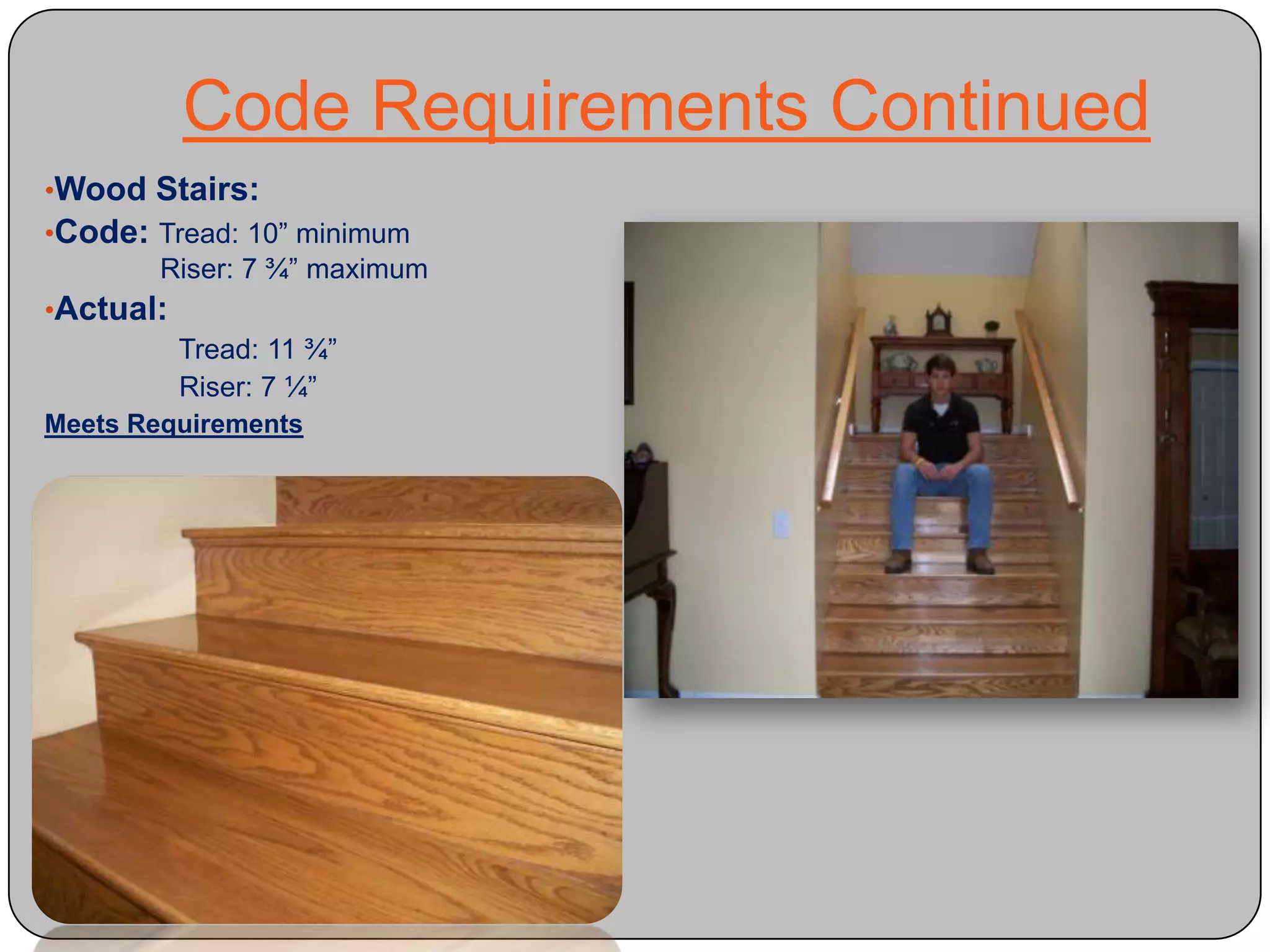
Code Requirements ContinuedWood Stairs:
Code: Tread: 10” minimum         Riser: 7 ¾” maximum Actual:                 Tread: 11 ¾”                 Riser: 7 ¼”Meets Requirements
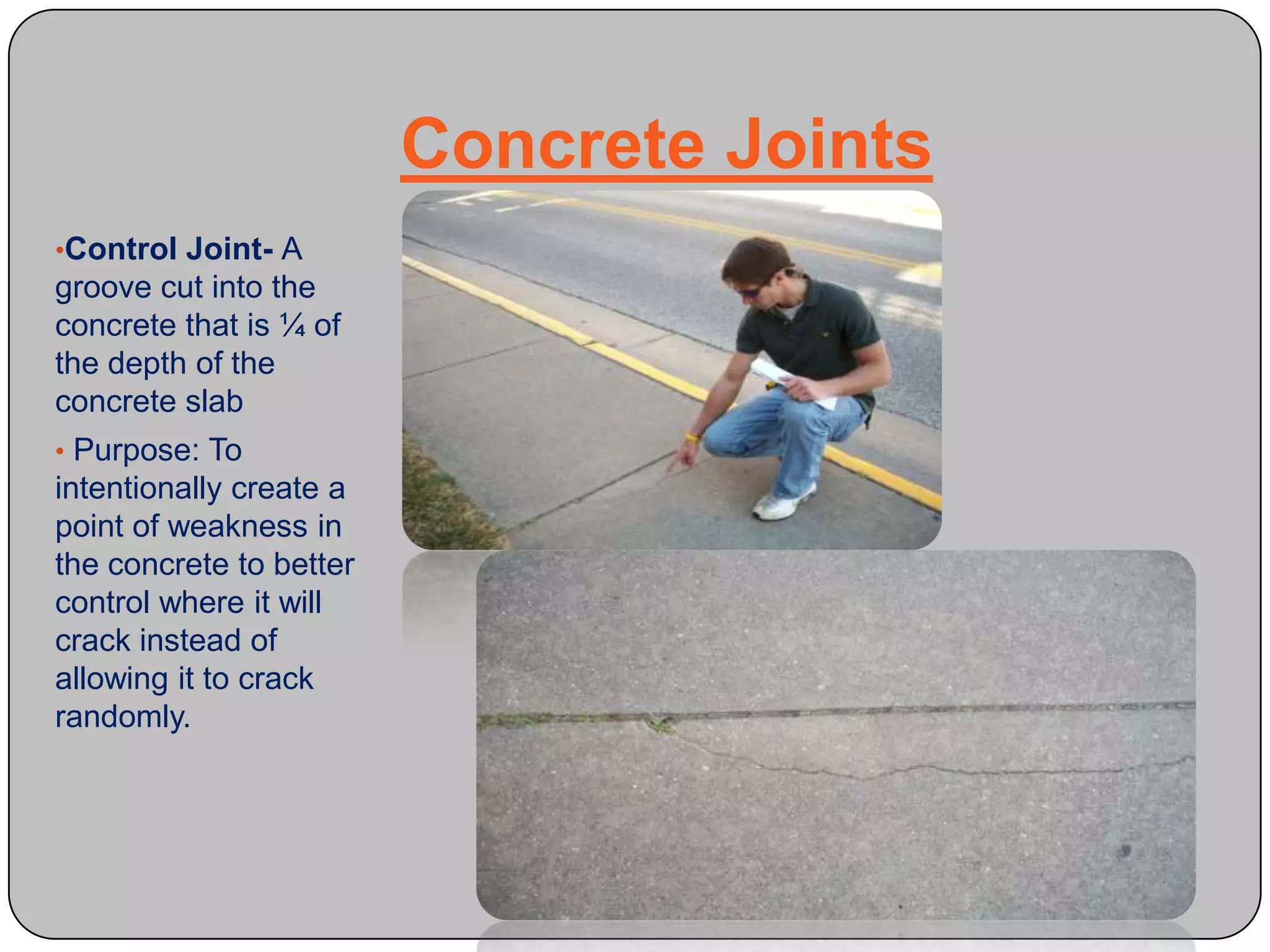
Concrete JointsControl Joint- A groove cut into the concrete that is ¼ of the depth of the concrete slab
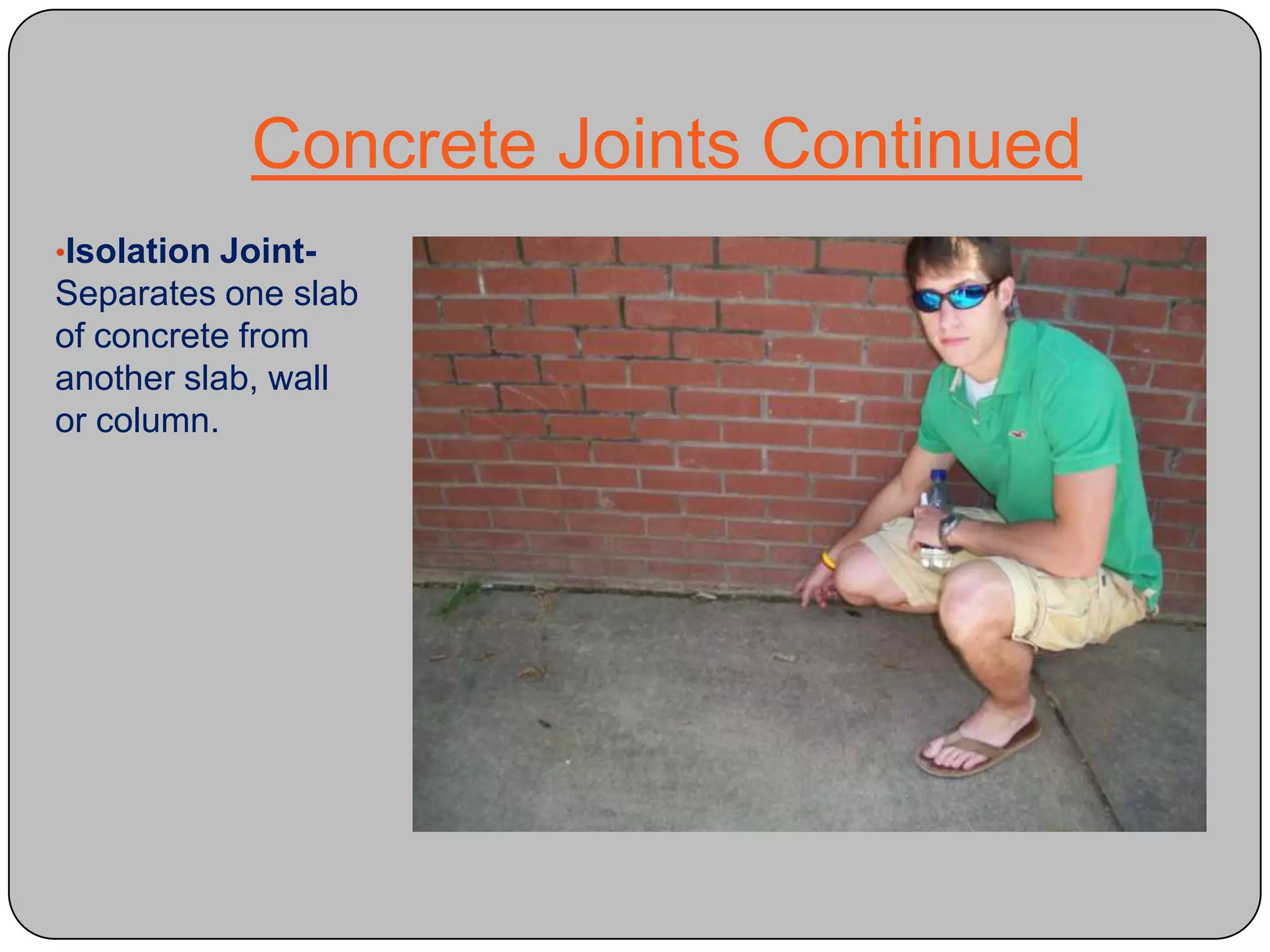
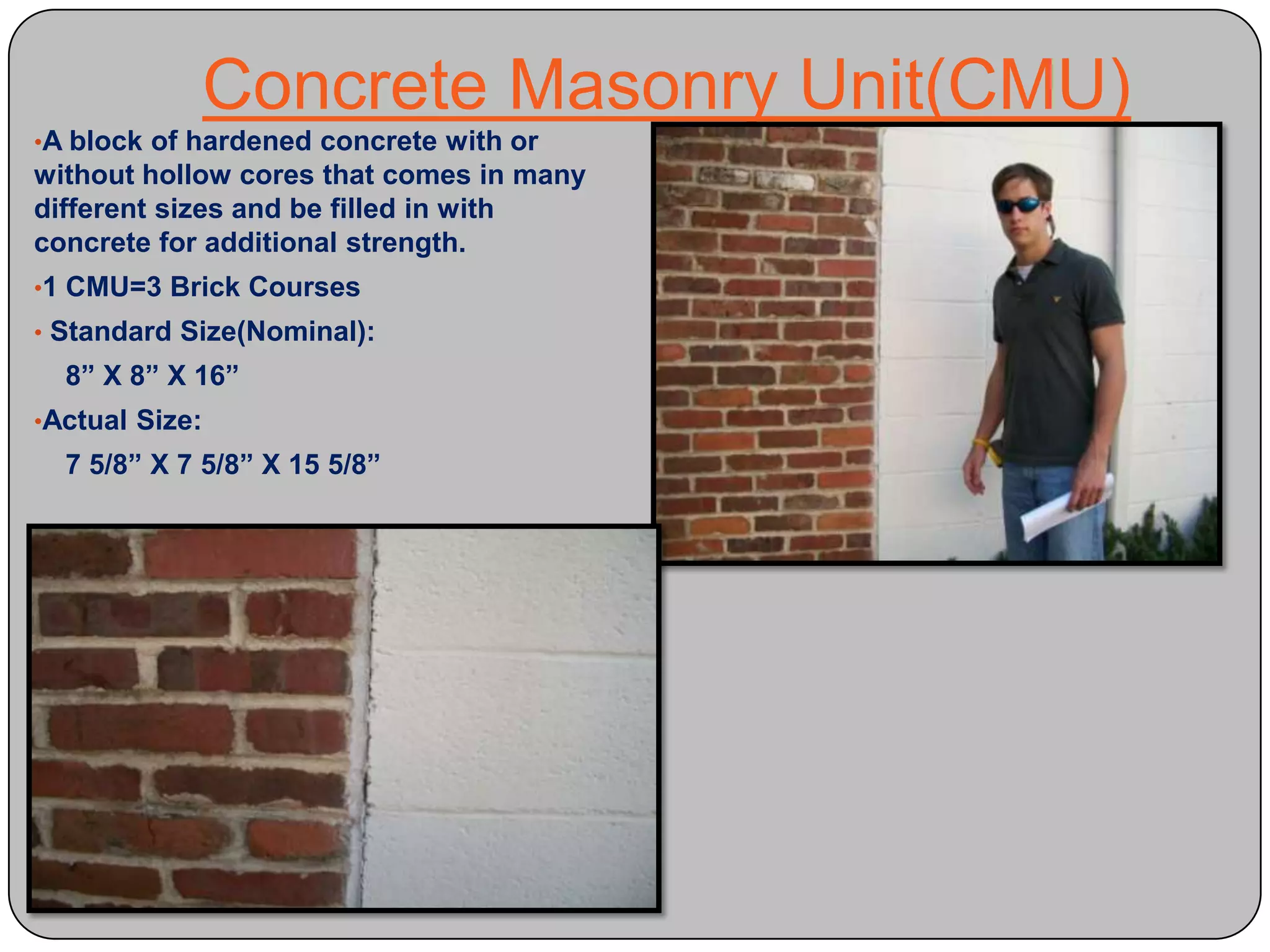
 Purpose: To intentionally create a point of weakness in the concrete to better control where it will crack instead of allowing it to crack randomly.Concrete Joints ContinuedIsolation Joint- Separates one slab of concrete from another slab, wall or column.Concrete Masonry Unit(CMU)A block of hardened concrete with or without hollow cores that comes in many different sizes and be filled in with concrete for additional strength.
1 CMU=3 Brick Courses
 Standard Size(Nominal):    8” X 8” X 16”Actual Size:     7 5/8” X 7 5/8” X 15 5/8”
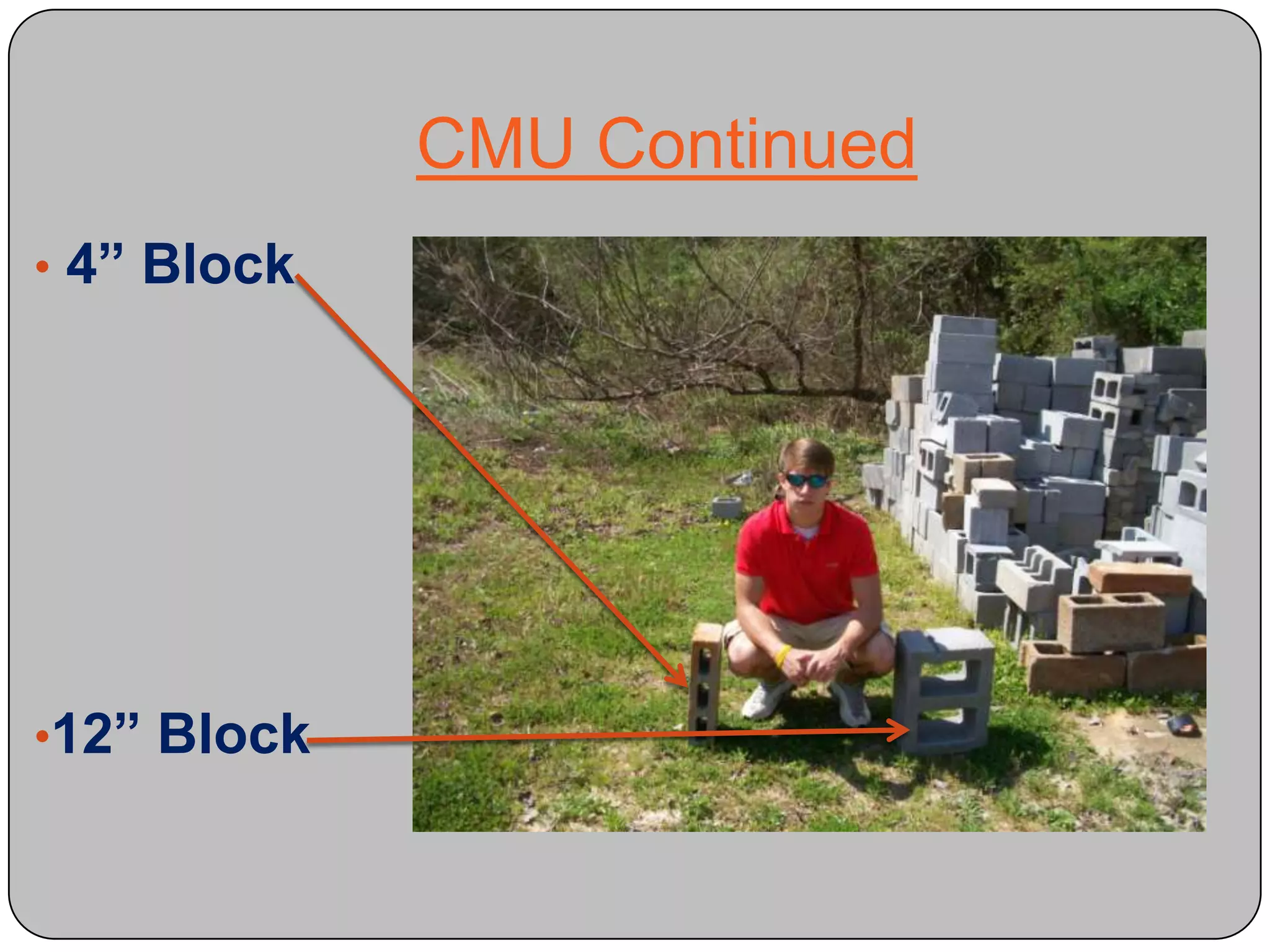
CMU Continued4” Block
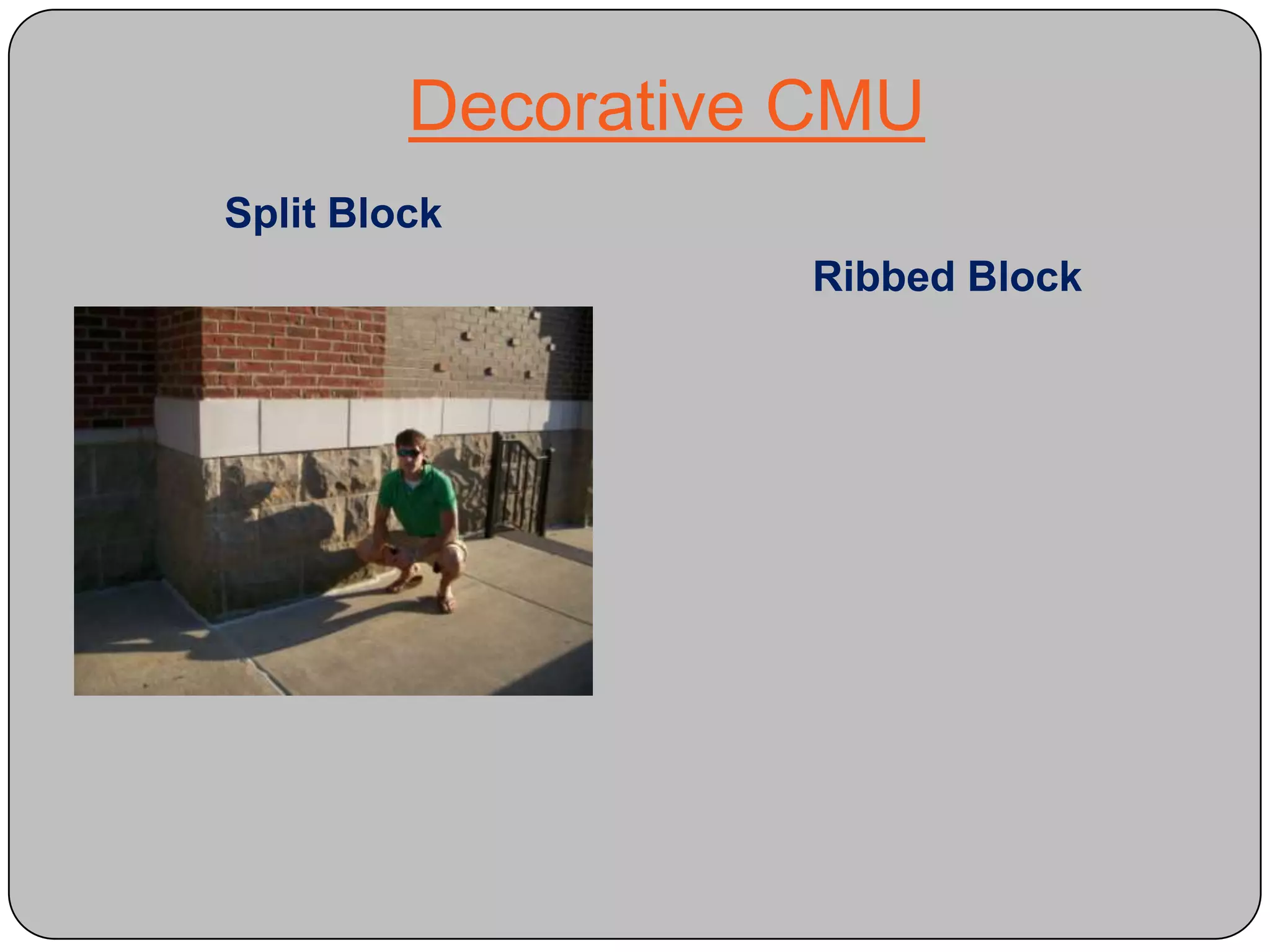
12” BlockDecorative CMUSplit BlockRibbed Block
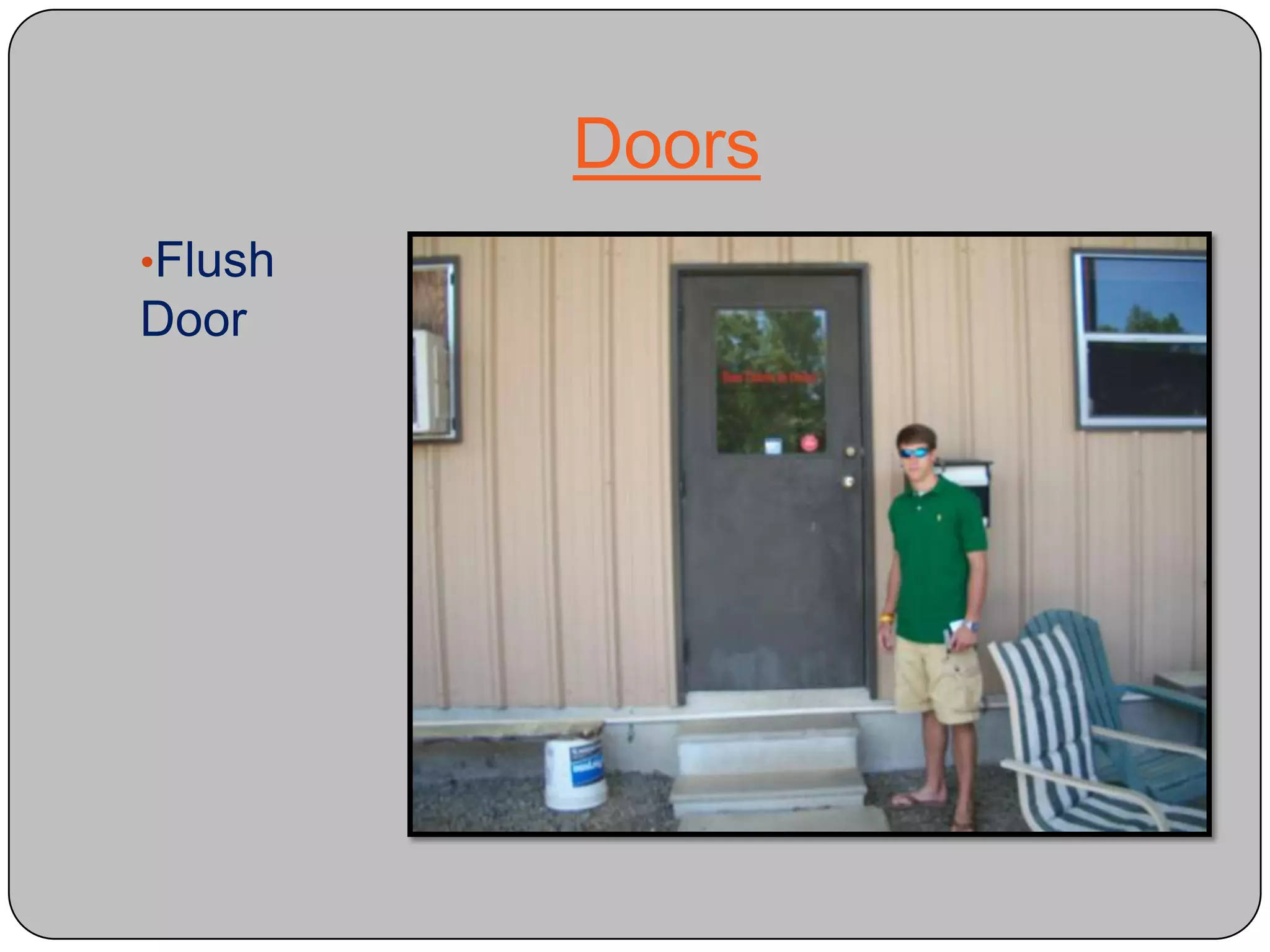
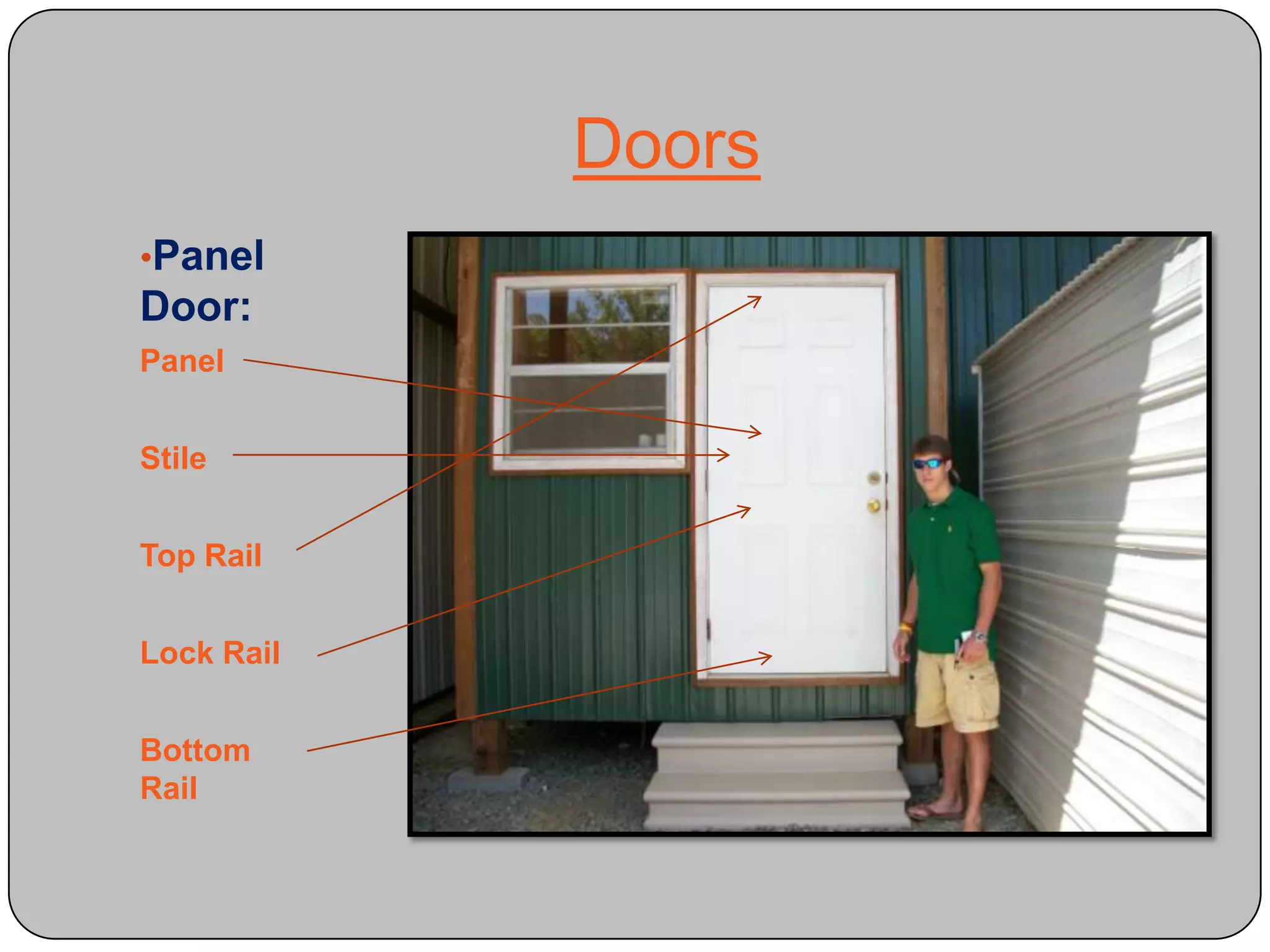
DoorsFlush DoorDoorsPanel Door:PanelStileTop RailLock RailBottom Rail
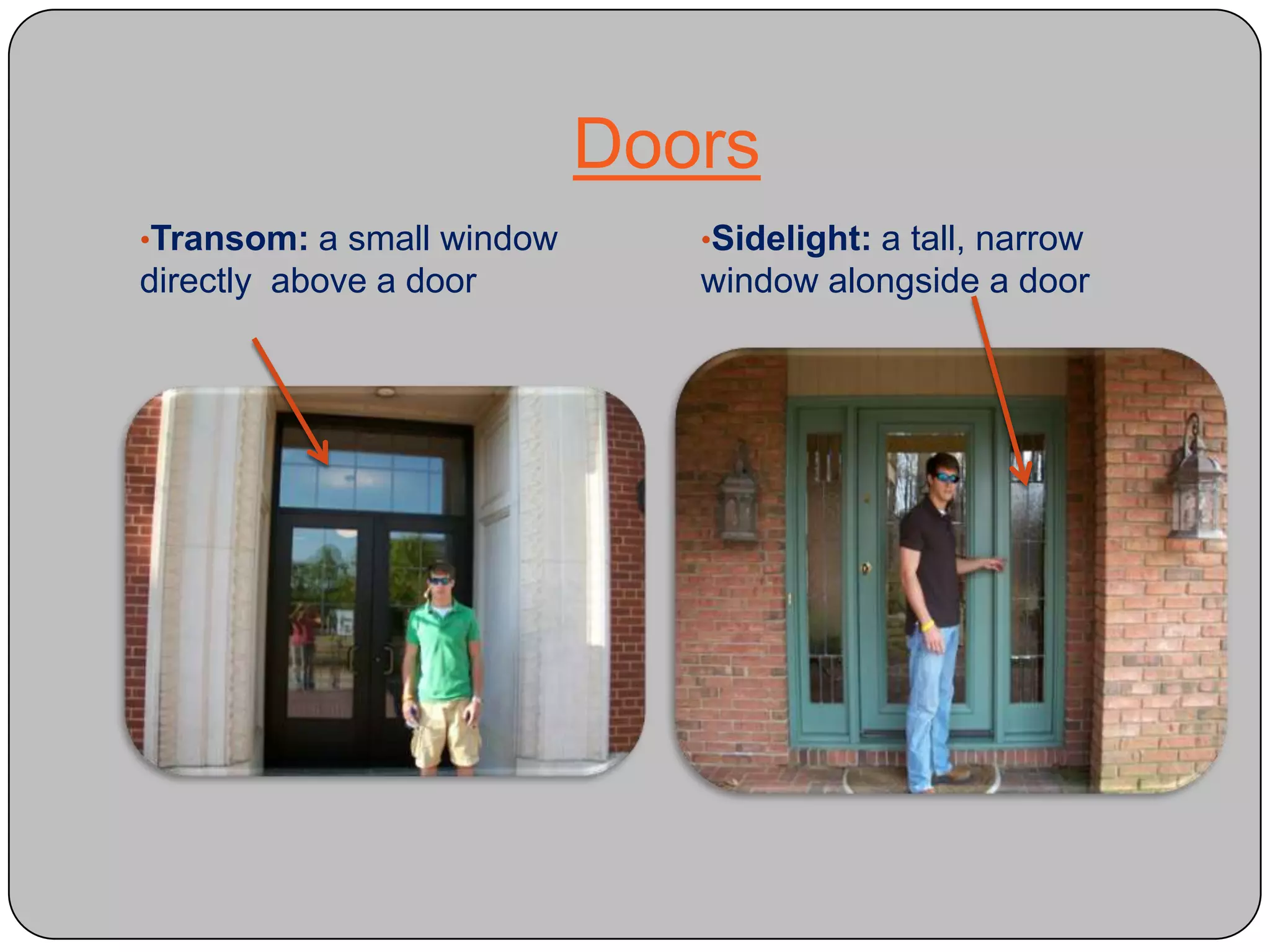
DoorsTransom: a small window directly  above a door
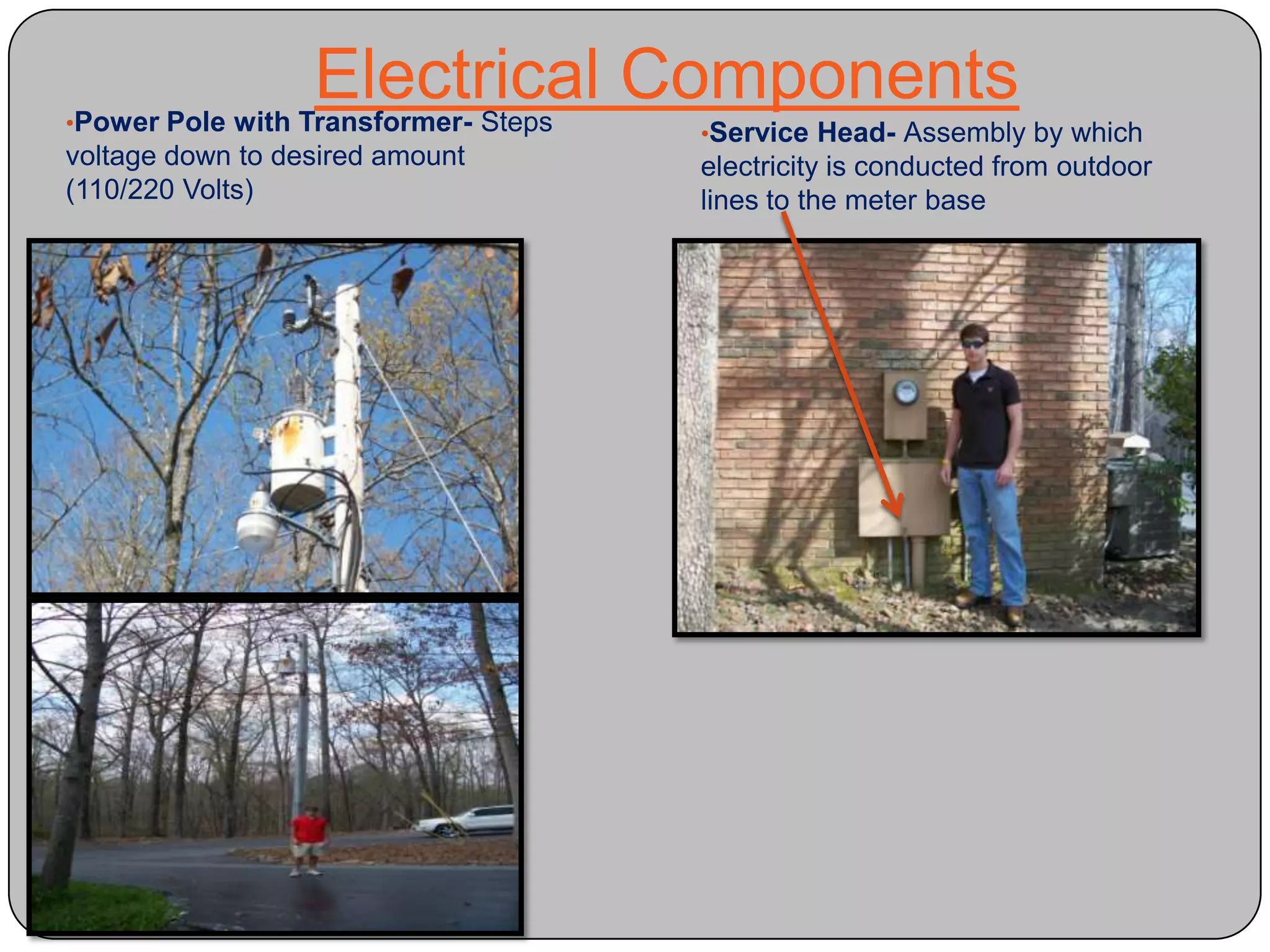
Sidelight: a tall, narrow window alongside a doorElectrical ComponentsPower Pole with Transformer- Steps voltage down to desired amount (110/220 Volts)
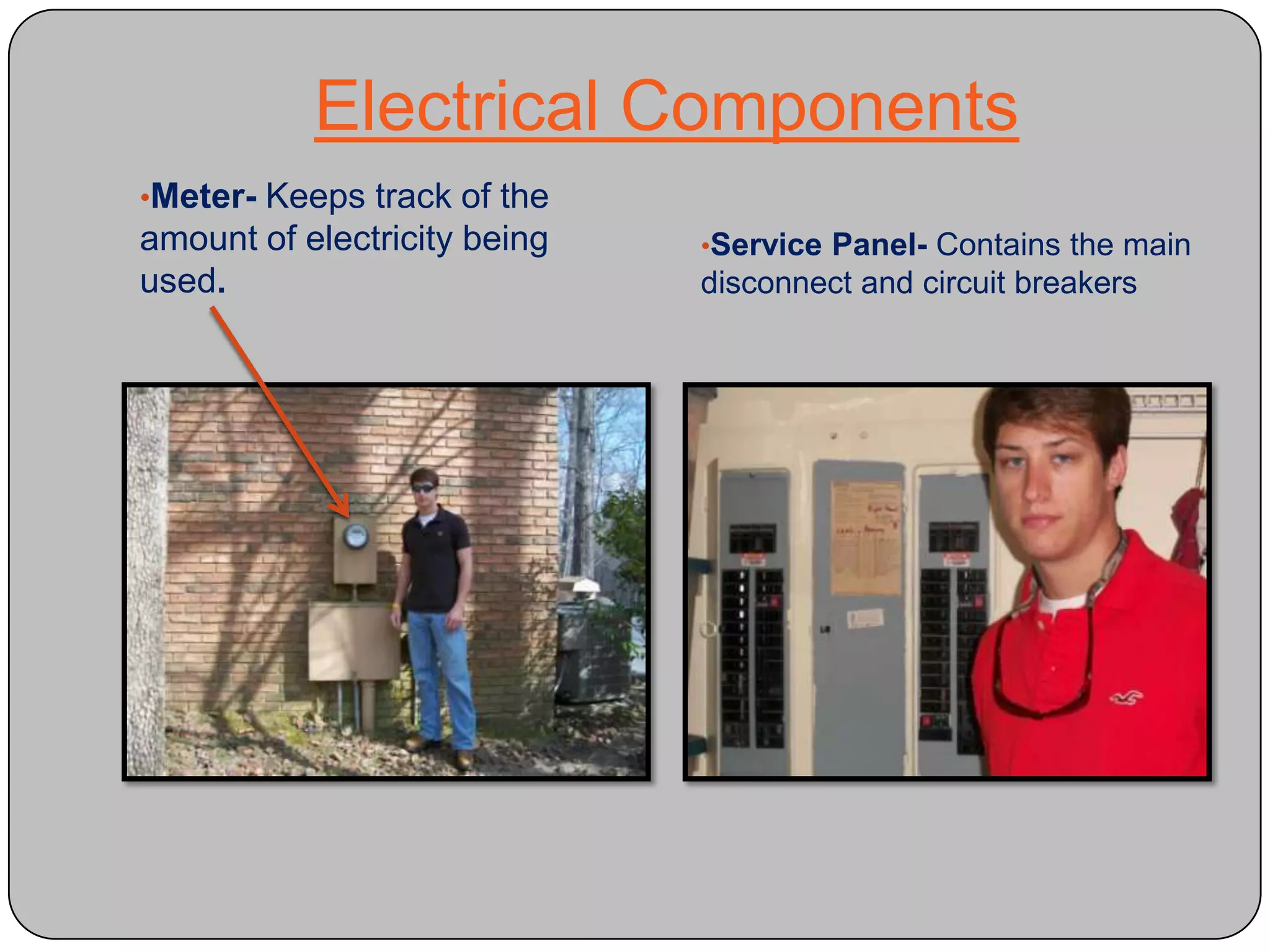
Service Head- Assembly by which electricity is conducted from outdoor lines to the meter baseElectrical ComponentsMeter- Keeps track of the amount of electricity being used.
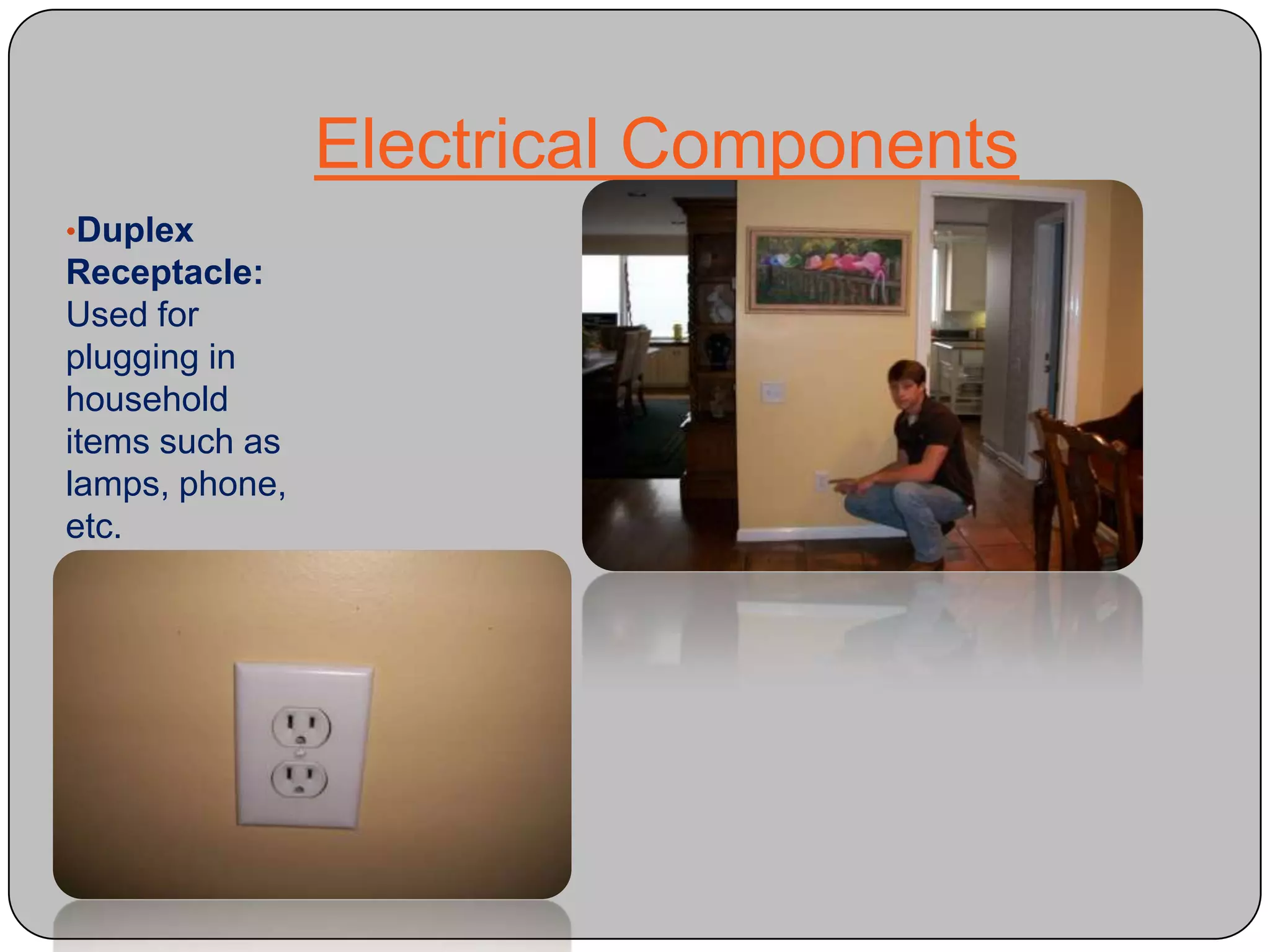
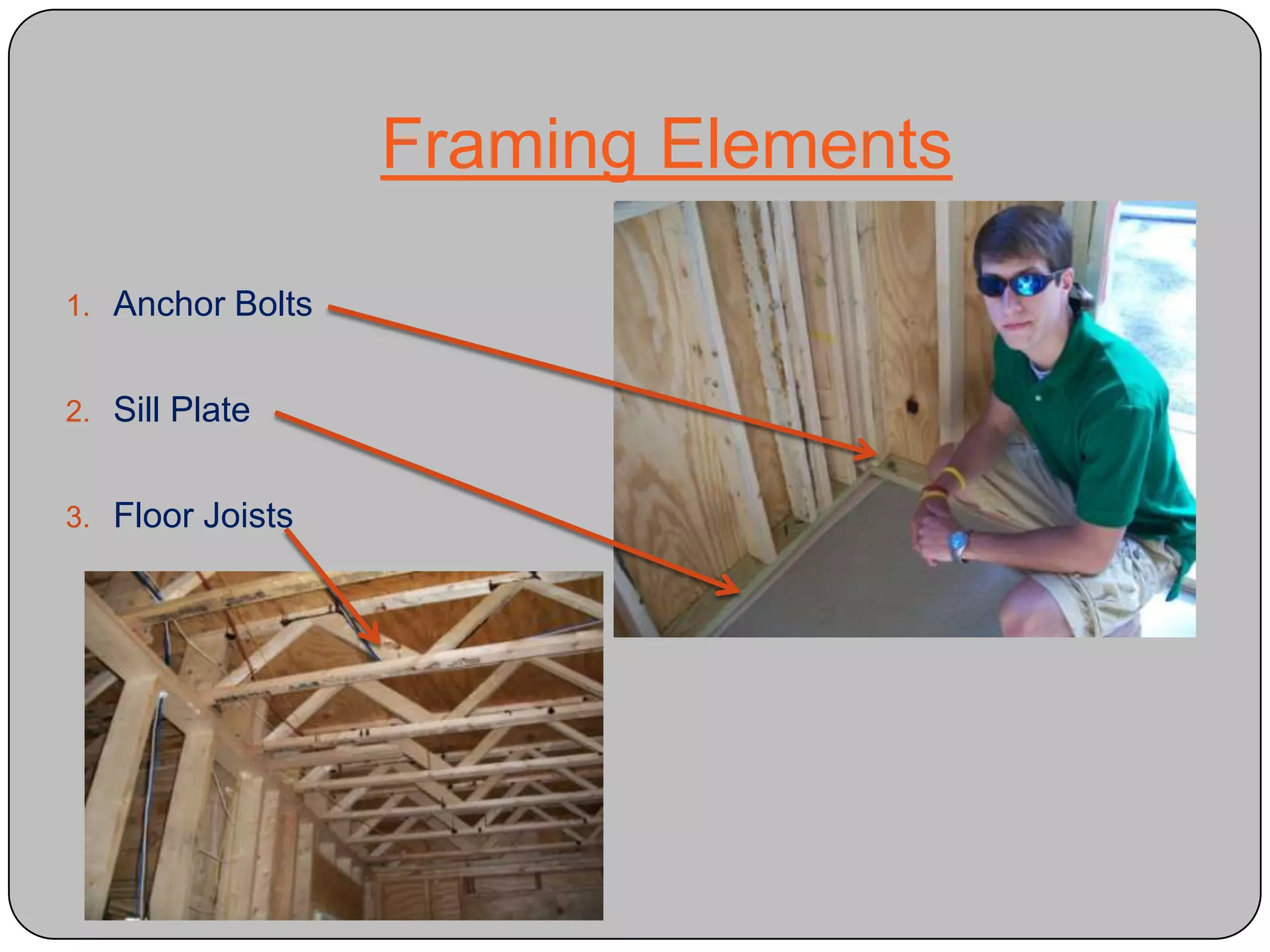
Service Panel- Contains the main disconnect and circuit breakersElectrical ComponentsDuplex Receptacle: Used for plugging in household items such as lamps, phone, etc.Framing ElementsAnchor BoltsSill Plate Floor Joists
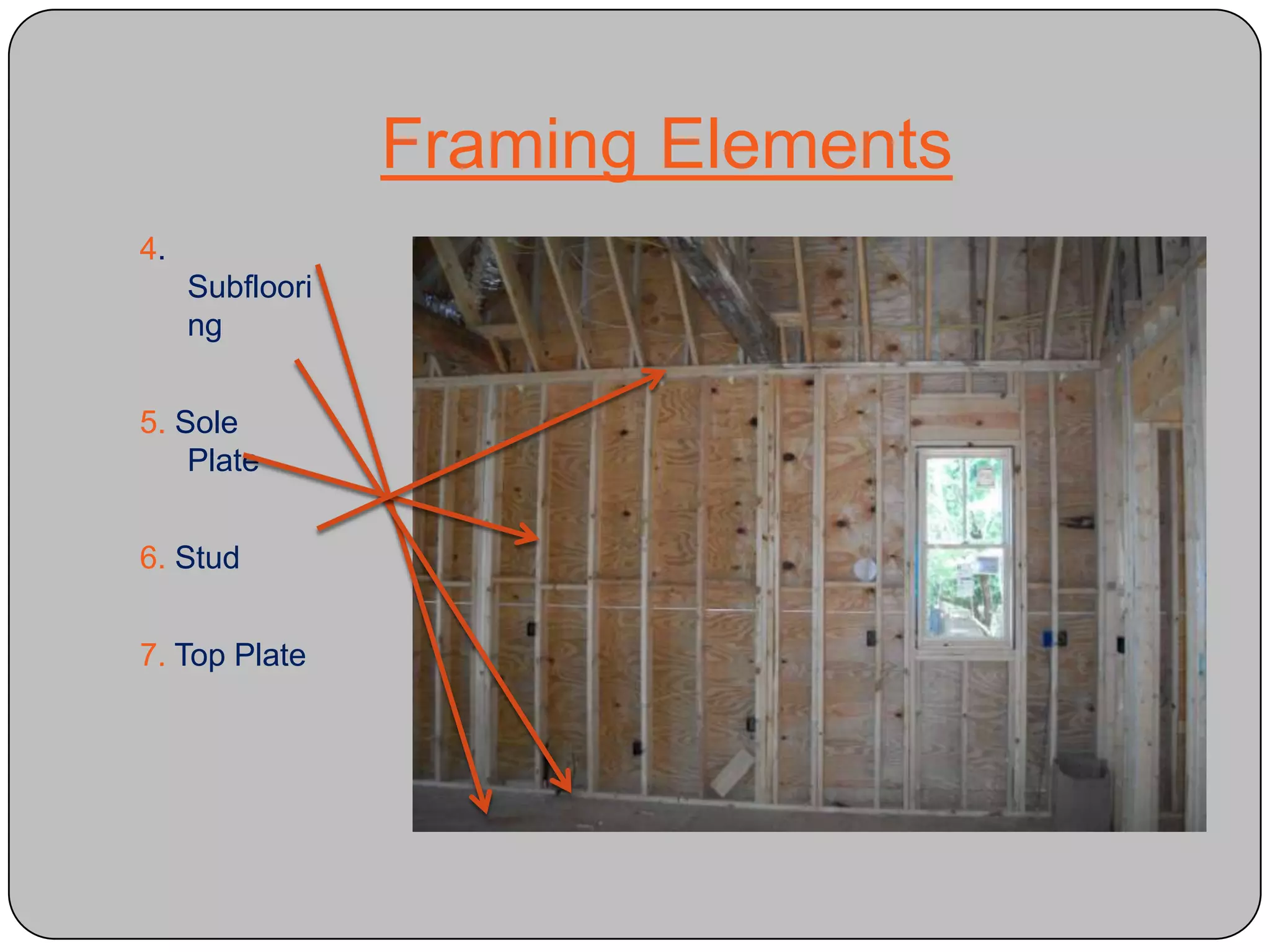
Framing Elements4. Subflooring5. Sole Plate6. Stud7. Top Plate
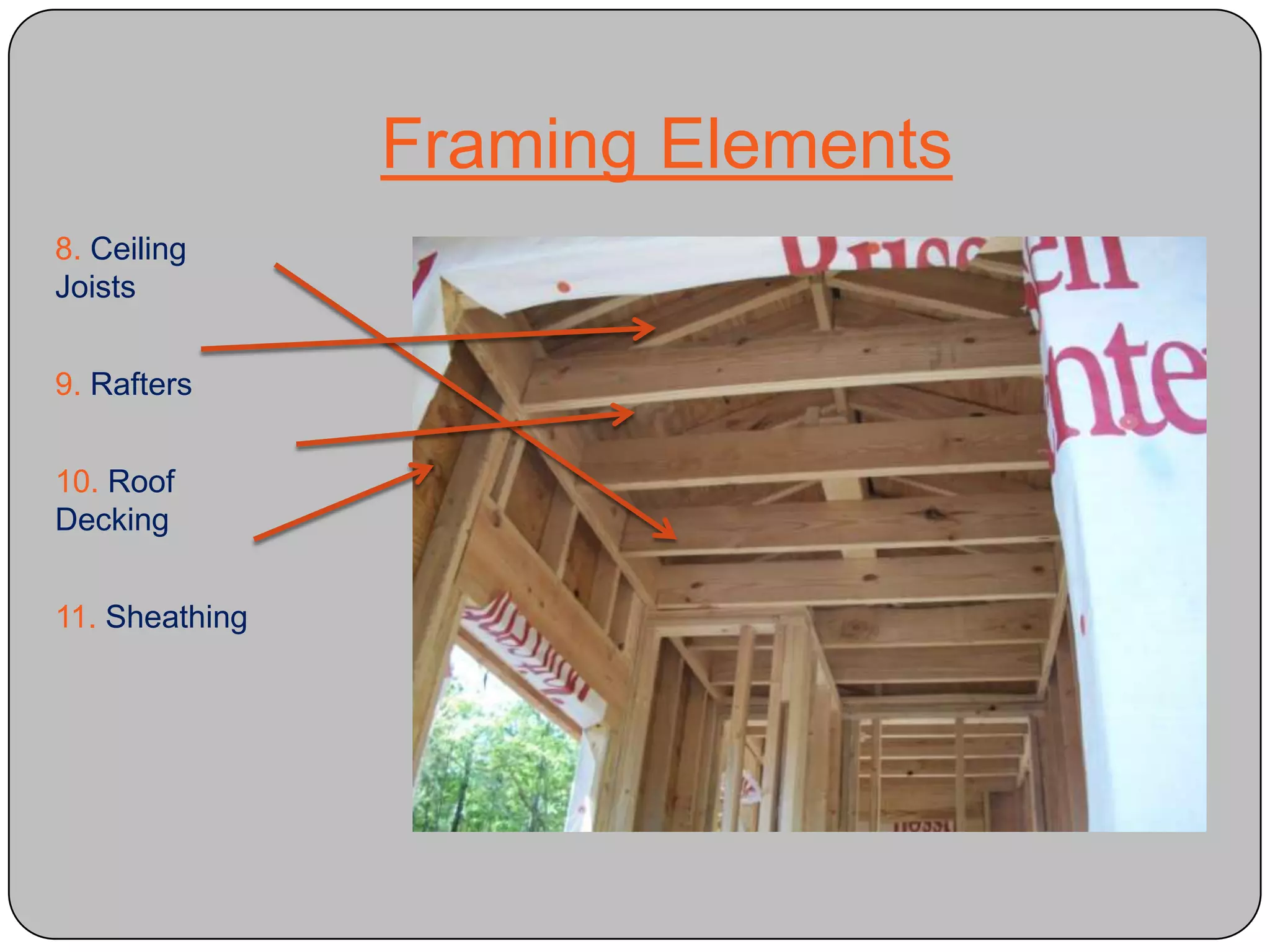
Framing Elements8. Ceiling Joists9. Rafters10. Roof Decking11. Sheathing
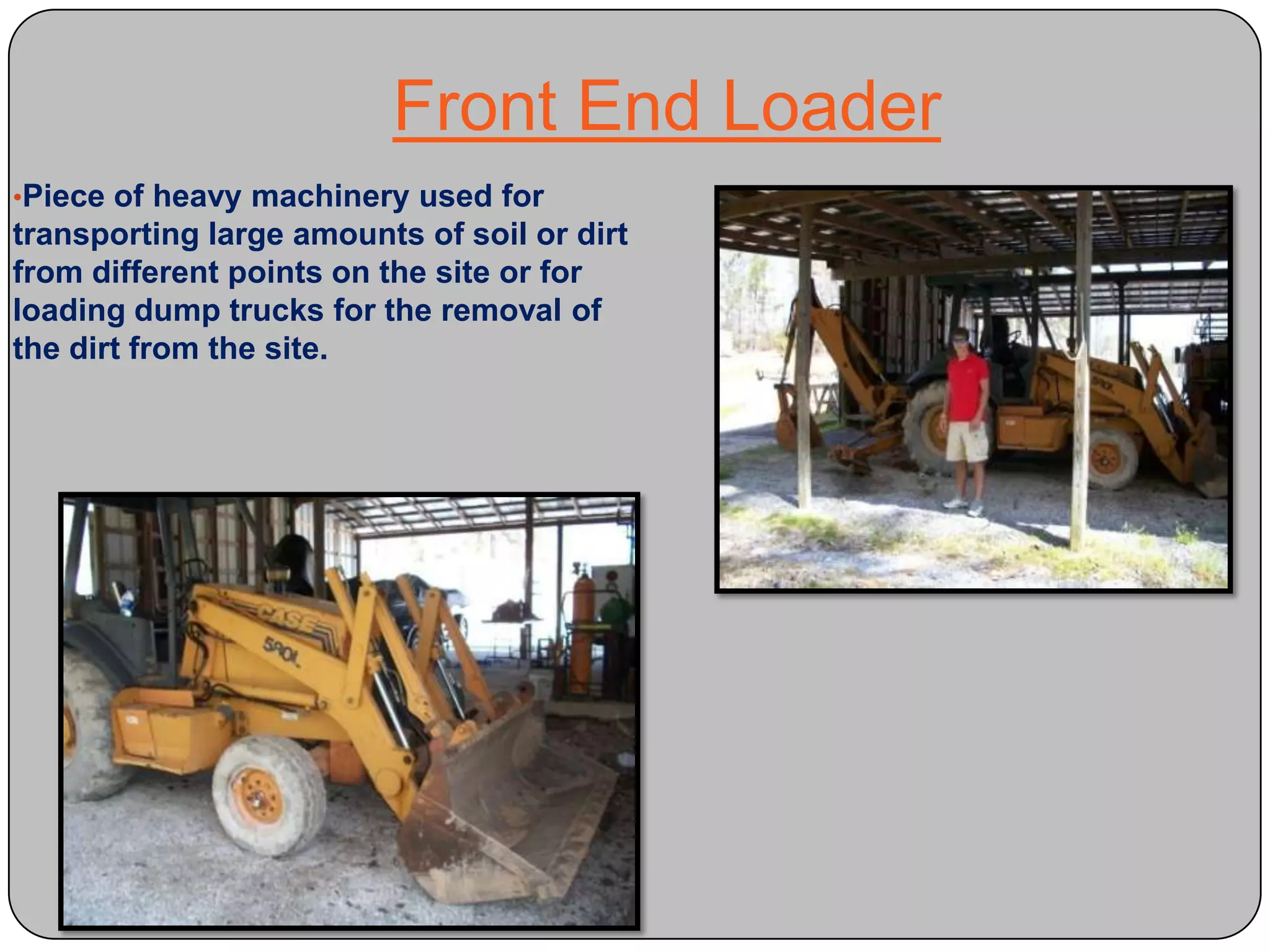
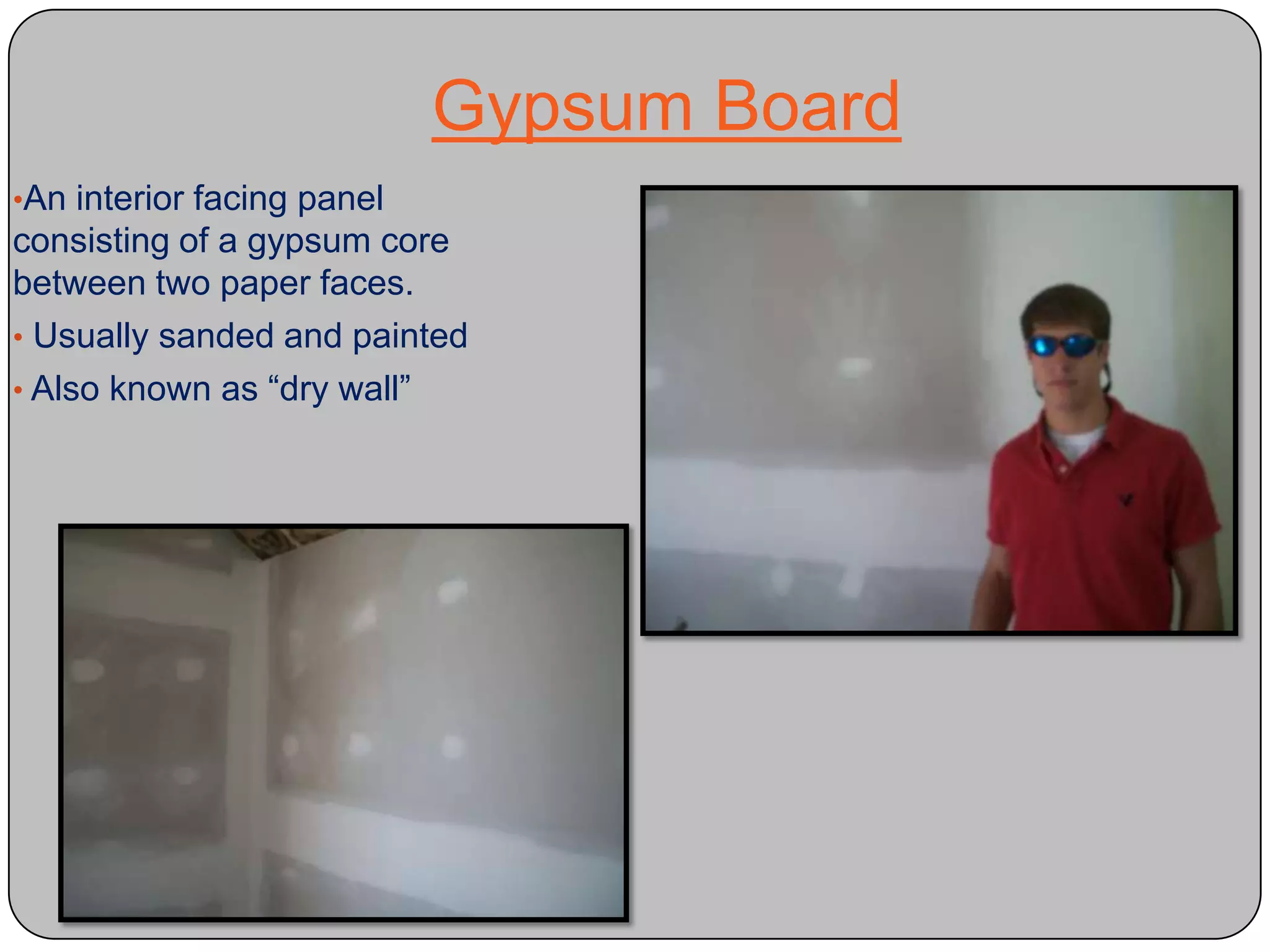
Front End LoaderPiece of heavy machinery used for transporting large amounts of soil or dirt from different points on the site or for loading dump trucks for the removal of the dirt from the site. Gypsum BoardAn interior facing panel consisting of a gypsum core between two paper faces.
 Usually sanded and painted
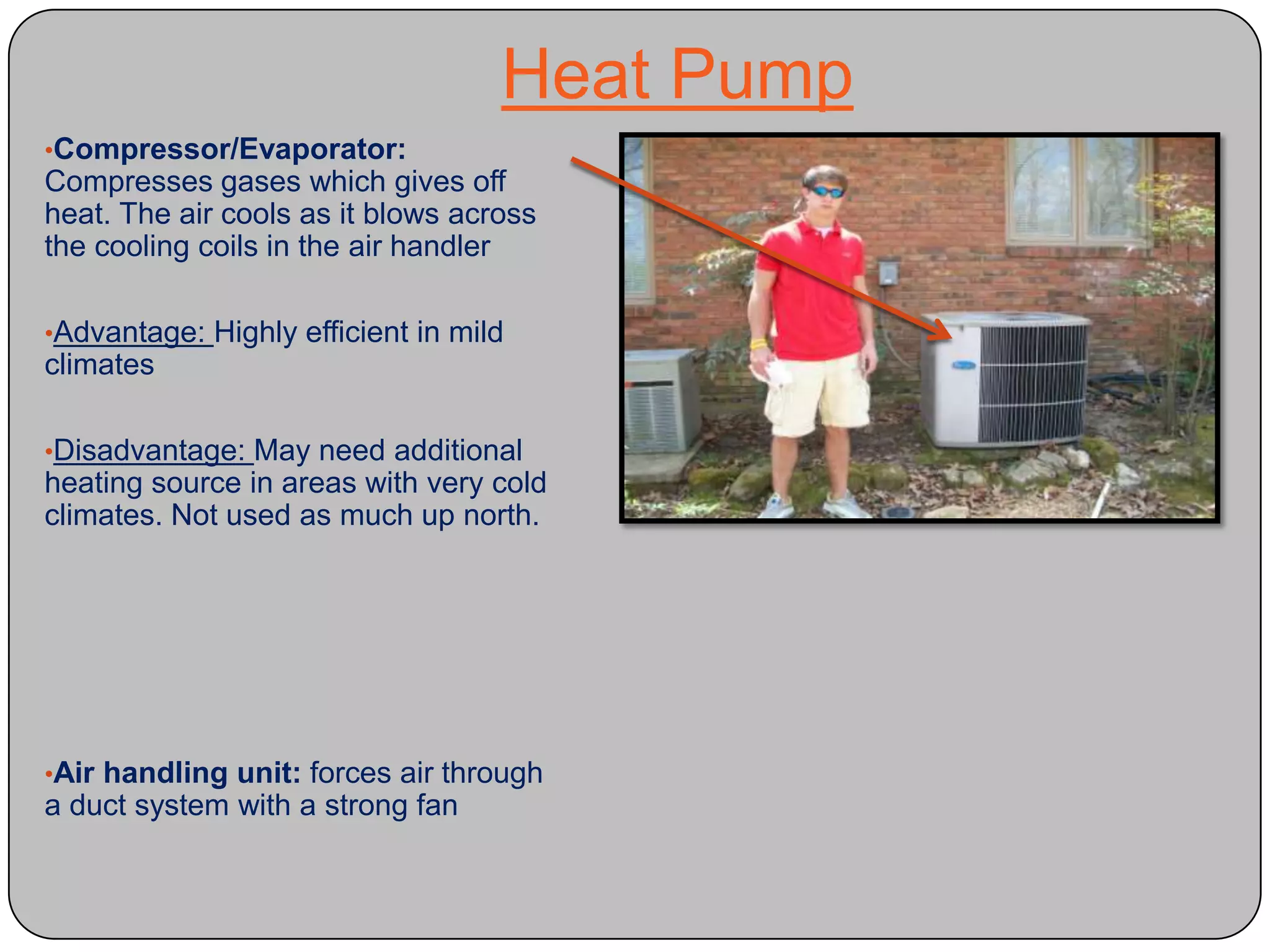
 Also known as “dry wall”Heat PumpCompressor/Evaporator:  Compresses gases which gives off heat. The air cools as it blows across the cooling coils in the air handler
Advantage: Highly efficient in mild climates
Disadvantage: May need additional heating source in areas with very cold climates. Not used as much up north.
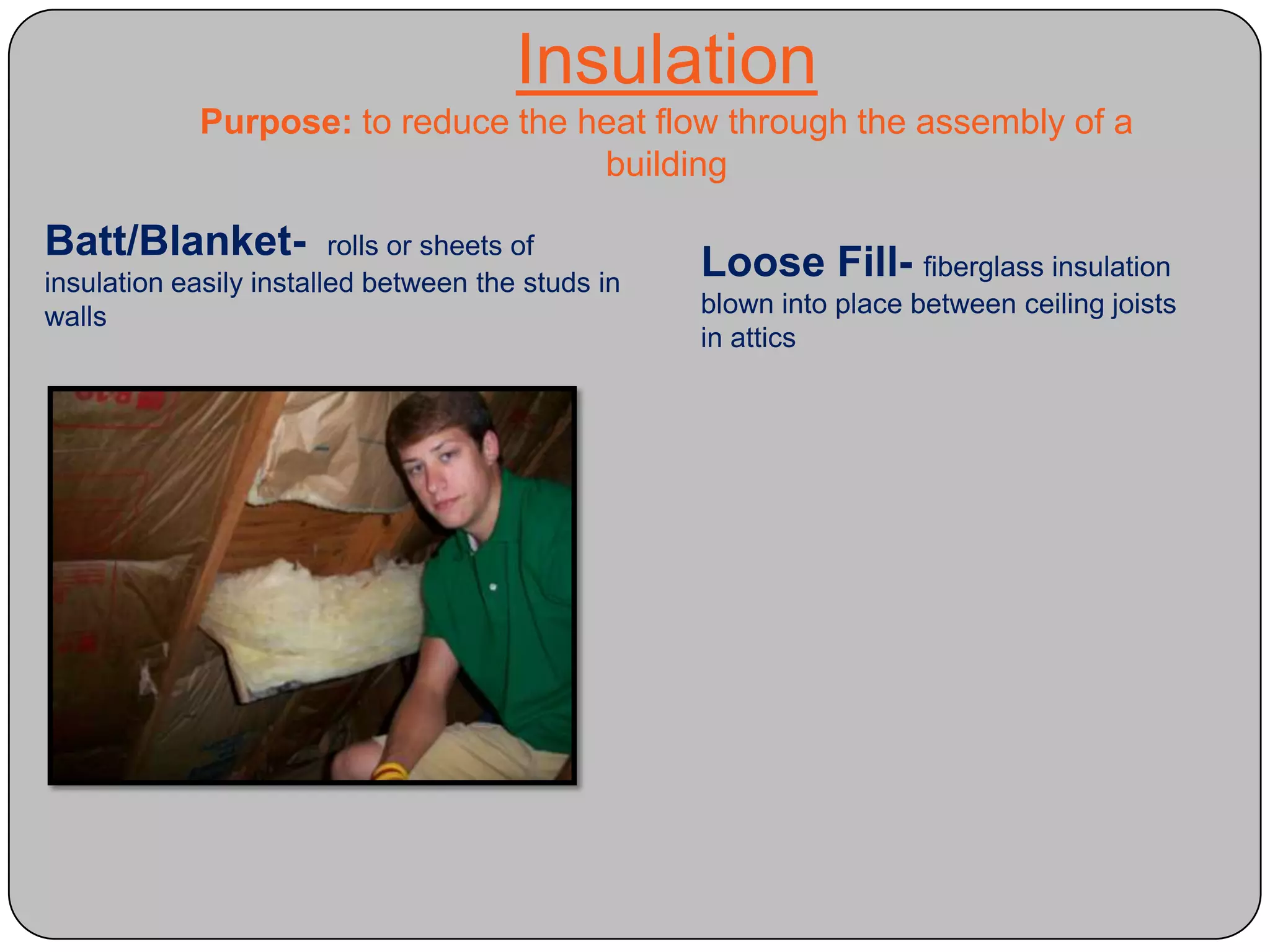
Air handling unit: forces air through a duct system with a strong fanInsulationPurpose: to reduce the heat flow through the assembly of a buildingBatt/Blanket- rolls or sheets of insulation easily installed between the studs in wallsLoose Fill- fiberglass insulation blown into place between ceiling joists in attics
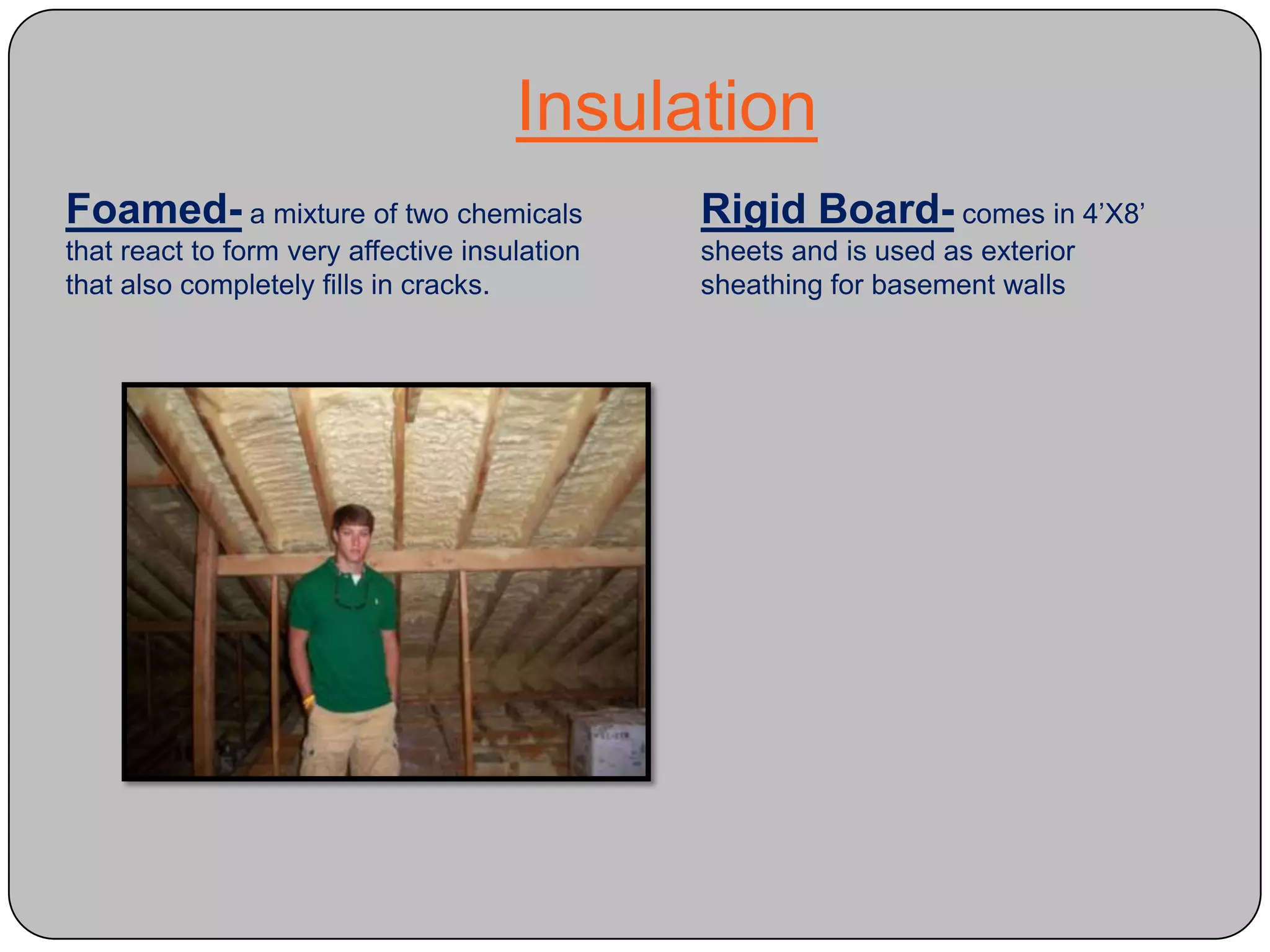
InsulationFoamed- a mixture of two chemicals that react to form very affective insulation that also completely fills in cracks.Rigid Board- comes in 4’X8’ sheets and is used as exterior sheathing for basement walls
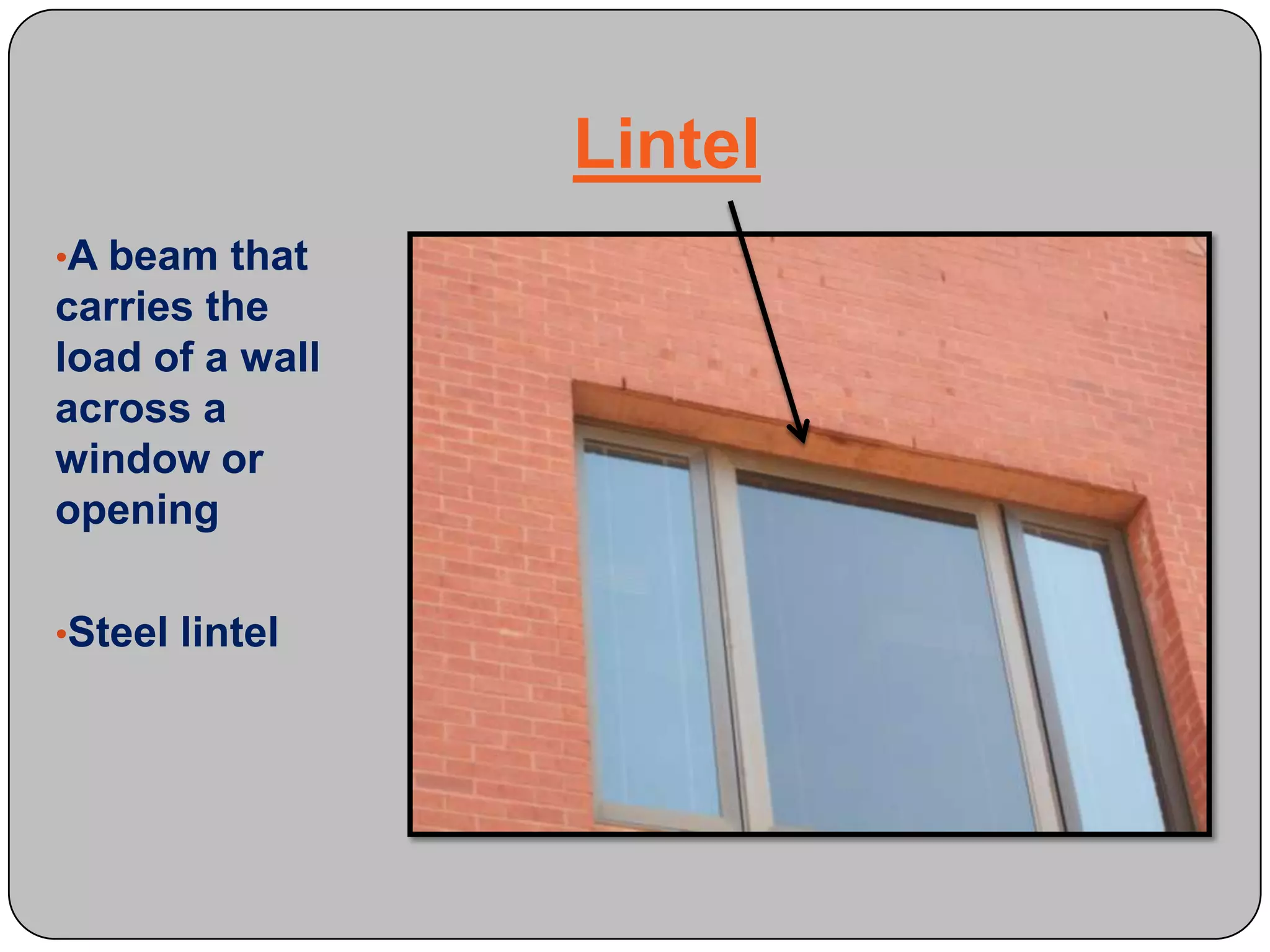
LintelA beam that carries the load of a wall across a window or opening
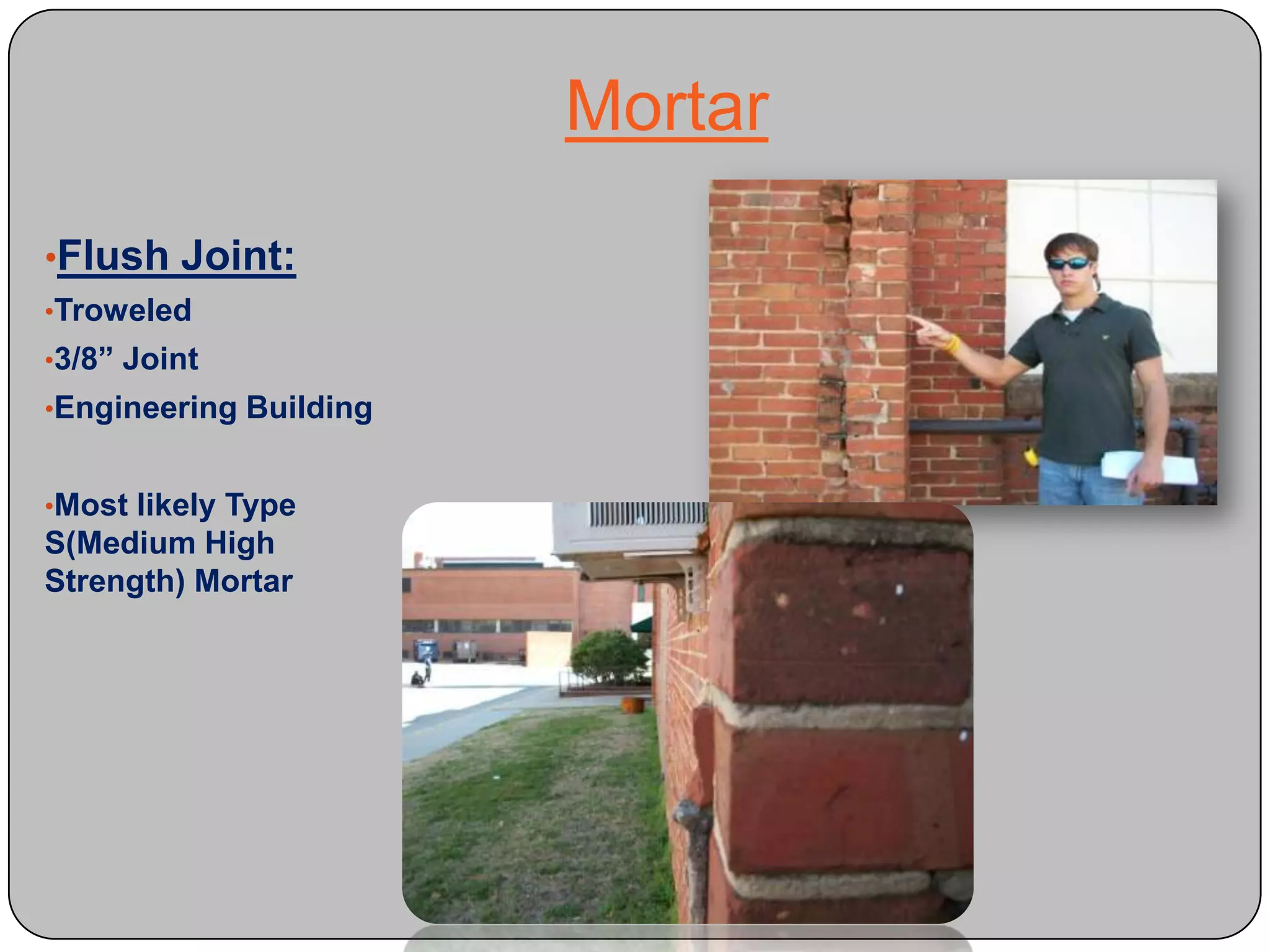
Steel lintelMortarFlush Joint:
Troweled
3/8” Joint
Engineering Building
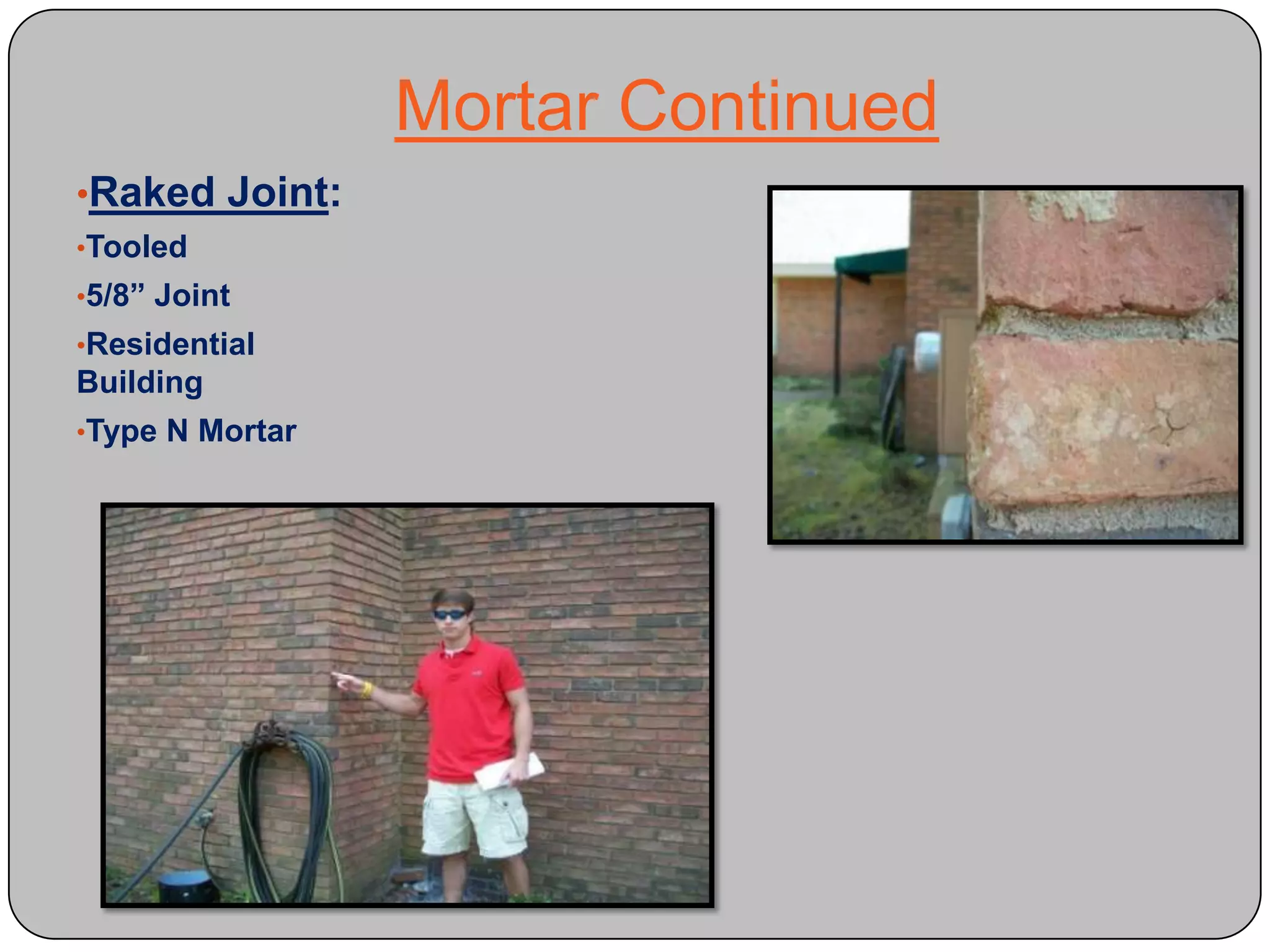
Most likely Type S(Medium High Strength) MortarMortar ContinuedRaked Joint:
Tooled
5/8” Joint
Residential Building
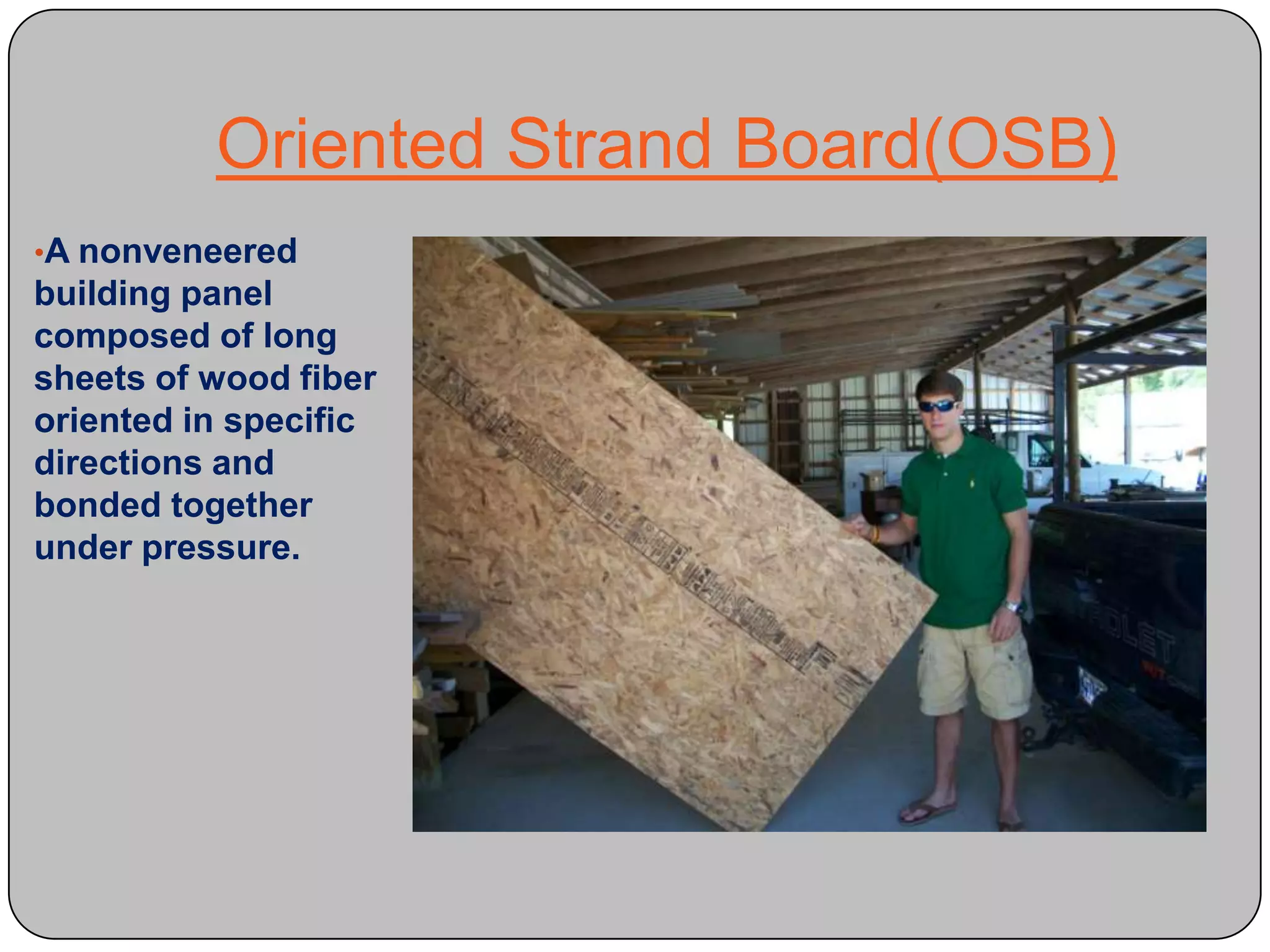
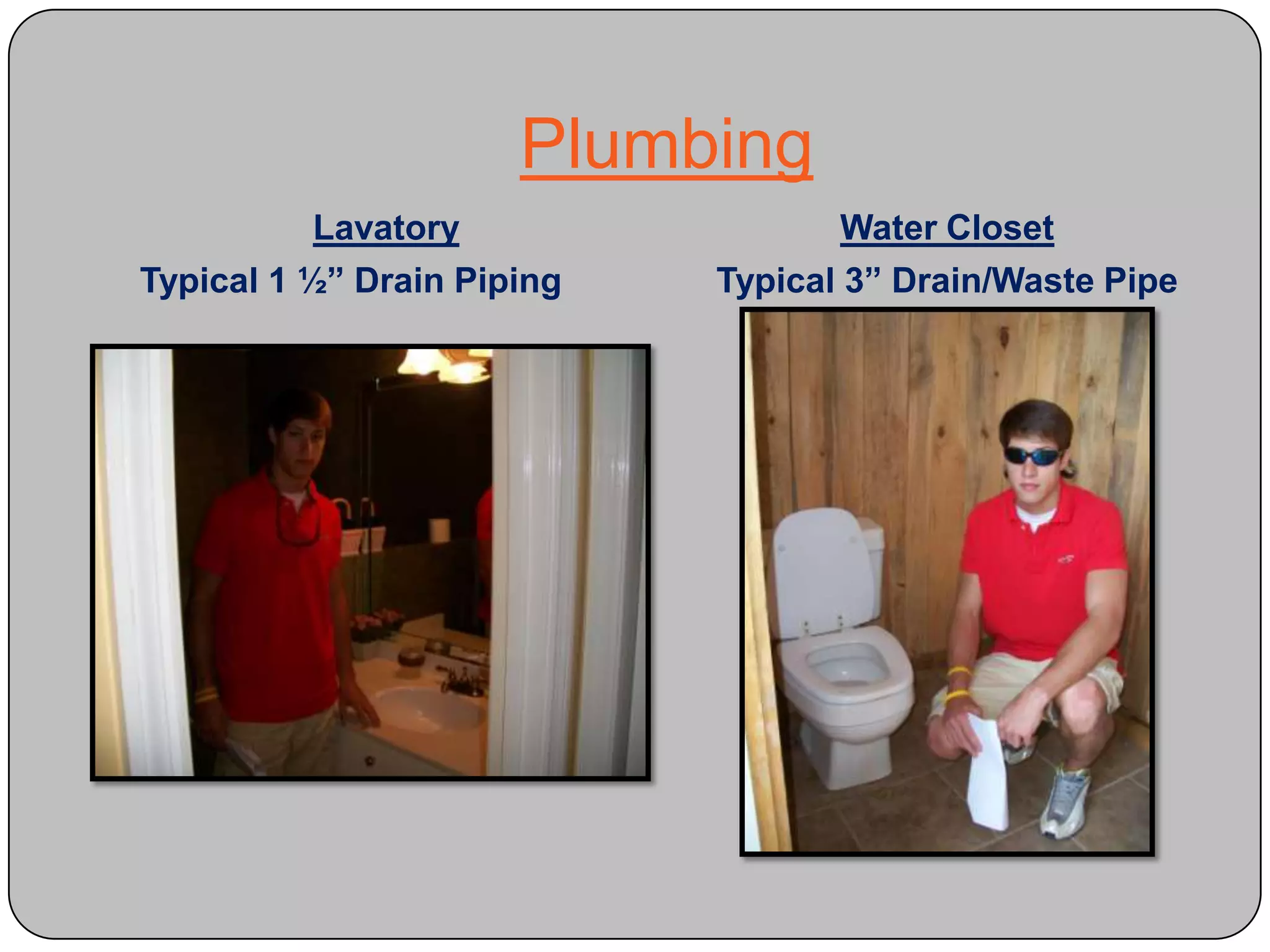
Type N MortarOriented Strand Board(OSB)A nonveneered building panel composed of long sheets of wood fiber oriented in specific directions and bonded together under pressure.PlumbingLavatoryTypical 1 ½” Drain PipingWater ClosetTypical 3” Drain/Waste Pipe
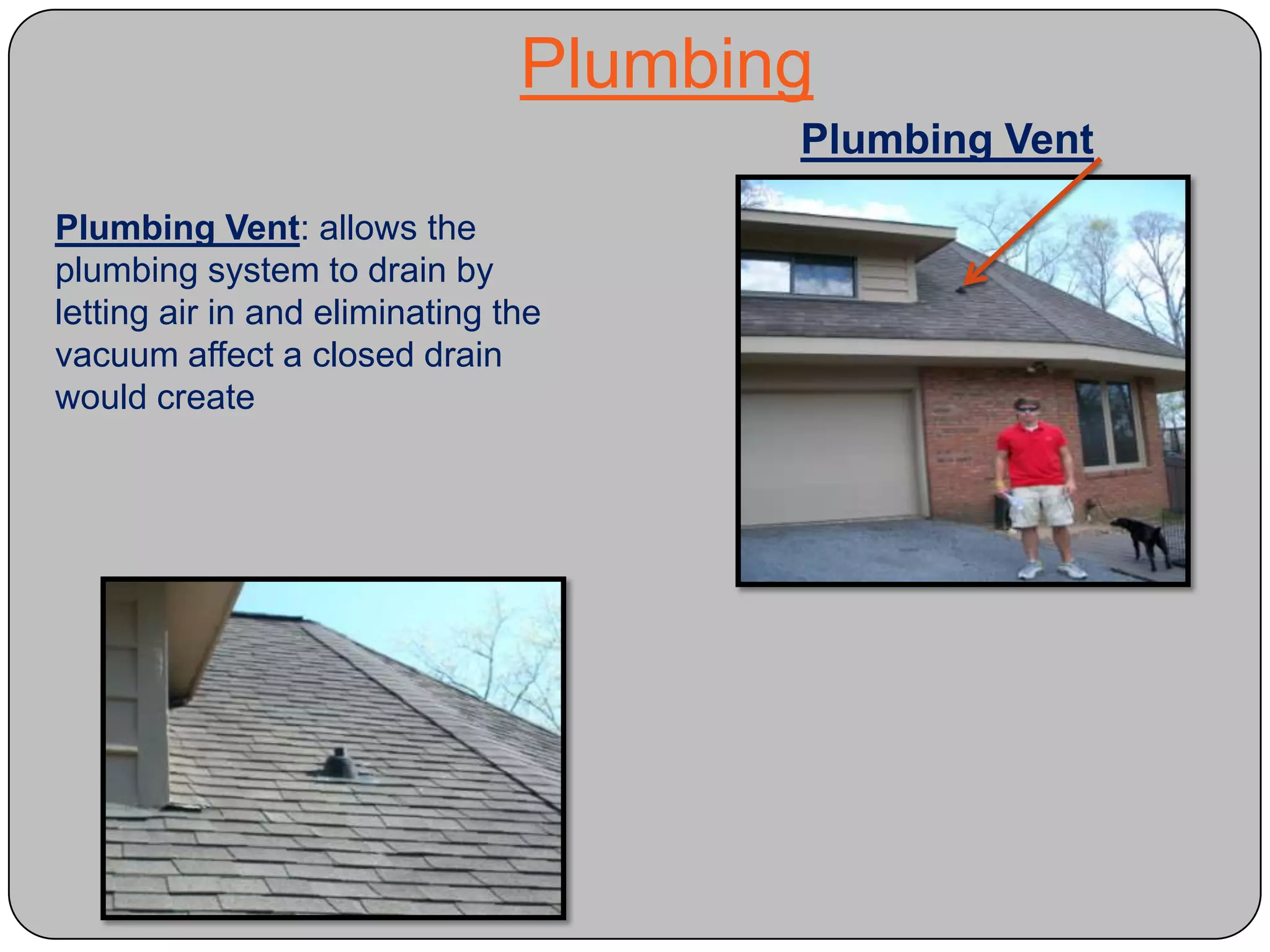
PlumbingPlumbing VentPlumbing Vent: allows the plumbing system to drain by letting air in and eliminating the vacuum affect a closed drain would create
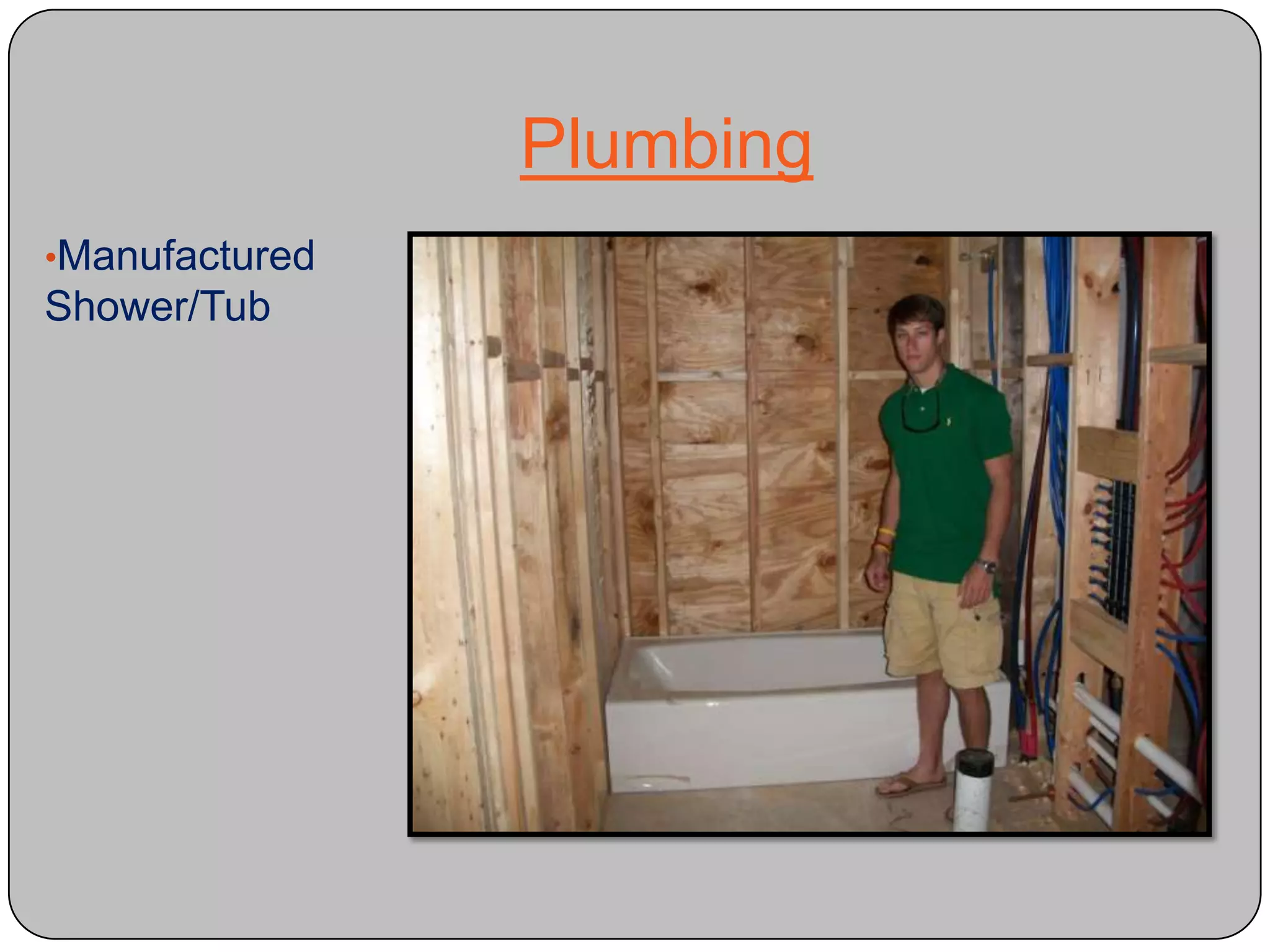
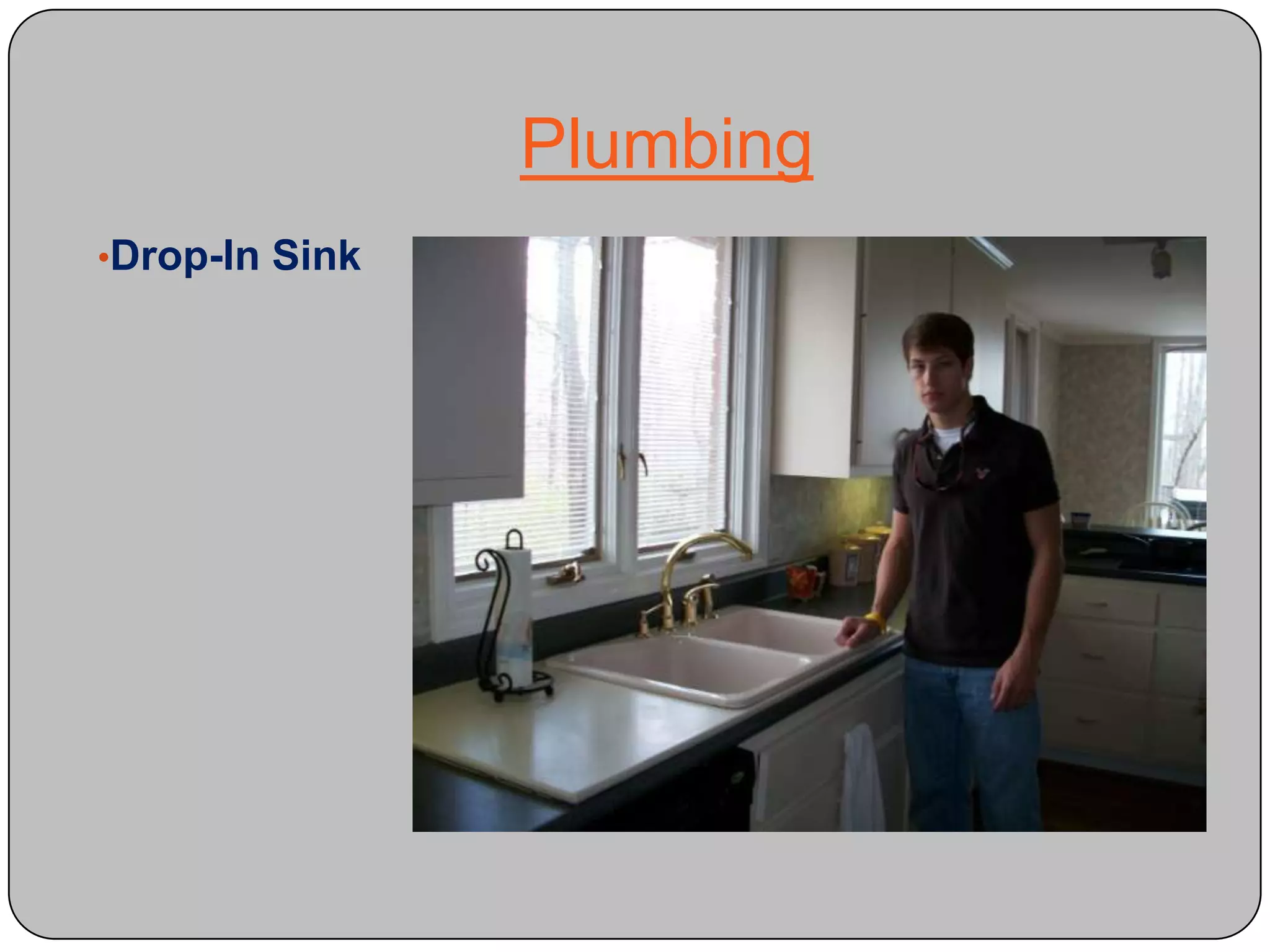
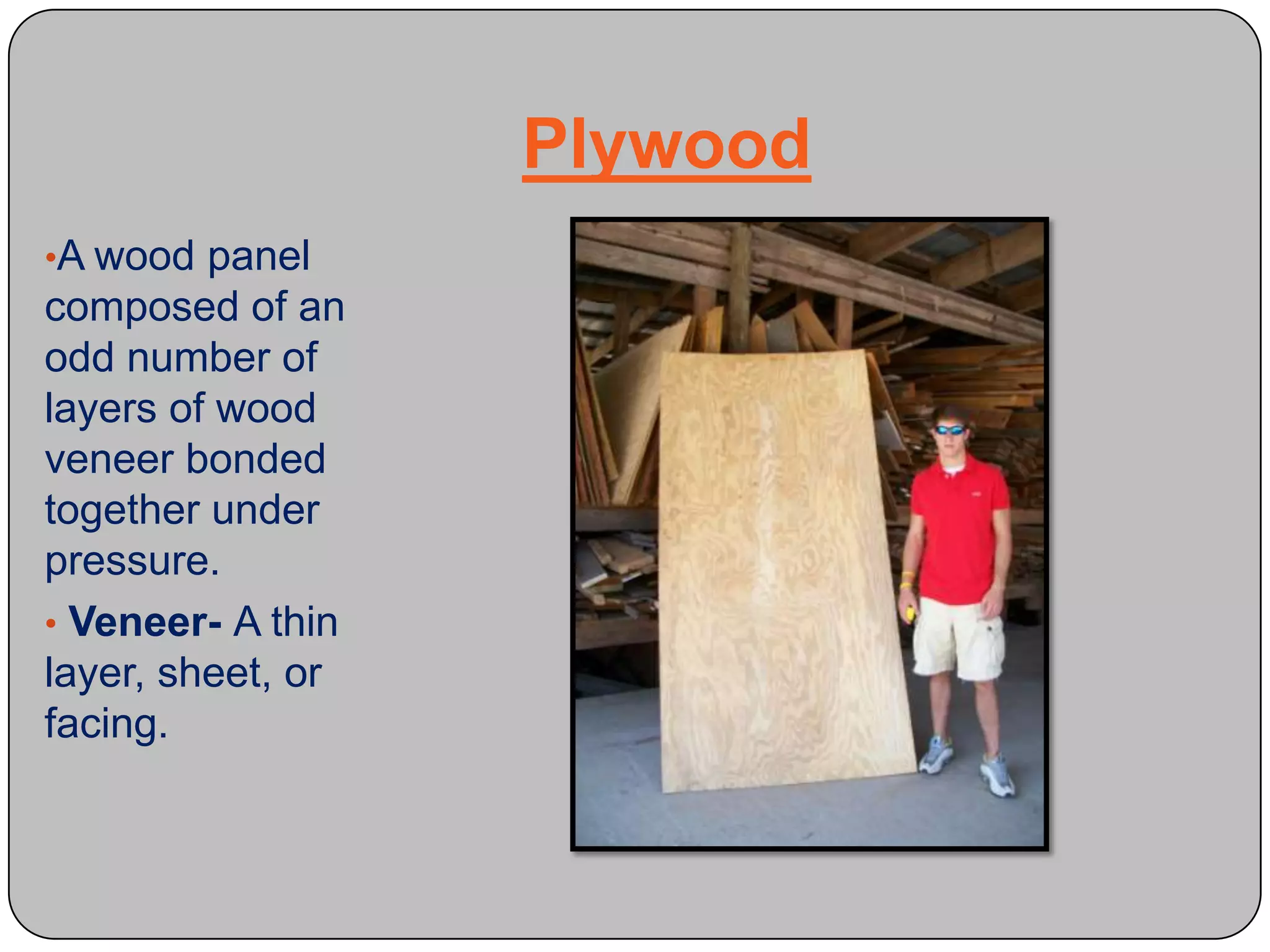
PlumbingManufactured Shower/Tub PlumbingDrop-In SinkPlywoodA wood panel composed of an odd number of layers of wood veneer bonded together under pressure.
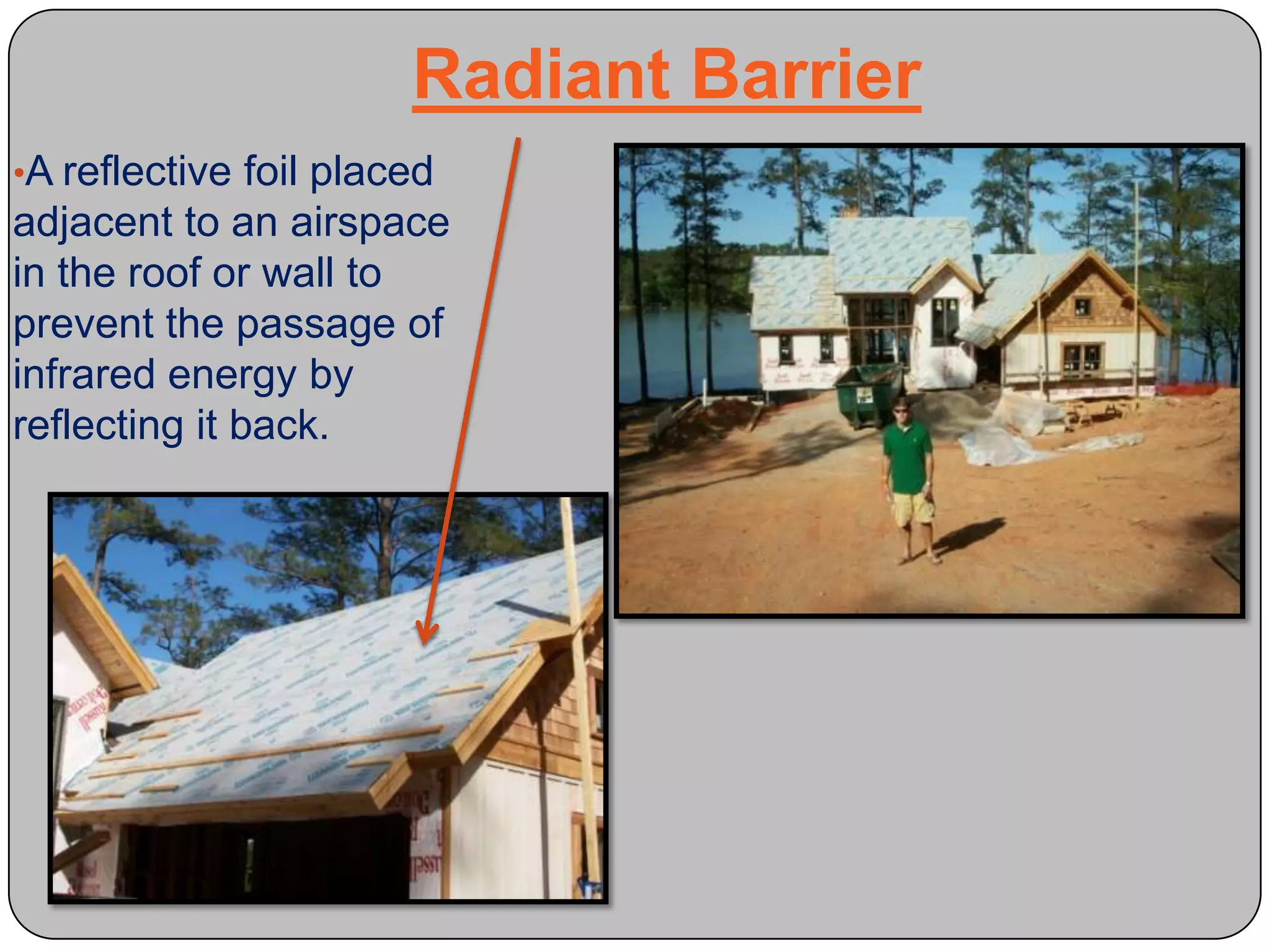
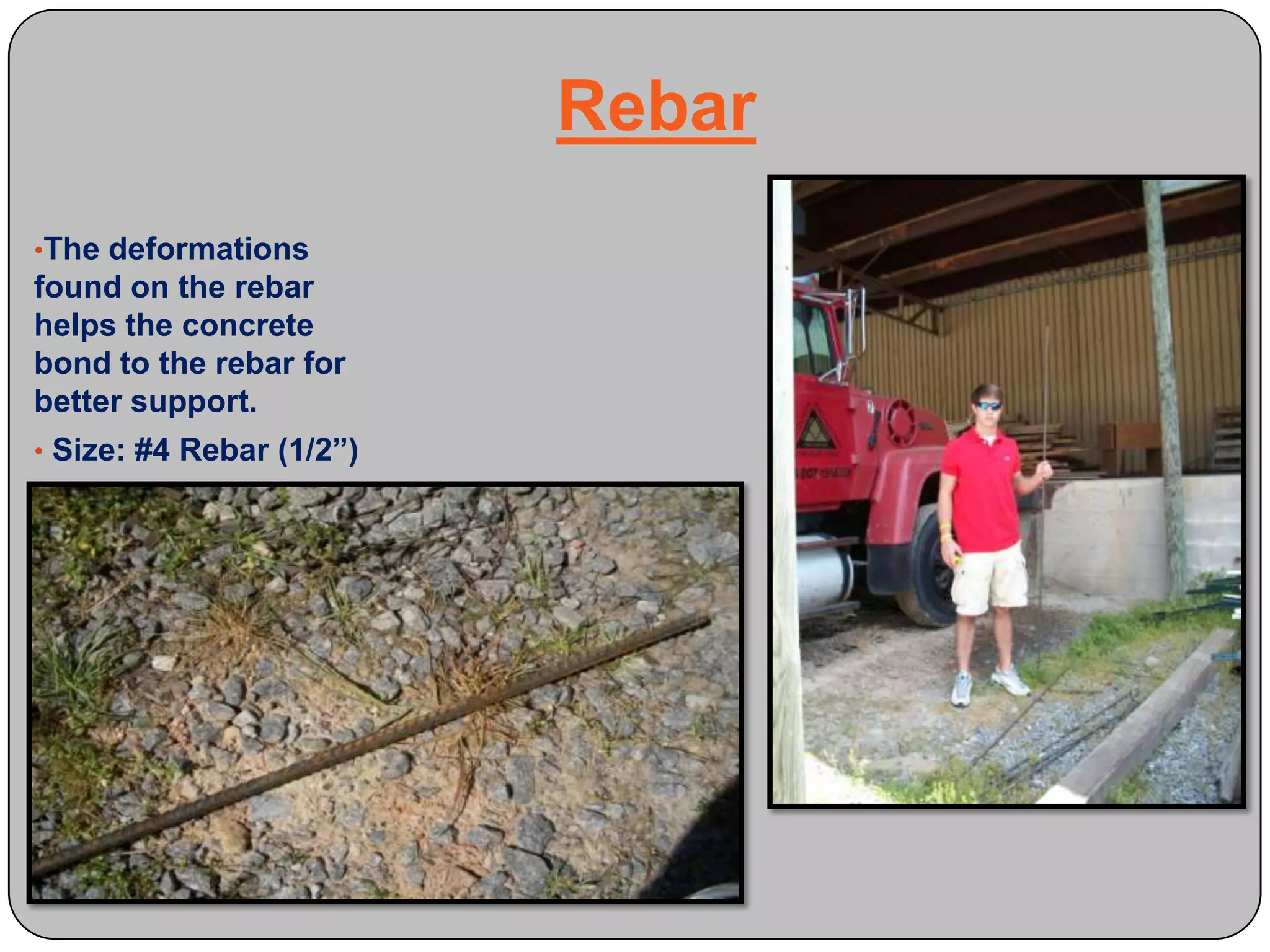
 Veneer- A thin layer, sheet, or facing.Radiant BarrierA reflective foil placed adjacent to an airspace in the roof or wall to prevent the passage of infrared energy by reflecting it back.RebarThe deformations found on the rebar helps the concrete bond to the rebar for better support.
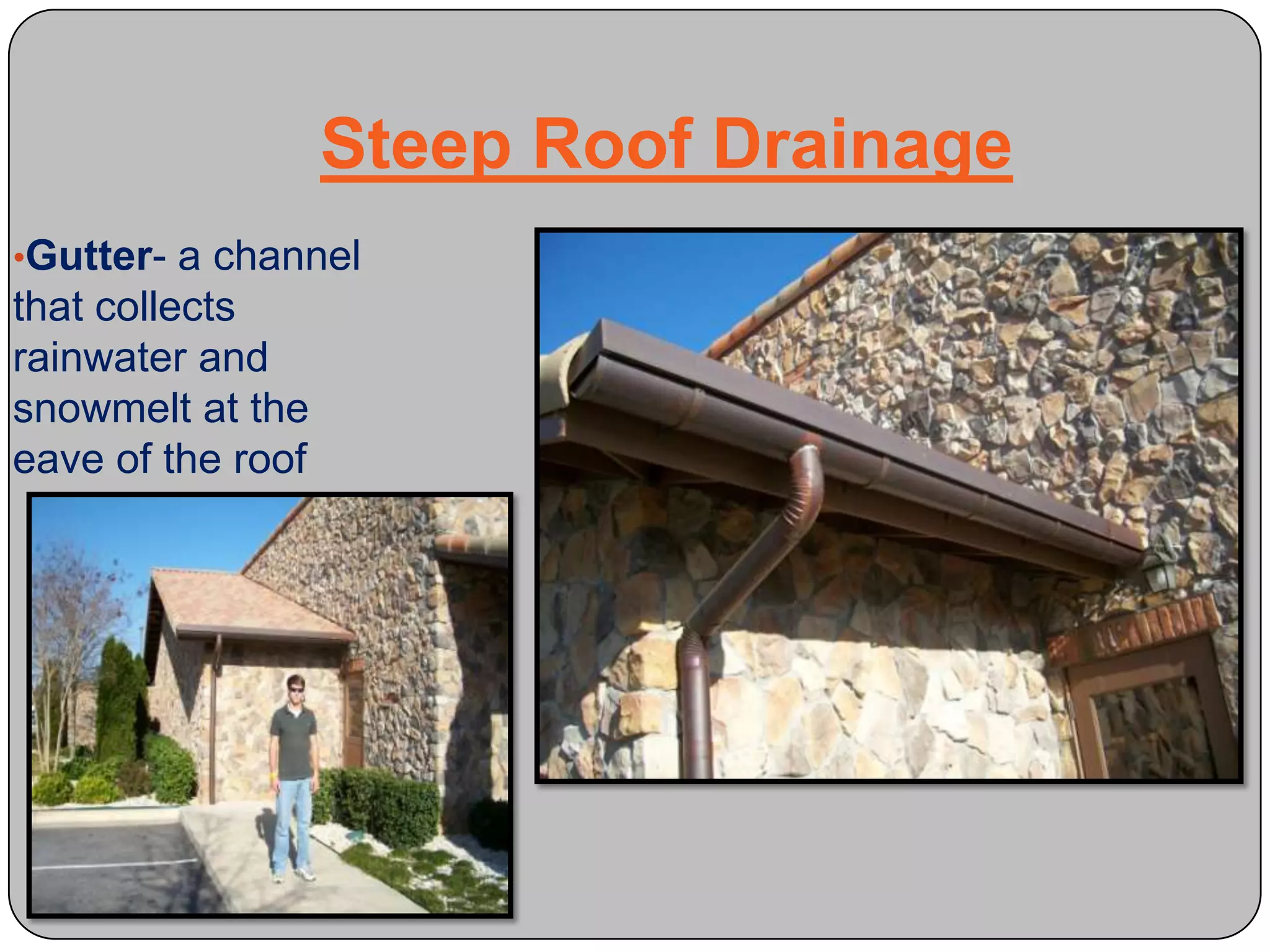
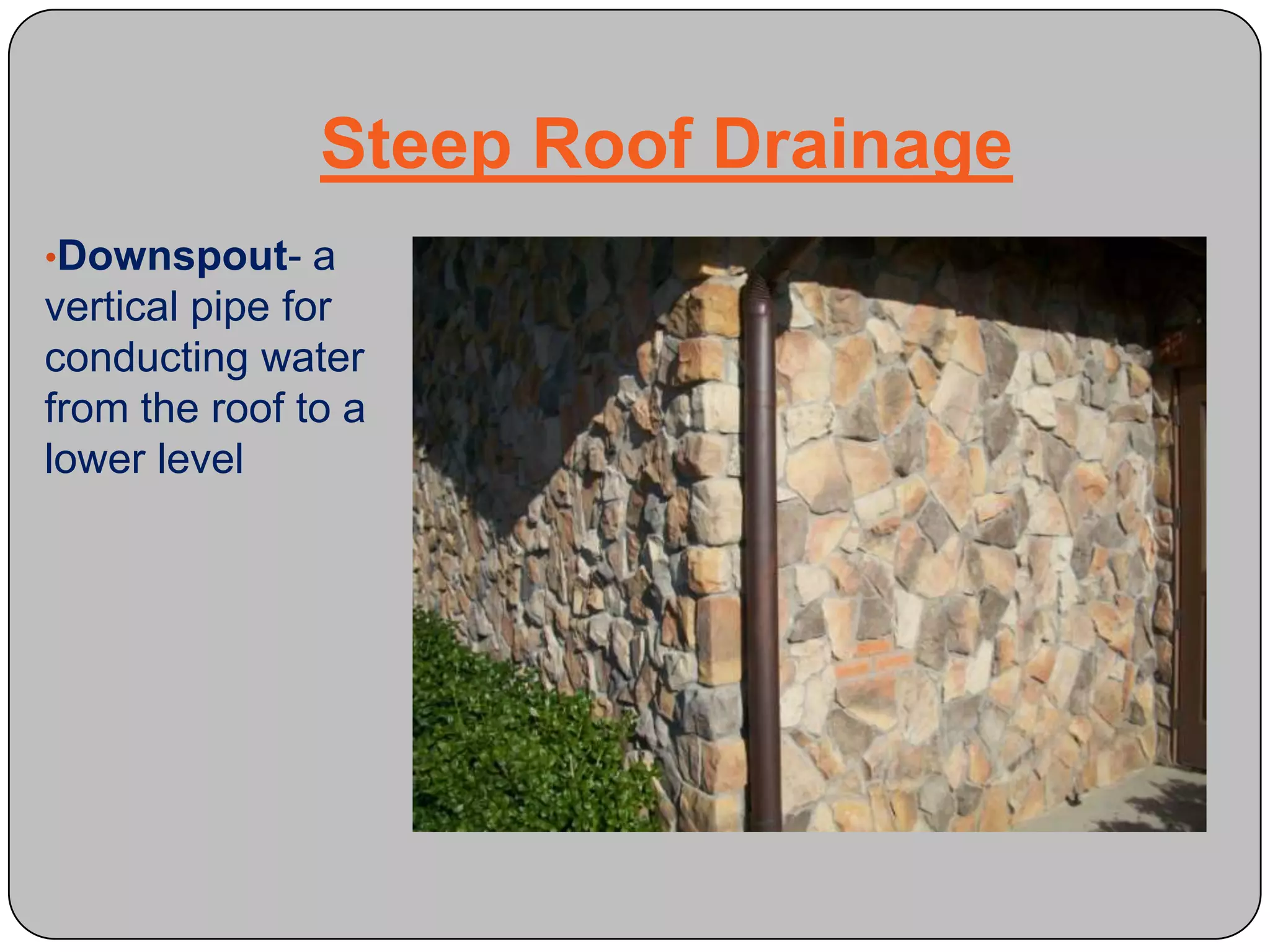
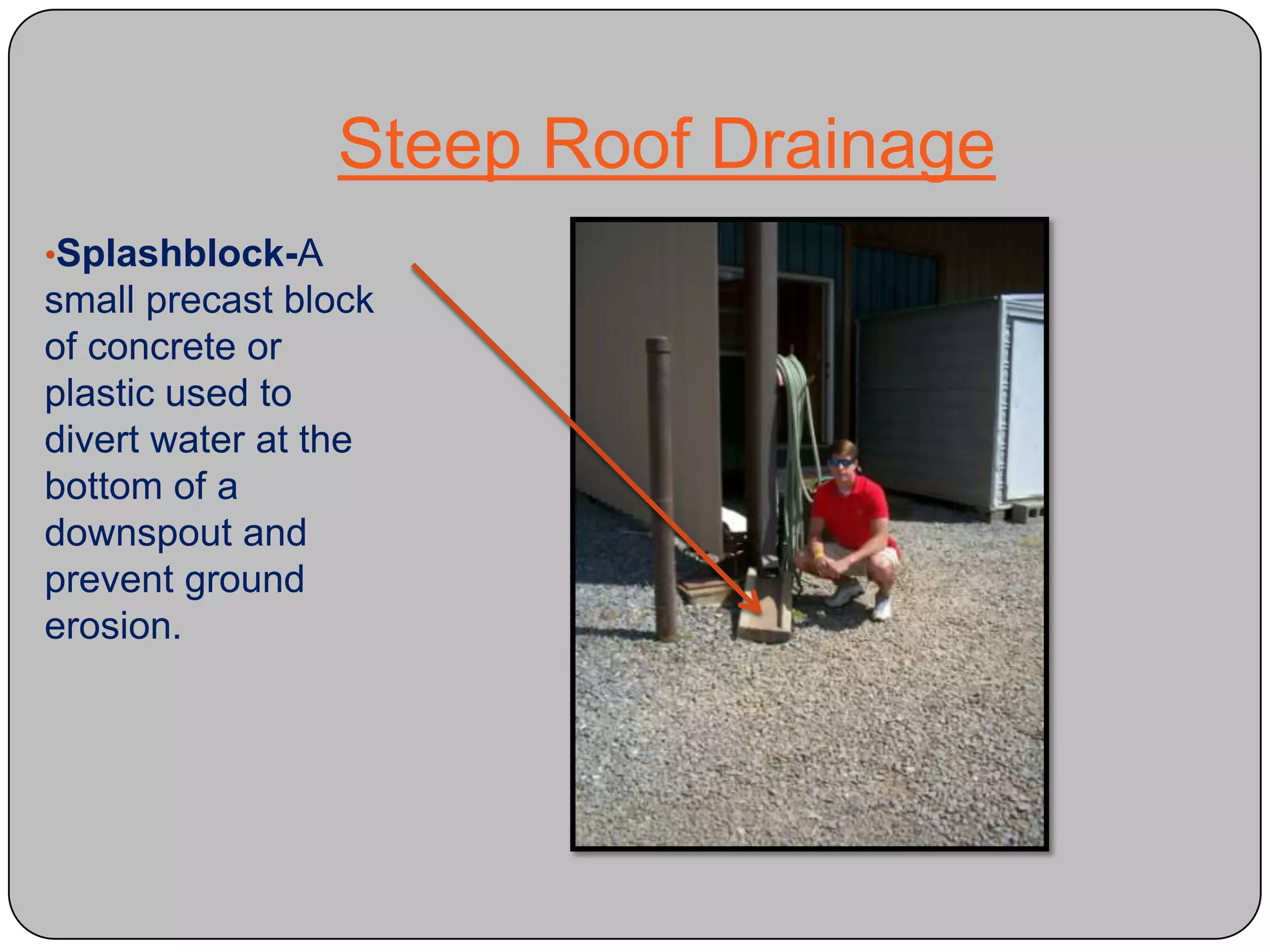
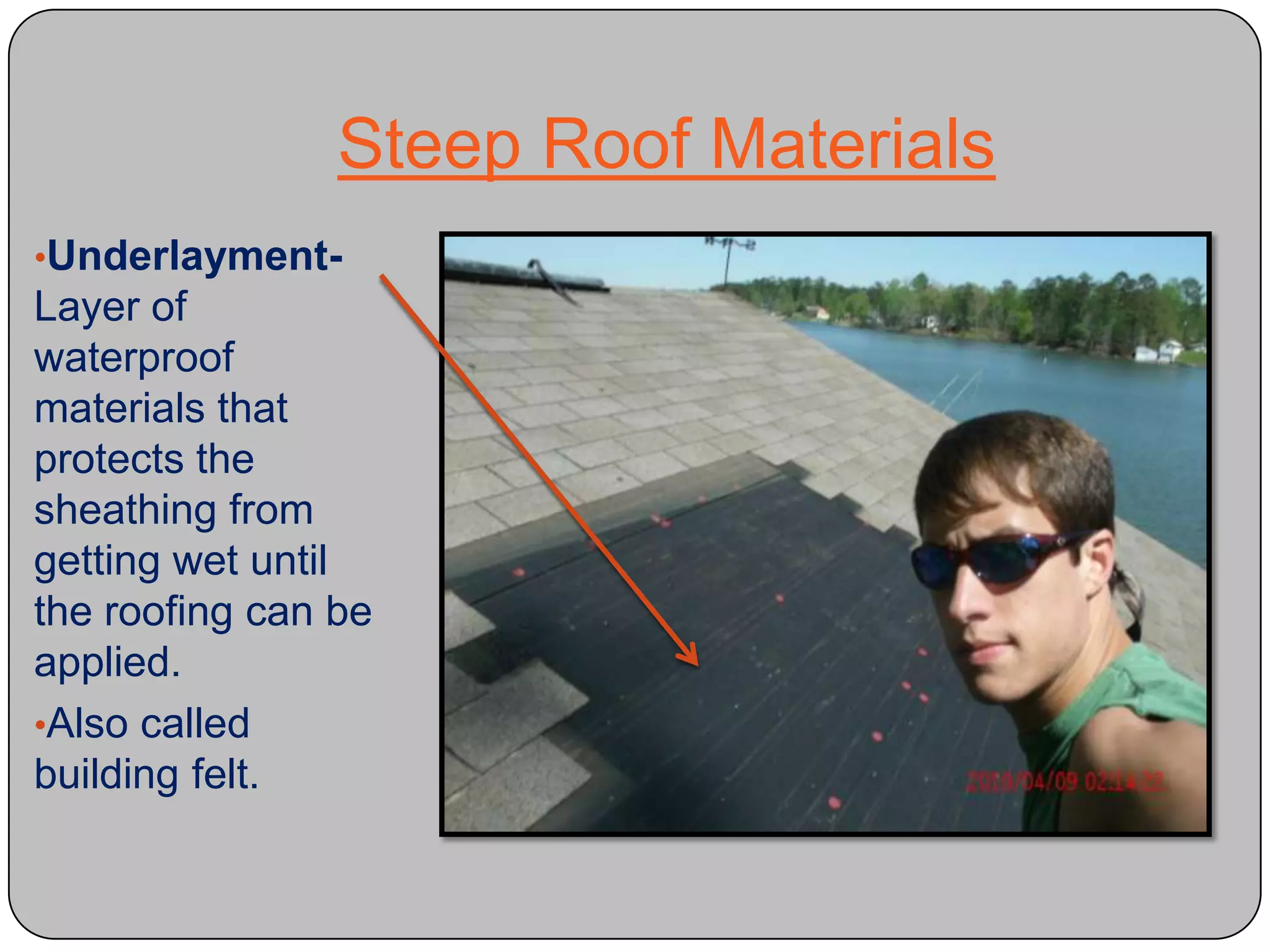
 Size: #4 Rebar (1/2”)Steep Roof DrainageGutter- a channel that collects rainwater and snowmelt at the eave of the roofSteep Roof DrainageDownspout- a vertical pipe for conducting water from the roof to a lower levelSteep Roof DrainageSplashblock-A small precast block of concrete or plastic used to divert water at the bottom of a downspout and prevent ground erosion.Steep Roof MaterialsUnderlayment- Layer of waterproof materials that protects the sheathing from getting wet until the roofing can be applied.
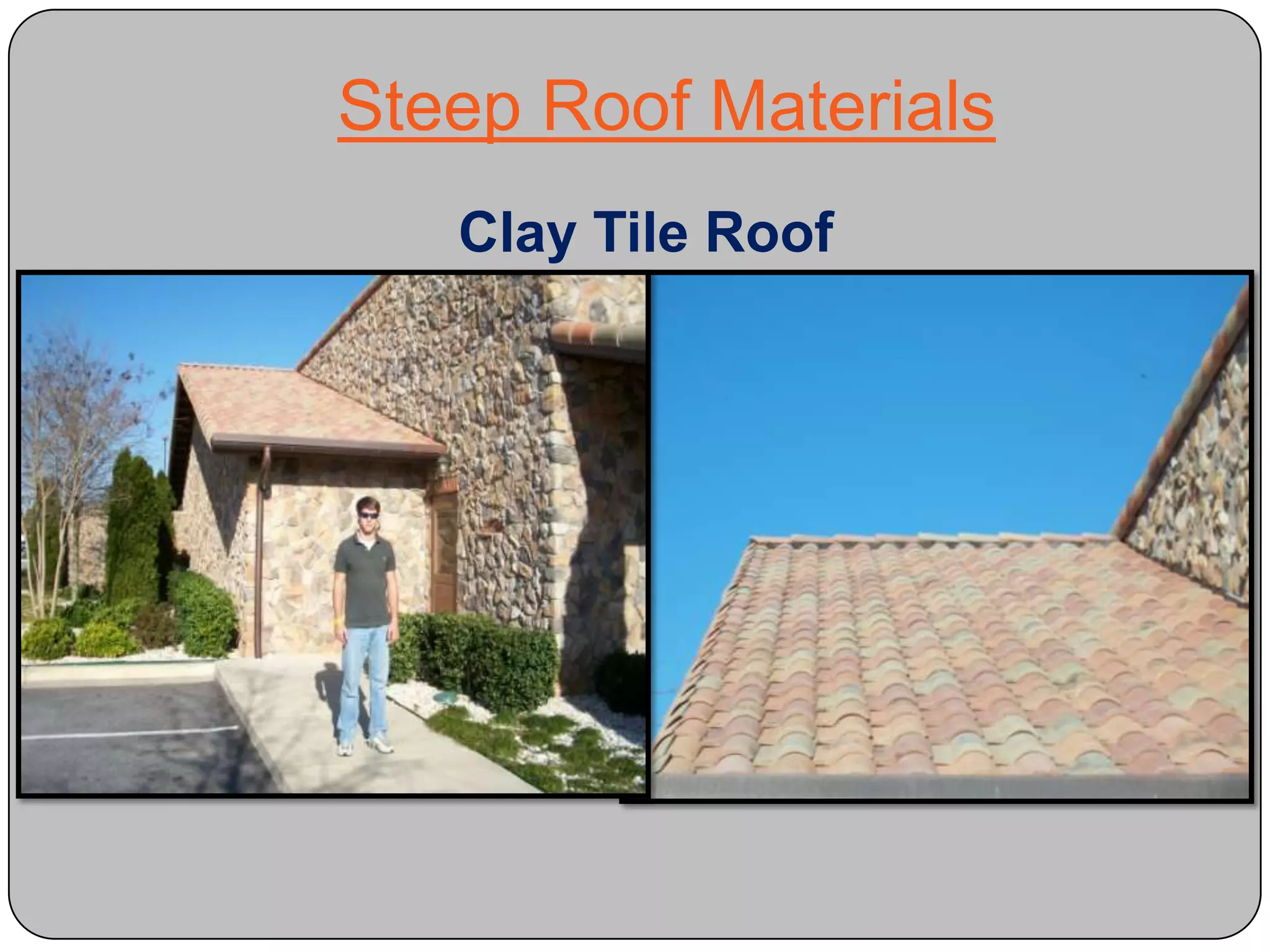
Also called building felt.Steep Roof MaterialsClay Tile Roof
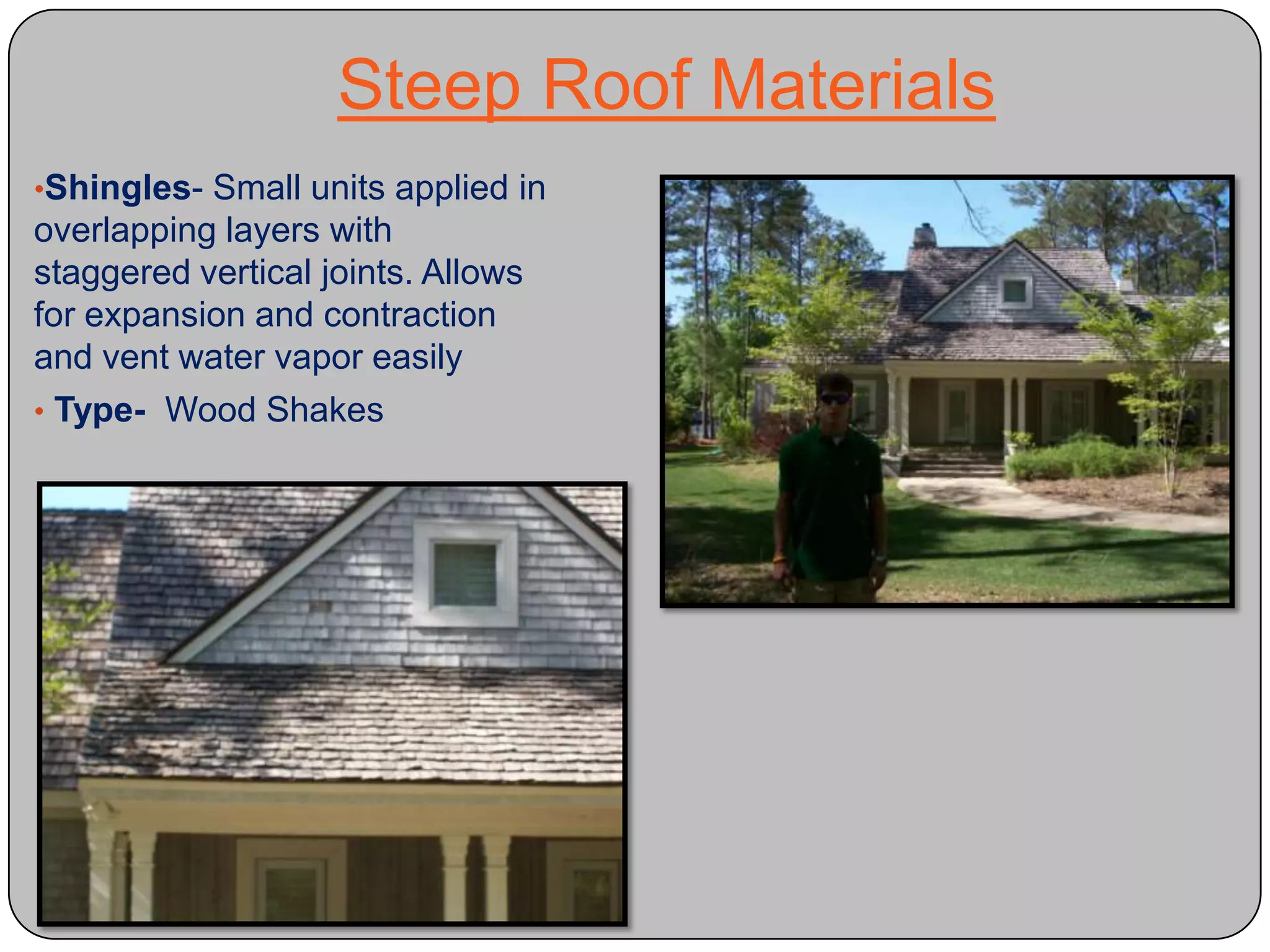
Steep Roof MaterialsShingles- Small units applied in overlapping layers with staggered vertical joints. Allows for expansion and contraction and vent water vapor easily
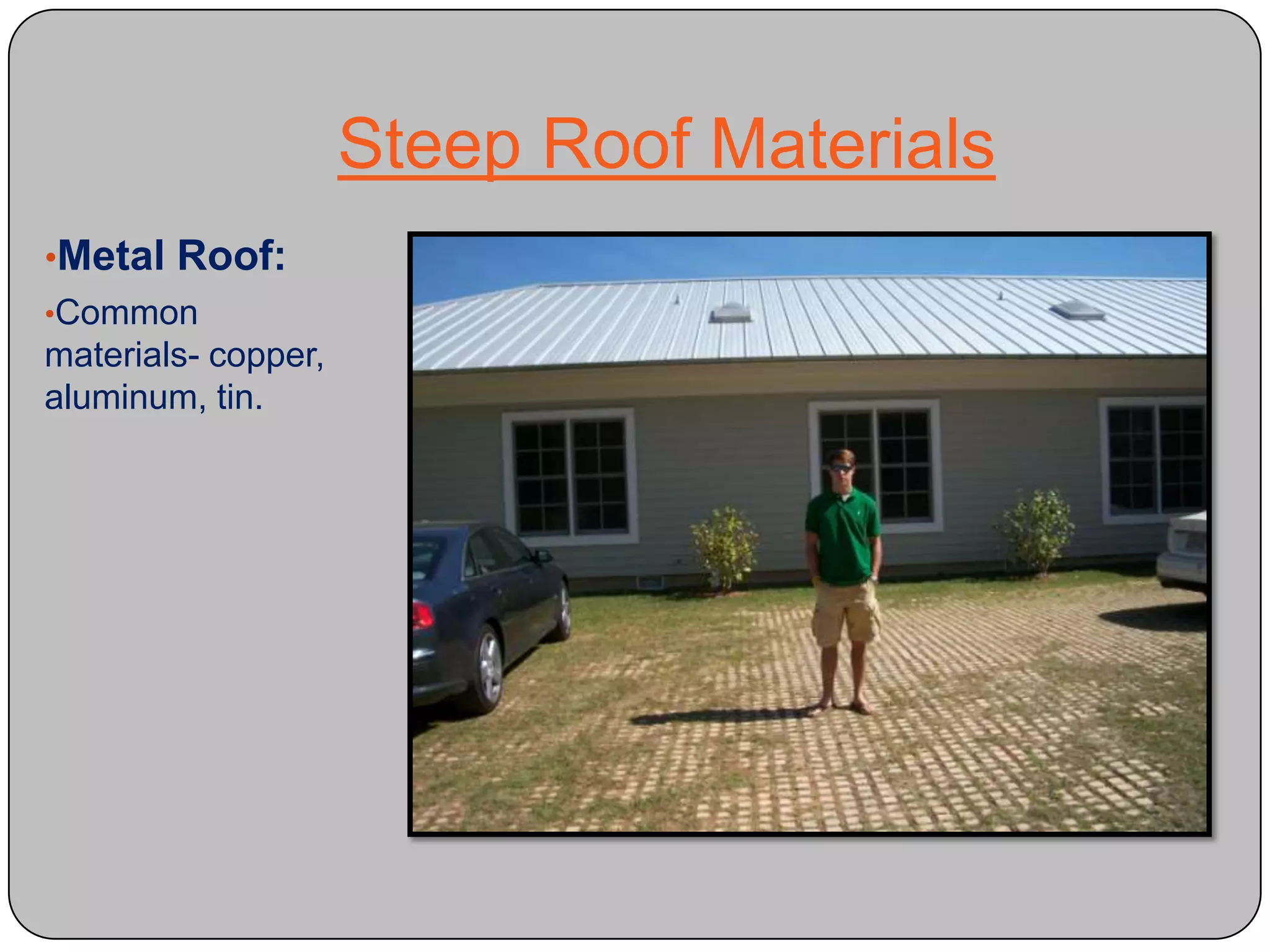
 Type-  Wood ShakesSteep Roof MaterialsMetal Roof:
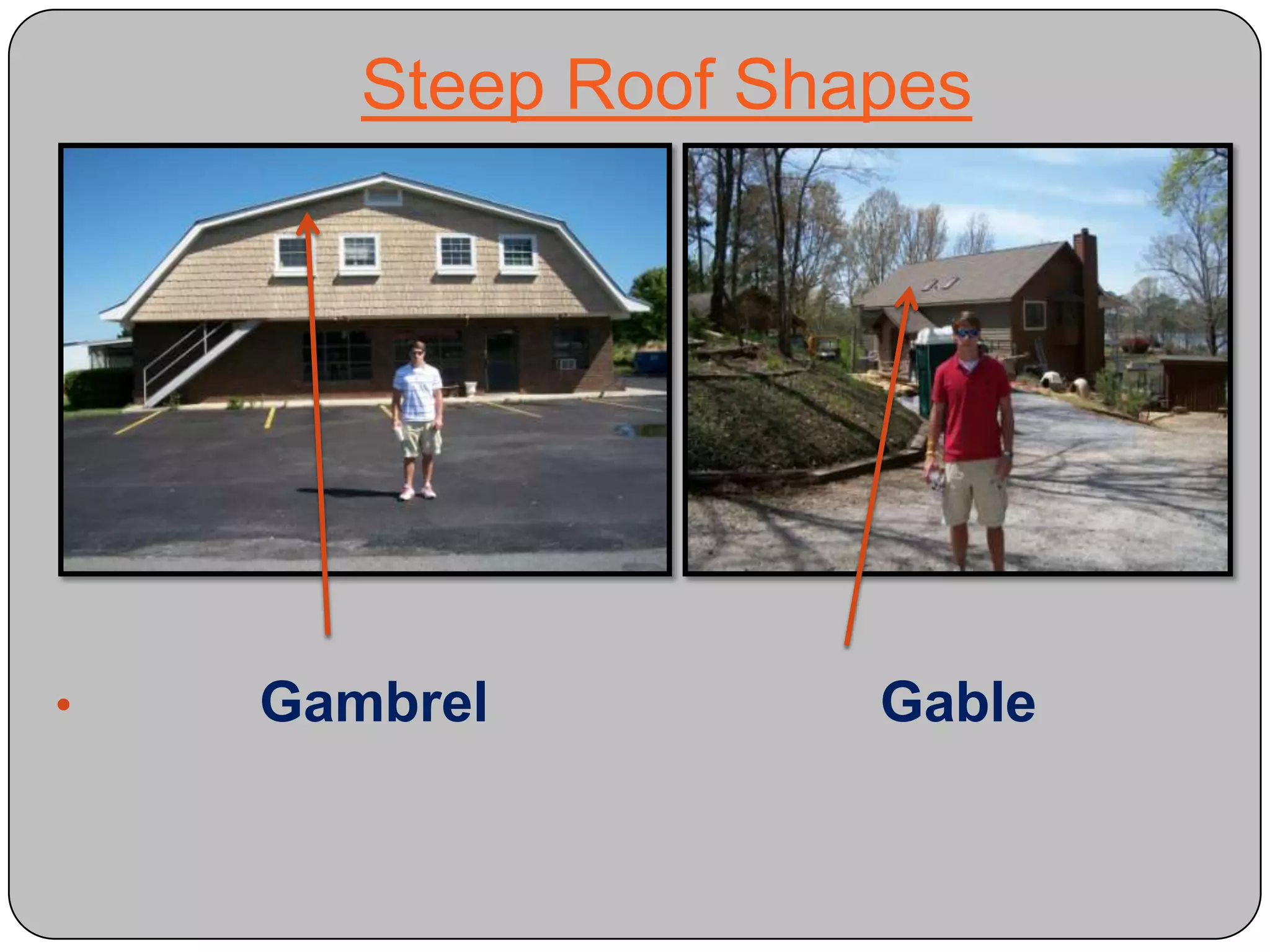
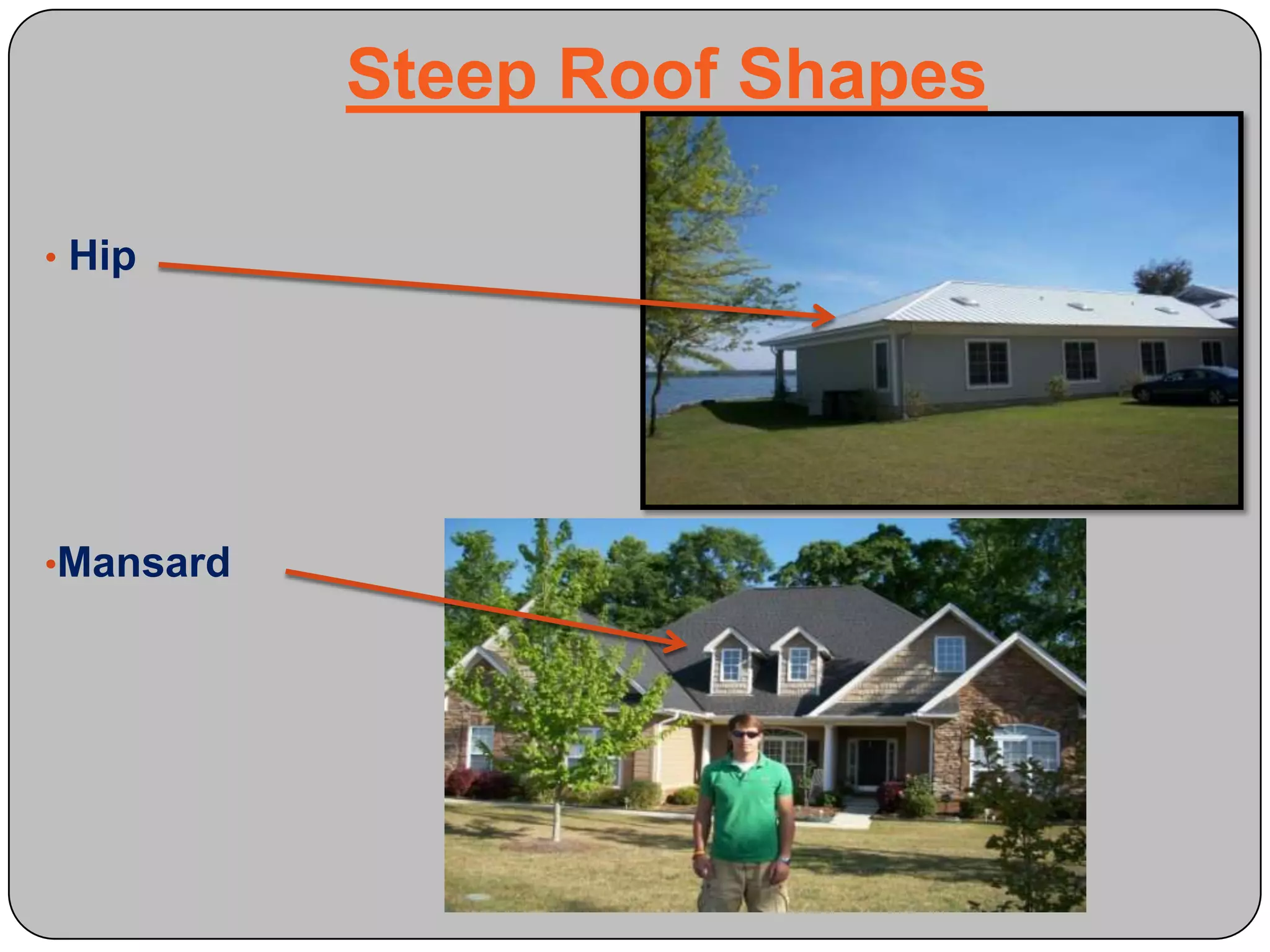
Common materials- copper, aluminum, tin. Steep Roof ShapesGambrel                         GableSteep Roof ShapesHip
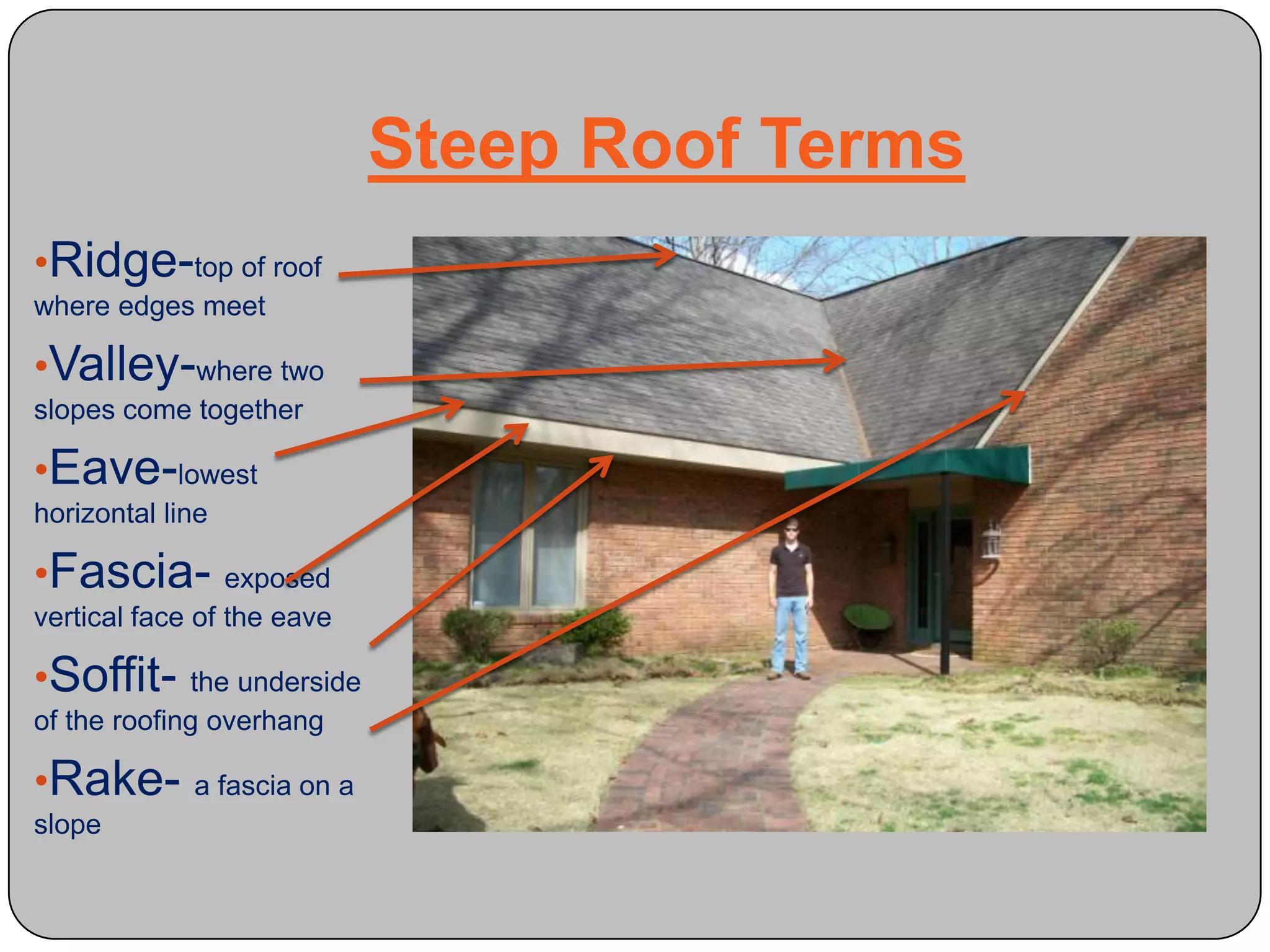
MansardSteep Roof TermsRidge-top of roof where edges meet
Valley-where two slopes come together
Eave-lowest horizontal line
Fascia- exposed vertical face of the eave
Soffit- the underside of the roofing overhang
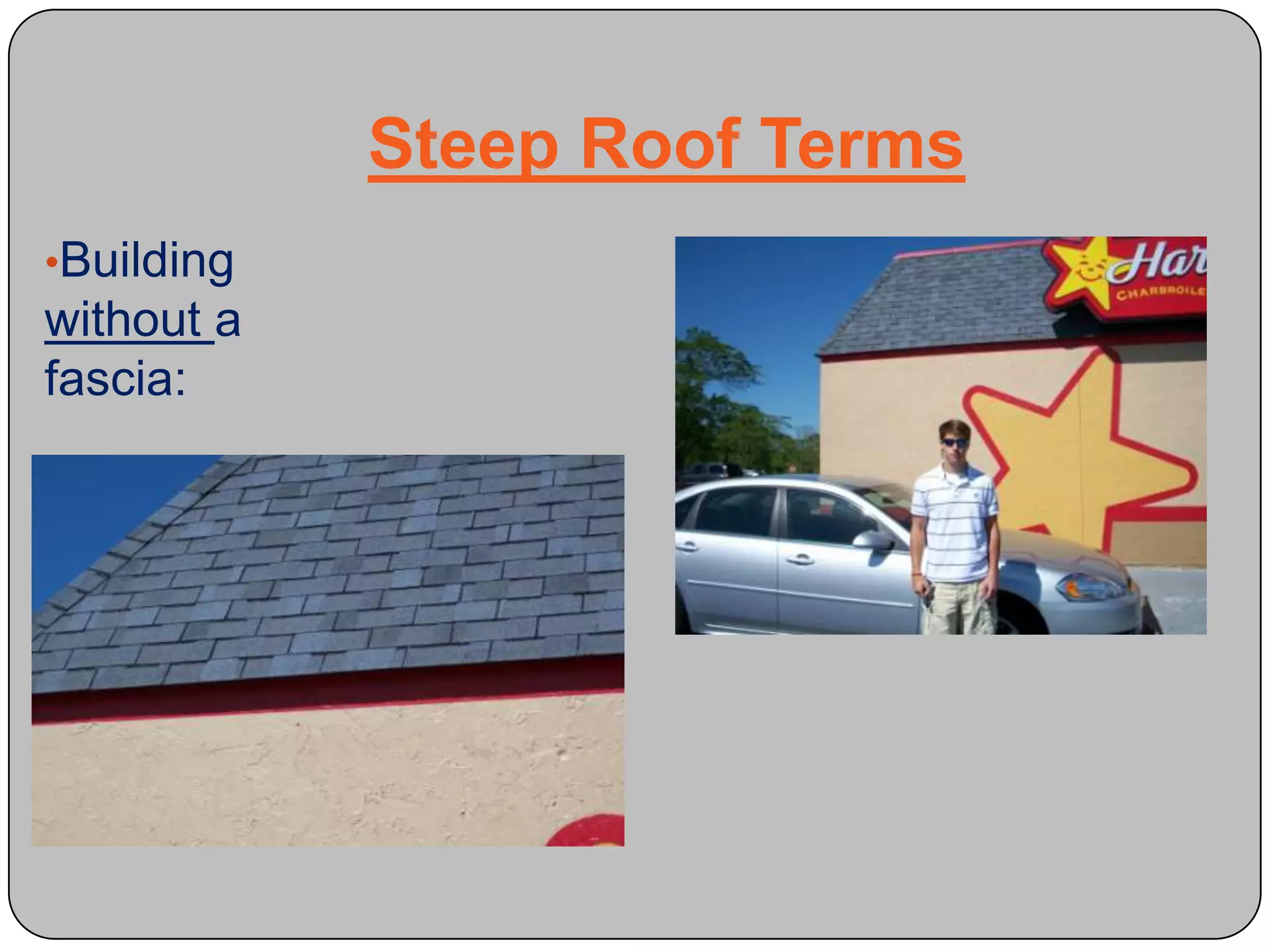
Rake- a fascia on a slopeSteep Roof TermsBuilding without a fascia:StoneRandom RubbleCoursed Rubble
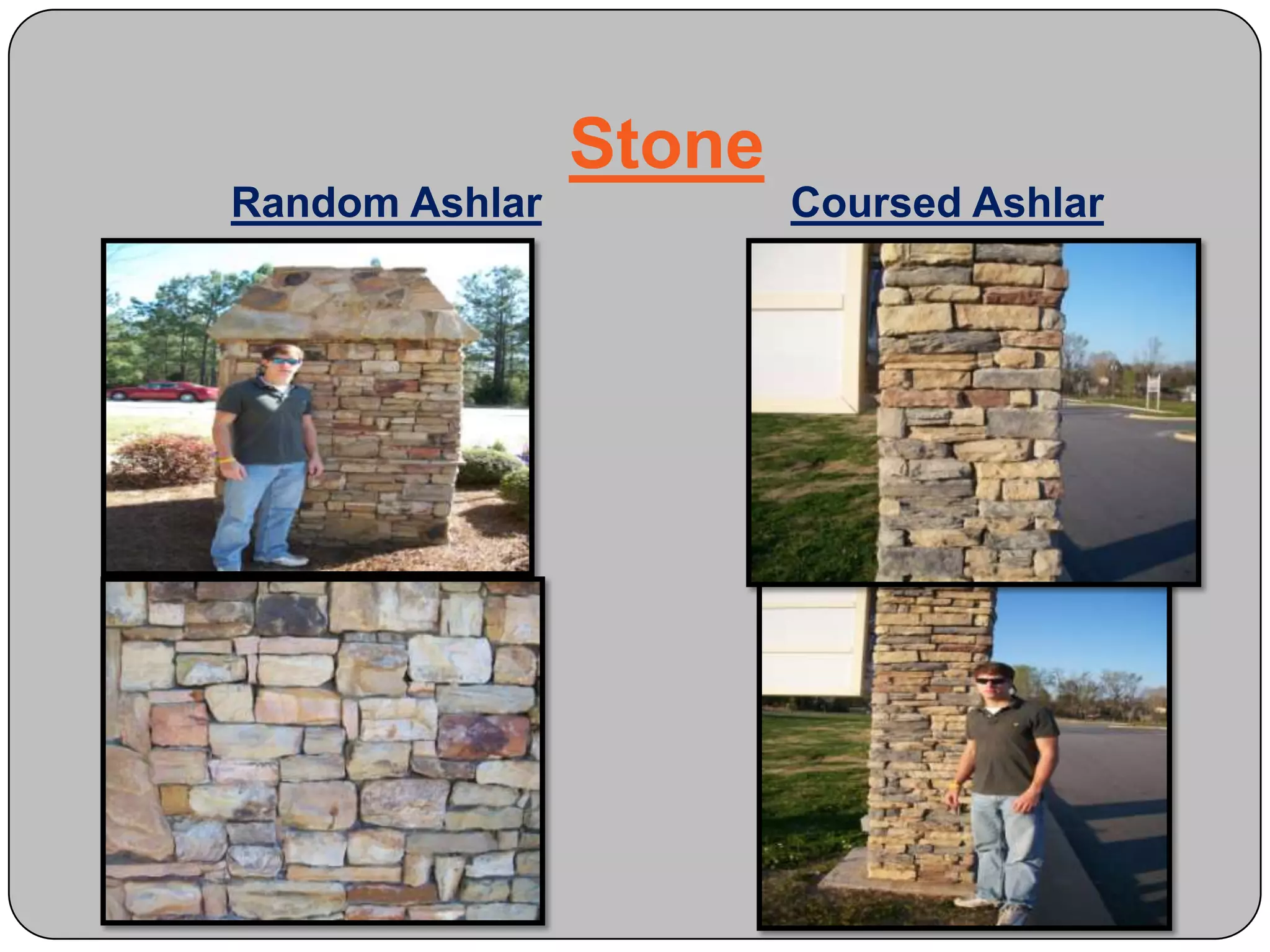
StoneRandom AshlarCoursed Ashlar
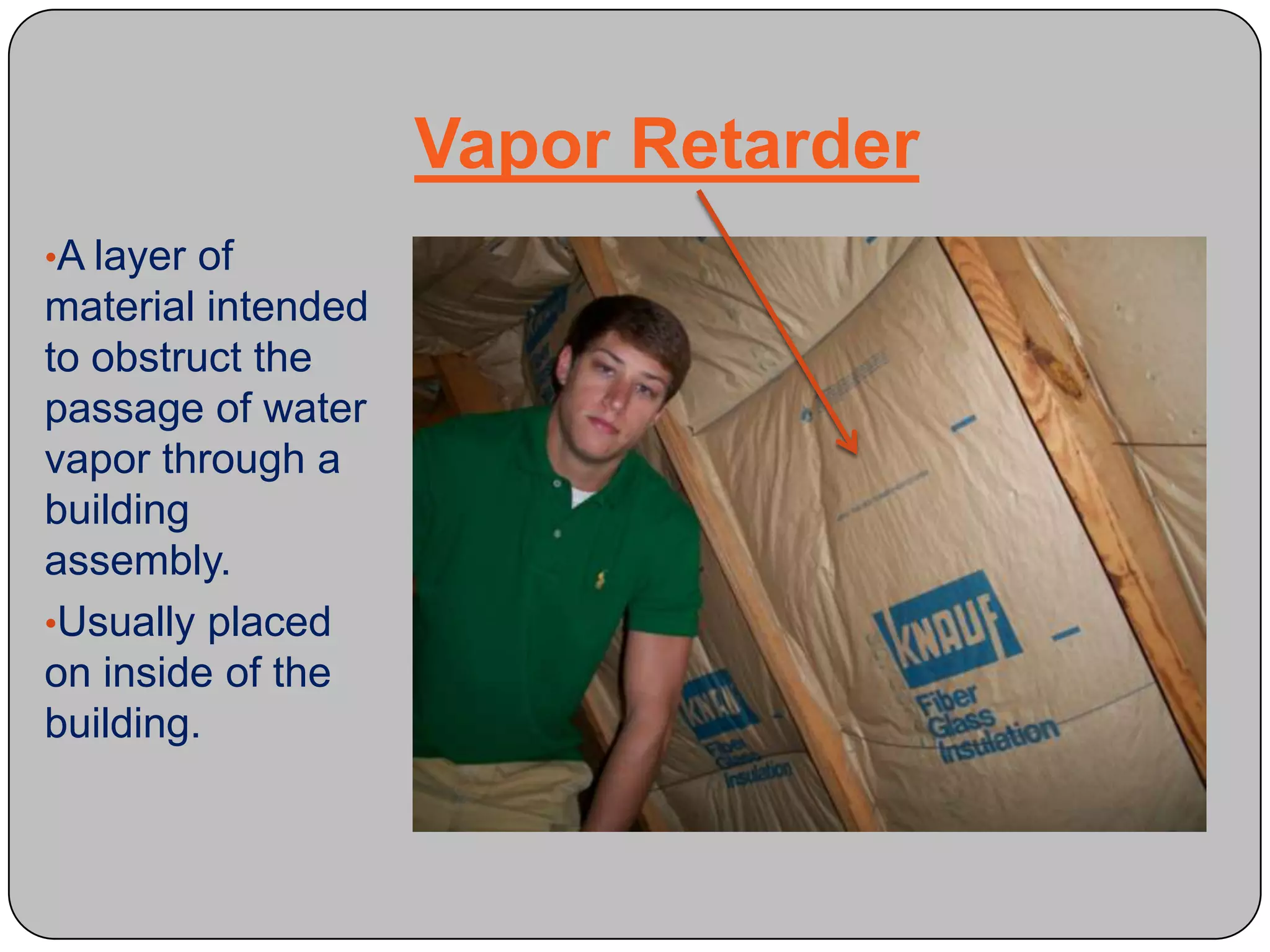
Vapor RetarderA layer of material intended to obstruct the passage of water vapor through a building assembly.
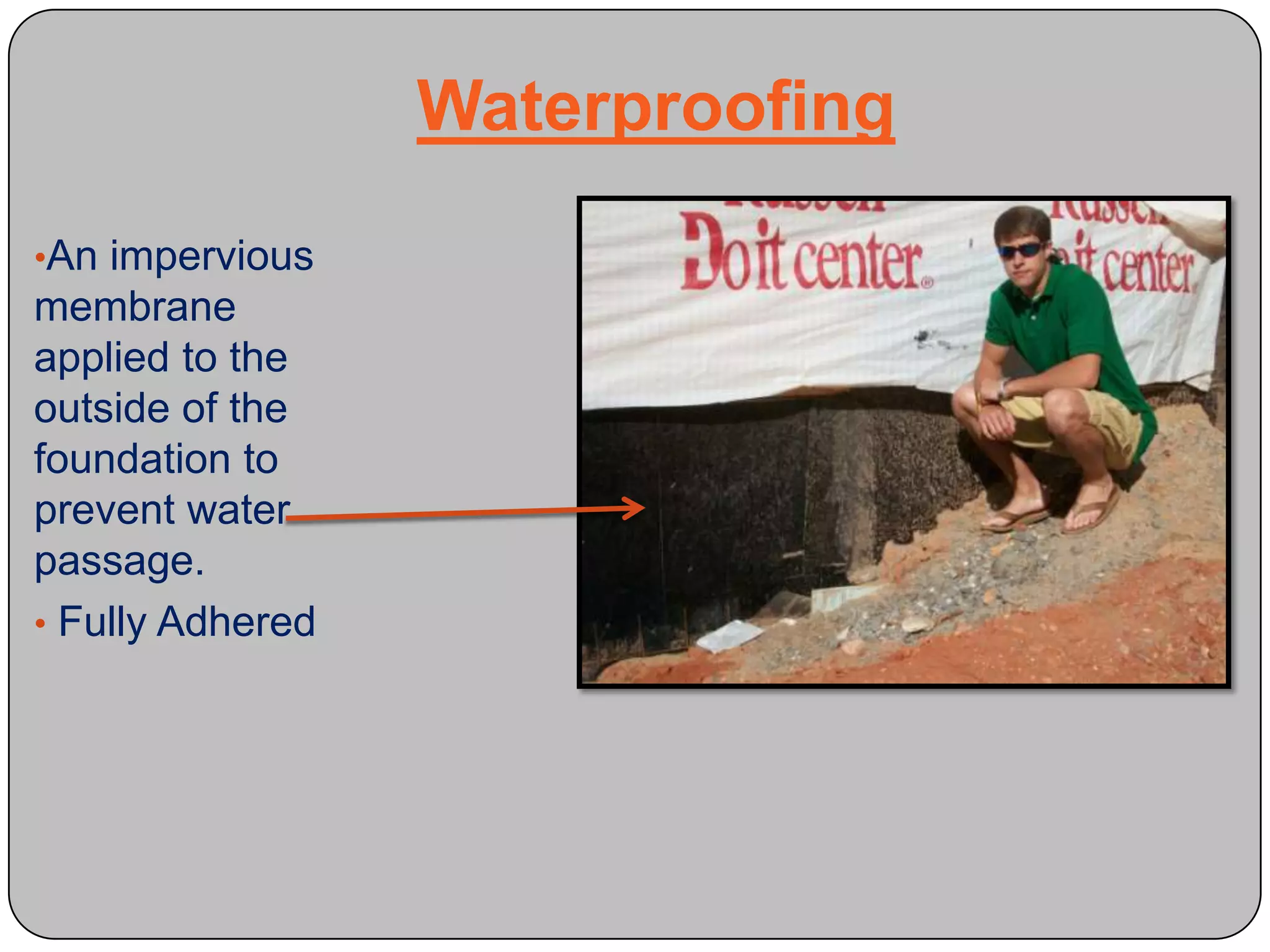
Usually placed on inside of the building.WaterproofingAn impervious membrane applied to the outside of the foundation to prevent water passage.
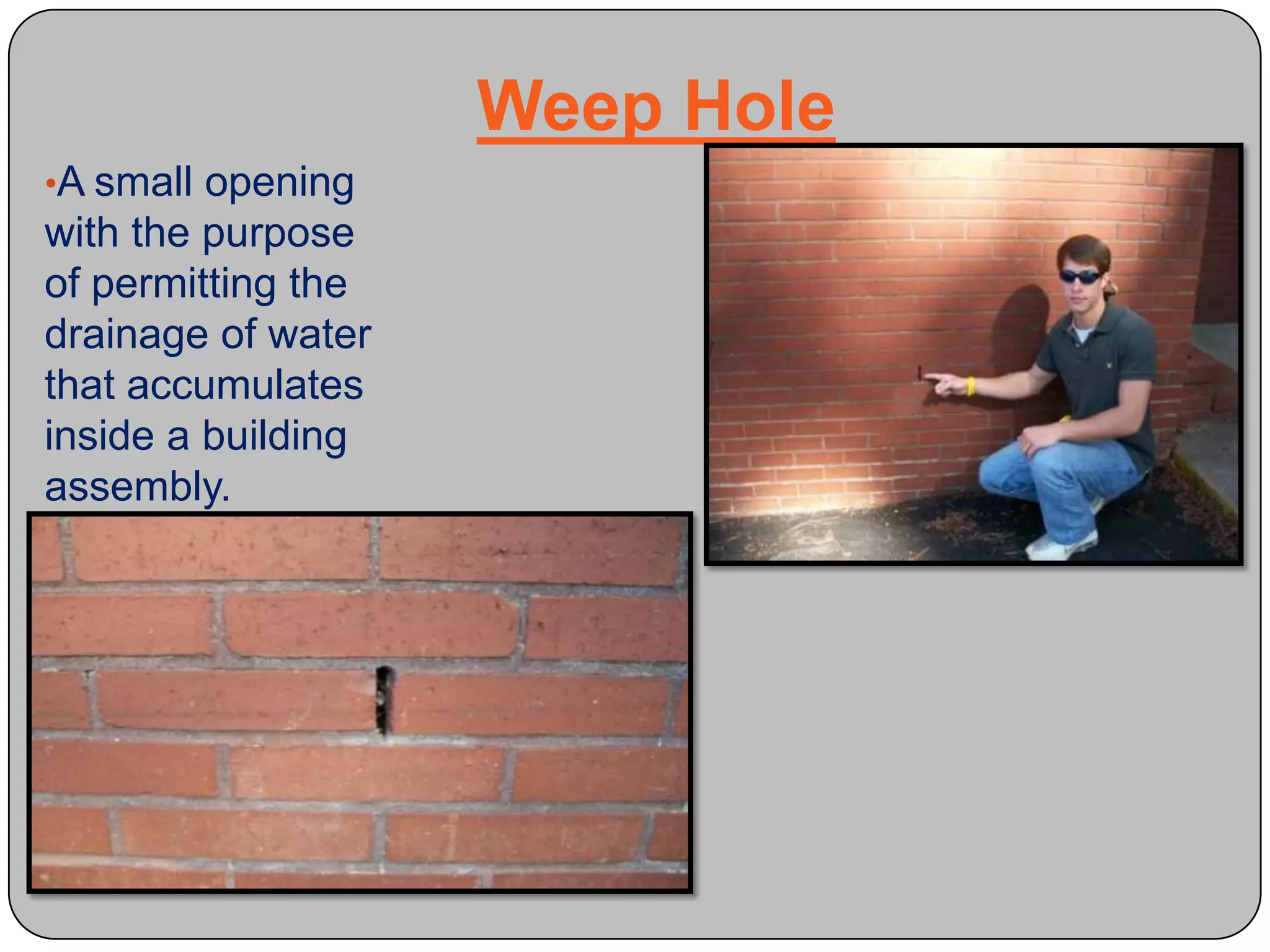
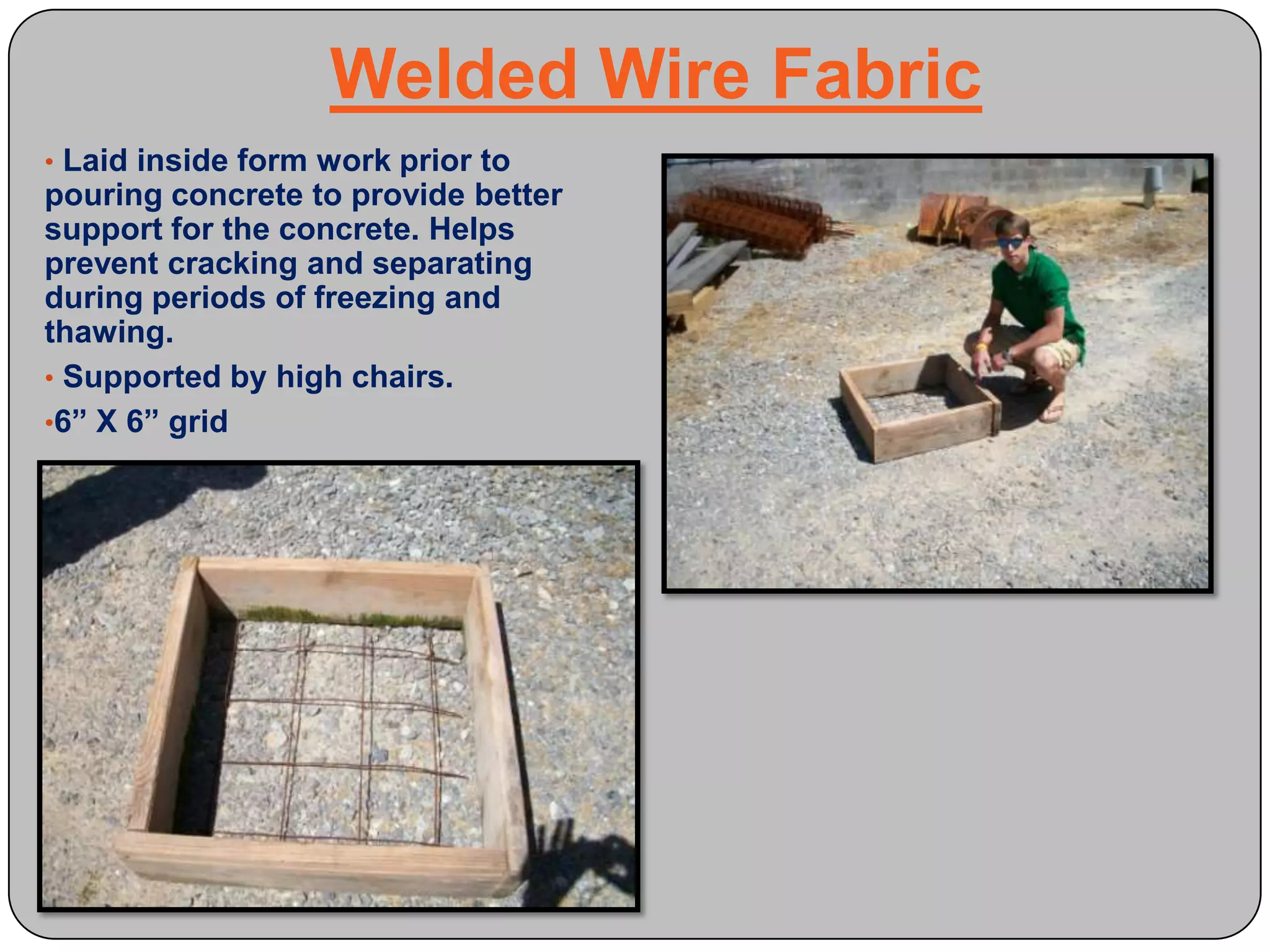
 Fully AdheredWeep HoleA small opening with the purpose of permitting the drainage of water that accumulates inside a building assembly. Welded Wire Fabric Laid inside form work prior to pouring concrete to provide better support for the concrete. Helps prevent cracking and separating during periods of freezing and thawing.
 Supported by high chairs.

Visual dictionary 2

  • 1.
    Sp10ConcreteBSCI 2400April 25,2010Visual Dictionary
  • 2.
    Air Barrier PaperAmembrane that is applied over the sheathing in order to close up the joints and prevent air passage into the building.
  • 3.
    Attic Ventilation Importantfor allowing water vapor and heat to escape the attic space.Ridge Vent: a vent placed over the gap where the roof decking meets at the ridge
  • 4.
    Attic Ventilation ContinuedSoffitVent- allows air to come into the bottom of the attic so that the hot air can be pushed through the gable and ridge vents.Attic Ventilation ContinuedGable Vent- vent usually found on the upper portion of the house that allows heat and water vapor to escape
  • 5.
    BackhoeHeavy machinery witha bucket used to dig footings for foundations and other excavation situations.
  • 6.
    2 ft. bucketwidthBatter BoardsDefinition:Boards used during the rough site work and excavation period to create the temporary outline of where the building will be constructed. Helps ensure the building footings will be square and straight.
  • 7.
  • 8.
  • 9.
  • 10.
    Centering: the formworkused to support the arch during constructionBrick BondsRunning Bond- All stretchers, each course offset by half a brick
  • 11.
    Flemish bond- stretcherand header alternate during courseBrick Bonds ContinuedRowlocks
  • 12.
  • 13.
    Stretcher RowlocksBrick BondsContinuedSailorsBrick SizesStandard Brick:3½”X 2¼”X 8” Utility Brick:3½”X 3½” X 11 ½”
  • 14.
    BulldozerA piece of heavy equipment with a large blade on the front used to move large amounts of dirt around the site and set grade.CladdingBrickEIFS
  • 15.
    Cladding ContinuedWood ShinglesShingles-sawn with smooth surfaceShakes- split and have rougher exterior StoneRandom Rubble
  • 16.
    Cladding ContinuedWood BoardsCodeRequirementsBedroom Window:
  • 17.
    Minimum opening of5.7 sq.ft.(only 5.0 if sill is less than 44” AFF)
  • 18.
  • 19.
  • 20.
    Actual Measurements: 26¾” h X 29 ½” w= 5.48 sq.ft.21” AFF Window Meets Code
  • 21.
  • 22.
    Code: Tread: 10”minimum Riser: 7 ¾” maximum Actual: Tread: 11 ¾” Riser: 7 ¼”Meets Requirements
  • 23.
    Concrete JointsControl Joint-A groove cut into the concrete that is ¼ of the depth of the concrete slab
  • 24.
    Purpose: Tointentionally create a point of weakness in the concrete to better control where it will crack instead of allowing it to crack randomly.Concrete Joints ContinuedIsolation Joint- Separates one slab of concrete from another slab, wall or column.Concrete Masonry Unit(CMU)A block of hardened concrete with or without hollow cores that comes in many different sizes and be filled in with concrete for additional strength.
  • 25.
  • 26.
    Standard Size(Nominal): 8” X 8” X 16”Actual Size: 7 5/8” X 7 5/8” X 15 5/8”
  • 27.
  • 28.
  • 29.
  • 30.
    DoorsTransom: a smallwindow directly above a door
  • 31.
    Sidelight: a tall,narrow window alongside a doorElectrical ComponentsPower Pole with Transformer- Steps voltage down to desired amount (110/220 Volts)
  • 32.
    Service Head- Assemblyby which electricity is conducted from outdoor lines to the meter baseElectrical ComponentsMeter- Keeps track of the amount of electricity being used.
  • 33.
    Service Panel- Containsthe main disconnect and circuit breakersElectrical ComponentsDuplex Receptacle: Used for plugging in household items such as lamps, phone, etc.Framing ElementsAnchor BoltsSill Plate Floor Joists
  • 34.
    Framing Elements4. Subflooring5.Sole Plate6. Stud7. Top Plate
  • 35.
    Framing Elements8. CeilingJoists9. Rafters10. Roof Decking11. Sheathing
  • 36.
    Front End LoaderPieceof heavy machinery used for transporting large amounts of soil or dirt from different points on the site or for loading dump trucks for the removal of the dirt from the site. Gypsum BoardAn interior facing panel consisting of a gypsum core between two paper faces.
  • 37.
    Usually sandedand painted
  • 38.
    Also knownas “dry wall”Heat PumpCompressor/Evaporator: Compresses gases which gives off heat. The air cools as it blows across the cooling coils in the air handler
  • 39.
  • 40.
    Disadvantage: May needadditional heating source in areas with very cold climates. Not used as much up north.
  • 41.
    Air handling unit:forces air through a duct system with a strong fanInsulationPurpose: to reduce the heat flow through the assembly of a buildingBatt/Blanket- rolls or sheets of insulation easily installed between the studs in wallsLoose Fill- fiberglass insulation blown into place between ceiling joists in attics
  • 42.
    InsulationFoamed- a mixtureof two chemicals that react to form very affective insulation that also completely fills in cracks.Rigid Board- comes in 4’X8’ sheets and is used as exterior sheathing for basement walls
  • 43.
    LintelA beam thatcarries the load of a wall across a window or opening
  • 44.
  • 45.
  • 46.
  • 47.
  • 48.
    Most likely TypeS(Medium High Strength) MortarMortar ContinuedRaked Joint:
  • 49.
  • 50.
  • 51.
  • 52.
    Type N MortarOrientedStrand Board(OSB)A nonveneered building panel composed of long sheets of wood fiber oriented in specific directions and bonded together under pressure.PlumbingLavatoryTypical 1 ½” Drain PipingWater ClosetTypical 3” Drain/Waste Pipe
  • 53.
    PlumbingPlumbing VentPlumbing Vent:allows the plumbing system to drain by letting air in and eliminating the vacuum affect a closed drain would create
  • 54.
    PlumbingManufactured Shower/Tub PlumbingDrop-InSinkPlywoodA wood panel composed of an odd number of layers of wood veneer bonded together under pressure.
  • 55.
    Veneer- Athin layer, sheet, or facing.Radiant BarrierA reflective foil placed adjacent to an airspace in the roof or wall to prevent the passage of infrared energy by reflecting it back.RebarThe deformations found on the rebar helps the concrete bond to the rebar for better support.
  • 56.
    Size: #4Rebar (1/2”)Steep Roof DrainageGutter- a channel that collects rainwater and snowmelt at the eave of the roofSteep Roof DrainageDownspout- a vertical pipe for conducting water from the roof to a lower levelSteep Roof DrainageSplashblock-A small precast block of concrete or plastic used to divert water at the bottom of a downspout and prevent ground erosion.Steep Roof MaterialsUnderlayment- Layer of waterproof materials that protects the sheathing from getting wet until the roofing can be applied.
  • 57.
    Also called buildingfelt.Steep Roof MaterialsClay Tile Roof
  • 58.
    Steep Roof MaterialsShingles-Small units applied in overlapping layers with staggered vertical joints. Allows for expansion and contraction and vent water vapor easily
  • 59.
    Type- Wood ShakesSteep Roof MaterialsMetal Roof:
  • 60.
    Common materials- copper,aluminum, tin. Steep Roof ShapesGambrel GableSteep Roof ShapesHip
  • 61.
    MansardSteep Roof TermsRidge-topof roof where edges meet
  • 62.
  • 63.
  • 64.
    Fascia- exposed verticalface of the eave
  • 65.
    Soffit- the undersideof the roofing overhang
  • 66.
    Rake- a fasciaon a slopeSteep Roof TermsBuilding without a fascia:StoneRandom RubbleCoursed Rubble
  • 67.
  • 68.
    Vapor RetarderA layerof material intended to obstruct the passage of water vapor through a building assembly.
  • 69.
    Usually placed oninside of the building.WaterproofingAn impervious membrane applied to the outside of the foundation to prevent water passage.
  • 70.
    Fully AdheredWeepHoleA small opening with the purpose of permitting the drainage of water that accumulates inside a building assembly. Welded Wire Fabric Laid inside form work prior to pouring concrete to provide better support for the concrete. Helps prevent cracking and separating during periods of freezing and thawing.
  • 71.
    Supported byhigh chairs.
  • 72.
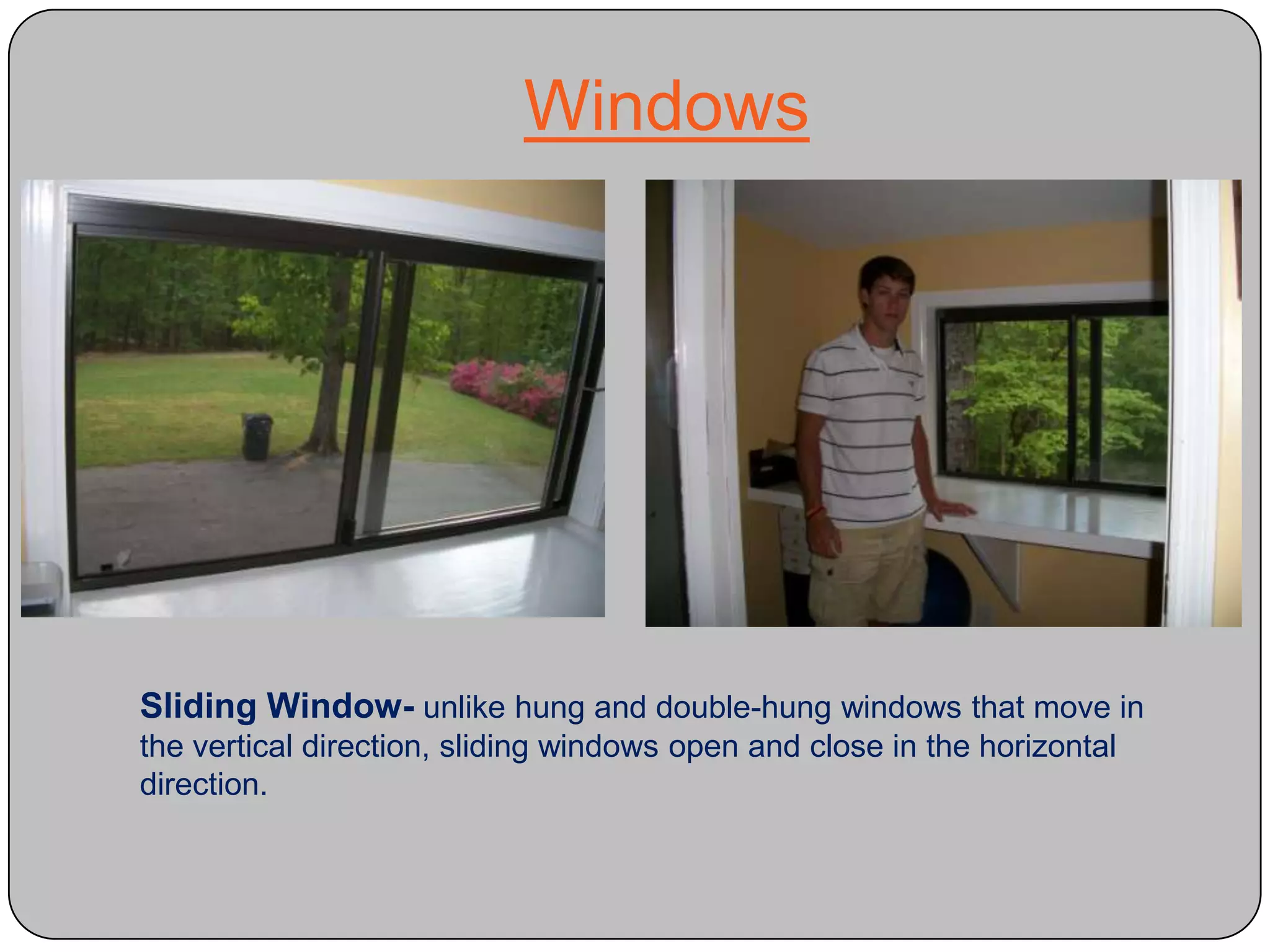
    6” X 6”gridWindowsSliding Window- unlike hung and double-hung windows that move in the vertical direction, sliding windows open and close in the horizontal direction.
  • 73.
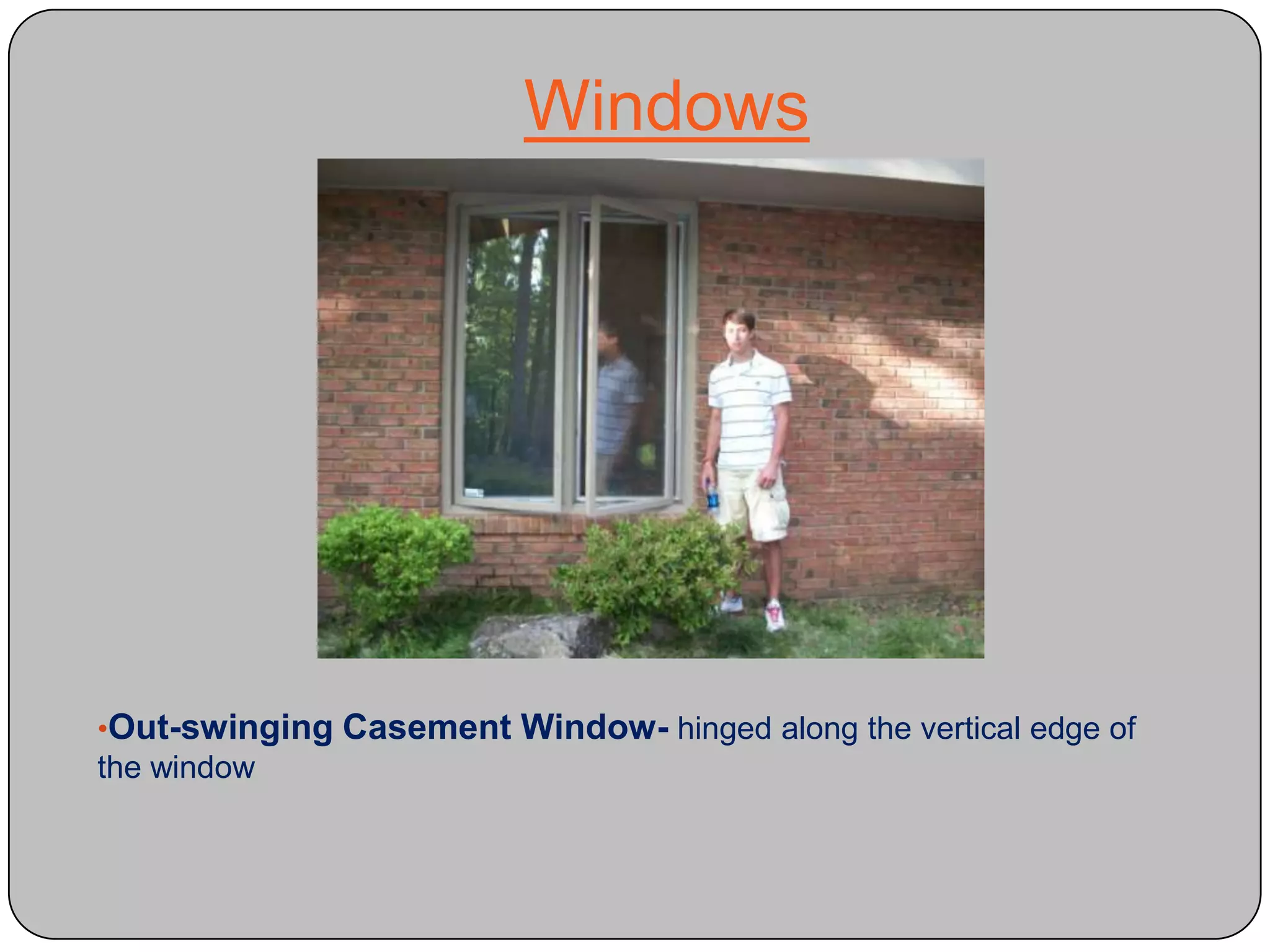
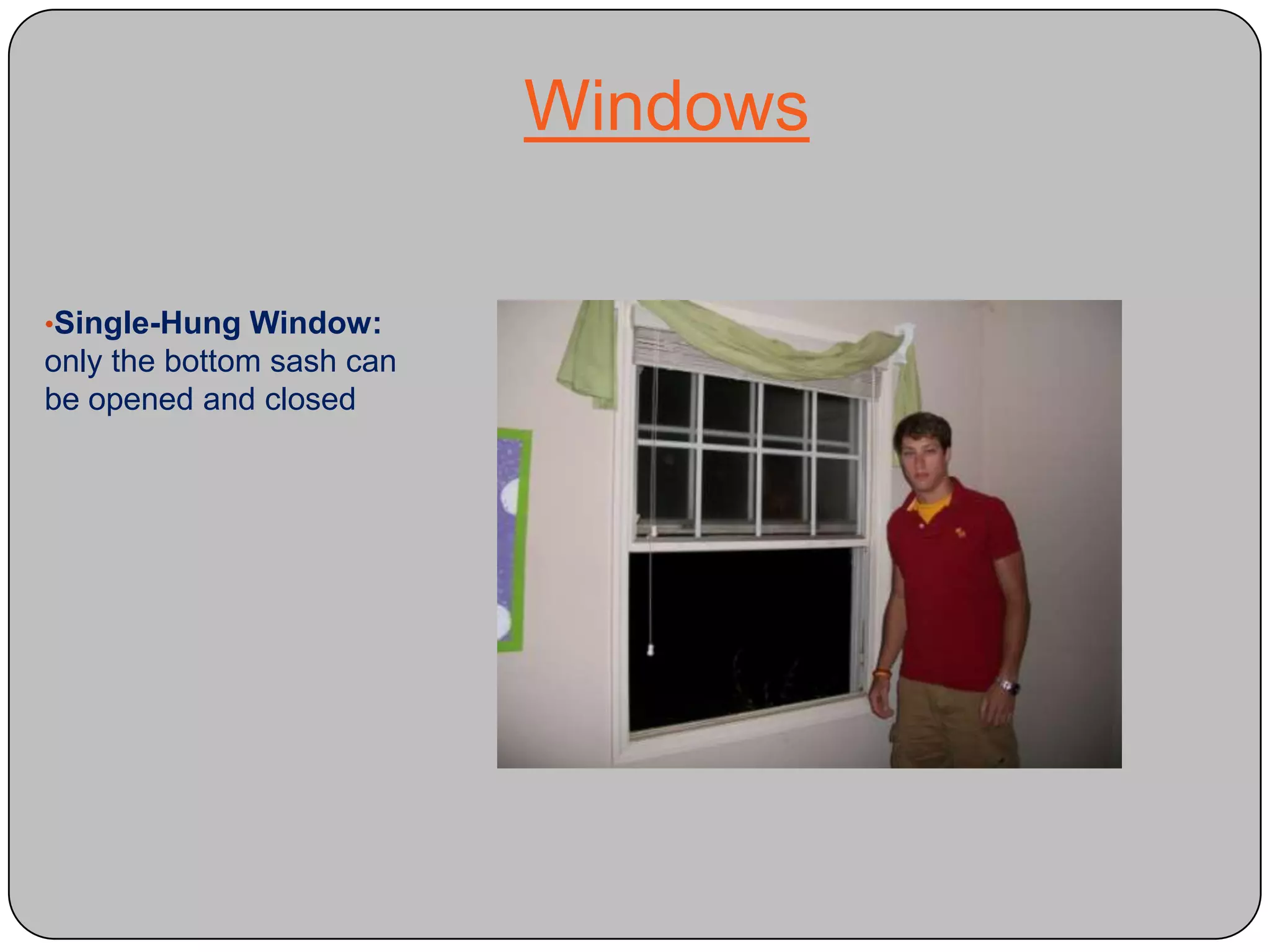
    WindowsOut-swinging Casement Window-hinged along the vertical edge of the windowWindowsSingle-Hung Window: only the bottom sash can be opened and closed