VIRTUAL MANUFACTURING
NAME : ABHAY KUMAR
REG NO :
ROLL NO :
INTRODUCTION
 It is a new kind of manufacturing technology
 It is based on :
• Simulation technology
• Virtual reality technology
• Information technology
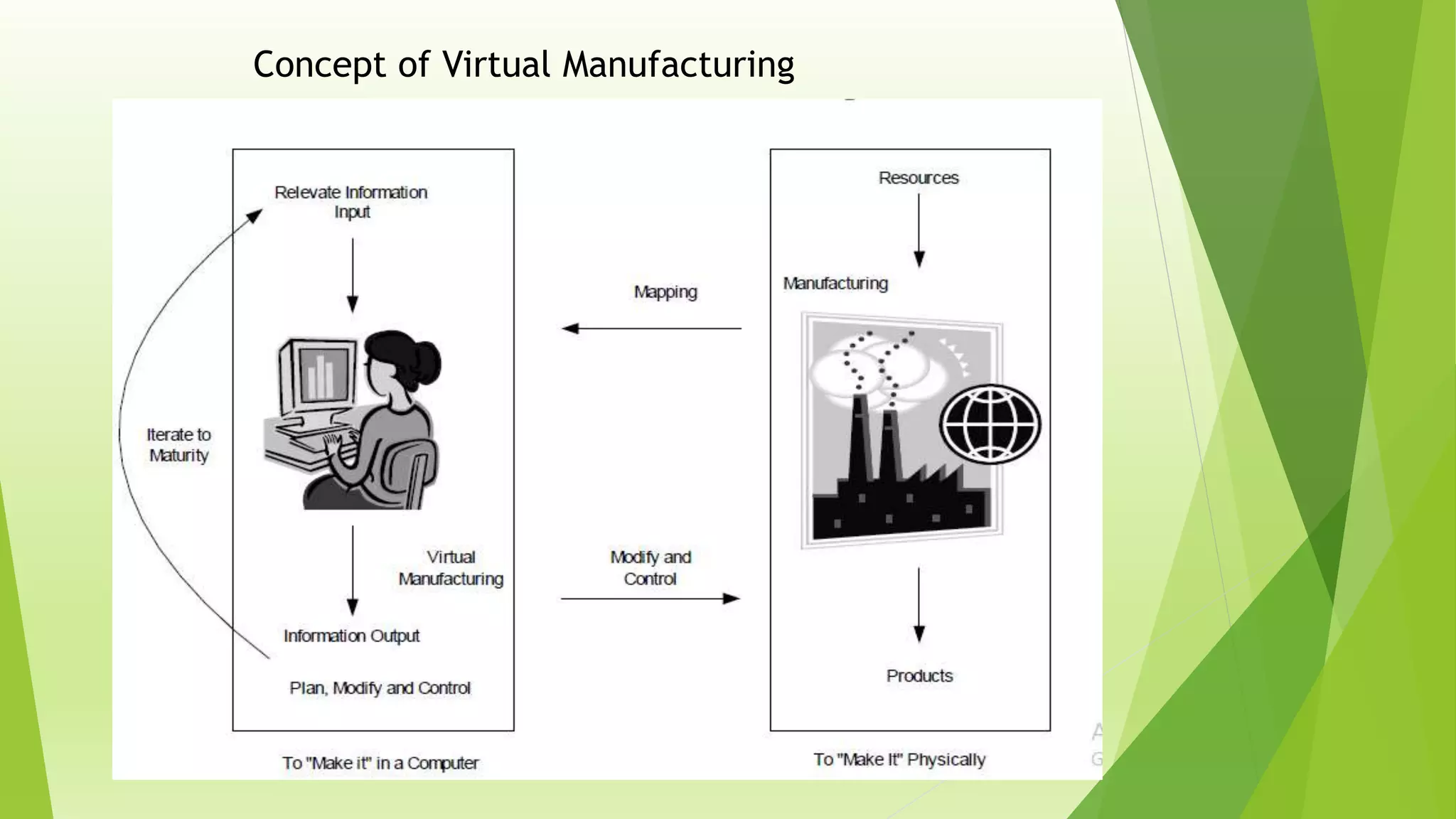
 Virtual manufacturing system is the implementation of the real
manufacturing process in a computer environment.
 It uses computer simulation and virtual reality technology to model
the whole manufacturing system.
 It allows us to predict potential problems for product functionality
and manufacturability before real manufacturing occurs.
Concept of Virtual Manufacturing
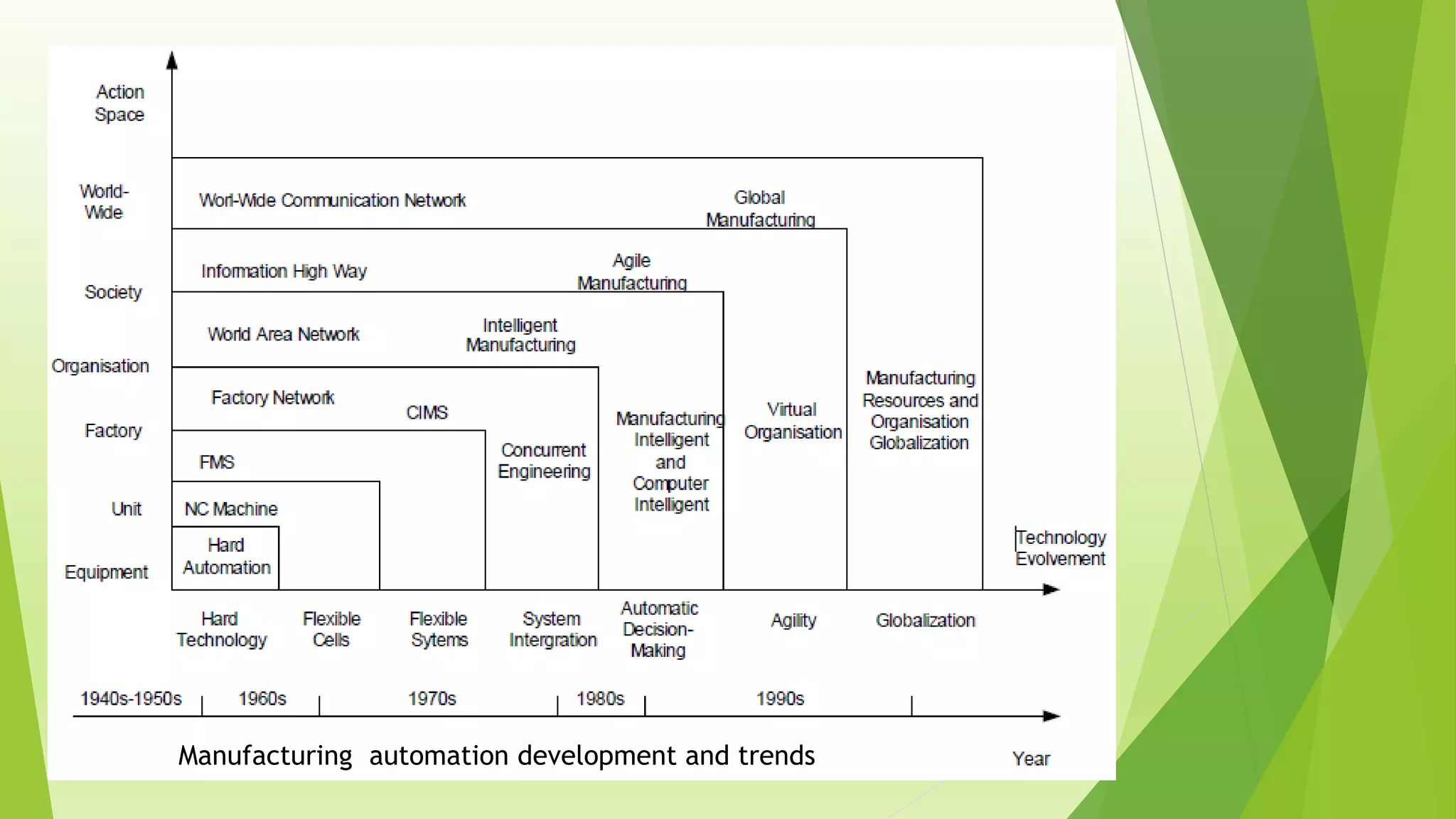
Manufacturing automation development and trends
Factors that affects Manufacturing
 Complex Manufacturing environment and frequent
product redesign.
 When a new product is designed , it is hard to evaluate
the benefits and risks before it is put into production.
 Difficult to gather the real manufacturing information in
different production stages.
 Difficult to adjust the relationship between design and
manufacturing to ensure enterprise gets maximum
benefit.
Classification
Based on types of products and process design Virtual
Manufacturing is classified as:
1. Design centered VM
 It provides an environment for designers to design products
and to evaluate manufacturability of products.
2. Production centered VM
 It provides an environment for generating process plans
and production plans.
3. Control centered VM
 It uses machine control models to achieve process
optimization during the actual production cycle.
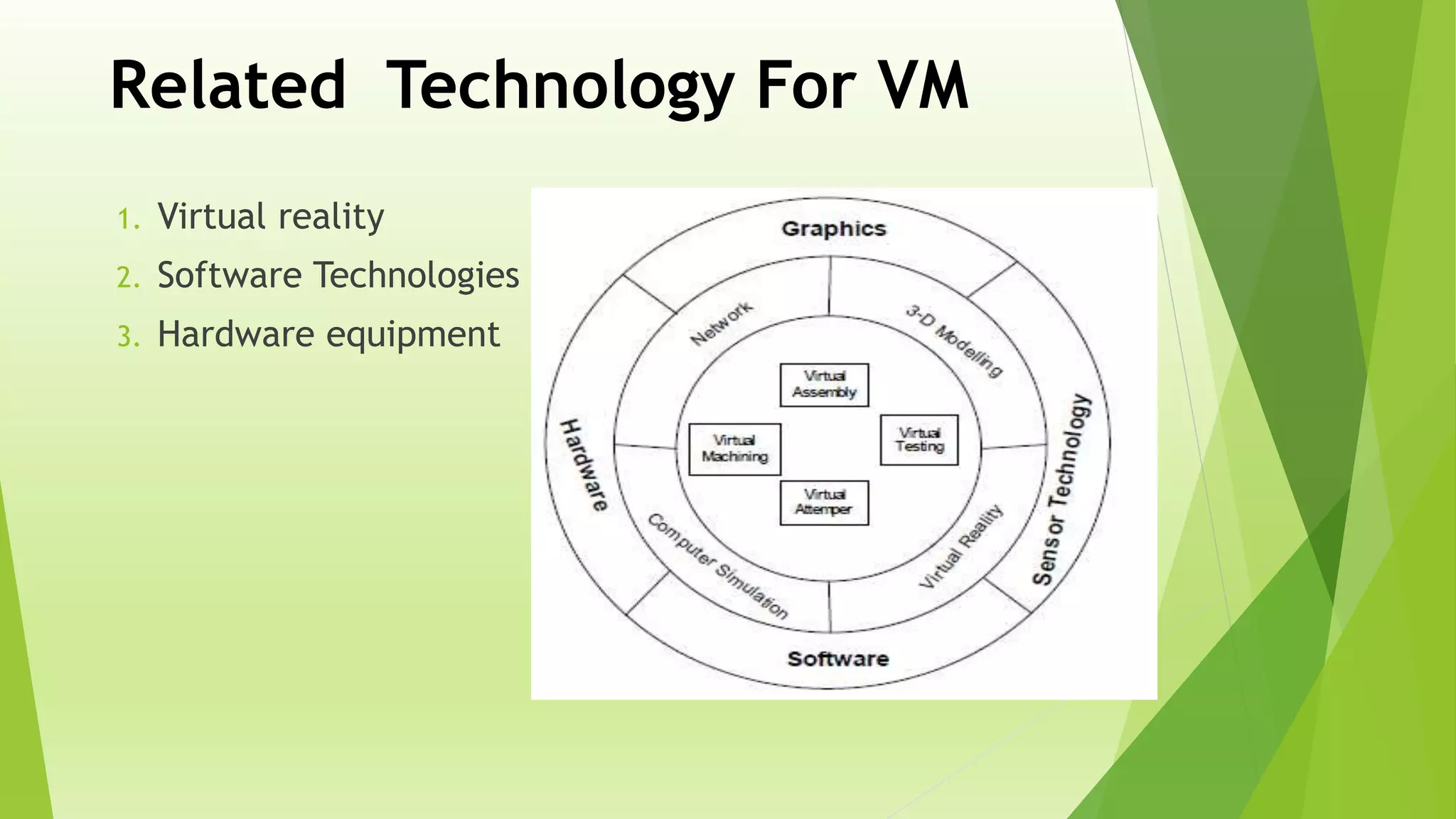
Related Technology For VM
1. Virtual reality
2. Software Technologies
3. Hardware equipment
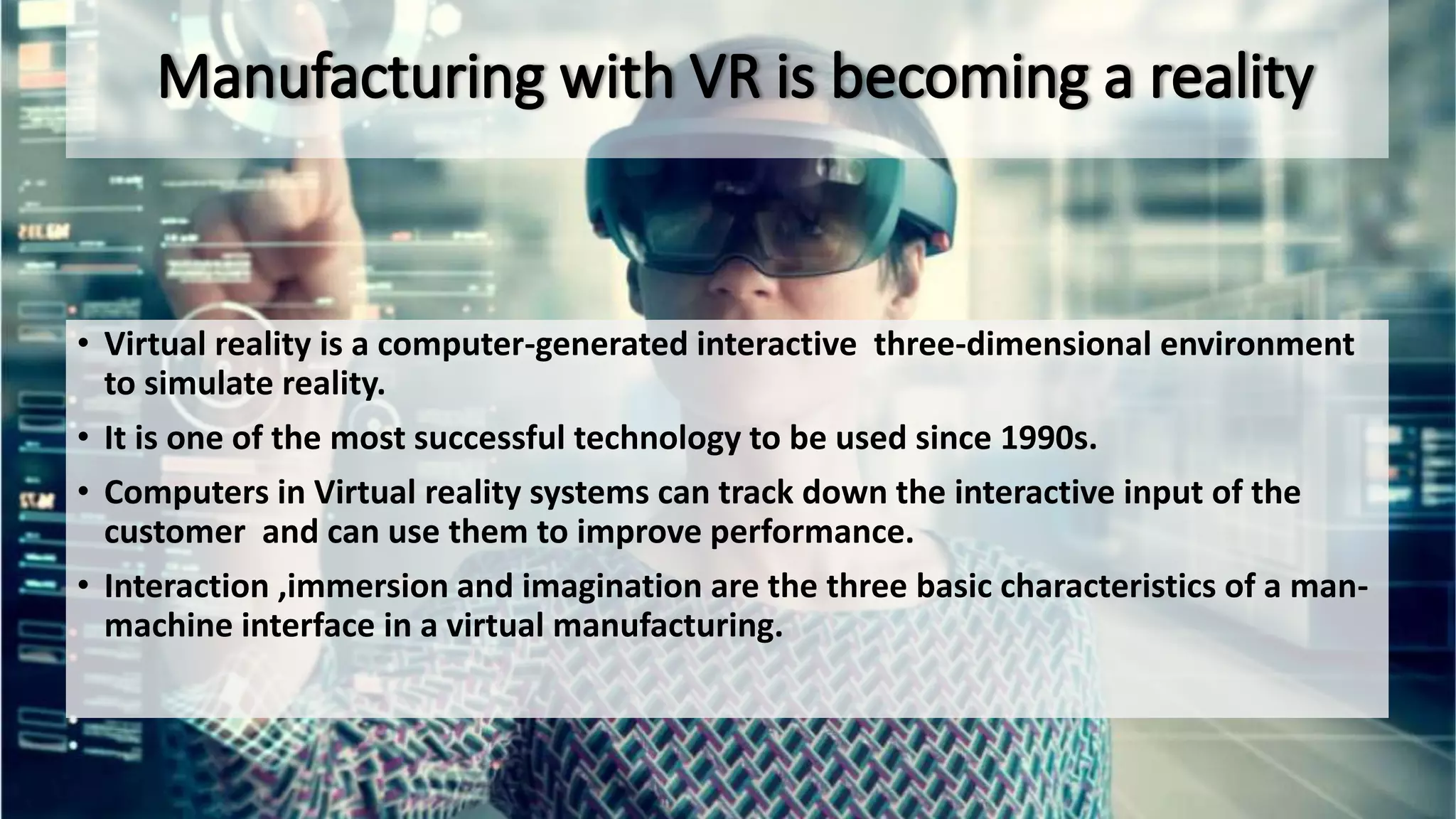
• Virtual reality is a computer-generated interactive three-dimensional environment
to simulate reality.
• It is one of the most successful technology to be used since 1990s.
• Computers in Virtual reality systems can track down the interactive input of the
customer and can use them to improve performance.
• Interaction ,immersion and imagination are the three basic characteristics of a man-
machine interface in a virtual manufacturing.
Software Technologies
 Some software technologies used in virtual manufacturing are:
 Environment construction Technology
 Information Representation
 Meta-modelling
 Simulation
Virtual Manufacturing Technology
 Virtual manufacturing technology is the key content of a virtual
manufacturing system .It is a system-integrated technology
which includes simulation , modelling and manufacturing.
 It can predict product performance and manufacturability.
 Different Virtual Manufacturing Techniques are listed below
1. Virtual Design
2.Virtual Machining
3.Virtual Assembly
4.Virtual Test
Virtual Design
 Virtual Design is a process and a way of working that
involves the management of integrated multidisciplinary
performance models.
 It is a way of coming up with an ideal strategy for a given
project that incorporates the right people and the right
technology.
 Virtual design and construction can be used by construction
companies to demonstrate the organizational and
collaborative skills
 With VDC, engineers and architects can work together to
create a visual model of the project for presentation to the
client
Virtual Machining
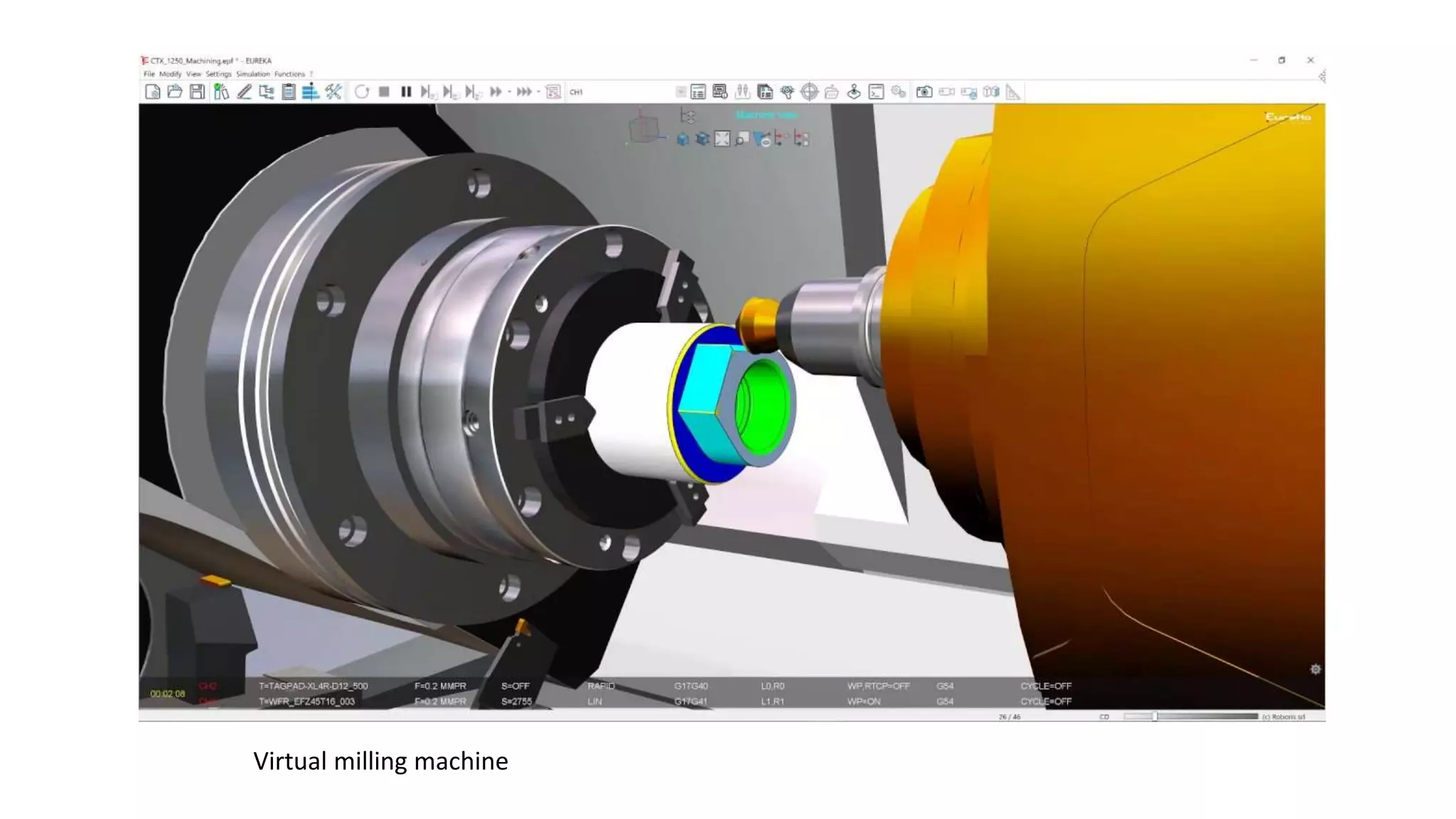
 Virtual Machining refers to making changes in the
geometrical characteristics and physical performance of
the product in a virtual environment.
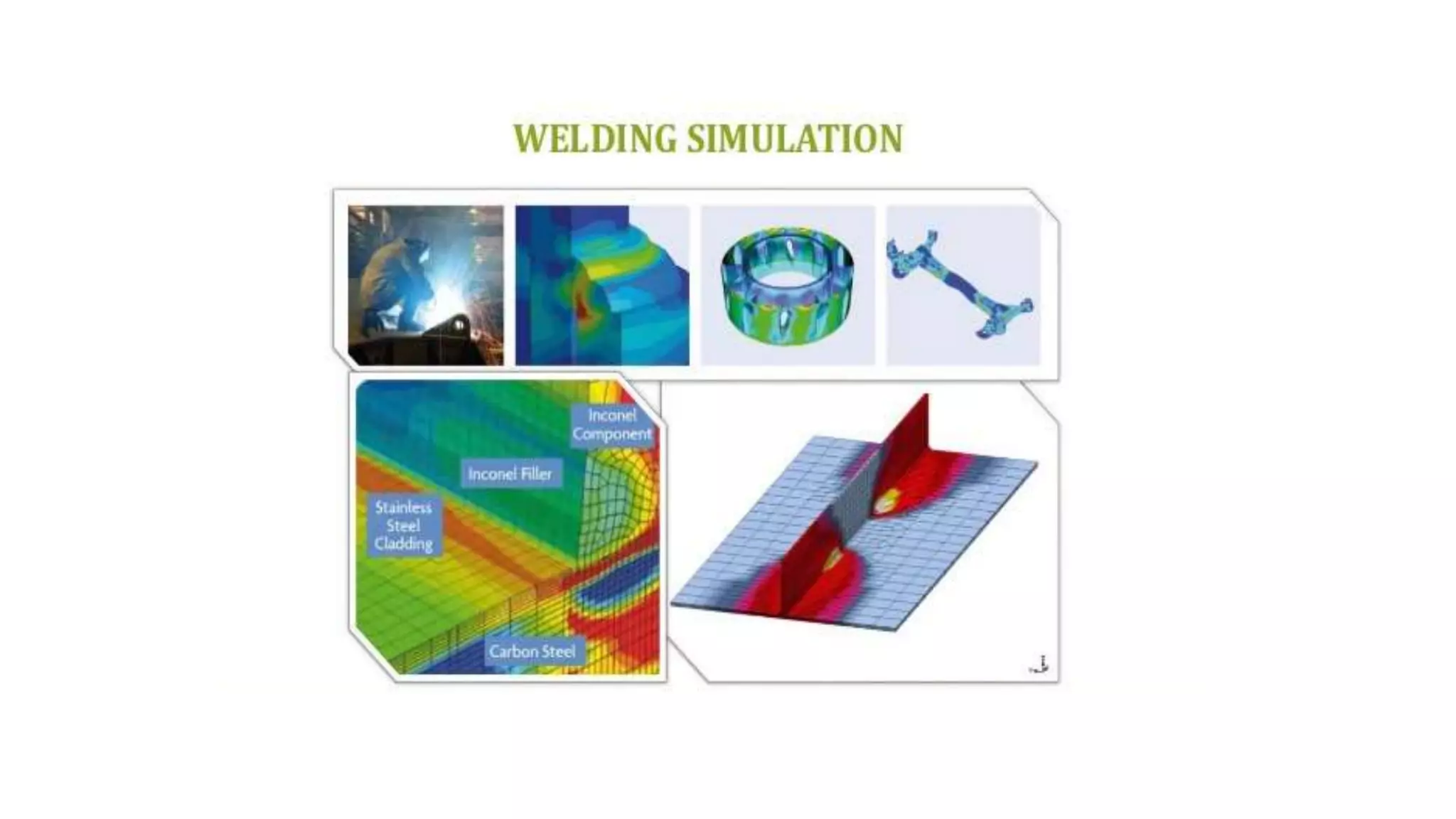
 The machining process simulation includes cutting process
simulation, welding process simulation , casting process
simulation etc.
 Simulated machining process in virtual environments
reveals errors without wasting materials , damaging
machine tools, or putting workers at risk
Virtual milling machine
Virtual Assembly Design
Environment(VADE)
 (VADE) is a virtual reality (VR) based engineering application
which allows engineers to evaluate, analyze, and plan the
assembly of mechanical systems.
 It can easily find out design error and quickly amend it to
increase design efficiency and reduce cost.
 Virtual assembly has two assembly modes
 Top to bottom assembly mode
 Bottom to top assembly mode
Virtual Test
 Test , measurement or inspection is a powerful technical
tool to guarantee Product quality.
 Virtual test is based on a simulation technology.
 In a virtual manufacturing process, test items include
Virtual component geometry size tolerance , virtual
dimension tolerance and other manufacturing parameters.
 It also includes Product performance test , distortion and
stress distribution test.
Virtual Manufacturing System
 A virtual manufacturing system is based on Virtual
manufacturing technology.
 It is the mapping of real manufacturing system in virtual
environment.
 It consists of two subsystems:
 Information system(real and virtual information)
 Physics system (real and Virtual physical system)
Functions of a Virtual Manufacturing
System
 A virtual manufacturing system provides the following
functions:
1. Integrates computing technology such as virtual
reality, visualization and multimedia to support
modelling.
2. Improve decision making and control ability in product
development process.
3. Improve enterprize ability in self-development,self-
change and self adjustment.
Requirement for a Virtual Manufacturing
System(VMS)
 Function consistency
 The function of the virtual manufacturing system should
coincide with its real manufacturing system.
 Structure similarity
 The virtual manufacturing system should have a similar
structure to the corresponding real manufacturing system.
 Intelligence
 Each node of a virtual manufacturing system needs to have
intelligence .It needs to optimize the information from the
systems point of view.
Virtual Manufacturing Applications
 Virtual Manufacturing has unlimited potential in
production design and manufacturing process applications.
 Recently Boeing used Virtual Manufacturing Technology in
the development and production of Boeing 777 airplane.
 Other examples:
1.Virtual car design
2.Product Layout Design
3.Product Assembly Simulation
4.Virtual Simulation
1.Virtual Car Design
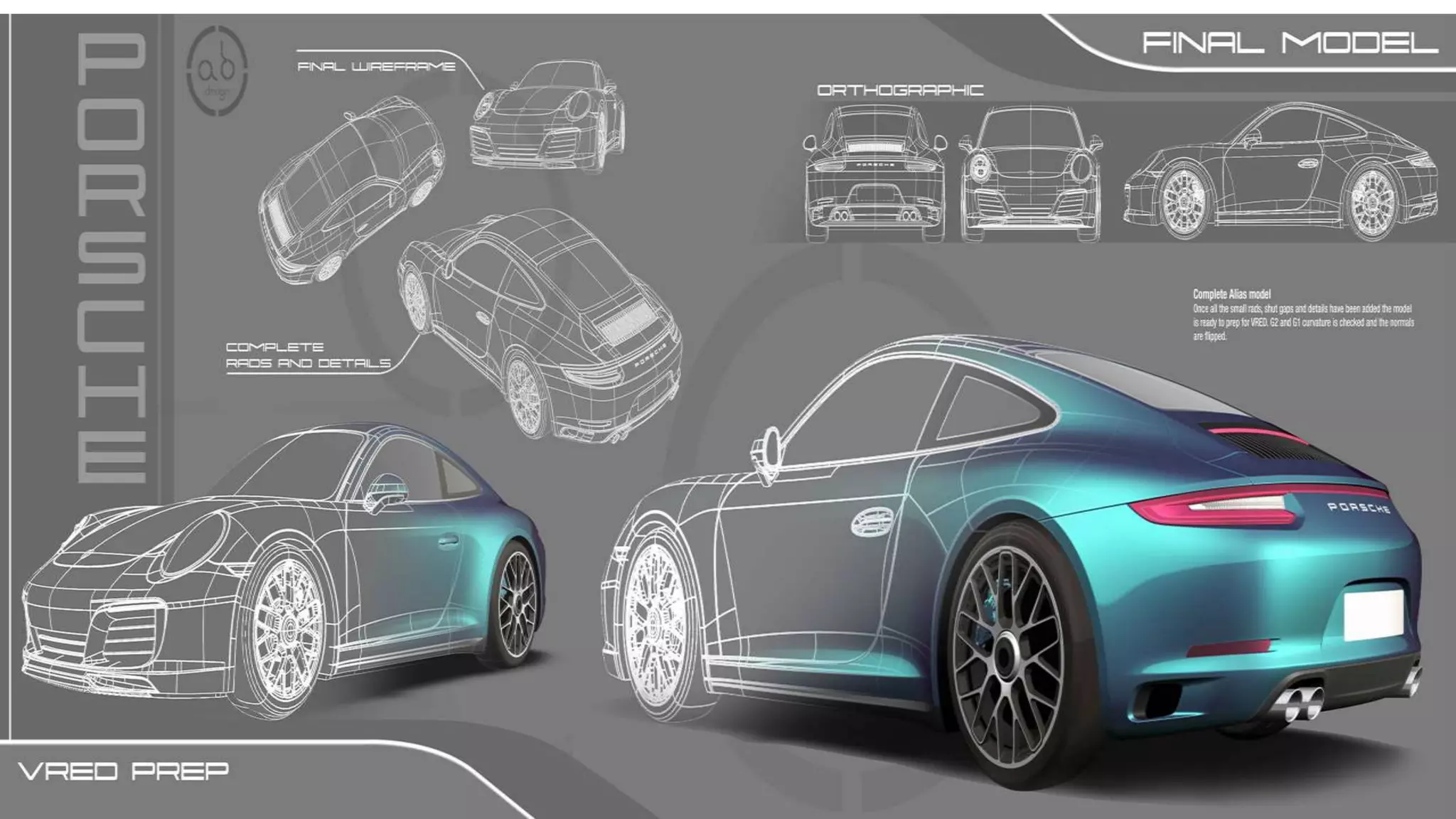
 Virtual car design has developed rapidly in recent years.
 Virtual prototype of the car is created using Autodesk
Alias(formerly known as Alias studio tools).
 It enabled more cost effective and realistic design prior to
the manufacture of physical models.
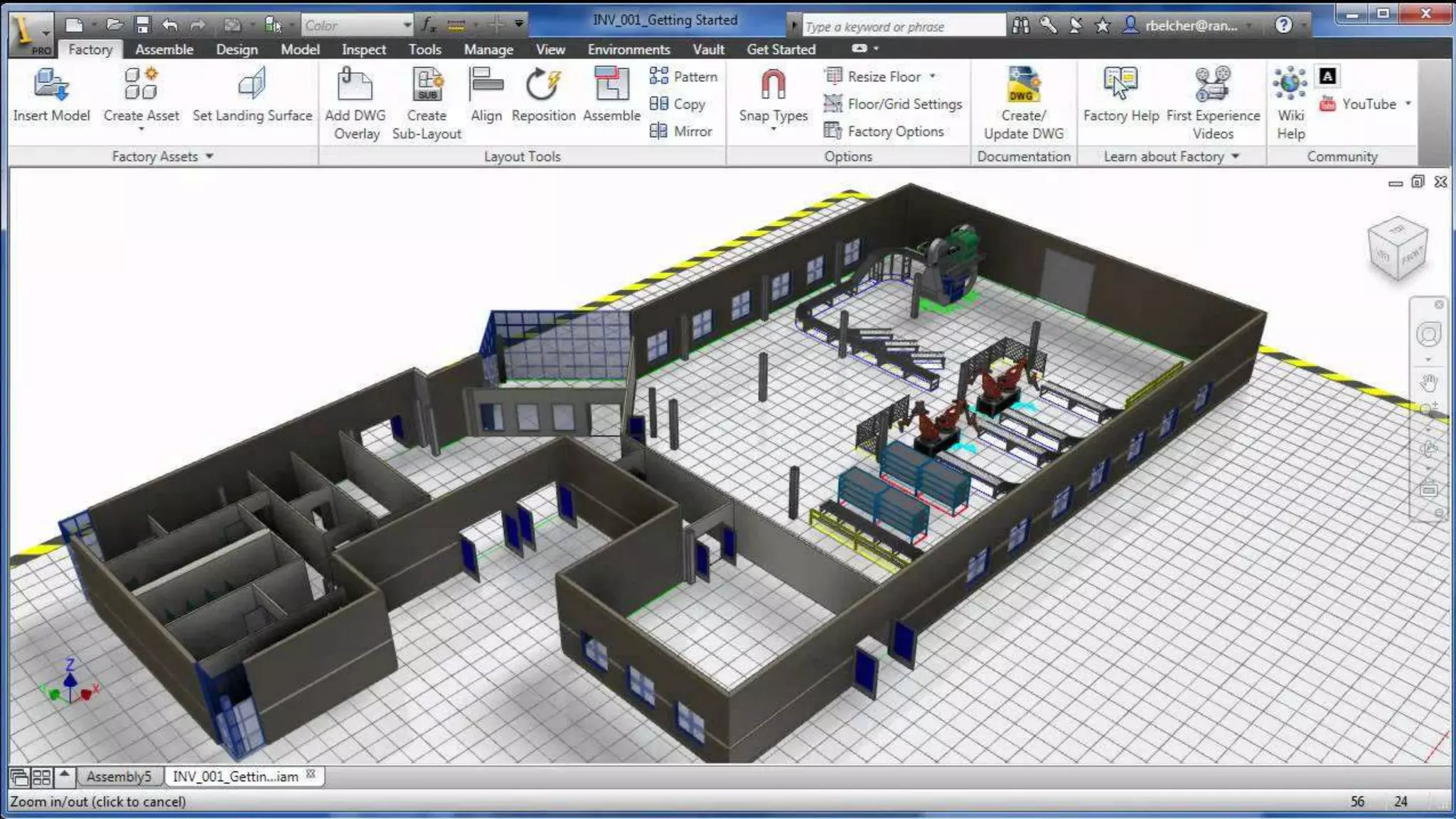
2.Product Layout Design
 Traditionally Engineers have relied on 2-D drawings to
visualize and assess changes to the production plant and
part flow.
 New Software tools enable manufacturer to visualize ,
analyze and maximize the efficiency of their proposed
factory layouts.
 VR-Fact! Is a interactive virtual factory development tool.
 The software creates a digital mock- up of a factory shop
floor.
3.Product Assembly Simulation
 Visual assembly is a combination of several technologies
such as advanced visualization ,simulation, manufacturing
procedures.
 The model is first created in a CAD system.
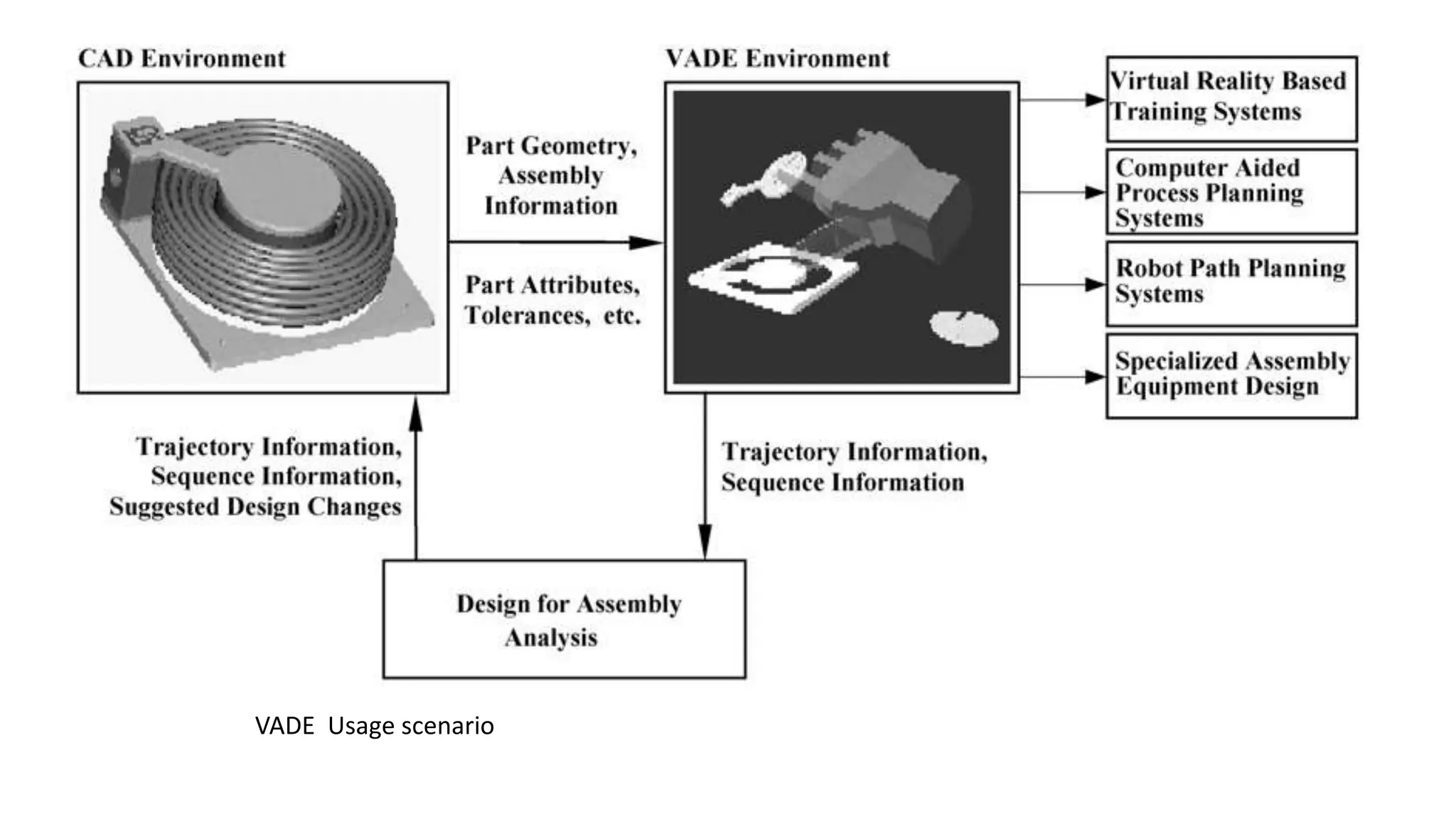
 This model is then tested in a Virtual assembly Design
Environment(VADE).
VADE Usage scenario
4.Virtual Simulation
 Virtual reality simulation is the use of 3D objects and
environments to create immersive and engaging learning
experiences.
 Different types of simulation:
 Casting Simulation
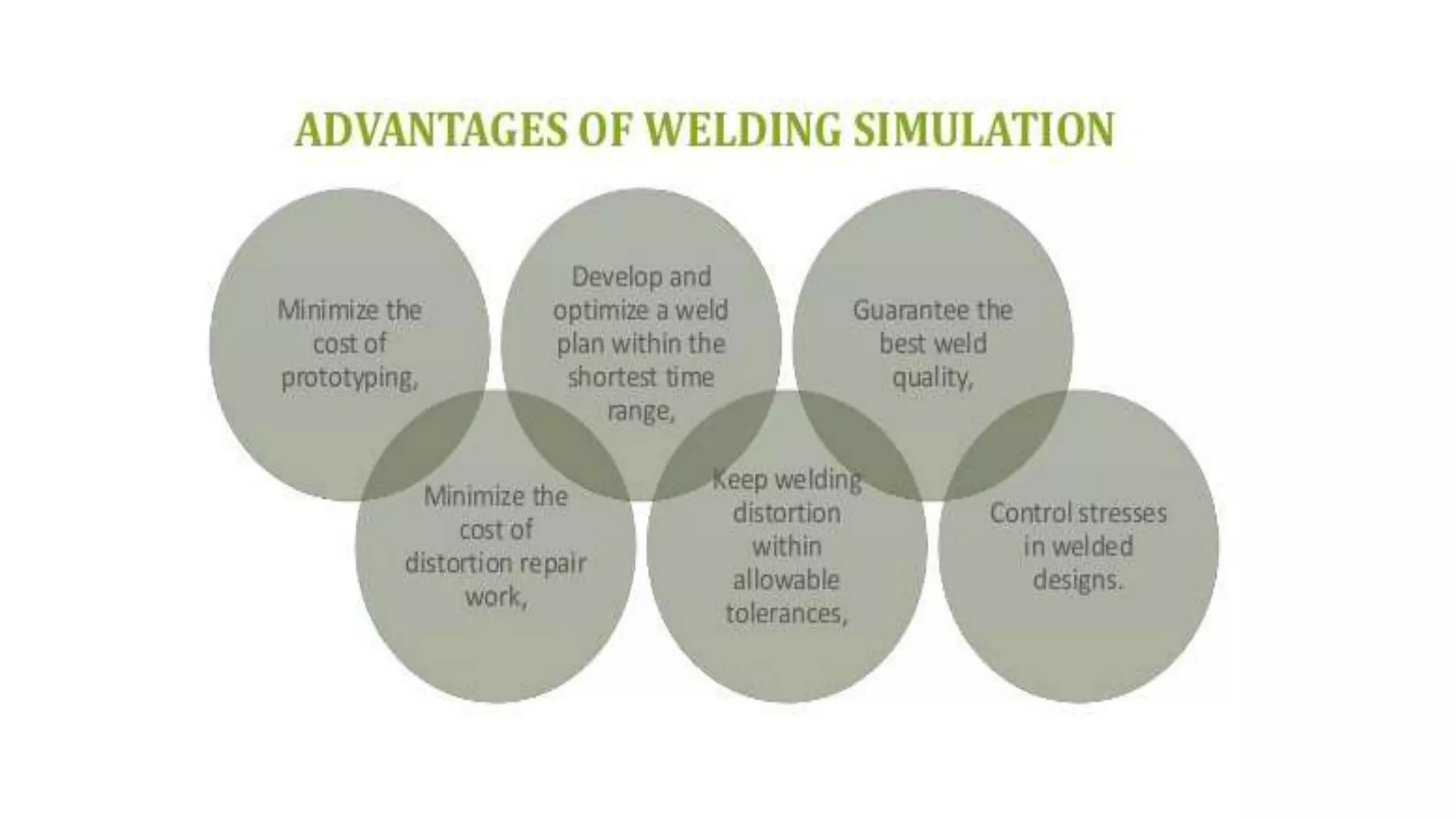
 Welding Simulation
 Forming Simulation
Conclusion
 As a conclusion , we can say that we have now reached a
point where everyone can use VM.
 It appears that VM will stimulate the need to design both
for manufacturability and manufacturing efficiency.
 leading companies are already demonstrating the
successful use of virtual manufacturing techniques.

Virtual Manufacturing seminar ppt

  • 1.
    VIRTUAL MANUFACTURING NAME :ABHAY KUMAR REG NO : ROLL NO :
  • 2.
    INTRODUCTION  It isa new kind of manufacturing technology  It is based on : • Simulation technology • Virtual reality technology • Information technology  Virtual manufacturing system is the implementation of the real manufacturing process in a computer environment.  It uses computer simulation and virtual reality technology to model the whole manufacturing system.  It allows us to predict potential problems for product functionality and manufacturability before real manufacturing occurs.
  • 3.
    Concept of VirtualManufacturing
  • 4.
  • 5.
    Factors that affectsManufacturing  Complex Manufacturing environment and frequent product redesign.  When a new product is designed , it is hard to evaluate the benefits and risks before it is put into production.  Difficult to gather the real manufacturing information in different production stages.  Difficult to adjust the relationship between design and manufacturing to ensure enterprise gets maximum benefit.
  • 6.
    Classification Based on typesof products and process design Virtual Manufacturing is classified as: 1. Design centered VM  It provides an environment for designers to design products and to evaluate manufacturability of products. 2. Production centered VM  It provides an environment for generating process plans and production plans. 3. Control centered VM  It uses machine control models to achieve process optimization during the actual production cycle.
  • 7.
    Related Technology ForVM 1. Virtual reality 2. Software Technologies 3. Hardware equipment
  • 8.
    • Virtual realityis a computer-generated interactive three-dimensional environment to simulate reality. • It is one of the most successful technology to be used since 1990s. • Computers in Virtual reality systems can track down the interactive input of the customer and can use them to improve performance. • Interaction ,immersion and imagination are the three basic characteristics of a man- machine interface in a virtual manufacturing.
  • 9.
    Software Technologies  Somesoftware technologies used in virtual manufacturing are:  Environment construction Technology  Information Representation  Meta-modelling  Simulation
  • 10.
    Virtual Manufacturing Technology Virtual manufacturing technology is the key content of a virtual manufacturing system .It is a system-integrated technology which includes simulation , modelling and manufacturing.  It can predict product performance and manufacturability.  Different Virtual Manufacturing Techniques are listed below 1. Virtual Design 2.Virtual Machining 3.Virtual Assembly 4.Virtual Test
  • 11.
    Virtual Design  VirtualDesign is a process and a way of working that involves the management of integrated multidisciplinary performance models.  It is a way of coming up with an ideal strategy for a given project that incorporates the right people and the right technology.  Virtual design and construction can be used by construction companies to demonstrate the organizational and collaborative skills  With VDC, engineers and architects can work together to create a visual model of the project for presentation to the client
  • 12.
    Virtual Machining  VirtualMachining refers to making changes in the geometrical characteristics and physical performance of the product in a virtual environment.  The machining process simulation includes cutting process simulation, welding process simulation , casting process simulation etc.  Simulated machining process in virtual environments reveals errors without wasting materials , damaging machine tools, or putting workers at risk
  • 13.
  • 14.
    Virtual Assembly Design Environment(VADE) (VADE) is a virtual reality (VR) based engineering application which allows engineers to evaluate, analyze, and plan the assembly of mechanical systems.  It can easily find out design error and quickly amend it to increase design efficiency and reduce cost.  Virtual assembly has two assembly modes  Top to bottom assembly mode  Bottom to top assembly mode
  • 15.
    Virtual Test  Test, measurement or inspection is a powerful technical tool to guarantee Product quality.  Virtual test is based on a simulation technology.  In a virtual manufacturing process, test items include Virtual component geometry size tolerance , virtual dimension tolerance and other manufacturing parameters.  It also includes Product performance test , distortion and stress distribution test.
  • 16.
    Virtual Manufacturing System A virtual manufacturing system is based on Virtual manufacturing technology.  It is the mapping of real manufacturing system in virtual environment.  It consists of two subsystems:  Information system(real and virtual information)  Physics system (real and Virtual physical system)
  • 18.
    Functions of aVirtual Manufacturing System  A virtual manufacturing system provides the following functions: 1. Integrates computing technology such as virtual reality, visualization and multimedia to support modelling. 2. Improve decision making and control ability in product development process. 3. Improve enterprize ability in self-development,self- change and self adjustment.
  • 19.
    Requirement for aVirtual Manufacturing System(VMS)  Function consistency  The function of the virtual manufacturing system should coincide with its real manufacturing system.  Structure similarity  The virtual manufacturing system should have a similar structure to the corresponding real manufacturing system.  Intelligence  Each node of a virtual manufacturing system needs to have intelligence .It needs to optimize the information from the systems point of view.
  • 20.
    Virtual Manufacturing Applications Virtual Manufacturing has unlimited potential in production design and manufacturing process applications.  Recently Boeing used Virtual Manufacturing Technology in the development and production of Boeing 777 airplane.  Other examples: 1.Virtual car design 2.Product Layout Design 3.Product Assembly Simulation 4.Virtual Simulation
  • 21.
    1.Virtual Car Design Virtual car design has developed rapidly in recent years.  Virtual prototype of the car is created using Autodesk Alias(formerly known as Alias studio tools).  It enabled more cost effective and realistic design prior to the manufacture of physical models.
  • 23.
    2.Product Layout Design Traditionally Engineers have relied on 2-D drawings to visualize and assess changes to the production plant and part flow.  New Software tools enable manufacturer to visualize , analyze and maximize the efficiency of their proposed factory layouts.  VR-Fact! Is a interactive virtual factory development tool.  The software creates a digital mock- up of a factory shop floor.
  • 25.
    3.Product Assembly Simulation Visual assembly is a combination of several technologies such as advanced visualization ,simulation, manufacturing procedures.  The model is first created in a CAD system.  This model is then tested in a Virtual assembly Design Environment(VADE).
  • 26.
  • 27.
    4.Virtual Simulation  Virtualreality simulation is the use of 3D objects and environments to create immersive and engaging learning experiences.  Different types of simulation:  Casting Simulation  Welding Simulation  Forming Simulation
  • 30.
    Conclusion  As aconclusion , we can say that we have now reached a point where everyone can use VM.  It appears that VM will stimulate the need to design both for manufacturability and manufacturing efficiency.  leading companies are already demonstrating the successful use of virtual manufacturing techniques.