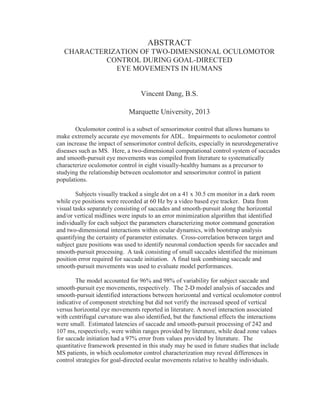
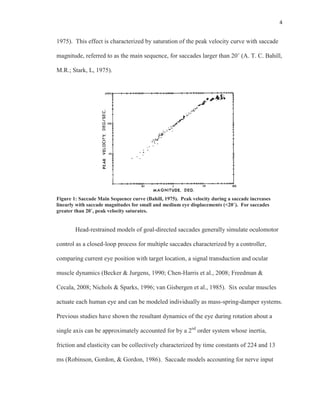
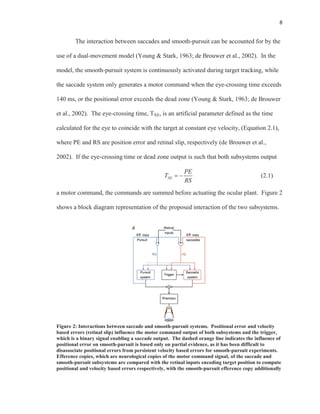
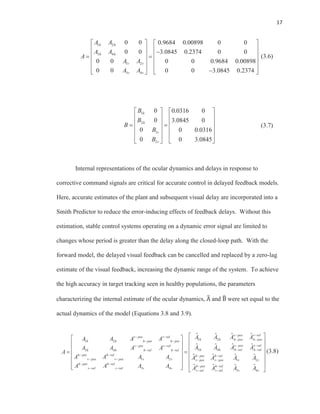
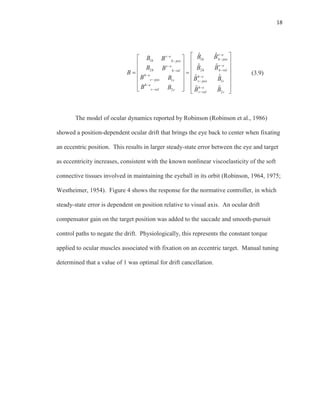
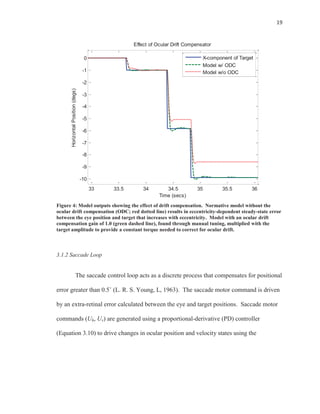
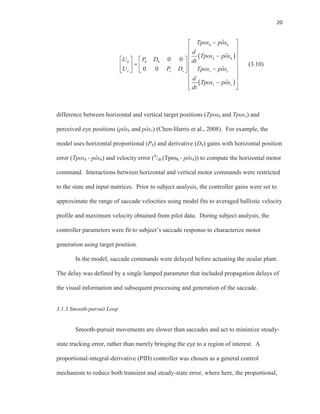
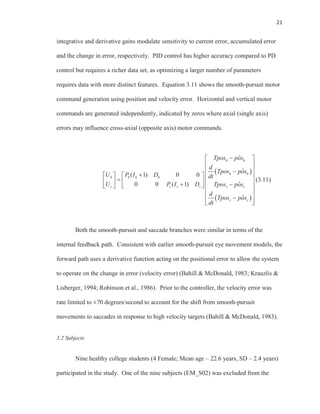
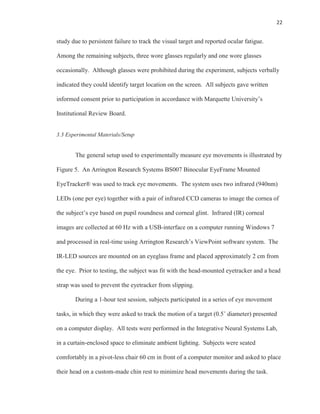
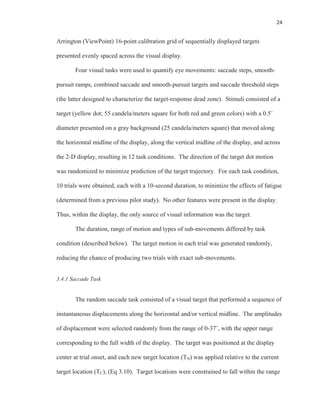
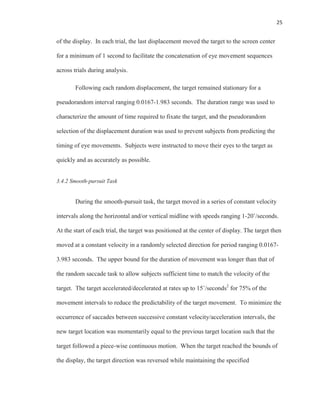
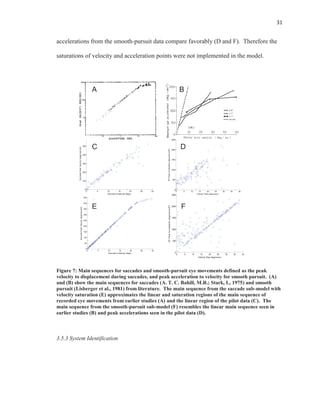
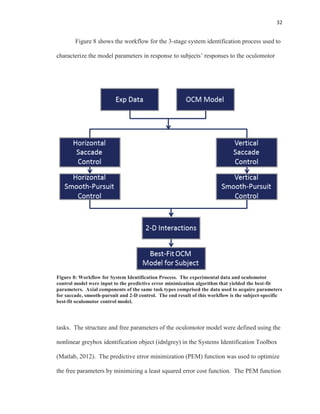
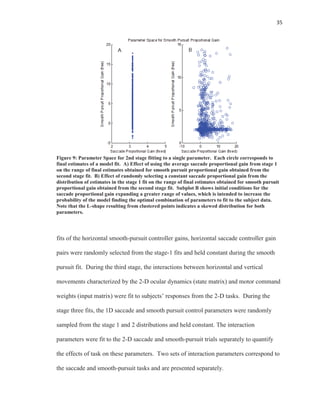
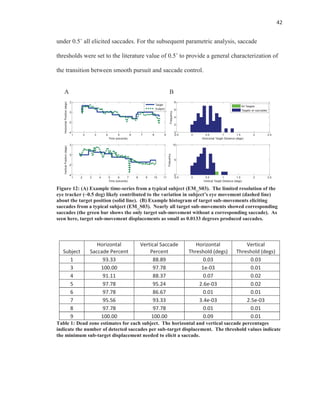
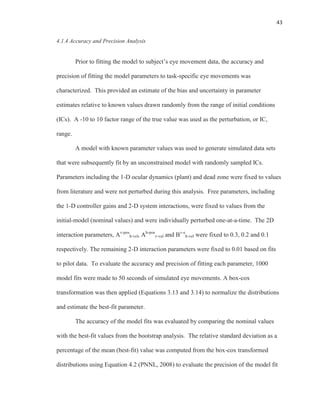
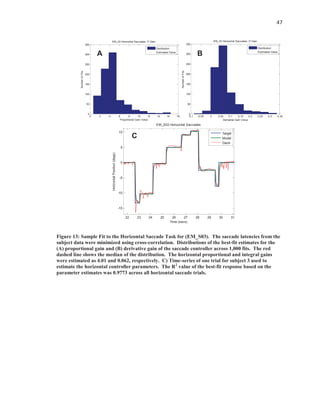
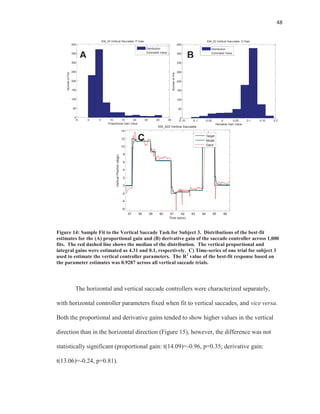
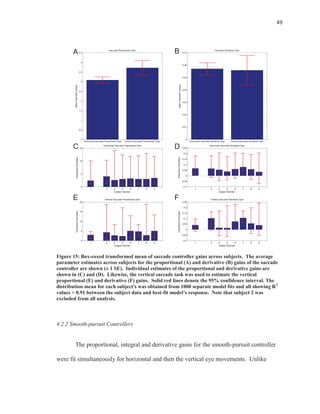
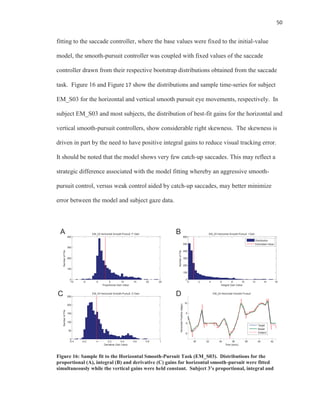
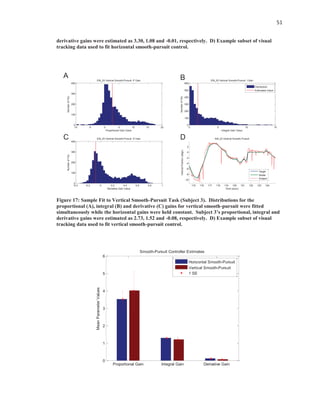
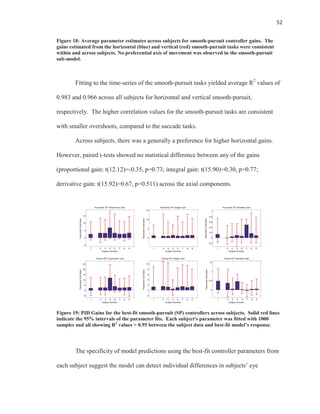
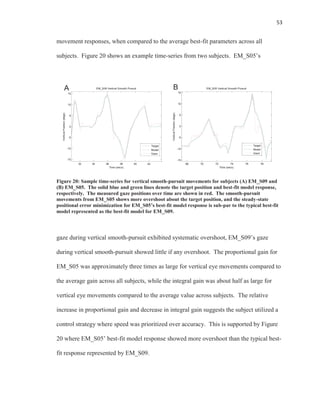
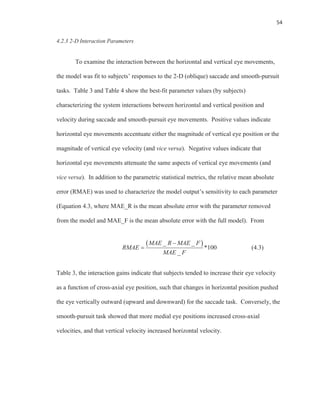
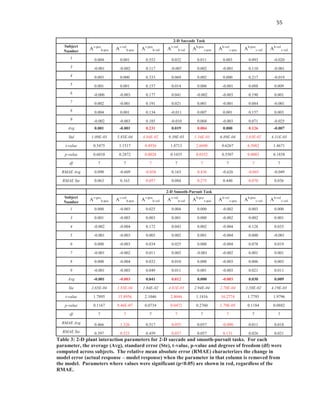
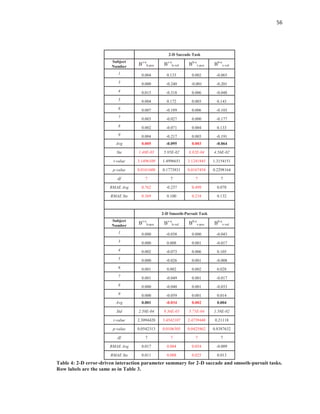
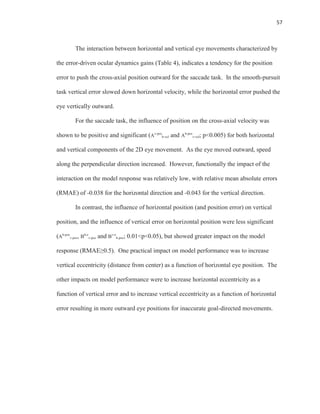
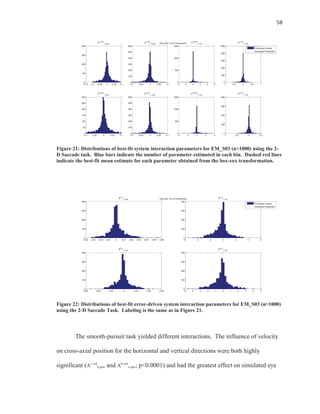
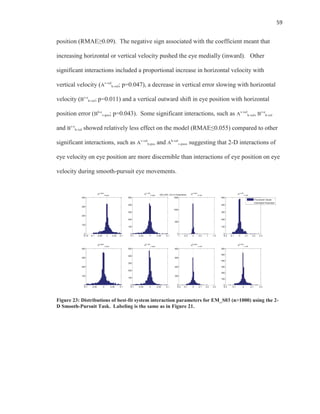
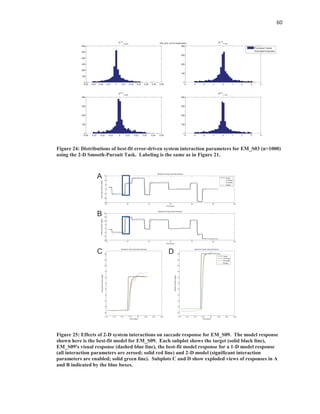
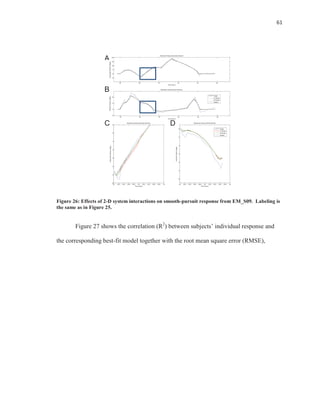
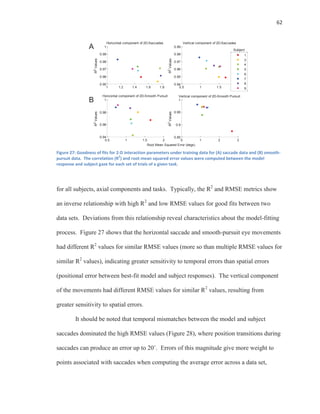
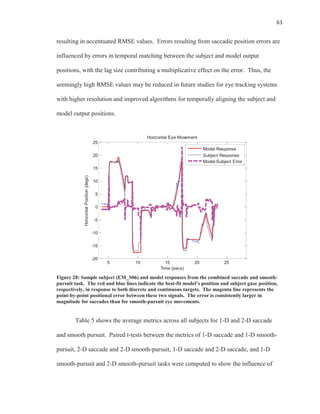
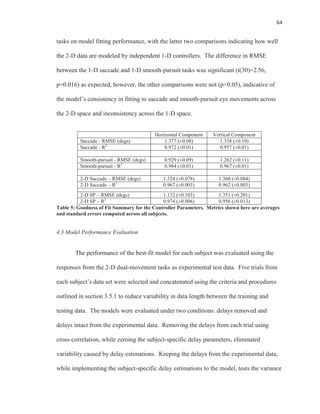
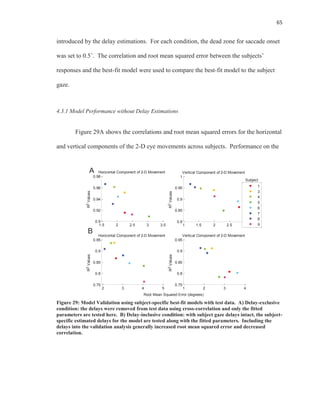
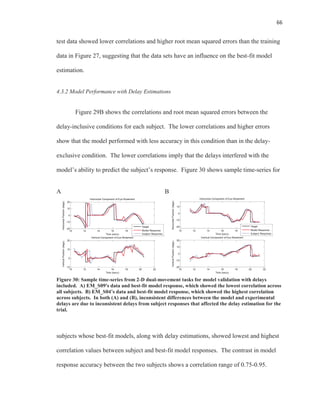
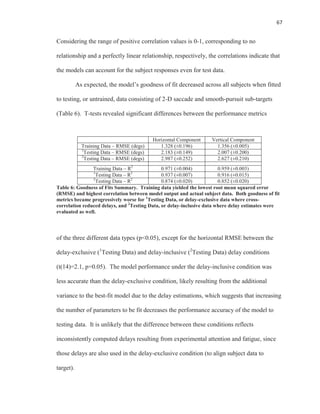
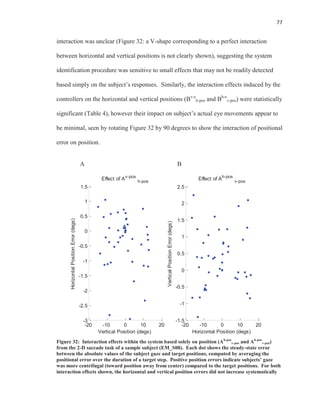
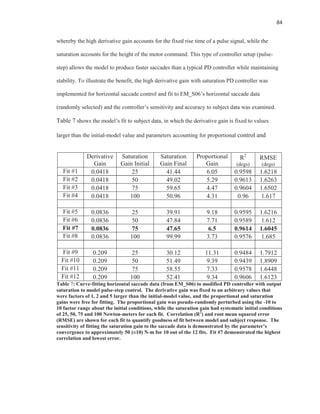
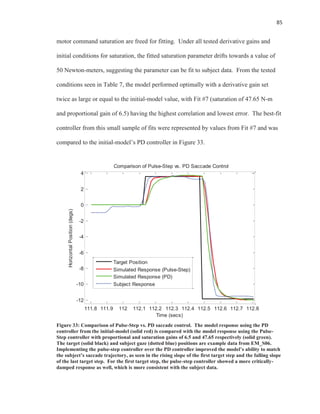
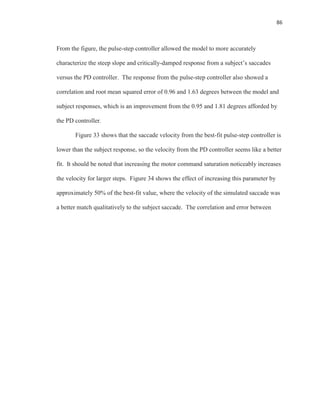
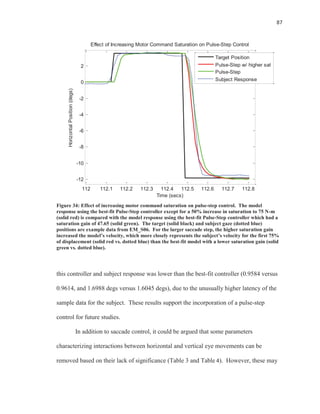
This document describes a study that developed and applied a two-dimensional computational model of oculomotor control to characterize eye movements in eight healthy human subjects. The study aimed to systematically characterize individual subjects' saccade and smooth pursuit control and identify any interactions between horizontal and vertical eye movement control. Subjects performed various visual tasks while eye position was recorded. A system identification process was used to characterize each subject's oculomotor control parameters by fitting experimental eye movement data to the computational model. The model accounted for over 96% of variability in subjects' eye movements. The study provided quantitative characterization of individual subjects' saccade and smooth pursuit control strategies and identified some small interactions between horizontal and vertical control.