Conferencing in the Sector
   - Research Findings
    Peter James and Lisa Hopkinson
   SusteIT, University of Bradford, UK
         www.goodcampus.org

  6 March 2012, University of Warwick
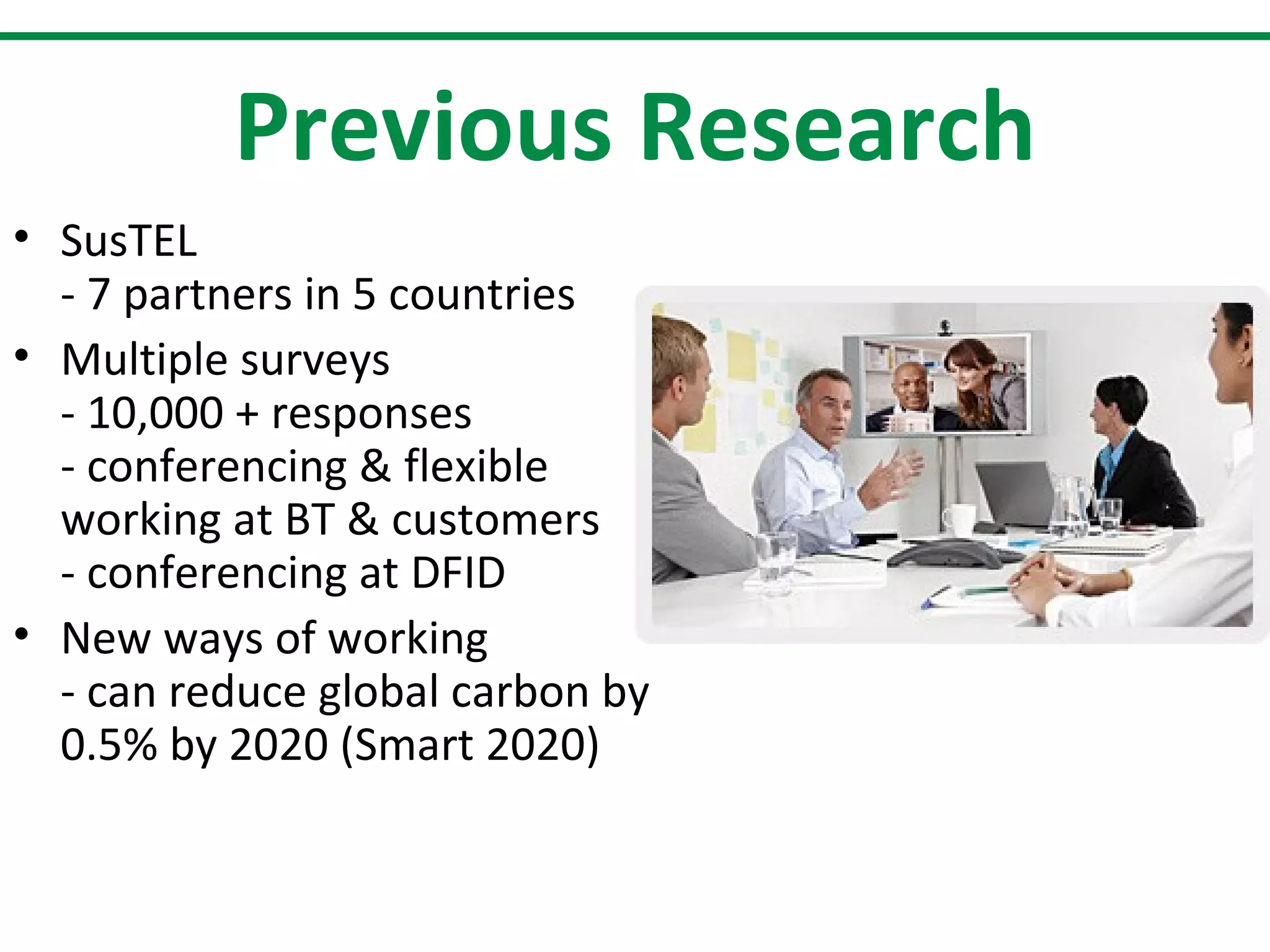
Previous Research
• SusTEL
  - 7 partners in 5 countries
• Multiple surveys
  - 10,000 + responses
  - conferencing & flexible
  working at BT & customers
  - conferencing at DFID
• New ways of working
  - can reduce global carbon by
  0.5% by 2020 (Smart 2020)
Virtually Sustainable
• One of 3 JISC Green IT projects
• Surveys in 9 universities
  - Aberystwyth, Bangor, Bradford, Glasgow, Leeds,
  MMU, Staffordshire, Swansea, UCLAN
  - 1120 users; 684 non-users
• Survey of university travel coordinators
• Three workshops with c 150 attendees
• 11 Briefing papers and case studies
  - e.g. Llandeillo College; University of Kent
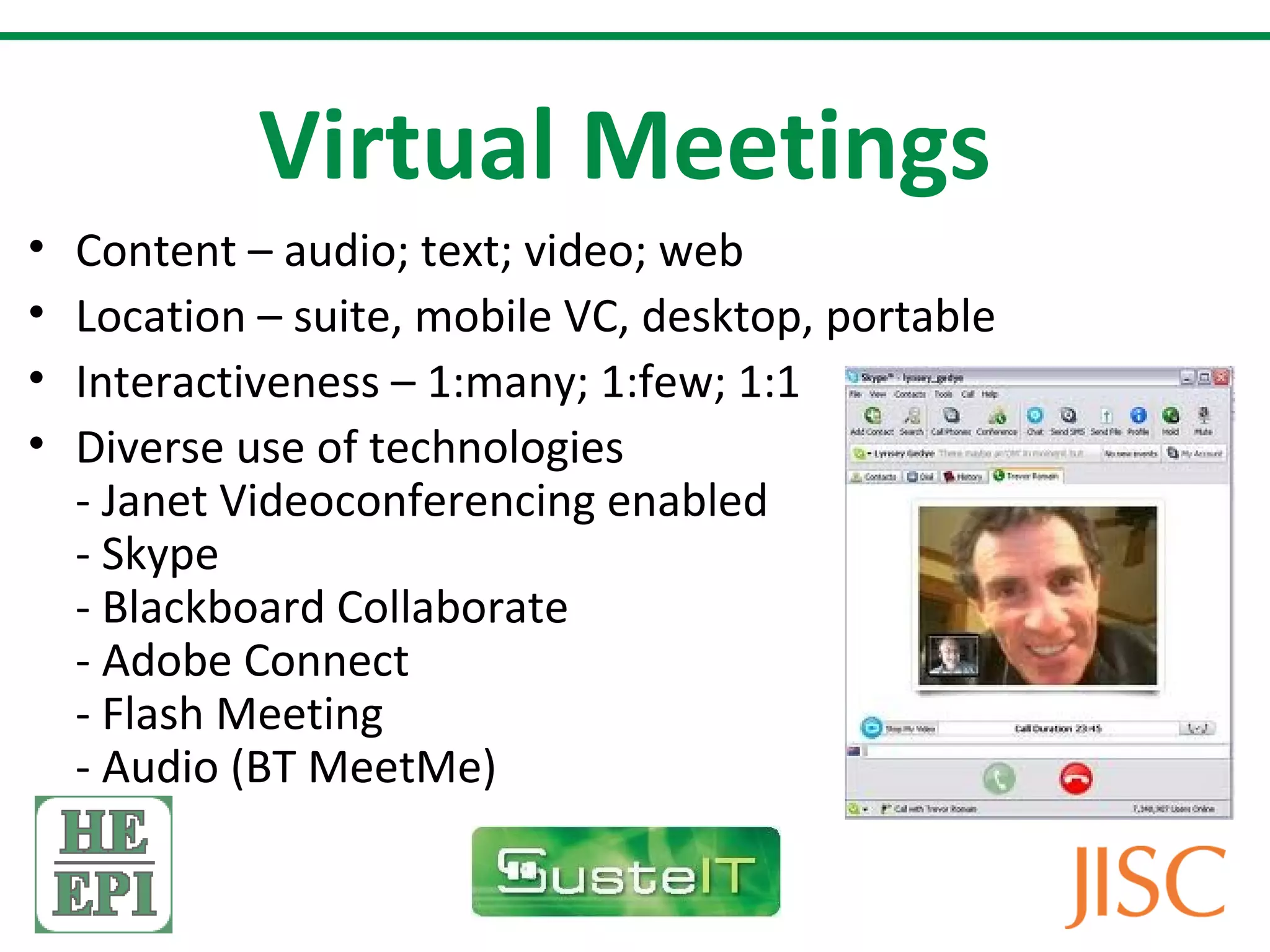
Virtual Meetings
•   Content – audio; text; video; web
•   Location – suite, mobile VC, desktop, portable
•   Interactiveness – 1:many; 1:few; 1:1
•   Diverse use of technologies
    - Janet Videoconferencing enabled
    - Skype
    - Blackboard Collaborate
    - Adobe Connect
    - Flash Meeting
    - Audio (BT MeetMe)
Conferencing Works!
• Last virtual meeting
  - completely successful for 65%
  - partially successful for 28%
  - avoided travel for 54%
  - average 300/1346 miles avoidance
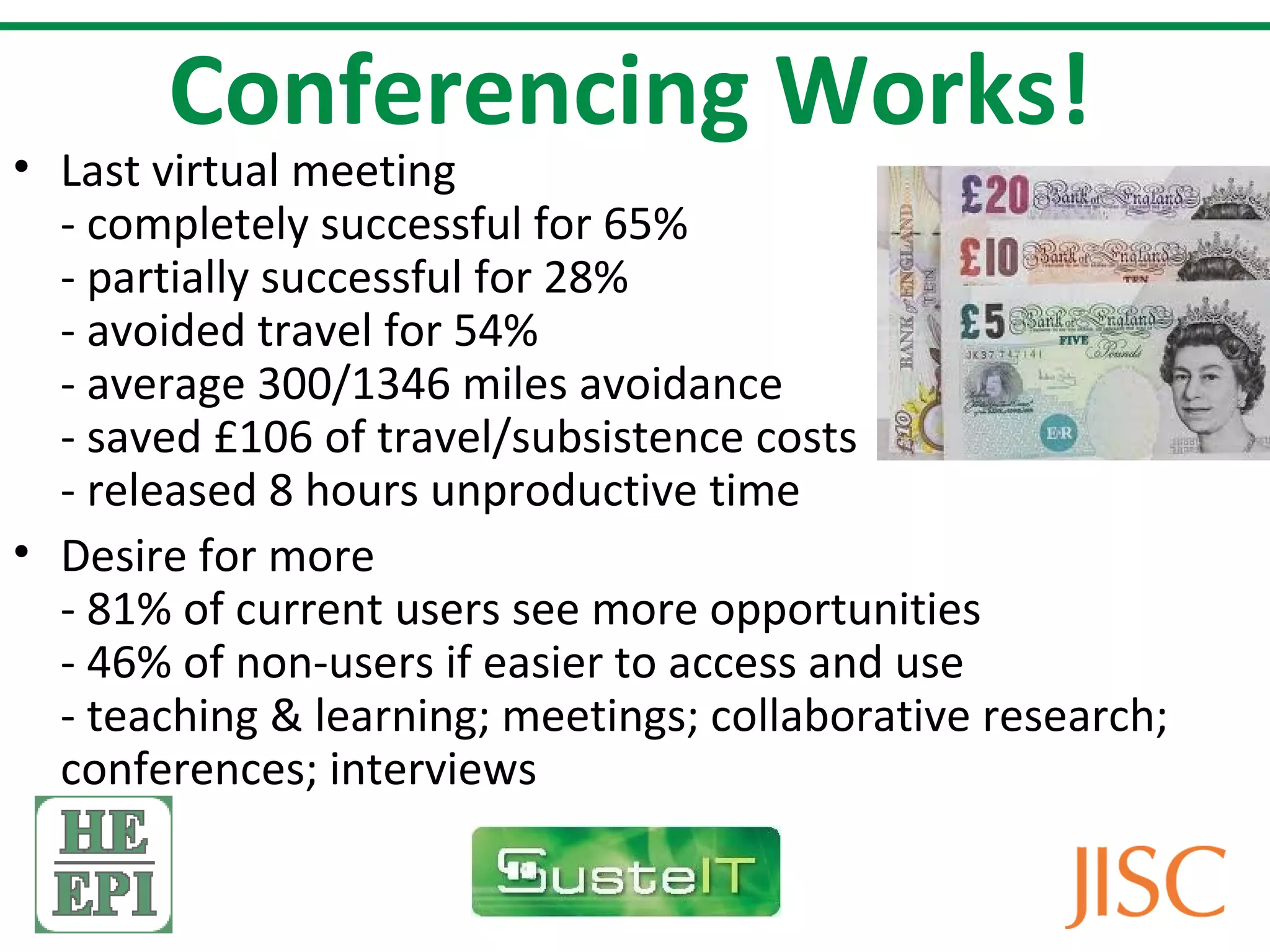
  - saved £106 of travel/subsistence costs
  - released 8 hours unproductive time
• Desire for more
  - 81% of current users see more opportunities
  - 46% of non-users if easier to access and use
  - teaching & learning; meetings; collaborative research;
  conferences; interviews
Sector Patterns
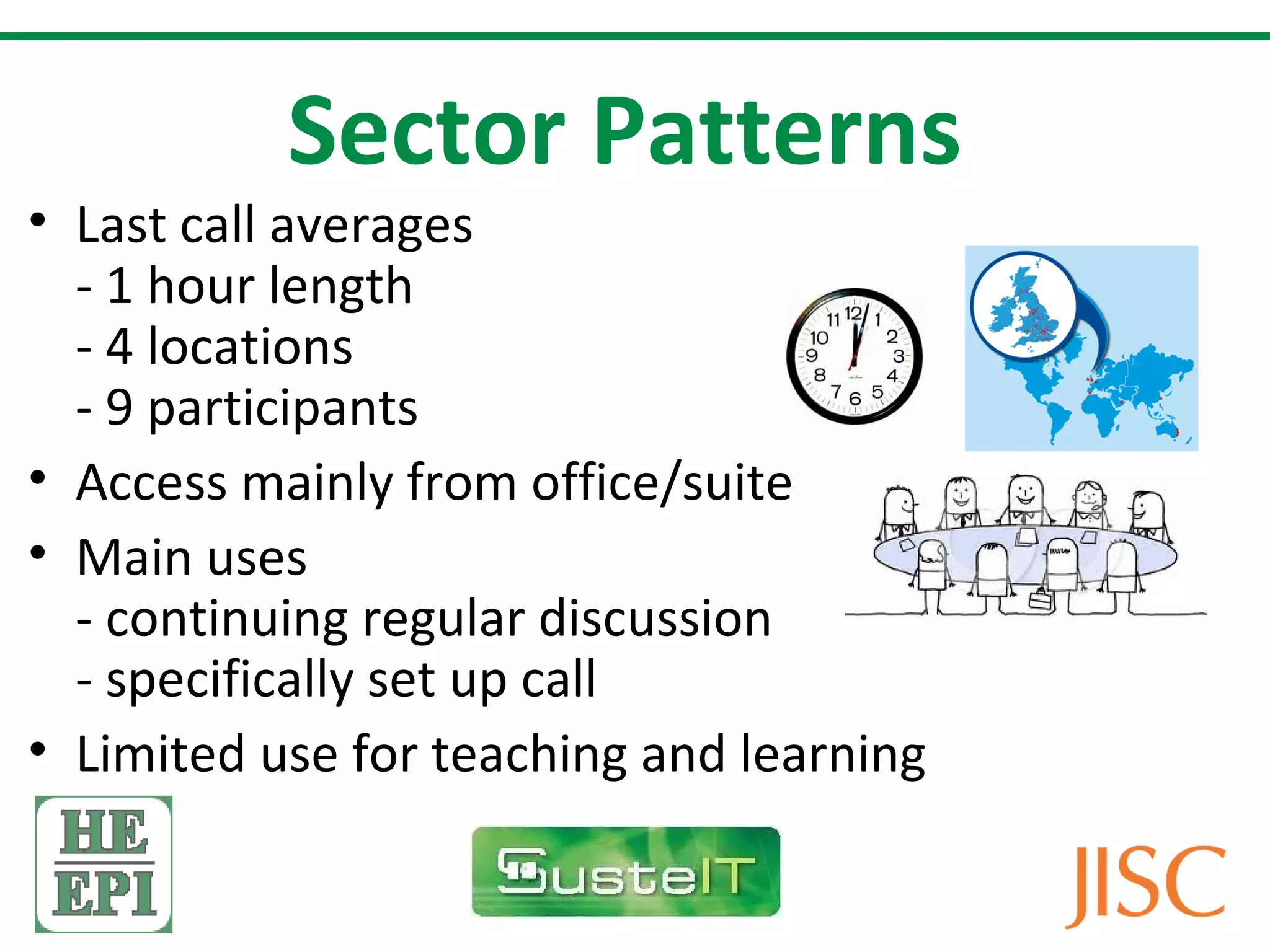
• Last call averages
  - 1 hour length
  - 4 locations
  - 9 participants
• Access mainly from office/suite
• Main uses
  - continuing regular discussion
  - specifically set up call
• Limited use for teaching and learning
Key Benefits - 1
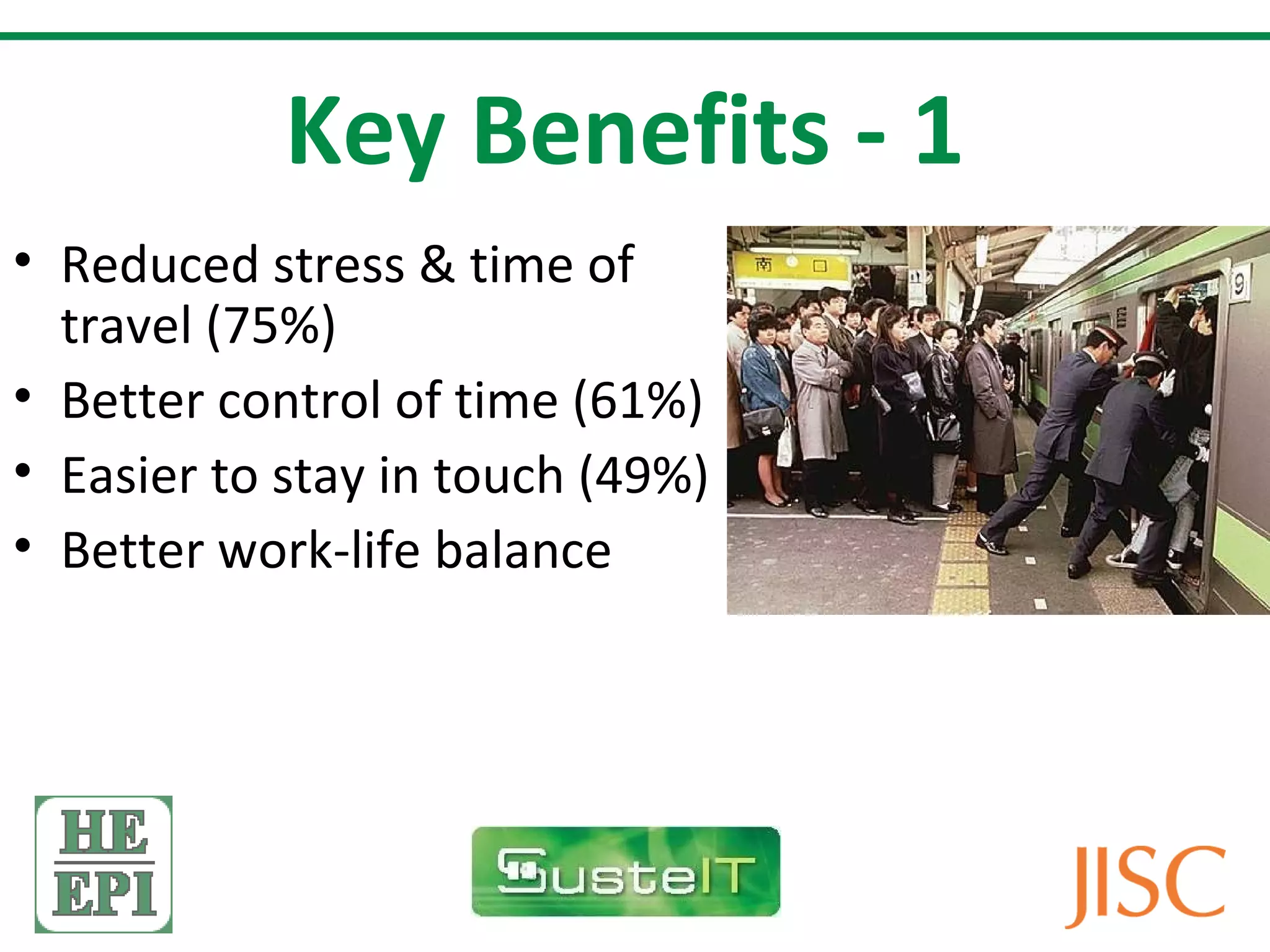
• Reduced stress & time of
  travel (75%)
• Better control of time (61%)
• Easier to stay in touch (49%)
• Better work-life balance
Key Benefits - 2
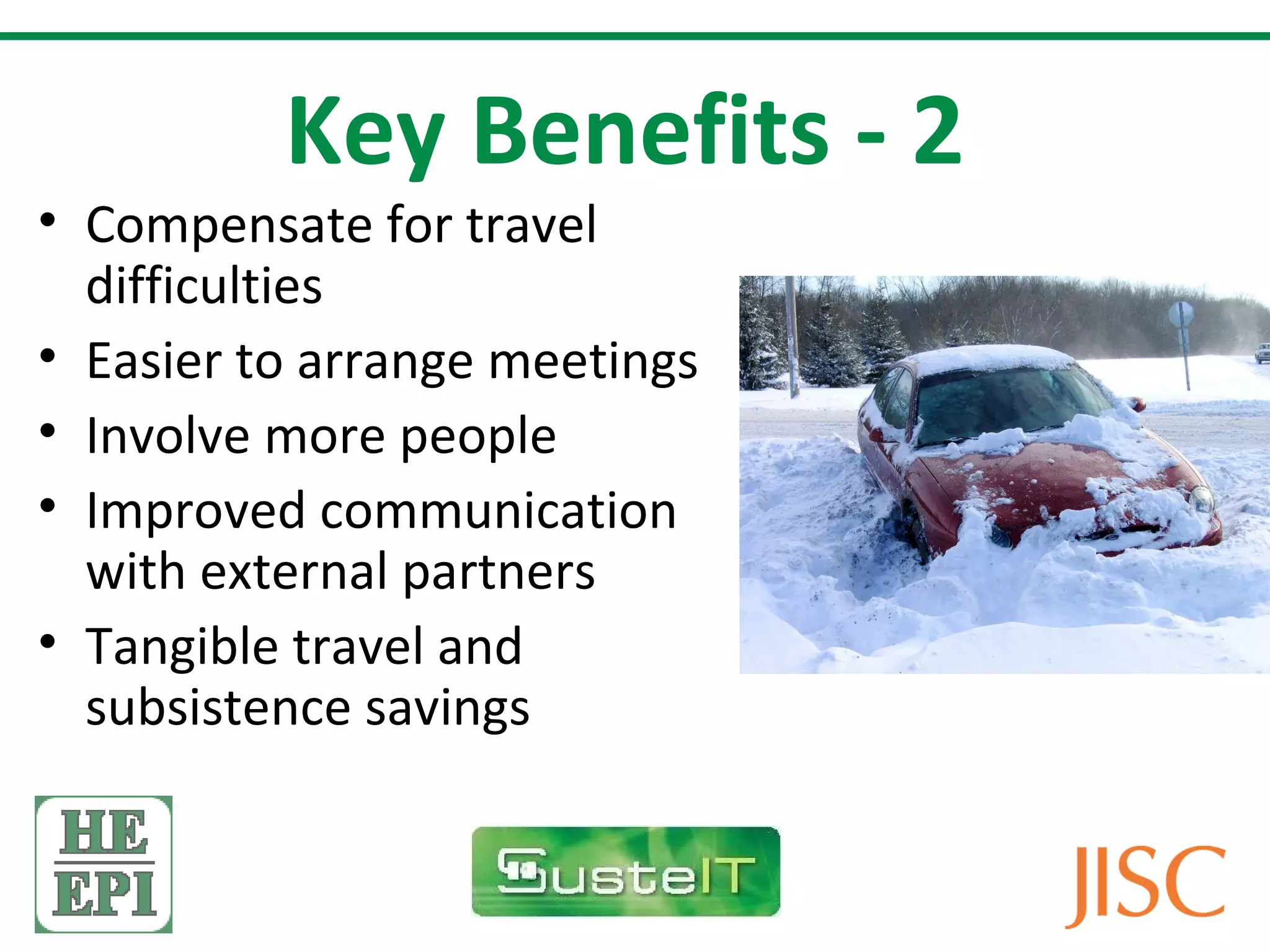
• Compensate for travel
  difficulties
• Easier to arrange meetings
• Involve more people
• Improved communication
  with external partners
• Tangible travel and
  subsistence savings
Disbenefits
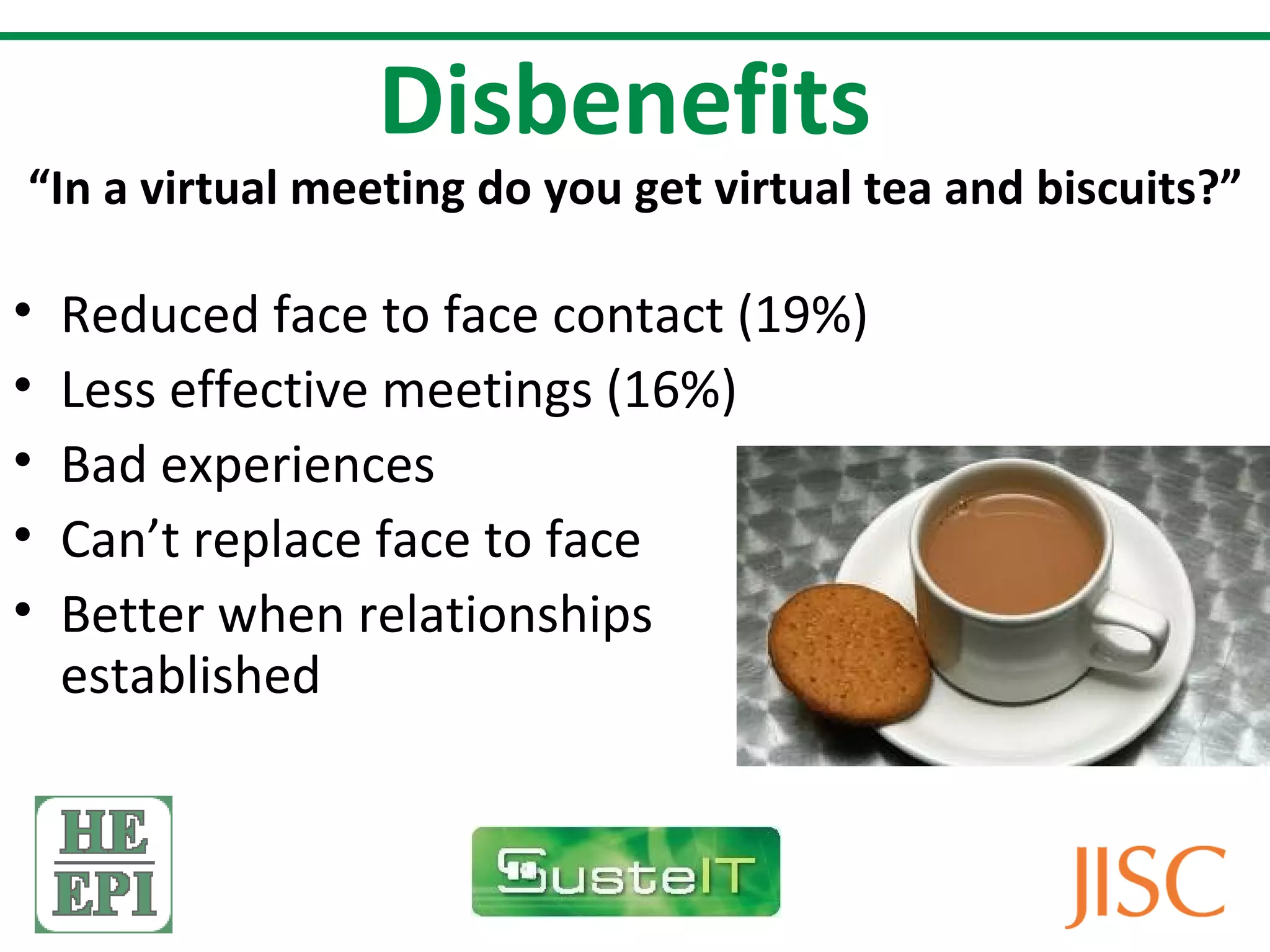
“In a virtual meeting do you get virtual tea and biscuits?”

•   Reduced face to face contact (19%)
•   Less effective meetings (16%)
•   Bad experiences
•   Can’t replace face to face
•   Better when relationships
    established
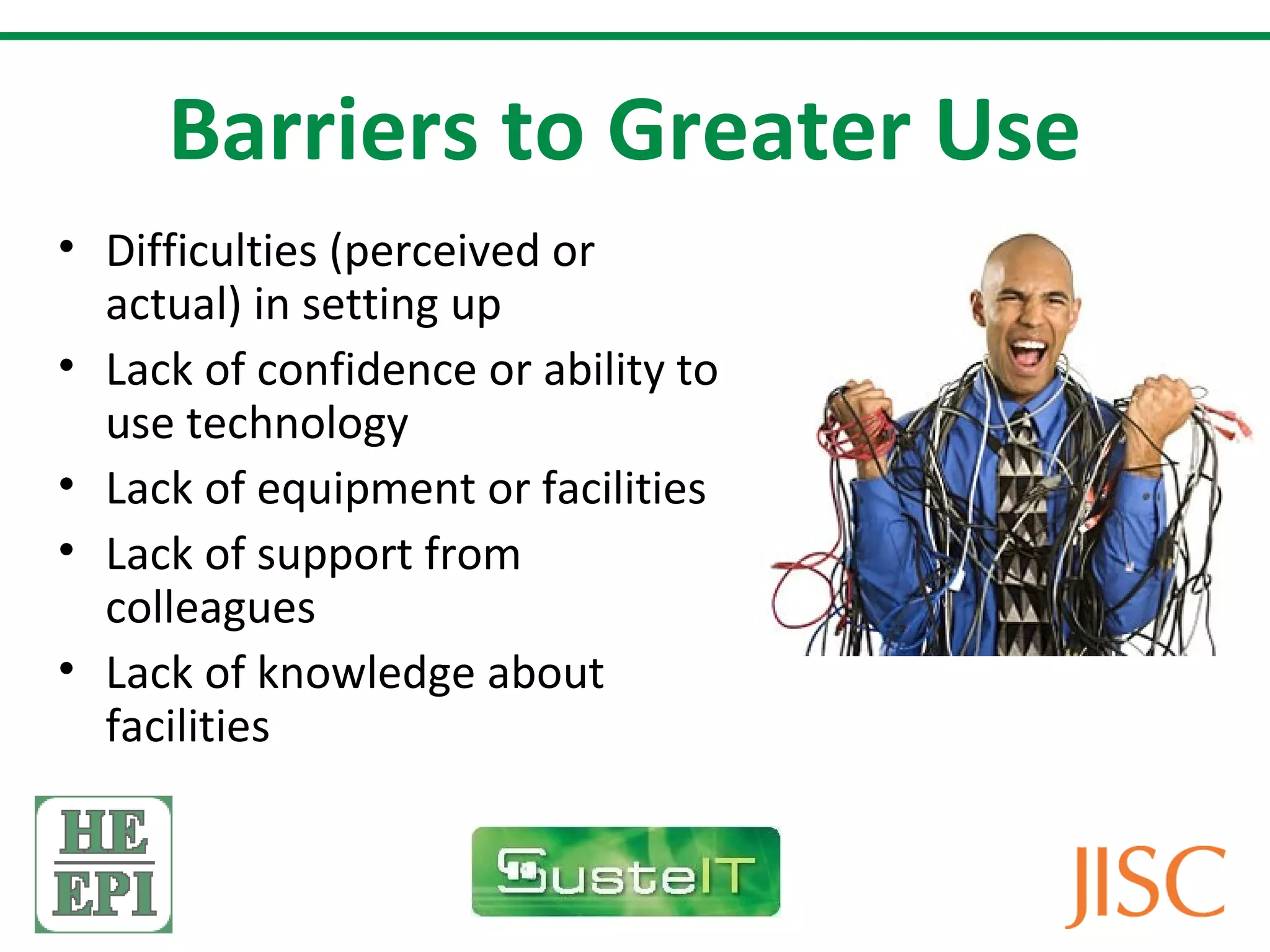
Barriers to Greater Use
• Difficulties (perceived or
  actual) in setting up
• Lack of confidence or ability to
  use technology
• Lack of equipment or facilities
• Lack of support from
  colleagues
• Lack of knowledge about
  facilities
Travel Coordinators - 1
• 52 individuals from 44 separate institutions
• 31%: institutional travel plan encourages virtual meetings
  & teleworking
• 66%: institution has no quantified targets to reduce staff
  business travel
• A few, e.g. Glasgow, have specific VC targets
• 72%: considerable or very considerable potential at their
  institution, especially business meetings & intra-site travel
Travel Coordinators - 2
•   Main barriers similar to university surveys
•   3 best means of encouraging greater uptake:
•   Senior manager support e.g. by using it more (66%)
•   Simple technical guides to technologies (53%)
•   Demo projects in pilot areas e.g. estates, IT (53%)
Conclusions
• Considerable benefits from, and opportunities for
  more, virtual meetings
• Virtual meetings don’t always replace travel
  - new uses; stimulating contact
• Considerable CO2 benefits for all
  - largest element in research unis is (long haul) air
• Air generally dominates CO2 equivalent travel
• But overall business benefits are mainly related
  to short-medium distance travel air travel
• Best to target UNPRODUCTIVE travel?
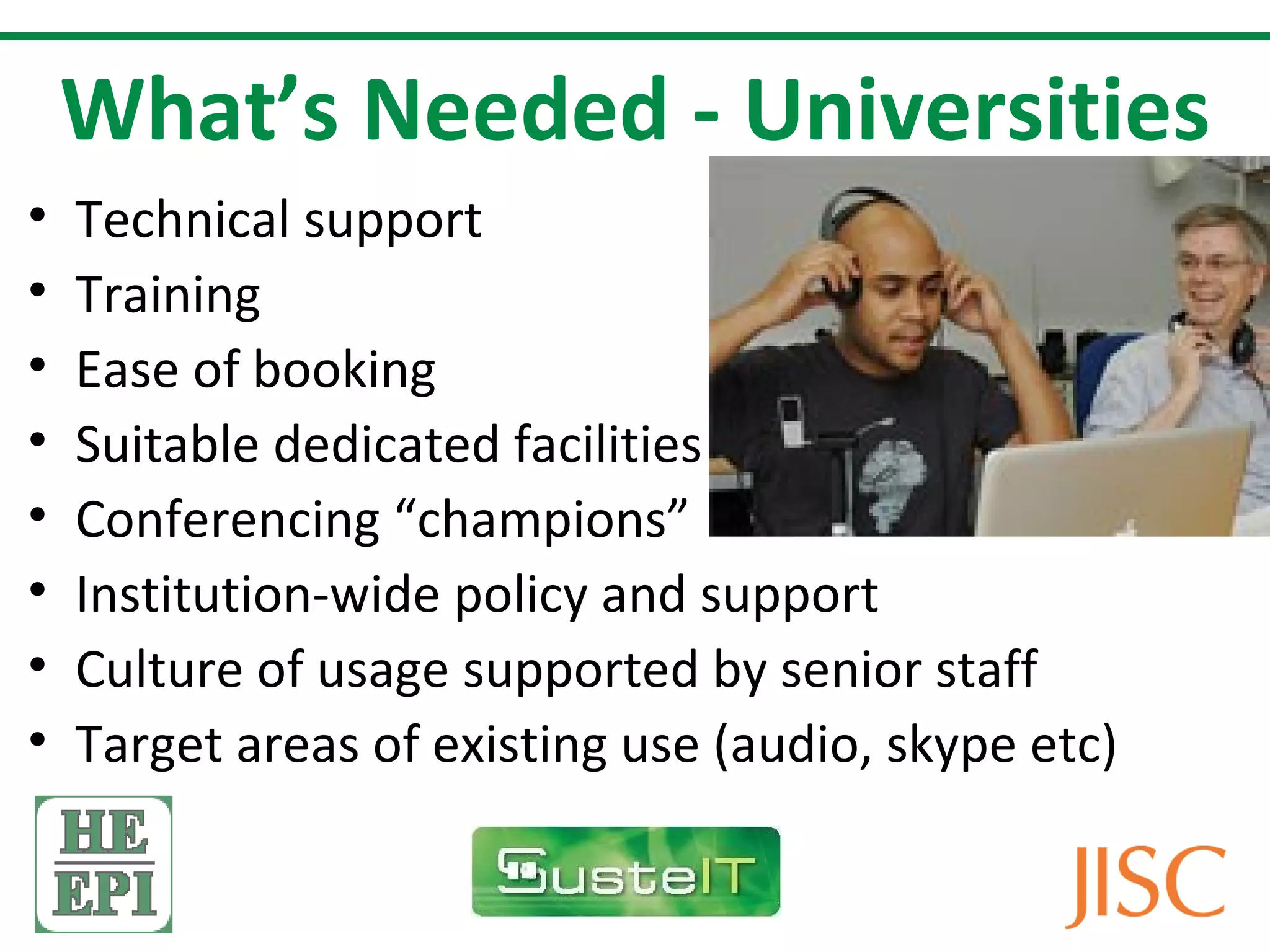
What’s Needed - Universities
•   Technical support
•   Training
•   Ease of booking
•   Suitable dedicated facilities
•   Conferencing “champions”
•   Institution-wide policy and support
•   Culture of usage supported by senior staff
•   Target areas of existing use (audio, skype etc)
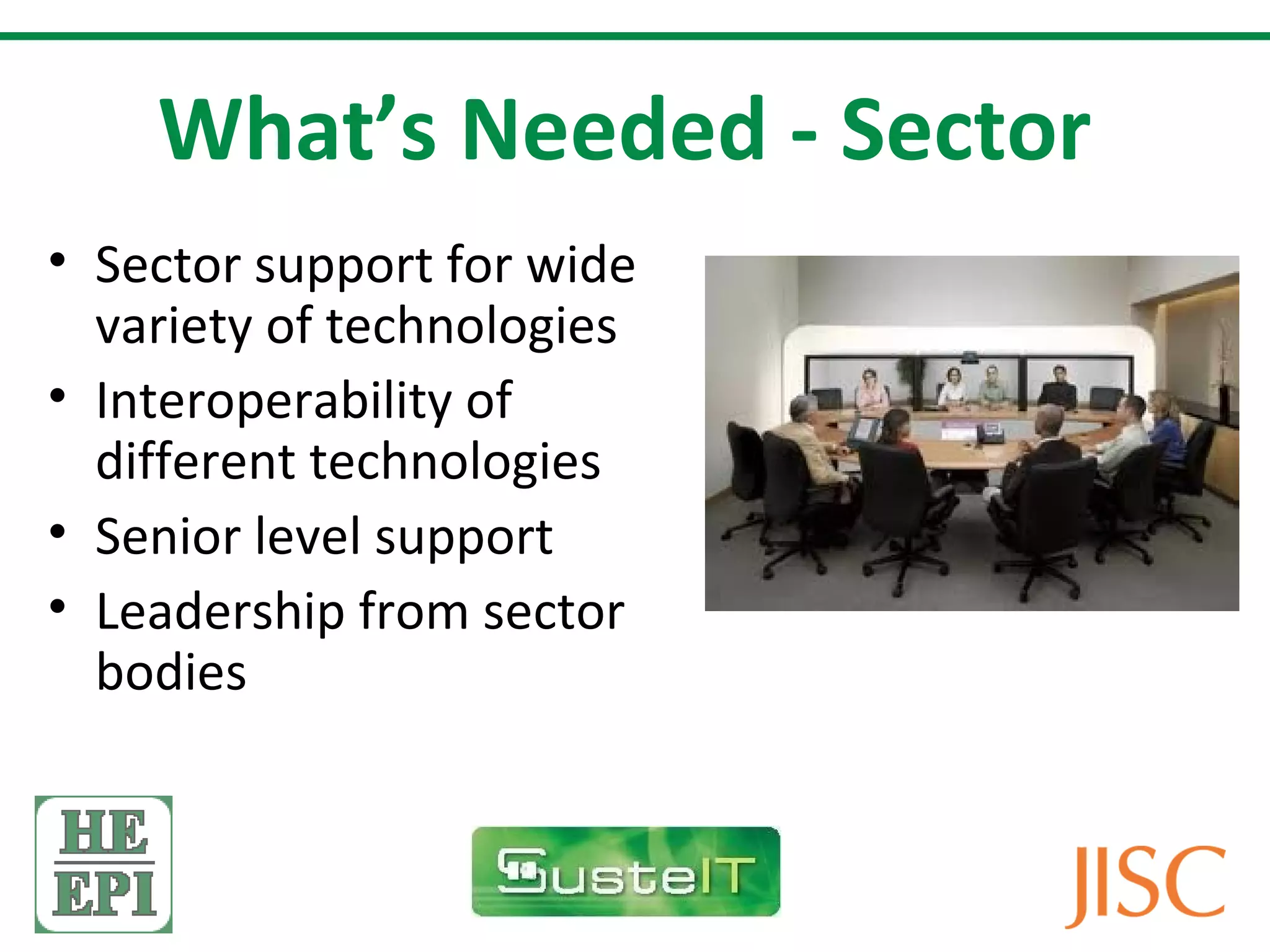
What’s Needed - Sector
• Sector support for wide
  variety of technologies
• Interoperability of
  different technologies
• Senior level support
• Leadership from sector
  bodies
Assessing Carbon Impacts
• 1. Scoping
  - e.g. identifying the reference case
  - determining impact significance
  - work/private travel; buildings; eqt
• 2. Calculating impacts per virtual meeting
  - net MINUS gross (i.e. eqt, rebound etc.)
  - applying air uplift
  - range of cases (low, medium, high)
  - how many participants avoid how much travel?
  - how many virtual meetings in a university?
• 3. Conducting reality check
• 4. Producing figures

Video-Conferencing in the UK HE & FE Sectors - Research Findings

  • 1.
    Conferencing in theSector - Research Findings Peter James and Lisa Hopkinson SusteIT, University of Bradford, UK www.goodcampus.org 6 March 2012, University of Warwick
  • 2.
    Previous Research • SusTEL - 7 partners in 5 countries • Multiple surveys - 10,000 + responses - conferencing & flexible working at BT & customers - conferencing at DFID • New ways of working - can reduce global carbon by 0.5% by 2020 (Smart 2020)
  • 3.
    Virtually Sustainable • Oneof 3 JISC Green IT projects • Surveys in 9 universities - Aberystwyth, Bangor, Bradford, Glasgow, Leeds, MMU, Staffordshire, Swansea, UCLAN - 1120 users; 684 non-users • Survey of university travel coordinators • Three workshops with c 150 attendees • 11 Briefing papers and case studies - e.g. Llandeillo College; University of Kent
  • 4.
    Virtual Meetings • Content – audio; text; video; web • Location – suite, mobile VC, desktop, portable • Interactiveness – 1:many; 1:few; 1:1 • Diverse use of technologies - Janet Videoconferencing enabled - Skype - Blackboard Collaborate - Adobe Connect - Flash Meeting - Audio (BT MeetMe)
  • 5.
    Conferencing Works! • Lastvirtual meeting - completely successful for 65% - partially successful for 28% - avoided travel for 54% - average 300/1346 miles avoidance - saved £106 of travel/subsistence costs - released 8 hours unproductive time • Desire for more - 81% of current users see more opportunities - 46% of non-users if easier to access and use - teaching & learning; meetings; collaborative research; conferences; interviews
  • 6.
    Sector Patterns • Lastcall averages - 1 hour length - 4 locations - 9 participants • Access mainly from office/suite • Main uses - continuing regular discussion - specifically set up call • Limited use for teaching and learning
  • 7.
    Key Benefits -1 • Reduced stress & time of travel (75%) • Better control of time (61%) • Easier to stay in touch (49%) • Better work-life balance
  • 8.
    Key Benefits -2 • Compensate for travel difficulties • Easier to arrange meetings • Involve more people • Improved communication with external partners • Tangible travel and subsistence savings
  • 9.
    Disbenefits “In a virtualmeeting do you get virtual tea and biscuits?” • Reduced face to face contact (19%) • Less effective meetings (16%) • Bad experiences • Can’t replace face to face • Better when relationships established
  • 10.
    Barriers to GreaterUse • Difficulties (perceived or actual) in setting up • Lack of confidence or ability to use technology • Lack of equipment or facilities • Lack of support from colleagues • Lack of knowledge about facilities
  • 11.
    Travel Coordinators -1 • 52 individuals from 44 separate institutions • 31%: institutional travel plan encourages virtual meetings & teleworking • 66%: institution has no quantified targets to reduce staff business travel • A few, e.g. Glasgow, have specific VC targets • 72%: considerable or very considerable potential at their institution, especially business meetings & intra-site travel
  • 12.
    Travel Coordinators -2 • Main barriers similar to university surveys • 3 best means of encouraging greater uptake: • Senior manager support e.g. by using it more (66%) • Simple technical guides to technologies (53%) • Demo projects in pilot areas e.g. estates, IT (53%)
  • 13.
    Conclusions • Considerable benefitsfrom, and opportunities for more, virtual meetings • Virtual meetings don’t always replace travel - new uses; stimulating contact • Considerable CO2 benefits for all - largest element in research unis is (long haul) air • Air generally dominates CO2 equivalent travel • But overall business benefits are mainly related to short-medium distance travel air travel • Best to target UNPRODUCTIVE travel?
  • 14.
    What’s Needed -Universities • Technical support • Training • Ease of booking • Suitable dedicated facilities • Conferencing “champions” • Institution-wide policy and support • Culture of usage supported by senior staff • Target areas of existing use (audio, skype etc)
  • 15.
    What’s Needed -Sector • Sector support for wide variety of technologies • Interoperability of different technologies • Senior level support • Leadership from sector bodies
  • 16.
    Assessing Carbon Impacts •1. Scoping - e.g. identifying the reference case - determining impact significance - work/private travel; buildings; eqt • 2. Calculating impacts per virtual meeting - net MINUS gross (i.e. eqt, rebound etc.) - applying air uplift - range of cases (low, medium, high) - how many participants avoid how much travel? - how many virtual meetings in a university? • 3. Conducting reality check • 4. Producing figures