SSE/XXXXX/YYY/ZZZZ $Revision: xx.xx $


                                         From business to competencies and back again
page 1


                                         tsd@systematic.com   COMMERCIAL IN CONFIDENCE
Agenda

 About Systematic
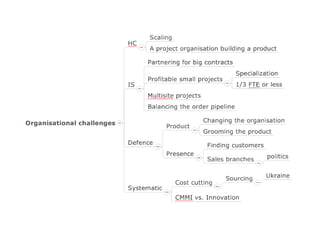
 Organisational challenges
 4 perspectives on development
     1:450
     Why
     Time2performance
     Highly specialized workforce?
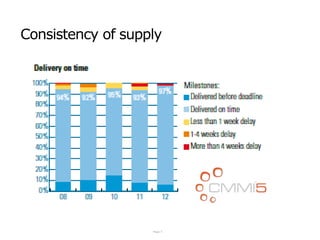
Consistency of supply


                   Page 5
1:450
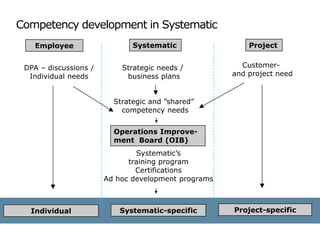
Competency development in Systematic
   Employee                   Systematic                 Project


 DPA – discussions /       Strategic needs /           Customer-
  Individual needs          business plans           and project need


                         Strategic and ”shared”
                           competency needs


                         Operations Improve-
                         ment Board (OIB)
                               Systematic’s
                             training program
                               Certifications
                       Ad hoc development programs


  Individual              Systematic-specific        Project-specific
Why
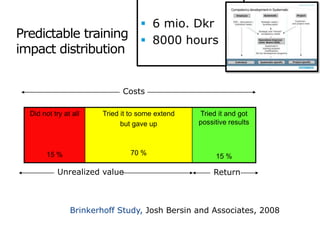
 6 mio. Dkr
Predictable training                8000 hours
impact distribution


                             Costs

  Did not try at all   Tried it to some extend   Tried it and got
                             but gave up         possitive results


        15 %                   70 %                   15 %

            Unrealized value                          Return


                Brinkerhoff Study, Josh Bersin and Associates, 2008
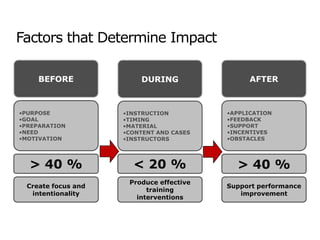
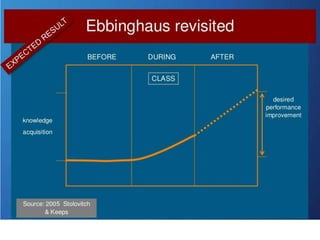
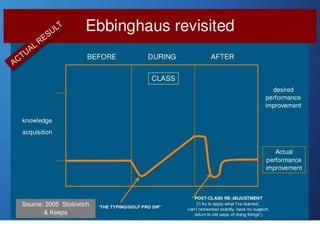
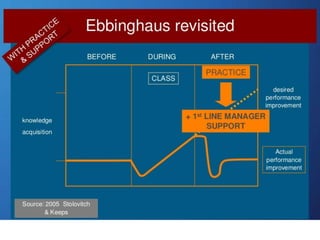
Factors that Determine Impact

    BEFORE              DURING                 AFTER


•PURPOSE            •INSTRUCTION         •APPLICATION
•GOAL               •TIMING              •FEEDBACK
•PREPARATION        •MATERIAL            •SUPPORT
•NEED               •CONTENT AND CASES   •INCENTIVES
•MOTIVATION         •INSTRUCTORS         •OBSTACLES


  > 40 %              < 20 %               > 40 %
                     Produce effective
 Create focus and                        Support performance
                          training
  intentionality                            improvement
                       interventions
Impact thinking
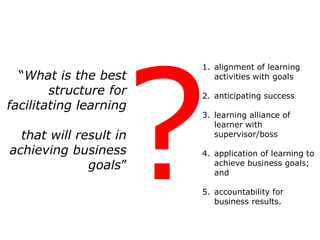
1. alignment of learning
  “What is the best        activities with goals
        structure for   2. anticipating success
facilitating learning
                        3. learning alliance of
                           learner with
  that will result in      supervisor/boss

achieving business      4. application of learning to
              goals”       achieve business goals;
                           and

                        5. accountability for
                           business results.
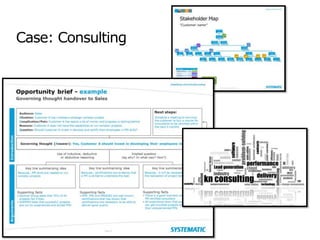
Case: Consulting
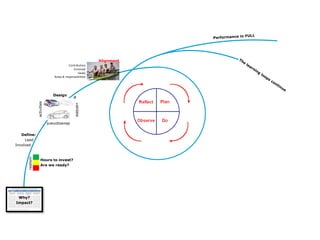
Time2performance
Alignment
                                          Contributors
                                              Involved
                                                 Goals
                                Roles & responsibilities


                                Design
                activities


                                                validate


                             development


   Define:
     Lead
Involved
      realism


                     Hours to invest?
                     Are we ready?


 Why?
Impact?
The 3 golden questions
 What have you
  been doing since
  last meeting?

            • What would you do
              differently to
              achieve improved
              outcomes?

                          • What learning have
                            you been provided
                            with?
“Training is a wonderful last step
      in bringing about changed
organizational and personal behavior,
 but a pathetically useless first step”

                            David Maister
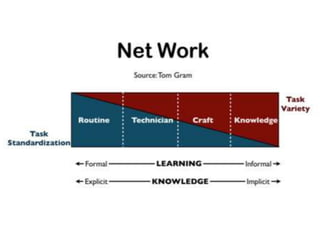
Highly specialized workforce?
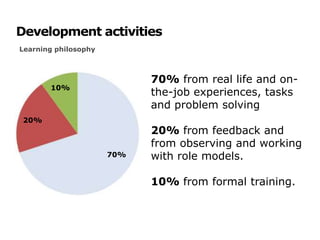
Development activities
Learning philosophy


                            70% from real life and on-
       10%
                            the-job experiences, tasks
                            and problem solving
 20%
                            20% from feedback and
                            from observing and working
                      70%   with role models.

                            10% from formal training.
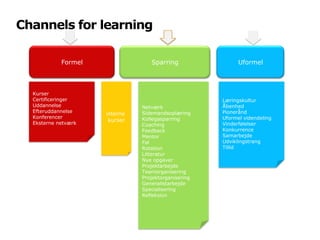
Channels for learning

            Formel                Sparring                 Uformel


  Kurser
  Certificeringer                                    Læringskultur
  Uddannelse                   Netværk               Åbenhed
  Efteruddannelse              Sidemandsoplæring     Pionerånd
                     interne
  Konferencer                  Kollegasparring       Uformel videndeling
                      kurser
  Eksterne netværk             Coaching              Vinderfølelser
                               Feedback              Konkurrence
                               Mentor                Samarbejde
                               Føl                   Udviklingstrang
                               Rotation              Tillid
                               Litteratur
                               Nye opgaver
                               Projektarbejde
                               Teamorganisering
                               Projektorganisering
                               Generalistarbejde
                               Specialisering
                               Refleksion
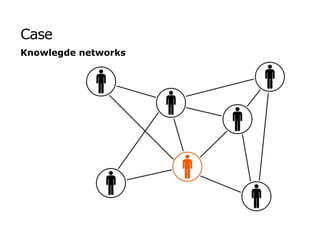
Case
Knowlegde networks
Business impact
Ensuring purposefull initiatives and 360° commitment

 Support of the business
    Faster implementation of changes based on
     commitment and voice of the expert (YOU)
    Better execution of projects – we reduce the
     amount of rework and doing the same mistake
     twice.
    Inspire our customers
 Reduce the time to performance through high
  competency level of professionals
 Decrease the level of risk in projects – by
  testing potentials in new technologies etc.

Perspectives on competency development

  • 1.
    SSE/XXXXX/YYY/ZZZZ $Revision: xx.xx$ From business to competencies and back again page 1 tsd@systematic.com COMMERCIAL IN CONFIDENCE
  • 2.
    Agenda  About Systematic Organisational challenges  4 perspectives on development  1:450  Why  Time2performance  Highly specialized workforce?
  • 5.
  • 7.
  • 8.
    Competency development inSystematic Employee Systematic Project DPA – discussions / Strategic needs / Customer- Individual needs business plans and project need Strategic and ”shared” competency needs Operations Improve- ment Board (OIB) Systematic’s training program Certifications Ad hoc development programs Individual Systematic-specific Project-specific
  • 10.
  • 11.
     6 mio.Dkr Predictable training  8000 hours impact distribution Costs Did not try at all Tried it to some extend Tried it and got but gave up possitive results 15 % 70 % 15 % Unrealized value Return Brinkerhoff Study, Josh Bersin and Associates, 2008
  • 12.
    Factors that DetermineImpact BEFORE DURING AFTER •PURPOSE •INSTRUCTION •APPLICATION •GOAL •TIMING •FEEDBACK •PREPARATION •MATERIAL •SUPPORT •NEED •CONTENT AND CASES •INCENTIVES •MOTIVATION •INSTRUCTORS •OBSTACLES > 40 % < 20 % > 40 % Produce effective Create focus and Support performance training intentionality improvement interventions
  • 14.
  • 15.
    1. alignment oflearning “What is the best activities with goals structure for 2. anticipating success facilitating learning 3. learning alliance of learner with that will result in supervisor/boss achieving business 4. application of learning to goals” achieve business goals; and 5. accountability for business results.
  • 16.
  • 17.
  • 22.
    Alignment Contributors Involved Goals Roles & responsibilities Design activities validate development Define: Lead Involved realism Hours to invest? Are we ready? Why? Impact?
  • 23.
    The 3 goldenquestions  What have you been doing since last meeting? • What would you do differently to achieve improved outcomes? • What learning have you been provided with?
  • 24.
    “Training is awonderful last step in bringing about changed organizational and personal behavior, but a pathetically useless first step” David Maister
  • 25.
  • 28.
    Development activities Learning philosophy 70% from real life and on- 10% the-job experiences, tasks and problem solving 20% 20% from feedback and from observing and working 70% with role models. 10% from formal training.
  • 29.
    Channels for learning Formel Sparring Uformel Kurser Certificeringer Læringskultur Uddannelse Netværk Åbenhed Efteruddannelse Sidemandsoplæring Pionerånd interne Konferencer Kollegasparring Uformel videndeling kurser Eksterne netværk Coaching Vinderfølelser Feedback Konkurrence Mentor Samarbejde Føl Udviklingstrang Rotation Tillid Litteratur Nye opgaver Projektarbejde Teamorganisering Projektorganisering Generalistarbejde Specialisering Refleksion
  • 31.
  • 32.
    Business impact Ensuring purposefullinitiatives and 360° commitment  Support of the business  Faster implementation of changes based on commitment and voice of the expert (YOU)  Better execution of projects – we reduce the amount of rework and doing the same mistake twice.  Inspire our customers  Reduce the time to performance through high competency level of professionals  Decrease the level of risk in projects – by testing potentials in new technologies etc.

Editor's Notes

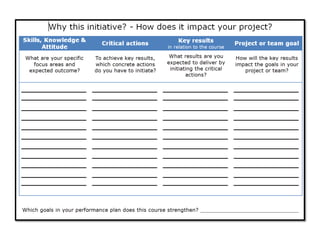
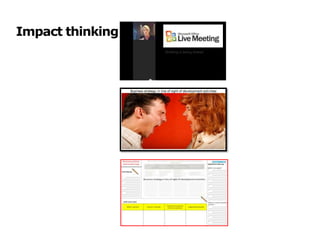
  • #13 Impactthinking is about the red linebetweenourgoals and the acivititesprovided to reachthese.Whatwe do to underpin the red line is:Precourse meeting (participants, manager): alignment, prepare for a precisedialogueImpactmaps – clear expectations, focus for your attendance in the courseAction plan: A strongtool for implementation of yourskillsImpactevluation:ValuecreationInitiated actionsRelevanseRessourcesTeam supportManager support
  • #14 Hvad betyder 70-20-10 modellen;70 – cases i træningen, inddragelse af dig som ekspert i design af aktiviteter20 – bevidstgørelse hos leder og team omkring deres rolle ift. udvikling/impact meetings &amp; maps10 – Relation to next slide: Wetry to enforce the relation between the 10% via the 20% to the 70% - meaningthatyouactuallybuild on yourskills and act it out in yourwork.
  • #31 BudskaberDGADE            - ønsket om at skabe sammenhæng mellem forretningsmål og aktiviteter I KN, gøre udbyttet af KN akt. målbare TSD          - synliggøre aktiviteter der understøtter forretningsmål + andre initiativer i aktivitetsplanenTSD          - skabe fokus for de forskellige indgang til KN og intentionen med disse
  • #32 DGADE