Presented By: Dr. Md. Samiul Haque, MBBS
FCPS P-2 Trainee (Medicine)
HMO, Medicine Unit-2, MMCH
Vertigo: A Practical
Approach
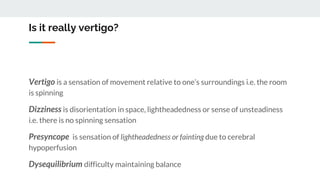
Is it really vertigo?
Vertigo is a sensation of movement relative to one’s surroundings i.e. the room
is spinning
Dizziness is disorientation in space, lightheadedness or sense of unsteadiness
i.e. there is no spinning sensation
Presyncope is sensation of lightheadedness or fainting due to cerebral
hypoperfusion
Dysequilibrium difficulty maintaining balance
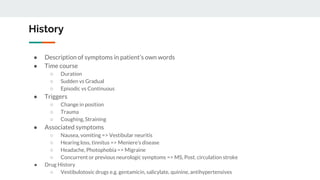
History
● Description of symptoms in patient’s own words
● Time course
○ Duration
○ Sudden vs Gradual
○ Episodic vs Continuous
● Triggers
○ Change in position
○ Trauma
○ Coughing, Straining
● Associated symptoms
○ Nausea, vomiting => Vestibular neuritis
○ Hearing loss, tinnitus => Meniere’s disease
○ Headache, Photophobia => Migraine
○ Concurrent or previous neurologic symptoms => MS, Post. circulation stroke
● Drug History
○ Vestibulotoxic drugs e.g. gentamicin, salicylate, quinine, antihypertensives
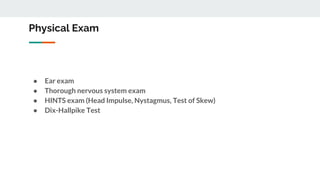
Physical Exam
● Ear exam
● Thorough nervous system exam
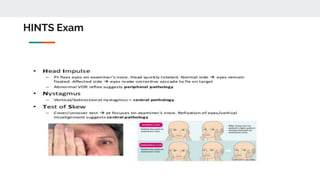
● HINTS exam (Head Impulse, Nystagmus, Test of Skew)
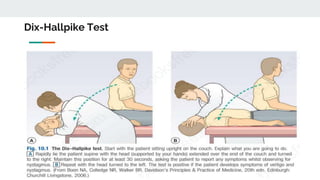
● Dix-Hallpike Test
HINTS Exam
Dix-Hallpike Test
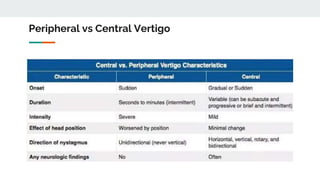
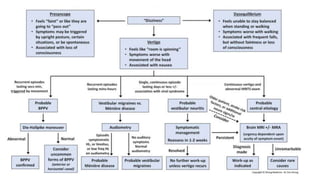
Peripheral vs Central Vertigo
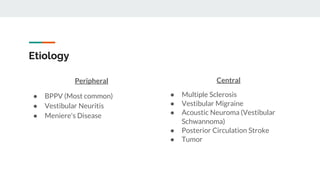
Etiology
Peripheral
● BPPV (Most common)
● Vestibular Neuritis
● Meniere's Disease
Central
● Multiple Sclerosis
● Vestibular Migraine
● Acoustic Neuroma (Vestibular
Schwannoma)
● Posterior Circulation Stroke
● Tumor
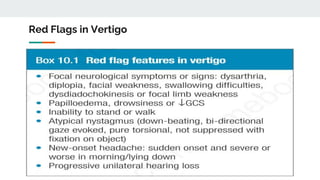
Red Flags in Vertigo
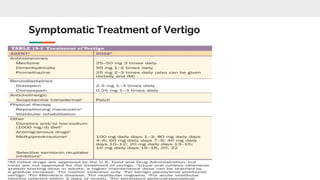
Symptomatic Treatment of Vertigo
Thank You

Vertigo: A Practical Approach

  • 1.
    Presented By: Dr.Md. Samiul Haque, MBBS FCPS P-2 Trainee (Medicine) HMO, Medicine Unit-2, MMCH Vertigo: A Practical Approach
  • 2.
    Is it reallyvertigo? Vertigo is a sensation of movement relative to one’s surroundings i.e. the room is spinning Dizziness is disorientation in space, lightheadedness or sense of unsteadiness i.e. there is no spinning sensation Presyncope is sensation of lightheadedness or fainting due to cerebral hypoperfusion Dysequilibrium difficulty maintaining balance
  • 3.
    History ● Description ofsymptoms in patient’s own words ● Time course ○ Duration ○ Sudden vs Gradual ○ Episodic vs Continuous ● Triggers ○ Change in position ○ Trauma ○ Coughing, Straining ● Associated symptoms ○ Nausea, vomiting => Vestibular neuritis ○ Hearing loss, tinnitus => Meniere’s disease ○ Headache, Photophobia => Migraine ○ Concurrent or previous neurologic symptoms => MS, Post. circulation stroke ● Drug History ○ Vestibulotoxic drugs e.g. gentamicin, salicylate, quinine, antihypertensives
  • 4.
    Physical Exam ● Earexam ● Thorough nervous system exam ● HINTS exam (Head Impulse, Nystagmus, Test of Skew) ● Dix-Hallpike Test
  • 5.
  • 6.
  • 7.
  • 8.
    Etiology Peripheral ● BPPV (Mostcommon) ● Vestibular Neuritis ● Meniere's Disease Central ● Multiple Sclerosis ● Vestibular Migraine ● Acoustic Neuroma (Vestibular Schwannoma) ● Posterior Circulation Stroke ● Tumor
  • 9.
    Red Flags inVertigo
  • 11.
  • 12.