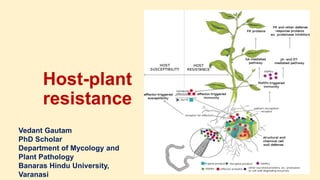
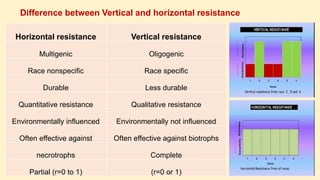
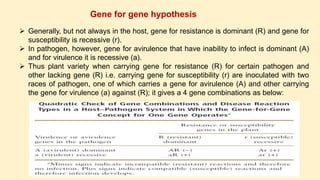
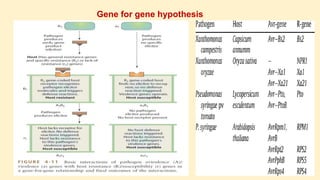
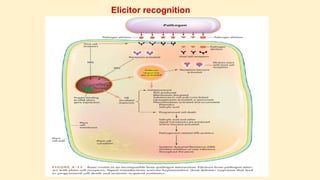
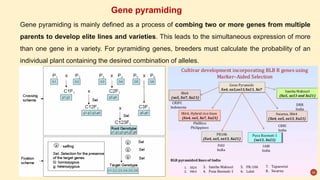
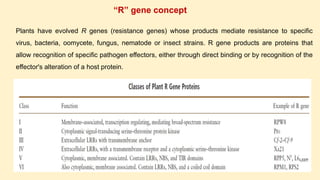
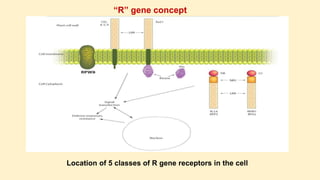
This document discusses host-plant resistance to pathogens. It describes the different types of resistance as monogenic or polygenic. Vertical resistance is controlled by a single gene while horizontal resistance is controlled by multiple genes. The gene-for-gene hypothesis proposes that for each resistance gene in the host there is a corresponding avirulence gene in the pathogen. Elicitors are molecules associated with pathogens that can bind to plant cell receptors to trigger defense responses. Gene pyramiding involves combining resistance genes from multiple parents into an elite variety. R genes allow plants to recognize specific pathogens. Components of disease resistance include pathogen detection, signal transduction, and defense responses.