Dr Veena Saraf
1
Definitions :
 Jaw relations : G.P.T-8
-Is any spatial relationship of maxilla to
mandible
 Types :
 Orientation jaw relation
 Vertical jaw relation
 Horizontal jaw relation
2
 VERTICAL JAW RELATIONS
 They are classified as :
 Vertical dimension of occlusion (VDO)
 Vertical dimension of rest position (VDR)
3
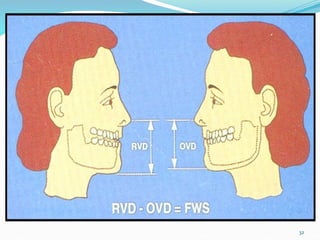
Vertical dimention
 Vertical dimension at rest: (GPT-8)
 The distance b/w two selected points measured
when the mandible is in the physiologic rest position.
 Vertical dimension at occlusion: (GPT-8)
 The distance b/w two points when the occluding
members are in contact.
4
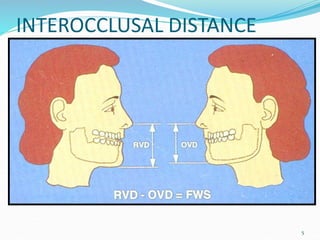
INTEROCCLUSAL DISTANCE
/INTEROCCLUSAL REST SPACE
5
Physiologic rest position
GPT-8: postural position of
mandible when an individual is
resting comfortably in an upright
position and the associated
muscles are in a state of minimal
contraction activity.
6
SIGNIFICANCE OF PHYSIOLOGIC
REST POSITION
1)Bone - bone relation in vertical direction
2)Absence of pathosis - relation - constant
3)Position - recorded & measured
4)Determining vertical dimension at
occlusion
7
Common factors to consider while
recording vertical jaw relation
Position of mandible – influenced by gravity
Patient should be calm, cool, & relaxed
Difficult in neuromuscular disturbances
No one method – accepted
8
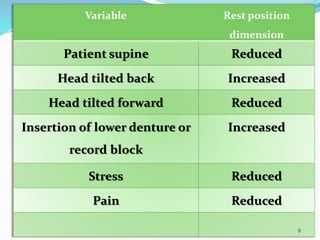
Variable Rest position
dimension
Patient supine Reduced
Head tilted back Increased
Head tilted forward Reduced
Insertion of lower denture or
record block
Increased
Stress Reduced
Pain Reduced
9
Recording rest position
Facial measurements
 Tactile sense
Measurements of anatomical
landmarks
Speech
Facial expression
10
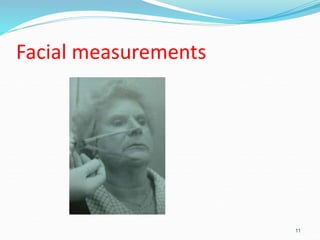
Facial measurements
11
Tactile sense
Patient -stand erect & open the mouth wide
open –strain
Opening- uncomfortable instruct the
patient - close until the jaws -comfortable
relaxed position
Distance between the points of reference
compare -after swallowing
12
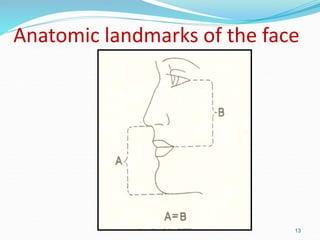
Anatomic landmarks of the face
13
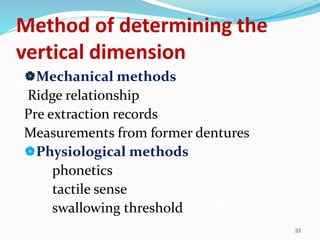
Method of determining the
vertical dimension
Mechanical methods
Ridge relationship
Pre extraction records
Measurements from former dentures
Physiological methods
phonetics
tactile sense
swallowing threshold
14
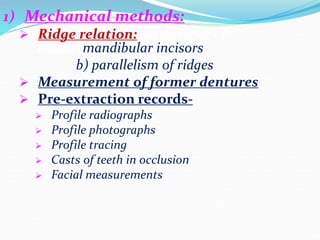
1) Mechanical methods:
 Ridge relation: a) distance of
incisivemandibular incisors
b) parallelism of ridges
 Measurement of former dentures
 Pre-extraction records-
 Profile radiographs
 Profile photographs
 Profile tracing
 Casts of teeth in occlusion
 Facial measurements
Mechanical methods
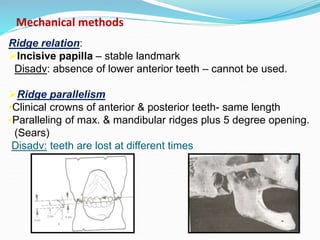
Ridge relation:
Incisive papilla – stable landmark
Disadv: absence of lower anterior teeth – cannot be used.

Ridge parallelism
•Clinical crowns of anterior & posterior teeth- same length
•Paralleling of max. & mandibular ridges plus 5 degree opening.
(Sears)
Disadv: teeth are lost at different times
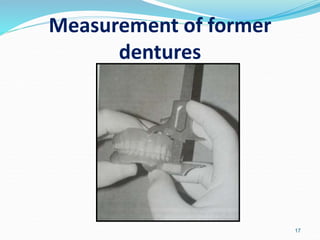
Measurement of former
dentures
17
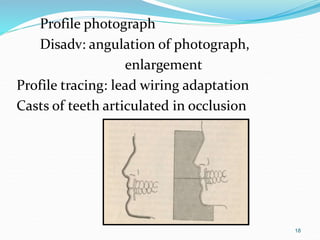
Profile photograph
Disadv: angulation of photograph,
enlargement
Profile tracing: lead wiring adaptation
Casts of teeth articulated in occlusion
18
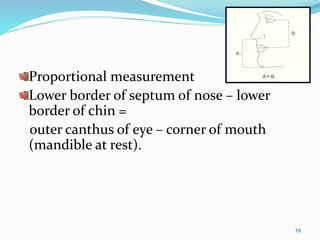
Proportional measurement
Lower border of septum of nose – lower
border of chin =
outer canthus of eye – corner of mouth
(mandible at rest).
19
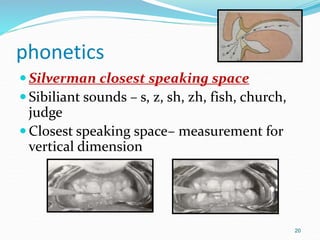
phonetics
 Silverman closest speaking space
 Sibiliant sounds – s, z, sh, zh, fish, church,
judge
 Closest speaking space– measurement for
vertical dimension
20
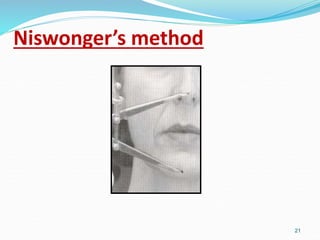
Niswonger’s method
21
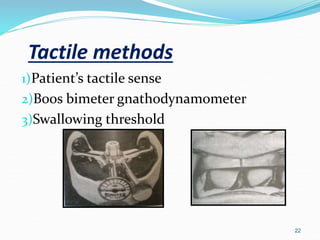
Tactile methods
1)Patient’s tactile sense
2)Boos bimeter gnathodynamometer
3)Swallowing threshold
22
Clinical procedure for recording Vertical
jaw relation
Testing the maxillary record block
 Retention
 Stability
Trimming the maxillary occlusal rim
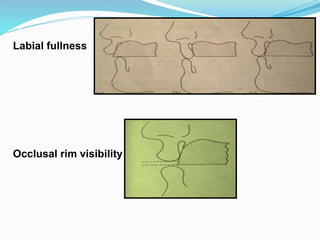
 Labial fullness
 The height of the occlusal rim
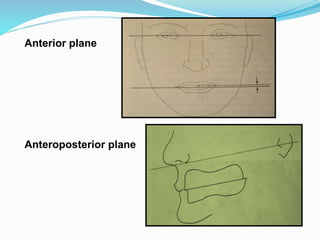
 The anterior plane
 The anteroposterior plane
Guide lines
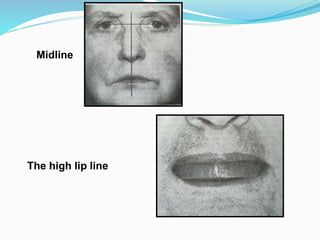
 The centre line or midline
 The high lip line
 The canine lines
Trimming the mandibular occlusal rim
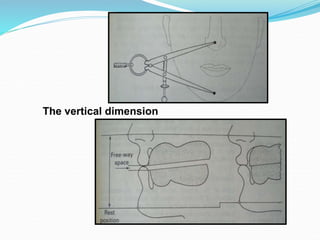
The vertical dimension
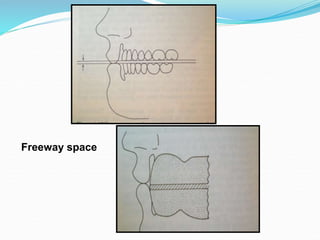
Freeway space measurement
Labial fullness
Occlusal rim visibility
Anterior plane
Anteroposterior plane
Midline
The high lip line
The vertical dimension
Freeway space
Clinical significance of vertical jaw relation
Comfort
Esthetics
Phonetics
Functional efficiency
Effect of increased vertical dimension
1) Increased risk of trauma- clenching of teeth
2) Discomfort to patient
3) Teeth are liable to contact – causing clicking
during speech
4) Trauma & pain – basal seat areas of denture
5) Loss of freeway space - muscular fatigue
6) Elongated appearance of face
7) Bone resorption
8) Loss of retention & stability of dentures
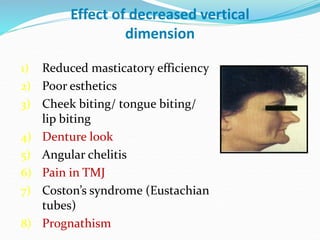
Effect of decreased vertical
dimension
1) Reduced masticatory efficiency
2) Poor esthetics
3) Cheek biting/ tongue biting/
lip biting
4) Denture look
5) Angular chelitis
6) Pain in TMJ
7) Coston’s syndrome (Eustachian
tubes)
8) Prognathism
32
Method of determining the
vertical dimension
Mechanical methods
Ridge relationship
Pre extraction records
Measurements from former dentures
Physiological methods
phonetics
tactile sense
swallowing threshold
33
1) Mechanical methods:
 Ridge relation: a) distance of
incisivemandibular incisors
b) parallelism of ridges
 Measurement of former dentures
 Pre-extraction records-
 Profile radiographs
 Profile photographs
 Profile tracing
 Casts of teeth in occlusion
 Facial measurements
35
.
“Stand and die in
your own
strength; if
there is any sin
in the world, it
is weakness;
avoid all
weakness, for
weakness is
sin, weakness is
death.”

vertical jaw relation.ppt

  • 1.
  • 2.
    Definitions :  Jawrelations : G.P.T-8 -Is any spatial relationship of maxilla to mandible  Types :  Orientation jaw relation  Vertical jaw relation  Horizontal jaw relation 2
  • 3.
     VERTICAL JAWRELATIONS  They are classified as :  Vertical dimension of occlusion (VDO)  Vertical dimension of rest position (VDR) 3
  • 4.
    Vertical dimention  Verticaldimension at rest: (GPT-8)  The distance b/w two selected points measured when the mandible is in the physiologic rest position.  Vertical dimension at occlusion: (GPT-8)  The distance b/w two points when the occluding members are in contact. 4
  • 5.
  • 6.
    Physiologic rest position GPT-8:postural position of mandible when an individual is resting comfortably in an upright position and the associated muscles are in a state of minimal contraction activity. 6
  • 7.
    SIGNIFICANCE OF PHYSIOLOGIC RESTPOSITION 1)Bone - bone relation in vertical direction 2)Absence of pathosis - relation - constant 3)Position - recorded & measured 4)Determining vertical dimension at occlusion 7
  • 8.
    Common factors toconsider while recording vertical jaw relation Position of mandible – influenced by gravity Patient should be calm, cool, & relaxed Difficult in neuromuscular disturbances No one method – accepted 8
  • 9.
    Variable Rest position dimension Patientsupine Reduced Head tilted back Increased Head tilted forward Reduced Insertion of lower denture or record block Increased Stress Reduced Pain Reduced 9
  • 10.
    Recording rest position Facialmeasurements  Tactile sense Measurements of anatomical landmarks Speech Facial expression 10
  • 11.
  • 12.
    Tactile sense Patient -standerect & open the mouth wide open –strain Opening- uncomfortable instruct the patient - close until the jaws -comfortable relaxed position Distance between the points of reference compare -after swallowing 12
  • 13.
  • 14.
    Method of determiningthe vertical dimension Mechanical methods Ridge relationship Pre extraction records Measurements from former dentures Physiological methods phonetics tactile sense swallowing threshold 14
  • 15.
    1) Mechanical methods: Ridge relation: a) distance of incisivemandibular incisors b) parallelism of ridges  Measurement of former dentures  Pre-extraction records-  Profile radiographs  Profile photographs  Profile tracing  Casts of teeth in occlusion  Facial measurements
  • 16.
    Mechanical methods Ridge relation: Incisivepapilla – stable landmark Disadv: absence of lower anterior teeth – cannot be used. Ridge parallelism •Clinical crowns of anterior & posterior teeth- same length •Paralleling of max. & mandibular ridges plus 5 degree opening. (Sears) Disadv: teeth are lost at different times

  • 17.
  • 18.
    Profile photograph Disadv: angulationof photograph, enlargement Profile tracing: lead wiring adaptation Casts of teeth articulated in occlusion 18
  • 19.
    Proportional measurement Lower borderof septum of nose – lower border of chin = outer canthus of eye – corner of mouth (mandible at rest). 19
  • 20.
    phonetics  Silverman closestspeaking space  Sibiliant sounds – s, z, sh, zh, fish, church, judge  Closest speaking space– measurement for vertical dimension 20
  • 21.
  • 22.
    Tactile methods 1)Patient’s tactilesense 2)Boos bimeter gnathodynamometer 3)Swallowing threshold 22
  • 23.
    Clinical procedure forrecording Vertical jaw relation Testing the maxillary record block  Retention  Stability Trimming the maxillary occlusal rim  Labial fullness  The height of the occlusal rim  The anterior plane  The anteroposterior plane Guide lines  The centre line or midline  The high lip line  The canine lines Trimming the mandibular occlusal rim The vertical dimension Freeway space measurement
  • 24.
  • 25.
  • 26.
  • 27.
  • 28.
  • 29.
    Clinical significance ofvertical jaw relation Comfort Esthetics Phonetics Functional efficiency
  • 30.
    Effect of increasedvertical dimension 1) Increased risk of trauma- clenching of teeth 2) Discomfort to patient 3) Teeth are liable to contact – causing clicking during speech 4) Trauma & pain – basal seat areas of denture 5) Loss of freeway space - muscular fatigue 6) Elongated appearance of face 7) Bone resorption 8) Loss of retention & stability of dentures
  • 31.
    Effect of decreasedvertical dimension 1) Reduced masticatory efficiency 2) Poor esthetics 3) Cheek biting/ tongue biting/ lip biting 4) Denture look 5) Angular chelitis 6) Pain in TMJ 7) Coston’s syndrome (Eustachian tubes) 8) Prognathism
  • 32.
  • 33.
    Method of determiningthe vertical dimension Mechanical methods Ridge relationship Pre extraction records Measurements from former dentures Physiological methods phonetics tactile sense swallowing threshold 33
  • 34.
    1) Mechanical methods: Ridge relation: a) distance of incisivemandibular incisors b) parallelism of ridges  Measurement of former dentures  Pre-extraction records-  Profile radiographs  Profile photographs  Profile tracing  Casts of teeth in occlusion  Facial measurements
  • 35.
  • 36.
    . “Stand and diein your own strength; if there is any sin in the world, it is weakness; avoid all weakness, for weakness is sin, weakness is death.”