Marketing
Becoming Familiar with Vertical
and Horizontal Integration
Objectives






Define horizontal integration
List and explain the advantages and
disadvantages of horizontal integration
Define vertical integration
Explain the three types of vertical
integration
List and explain the advantages and
disadvantages of Vertical integration
Define Horizontal Integration
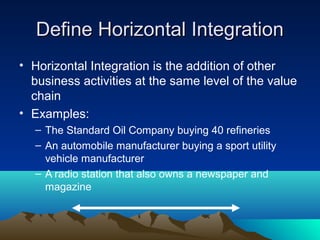
• Horizontal Integration is the addition of other
business activities at the same level of the value
chain
• Examples:
– The Standard Oil Company buying 40 refineries
– An automobile manufacturer buying a sport utility
vehicle manufacturer
– A radio station that also owns a newspaper and
magazine
Advantages of Horizontal
Integration
• Economics of scale: Selling more of the
same product in different parts of the
world
• Economics of Scope: Sharing resources
common to different products. “Synergies”
• Increased Market Power
• Reduction in cost
Disadvantages of Horizontal
Integration
•
•
•
•
•

Costs
Increased work load
Increased Responsibilities
Anti-trust issues
Creating a monopoly
Define Vertical Integration




is the degree to which a firm owns its
upstream suppliers and its downstream
buyers.
Example:


Carnegie Steel Company owned mills where
the steel was manufactured, mines where the
iron ore was extracted, coal mines that
supplied the coal, ships and railroads that
transported the material, etc.
Three Types of Vertical Integration


Backward (upstream) vertical integration: this is when a
company owns some of the subsidiaries that produce
some of the inputs used in the production of its products.




Forward vertical integration: this is when a company
owns the subsidiaries that market the product.




Eample: When and automobile company owns a tire company

Example is an movie studio that also owns a chain of theaters

Balanced Vertical Integration: is a company that sets up
subsidiaries that supply them with inputs as well as
market their product.
Advantages of Vertical Integration







Reduce transportation cost
Improve supply chain coordination
More oppertunities to differeniate by
means of increased control of inputs
Capture upstream and downstream profits
Increase entry barriers to potiental
competitors
Disadvantages of Vertical
Integration










Capacity balancing: Making sure that
inputs will match ouputs at all levels
Potentially higher cost due to the lack of
supplier compition
Decreased Flexability
Developing new competencies may
comprimise existing competencies
Increase bureaucratic costs
Monopolization of markets
Quiz
 What is Horizontal Integration?
 What are two advantages of horizontal

integration?

 What are two disadvantages of horizontal

integration?
Quiz
 Define Vertical Integration
 What are the three types of vertical

integration and explain each.
 What are 2 advantages of vertical
integration?
 What are 2 disadvantages of vertical
integration?
THE END

Vertical and horizontal integration

  • 1.
    Marketing Becoming Familiar withVertical and Horizontal Integration
  • 2.
    Objectives      Define horizontal integration Listand explain the advantages and disadvantages of horizontal integration Define vertical integration Explain the three types of vertical integration List and explain the advantages and disadvantages of Vertical integration
  • 3.
    Define Horizontal Integration •Horizontal Integration is the addition of other business activities at the same level of the value chain • Examples: – The Standard Oil Company buying 40 refineries – An automobile manufacturer buying a sport utility vehicle manufacturer – A radio station that also owns a newspaper and magazine
  • 4.
    Advantages of Horizontal Integration •Economics of scale: Selling more of the same product in different parts of the world • Economics of Scope: Sharing resources common to different products. “Synergies” • Increased Market Power • Reduction in cost
  • 5.
    Disadvantages of Horizontal Integration • • • • • Costs Increasedwork load Increased Responsibilities Anti-trust issues Creating a monopoly
  • 6.
    Define Vertical Integration   isthe degree to which a firm owns its upstream suppliers and its downstream buyers. Example:  Carnegie Steel Company owned mills where the steel was manufactured, mines where the iron ore was extracted, coal mines that supplied the coal, ships and railroads that transported the material, etc.
  • 7.
    Three Types ofVertical Integration  Backward (upstream) vertical integration: this is when a company owns some of the subsidiaries that produce some of the inputs used in the production of its products.   Forward vertical integration: this is when a company owns the subsidiaries that market the product.   Eample: When and automobile company owns a tire company Example is an movie studio that also owns a chain of theaters Balanced Vertical Integration: is a company that sets up subsidiaries that supply them with inputs as well as market their product.
  • 8.
    Advantages of VerticalIntegration      Reduce transportation cost Improve supply chain coordination More oppertunities to differeniate by means of increased control of inputs Capture upstream and downstream profits Increase entry barriers to potiental competitors
  • 9.
    Disadvantages of Vertical Integration       Capacitybalancing: Making sure that inputs will match ouputs at all levels Potentially higher cost due to the lack of supplier compition Decreased Flexability Developing new competencies may comprimise existing competencies Increase bureaucratic costs Monopolization of markets
  • 10.
    Quiz  What isHorizontal Integration?  What are two advantages of horizontal integration?  What are two disadvantages of horizontal integration?
  • 11.
    Quiz  Define VerticalIntegration  What are the three types of vertical integration and explain each.  What are 2 advantages of vertical integration?  What are 2 disadvantages of vertical integration?
  • 12.