The University of Bristol’s Festival of Social
Sciences and Law presents:

SCHOOLS CHARITY
CHALLENGE 2013
8 November 2013

Tweet @UobFutures #TF2013
Introduction
Sarah Smith
(University of Bristol)
The challenge
• How to encourage (more) people to give to
charity in the workplace
• Using insights from behavioural economics
• Drawing on experience of recent “giving trials”
What you will get from this
• Insights into
– behavioural economics
– applied economic research
• A “warm glow” from thinking about charity
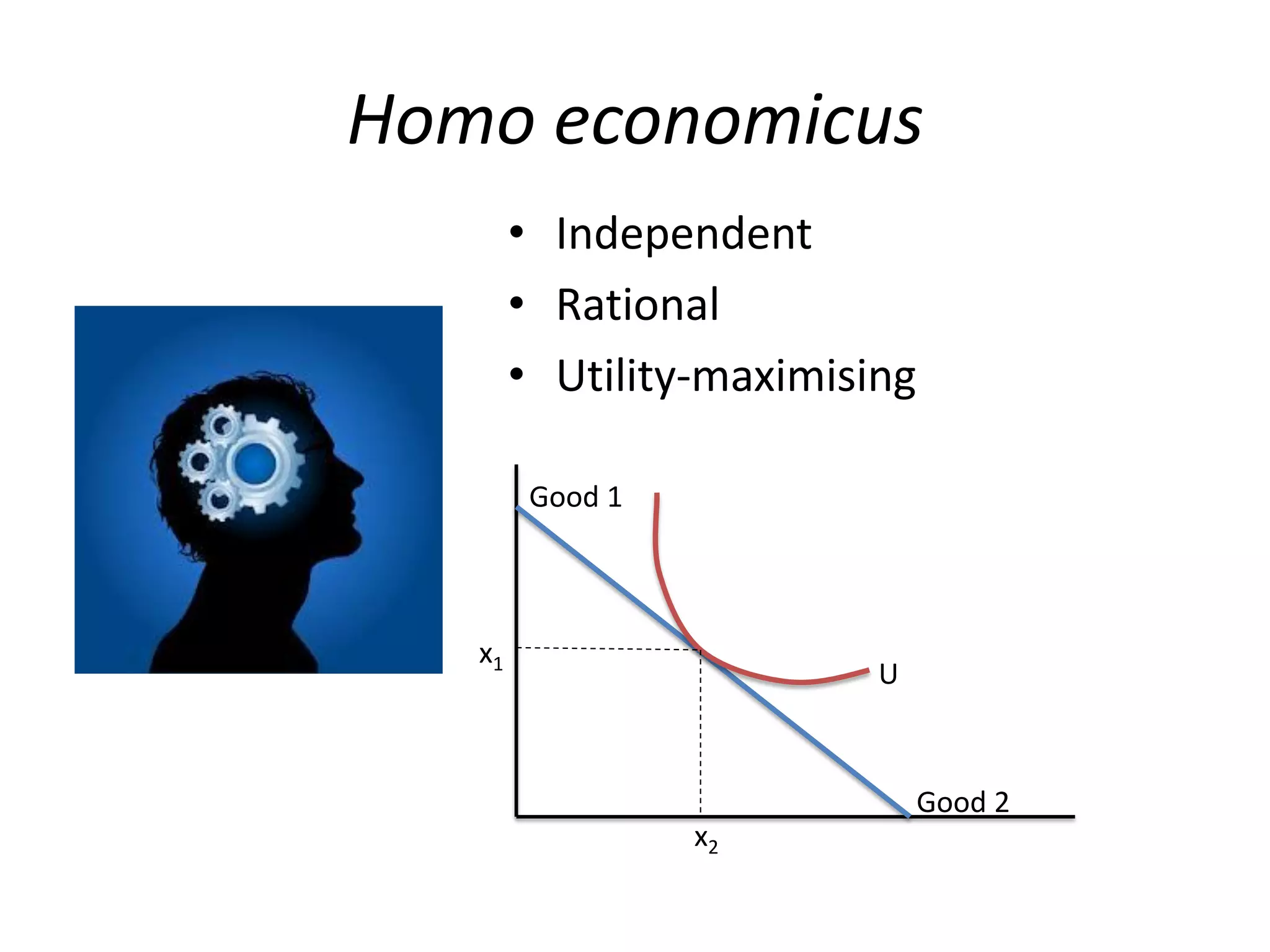
Homo economicus
• Independent
• Rational
• Utility-maximising
Good 1

x1

U

Good 2
x2
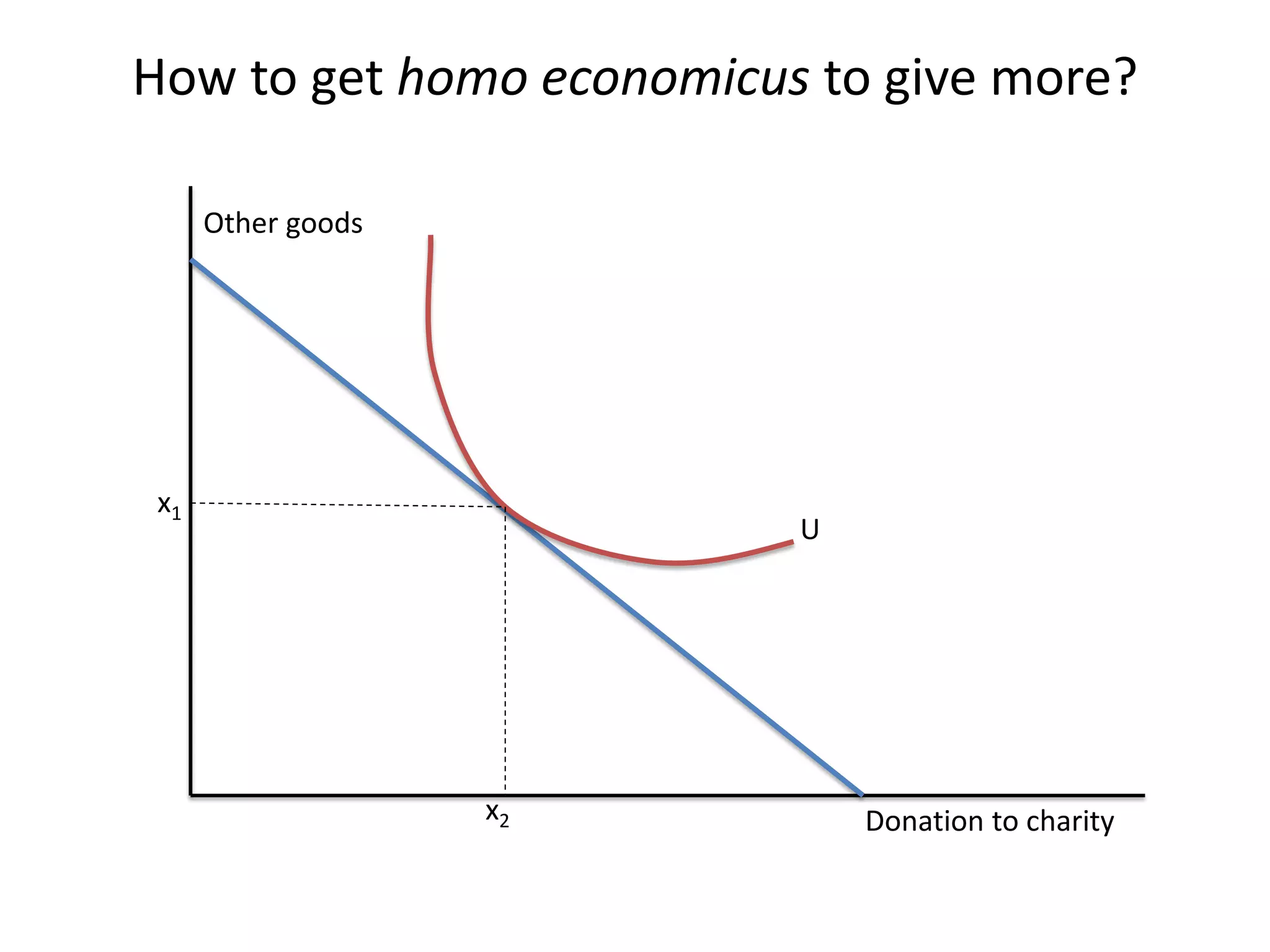
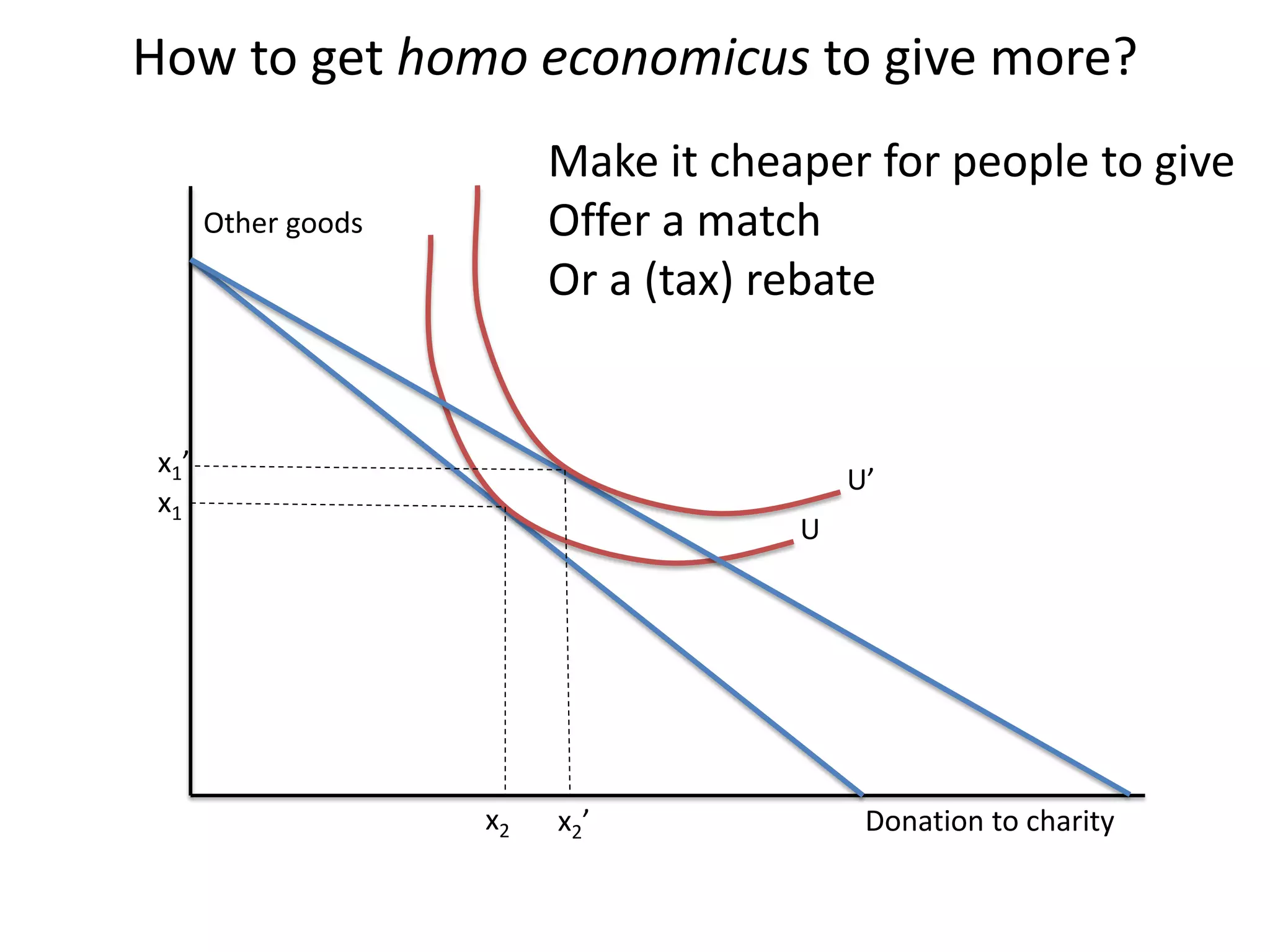
How to get homo economicus to give more?
Other goods

x1

U

x2

Donation to charity
How to get homo economicus to give more?
Make it cheaper for people to give
Offer a match
Or a (tax) rebate

Other goods

x1

U

x2

Donation to charity
How to get homo economicus to give more?
Make it cheaper for people to give
Offer a match
Or a (tax) rebate

Other goods

x1 ’
x1

U’
U

x2

x2 ’

Donation to charity
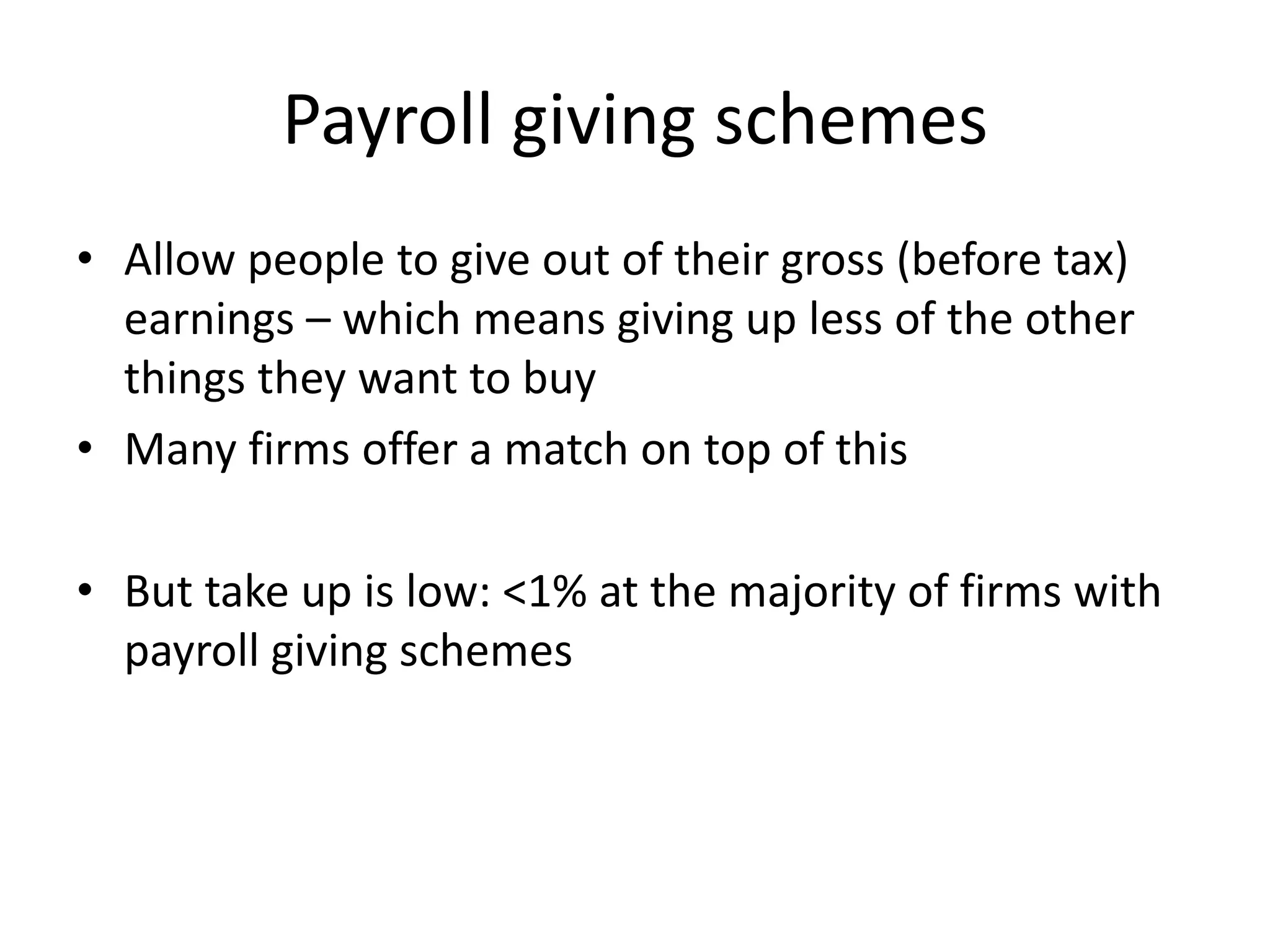
Payroll giving schemes
• Allow people to give out of their gross (before tax)
earnings – which means giving up less of the other
things they want to buy
• Many firms offer a match on top of this
• But take up is low: <1% at the majority of firms with
payroll giving schemes
Behavioural Economics Insights
• Does not do away altogether with homo
economicus paradigm
• But makes different/ more realistic
assumptions about the way people make
decisions
Behavioural Economics Insights (1)
• Making rational decisions is a
costly activity
• People may not always have –
and/ or process – all the
relevant information
• Small processing/ transactions
costs have a big effect
Behavioural Economics Insights (1)
• Practical insights:
– The way options are
presented matters
– Simplifying choices can have
an effect on decisions
– Defaults (opt in/out)
Behavioural Economics Insights (2)
• People are social
– They care what other
people think
– They are influenced by
what other people do
Behavioural Economics Insights (2)
• Practical insights
– People respond to
information on what other
people have done
– Personal relationships matter
– Group dynamics are
important
Charitable Giving Experiments
Michael Sanders
(University of Bristol
And Behavioural Insights Team)
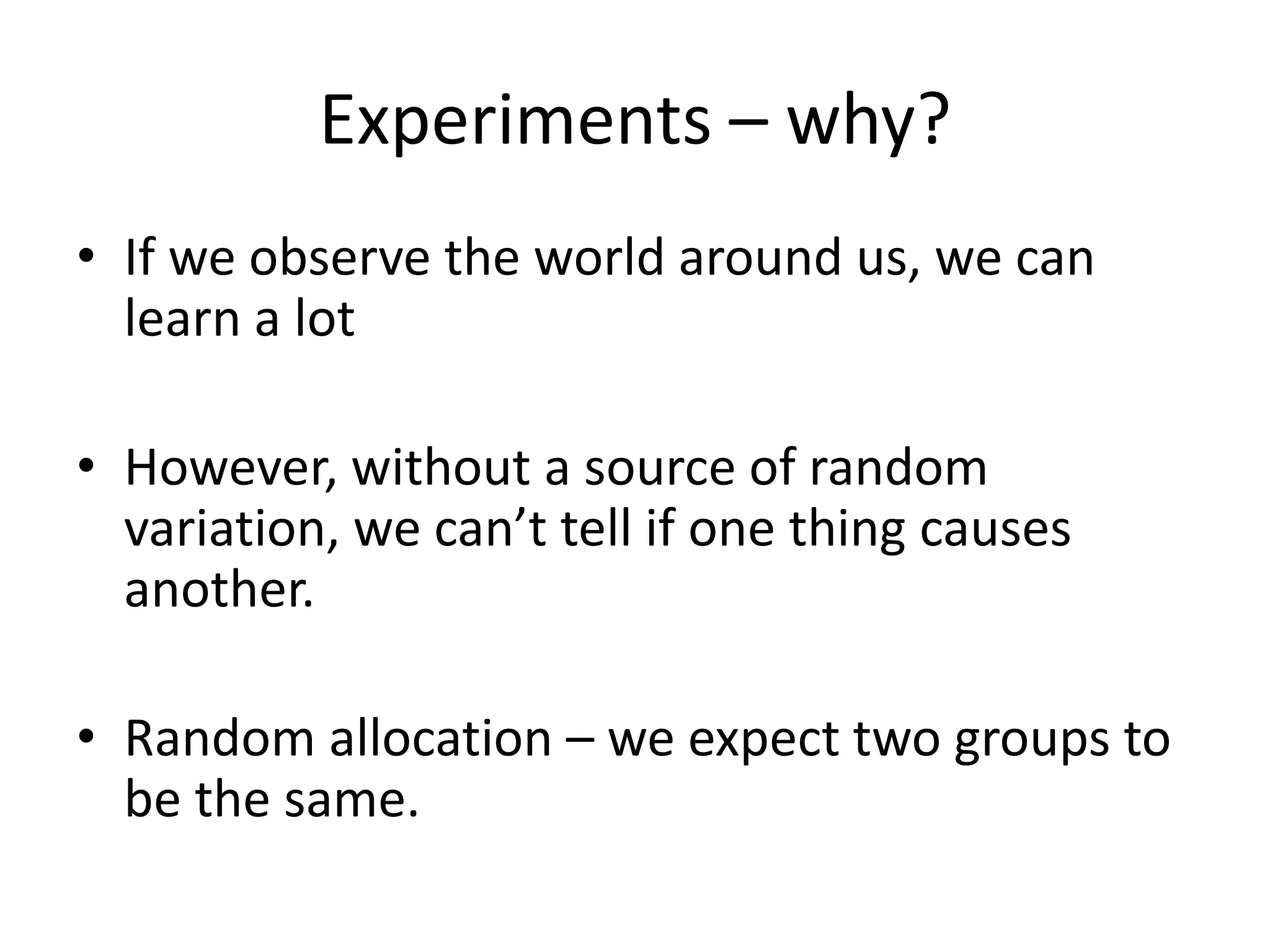
Experiments – why?
• If we observe the world around us, we can
learn a lot
• However, without a source of random
variation, we can’t tell if one thing causes
another.

• Random allocation – we expect two groups to
be the same.
Charitable Giving Experiments
• Two experiments
• Carried out in two very different workplaces
• Very quick examples of what can be done
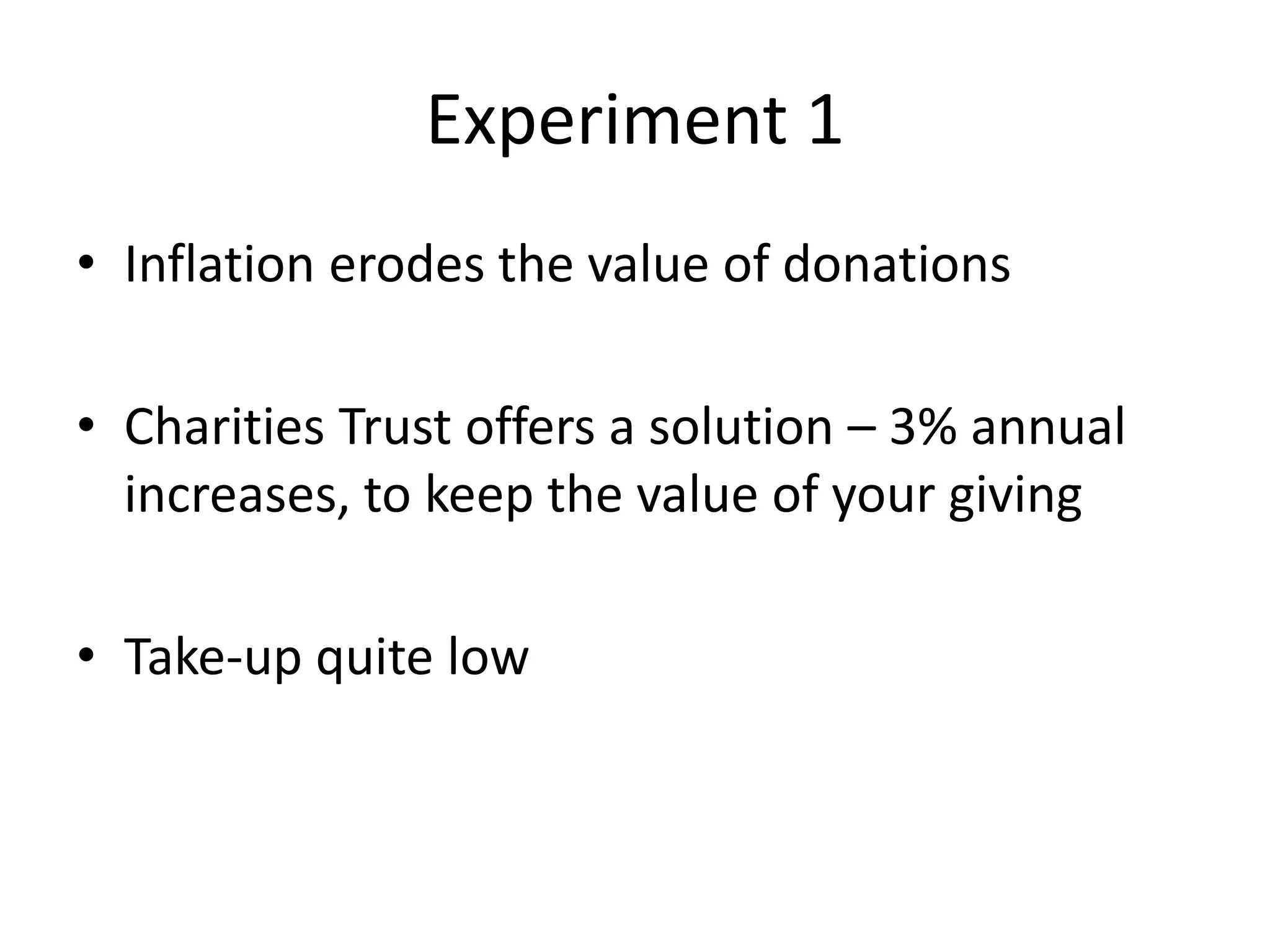
Experiment 1
• Inflation erodes the value of donations
• Charities Trust offers a solution – 3% annual
increases, to keep the value of your giving
• Take-up quite low
Experiment 1
• Switch the default –
• Tick to opt in
• Tick to opt out
• Very simple intervention, which can be very
powerful
Experiment 1: Results
Enrollment into annual increases
60%

48%
40%

20%

6%
0%

Opt-in

Opt-out
Experiment 2
• Investment bank
• Asking people to give one day’s salary
• 63 Offices
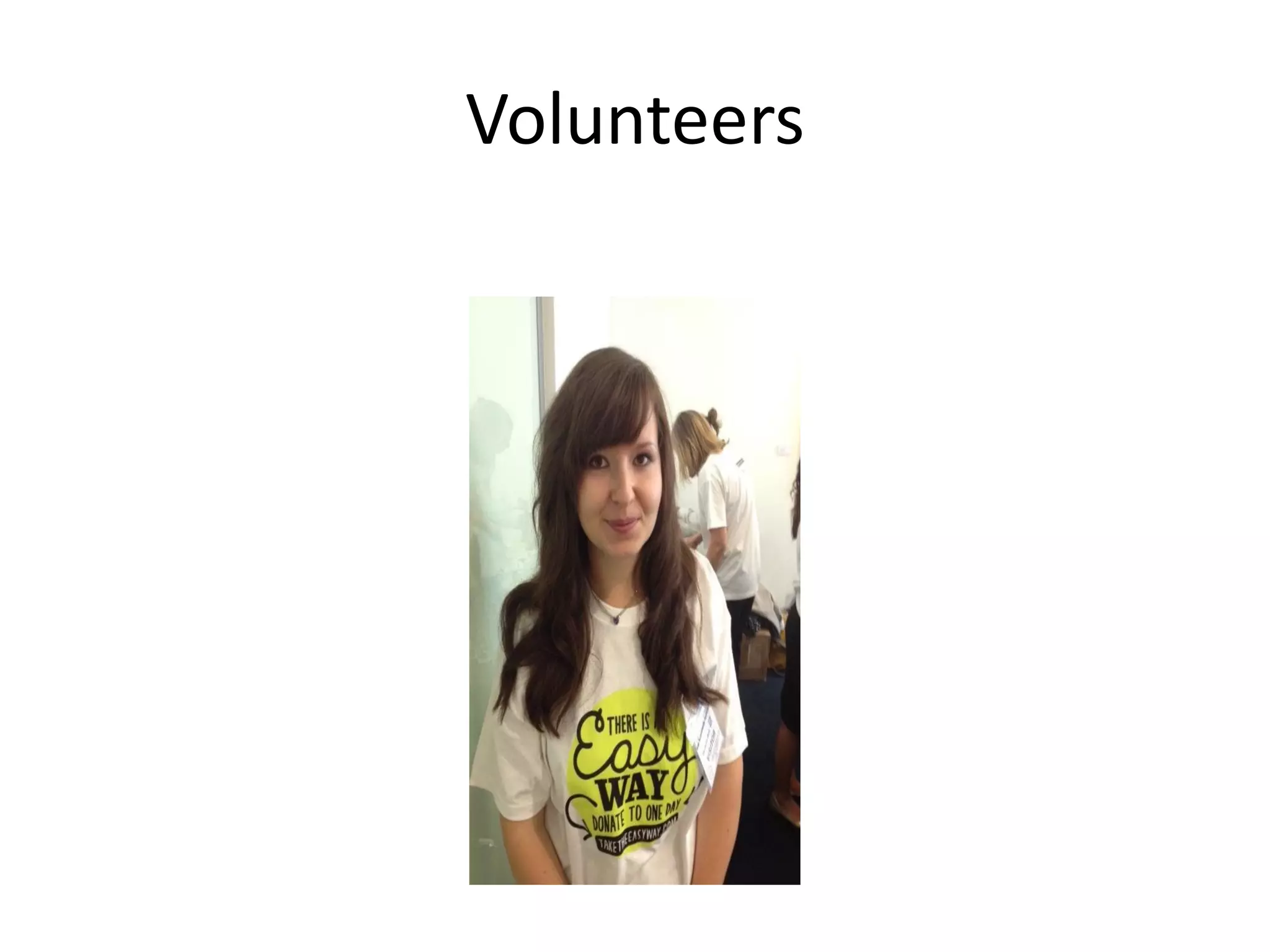
Volunteers
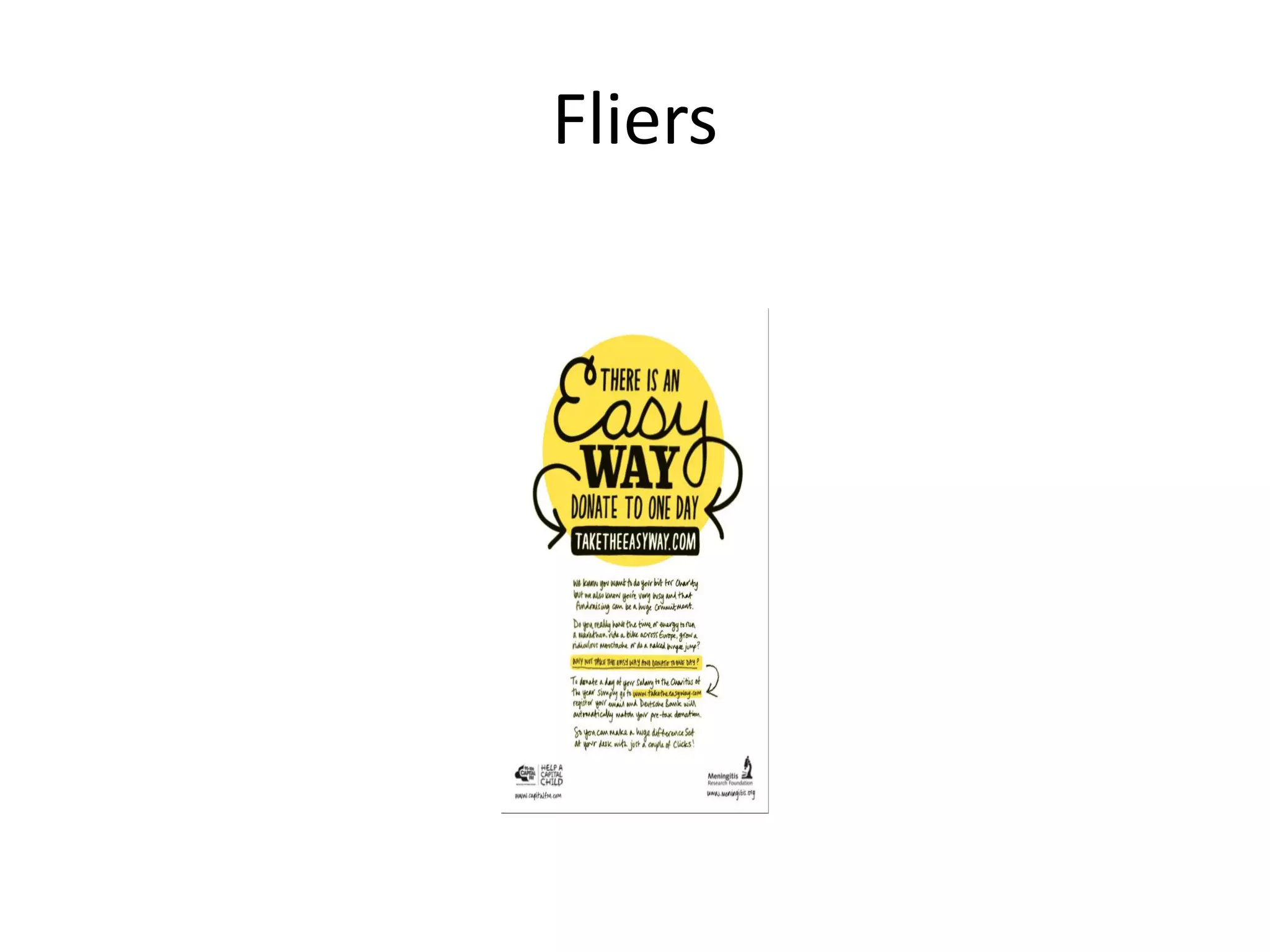
Fliers
Sweets
Experiment 2: Results
Giving One Day’s Salary
20%

11%
5%

5%

Control Group

Fliers

0%

Sweets
The University of Bristol’s Festival of Social
Sciences and Law presents:

SCHOOLS CHARITY
CHALLENGE 2013
8 November 2013

Tweet @UobFutures #TF2013
The importance of giving in the workplace
Why choose payroll giving?
• Tax efficient
• Payroll giving is the most tax effective way for
employees to support charities and good causes
• Social and community engagement
• Giving in the workplace delivers the feel good factor

• Flexible
• Complete choice over the charities they donate to and
the amount
Engaging employees in workplace giving
• What works?
• Chocolate!
• Match funding
• The last 3 feet…
• What doesn’t work?
• Poor promotion/communication = lack of awareness
• A complicated/time consuming sign-up process
The University of Bristol’s Festival of Social
Sciences and Law presents:

SCHOOLS CHARITY
CHALLENGE 2013
8 November 2013

Tweet @UobFutures #TF2013
Now over to you
• Design an intervention to increase the level of
giving in the workplace
• Prepare a brief (5 mins presentation)
• Your idea will be judged on:
– Innovation
– Potential to increase giving
– Incorporation of behavioural economics insights
The context
• Retail company; 600 stores across the country
• 11,000 employees; 212 signed up to payroll giving

• Presentations at HQ (no visits to outlets)
• Company matches first month’s donation

• Company supports Unicef; employees can choose
which charity to give to
The University of Bristol’s Festival of Social
Sciences and Law presents:

SCHOOLS CHARITY
CHALLENGE 2013
8 November 2013

Tweet @UobFutures #TF2013

University of Bristol Schoolscharitychallenge

  • 1.
    The University ofBristol’s Festival of Social Sciences and Law presents: SCHOOLS CHARITY CHALLENGE 2013 8 November 2013 Tweet @UobFutures #TF2013
  • 2.
  • 3.
    The challenge • Howto encourage (more) people to give to charity in the workplace • Using insights from behavioural economics • Drawing on experience of recent “giving trials”
  • 4.
    What you willget from this • Insights into – behavioural economics – applied economic research • A “warm glow” from thinking about charity
  • 5.
    Homo economicus • Independent •Rational • Utility-maximising Good 1 x1 U Good 2 x2
  • 6.
    How to gethomo economicus to give more? Other goods x1 U x2 Donation to charity
  • 7.
    How to gethomo economicus to give more? Make it cheaper for people to give Offer a match Or a (tax) rebate Other goods x1 U x2 Donation to charity
  • 8.
    How to gethomo economicus to give more? Make it cheaper for people to give Offer a match Or a (tax) rebate Other goods x1 ’ x1 U’ U x2 x2 ’ Donation to charity
  • 9.
    Payroll giving schemes •Allow people to give out of their gross (before tax) earnings – which means giving up less of the other things they want to buy • Many firms offer a match on top of this • But take up is low: <1% at the majority of firms with payroll giving schemes
  • 10.
    Behavioural Economics Insights •Does not do away altogether with homo economicus paradigm • But makes different/ more realistic assumptions about the way people make decisions
  • 11.
    Behavioural Economics Insights(1) • Making rational decisions is a costly activity • People may not always have – and/ or process – all the relevant information • Small processing/ transactions costs have a big effect
  • 12.
    Behavioural Economics Insights(1) • Practical insights: – The way options are presented matters – Simplifying choices can have an effect on decisions – Defaults (opt in/out)
  • 13.
    Behavioural Economics Insights(2) • People are social – They care what other people think – They are influenced by what other people do
  • 14.
    Behavioural Economics Insights(2) • Practical insights – People respond to information on what other people have done – Personal relationships matter – Group dynamics are important
  • 15.
    Charitable Giving Experiments MichaelSanders (University of Bristol And Behavioural Insights Team)
  • 16.
    Experiments – why? •If we observe the world around us, we can learn a lot • However, without a source of random variation, we can’t tell if one thing causes another. • Random allocation – we expect two groups to be the same.
  • 17.
    Charitable Giving Experiments •Two experiments • Carried out in two very different workplaces • Very quick examples of what can be done
  • 18.
    Experiment 1 • Inflationerodes the value of donations • Charities Trust offers a solution – 3% annual increases, to keep the value of your giving • Take-up quite low
  • 19.
    Experiment 1 • Switchthe default – • Tick to opt in • Tick to opt out • Very simple intervention, which can be very powerful
  • 20.
    Experiment 1: Results Enrollmentinto annual increases 60% 48% 40% 20% 6% 0% Opt-in Opt-out
  • 21.
    Experiment 2 • Investmentbank • Asking people to give one day’s salary • 63 Offices
  • 22.
  • 23.
  • 24.
  • 25.
    Experiment 2: Results GivingOne Day’s Salary 20% 11% 5% 5% Control Group Fliers 0% Sweets
  • 26.
    The University ofBristol’s Festival of Social Sciences and Law presents: SCHOOLS CHARITY CHALLENGE 2013 8 November 2013 Tweet @UobFutures #TF2013
  • 27.
    The importance ofgiving in the workplace Why choose payroll giving? • Tax efficient • Payroll giving is the most tax effective way for employees to support charities and good causes • Social and community engagement • Giving in the workplace delivers the feel good factor • Flexible • Complete choice over the charities they donate to and the amount
  • 28.
    Engaging employees inworkplace giving • What works? • Chocolate! • Match funding • The last 3 feet… • What doesn’t work? • Poor promotion/communication = lack of awareness • A complicated/time consuming sign-up process
  • 29.
    The University ofBristol’s Festival of Social Sciences and Law presents: SCHOOLS CHARITY CHALLENGE 2013 8 November 2013 Tweet @UobFutures #TF2013
  • 30.
    Now over toyou • Design an intervention to increase the level of giving in the workplace • Prepare a brief (5 mins presentation) • Your idea will be judged on: – Innovation – Potential to increase giving – Incorporation of behavioural economics insights
  • 31.
    The context • Retailcompany; 600 stores across the country • 11,000 employees; 212 signed up to payroll giving • Presentations at HQ (no visits to outlets) • Company matches first month’s donation • Company supports Unicef; employees can choose which charity to give to
  • 32.
    The University ofBristol’s Festival of Social Sciences and Law presents: SCHOOLS CHARITY CHALLENGE 2013 8 November 2013 Tweet @UobFutures #TF2013