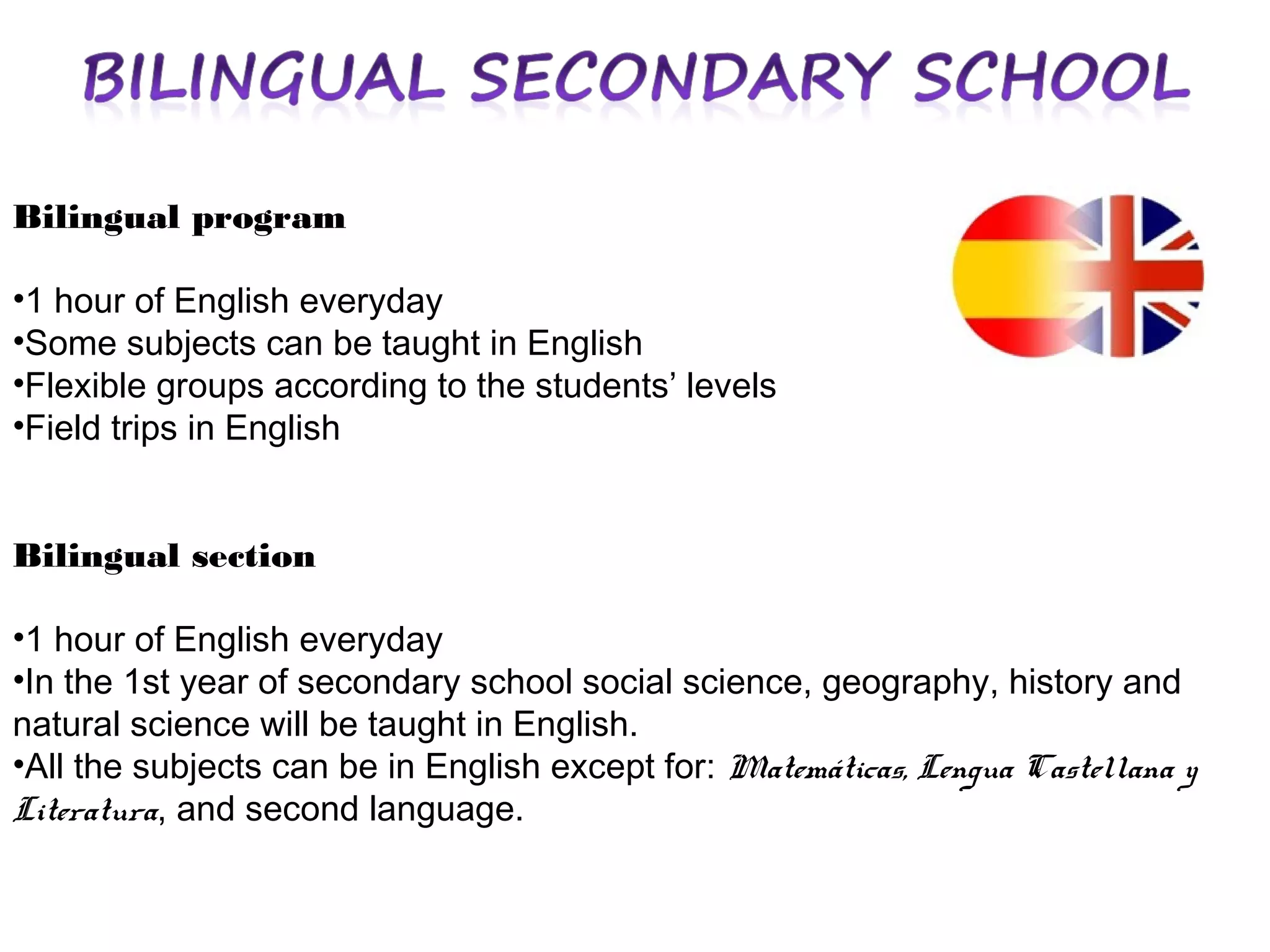
Bilingual program
•1 hour of English everyday
•Some subjects can be taught in English
•Flexible groups according to the students’ levels
•Field trips in English
Bilingual section
•1 hour of English everyday
•In the 1st year of secondary school social science, geography, history and
natural science will be taught in English.
•All the subjects can be in English except for: Matemáticas, Lengua Castellana y
Literatura, and second language.
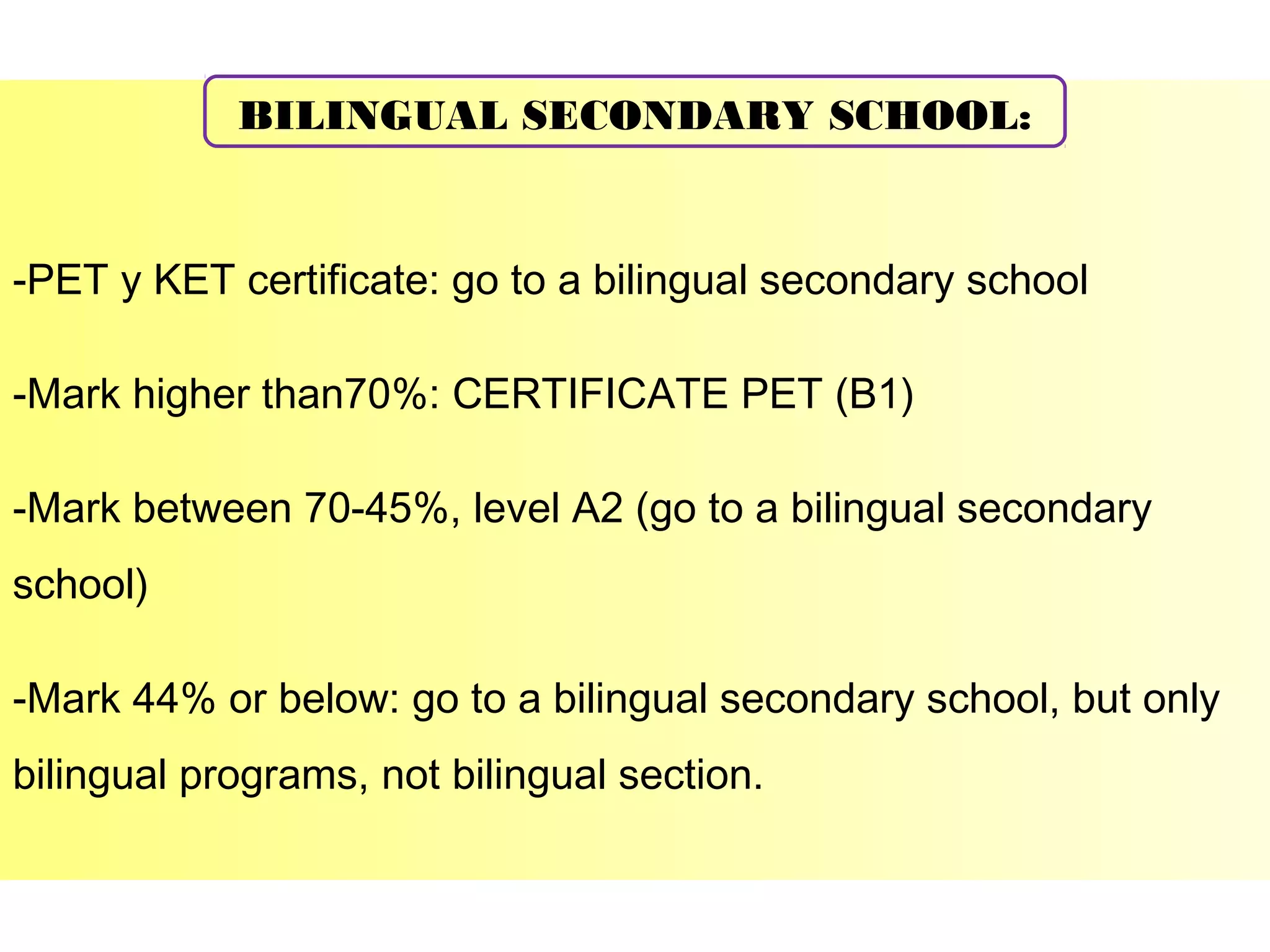
BILINGUAL SECONDARY SCHOOL:

-PET y KET certificate: go to a bilingual secondary school
-Mark higher than70%: CERTIFICATE PET (B1)
-Mark between 70-45%, level A2 (go to a bilingual secondary
school)
-Mark 44% or below: go to a bilingual secondary school, but only
bilingual programs, not bilingual section.
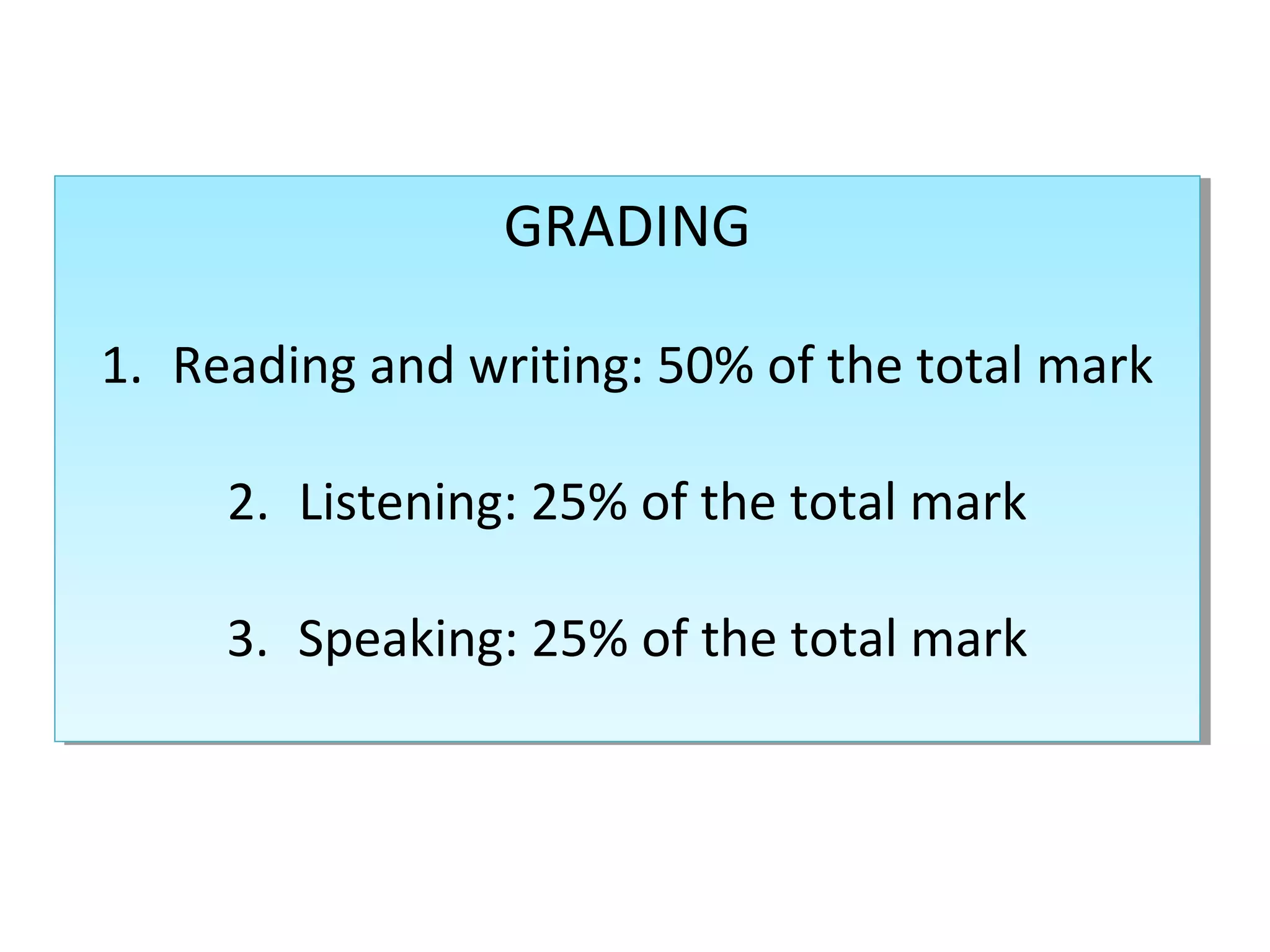
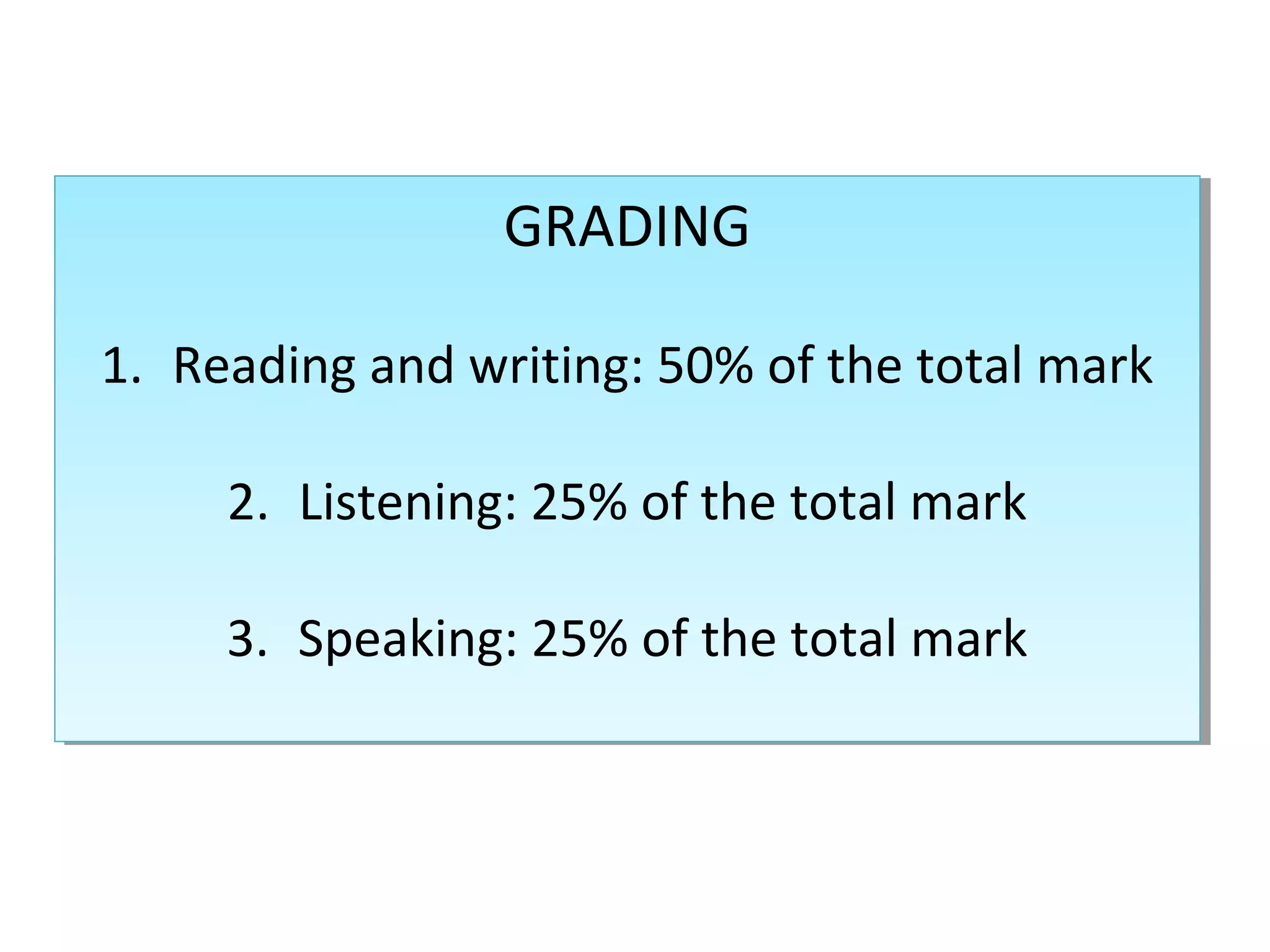
GRADING
GRADING
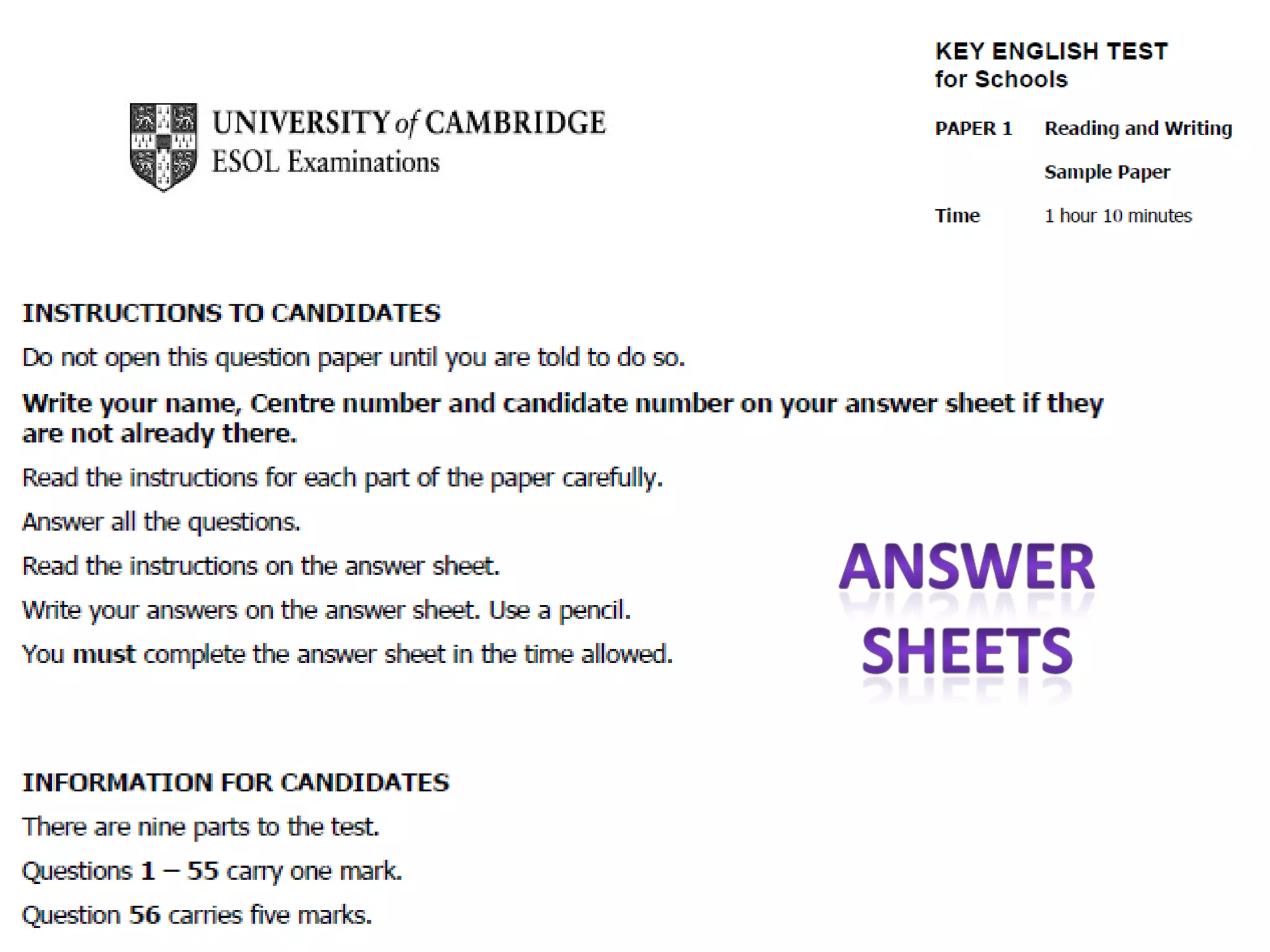
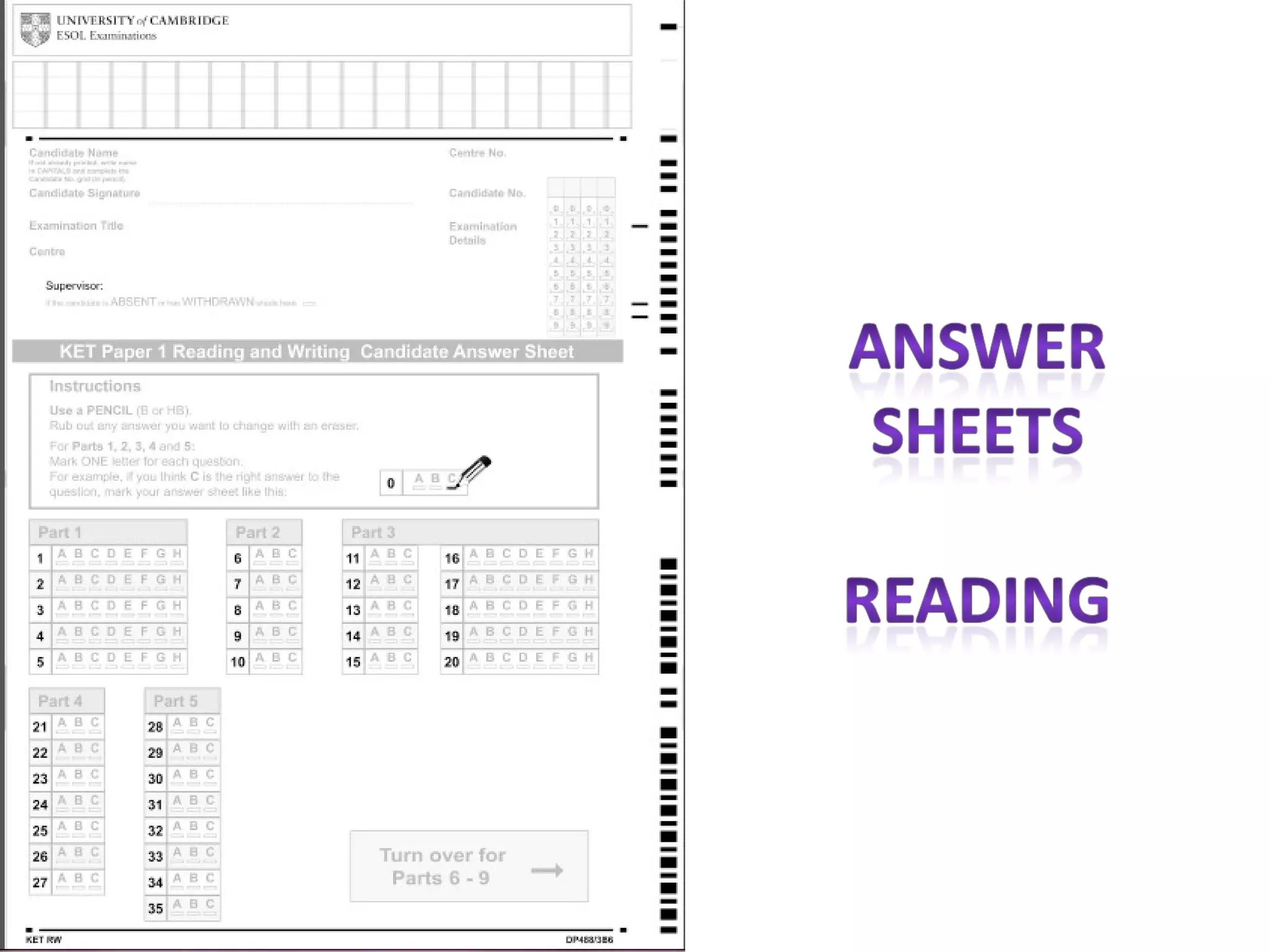
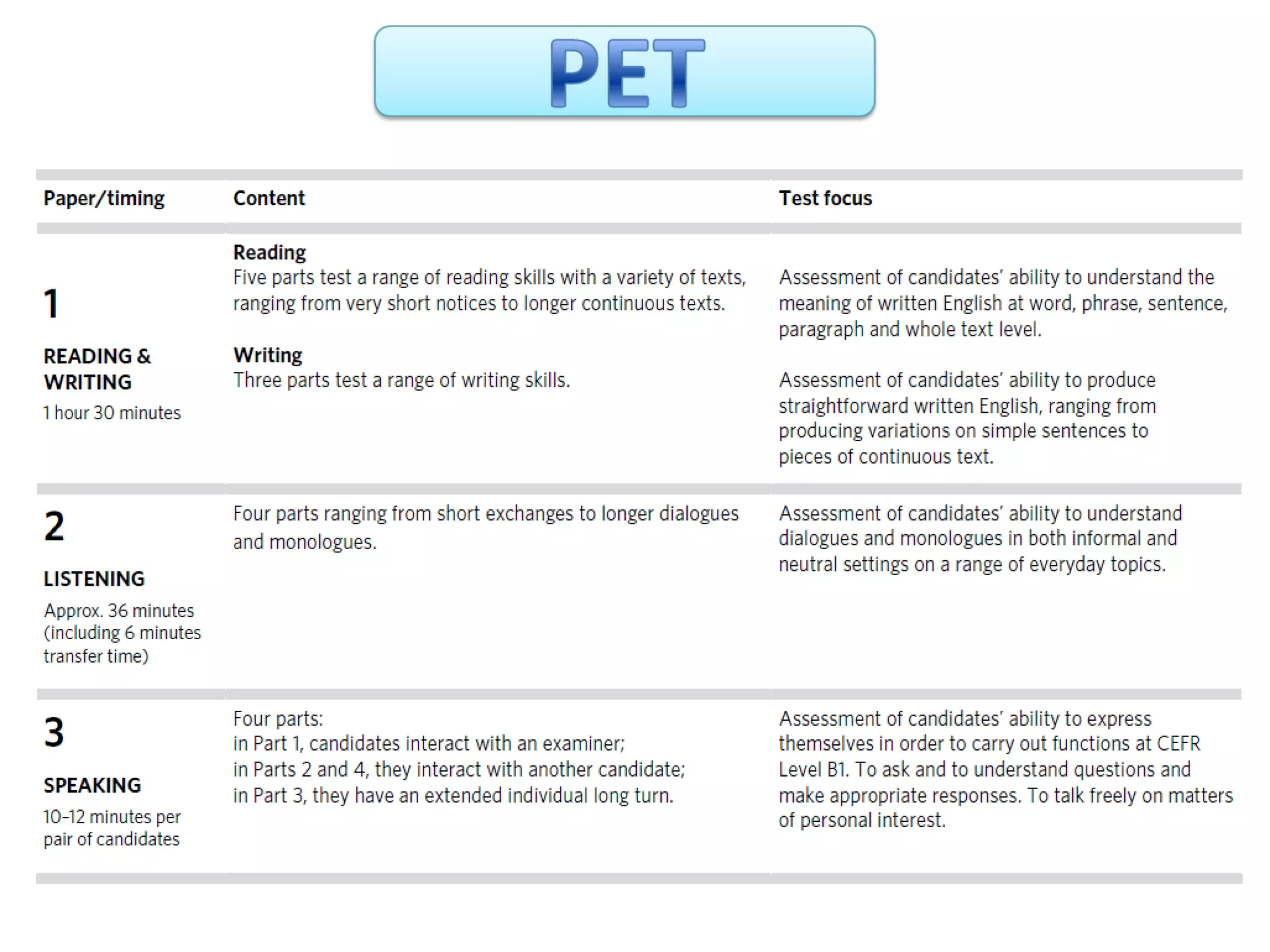
1. Reading and writing: 50% of the total mark
2. Listening: 25% of the total mark
3. Speaking: 25% of the total mark
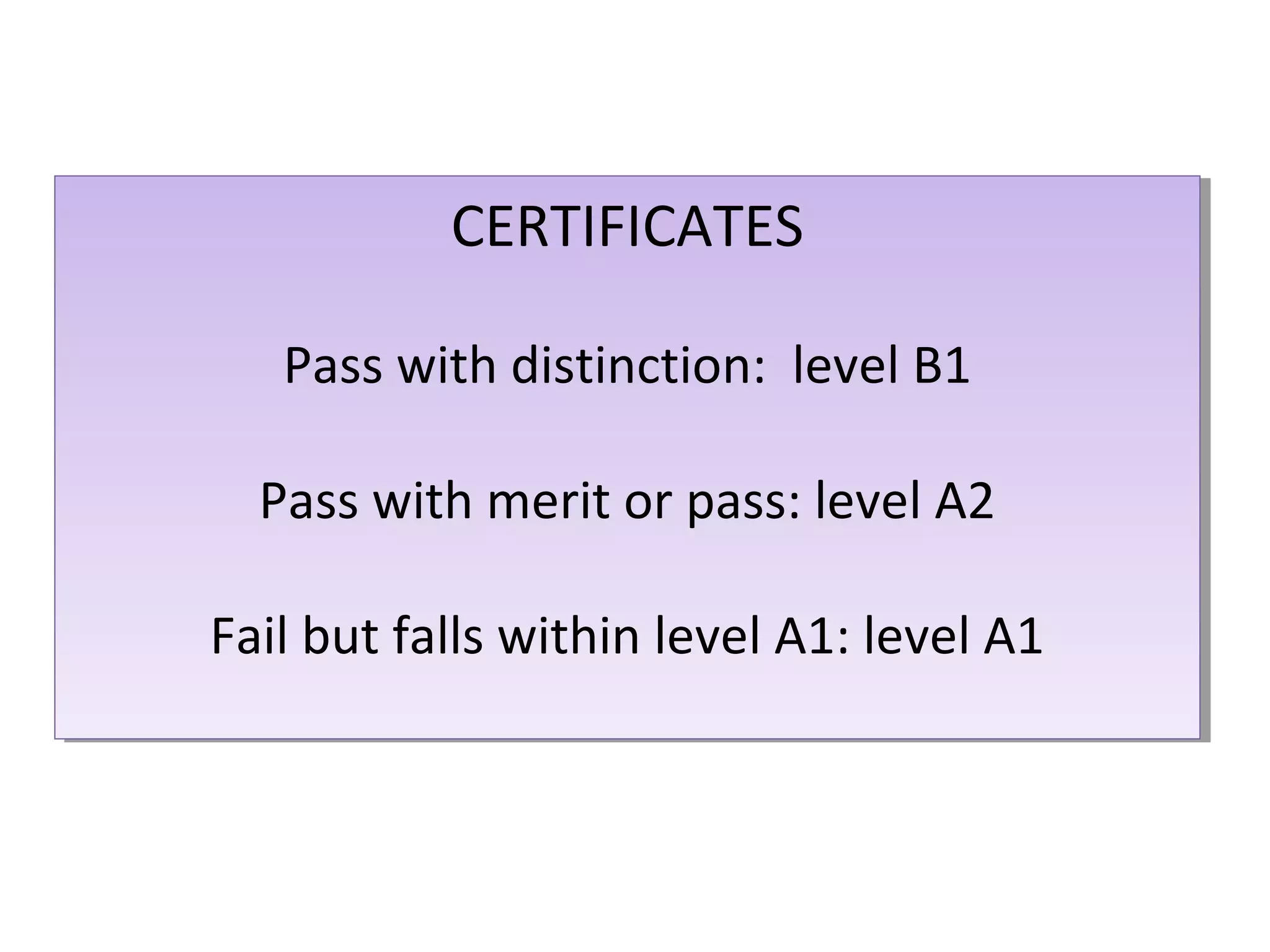
CERTIFICATES
CERTIFICATES
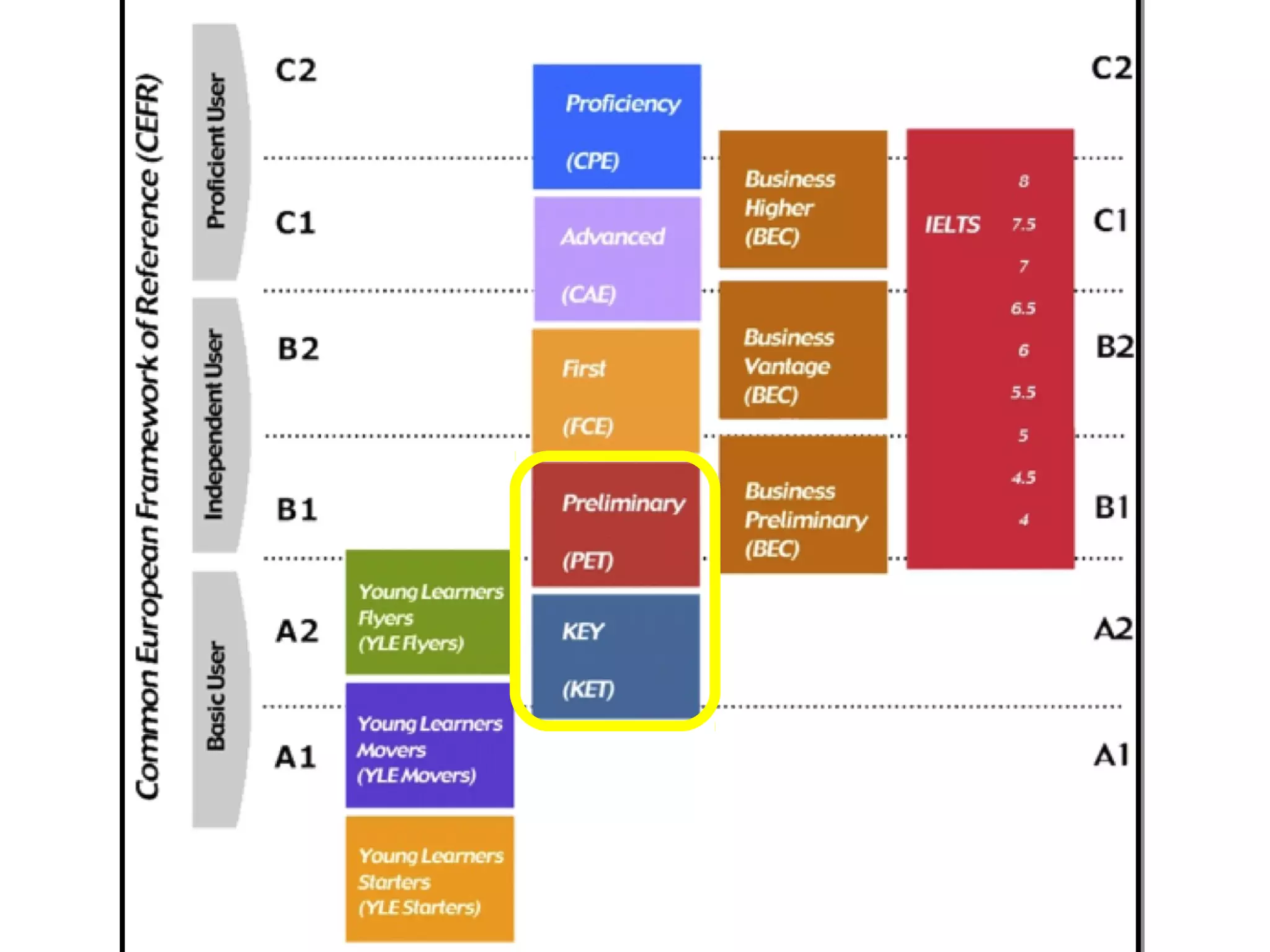
Pass with distinction: level B1
Pass with merit or pass: level A2
Fail but falls within level A1: level A1
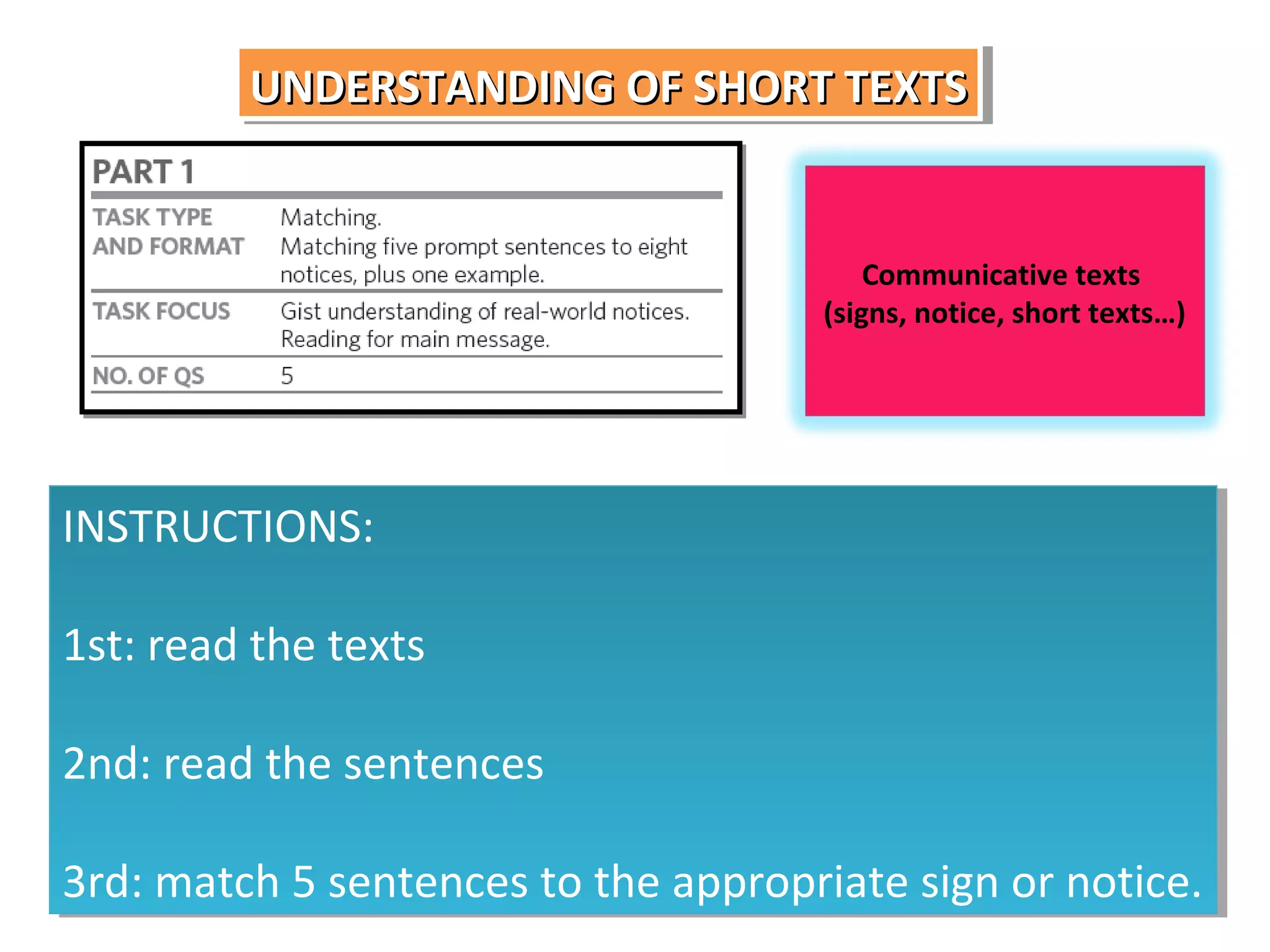
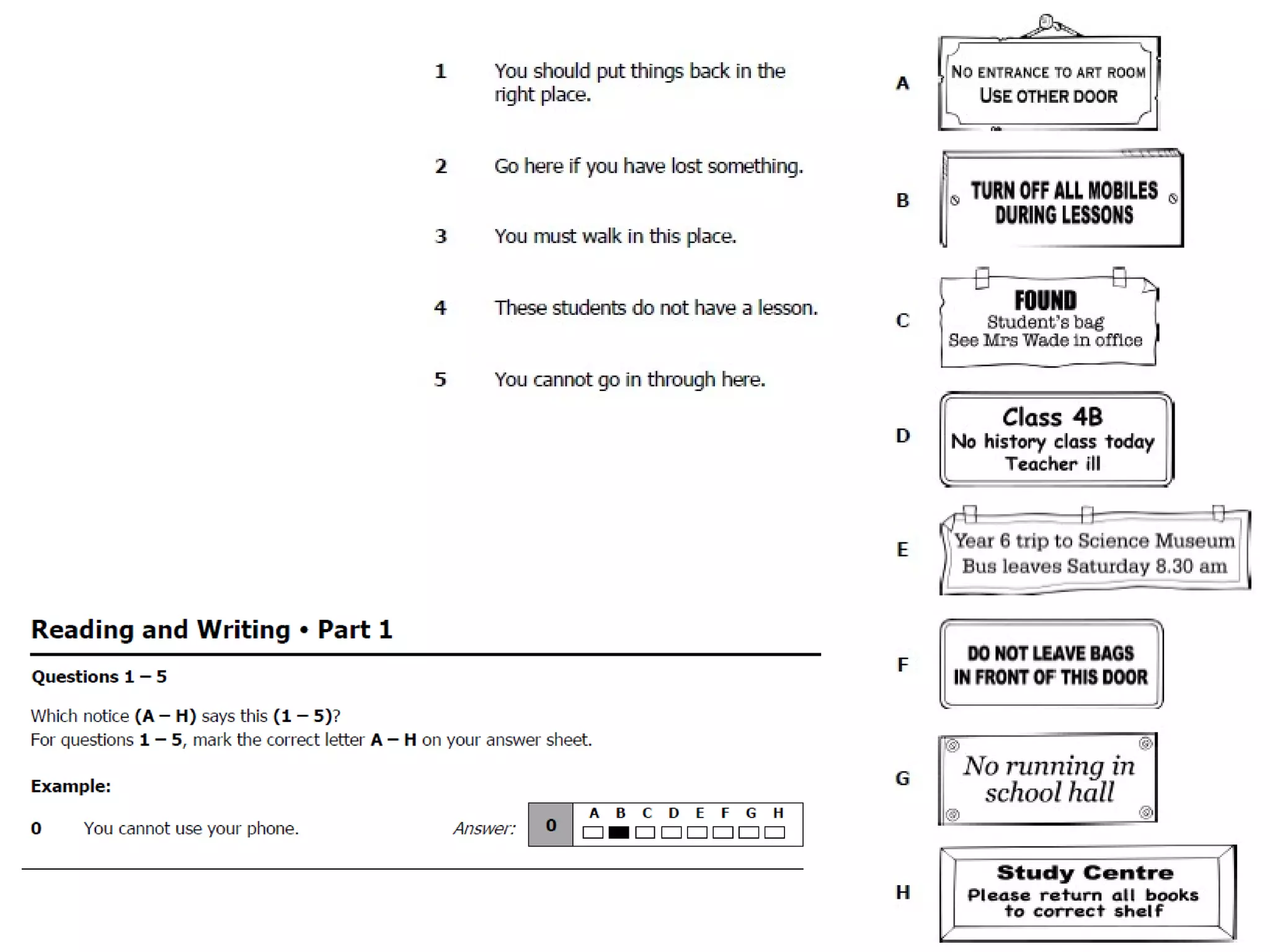
UNDERSTANDING OF SHORT TEXTS

Communicative texts
(signs, notice, short texts…)

INSTRUCTIONS:
INSTRUCTIONS:
1st: read the texts
1st: read the texts
2nd: read the sentences
3rd: match 5 sentences to the appropriate sign or notice.
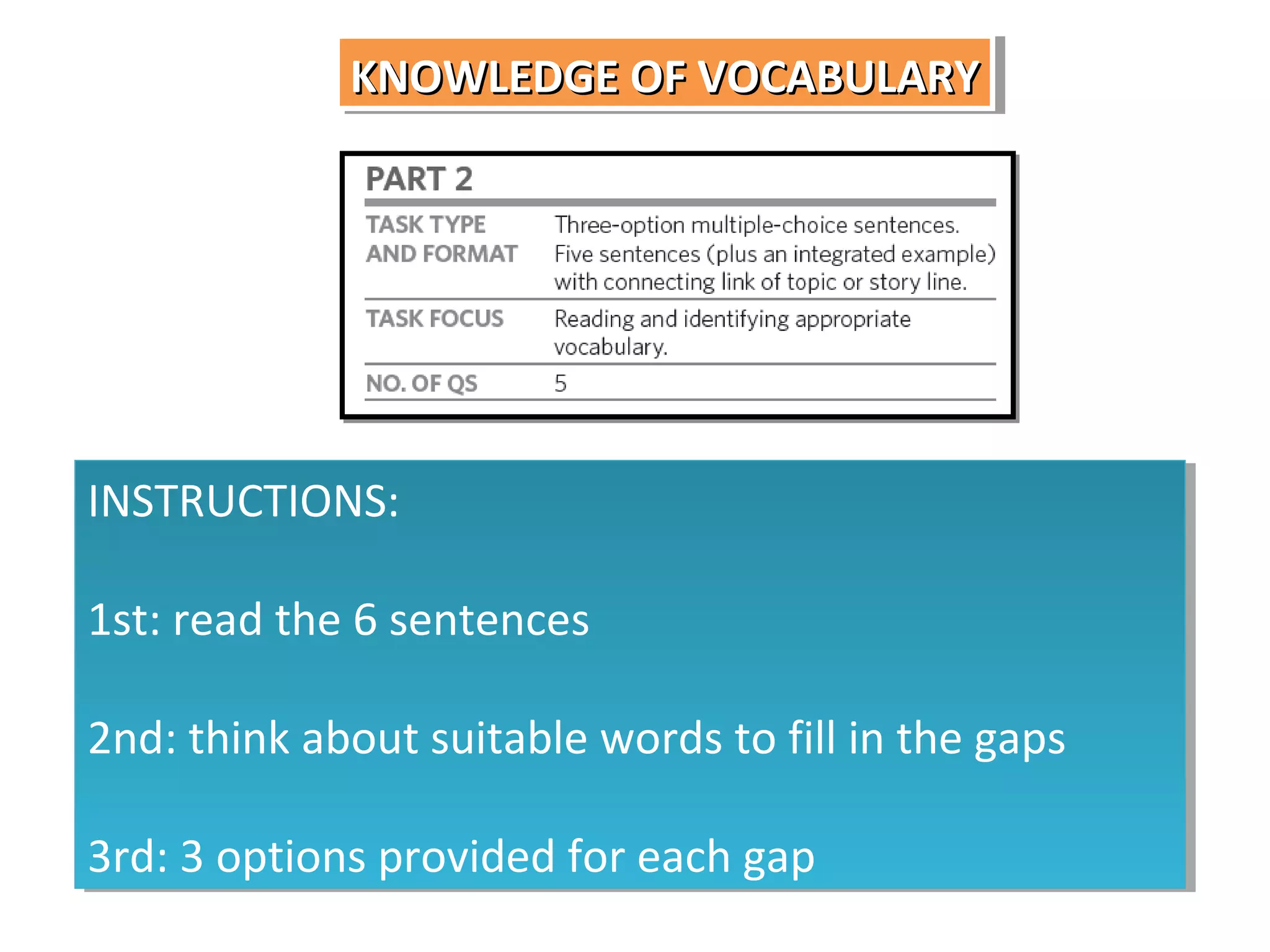
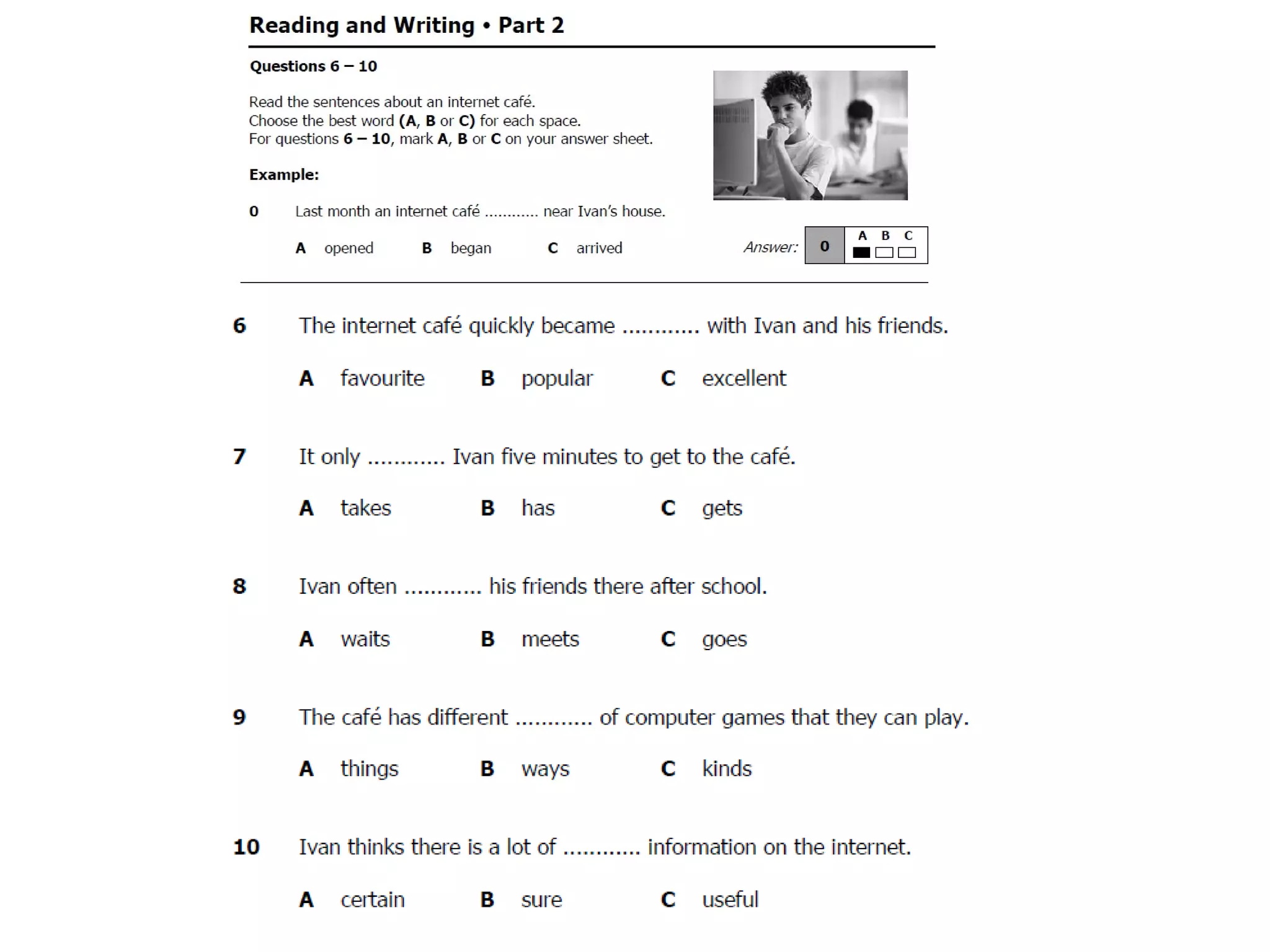
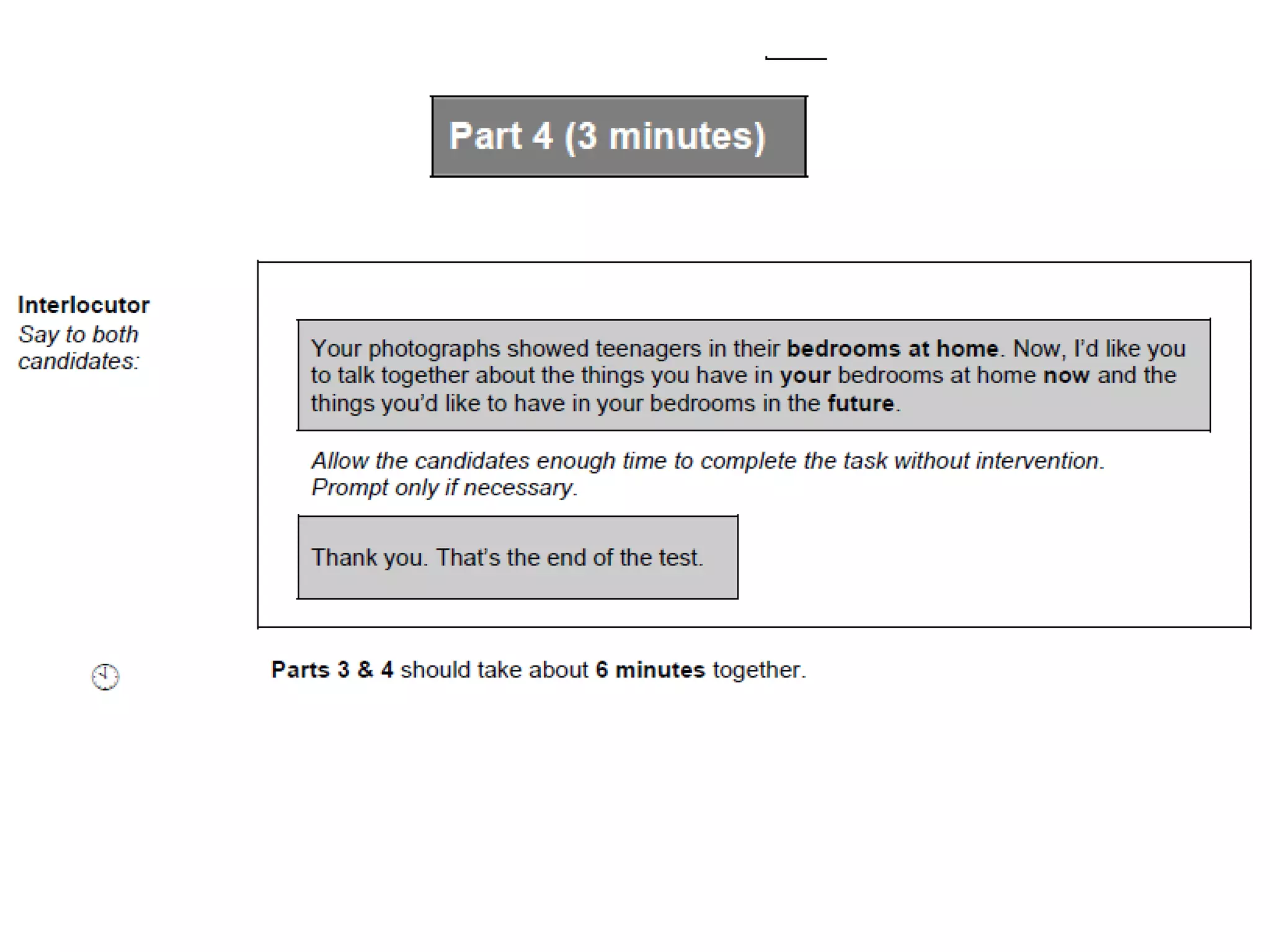
KNOWLEDGE OF VOCABULARY

INSTRUCTIONS:
INSTRUCTIONS:
1st: read the 6 sentences
2nd: think about suitable words to fill in the gaps
3rd: 3 options provided for each gap
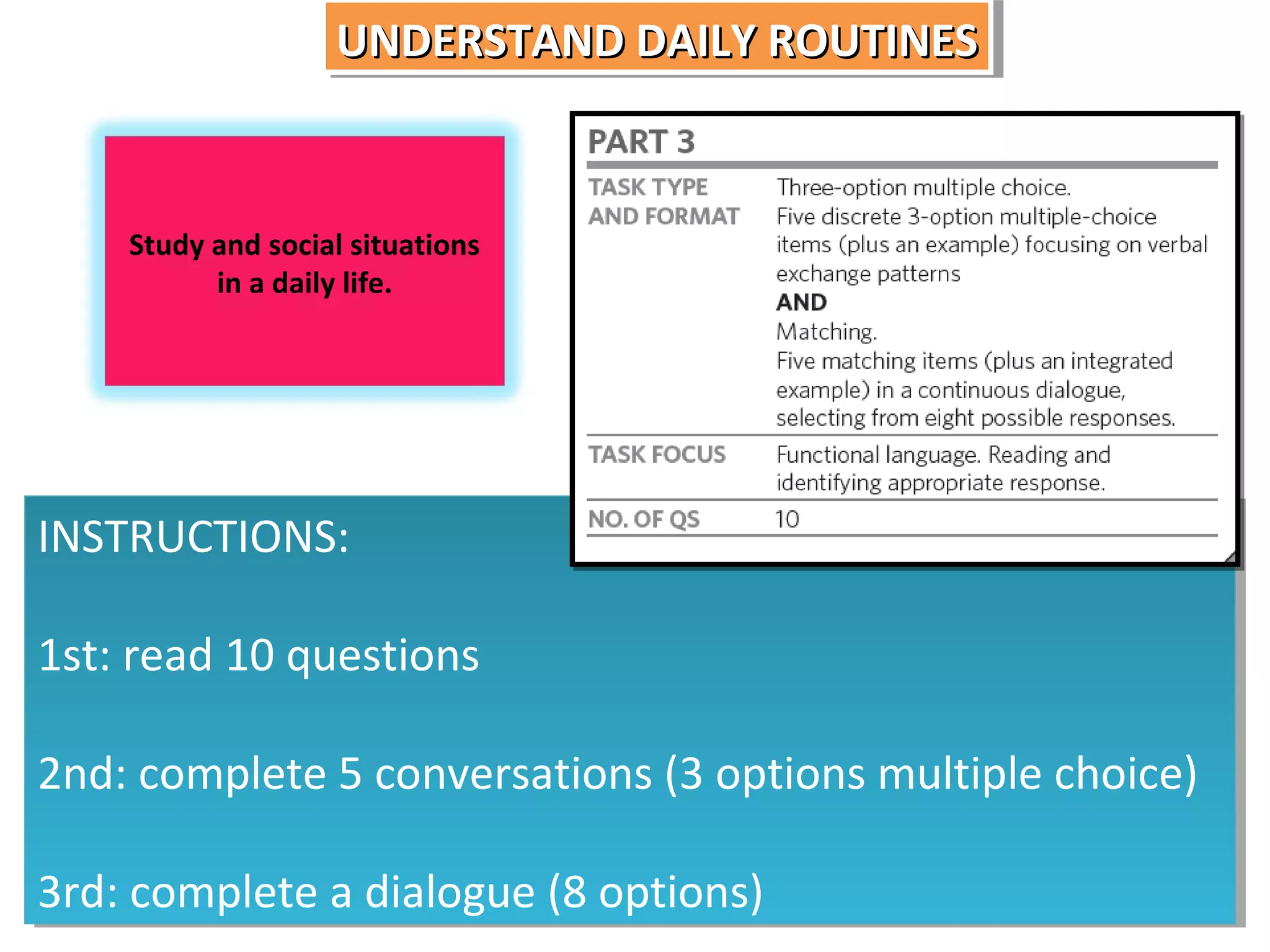
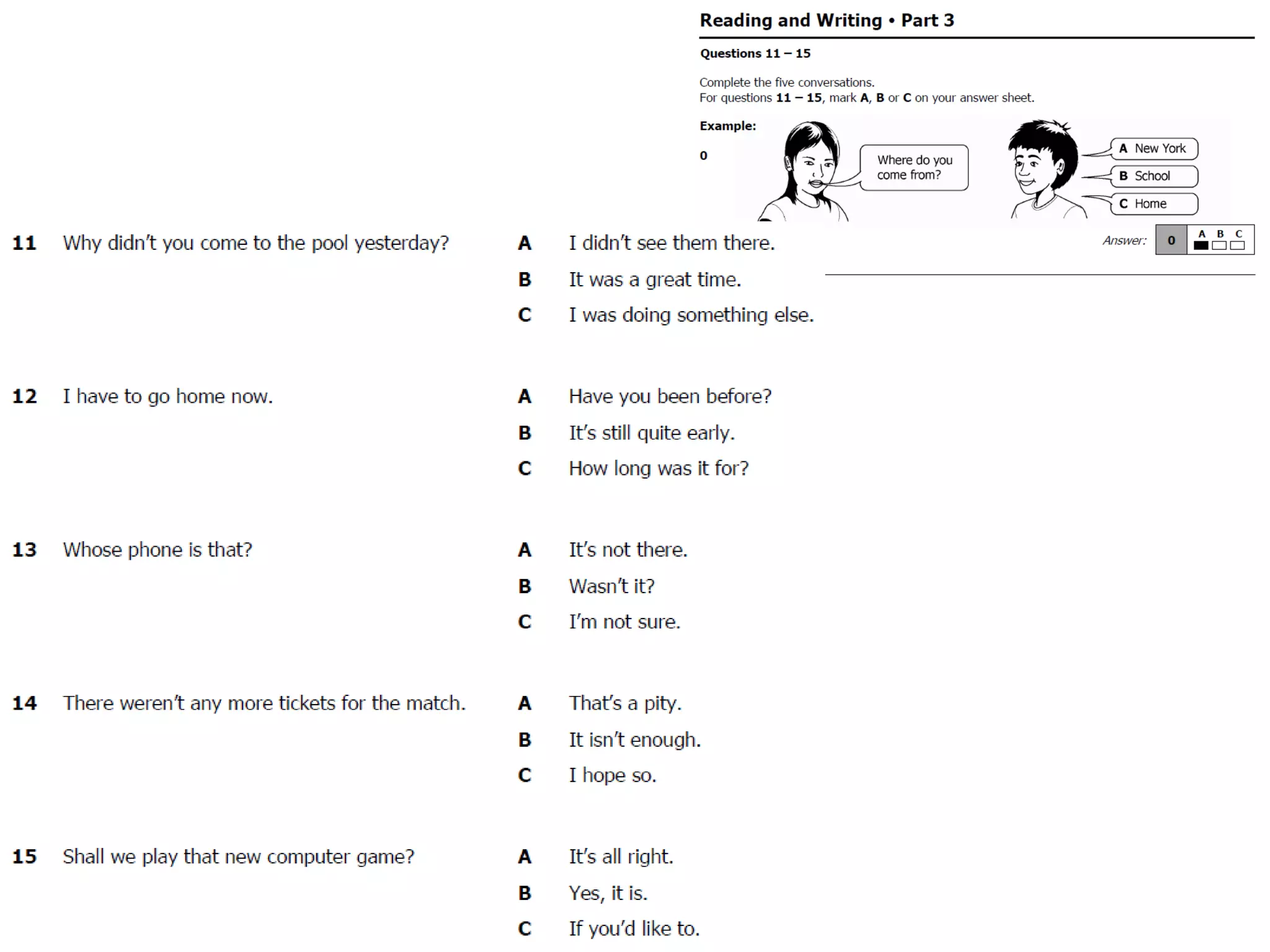
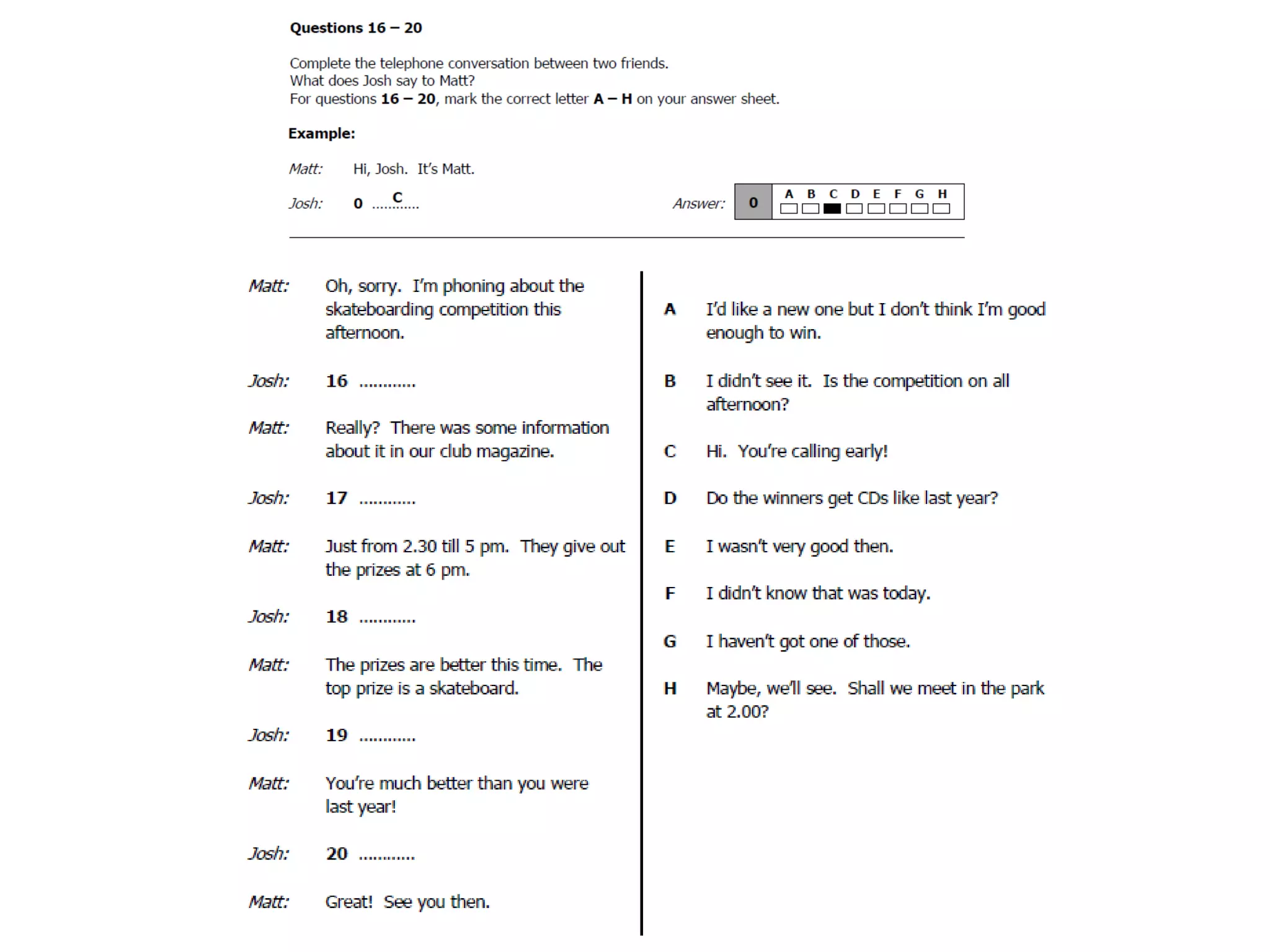
UNDERSTAND DAILY ROUTINES

Study and social situations
in a daily life.

INSTRUCTIONS:
INSTRUCTIONS:
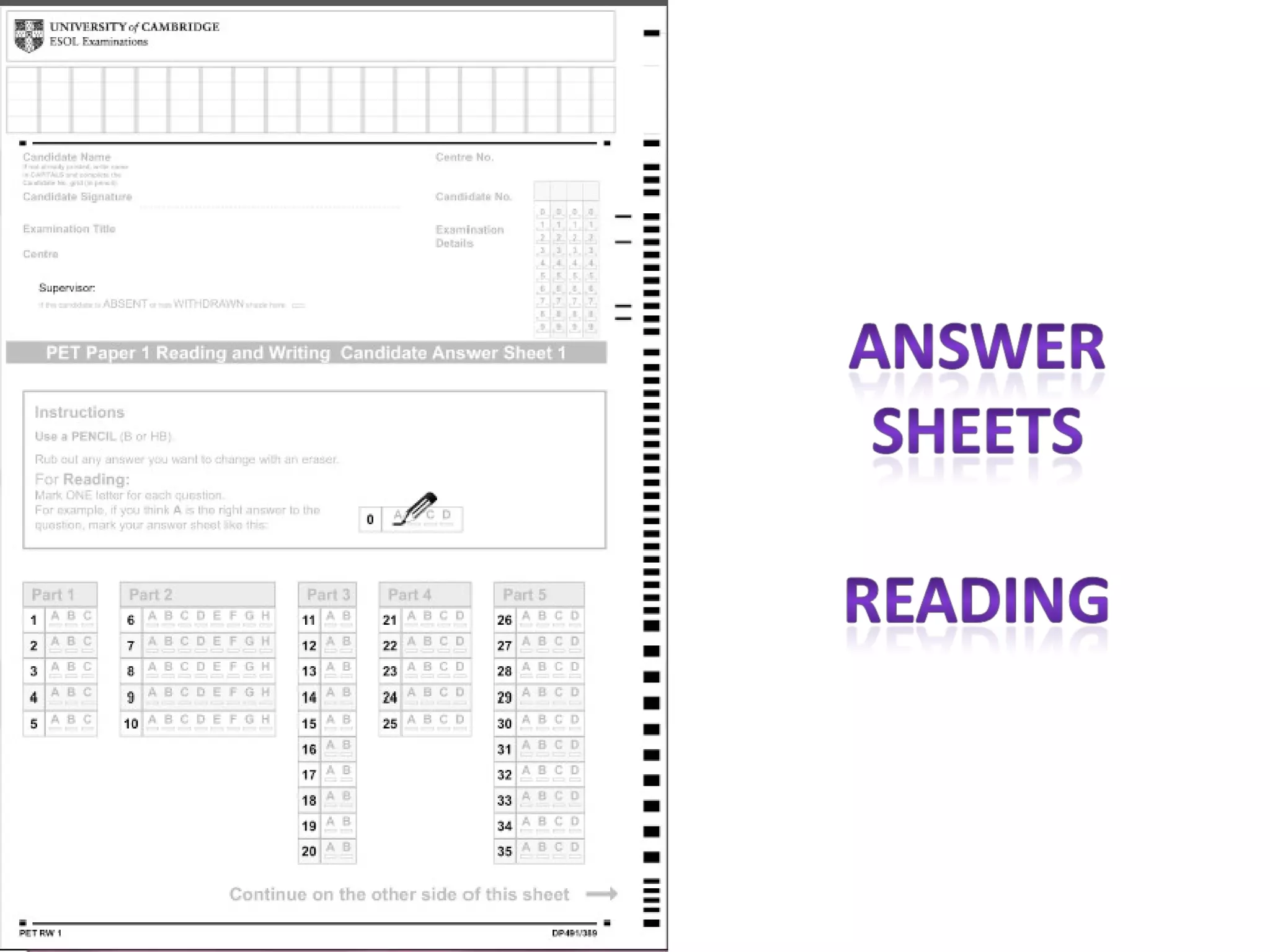
1st: read 10 questions
2nd: complete 5 conversations (3 options multiple choice)
3rd: complete a dialogue (8 options)
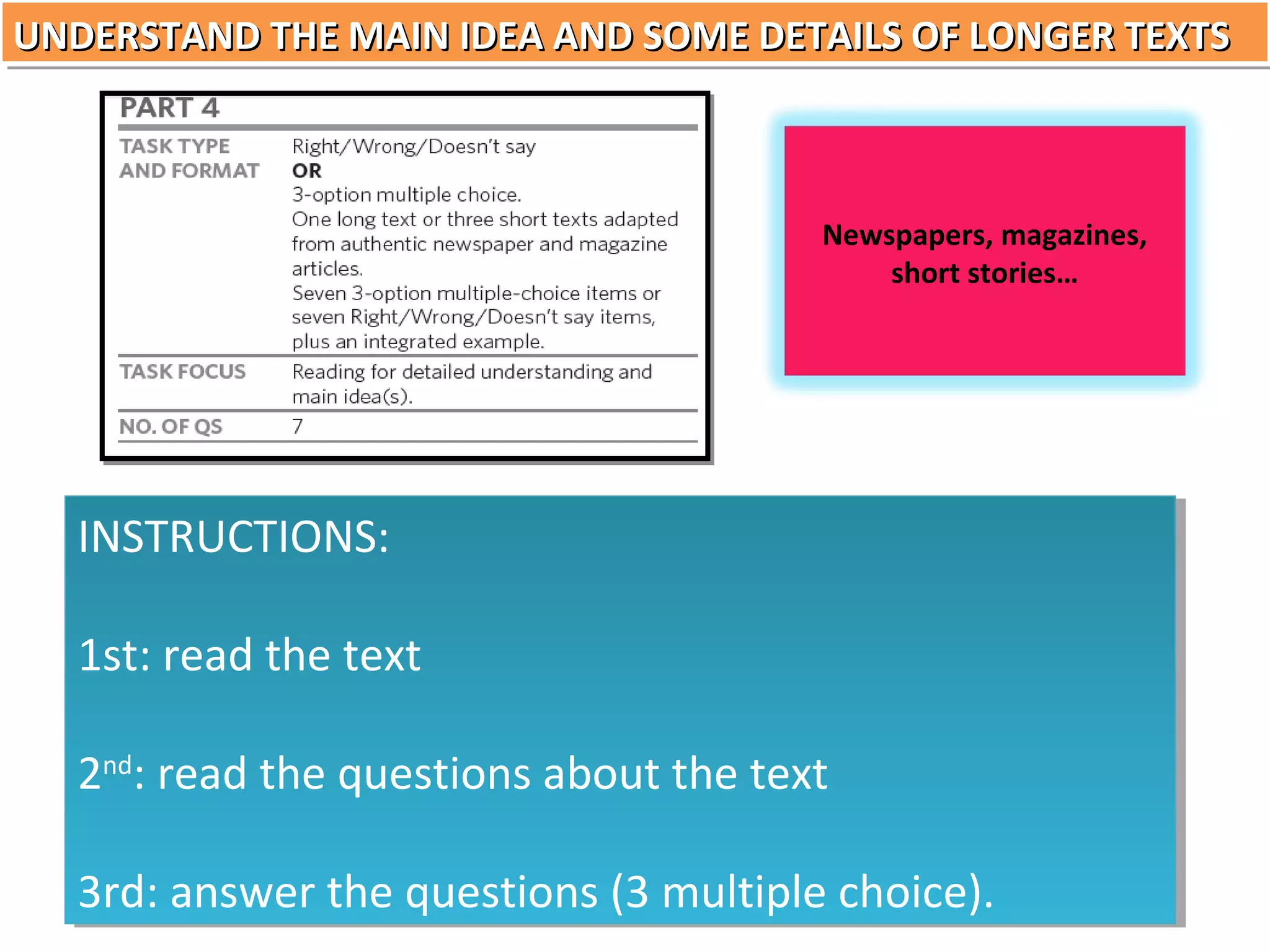
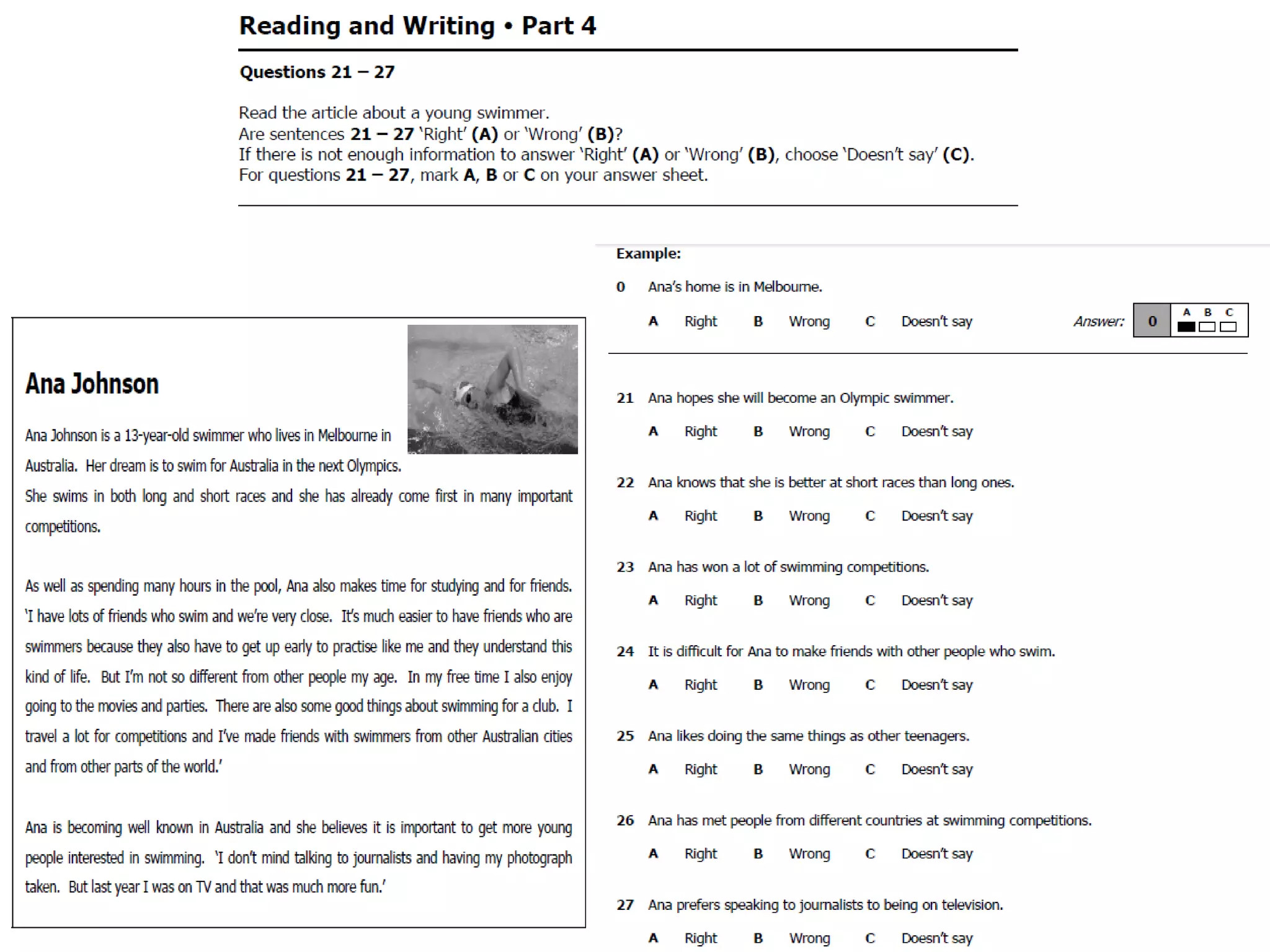
UNDERSTAND THE MAIN IDEA AND SOME DETAILS OF LONGER TEXTS

Newspapers, magazines,
short stories…

INSTRUCTIONS:
INSTRUCTIONS:
1st: read the text
1st: read the text
2nd::read the questions about the text
2nd read the questions about the text
3rd: answer the questions (3 multiple choice).
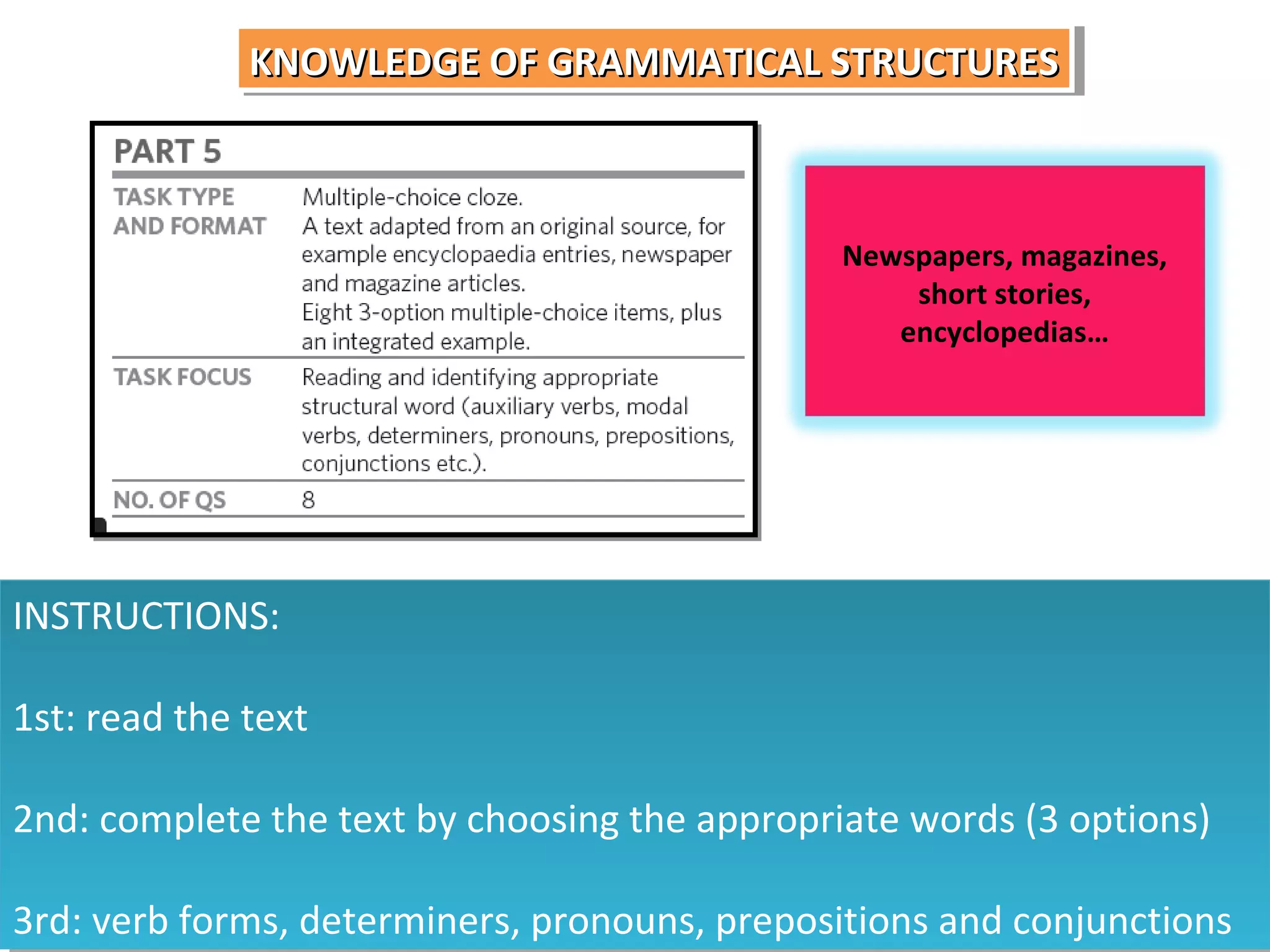
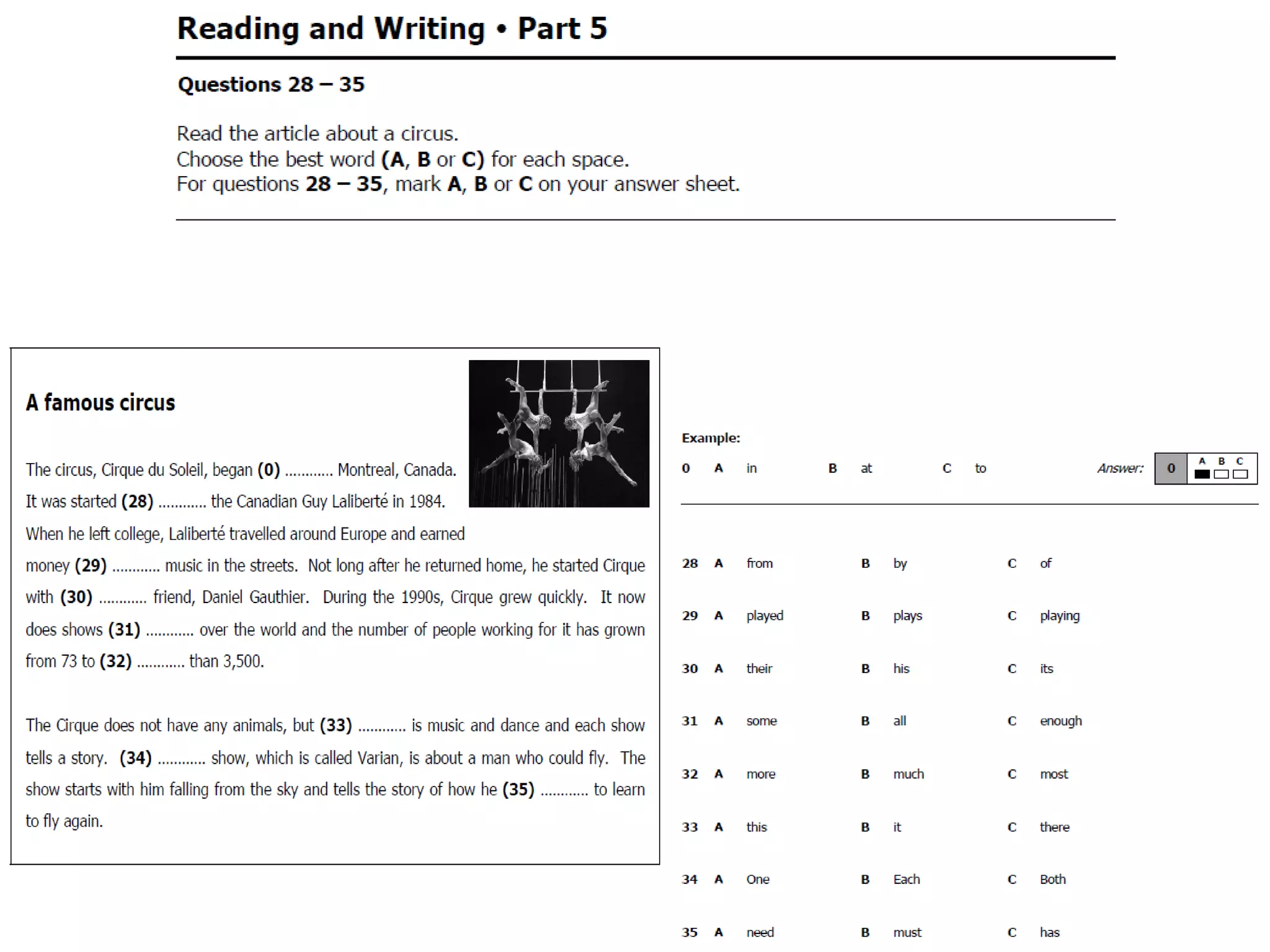
KNOWLEDGE OF GRAMMATICAL STRUCTURES

Newspapers, magazines,
short stories,
encyclopedias…

INSTRUCTIONS:
INSTRUCTIONS:
1st: read the text
1st: read the text
2nd: complete the text by choosing the appropriate words (3 options)
3rd: verb forms, determiners, pronouns, prepositions and conjunctions
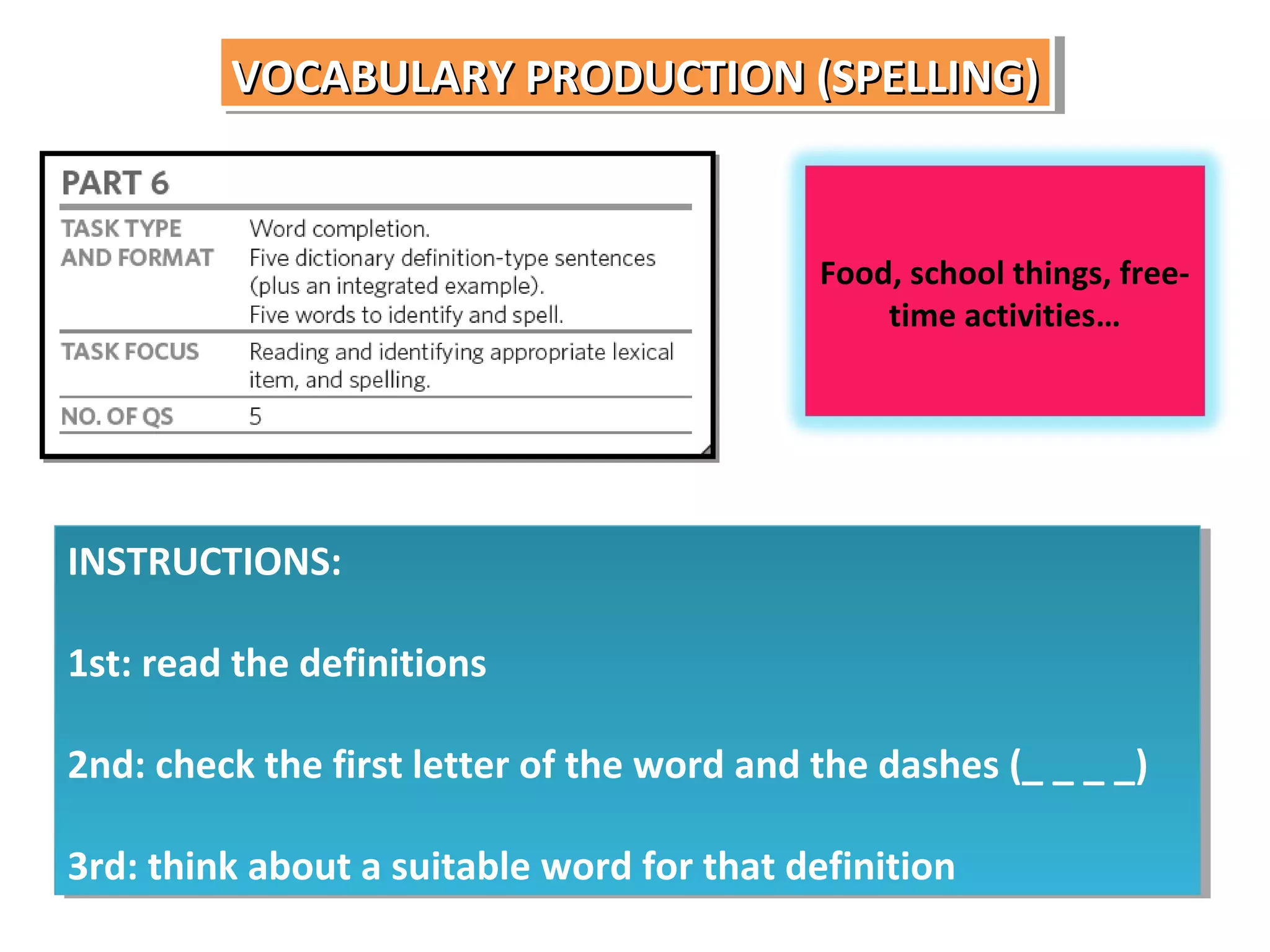
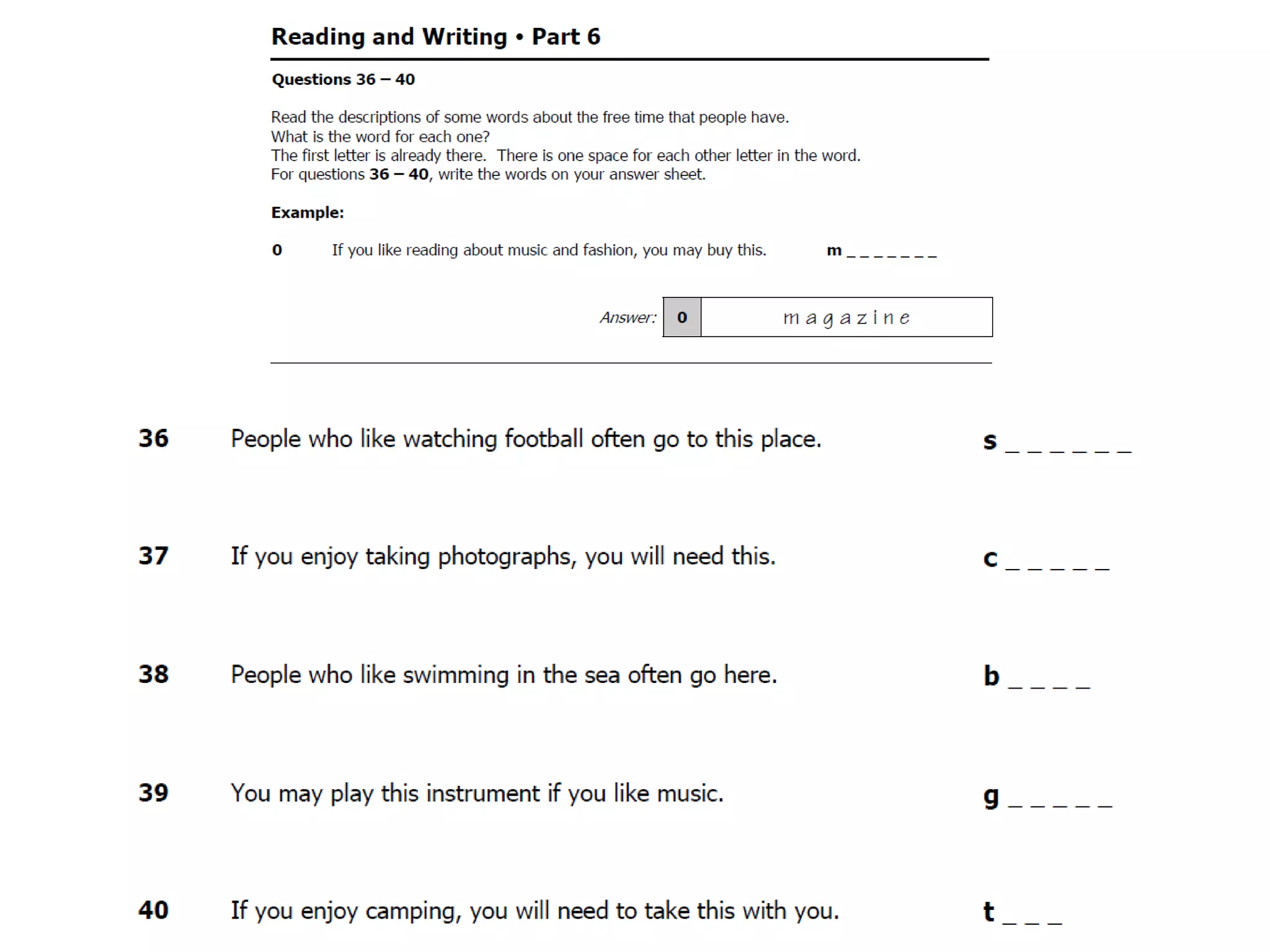
VOCABULARY PRODUCTION (SPELLING)

Food, school things, freetime activities…

INSTRUCTIONS:
INSTRUCTIONS:
1st: read the definitions
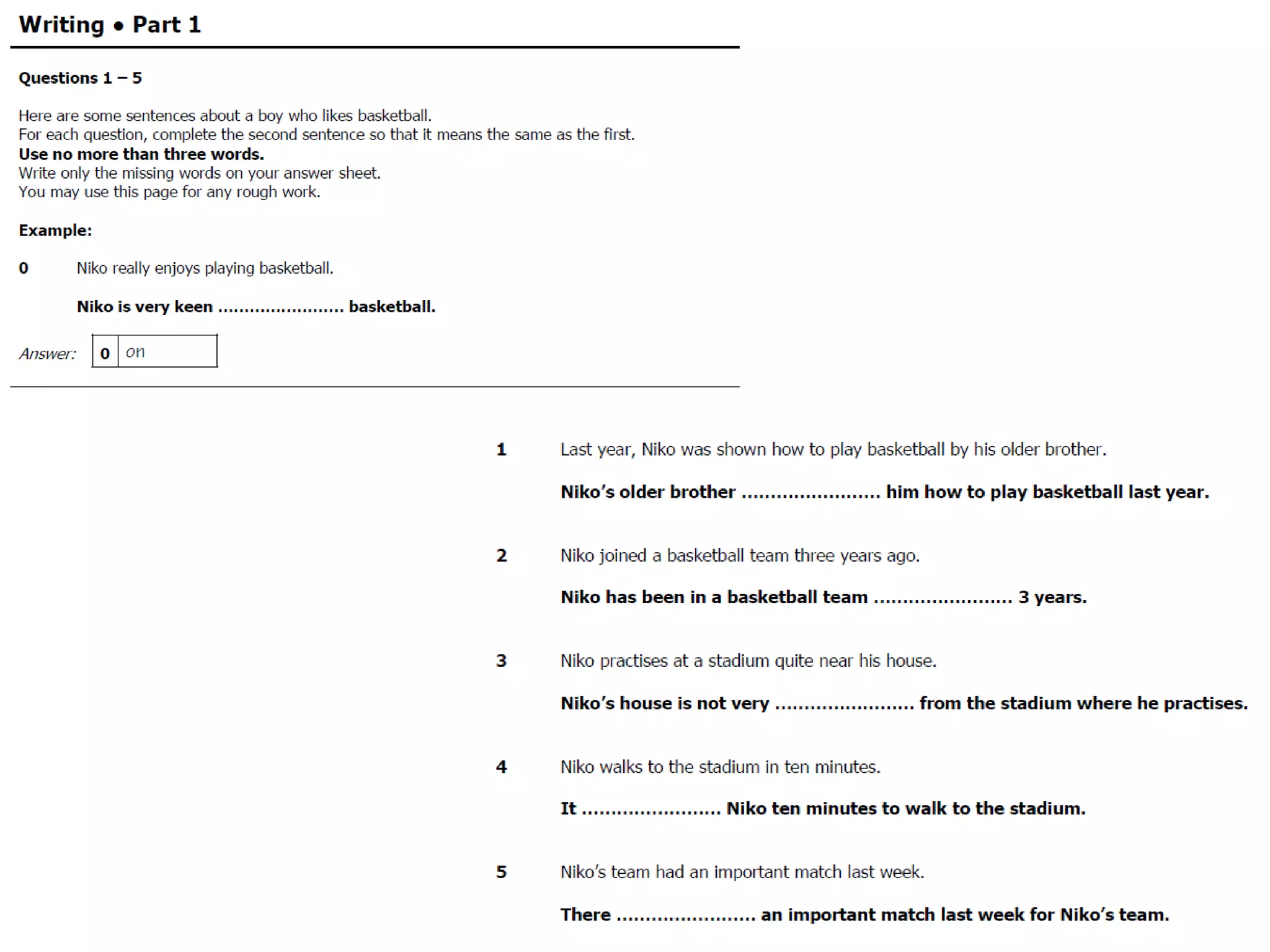
2nd: check the first letter of the word and the dashes (_ _ _ _)
3rd: think about a suitable word for that definition
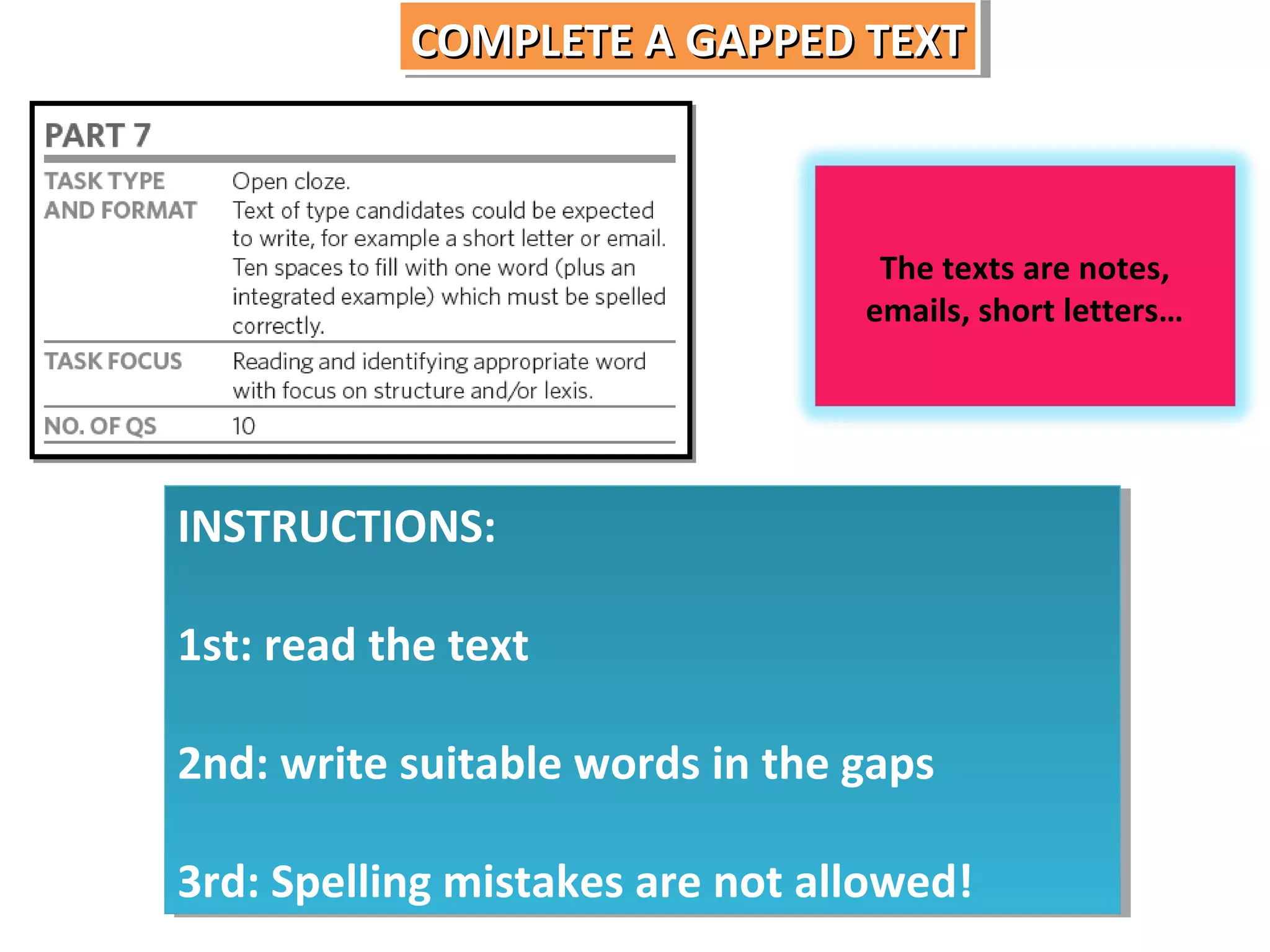
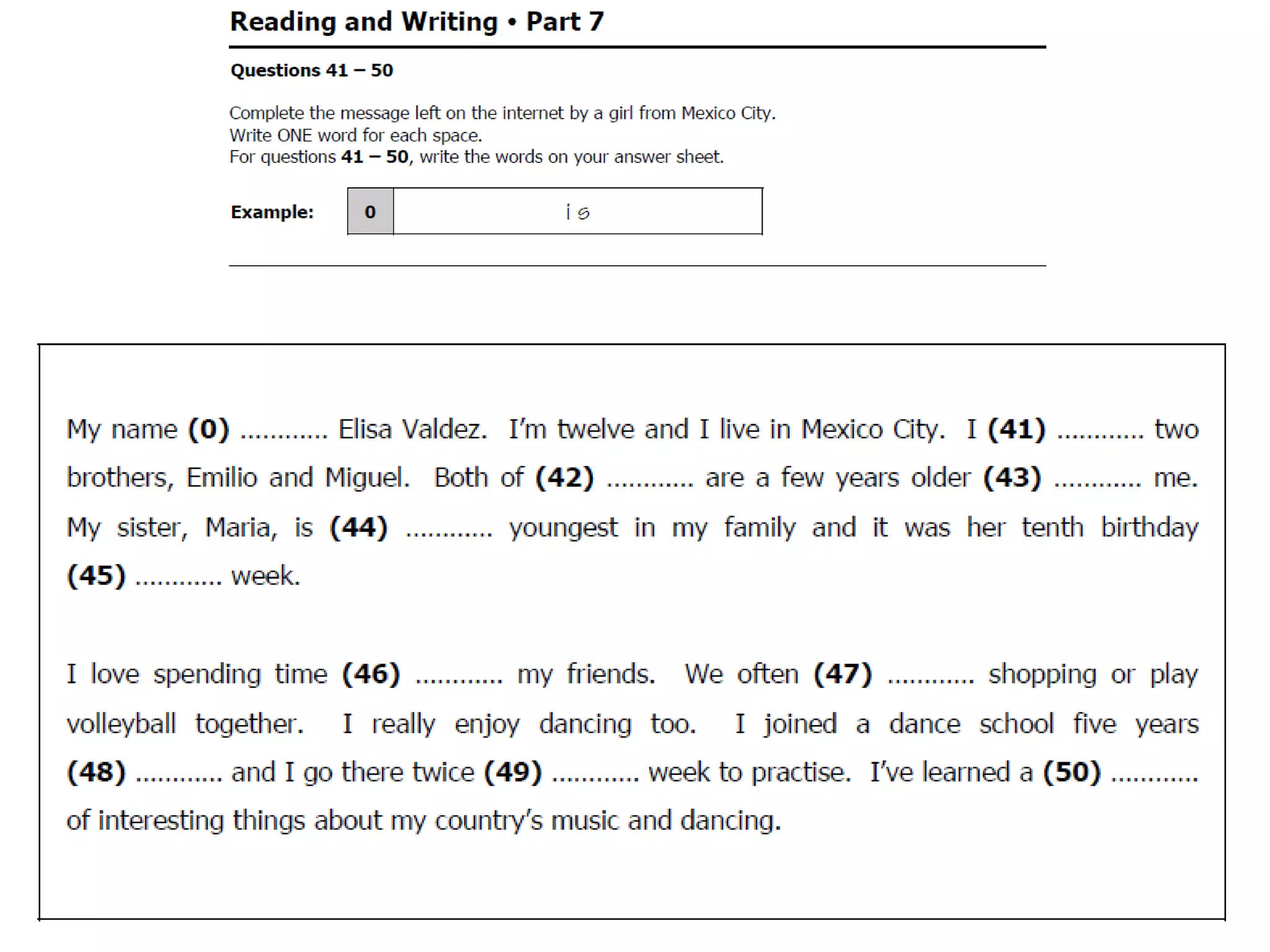
COMPLETE A GAPPED TEXT

The texts are notes,
emails, short letters…

INSTRUCTIONS:
INSTRUCTIONS:
1st: read the text
1st: read the text
2nd: write suitable words in the gaps
3rd: Spelling mistakes are not allowed!
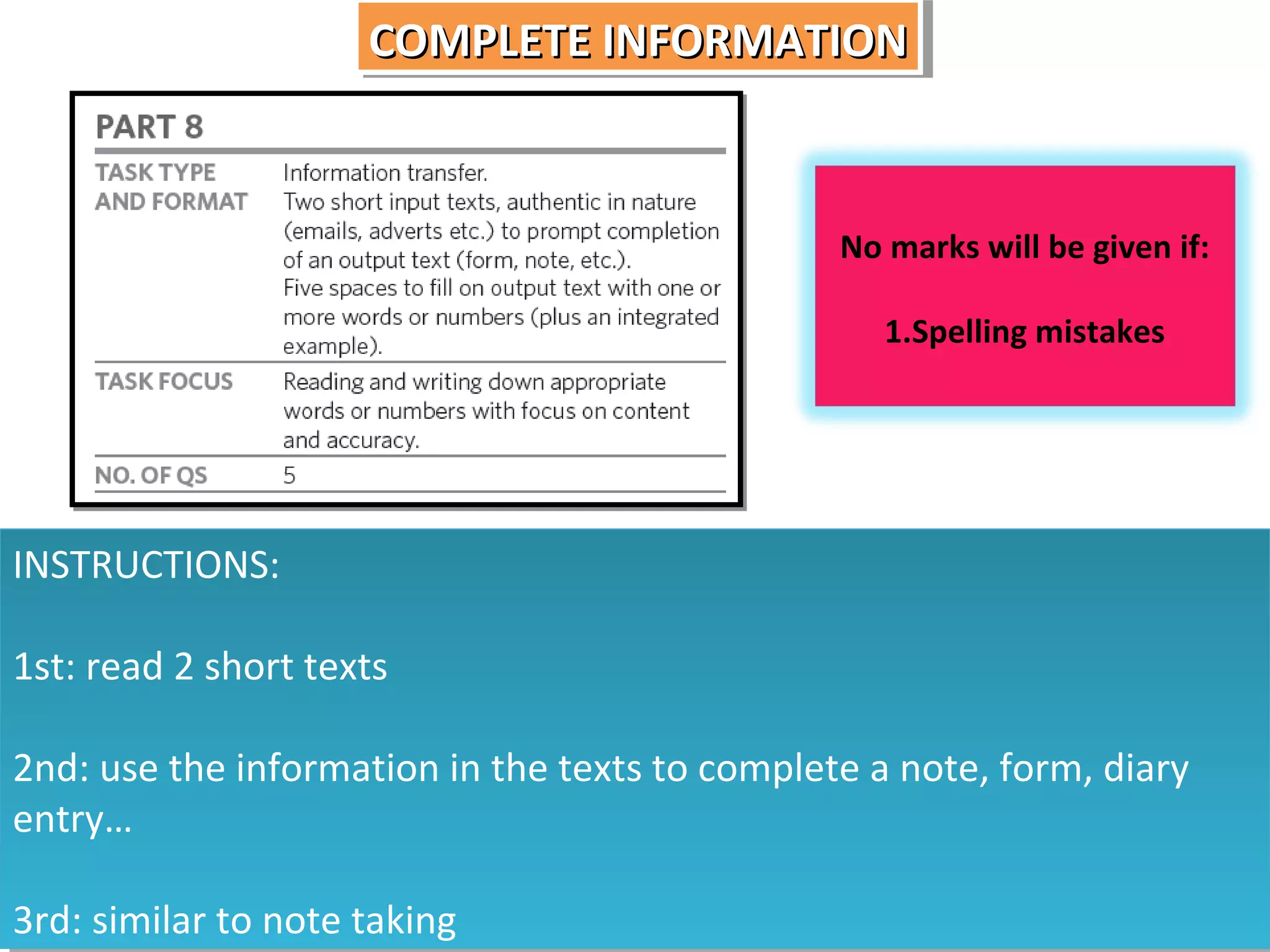
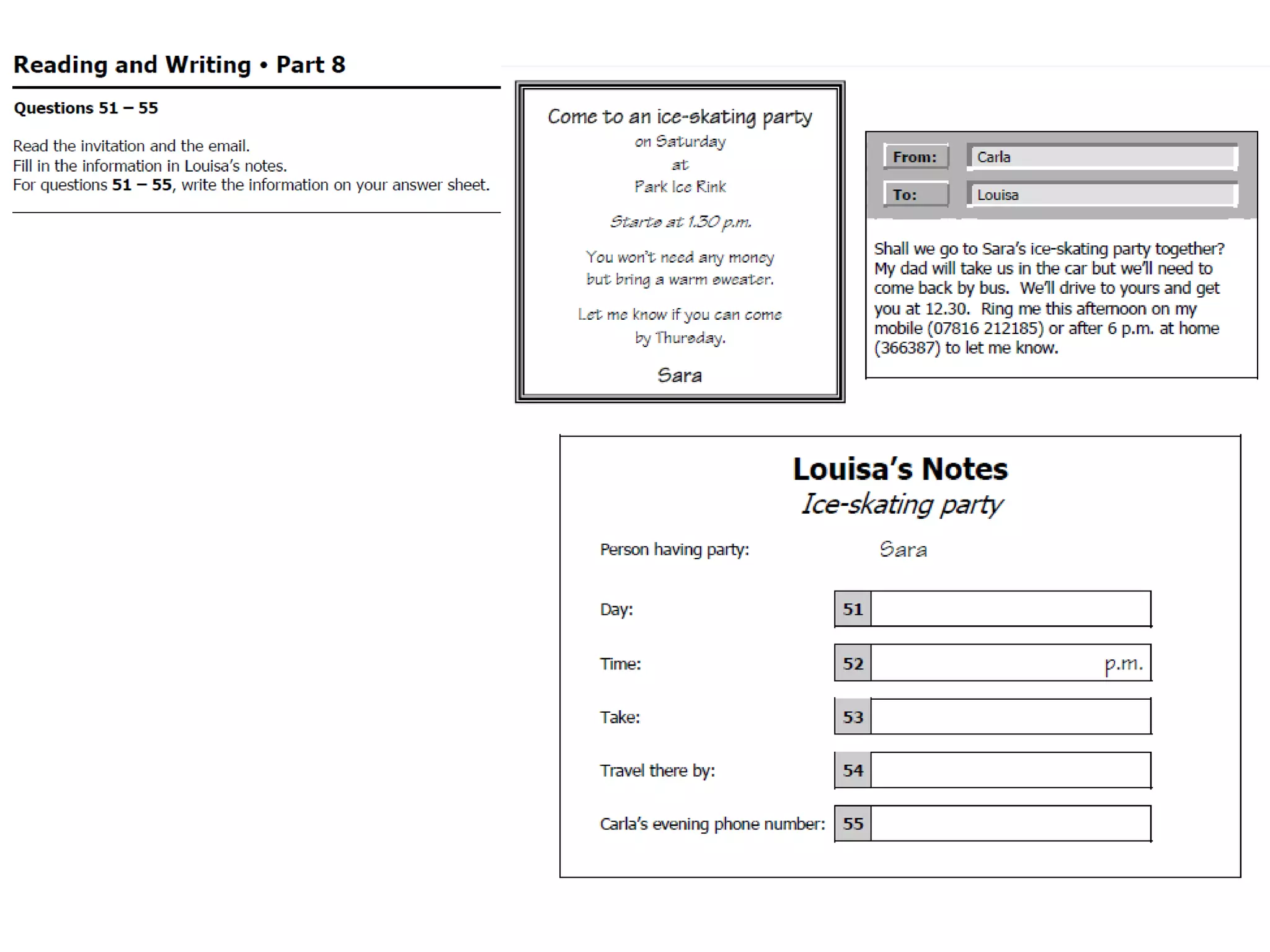
COMPLETE INFORMATION

No marks will be given if:
1.Spelling mistakes

INSTRUCTIONS:
INSTRUCTIONS:
1st: read 2 short texts
2nd: use the information in the texts to complete a note, form, diary
entry…
entry…
3rd: similar to note taking
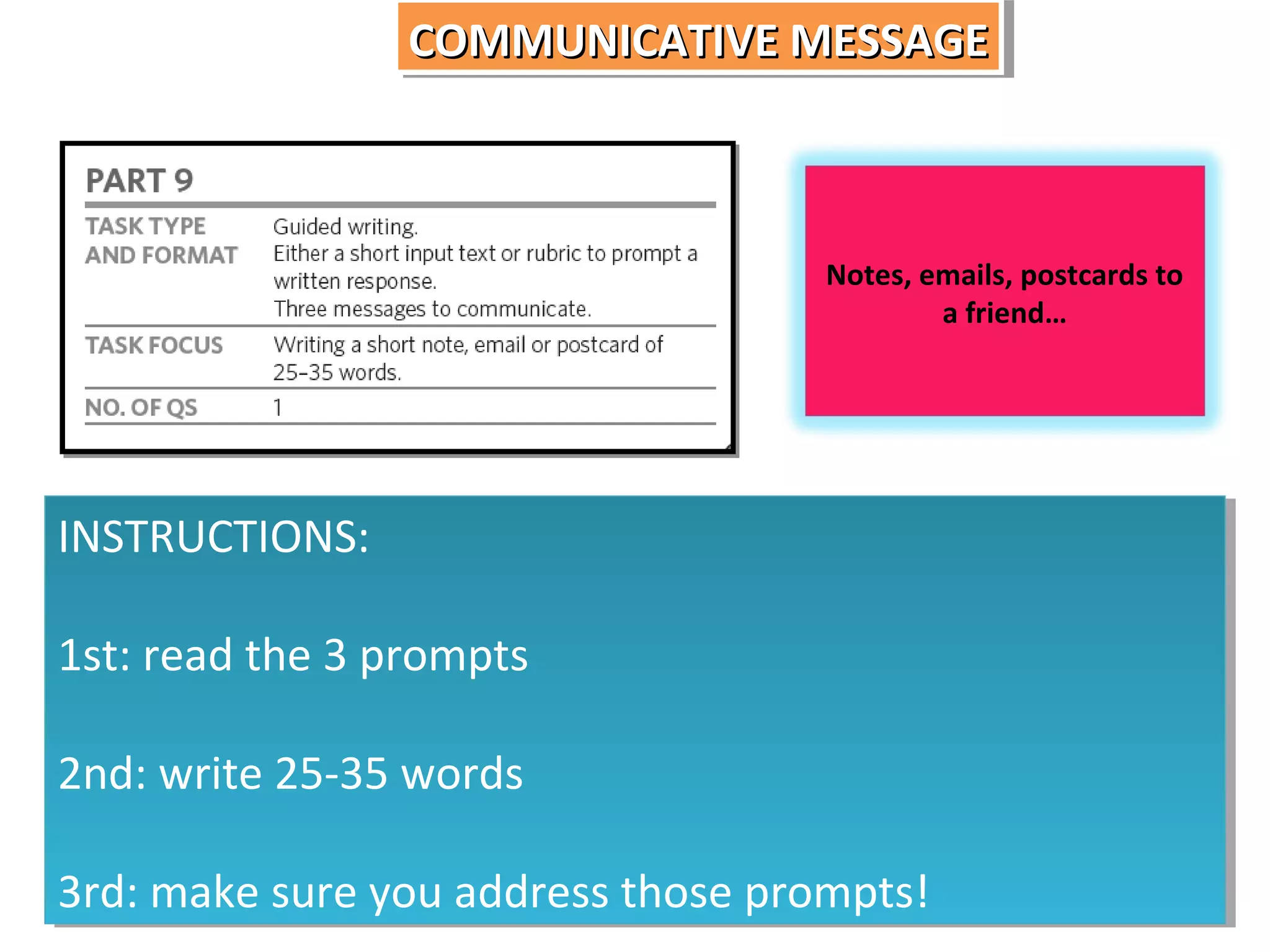
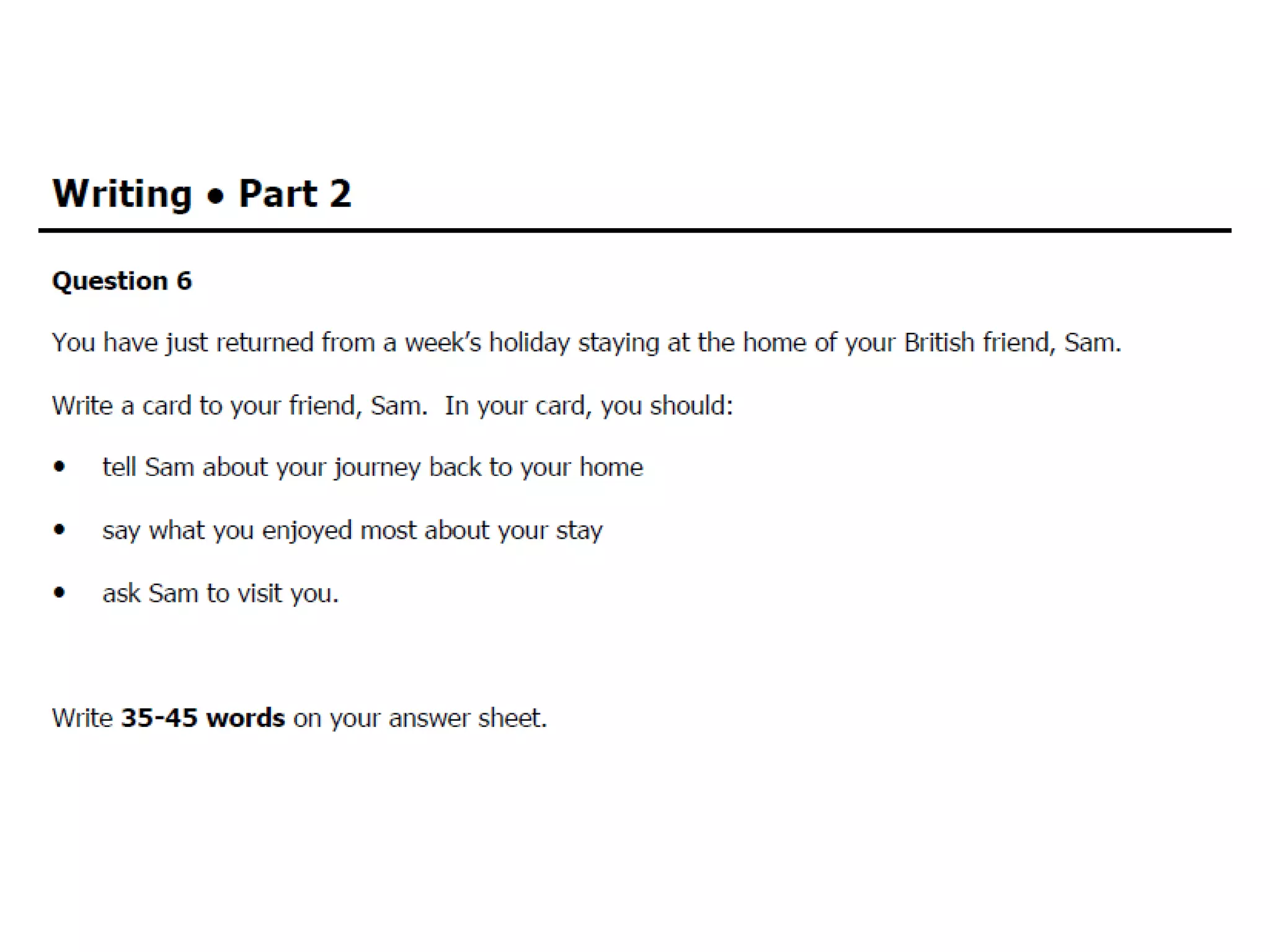
COMMUNICATIVE MESSAGE

Notes, emails, postcards to
a friend…

INSTRUCTIONS:
INSTRUCTIONS:
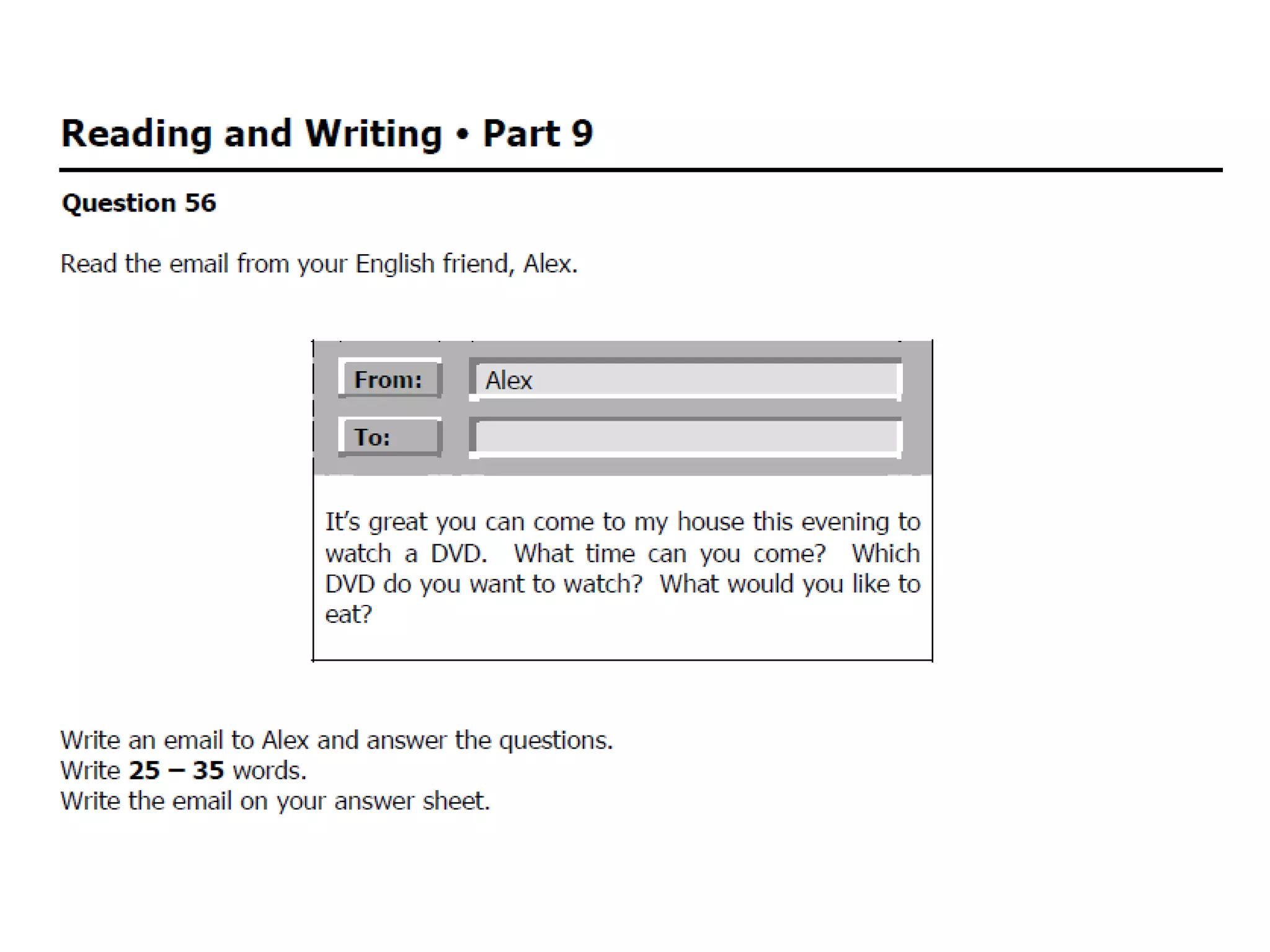
1st: read the 3 prompts
2nd: write 25-35 words
3rd: make sure you address those prompts!
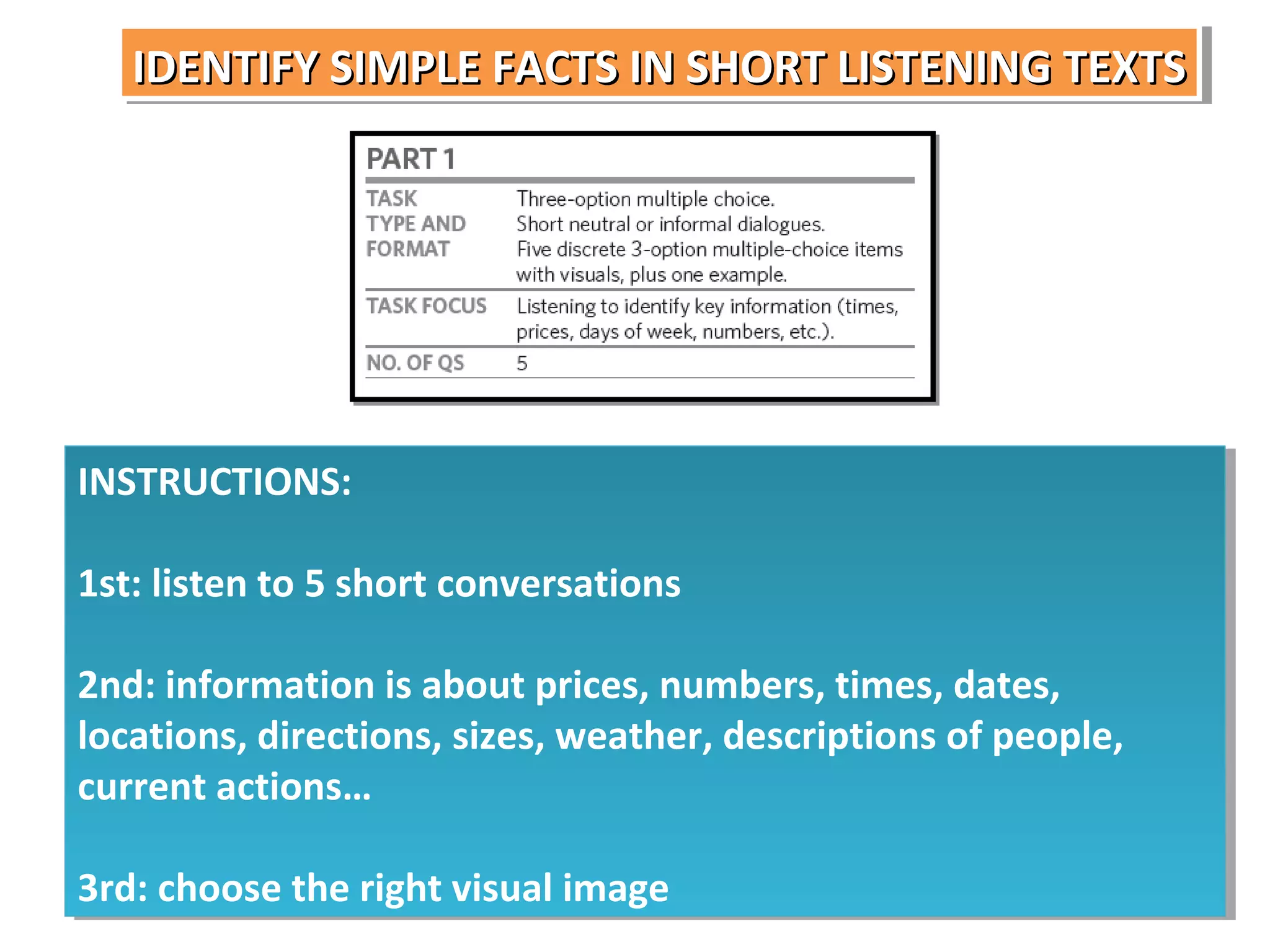
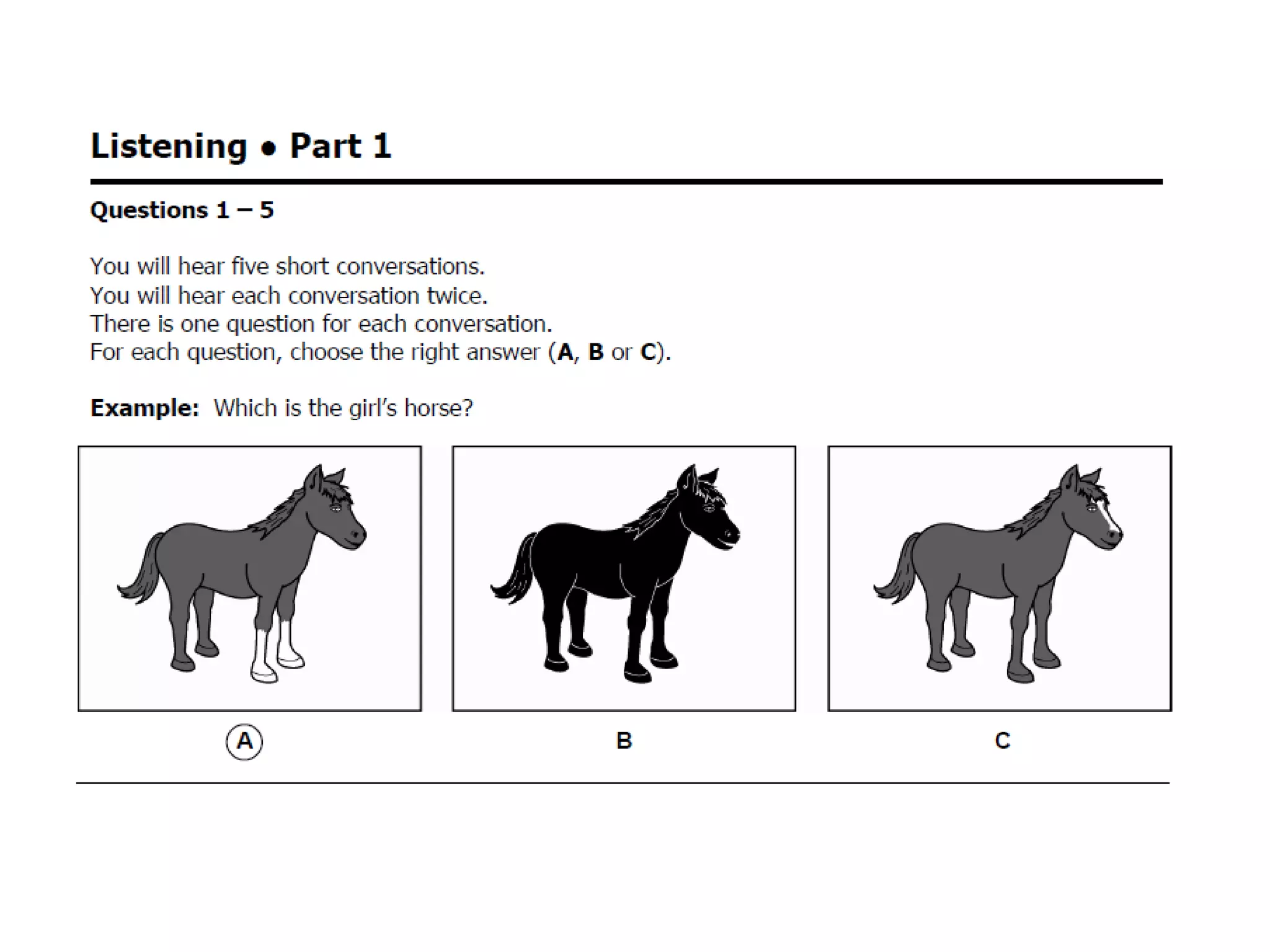
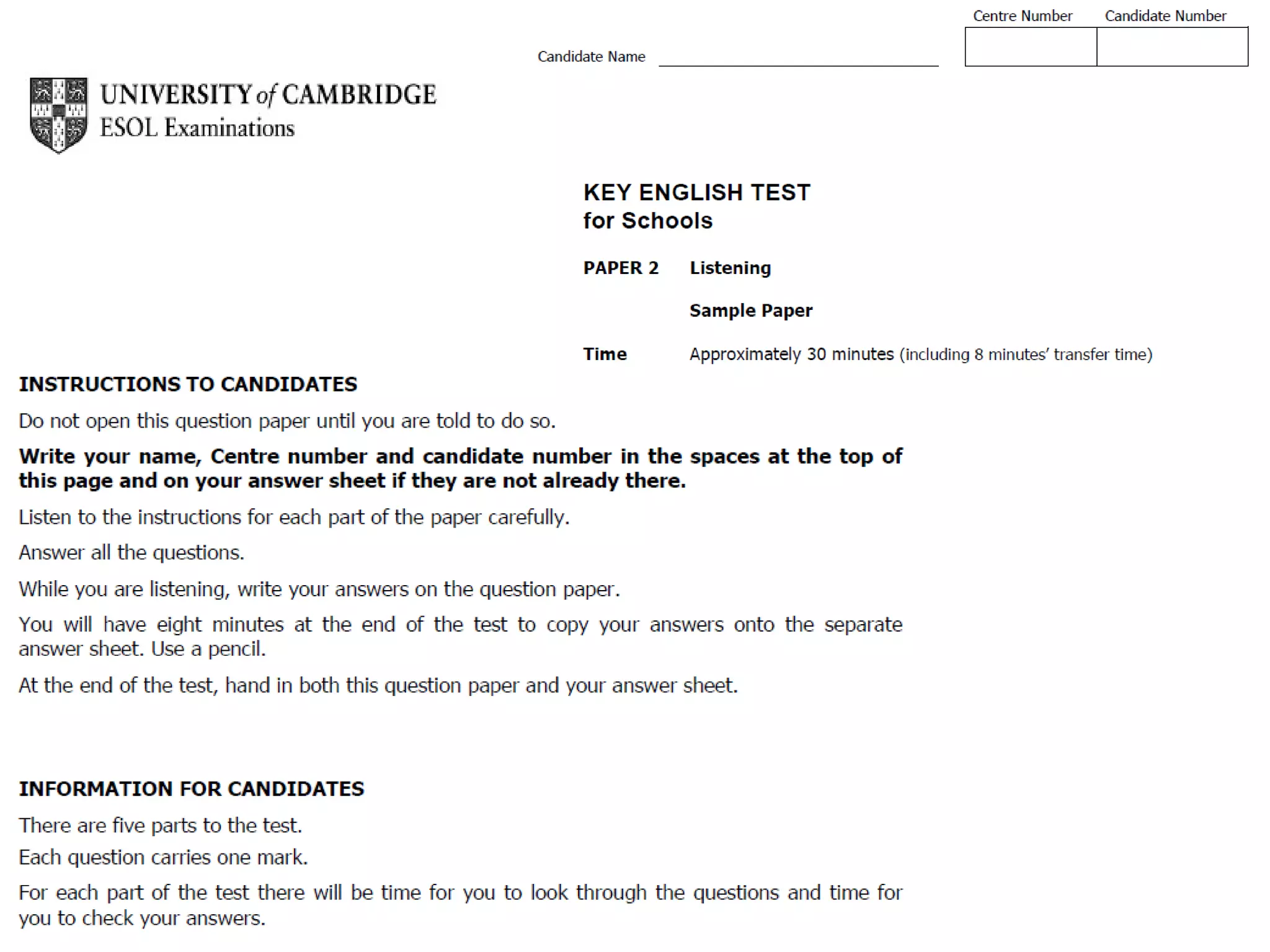
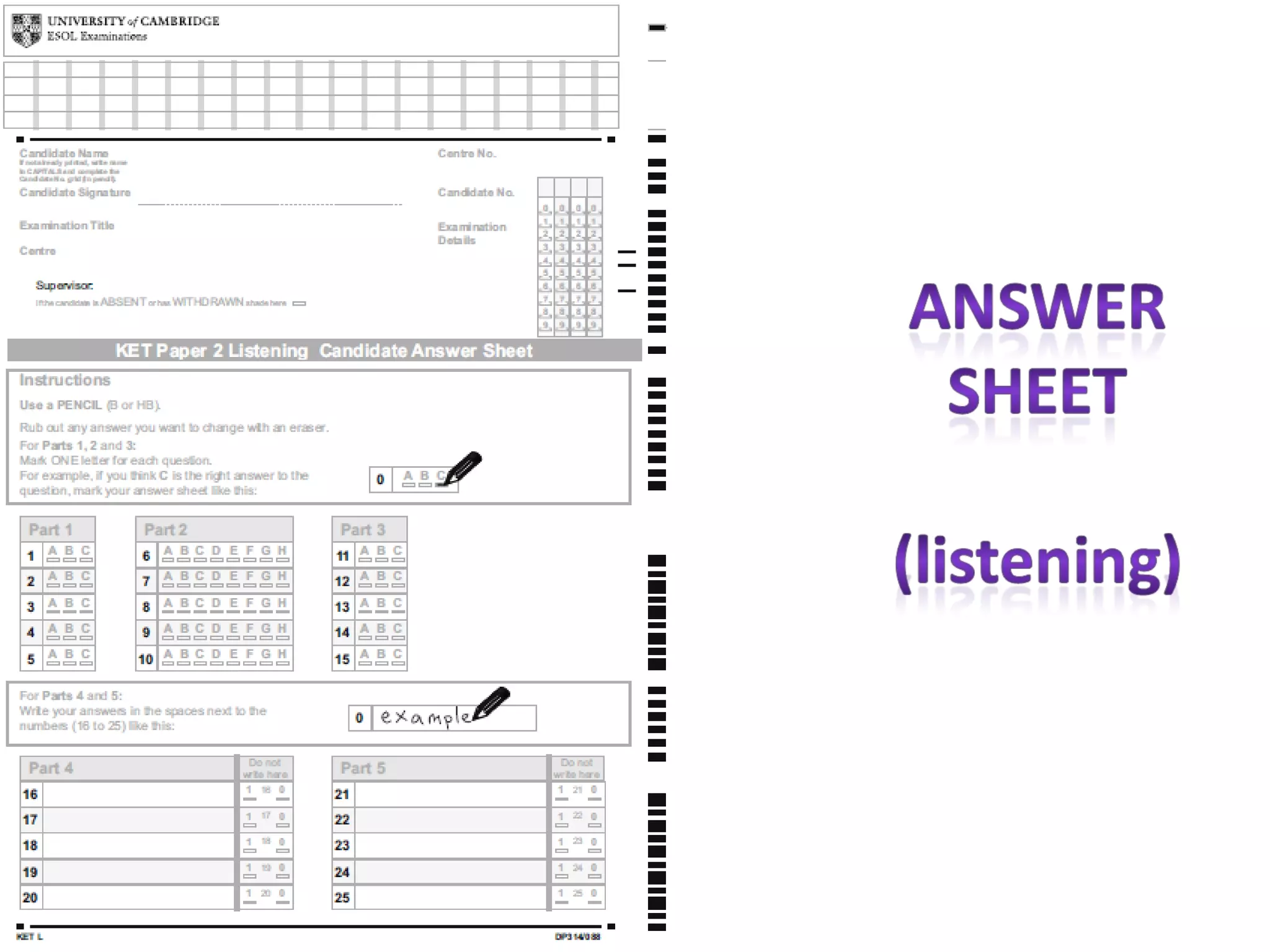
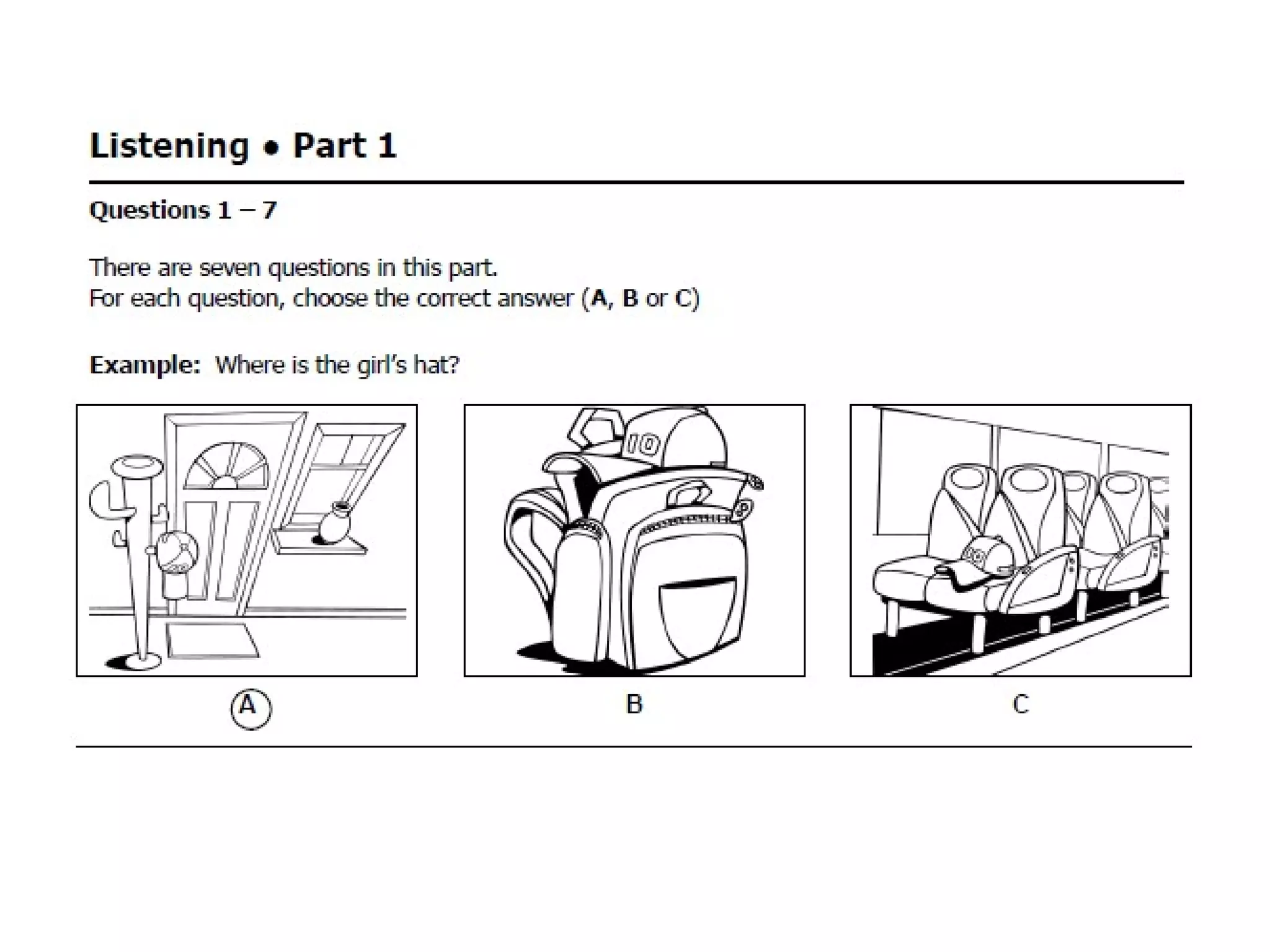
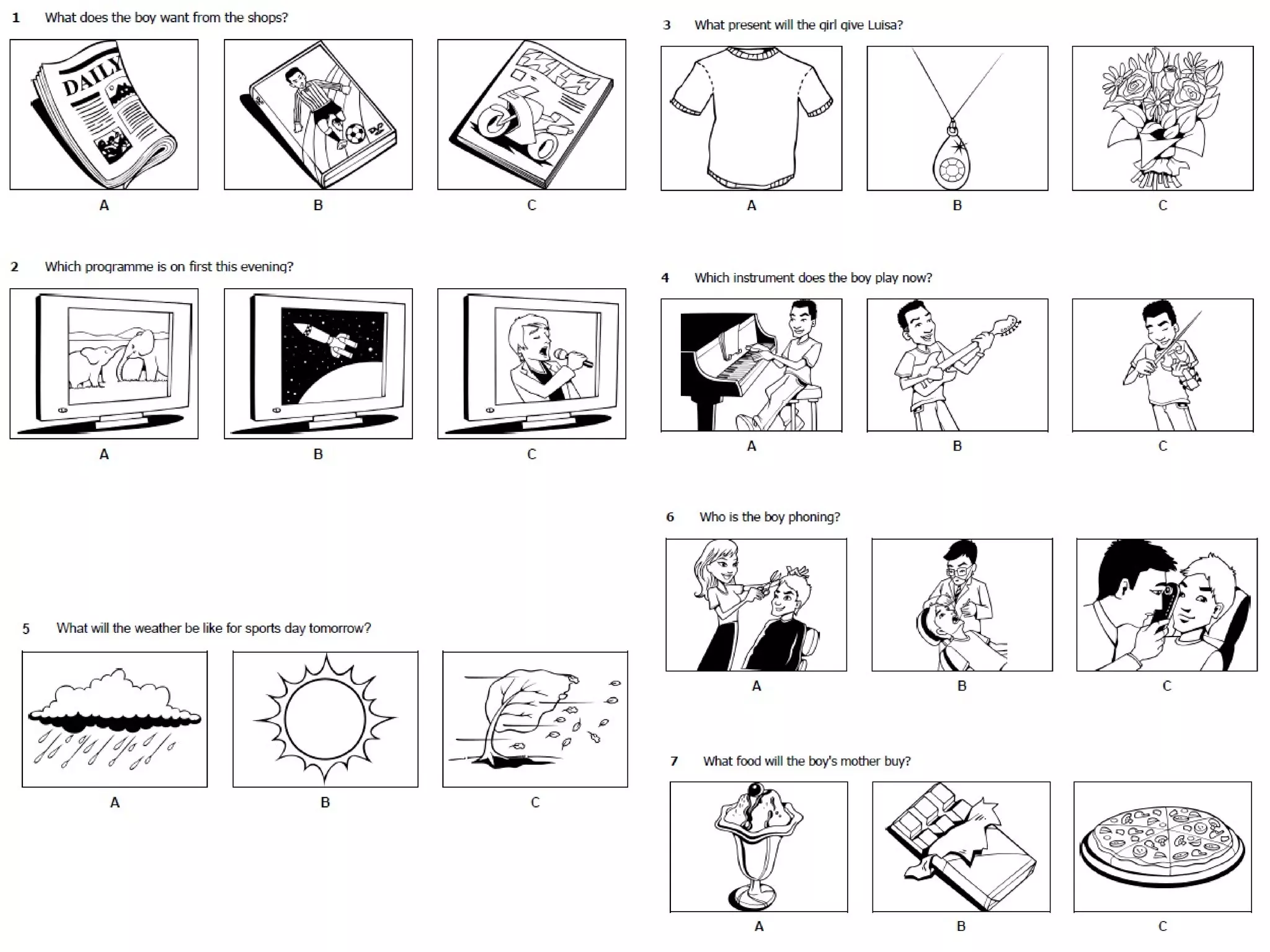
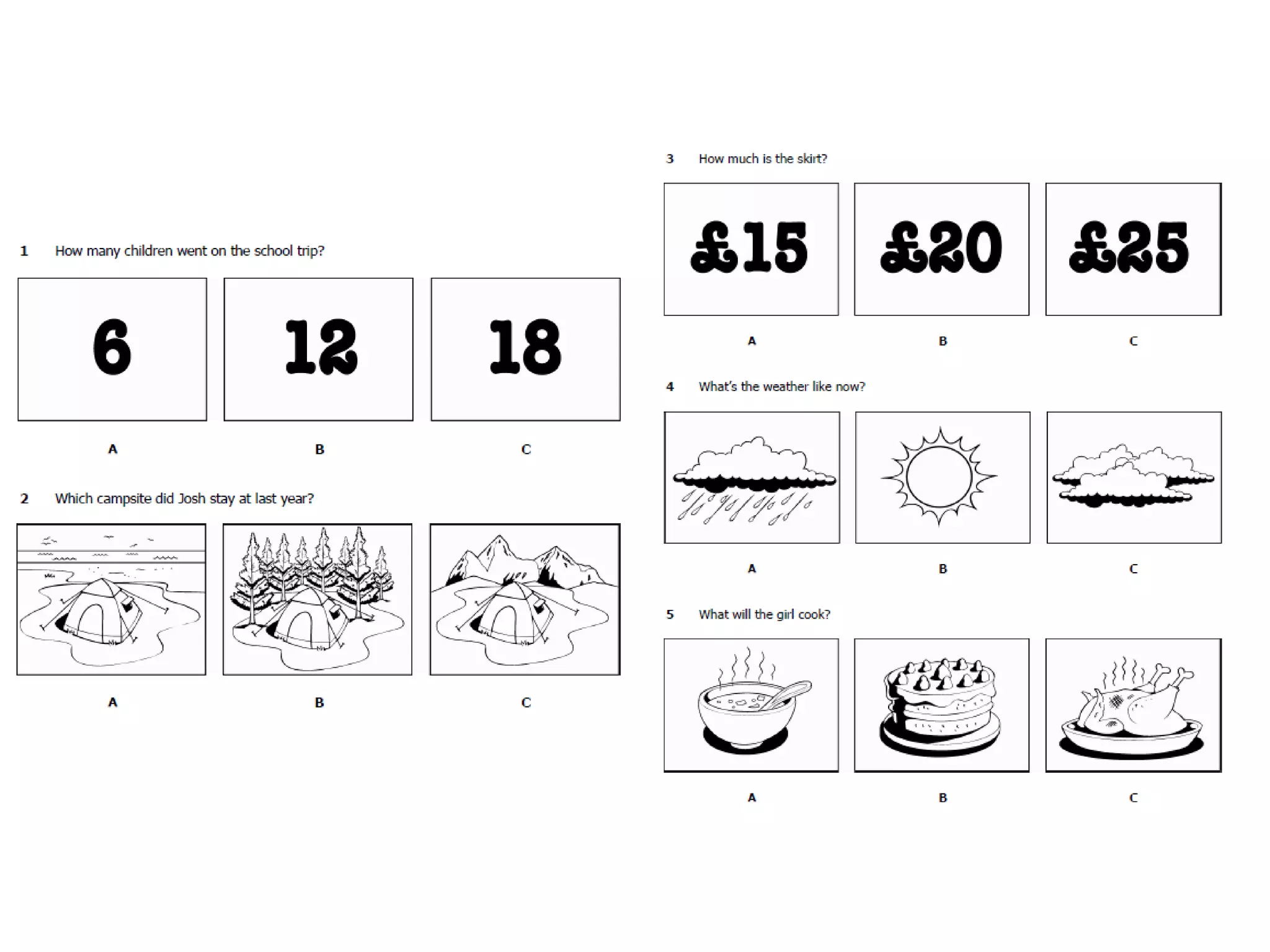
IDENTIFY SIMPLE FACTS IN SHORT LISTENING TEXTS

INSTRUCTIONS:
INSTRUCTIONS:
1st: listen to 5 short conversations
2nd: information is about prices, numbers, times, dates,
locations, directions, sizes, weather, descriptions of people,
current actions…
current actions…
3rd: choose the right visual image
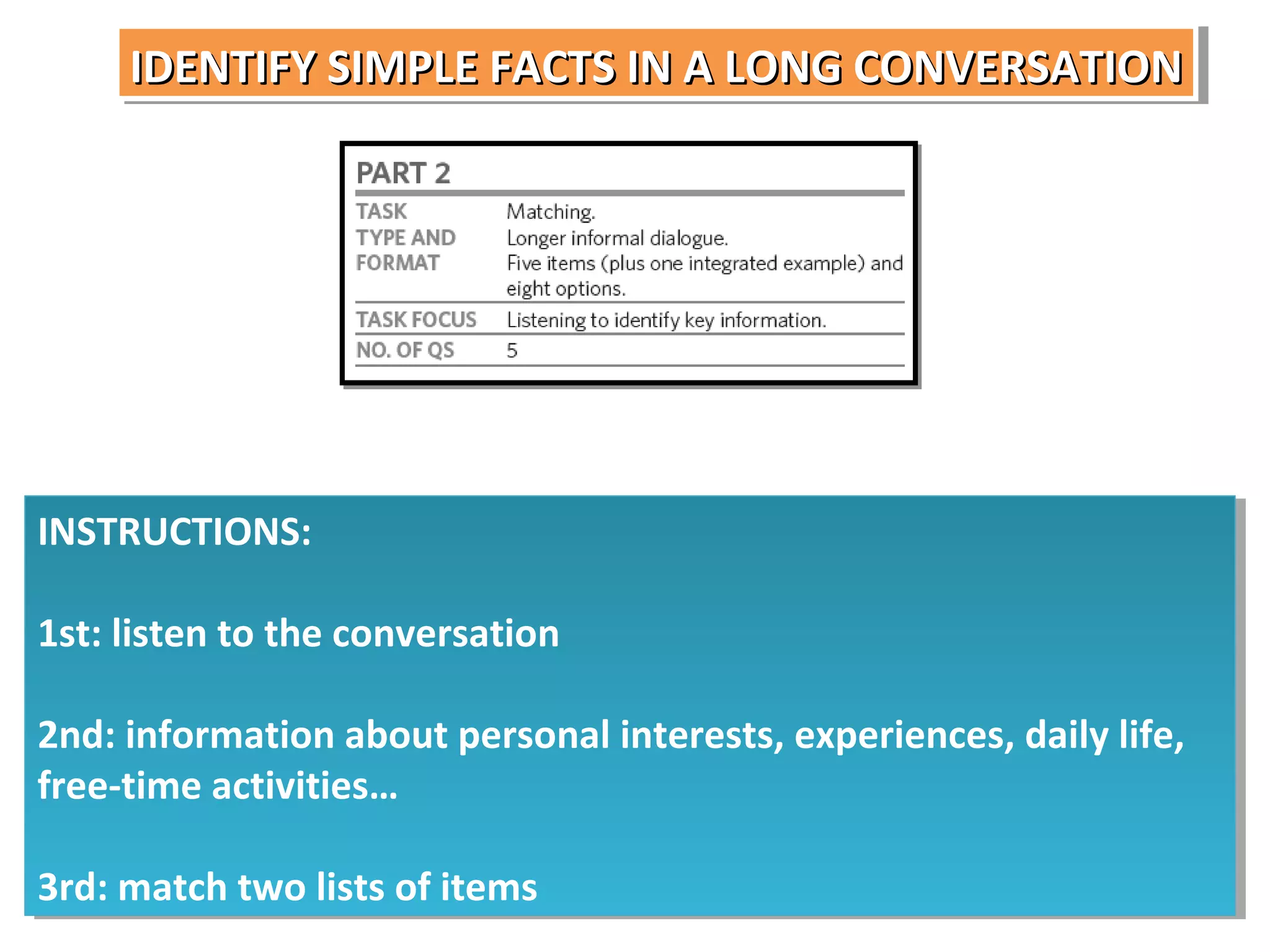
IDENTIFY SIMPLE FACTS IN A LONG CONVERSATION

INSTRUCTIONS:
INSTRUCTIONS:
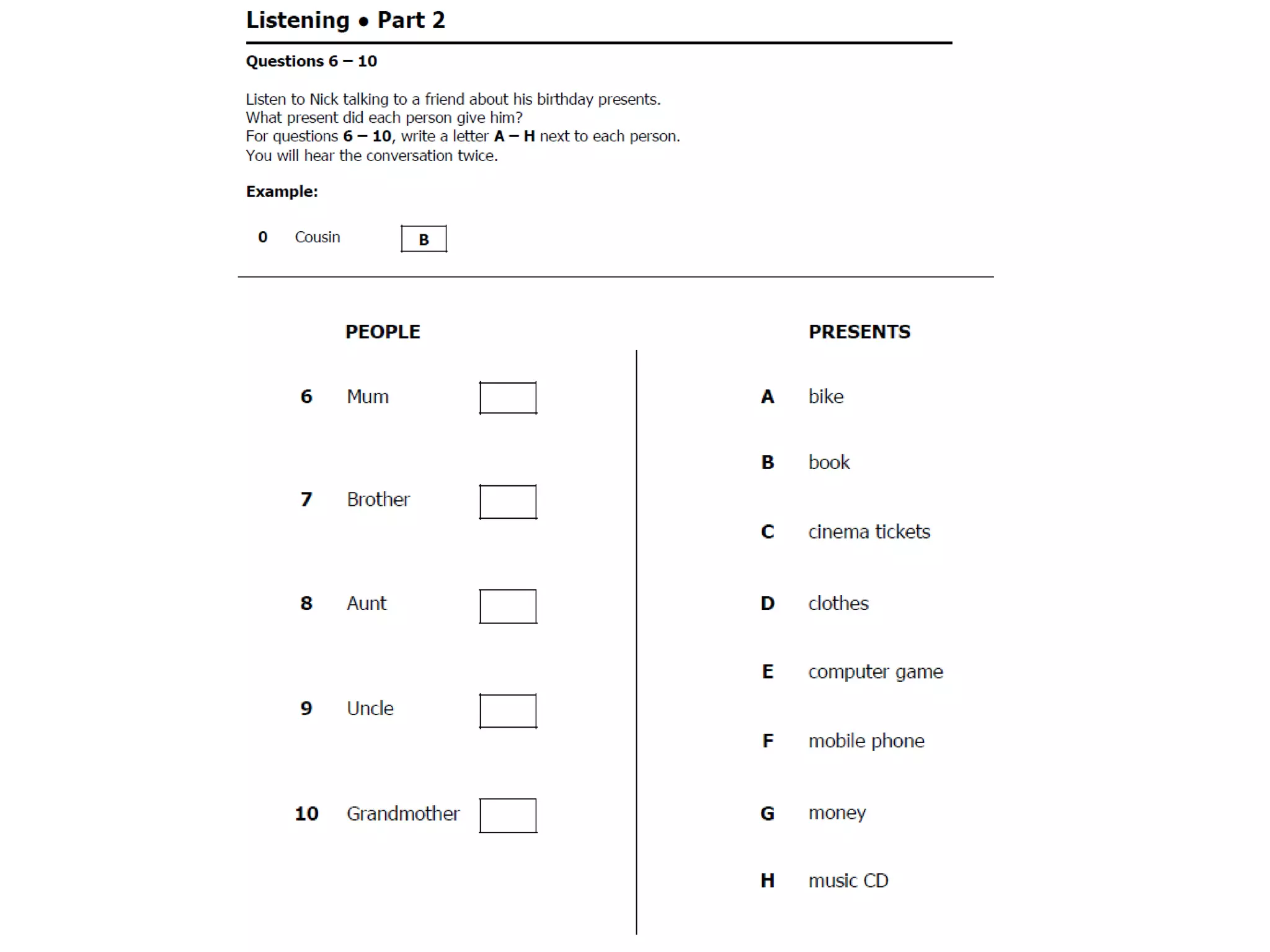
1st: listen to the conversation
2nd: information about personal interests, experiences, daily life,
free-time activities…
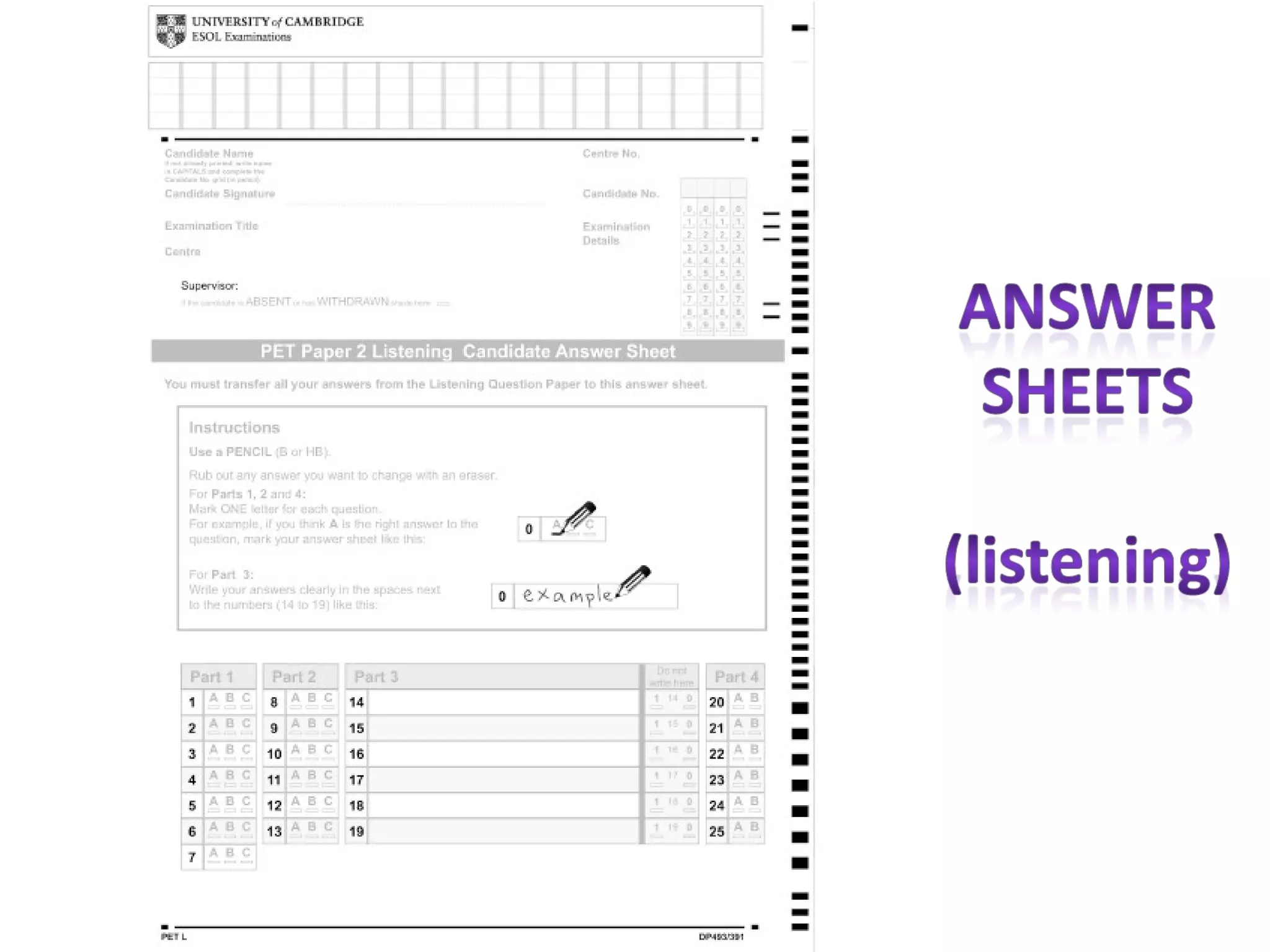
3rd: match two lists of items
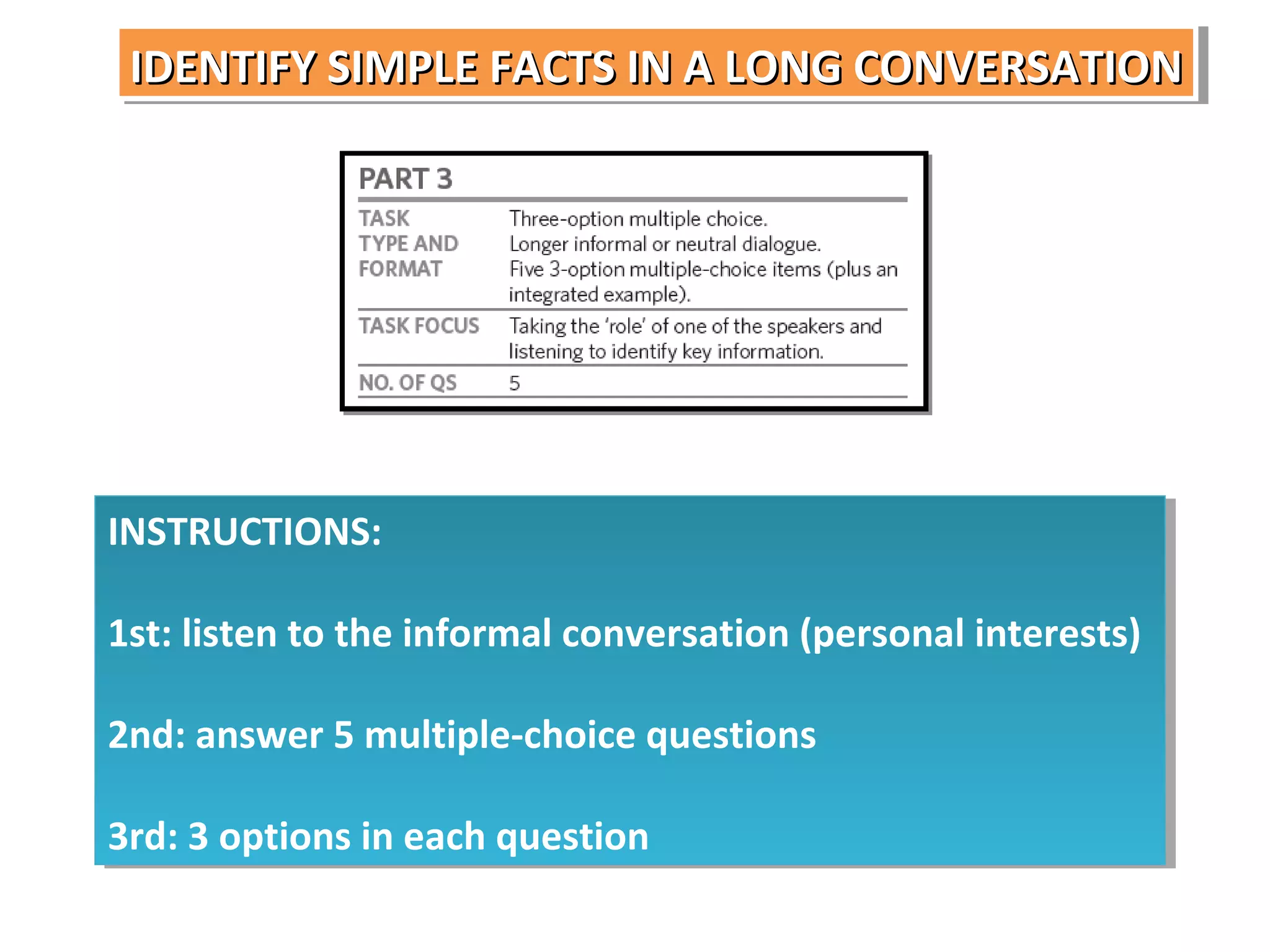
IDENTIFY SIMPLE FACTS IN A LONG CONVERSATION

INSTRUCTIONS:
INSTRUCTIONS:
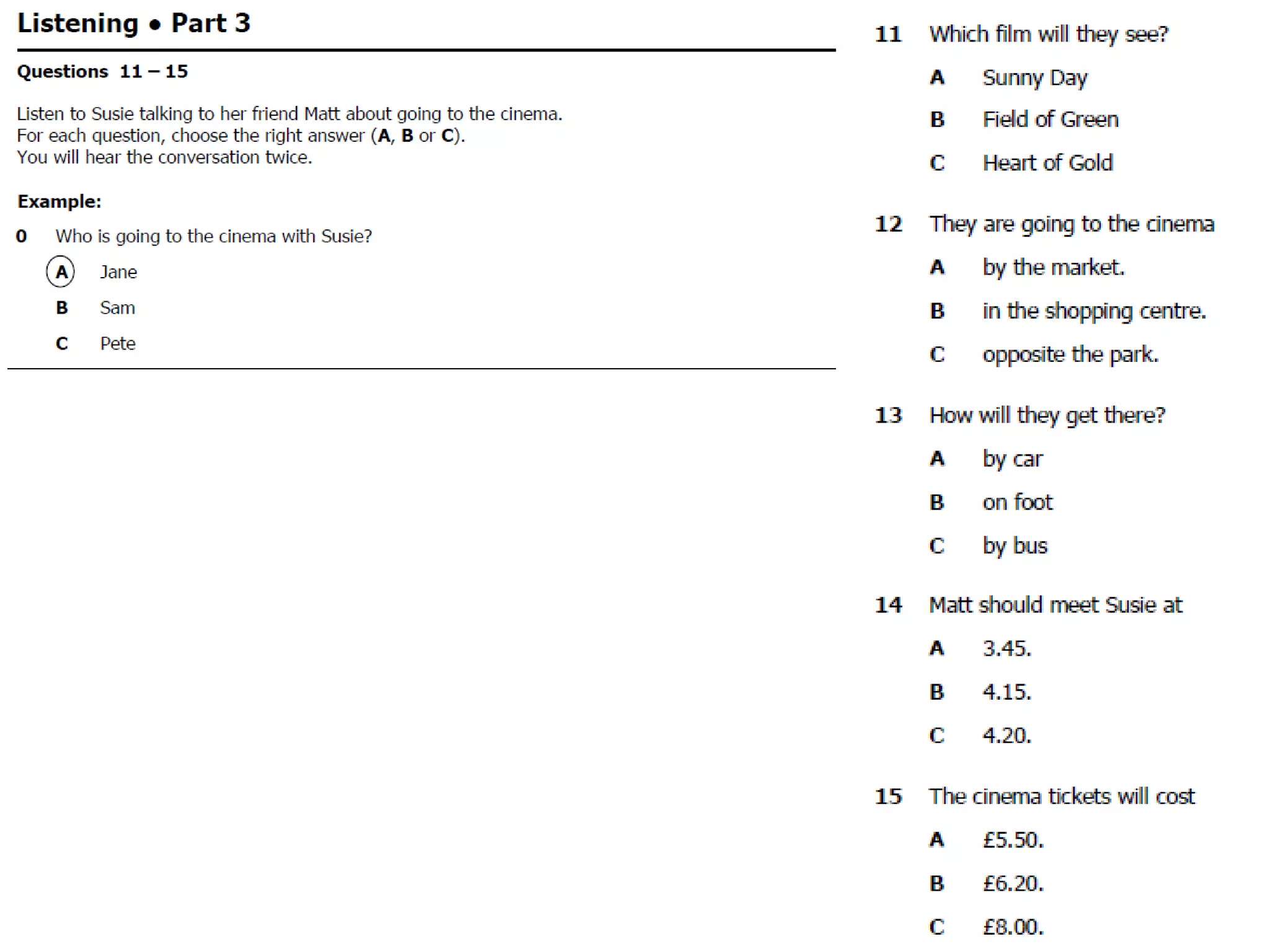
1st: listen to the informal conversation (personal interests)
2nd: answer 5 multiple-choice questions
3rd: 3 options in each question
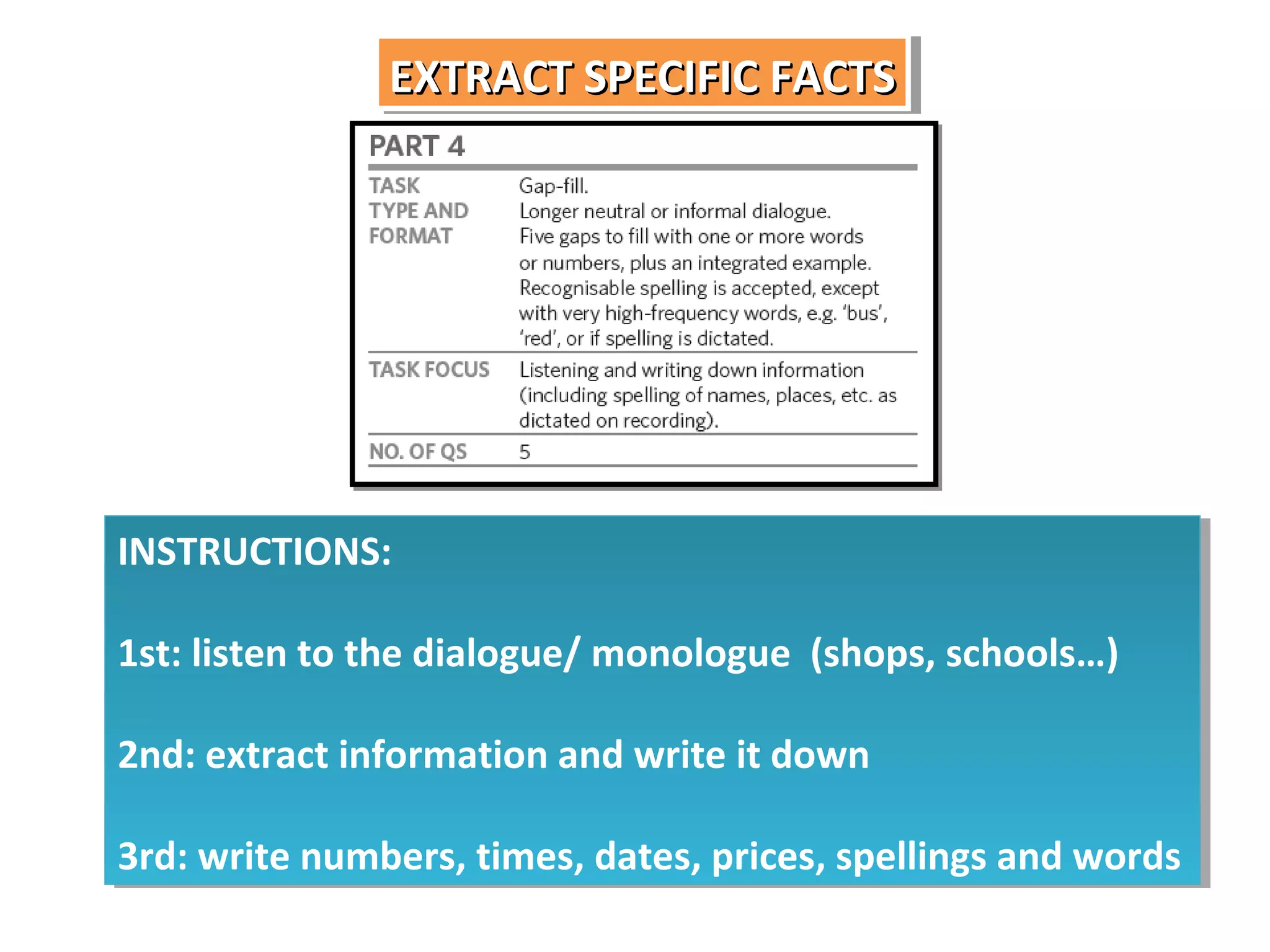
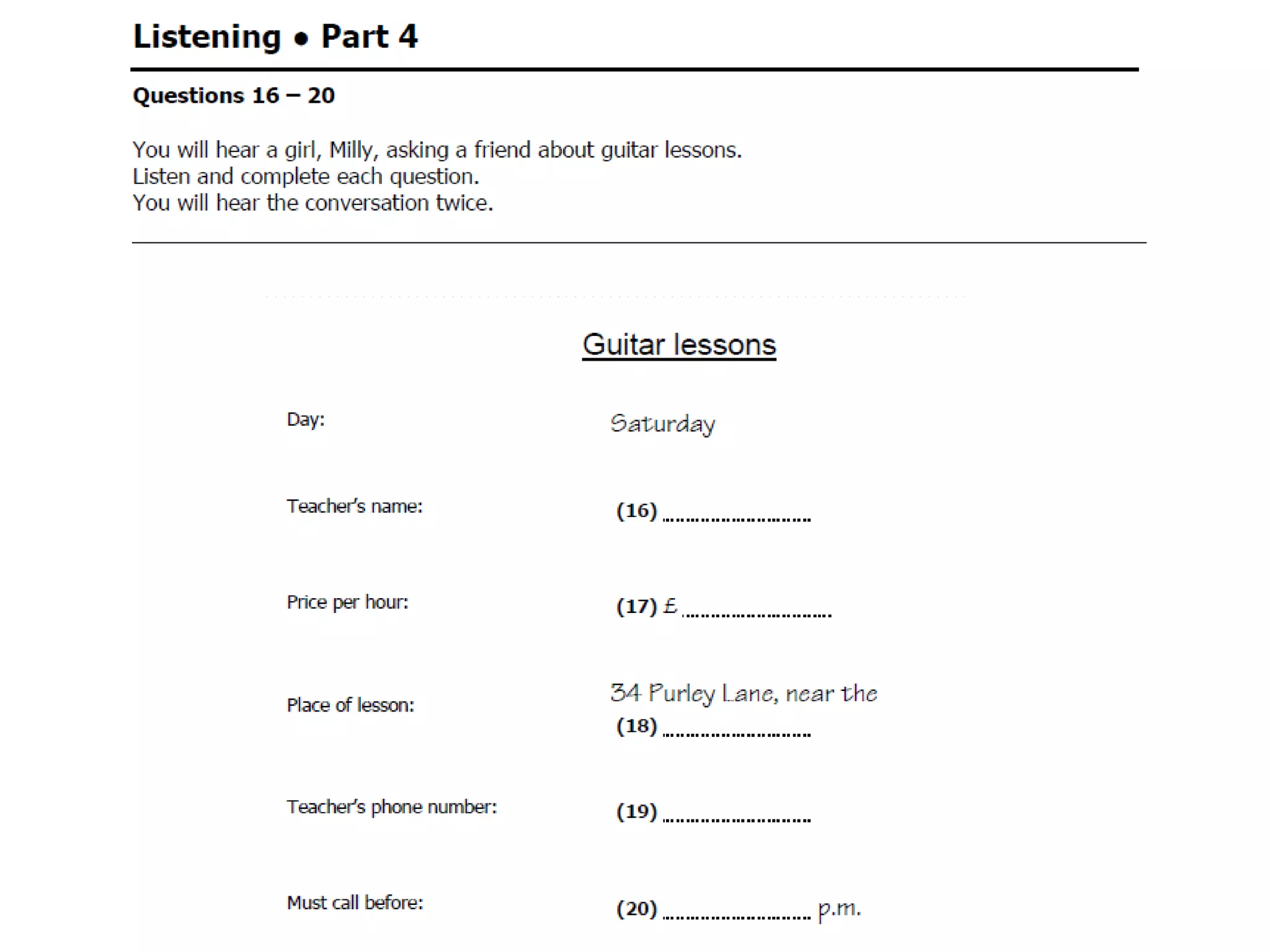
EXTRACT SPECIFIC FACTS

INSTRUCTIONS:
INSTRUCTIONS:
1st: listen to the dialogue/ monologue (shops, schools…)
2nd: extract information and write it down
3rd: write numbers, times, dates, prices, spellings and words
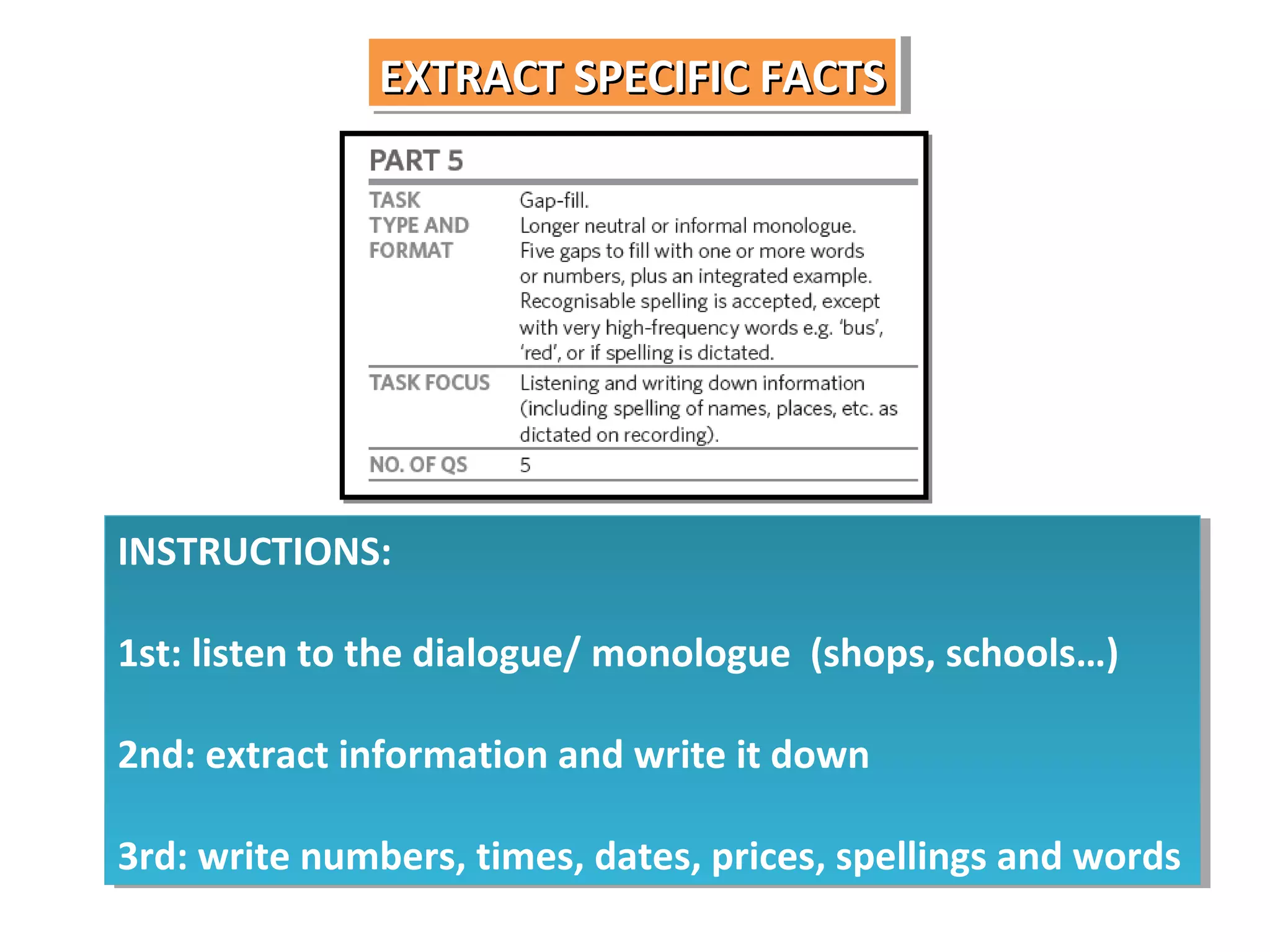
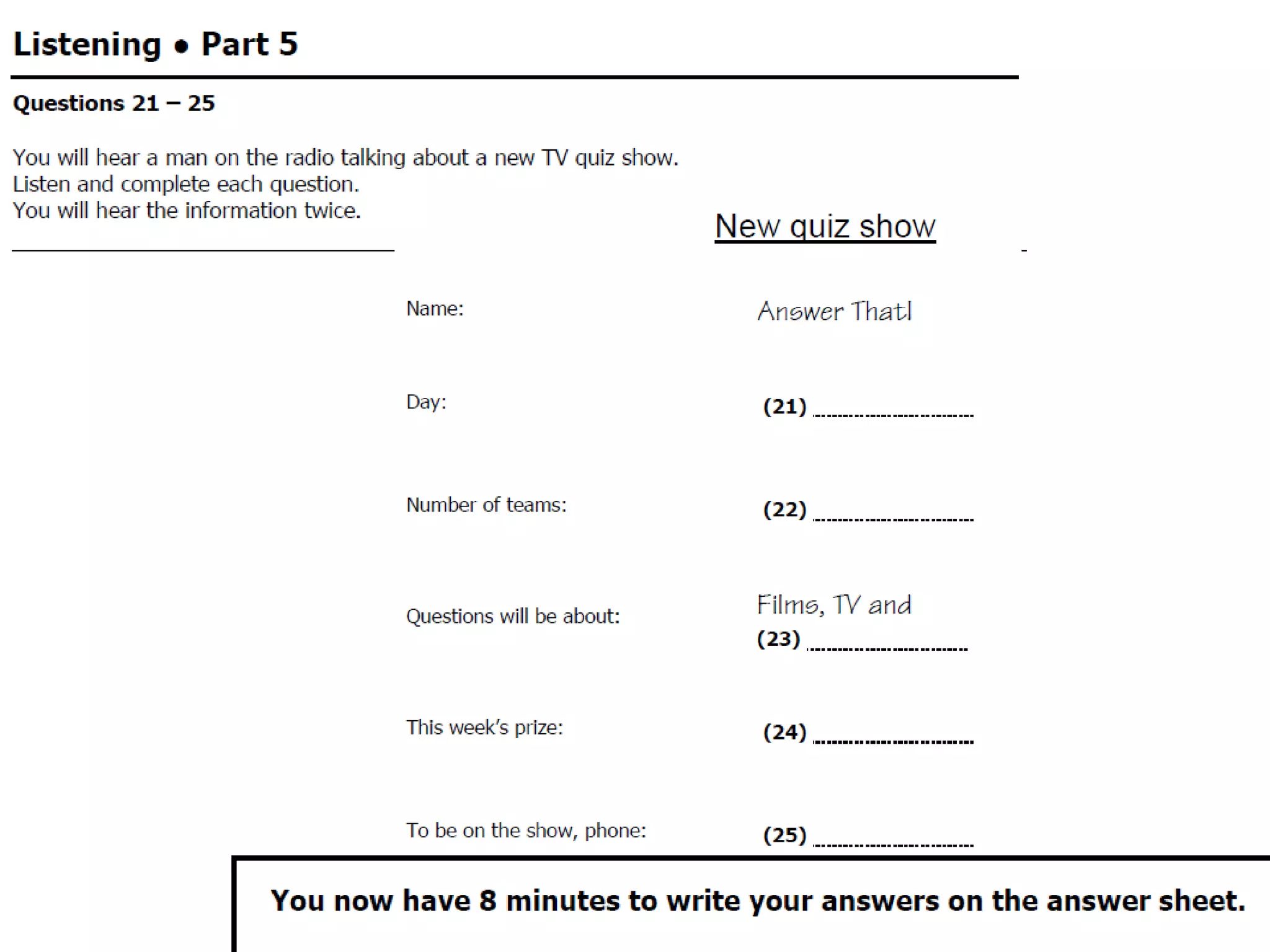
EXTRACT SPECIFIC FACTS

INSTRUCTIONS:
INSTRUCTIONS:
1st: listen to the dialogue/ monologue (shops, schools…)
2nd: extract information and write it down
3rd: write numbers, times, dates, prices, spellings and words
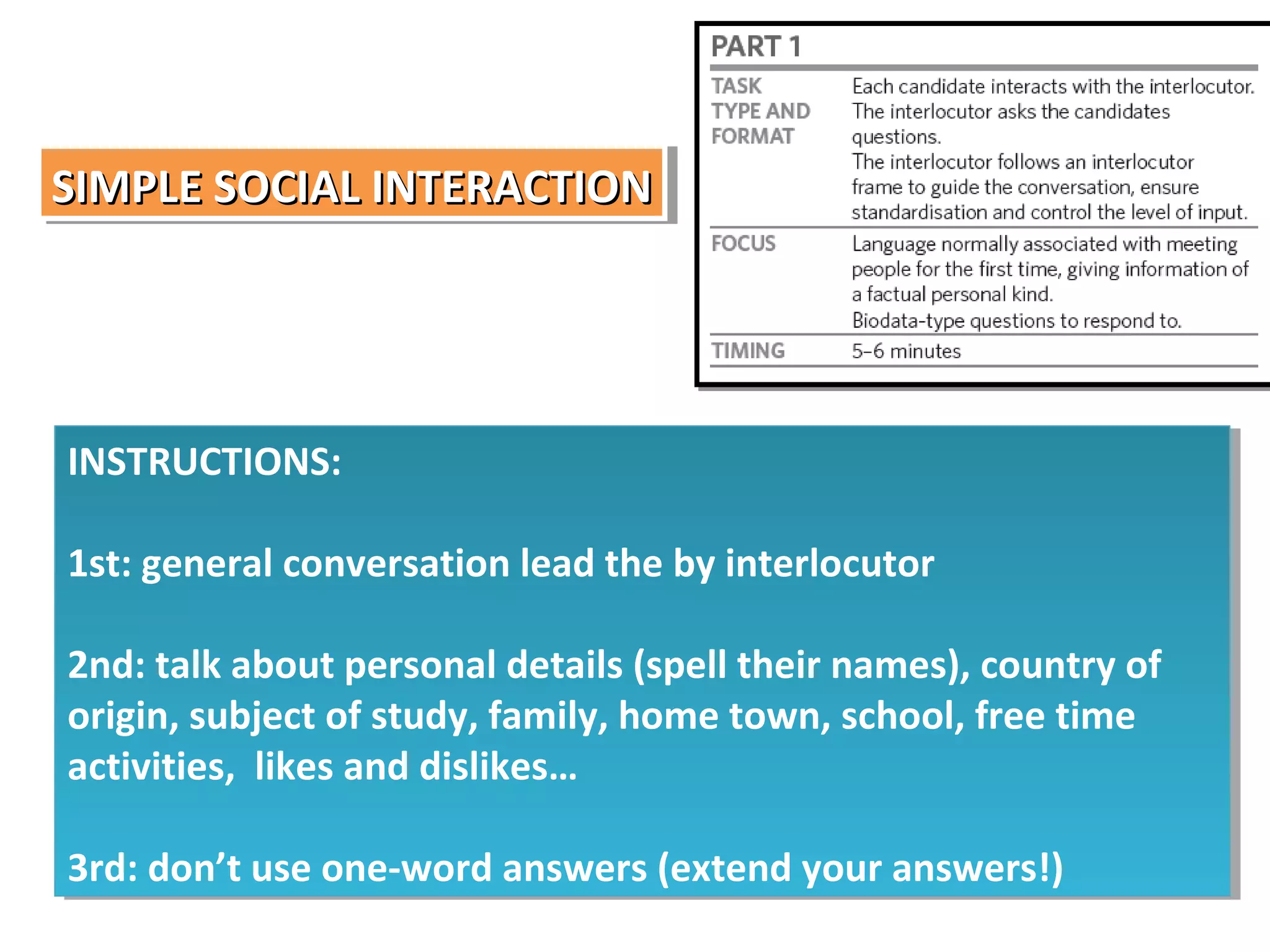
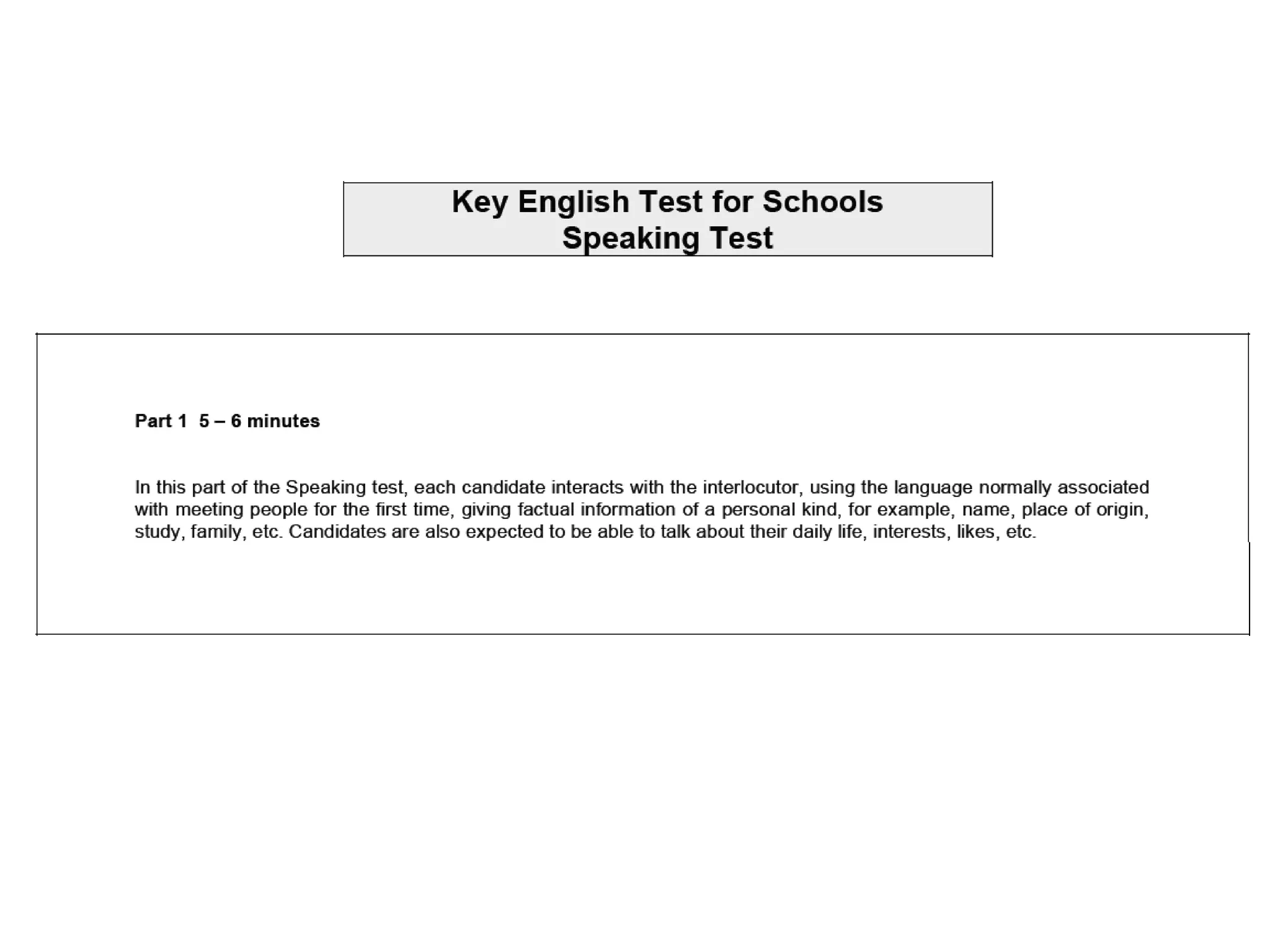
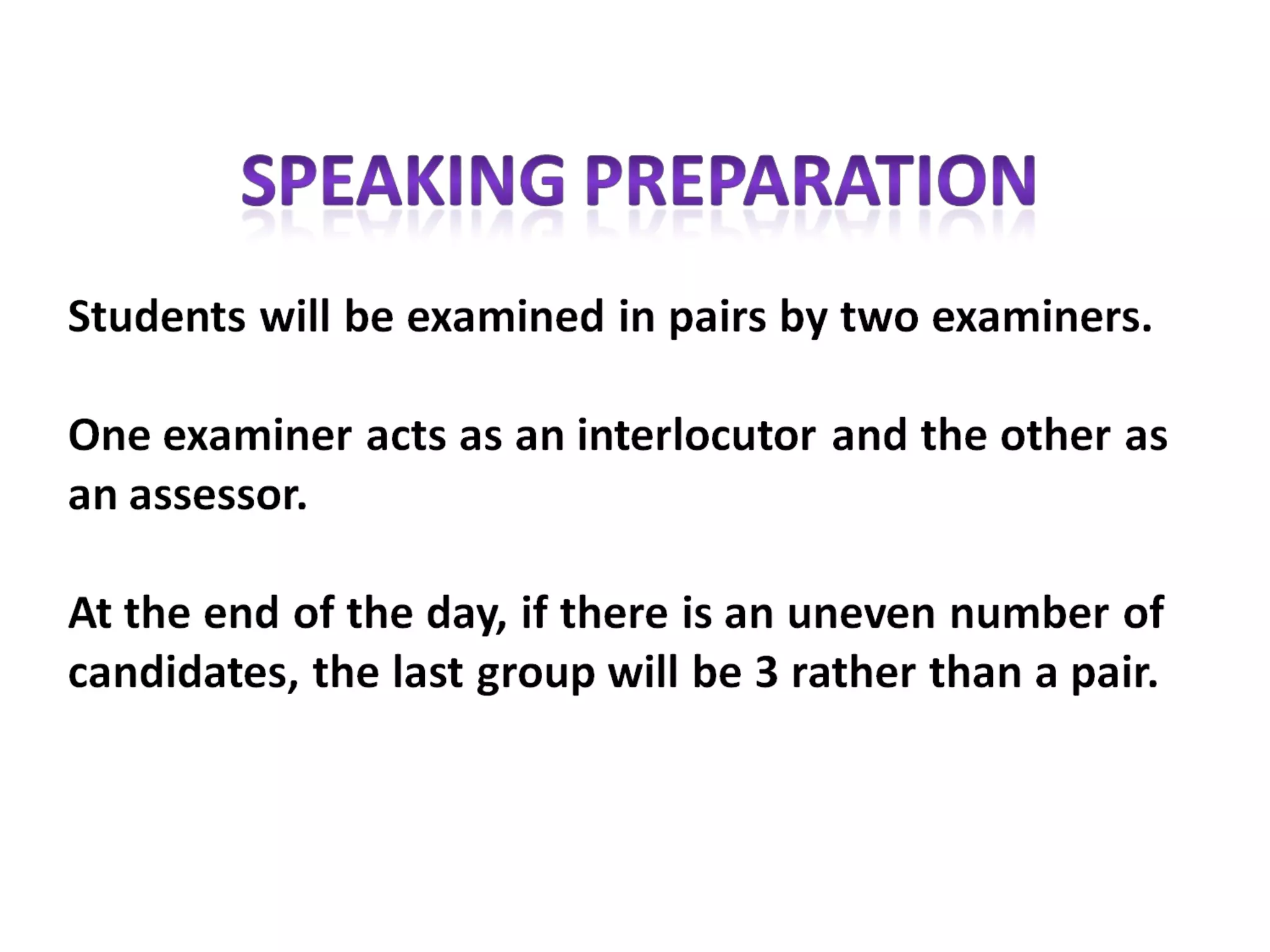
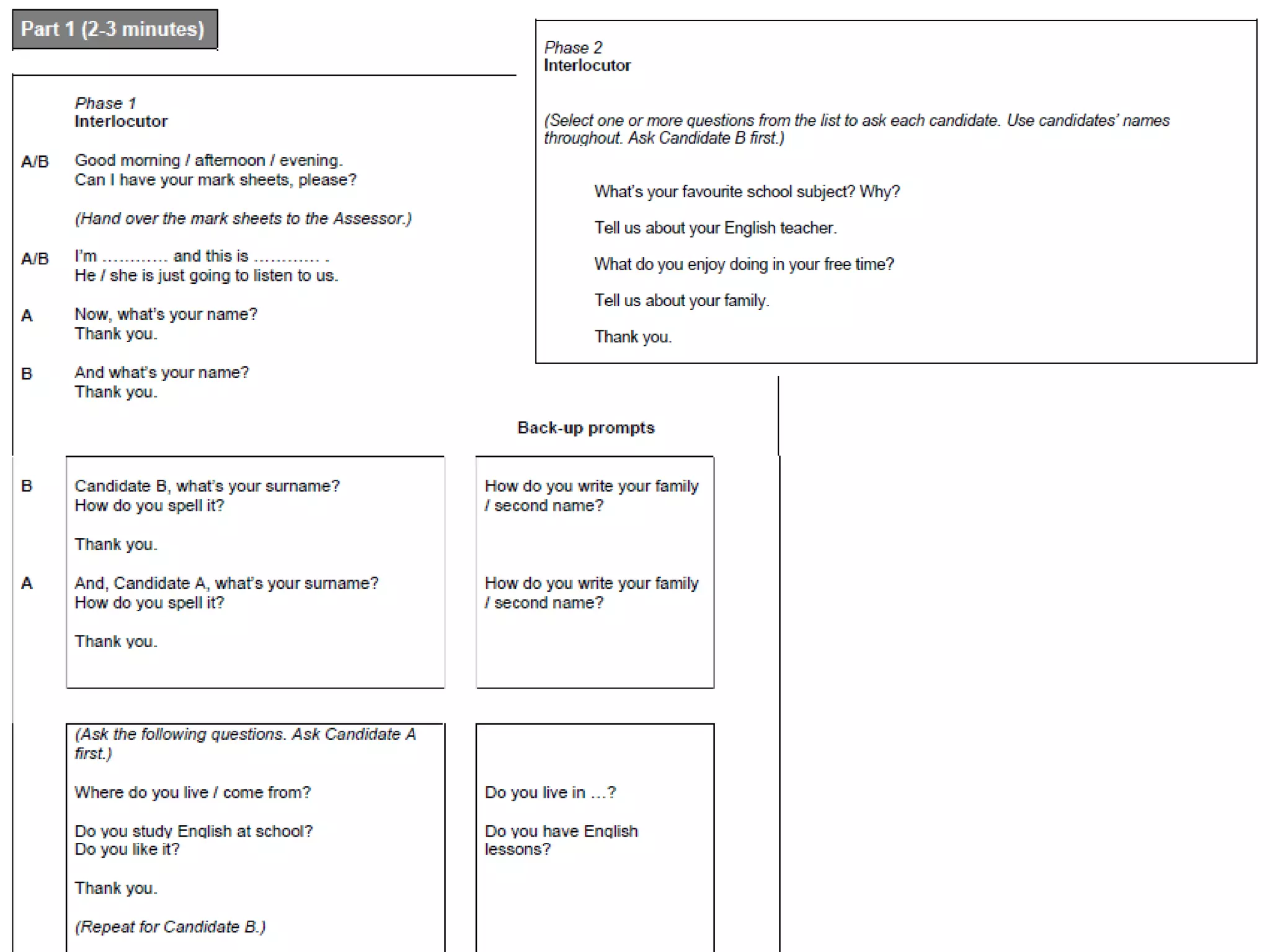
SIMPLE SOCIAL INTERACTION

INSTRUCTIONS:
INSTRUCTIONS:
1st: general conversation lead the by interlocutor
2nd: talk about personal details (spell their names), country of
origin, subject of study, family, home town, school, free time
activities, likes and dislikes…
3rd: don’t use one-word answers (extend your answers!)
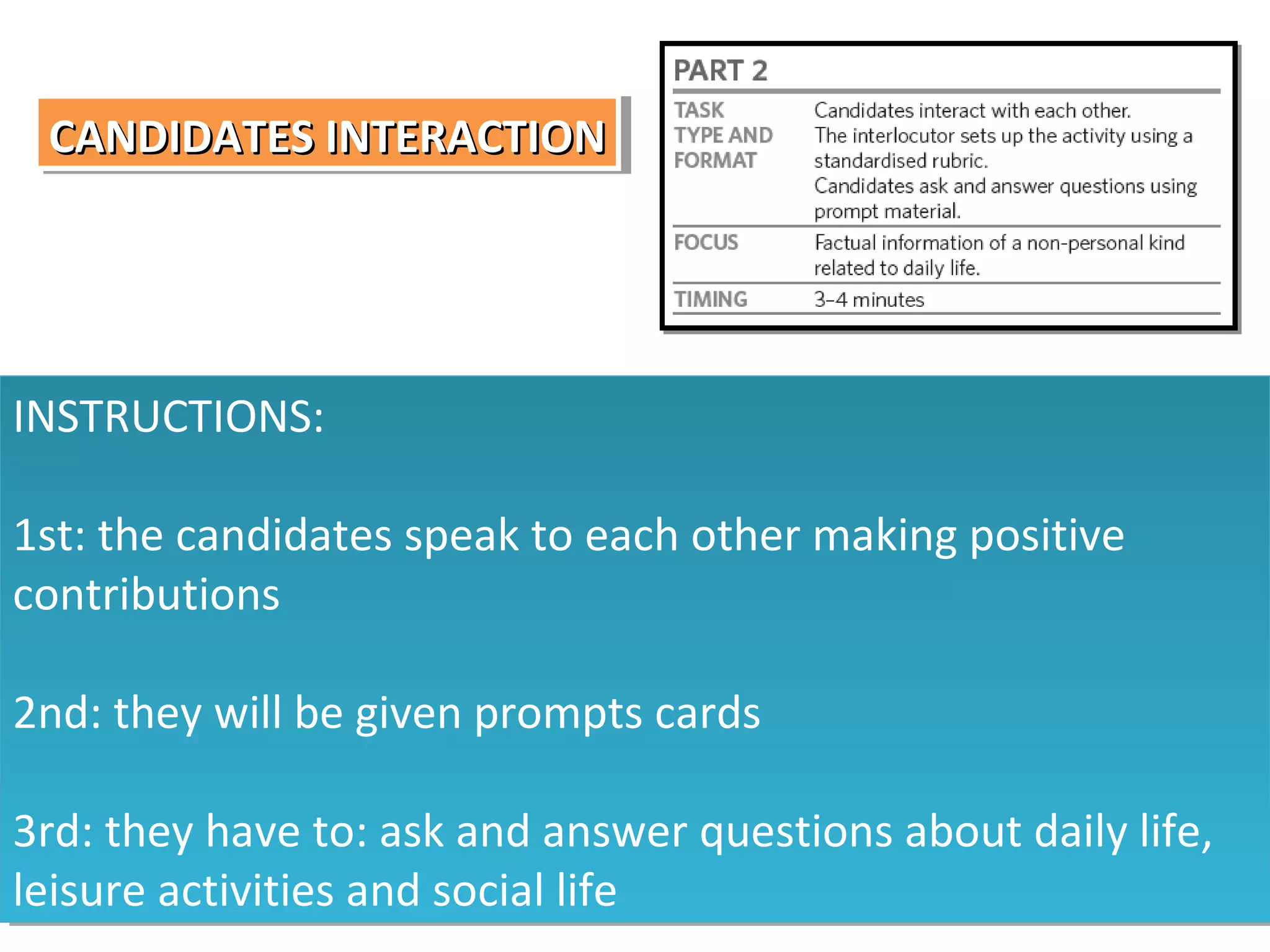
CANDIDATES INTERACTION

INSTRUCTIONS:
INSTRUCTIONS:
1st: the candidates speak to each other making positive
contributions
contributions
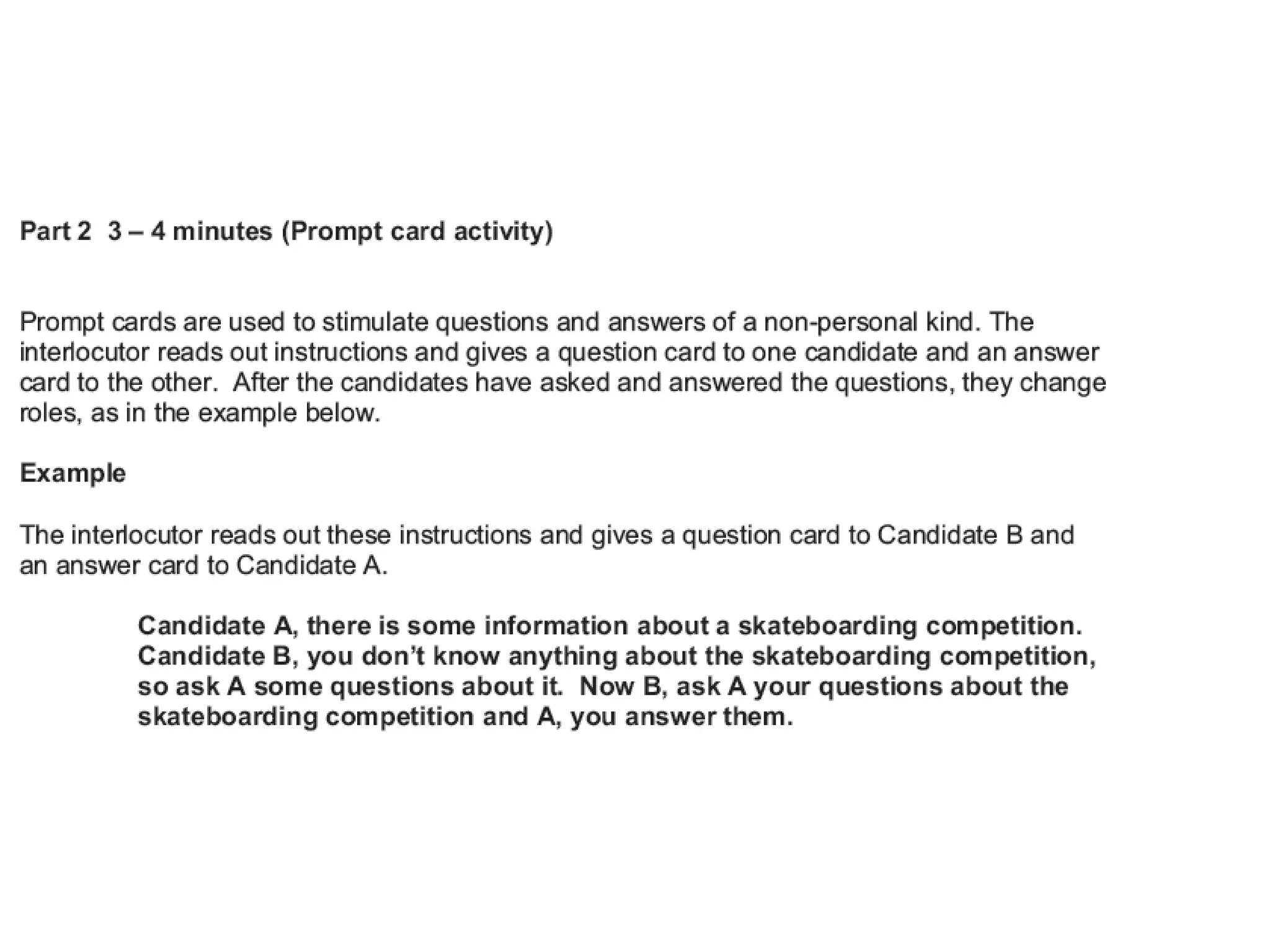
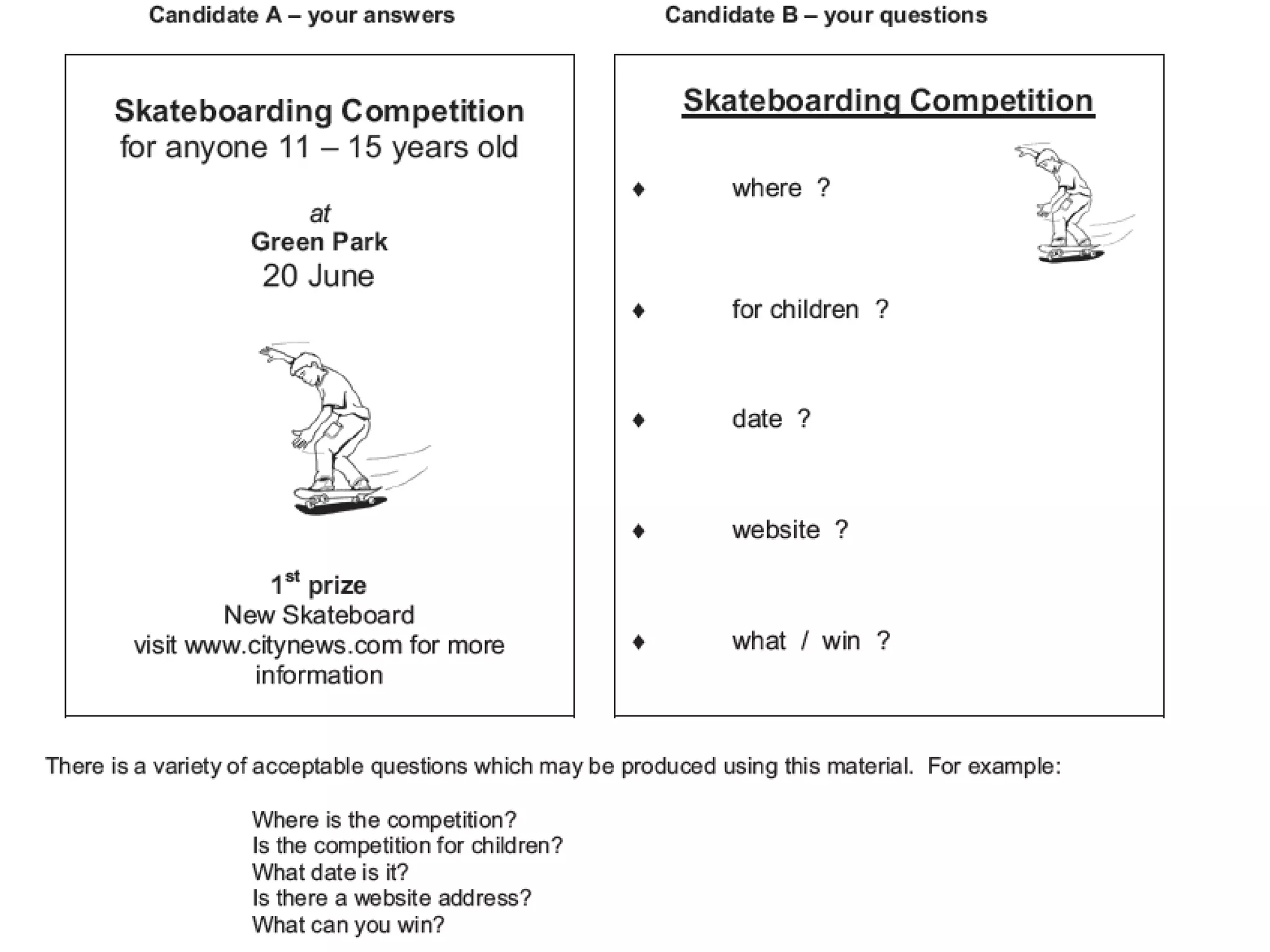
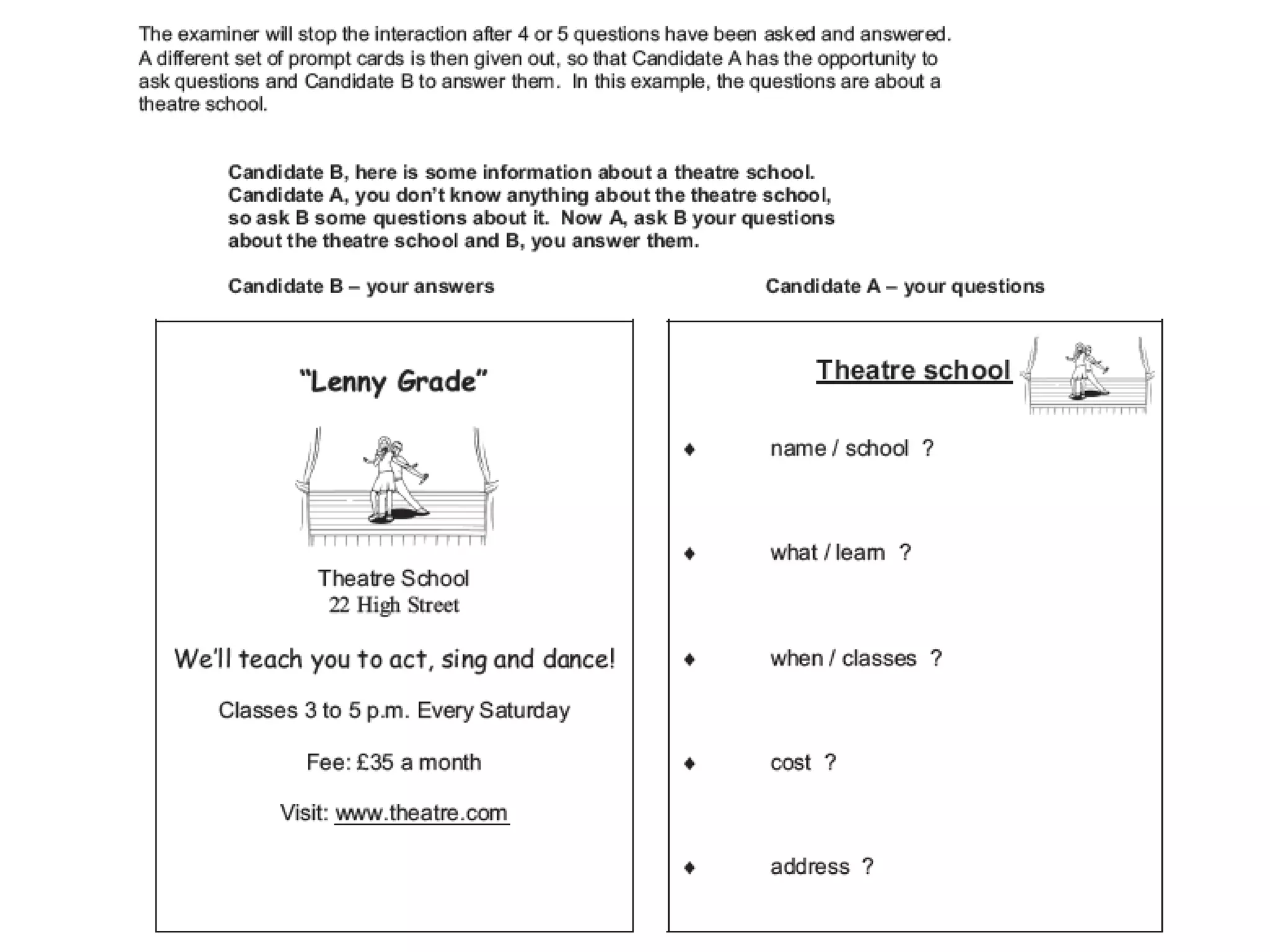
2nd: they will be given prompts cards
3rd: they have to: ask and answer questions about daily life,
leisure activities and social life
GRADING
GRADING
1. Reading and writing: 50% of the total mark
2. Listening: 25% of the total mark
3. Speaking: 25% of the total mark
CERTIFICATES
CERTIFICATES
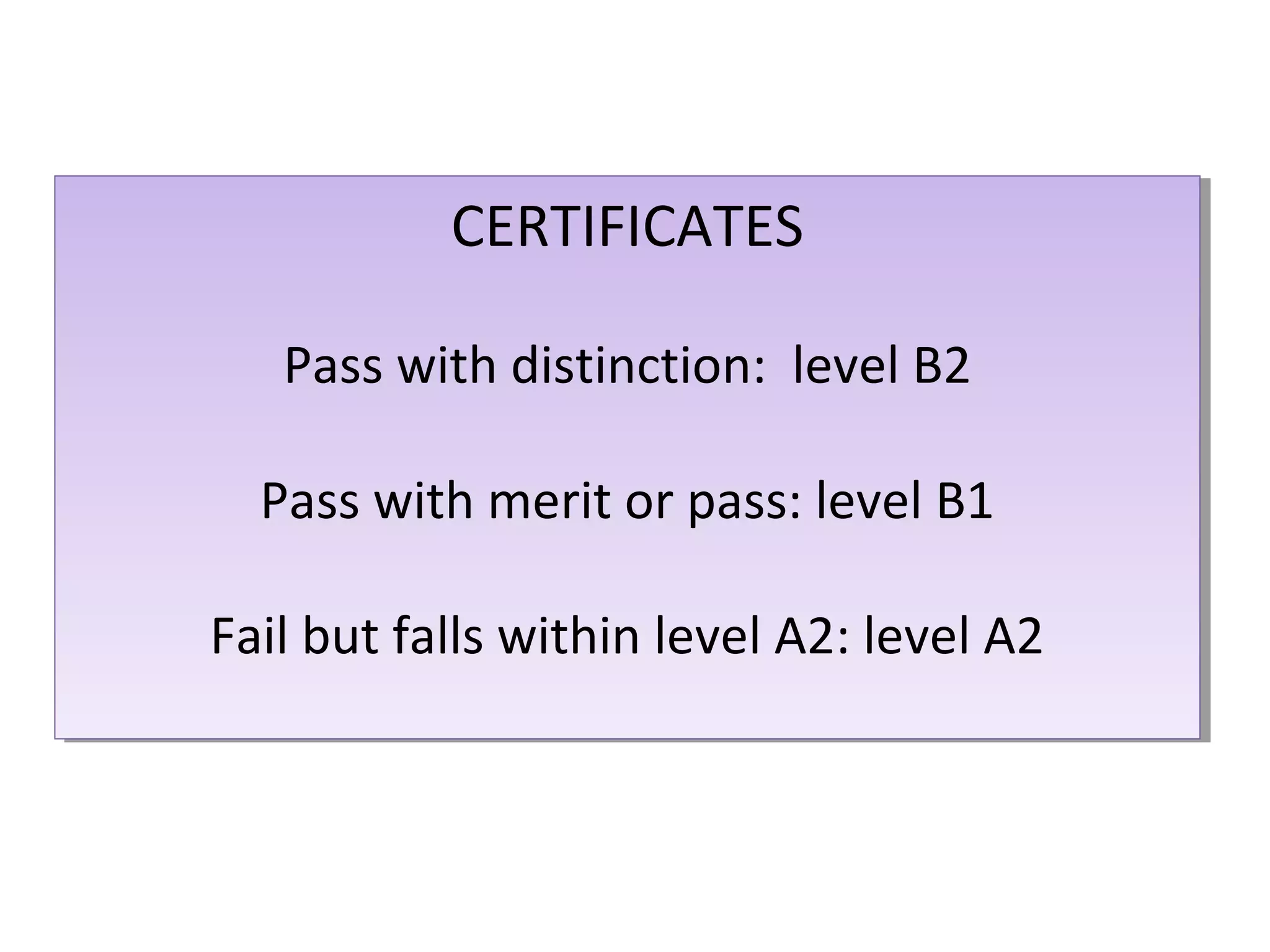
Pass with distinction: level B2
Pass with merit or pass: level B1
Fail but falls within level A2: level A2
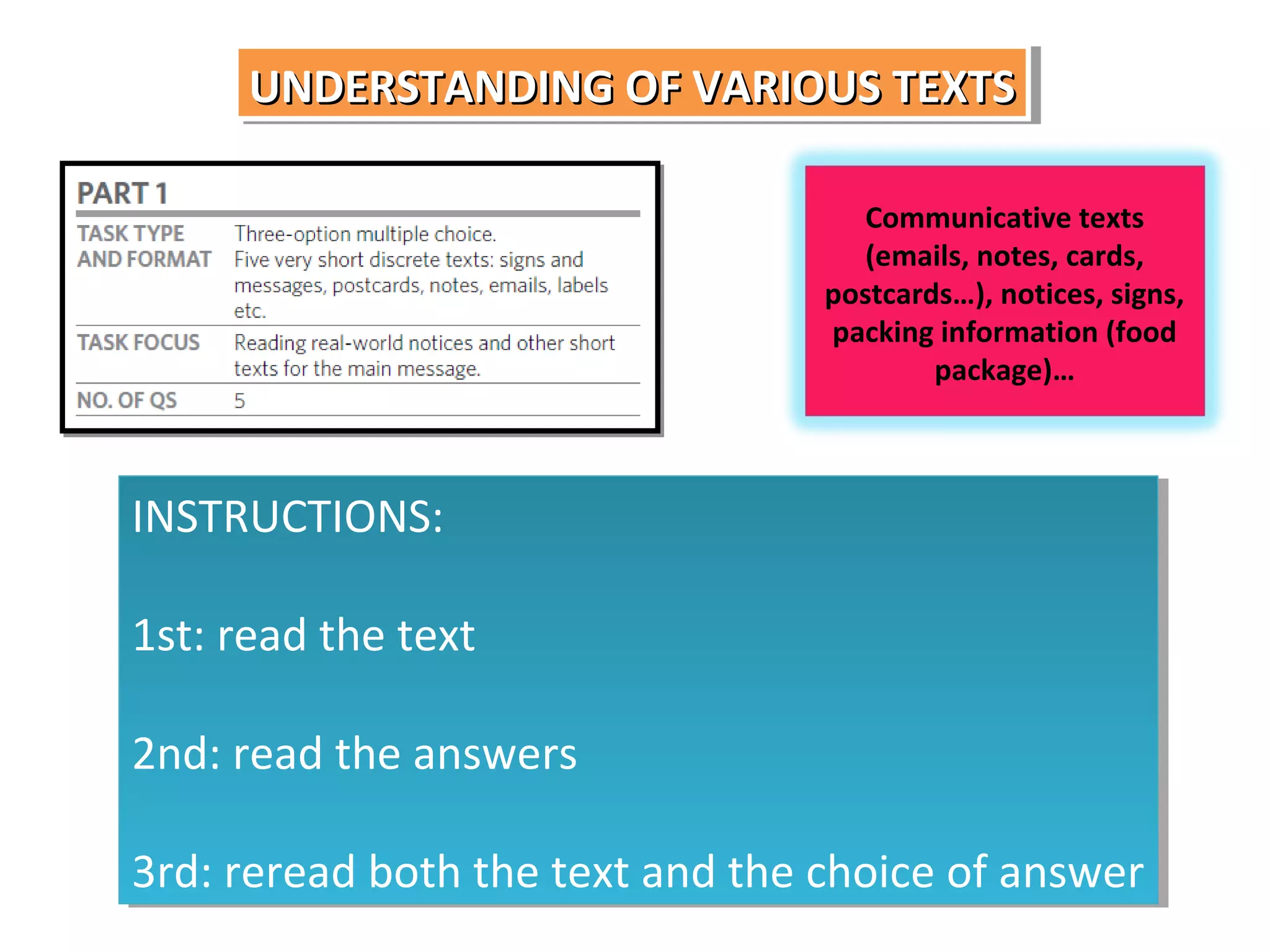
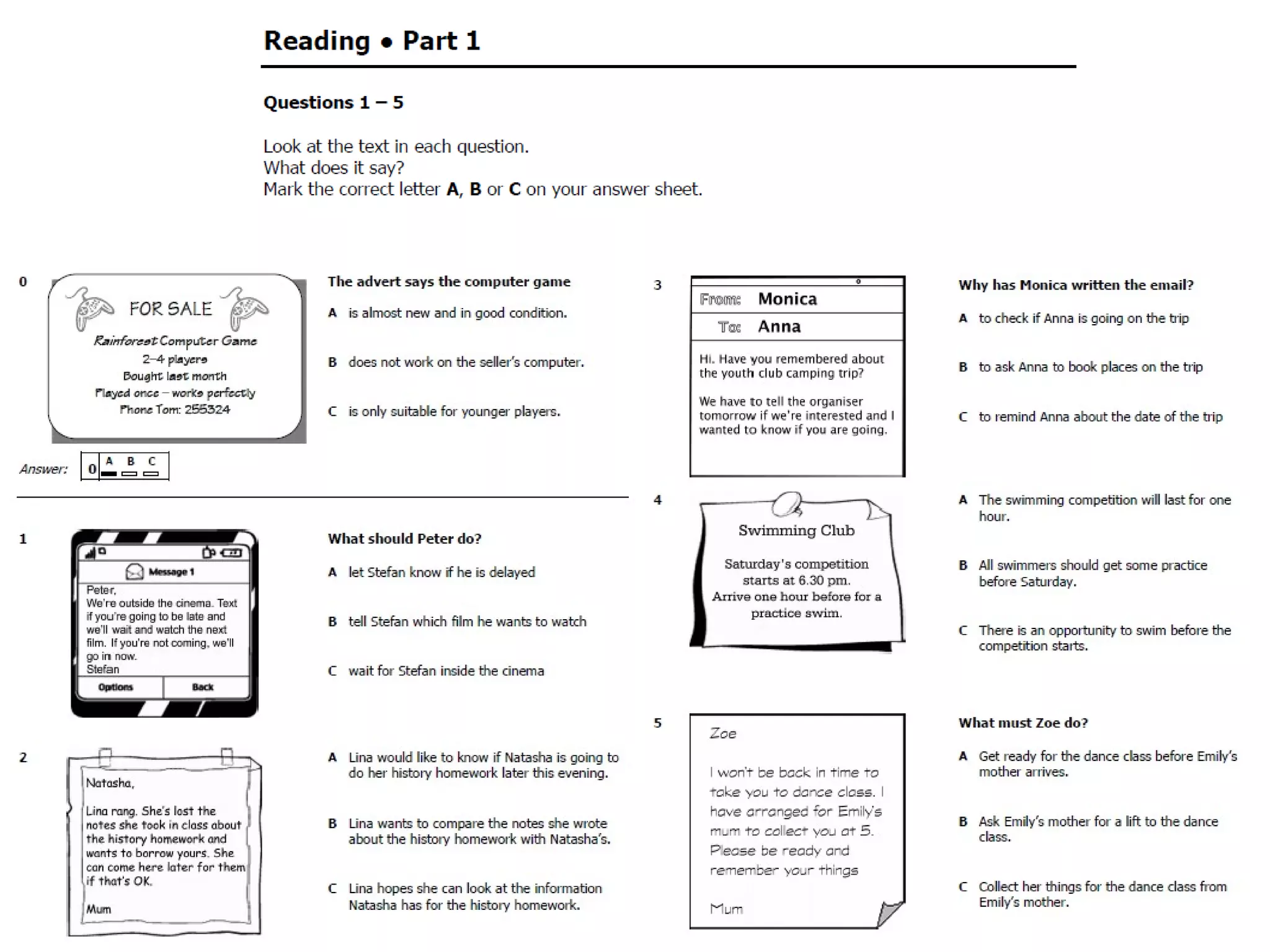
UNDERSTANDING OF VARIOUS TEXTS
Communicative texts
(emails, notes, cards,
postcards…), notices, signs,
packing information (food
package)…

INSTRUCTIONS:
INSTRUCTIONS:
1st: read the text
1st: read the text
2nd: read the answers
3rd: reread both the text and the choice of answer
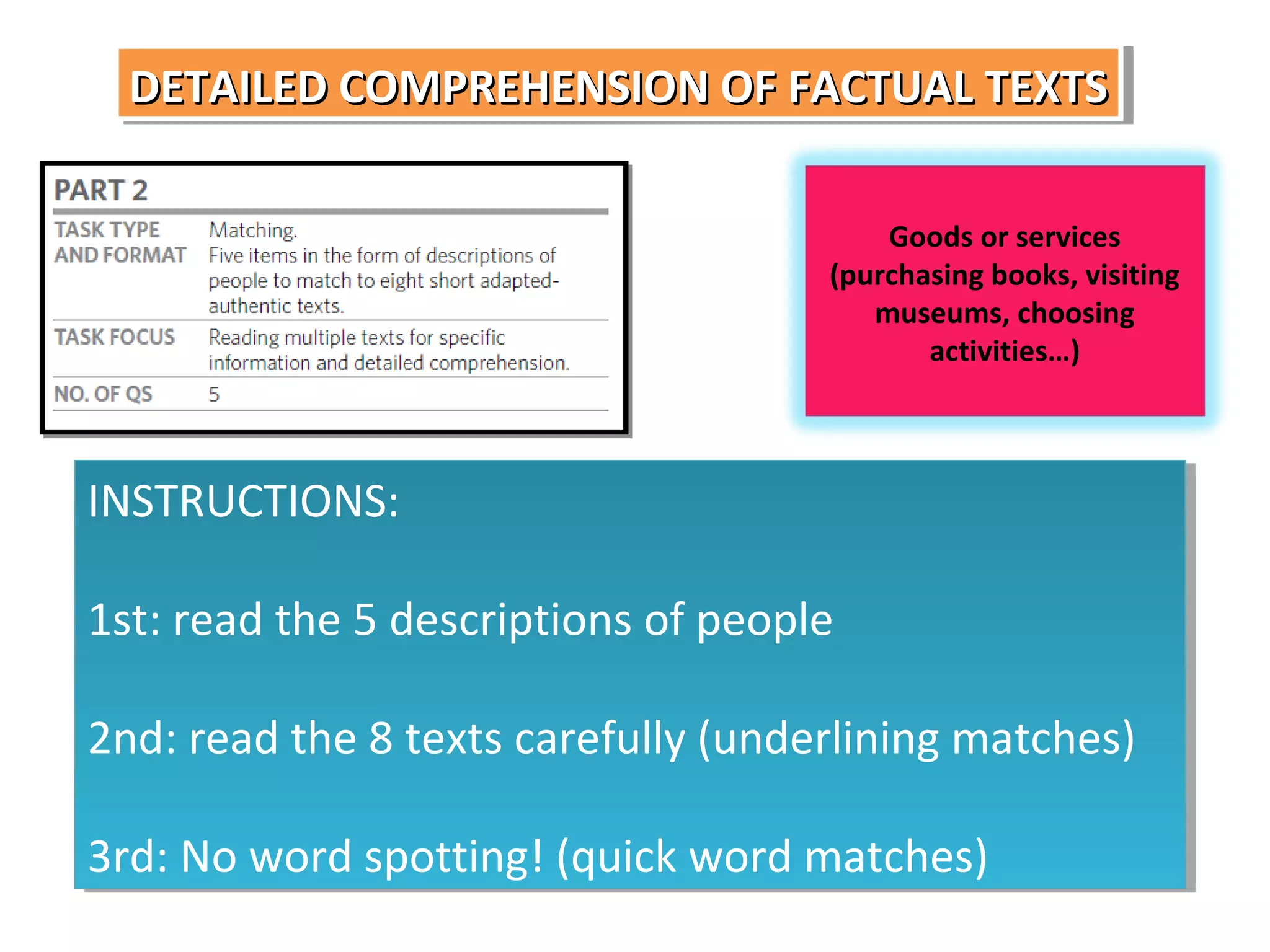
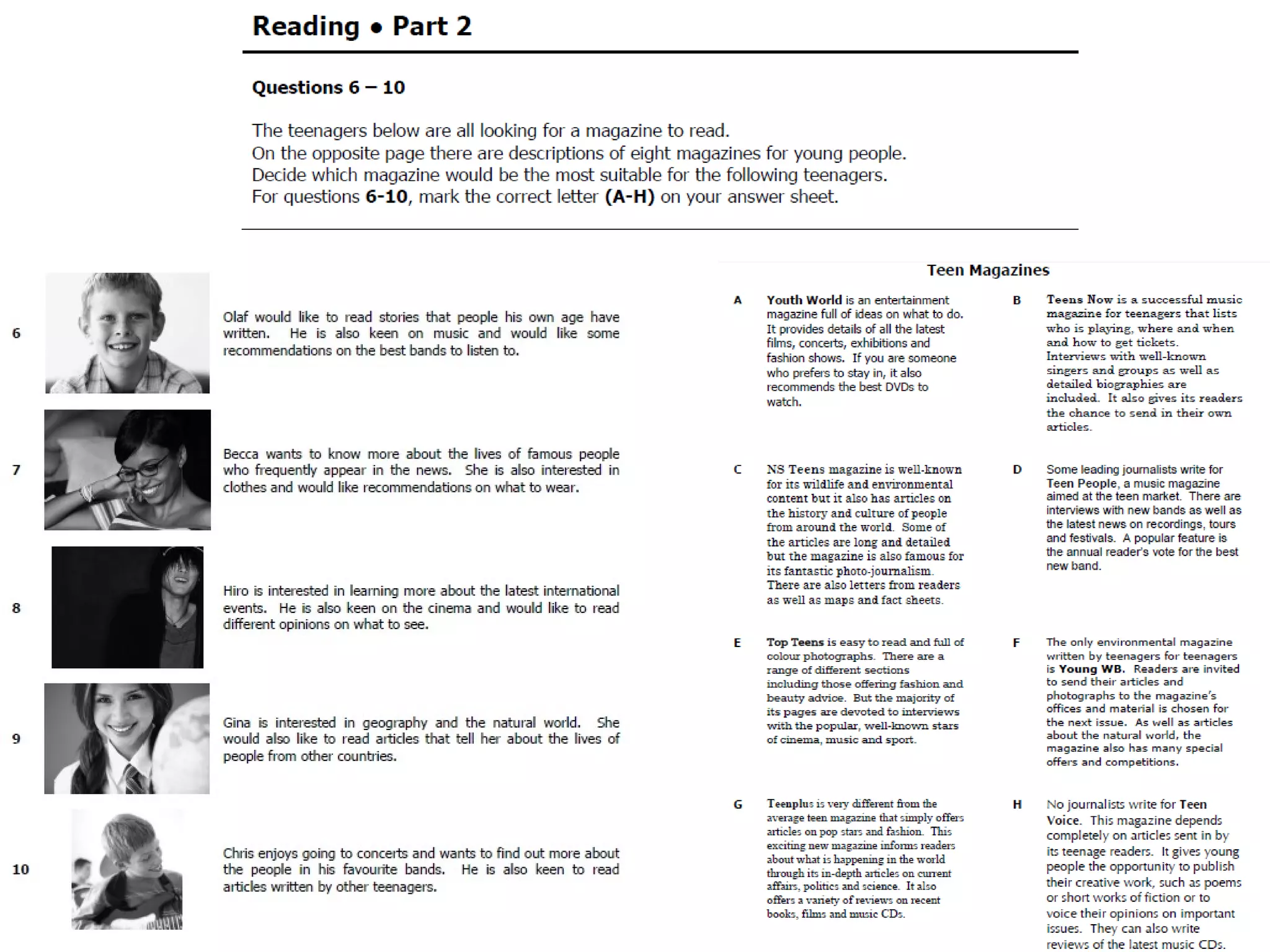
DETAILED COMPREHENSION OF FACTUAL TEXTS
Goods or services
(purchasing books, visiting
museums, choosing
activities…)

INSTRUCTIONS:
INSTRUCTIONS:
1st: read the 5 descriptions of people
2nd: read the 8 texts carefully (underlining matches)
3rd: No word spotting! (quick word matches)
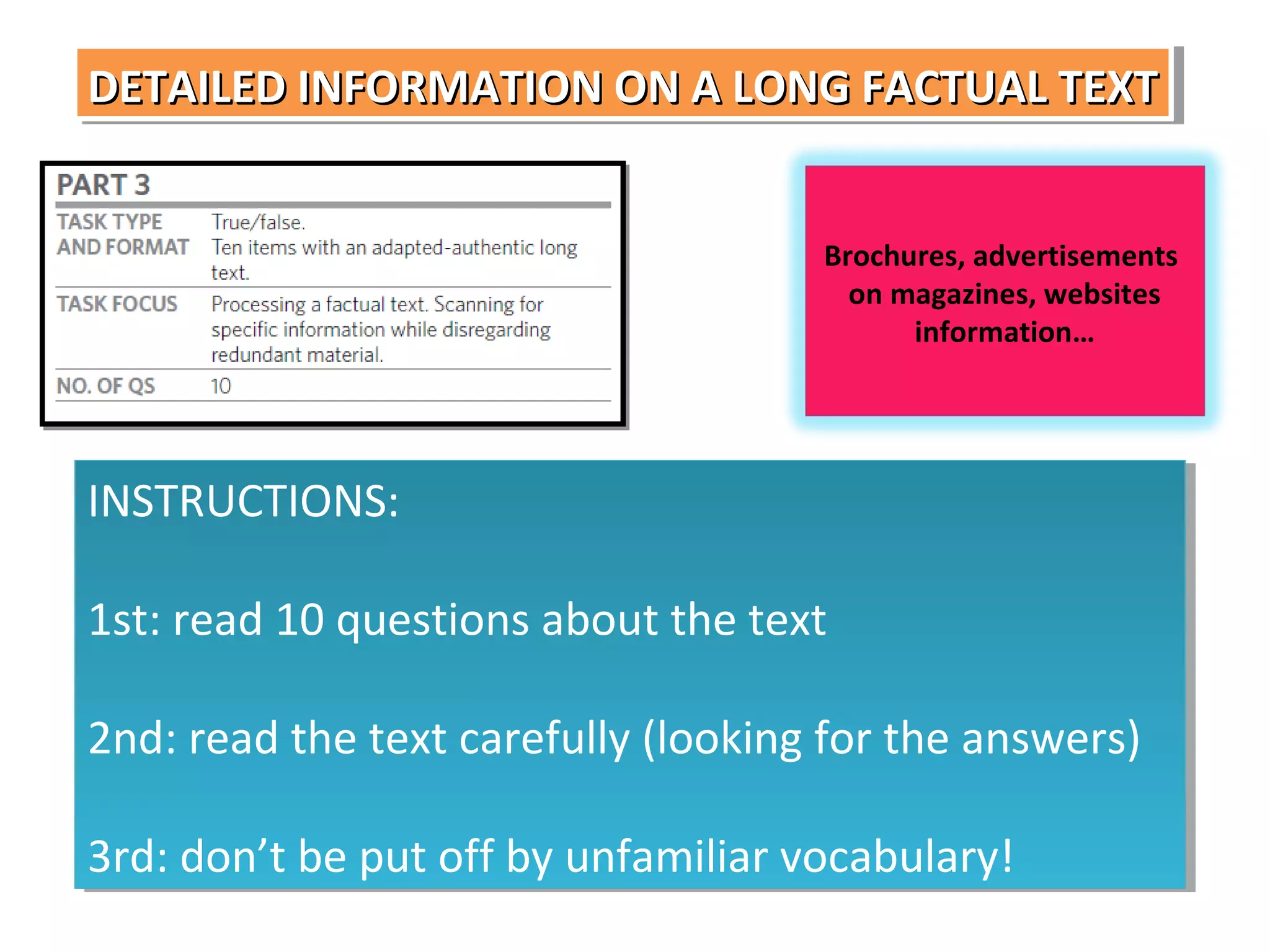
DETAILED INFORMATION ON A LONG FACTUAL TEXT
Brochures, advertisements
on magazines, websites
information…

INSTRUCTIONS:
INSTRUCTIONS:
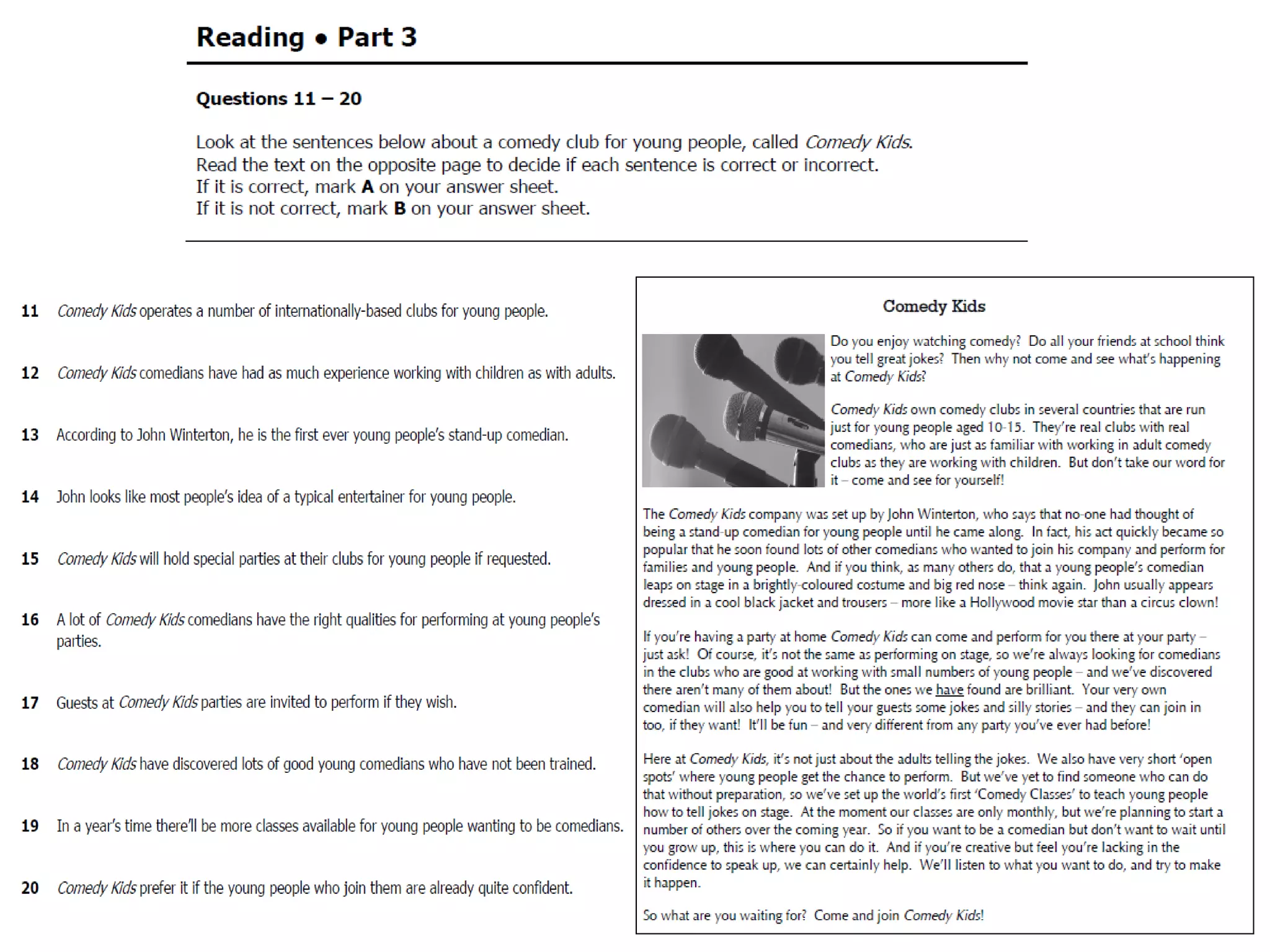
1st: read 10 questions about the text
2nd: read the text carefully (looking for the answers)
3rd: don’t be put off by unfamiliar vocabulary!
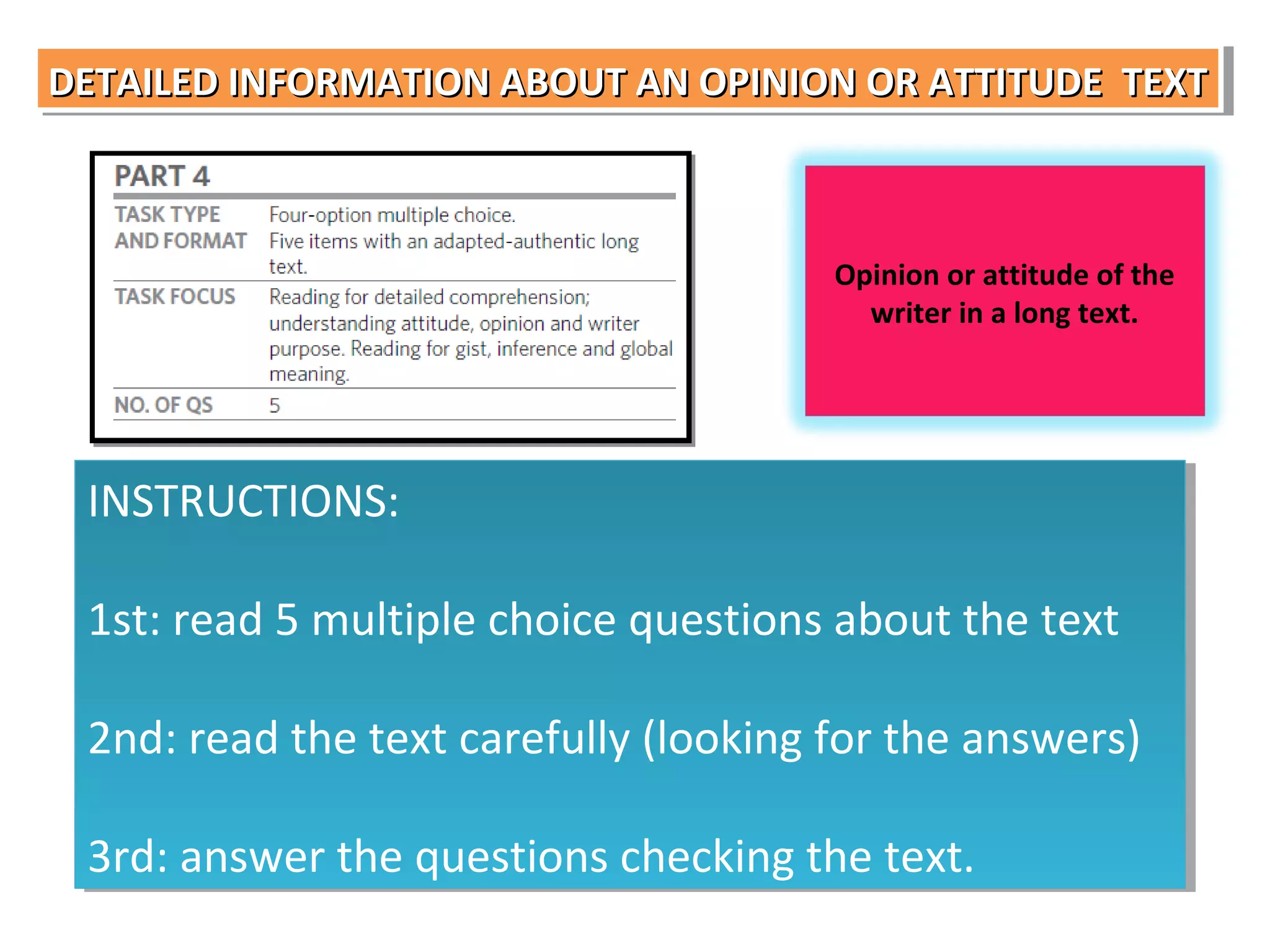
DETAILED INFORMATION ABOUT AN OPINION OR ATTITUDE TEXT

Opinion or attitude of the
writer in a long text.

INSTRUCTIONS:
INSTRUCTIONS:
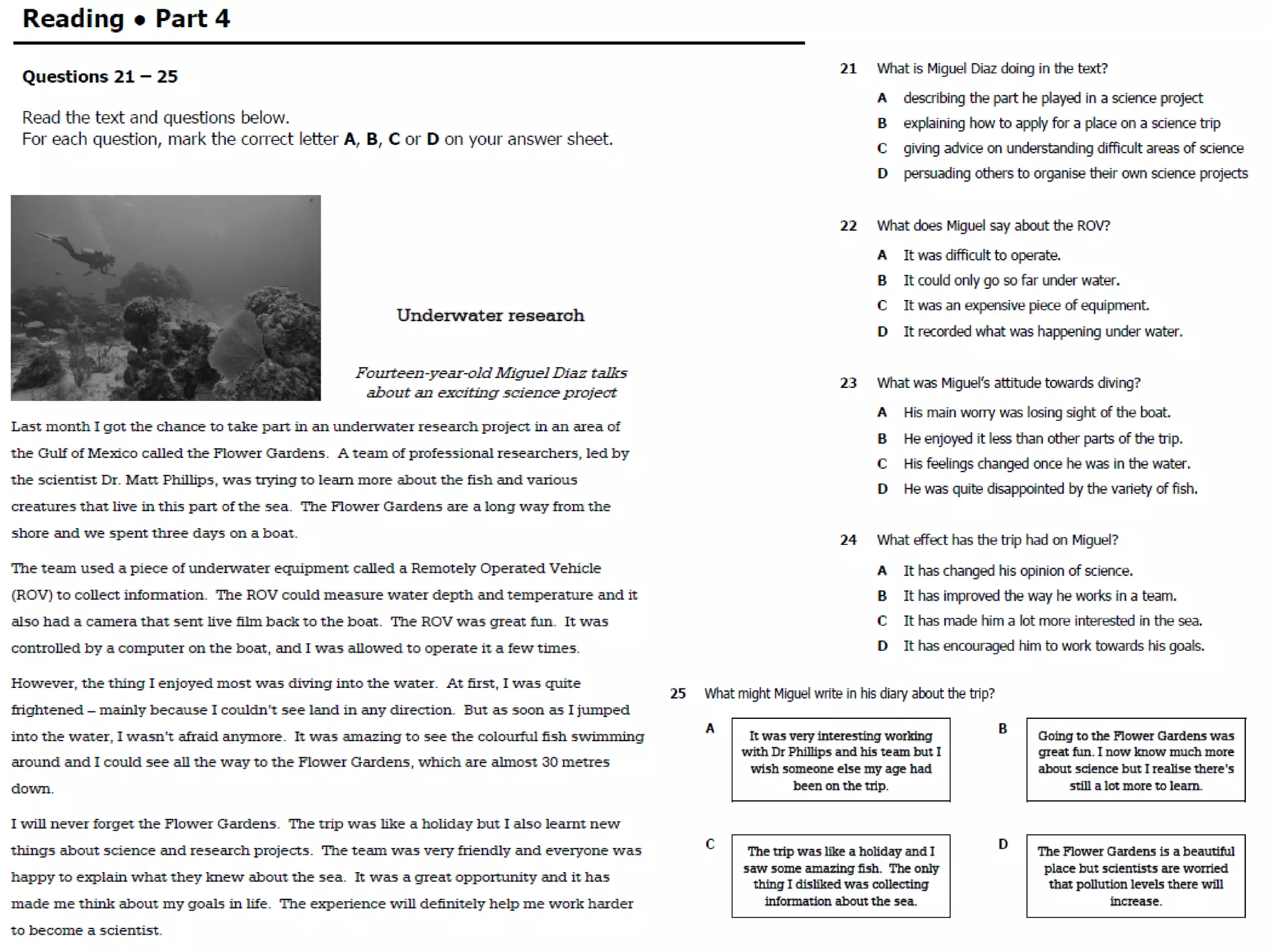
1st: read 5 multiple choice questions about the text
2nd: read the text carefully (looking for the answers)
3rd: answer the questions checking the text.
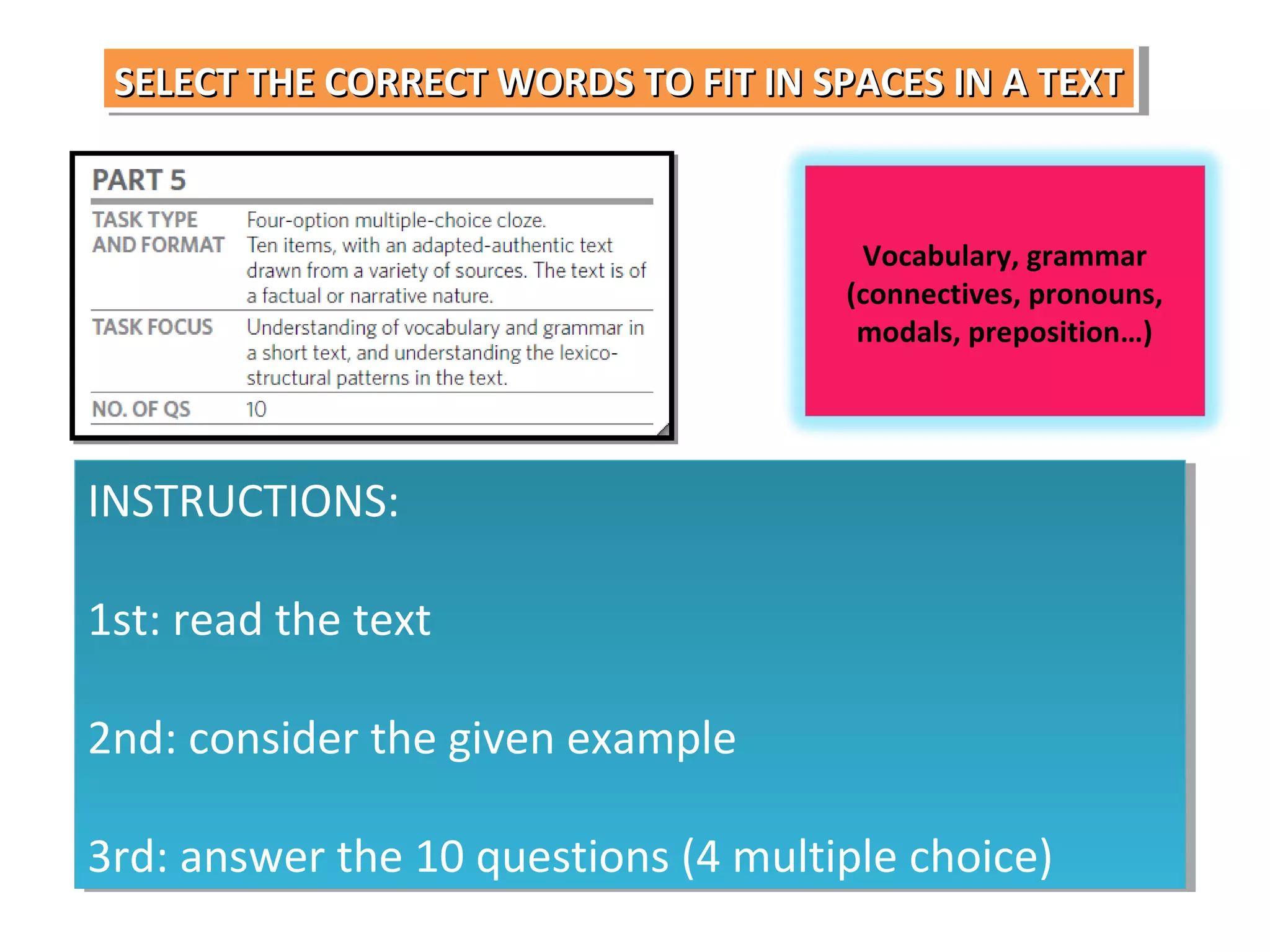
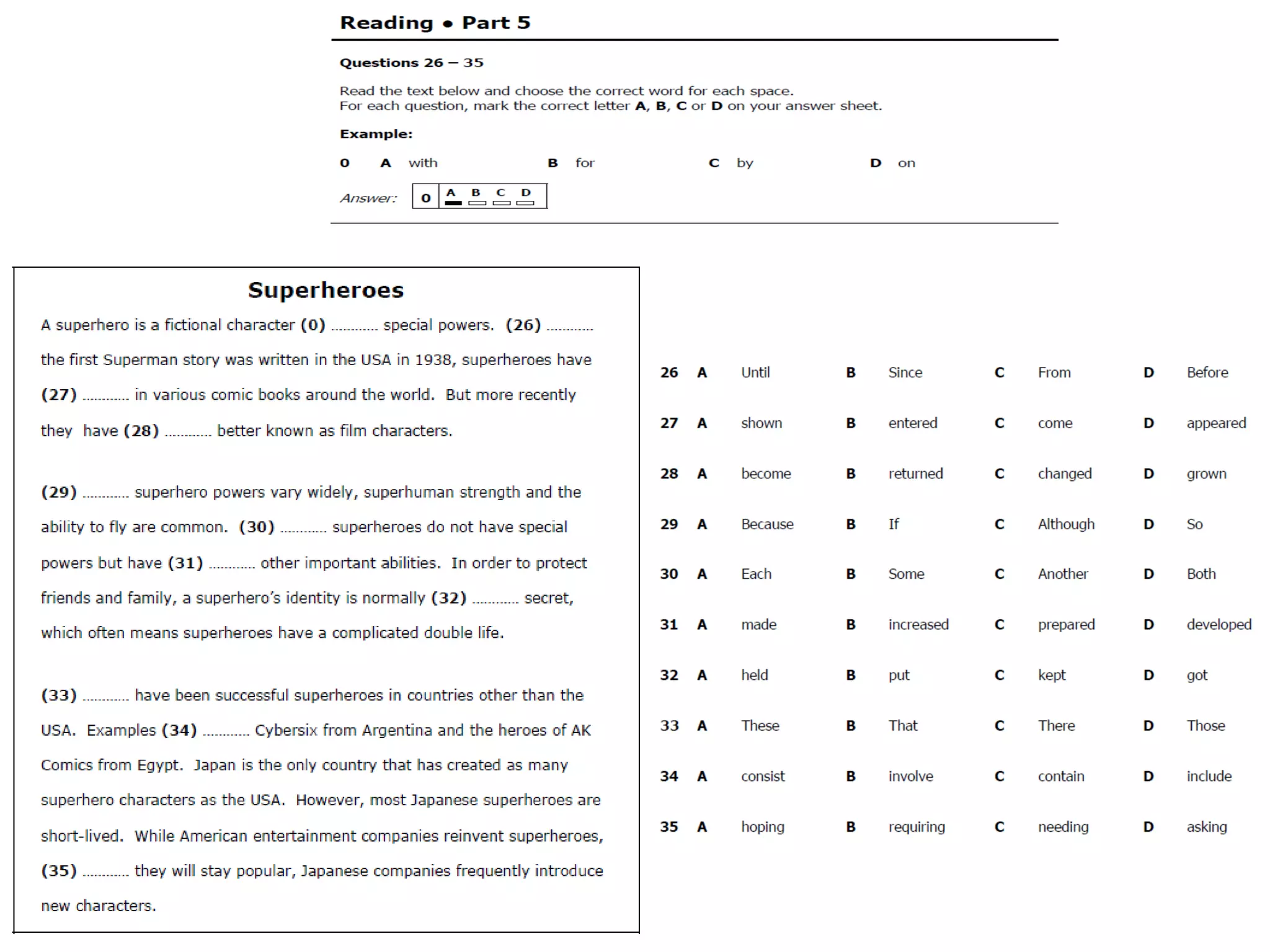
SELECT THE CORRECT WORDS TO FIT IN SPACES IN A TEXT

Vocabulary, grammar
(connectives, pronouns,
modals, preposition…)

INSTRUCTIONS:
INSTRUCTIONS:
1st: read the text
1st: read the text
2nd: consider the given example
3rd: answer the 10 questions (4 multiple choice)
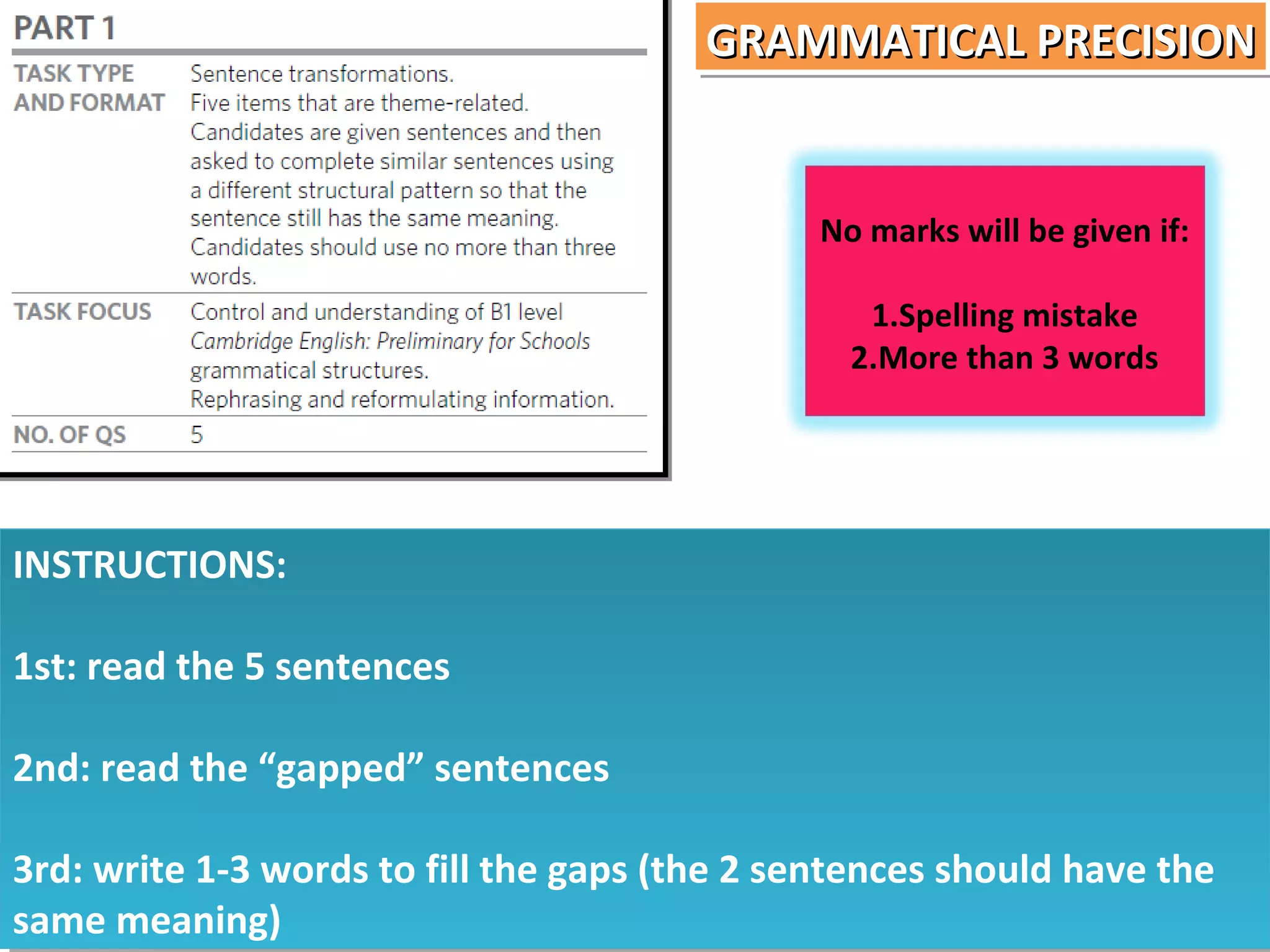
GRAMMATICAL PRECISION

No marks will be given if:
1.Spelling mistake
2.More than 3 words

INSTRUCTIONS:
INSTRUCTIONS:
1st: read the 5 sentences
2nd: read the “gapped” sentences
3rd: write 1-3 words to fill the gaps (the 2 sentences should have the
same meaning)
same meaning)
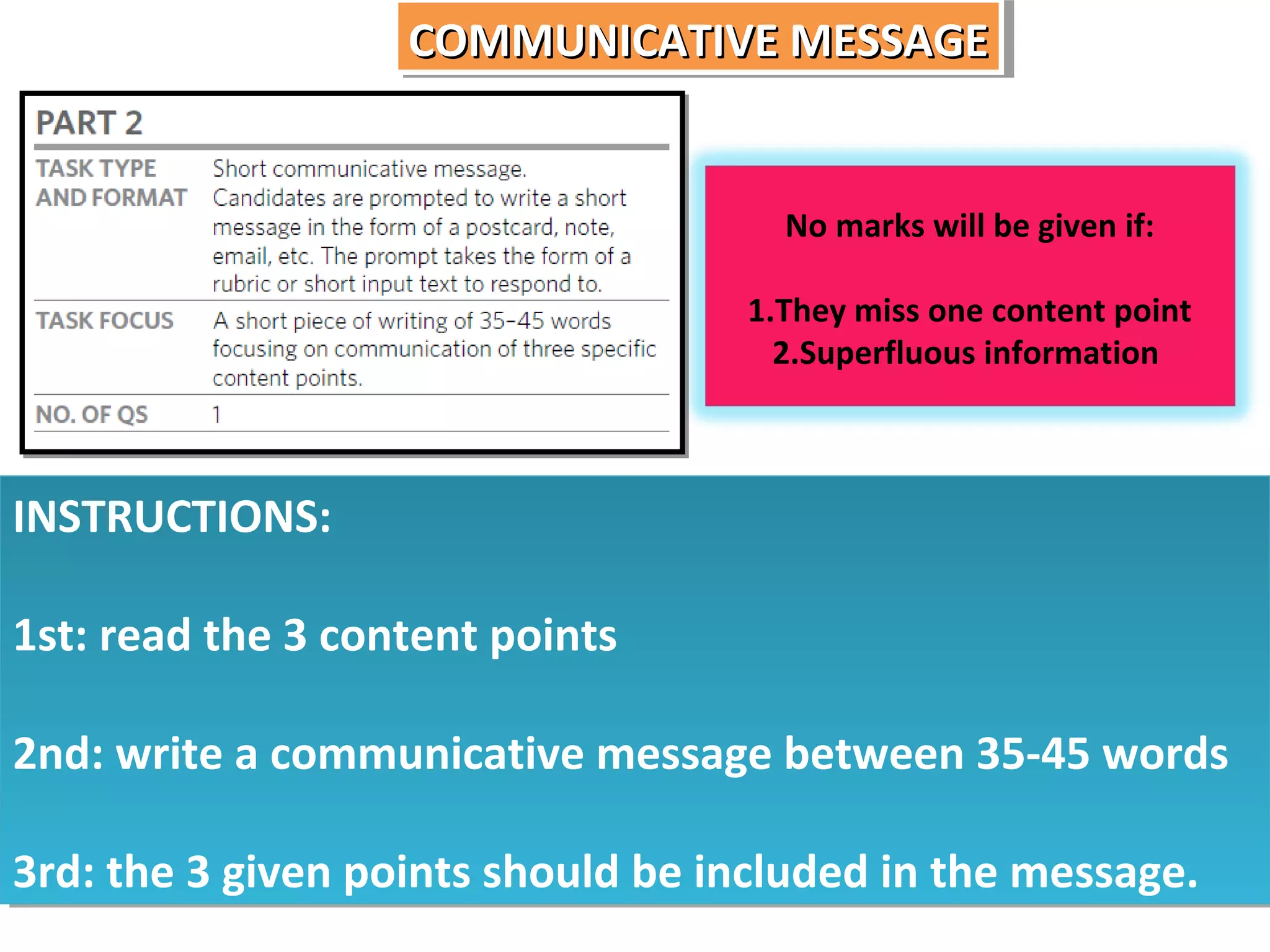
COMMUNICATIVE MESSAGE

No marks will be given if:
1.They miss one content point
2.Superfluous information

INSTRUCTIONS:
INSTRUCTIONS:
1st: read the 3 content points
2nd: write a communicative message between 35-45 words
3rd: the 3 given points should be included in the message.
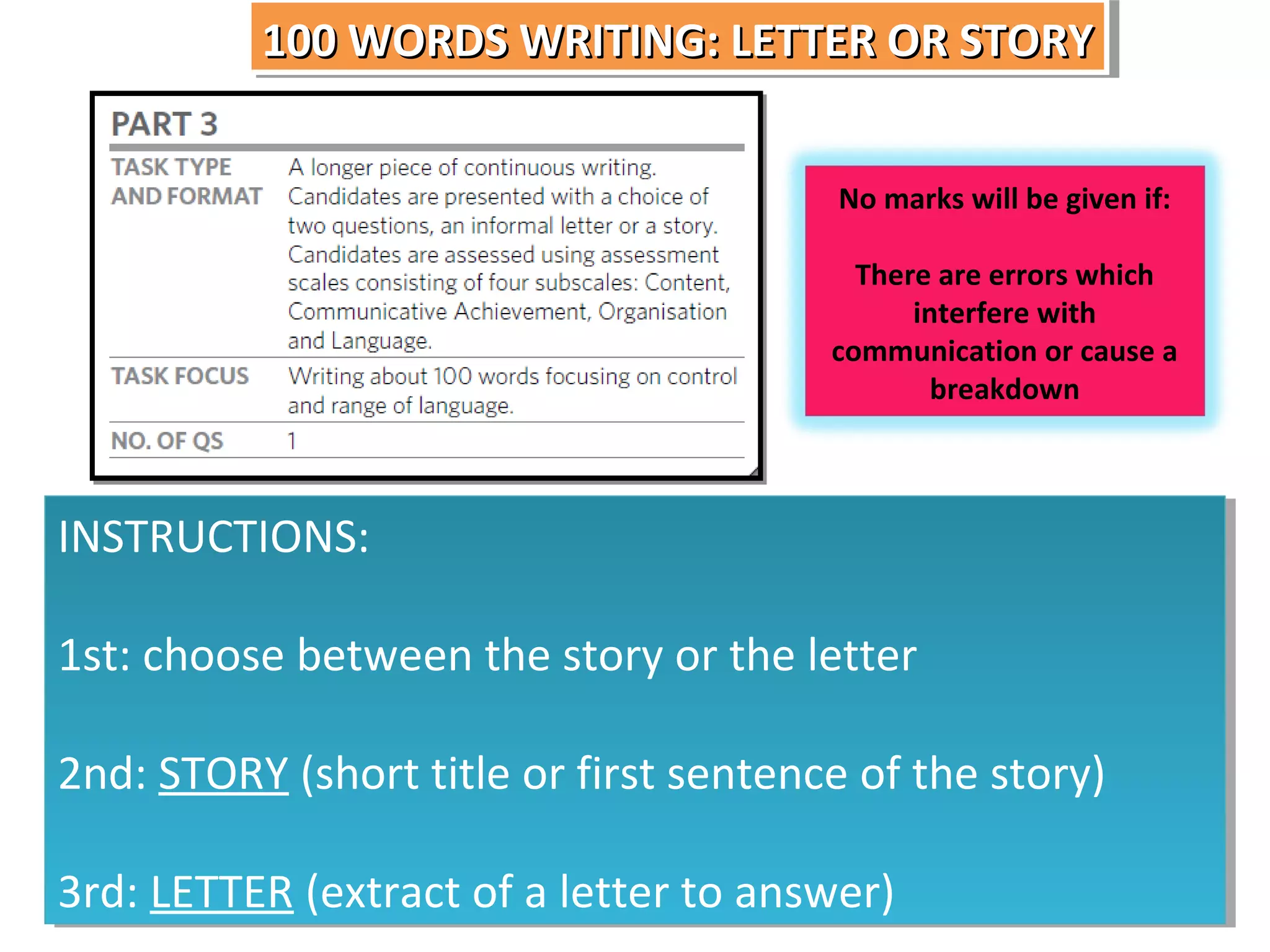
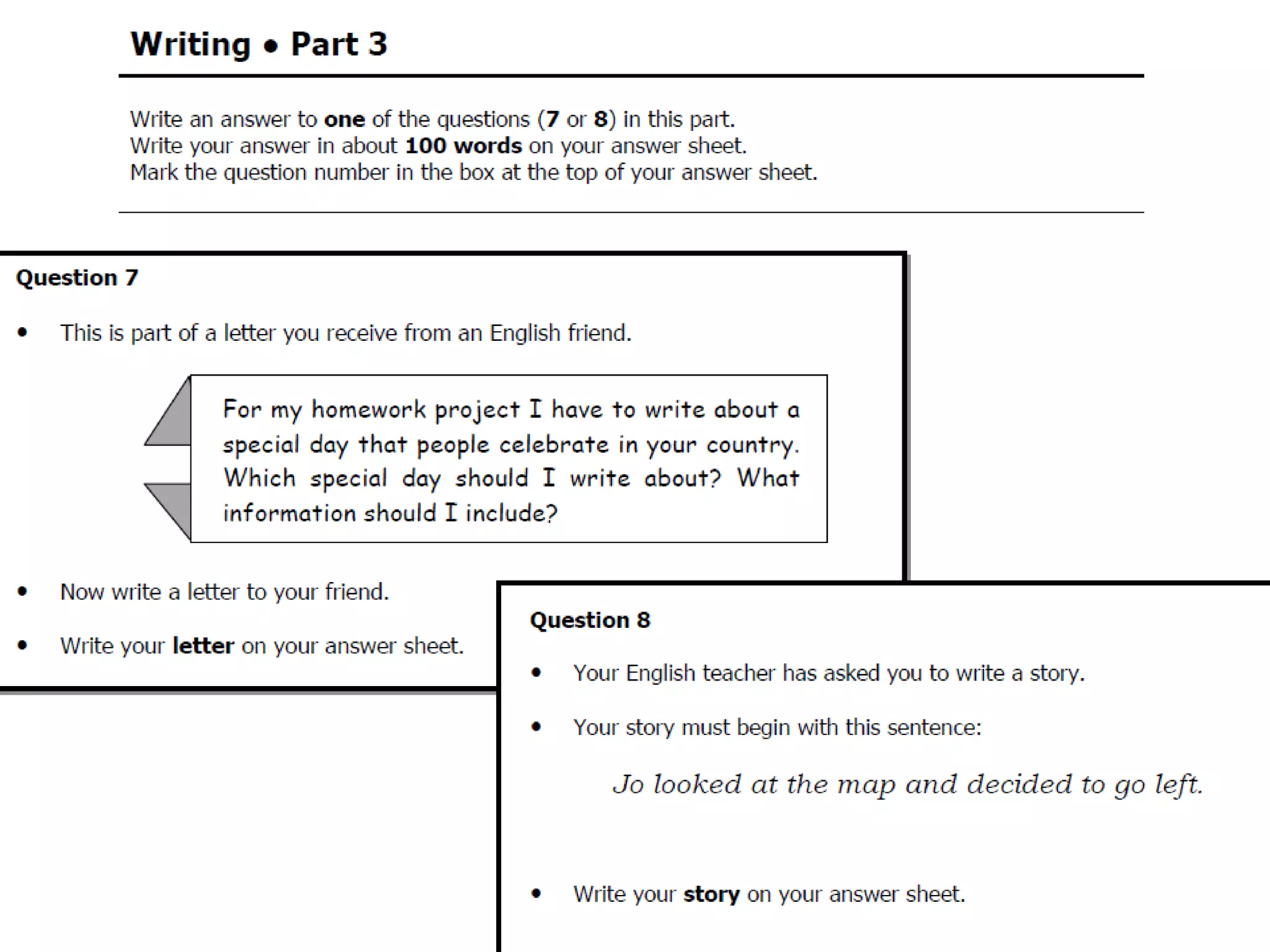
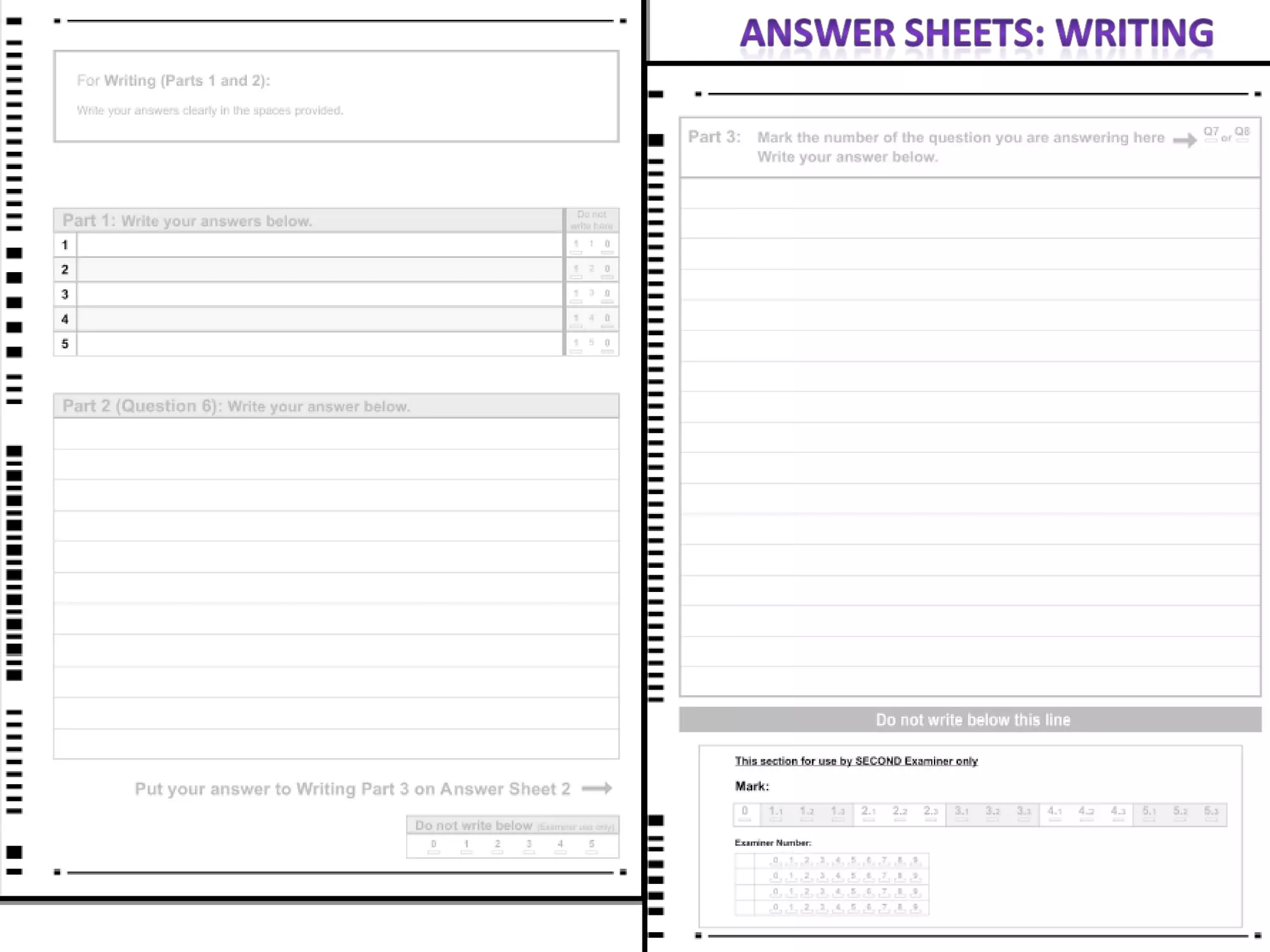
100 WORDS WRITING: LETTER OR STORY
No marks will be given if:
There are errors which
interfere with
communication or cause a
breakdown

INSTRUCTIONS:
INSTRUCTIONS:
1st: choose between the story or the letter
2nd: STORY (short title or first sentence of the story)
3rd: LETTER (extract of a letter to answer)
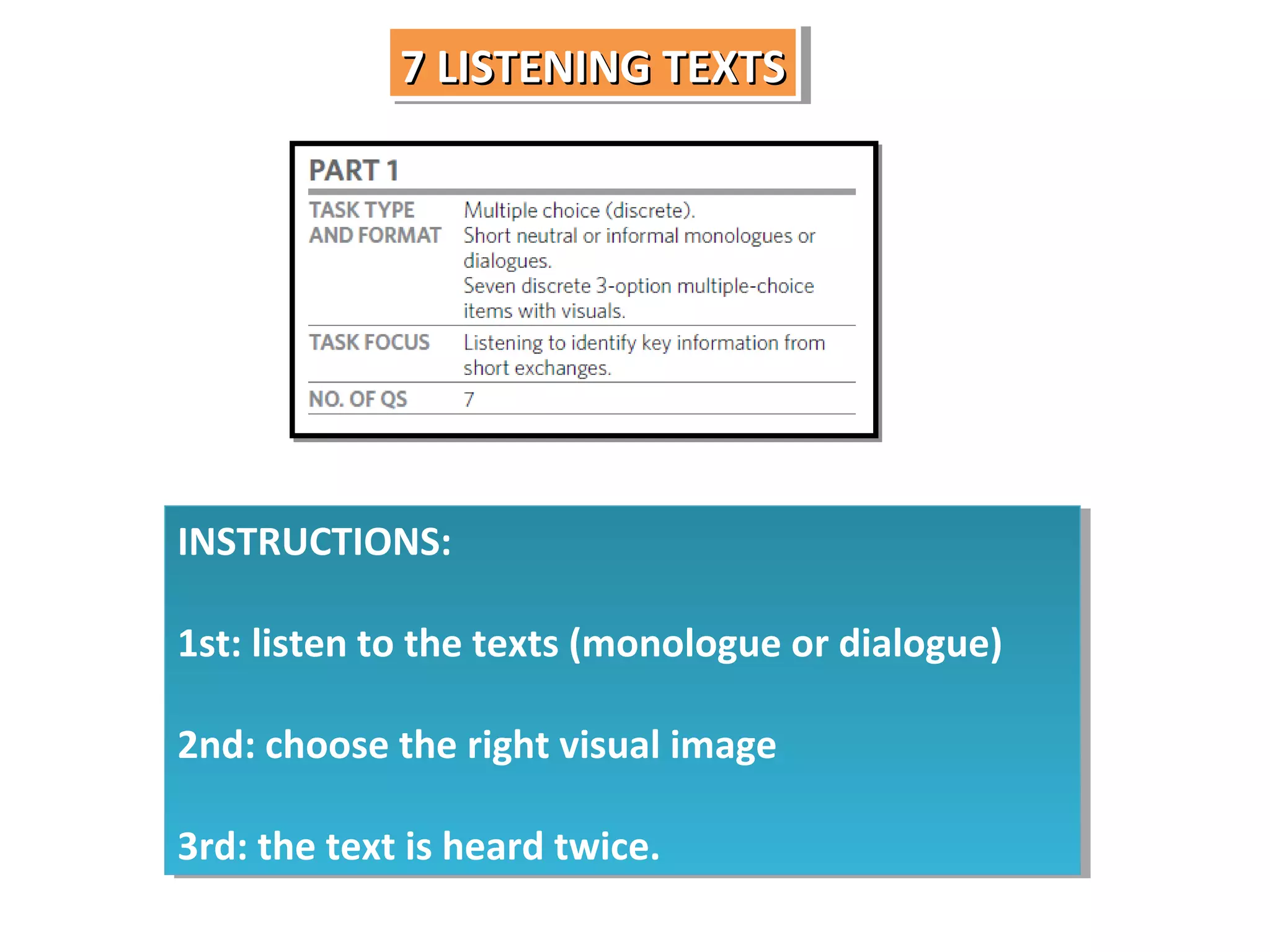
7 LISTENING TEXTS
7 LISTENING TEXTS

INSTRUCTIONS:
INSTRUCTIONS:
1st: listen to the texts (monologue or dialogue)
2nd: choose the right visual image
3rd: the text is heard twice.
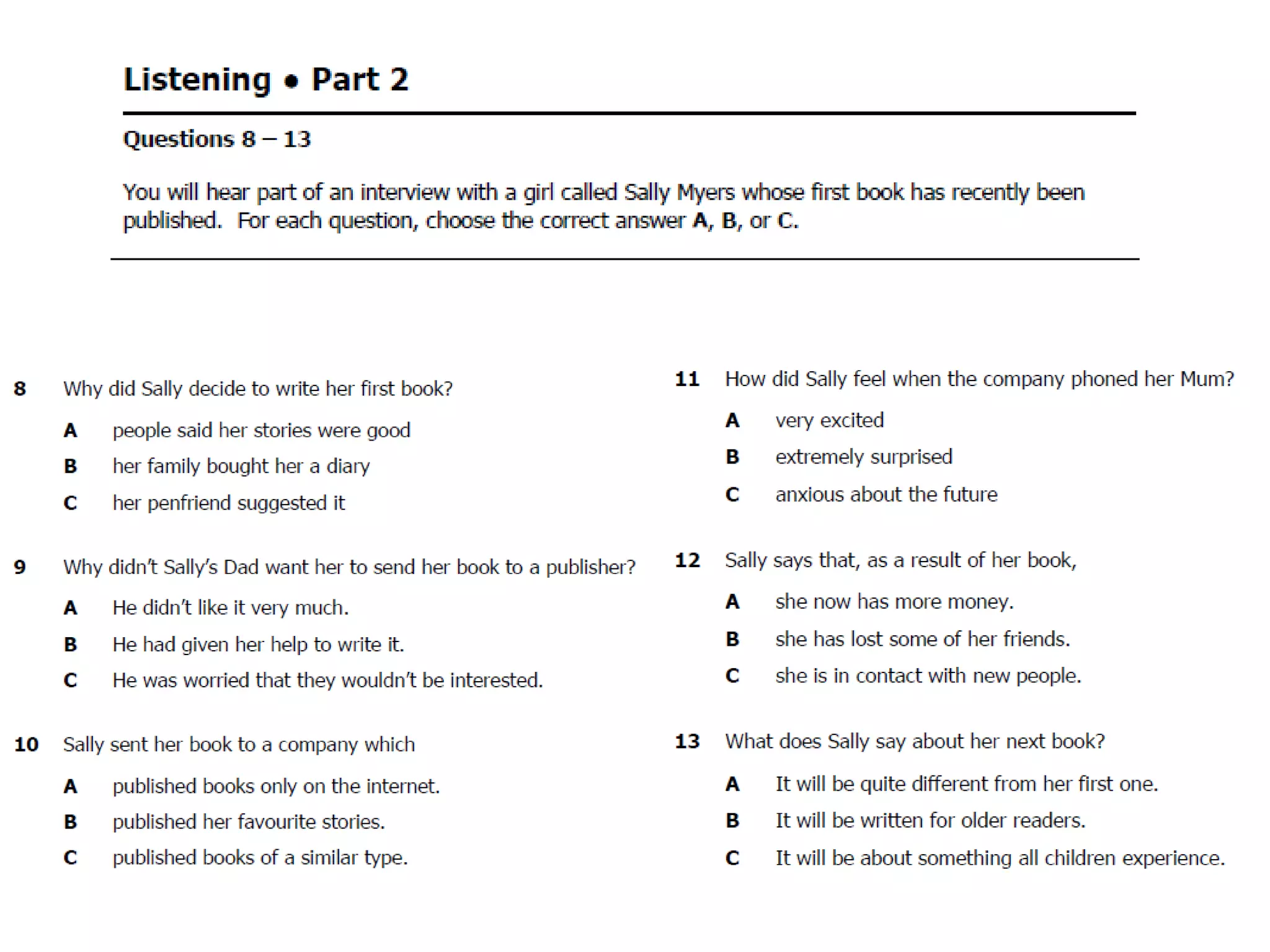
LONG LISTENING TEXT
LONG LISTENING TEXT

INSTRUCTIONS:
INSTRUCTIONS:
1st: listen to the text (information about places
or events, lives, interests, experiences…)
2nd: answer 6 multiple choice questions
3rd: the text is heard twice.
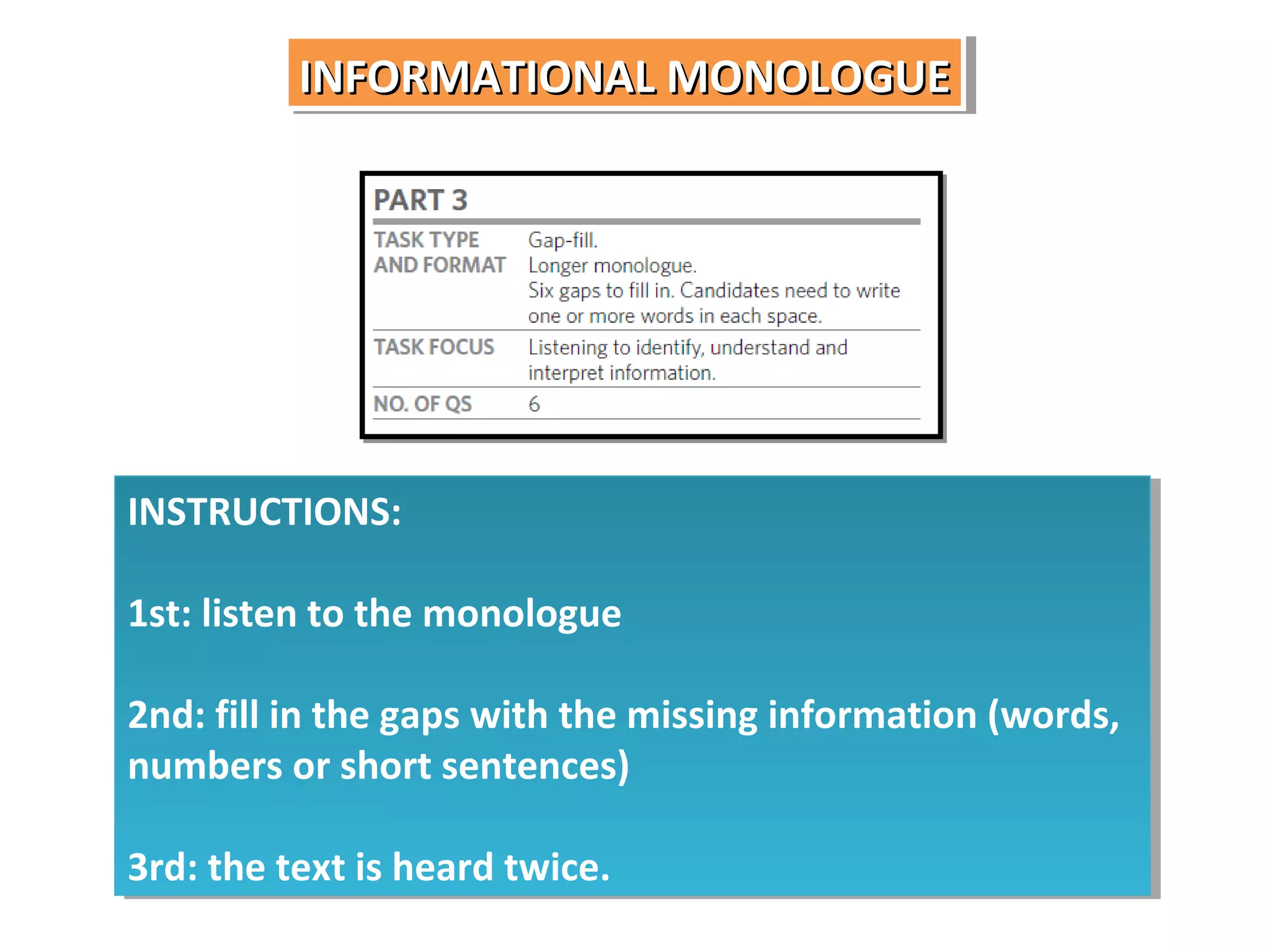
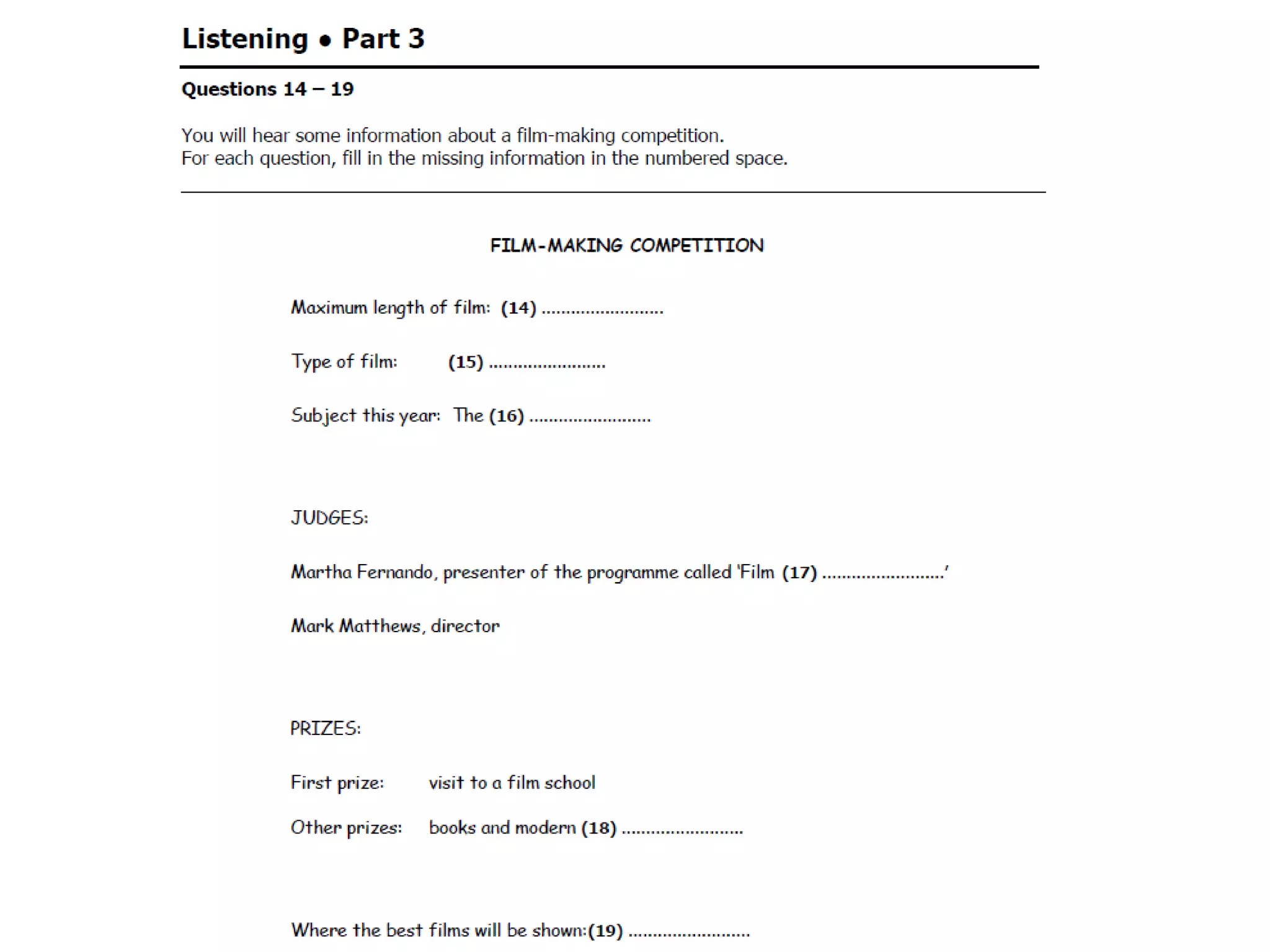
INFORMATIONAL MONOLOGUE

INSTRUCTIONS:
INSTRUCTIONS:
1st: listen to the monologue
2nd: fill in the gaps with the missing information (words,
numbers or short sentences)
3rd: the text is heard twice.
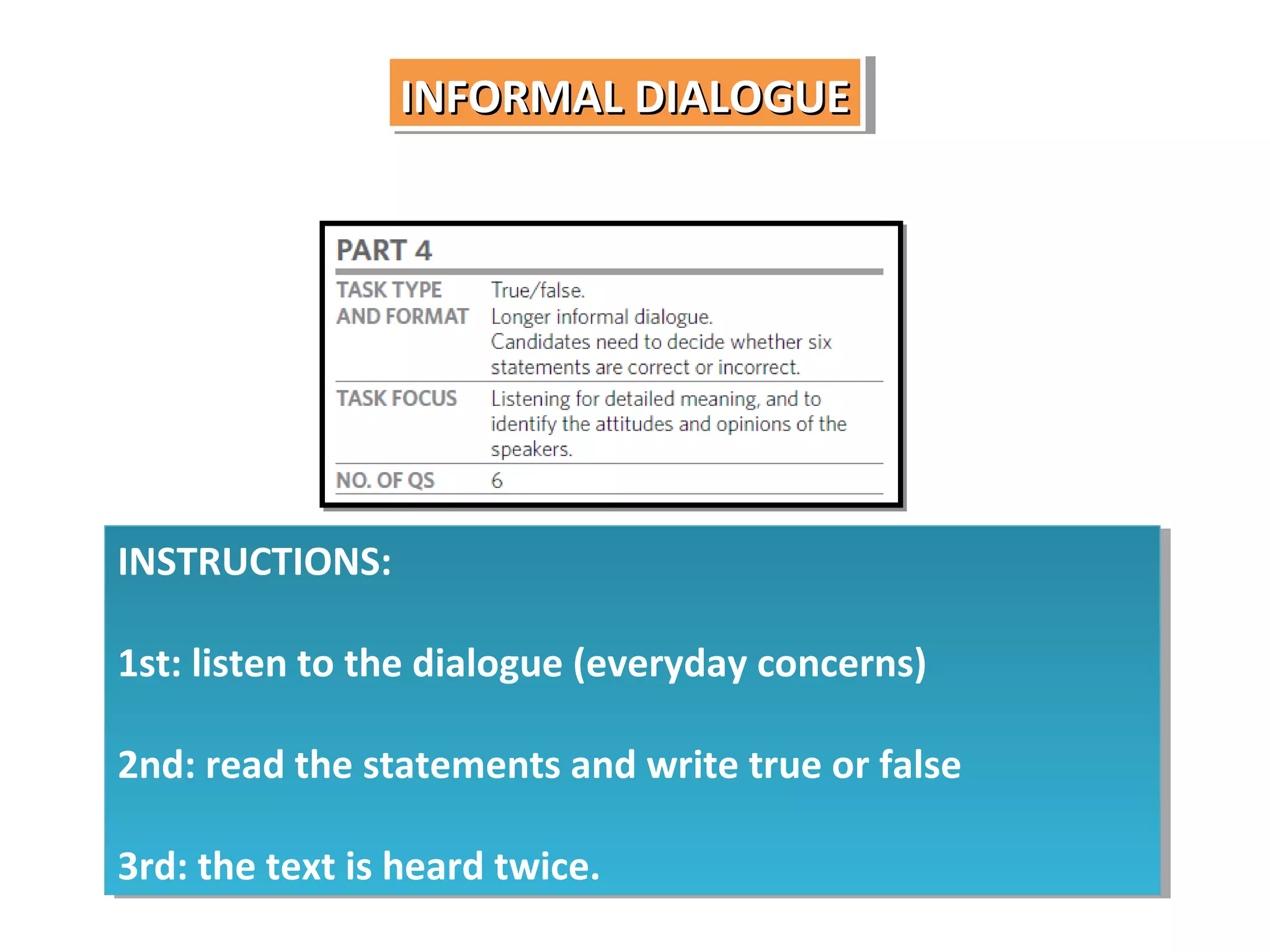
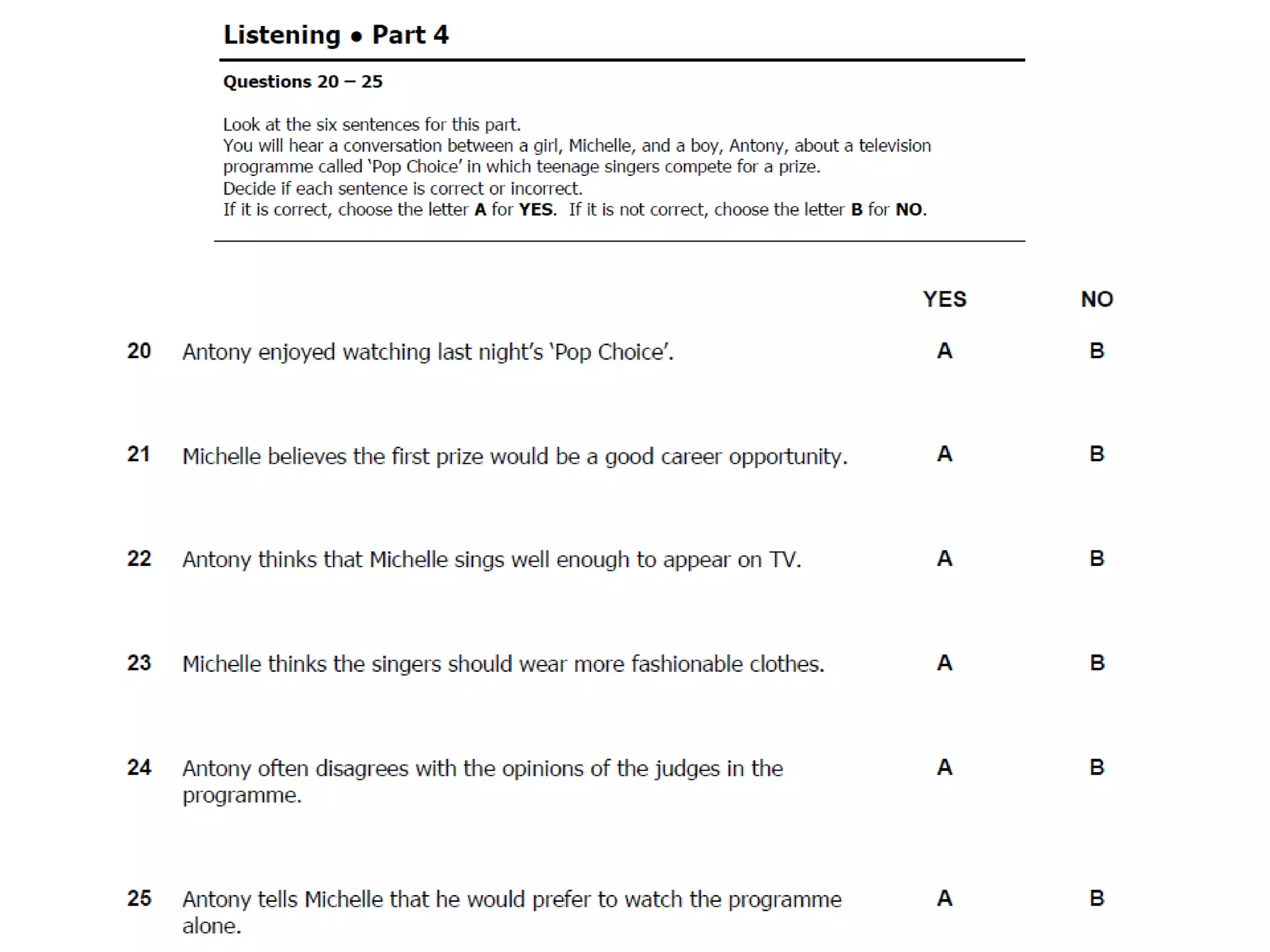
INFORMAL DIALOGUE
INFORMAL DIALOGUE

INSTRUCTIONS:
INSTRUCTIONS:
1st: listen to the dialogue (everyday concerns)
2nd: read the statements and write true or false
3rd: the text is heard twice.
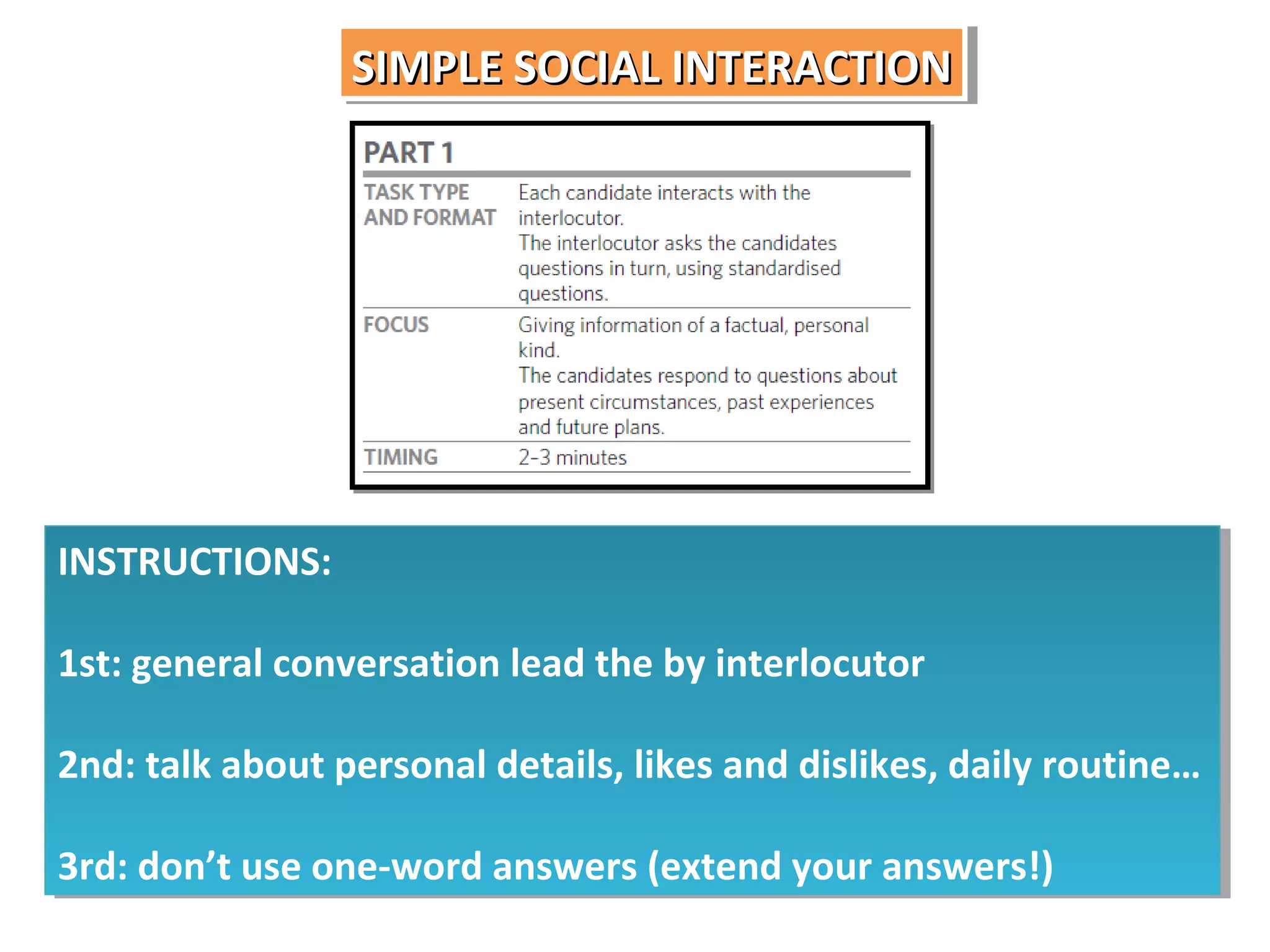
SIMPLE SOCIAL INTERACTION

INSTRUCTIONS:
INSTRUCTIONS:
1st: general conversation lead the by interlocutor
2nd: talk about personal details, likes and dislikes, daily routine…
3rd: don’t use one-word answers (extend your answers!)
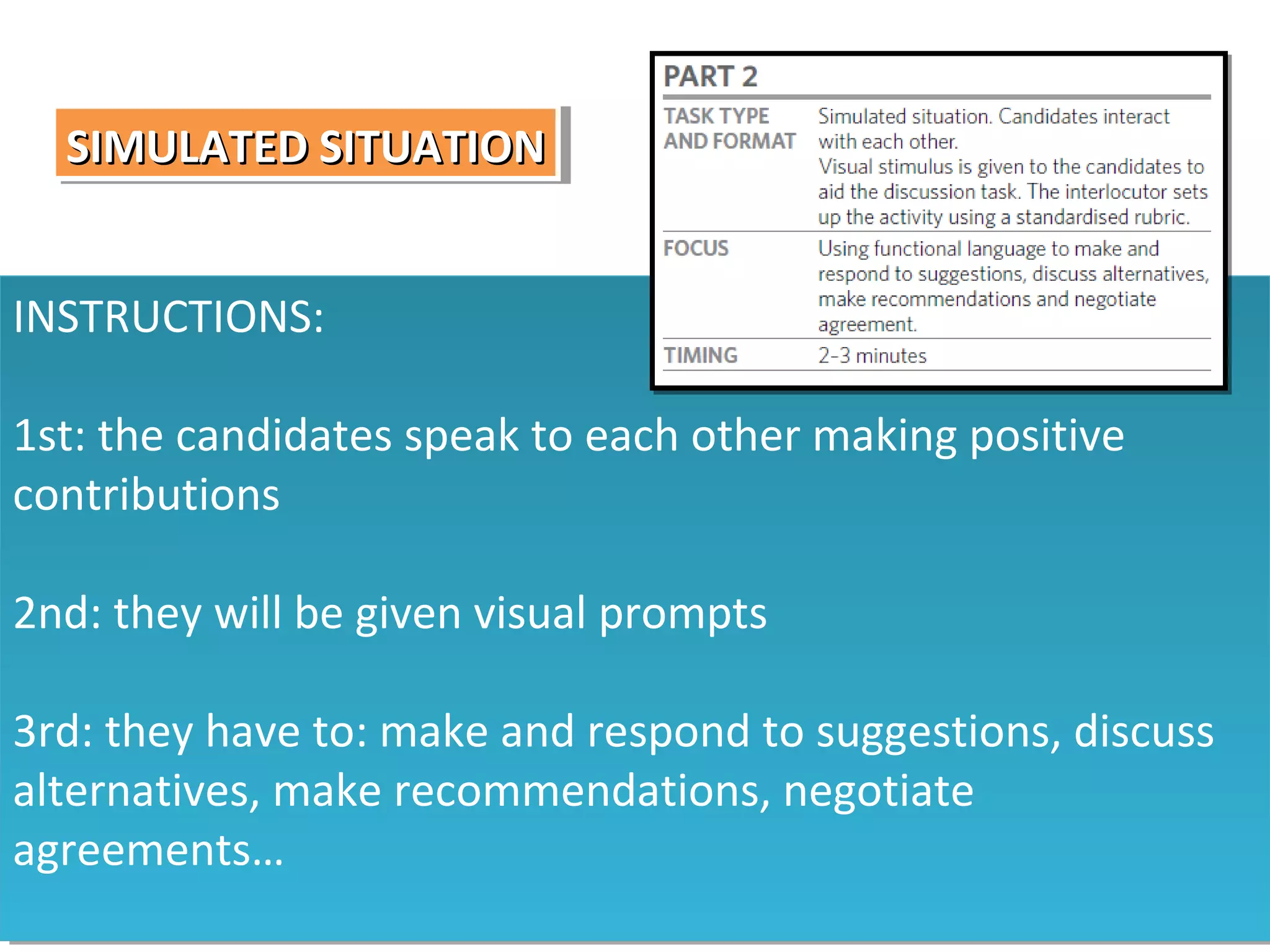
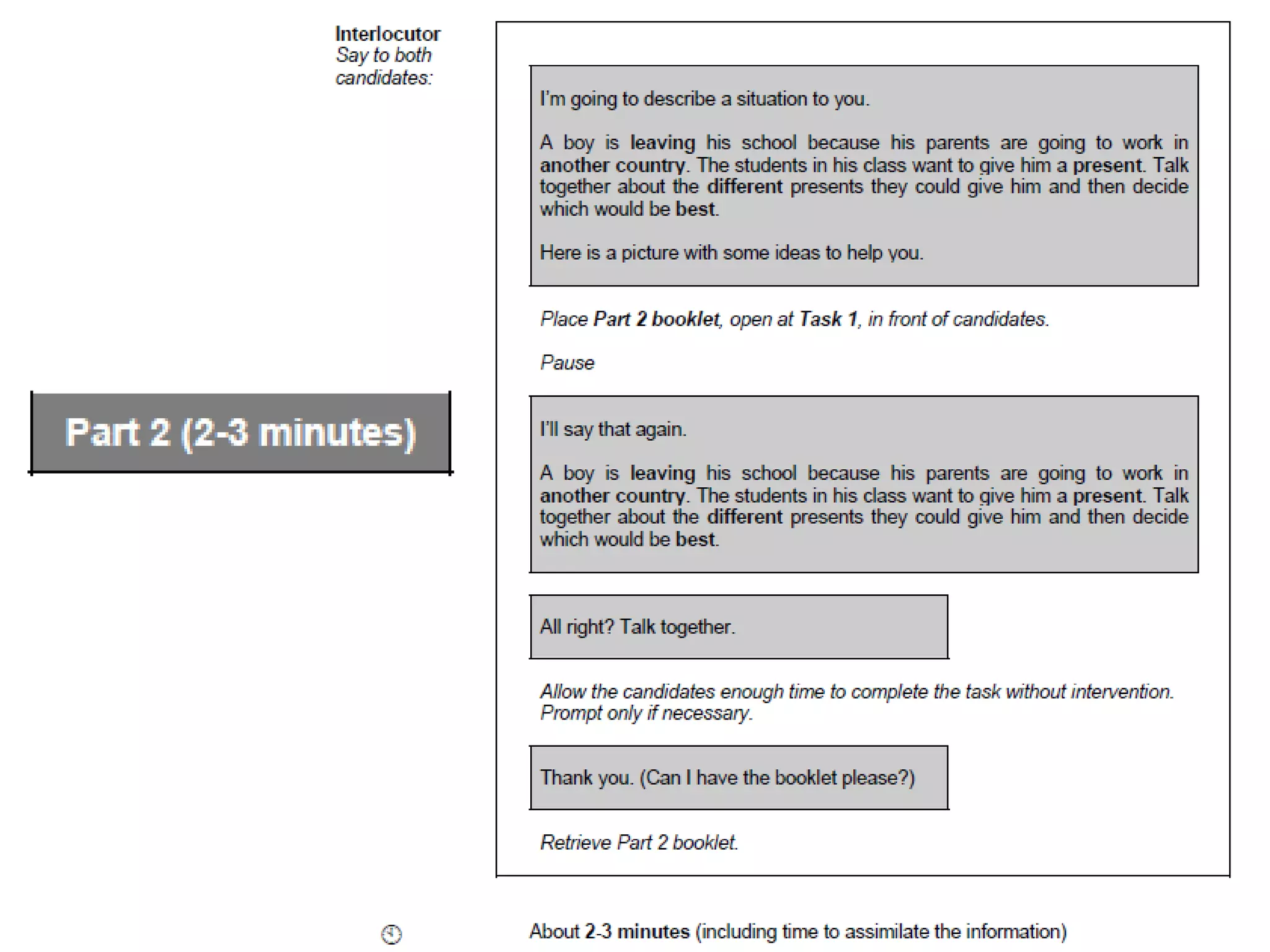
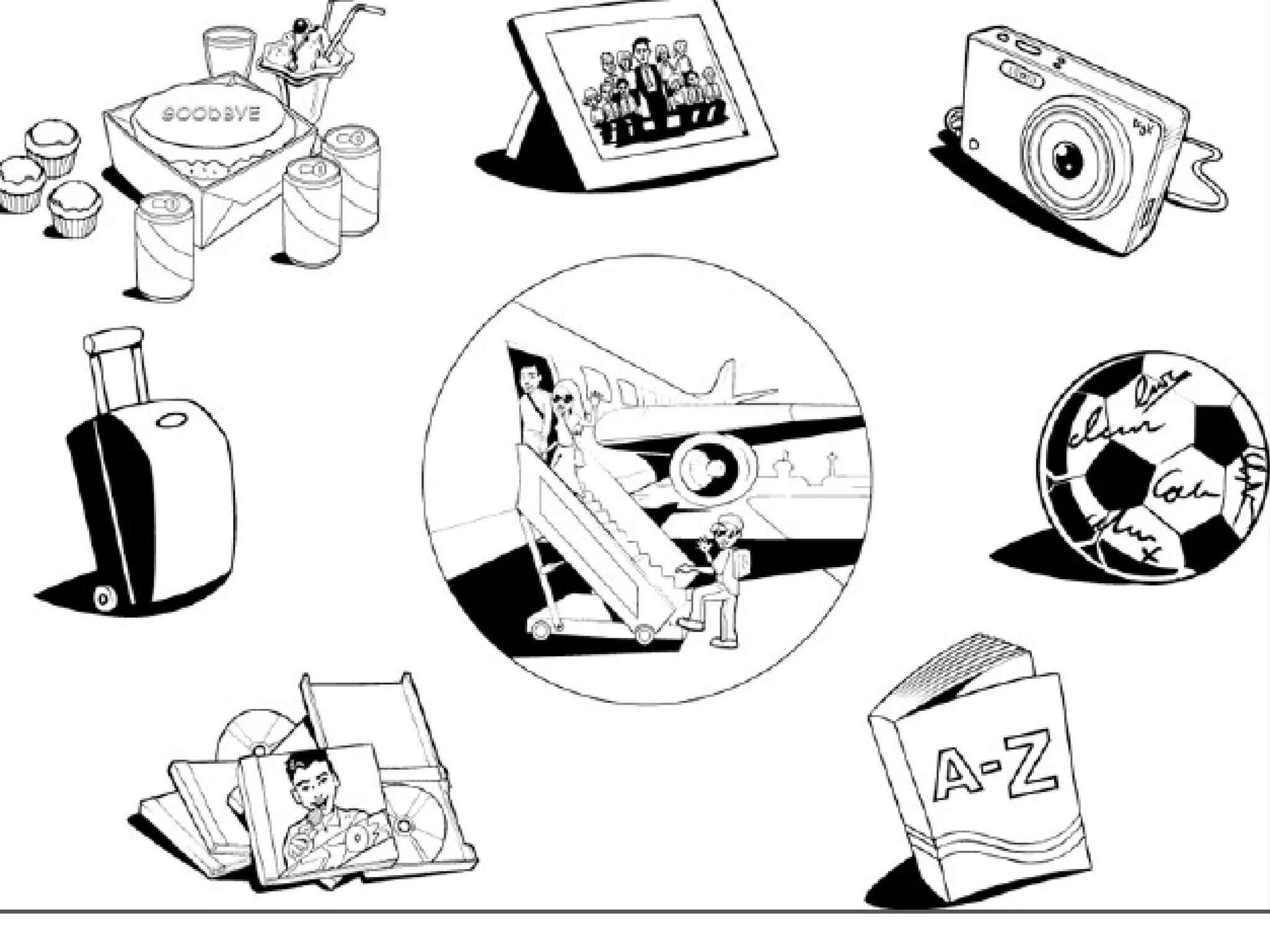
SIMULATED SITUATION
SIMULATED SITUATION
INSTRUCTIONS:
INSTRUCTIONS:
1st: the candidates speak to each other making positive
contributions
contributions
2nd: they will be given visual prompts
3rd: they have to: make and respond to suggestions, discuss
alternatives, make recommendations, negotiate
agreements…
agreements…
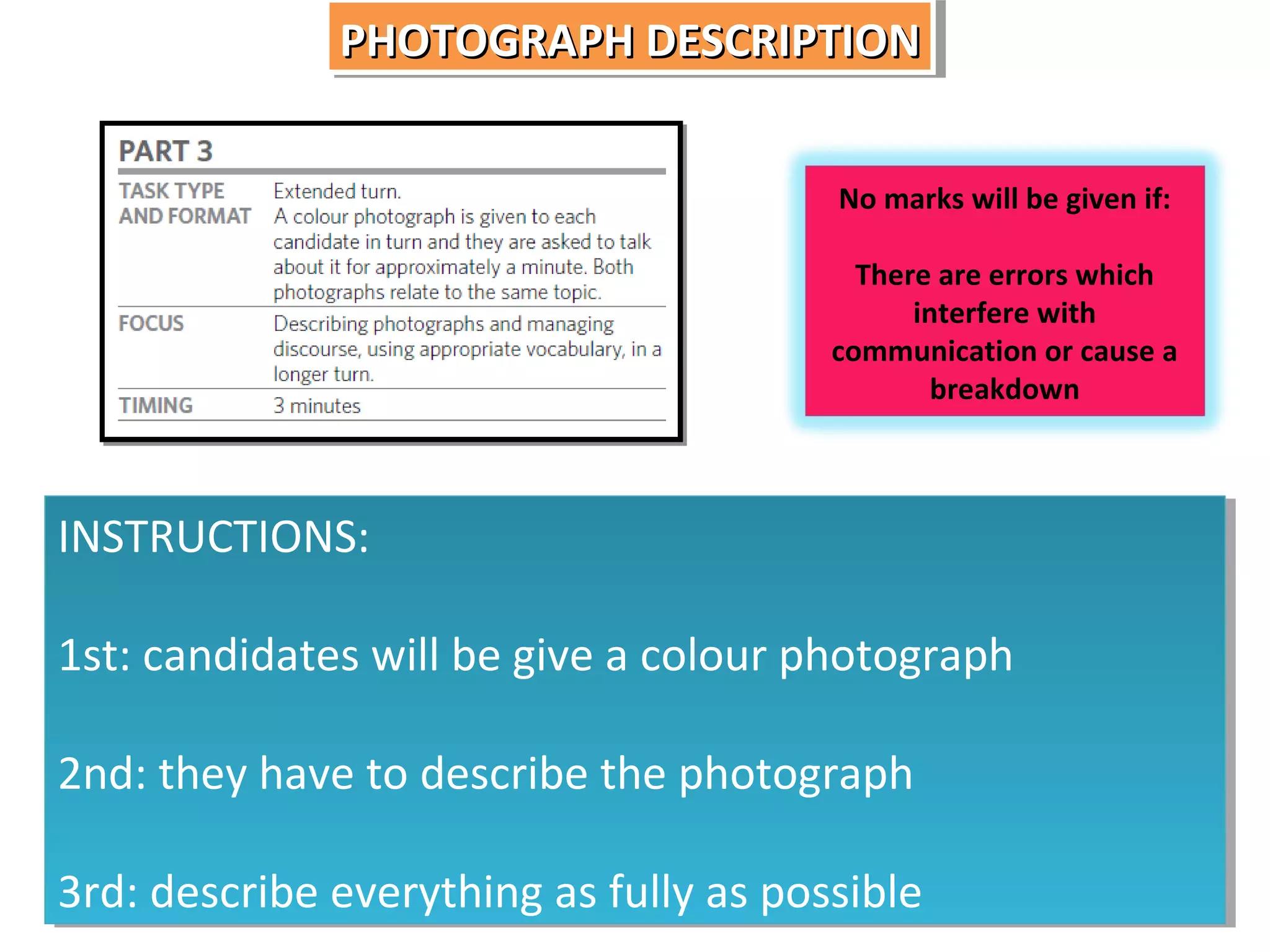
PHOTOGRAPH DESCRIPTION
No marks will be given if:
There are errors which
interfere with
communication or cause a
breakdown

INSTRUCTIONS:
INSTRUCTIONS:
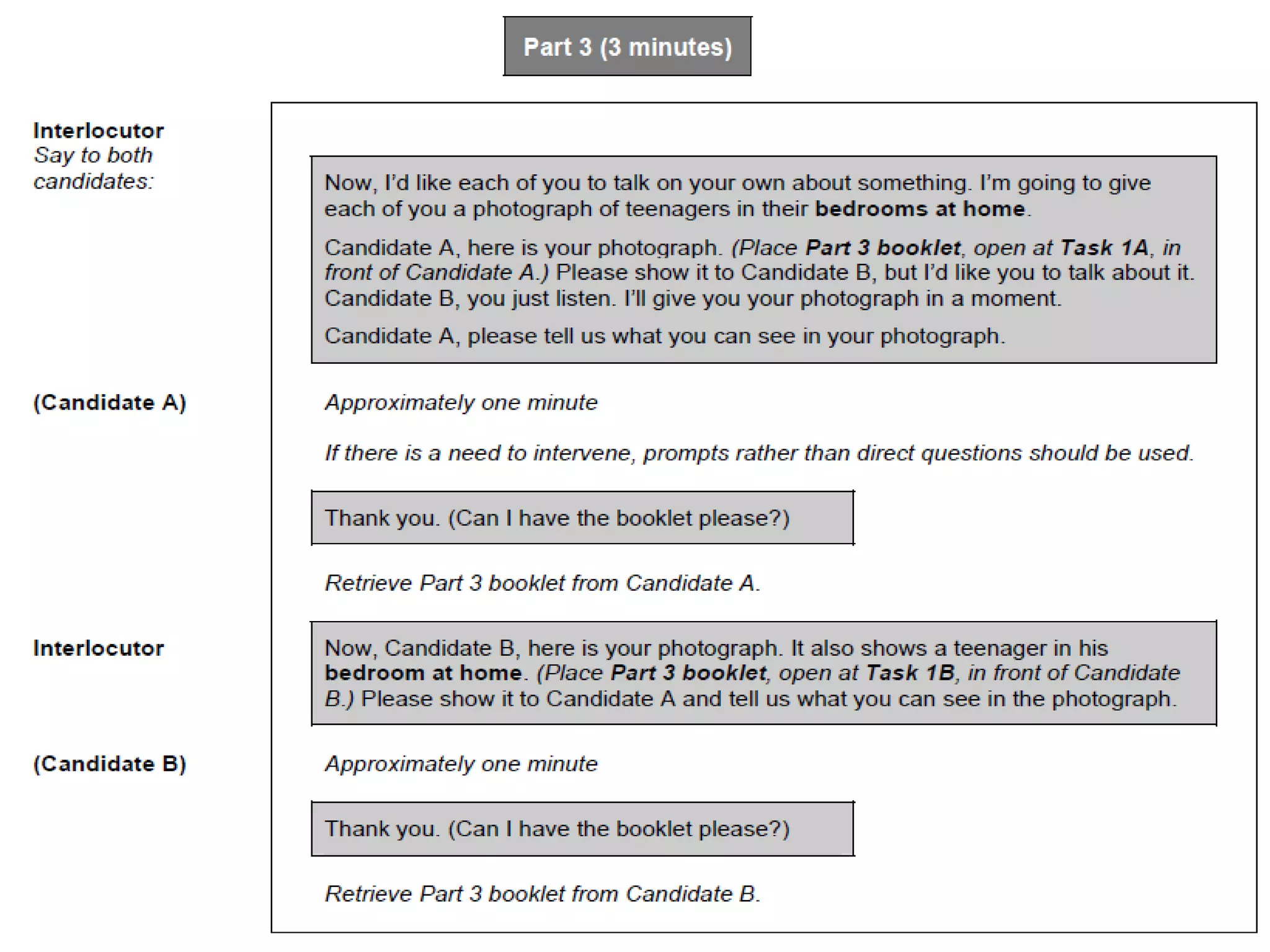
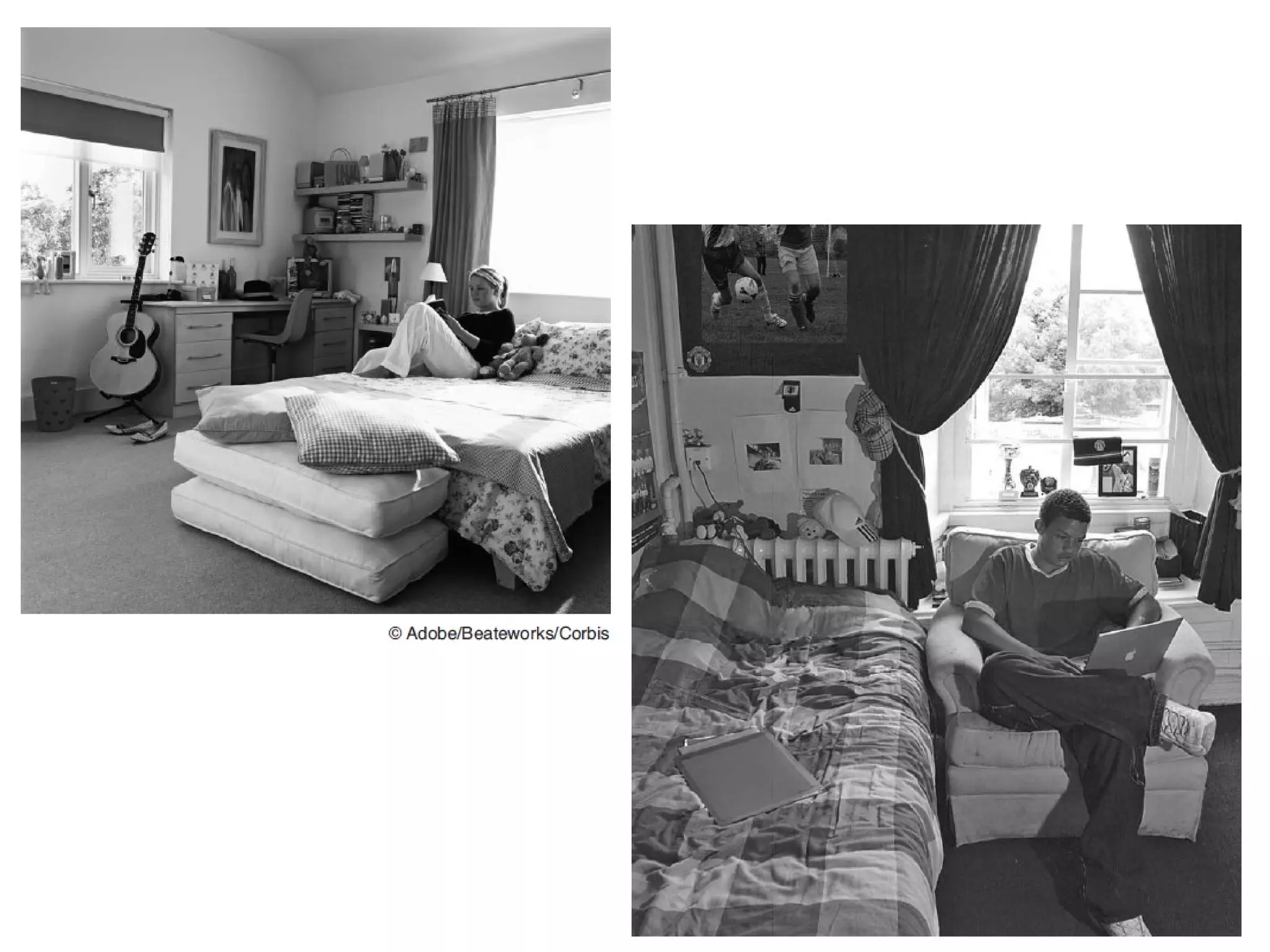
1st: candidates will be give a colour photograph
2nd: they have to describe the photograph
3rd: describe everything as fully as possible
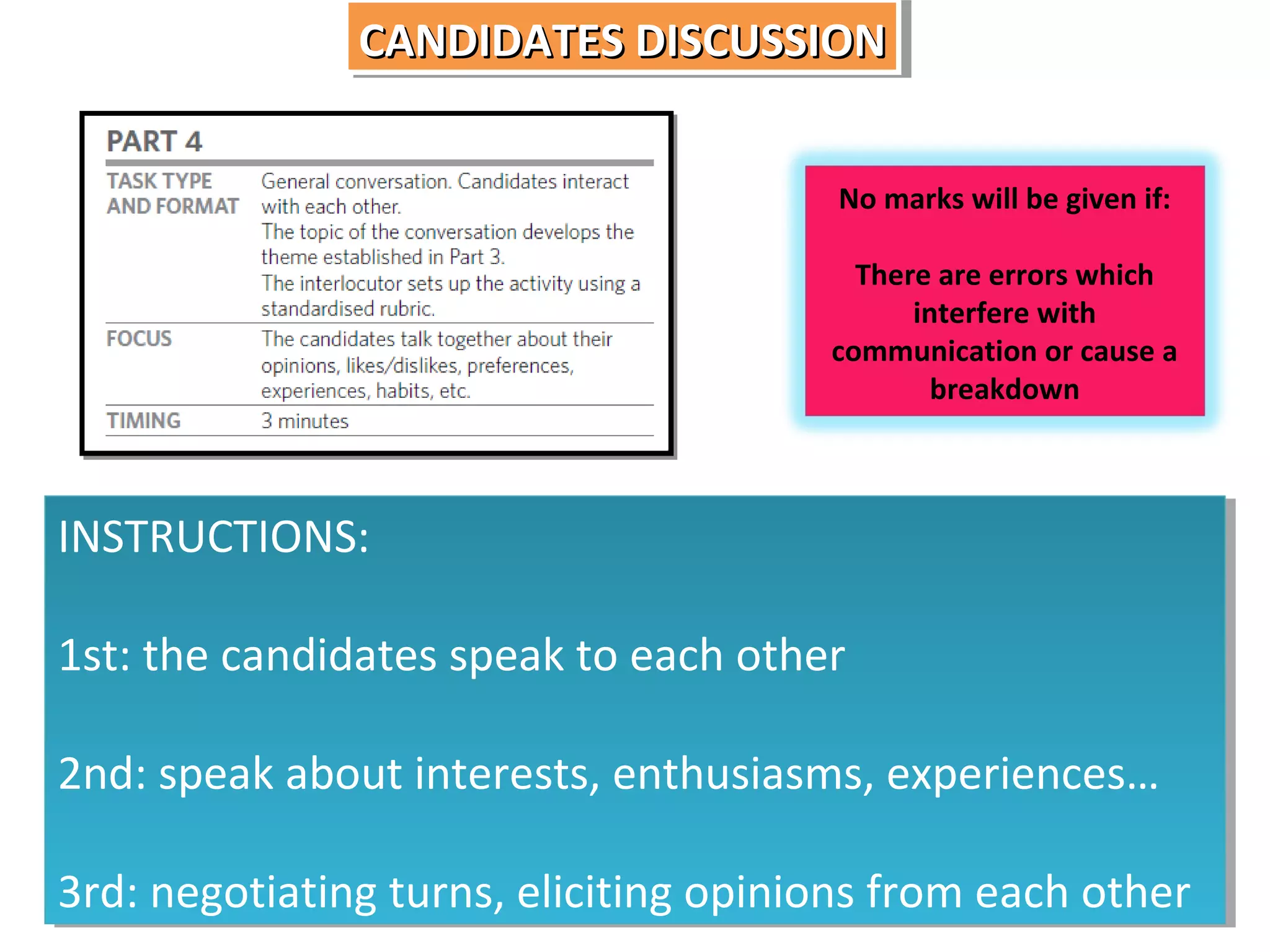
CANDIDATES DISCUSSION
No marks will be given if:
There are errors which
interfere with
communication or cause a
breakdown

INSTRUCTIONS:
INSTRUCTIONS:
1st: the candidates speak to each other
2nd: speak about interests, enthusiasms, experiences…
3rd: negotiating turns, eliciting opinions from each other
INFORMATION AND SAMPLE PAPERS
PET: http://www.cambridgeenglish.org/exams-and-qualifications/preliminary-for-schools/howPET: http://www.cambridgeenglish.org/exams-and-qualifications/preliminary-for-schools/howto-prepare/
to-prepare/
KET:http://www.cambridgeenglish.org/exams-and-qualifications/key-for-schools/how-toKET:http://www.cambridgeenglish.org/exams-and-qualifications/key-for-schools/how-toprepare/
prepare/

HANDBOOK
HANDBOOK
PET:https://www.teachers.cambridgeesol.org/ts/digitalAssets/117582_Preliminary_for_Schools
_Handbook.pdf
_Handbook.pdf
KET:https://www.teachers.cambridgeesol.org/ts/digitalAssets/117394_Cambridge_English_Key
__KET__for_Schools_Handbook.pdf

VOCABULARY LIST
VOCABULARY LIST
PET:http://www.cambridgeenglish.org/images/84669-vocabulary-list.pdf
KET:http://www.cambridgeenglish.org/images/22105-ket-vocabulary-list.pdf

Pet and Ket explanation for students in Year 6

  • 3.
    Bilingual program •1 hourof English everyday •Some subjects can be taught in English •Flexible groups according to the students’ levels •Field trips in English Bilingual section •1 hour of English everyday •In the 1st year of secondary school social science, geography, history and natural science will be taught in English. •All the subjects can be in English except for: Matemáticas, Lengua Castellana y Literatura, and second language.
  • 4.
    BILINGUAL SECONDARY SCHOOL: -PETy KET certificate: go to a bilingual secondary school -Mark higher than70%: CERTIFICATE PET (B1) -Mark between 70-45%, level A2 (go to a bilingual secondary school) -Mark 44% or below: go to a bilingual secondary school, but only bilingual programs, not bilingual section.
  • 6.
    GRADING GRADING 1. Reading andwriting: 50% of the total mark 1. Reading and writing: 50% of the total mark 2. Listening: 25% of the total mark 2. Listening: 25% of the total mark 3. Speaking: 25% of the total mark 3. Speaking: 25% of the total mark
  • 7.
    CERTIFICATES CERTIFICATES Pass with distinction:level B1 Pass with distinction: level B1 Pass with merit or pass: level A2 Pass with merit or pass: level A2 Fail but falls within level A1: level A1 Fail but falls within level A1: level A1
  • 11.
    UNDERSTANDING OF SHORTTEXTS UNDERSTANDING OF SHORT TEXTS Communicative texts (signs, notice, short texts…) INSTRUCTIONS: INSTRUCTIONS: 1st: read the texts 1st: read the texts 2nd: read the sentences 2nd: read the sentences 3rd: match 5 sentences to the appropriate sign or notice. 3rd: match 5 sentences to the appropriate sign or notice.
  • 13.
    KNOWLEDGE OF VOCABULARY KNOWLEDGEOF VOCABULARY INSTRUCTIONS: INSTRUCTIONS: 1st: read the 6 sentences 1st: read the 6 sentences 2nd: think about suitable words to fill in the gaps 2nd: think about suitable words to fill in the gaps 3rd: 3 options provided for each gap 3rd: 3 options provided for each gap
  • 15.
    UNDERSTAND DAILY ROUTINES UNDERSTANDDAILY ROUTINES Study and social situations in a daily life. INSTRUCTIONS: INSTRUCTIONS: 1st: read 10 questions 1st: read 10 questions 2nd: complete 5 conversations (3 options multiple choice) 2nd: complete 5 conversations (3 options multiple choice) 3rd: complete a dialogue (8 options) 3rd: complete a dialogue (8 options)
  • 18.
    UNDERSTAND THE MAINIDEA AND SOME DETAILS OF LONGER TEXTS UNDERSTAND THE MAIN IDEA AND SOME DETAILS OF LONGER TEXTS Newspapers, magazines, short stories… INSTRUCTIONS: INSTRUCTIONS: 1st: read the text 1st: read the text 2nd::read the questions about the text 2nd read the questions about the text 3rd: answer the questions (3 multiple choice). 3rd: answer the questions (3 multiple choice).
  • 20.
    KNOWLEDGE OF GRAMMATICALSTRUCTURES KNOWLEDGE OF GRAMMATICAL STRUCTURES Newspapers, magazines, short stories, encyclopedias… INSTRUCTIONS: INSTRUCTIONS: 1st: read the text 1st: read the text 2nd: complete the text by choosing the appropriate words (3 options) 2nd: complete the text by choosing the appropriate words (3 options) 3rd: verb forms, determiners, pronouns, prepositions and conjunctions 3rd: verb forms, determiners, pronouns, prepositions and conjunctions
  • 23.
    VOCABULARY PRODUCTION (SPELLING) VOCABULARYPRODUCTION (SPELLING) Food, school things, freetime activities… INSTRUCTIONS: INSTRUCTIONS: 1st: read the definitions 1st: read the definitions 2nd: check the first letter of the word and the dashes (_ _ _ _) 2nd: check the first letter of the word and the dashes (_ _ _ _) 3rd: think about a suitable word for that definition 3rd: think about a suitable word for that definition
  • 25.
    COMPLETE A GAPPEDTEXT COMPLETE A GAPPED TEXT The texts are notes, emails, short letters… INSTRUCTIONS: INSTRUCTIONS: 1st: read the text 1st: read the text 2nd: write suitable words in the gaps 2nd: write suitable words in the gaps 3rd: Spelling mistakes are not allowed! 3rd: Spelling mistakes are not allowed!
  • 27.
    COMPLETE INFORMATION COMPLETE INFORMATION Nomarks will be given if: 1.Spelling mistakes INSTRUCTIONS: INSTRUCTIONS: 1st: read 2 short texts 1st: read 2 short texts 2nd: use the information in the texts to complete a note, form, diary 2nd: use the information in the texts to complete a note, form, diary entry… entry… 3rd: similar to note taking 3rd: similar to note taking
  • 29.
    COMMUNICATIVE MESSAGE COMMUNICATIVE MESSAGE Notes,emails, postcards to a friend… INSTRUCTIONS: INSTRUCTIONS: 1st: read the 3 prompts 1st: read the 3 prompts 2nd: write 25-35 words 2nd: write 25-35 words 3rd: make sure you address those prompts! 3rd: make sure you address those prompts!
  • 37.
    IDENTIFY SIMPLE FACTSIN SHORT LISTENING TEXTS IDENTIFY SIMPLE FACTS IN SHORT LISTENING TEXTS INSTRUCTIONS: INSTRUCTIONS: 1st: listen to 5 short conversations 1st: listen to 5 short conversations 2nd: information is about prices, numbers, times, dates, 2nd: information is about prices, numbers, times, dates, locations, directions, sizes, weather, descriptions of people, locations, directions, sizes, weather, descriptions of people, current actions… current actions… 3rd: choose the right visual image 3rd: choose the right visual image
  • 40.
    IDENTIFY SIMPLE FACTSIN A LONG CONVERSATION IDENTIFY SIMPLE FACTS IN A LONG CONVERSATION INSTRUCTIONS: INSTRUCTIONS: 1st: listen to the conversation 1st: listen to the conversation 2nd: information about personal interests, experiences, daily life, 2nd: information about personal interests, experiences, daily life, free-time activities… free-time activities… 3rd: match two lists of items 3rd: match two lists of items
  • 42.
    IDENTIFY SIMPLE FACTSIN A LONG CONVERSATION IDENTIFY SIMPLE FACTS IN A LONG CONVERSATION INSTRUCTIONS: INSTRUCTIONS: 1st: listen to the informal conversation (personal interests) 1st: listen to the informal conversation (personal interests) 2nd: answer 5 multiple-choice questions 2nd: answer 5 multiple-choice questions 3rd: 3 options in each question 3rd: 3 options in each question
  • 44.
    EXTRACT SPECIFIC FACTS EXTRACTSPECIFIC FACTS INSTRUCTIONS: INSTRUCTIONS: 1st: listen to the dialogue/ monologue (shops, schools…) 1st: listen to the dialogue/ monologue (shops, schools…) 2nd: extract information and write it down 2nd: extract information and write it down 3rd: write numbers, times, dates, prices, spellings and words 3rd: write numbers, times, dates, prices, spellings and words
  • 46.
    EXTRACT SPECIFIC FACTS EXTRACTSPECIFIC FACTS INSTRUCTIONS: INSTRUCTIONS: 1st: listen to the dialogue/ monologue (shops, schools…) 1st: listen to the dialogue/ monologue (shops, schools…) 2nd: extract information and write it down 2nd: extract information and write it down 3rd: write numbers, times, dates, prices, spellings and words 3rd: write numbers, times, dates, prices, spellings and words
  • 53.
    SIMPLE SOCIAL INTERACTION SIMPLESOCIAL INTERACTION INSTRUCTIONS: INSTRUCTIONS: 1st: general conversation lead the by interlocutor 1st: general conversation lead the by interlocutor 2nd: talk about personal details (spell their names), country of 2nd: talk about personal details (spell their names), country of origin, subject of study, family, home town, school, free time origin, subject of study, family, home town, school, free time activities, likes and dislikes… activities, likes and dislikes… 3rd: don’t use one-word answers (extend your answers!) 3rd: don’t use one-word answers (extend your answers!)
  • 55.
    CANDIDATES INTERACTION CANDIDATES INTERACTION INSTRUCTIONS: INSTRUCTIONS: 1st:the candidates speak to each other making positive 1st: the candidates speak to each other making positive contributions contributions 2nd: they will be given prompts cards 2nd: they will be given prompts cards 3rd: they have to: ask and answer questions about daily life, 3rd: they have to: ask and answer questions about daily life, leisure activities and social life leisure activities and social life
  • 60.
    GRADING GRADING 1. Reading andwriting: 50% of the total mark 1. Reading and writing: 50% of the total mark 2. Listening: 25% of the total mark 2. Listening: 25% of the total mark 3. Speaking: 25% of the total mark 3. Speaking: 25% of the total mark
  • 61.
    CERTIFICATES CERTIFICATES Pass with distinction:level B2 Pass with distinction: level B2 Pass with merit or pass: level B1 Pass with merit or pass: level B1 Fail but falls within level A2: level A2 Fail but falls within level A2: level A2
  • 65.
    UNDERSTANDING OF VARIOUSTEXTS UNDERSTANDING OF VARIOUS TEXTS Communicative texts (emails, notes, cards, postcards…), notices, signs, packing information (food package)… INSTRUCTIONS: INSTRUCTIONS: 1st: read the text 1st: read the text 2nd: read the answers 2nd: read the answers 3rd: reread both the text and the choice of answer 3rd: reread both the text and the choice of answer
  • 67.
    DETAILED COMPREHENSION OFFACTUAL TEXTS DETAILED COMPREHENSION OF FACTUAL TEXTS Goods or services (purchasing books, visiting museums, choosing activities…) INSTRUCTIONS: INSTRUCTIONS: 1st: read the 5 descriptions of people 1st: read the 5 descriptions of people 2nd: read the 8 texts carefully (underlining matches) 2nd: read the 8 texts carefully (underlining matches) 3rd: No word spotting! (quick word matches) 3rd: No word spotting! (quick word matches)
  • 69.
    DETAILED INFORMATION ONA LONG FACTUAL TEXT DETAILED INFORMATION ON A LONG FACTUAL TEXT Brochures, advertisements on magazines, websites information… INSTRUCTIONS: INSTRUCTIONS: 1st: read 10 questions about the text 1st: read 10 questions about the text 2nd: read the text carefully (looking for the answers) 2nd: read the text carefully (looking for the answers) 3rd: don’t be put off by unfamiliar vocabulary! 3rd: don’t be put off by unfamiliar vocabulary!
  • 71.
    DETAILED INFORMATION ABOUTAN OPINION OR ATTITUDE TEXT DETAILED INFORMATION ABOUT AN OPINION OR ATTITUDE TEXT Opinion or attitude of the writer in a long text. INSTRUCTIONS: INSTRUCTIONS: 1st: read 5 multiple choice questions about the text 1st: read 5 multiple choice questions about the text 2nd: read the text carefully (looking for the answers) 2nd: read the text carefully (looking for the answers) 3rd: answer the questions checking the text. 3rd: answer the questions checking the text.
  • 73.
    SELECT THE CORRECTWORDS TO FIT IN SPACES IN A TEXT SELECT THE CORRECT WORDS TO FIT IN SPACES IN A TEXT Vocabulary, grammar (connectives, pronouns, modals, preposition…) INSTRUCTIONS: INSTRUCTIONS: 1st: read the text 1st: read the text 2nd: consider the given example 2nd: consider the given example 3rd: answer the 10 questions (4 multiple choice) 3rd: answer the 10 questions (4 multiple choice)
  • 76.
    GRAMMATICAL PRECISION GRAMMATICAL PRECISION Nomarks will be given if: 1.Spelling mistake 2.More than 3 words INSTRUCTIONS: INSTRUCTIONS: 1st: read the 5 sentences 1st: read the 5 sentences 2nd: read the “gapped” sentences 2nd: read the “gapped” sentences 3rd: write 1-3 words to fill the gaps (the 2 sentences should have the 3rd: write 1-3 words to fill the gaps (the 2 sentences should have the same meaning) same meaning)
  • 78.
    COMMUNICATIVE MESSAGE COMMUNICATIVE MESSAGE Nomarks will be given if: 1.They miss one content point 2.Superfluous information INSTRUCTIONS: INSTRUCTIONS: 1st: read the 3 content points 1st: read the 3 content points 2nd: write a communicative message between 35-45 words 2nd: write a communicative message between 35-45 words 3rd: the 3 given points should be included in the message. 3rd: the 3 given points should be included in the message.
  • 80.
    100 WORDS WRITING:LETTER OR STORY 100 WORDS WRITING: LETTER OR STORY No marks will be given if: There are errors which interfere with communication or cause a breakdown INSTRUCTIONS: INSTRUCTIONS: 1st: choose between the story or the letter 1st: choose between the story or the letter 2nd: STORY (short title or first sentence of the story) 2nd: STORY (short title or first sentence of the story) 3rd: LETTER (extract of a letter to answer) 3rd: LETTER (extract of a letter to answer)
  • 88.
    7 LISTENING TEXTS 7LISTENING TEXTS INSTRUCTIONS: INSTRUCTIONS: 1st: listen to the texts (monologue or dialogue) 1st: listen to the texts (monologue or dialogue) 2nd: choose the right visual image 2nd: choose the right visual image 3rd: the text is heard twice. 3rd: the text is heard twice.
  • 91.
    LONG LISTENING TEXT LONGLISTENING TEXT INSTRUCTIONS: INSTRUCTIONS: 1st: listen to the text (information about places 1st: listen to the text (information about places or events, lives, interests, experiences…) or events, lives, interests, experiences…) 2nd: answer 6 multiple choice questions 2nd: answer 6 multiple choice questions 3rd: the text is heard twice. 3rd: the text is heard twice.
  • 93.
    INFORMATIONAL MONOLOGUE INFORMATIONAL MONOLOGUE INSTRUCTIONS: INSTRUCTIONS: 1st:listen to the monologue 1st: listen to the monologue 2nd: fill in the gaps with the missing information (words, 2nd: fill in the gaps with the missing information (words, numbers or short sentences) numbers or short sentences) 3rd: the text is heard twice. 3rd: the text is heard twice.
  • 95.
    INFORMAL DIALOGUE INFORMAL DIALOGUE INSTRUCTIONS: INSTRUCTIONS: 1st:listen to the dialogue (everyday concerns) 1st: listen to the dialogue (everyday concerns) 2nd: read the statements and write true or false 2nd: read the statements and write true or false 3rd: the text is heard twice. 3rd: the text is heard twice.
  • 102.
    SIMPLE SOCIAL INTERACTION SIMPLESOCIAL INTERACTION INSTRUCTIONS: INSTRUCTIONS: 1st: general conversation lead the by interlocutor 1st: general conversation lead the by interlocutor 2nd: talk about personal details, likes and dislikes, daily routine… 2nd: talk about personal details, likes and dislikes, daily routine… 3rd: don’t use one-word answers (extend your answers!) 3rd: don’t use one-word answers (extend your answers!)
  • 104.
    SIMULATED SITUATION SIMULATED SITUATION INSTRUCTIONS: INSTRUCTIONS: 1st:the candidates speak to each other making positive 1st: the candidates speak to each other making positive contributions contributions 2nd: they will be given visual prompts 2nd: they will be given visual prompts 3rd: they have to: make and respond to suggestions, discuss 3rd: they have to: make and respond to suggestions, discuss alternatives, make recommendations, negotiate alternatives, make recommendations, negotiate agreements… agreements…
  • 107.
    PHOTOGRAPH DESCRIPTION PHOTOGRAPH DESCRIPTION Nomarks will be given if: There are errors which interfere with communication or cause a breakdown INSTRUCTIONS: INSTRUCTIONS: 1st: candidates will be give a colour photograph 1st: candidates will be give a colour photograph 2nd: they have to describe the photograph 2nd: they have to describe the photograph 3rd: describe everything as fully as possible 3rd: describe everything as fully as possible
  • 110.
    CANDIDATES DISCUSSION CANDIDATES DISCUSSION Nomarks will be given if: There are errors which interfere with communication or cause a breakdown INSTRUCTIONS: INSTRUCTIONS: 1st: the candidates speak to each other 1st: the candidates speak to each other 2nd: speak about interests, enthusiasms, experiences… 2nd: speak about interests, enthusiasms, experiences… 3rd: negotiating turns, eliciting opinions from each other 3rd: negotiating turns, eliciting opinions from each other
  • 112.
    INFORMATION AND SAMPLEPAPERS INFORMATION AND SAMPLE PAPERS PET: http://www.cambridgeenglish.org/exams-and-qualifications/preliminary-for-schools/howPET: http://www.cambridgeenglish.org/exams-and-qualifications/preliminary-for-schools/howto-prepare/ to-prepare/ KET:http://www.cambridgeenglish.org/exams-and-qualifications/key-for-schools/how-toKET:http://www.cambridgeenglish.org/exams-and-qualifications/key-for-schools/how-toprepare/ prepare/ HANDBOOK HANDBOOK PET:https://www.teachers.cambridgeesol.org/ts/digitalAssets/117582_Preliminary_for_Schools PET:https://www.teachers.cambridgeesol.org/ts/digitalAssets/117582_Preliminary_for_Schools _Handbook.pdf _Handbook.pdf KET:https://www.teachers.cambridgeesol.org/ts/digitalAssets/117394_Cambridge_English_Key KET:https://www.teachers.cambridgeesol.org/ts/digitalAssets/117394_Cambridge_English_Key __KET__for_Schools_Handbook.pdf __KET__for_Schools_Handbook.pdf VOCABULARY LIST VOCABULARY LIST PET:http://www.cambridgeenglish.org/images/84669-vocabulary-list.pdf PET:http://www.cambridgeenglish.org/images/84669-vocabulary-list.pdf KET:http://www.cambridgeenglish.org/images/22105-ket-vocabulary-list.pdf KET:http://www.cambridgeenglish.org/images/22105-ket-vocabulary-list.pdf