English class. Unit 1
Aprendamos Inglés
¡Vivo en Argentina!  ¿Para qué me sirve?
 ¿Sabes? es una
herramienta de
trabajo y
comunicación
Aprendamos
 Necesitamos saber el significado de
términos en Inglés que usamos a diario.
 Necesitamos comunicarnos.
Pronombres + Verb “to be” (ser/estar)
 I am [yo soy /estoy]
 You are [usted es / está]
 He is [él es / está]
 She is [ella es / está]
 It is [ello es/ está]
 We are [nosotros somos/estamos]
 You are [ustedes son / están]
 They are [ellos son/ están]
Verb To Be
 Nota las formas contraídas del verbo “to be”
 Am -- ‘m
 Is -- ‘s
 Are -- ‘re
Puedes usarlas en vez de las formas completas.
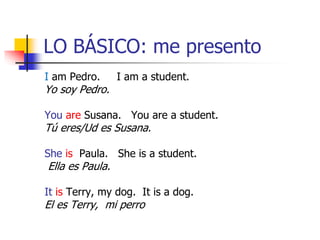
LO BÁSICO: me presento
I am Pedro. I am a student.
Yo soy Pedro.
You are Susana. You are a student.
Tú eres/Ud es Susana.
She is Paula. She is a student.
Ella es Paula.
It is Terry, my dog. It is a dog.
El es Terry, mi perro
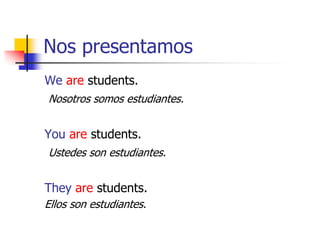
Nos presentamos
We are students.
Nosotros somos estudiantes.
You are students.
Ustedes son estudiantes.
They are students.
Ellos son estudiantes.
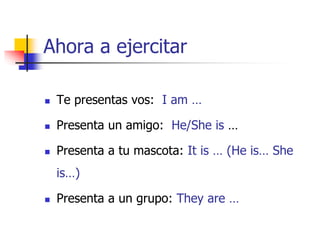
Ahora a ejercitar
 Te presentas vos: I am …
 Presenta un amigo: He/She is …
 Presenta a tu mascota: It is … (He is… She
is…)
 Presenta a un grupo: They are …
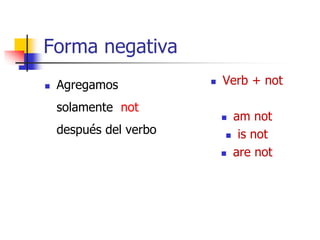
Forma negativa
 Agregamos
solamente not
después del verbo
 Verb + not
 am not
 is not
 are not
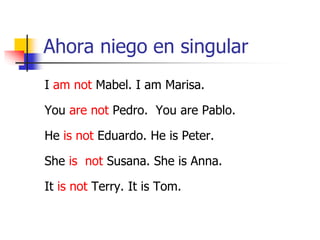
Ahora niego en singular
I am not Mabel. I am Marisa.
You are not Pedro. You are Pablo.
He is not Eduardo. He is Peter.
She is not Susana. She is Anna.
It is not Terry. It is Tom.
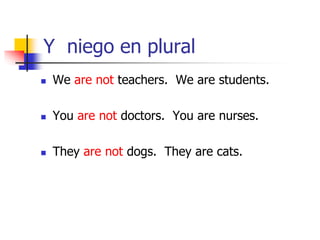
Y niego en plural
 We are not teachers. We are students.
 You are not doctors. You are nurses.
 They are not dogs. They are cats.
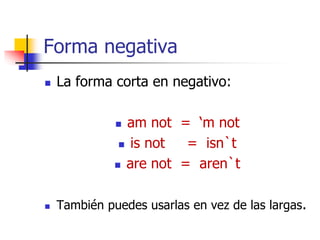
Forma negativa
 La forma corta en negativo:
 am not = ‘m not
 is not = isn`t
 are not = aren`t
 También puedes usarlas en vez de las largas.
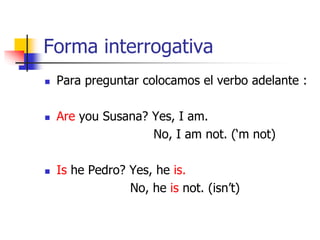
Forma interrogativa
 Para preguntar colocamos el verbo adelante :
 Are you Susana? Yes, I am.
No, I am not. (‘m not)
 Is he Pedro? Yes, he is.
No, he is not. (isn’t)
Otros ejemplos
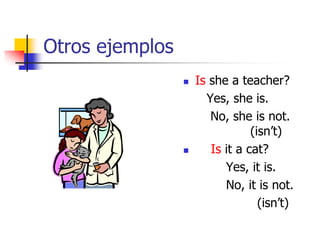
 Is she a teacher?
Yes, she is.
No, she is not.
(isn’t)
 Is it a cat?
Yes, it is.
No, it is not.
(isn’t)
Otros ejemplos
• Are they in class?
Yes, they are
No, they are not (aren’t)
• Are we in classroom 4?
Yes, we are
No, we aren’t
Ahora contesta …
 Are you a student?
 Are you an artist?
 Is Madonna a singer?
 Is Ricky Martin a painter?
 Are the students in class?
 Are “Los Nocheros” in Salta?
Solicitamos información…
 Anteponemos palabras con wh:
Where are you from?
I am from Argentina.
Where are they from?
They are from Brazil.
Solicitamos información
 Where is he from?
He is from Spain.
 Where is she from?
She is from the USA.
Ahora a practicar…
BUENA SUERTE…
GOOD LUCK !!!!
Material preparado por:
Prof. Alicia Ocampo
Año 2020
SEAS

Verbo to be elementary

  • 1.
  • 2.
    Aprendamos Inglés ¡Vivo enArgentina!  ¿Para qué me sirve?  ¿Sabes? es una herramienta de trabajo y comunicación
  • 3.
    Aprendamos  Necesitamos saberel significado de términos en Inglés que usamos a diario.  Necesitamos comunicarnos.
  • 4.
    Pronombres + Verb“to be” (ser/estar)  I am [yo soy /estoy]  You are [usted es / está]  He is [él es / está]  She is [ella es / está]  It is [ello es/ está]  We are [nosotros somos/estamos]  You are [ustedes son / están]  They are [ellos son/ están]
  • 5.
    Verb To Be Nota las formas contraídas del verbo “to be”  Am -- ‘m  Is -- ‘s  Are -- ‘re Puedes usarlas en vez de las formas completas.
  • 6.
    LO BÁSICO: mepresento I am Pedro. I am a student. Yo soy Pedro. You are Susana. You are a student. Tú eres/Ud es Susana. She is Paula. She is a student. Ella es Paula. It is Terry, my dog. It is a dog. El es Terry, mi perro
  • 7.
    Nos presentamos We arestudents. Nosotros somos estudiantes. You are students. Ustedes son estudiantes. They are students. Ellos son estudiantes.
  • 8.
    Ahora a ejercitar Te presentas vos: I am …  Presenta un amigo: He/She is …  Presenta a tu mascota: It is … (He is… She is…)  Presenta a un grupo: They are …
  • 9.
    Forma negativa  Agregamos solamentenot después del verbo  Verb + not  am not  is not  are not
  • 10.
    Ahora niego ensingular I am not Mabel. I am Marisa. You are not Pedro. You are Pablo. He is not Eduardo. He is Peter. She is not Susana. She is Anna. It is not Terry. It is Tom.
  • 11.
    Y niego enplural  We are not teachers. We are students.  You are not doctors. You are nurses.  They are not dogs. They are cats.
  • 12.
    Forma negativa  Laforma corta en negativo:  am not = ‘m not  is not = isn`t  are not = aren`t  También puedes usarlas en vez de las largas.
  • 13.
    Forma interrogativa  Parapreguntar colocamos el verbo adelante :  Are you Susana? Yes, I am. No, I am not. (‘m not)  Is he Pedro? Yes, he is. No, he is not. (isn’t)
  • 14.
    Otros ejemplos  Isshe a teacher? Yes, she is. No, she is not. (isn’t)  Is it a cat? Yes, it is. No, it is not. (isn’t)
  • 15.
    Otros ejemplos • Arethey in class? Yes, they are No, they are not (aren’t) • Are we in classroom 4? Yes, we are No, we aren’t
  • 16.
    Ahora contesta … Are you a student?  Are you an artist?  Is Madonna a singer?  Is Ricky Martin a painter?  Are the students in class?  Are “Los Nocheros” in Salta?
  • 17.
    Solicitamos información…  Anteponemospalabras con wh: Where are you from? I am from Argentina. Where are they from? They are from Brazil.
  • 18.
    Solicitamos información  Whereis he from? He is from Spain.  Where is she from? She is from the USA.
  • 19.
    Ahora a practicar… BUENASUERTE… GOOD LUCK !!!!
  • 20.
    Material preparado por: Prof.Alicia Ocampo Año 2020 SEAS