Verbo to be
Teacher Larissa Pinheiro
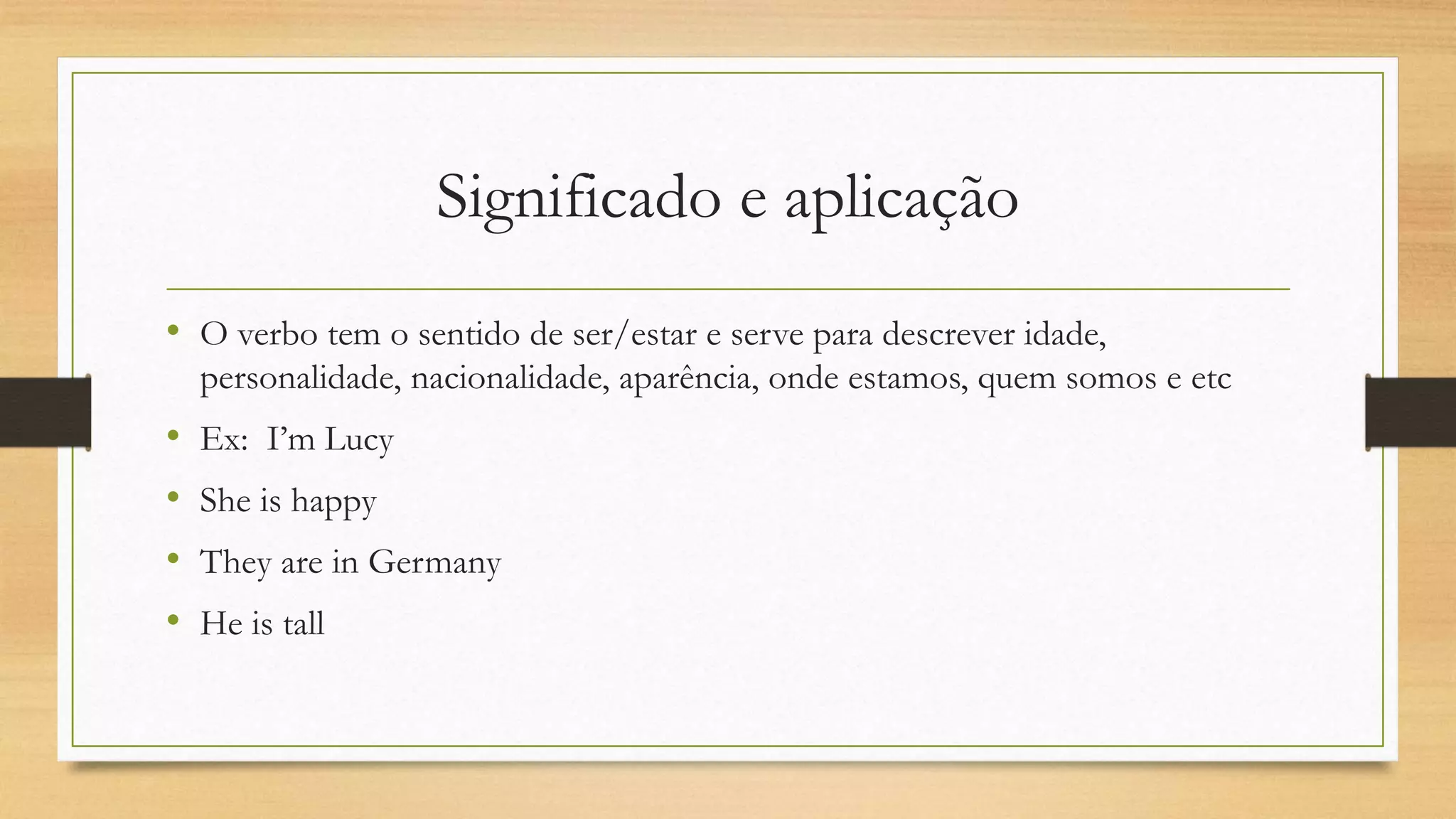
Significado e aplicação
• O verbo tem o sentido de ser/estar e serve para descrever idade,
personalidade, nacionalidade, aparência, onde estamos, quem somos e etc
• Ex: I’m Lucy
• She is happy
• They are in Germany
• He is tall
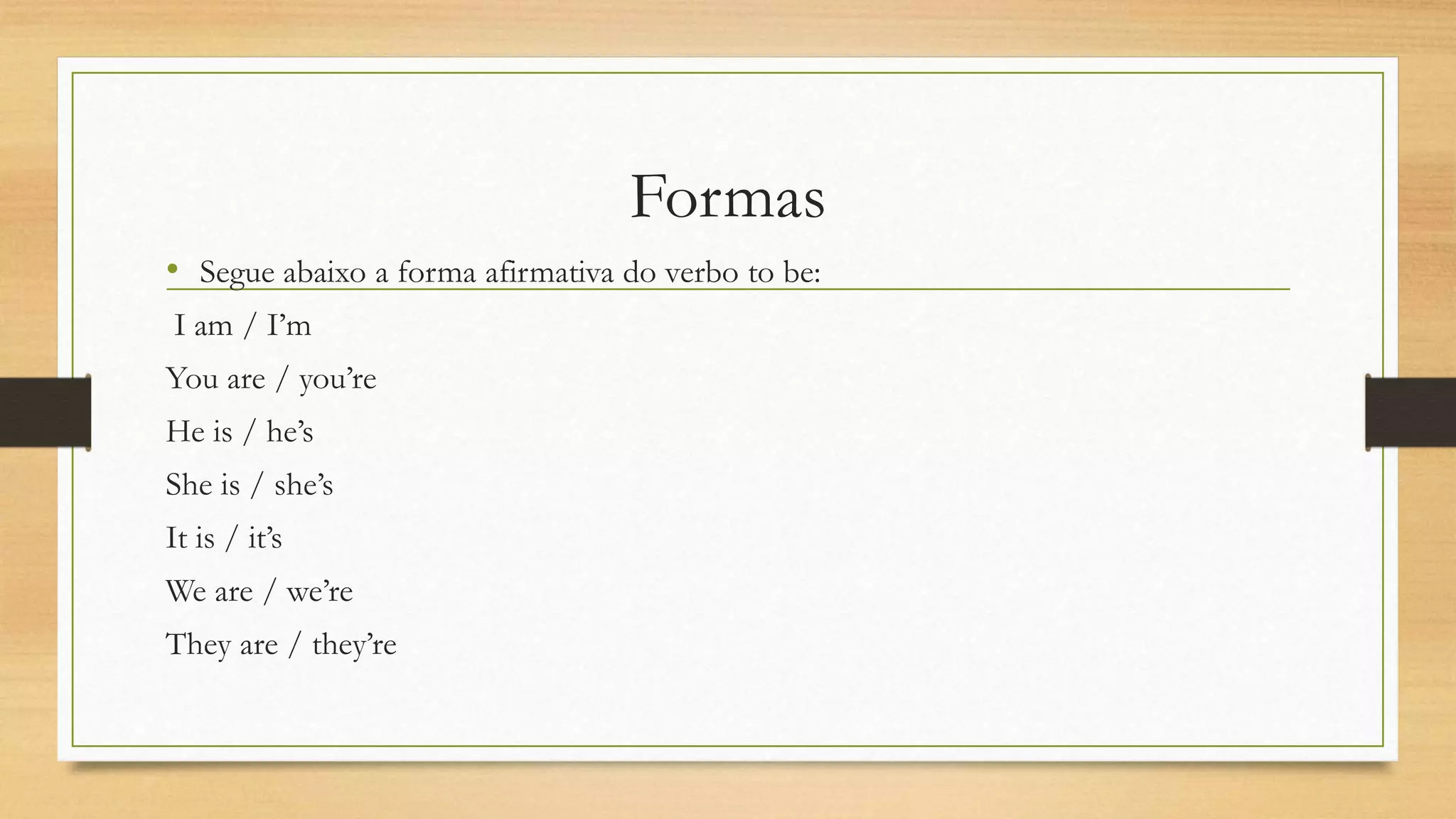
Formas
• Segue abaixo a forma afirmativa do verbo to be:
I am / I’m
You are / you’re
He is / he’s
She is / she’s
It is / it’s
We are / we’re
They are / they’re
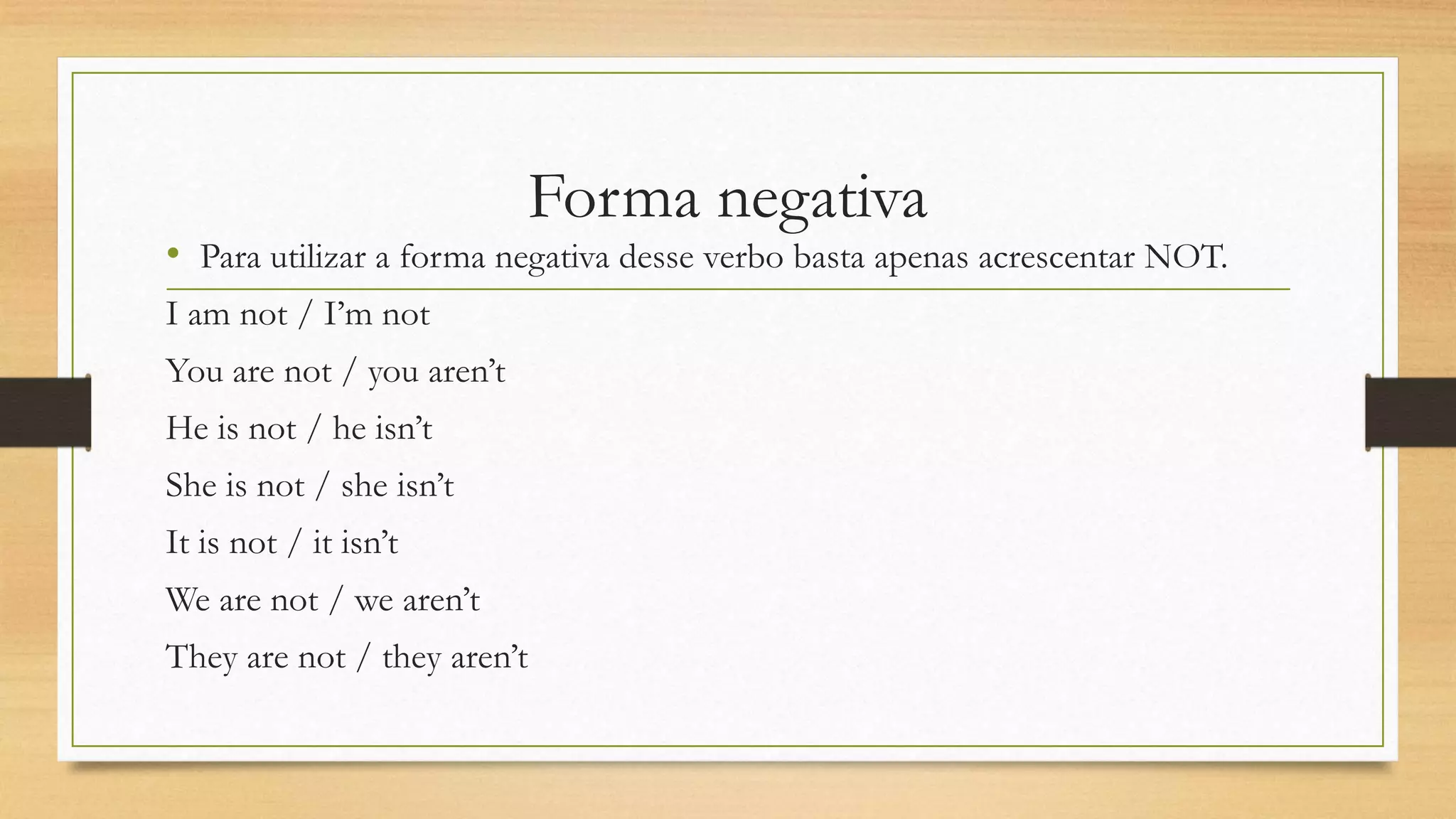
Forma negativa
• Para utilizar a forma negativa desse verbo basta apenas acrescentar NOT.
I am not / I’m not
You are not / you aren’t
He is not / he isn’t
She is not / she isn’t
It is not / it isn’t
We are not / we aren’t
They are not / they aren’t
TIME TO PRACTICE!
• Página dois da apostila, exercício pra ser feito em sala.

Verbo to be

  • 1.
    Verbo to be TeacherLarissa Pinheiro
  • 2.
    Significado e aplicação •O verbo tem o sentido de ser/estar e serve para descrever idade, personalidade, nacionalidade, aparência, onde estamos, quem somos e etc • Ex: I’m Lucy • She is happy • They are in Germany • He is tall
  • 3.
    Formas • Segue abaixoa forma afirmativa do verbo to be: I am / I’m You are / you’re He is / he’s She is / she’s It is / it’s We are / we’re They are / they’re
  • 4.
    Forma negativa • Parautilizar a forma negativa desse verbo basta apenas acrescentar NOT. I am not / I’m not You are not / you aren’t He is not / he isn’t She is not / she isn’t It is not / it isn’t We are not / we aren’t They are not / they aren’t
  • 5.
    TIME TO PRACTICE! •Página dois da apostila, exercício pra ser feito em sala.