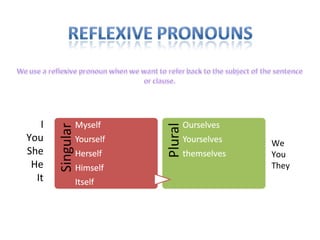
I You She He It We You They
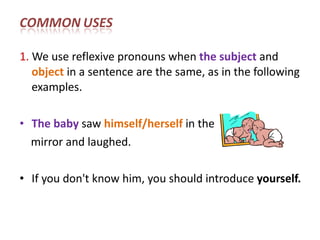
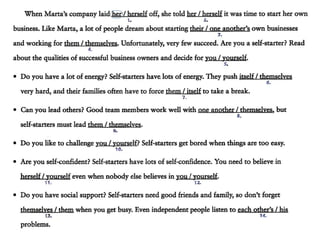
1.  We use reflexive pronouns when  the subject   and  object   in a sentence are the same, as in the following examples. The baby   saw  himself/herself   in the mirror and laughed. If you don't know him, you should introduce  yourself.
2.  In imperative sentences with reflexive pronouns, use: Yourself   when the subject is  singular . Don`t push  yourself  so hard,  Tom .  Yourselves   when the subject is  plural .   Don`t push  yourselves  so hard,  guys .
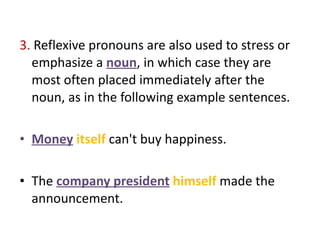
3.  Reflexive pronouns are also used to stress or emphasize a  noun , in which case they are most often placed immediately after the noun, as in the following example sentences. Money   itself  can't buy happiness. The  company president   himself   made the announcement.
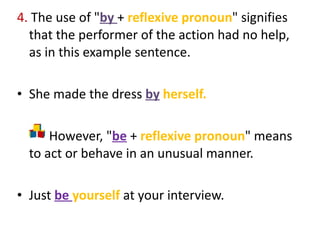
4.  The use of " by  +   reflexive pronoun " signifies that the performer of the action had no help, as in this example sentence. She made the dress  by   herself.   However, " be  +  reflexive pronoun " means to act or behave in an unusual manner.  Just  be  yourself  at your interview.
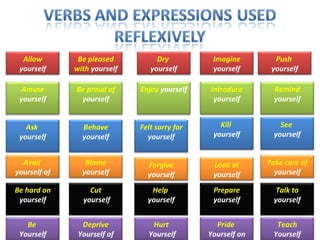
Allow  yourself Amuse   yourself Ask   yourself Avail  yourself of Be hard on   yourself Be   Yourself Blame  yourself Be pleased with  yourself Be proud of   yourself Behave   yourself Cut yourself Deprive  Yourself of Dry  yourself Imagine  yourself Enjoy  yourself Introduce  yourself Felt sorry for   yourself Kill  yourself Forgive  yourself Look at  yourself Prepare  yourself Help  yourself Pride  Yourself on Hurt Yourself Teach  Yourself Talk to  yourself Take care of  yourself See  yourself Remind  yourself Push  yourself
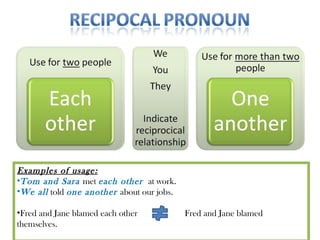
Examples of usage: Tom and Sara  met  each other  at work. We all  told  one another  about our jobs. Fred and Jane blamed each other  Fred and Jane blamed themselves.


Pronouns reflexive and reciprocal

  • 1.
  • 2.
  • 3.
    I You SheHe It We You They
  • 4.
    1. Weuse reflexive pronouns when the subject and object in a sentence are the same, as in the following examples. The baby saw himself/herself in the mirror and laughed. If you don't know him, you should introduce yourself.
  • 5.
    2. Inimperative sentences with reflexive pronouns, use: Yourself when the subject is singular . Don`t push yourself so hard, Tom . Yourselves when the subject is plural . Don`t push yourselves so hard, guys .
  • 6.
    3. Reflexivepronouns are also used to stress or emphasize a noun , in which case they are most often placed immediately after the noun, as in the following example sentences. Money itself can't buy happiness. The company president himself made the announcement.
  • 7.
    4. Theuse of " by + reflexive pronoun " signifies that the performer of the action had no help, as in this example sentence. She made the dress by herself. However, " be + reflexive pronoun " means to act or behave in an unusual manner. Just be yourself at your interview.
  • 8.
    Allow yourselfAmuse yourself Ask yourself Avail yourself of Be hard on yourself Be Yourself Blame yourself Be pleased with yourself Be proud of yourself Behave yourself Cut yourself Deprive Yourself of Dry yourself Imagine yourself Enjoy yourself Introduce yourself Felt sorry for yourself Kill yourself Forgive yourself Look at yourself Prepare yourself Help yourself Pride Yourself on Hurt Yourself Teach Yourself Talk to yourself Take care of yourself See yourself Remind yourself Push yourself
  • 9.
    Examples of usage:Tom and Sara met each other at work. We all told one another about our jobs. Fred and Jane blamed each other Fred and Jane blamed themselves.
  • 10.
  • 11.
  • 12.