INGLÉS 1ºESO Present Simple ☺  Affirmative ☺  Negative ☺  Interrogative ☺  Short answers ☺  Uses ☺  Adverbs of frequency  ☺  Time expressions ☺  Exercises I. ☺  Exercises II : Bob´s daily routine
AFFIRMATIVE FORM  ( I/you/we/they )+ Verbo Infinitivo Sujeto   + (C) ( he/she/it ) + Verbo Infinitivo+”s” He plays the guitar. John and Susan live in London. ▪  Infinitivos terminados en  “s” “sh” ch”   “o” “x”  añaden  “es”  al hacer la 3ª p.sg. go  goes  wash  washes ▪  Infinitivos terminados en Consonante  +”y”,  cambian ésta a  “i”  y añaden  “es”. study  studies
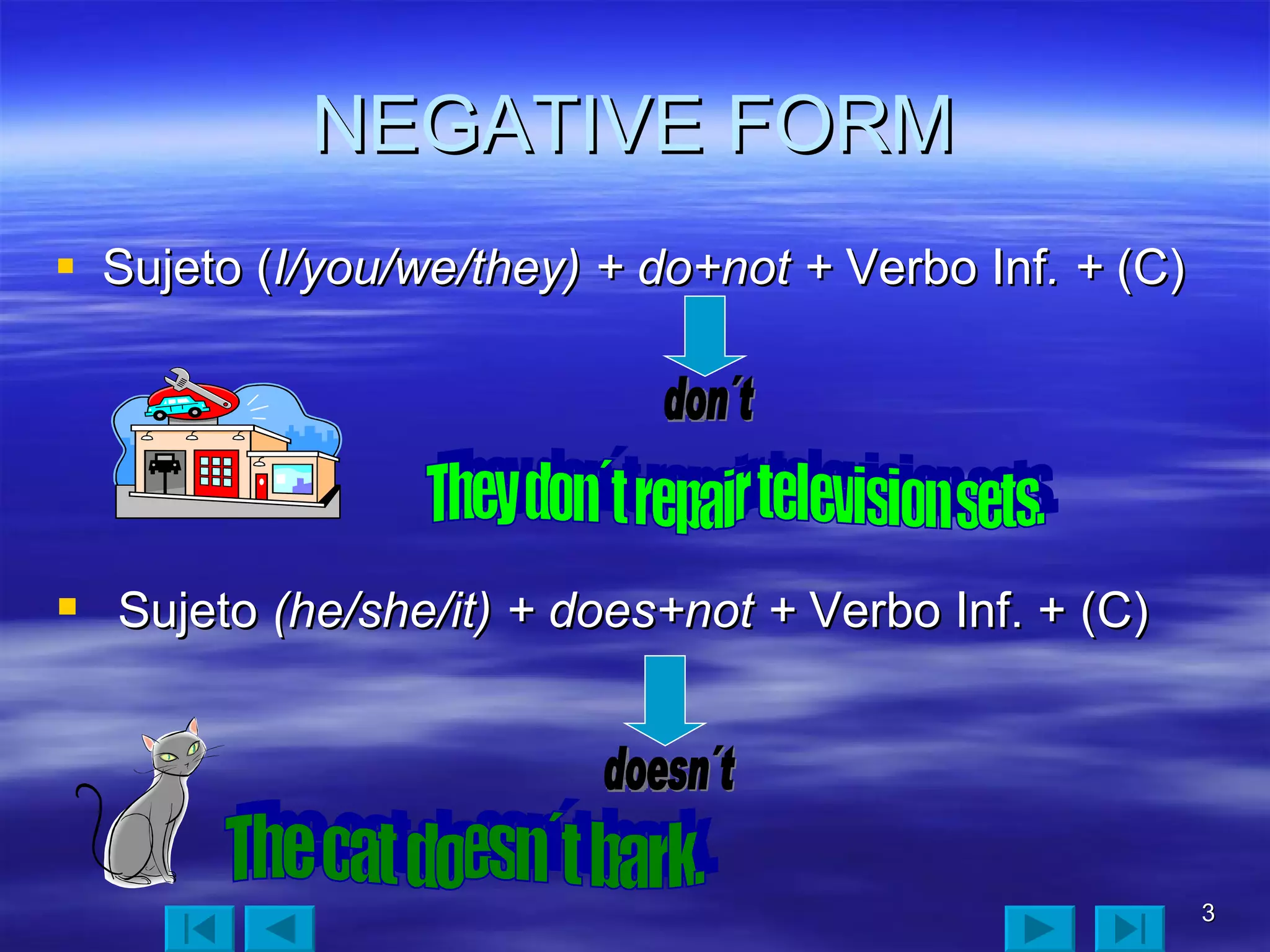
NEGATIVE FORM Sujeto ( I/you/we/they) + do+not +  Verbo Inf . +  (C) Sujeto  (he/she/it) + does+not +  Verbo Inf. + (C) don´t doesn´t They don´t repair television sets. The cat doesn´t bark.
INTERROGATIVE FORM Do  +Sujeto ( I/you/we/they )+Verbo Inf. +(C)? Does  +Sujeto ( he/she/it ) +Verbo Inf. +(C)? Do you live in Gijón? Does your teacher speak English?
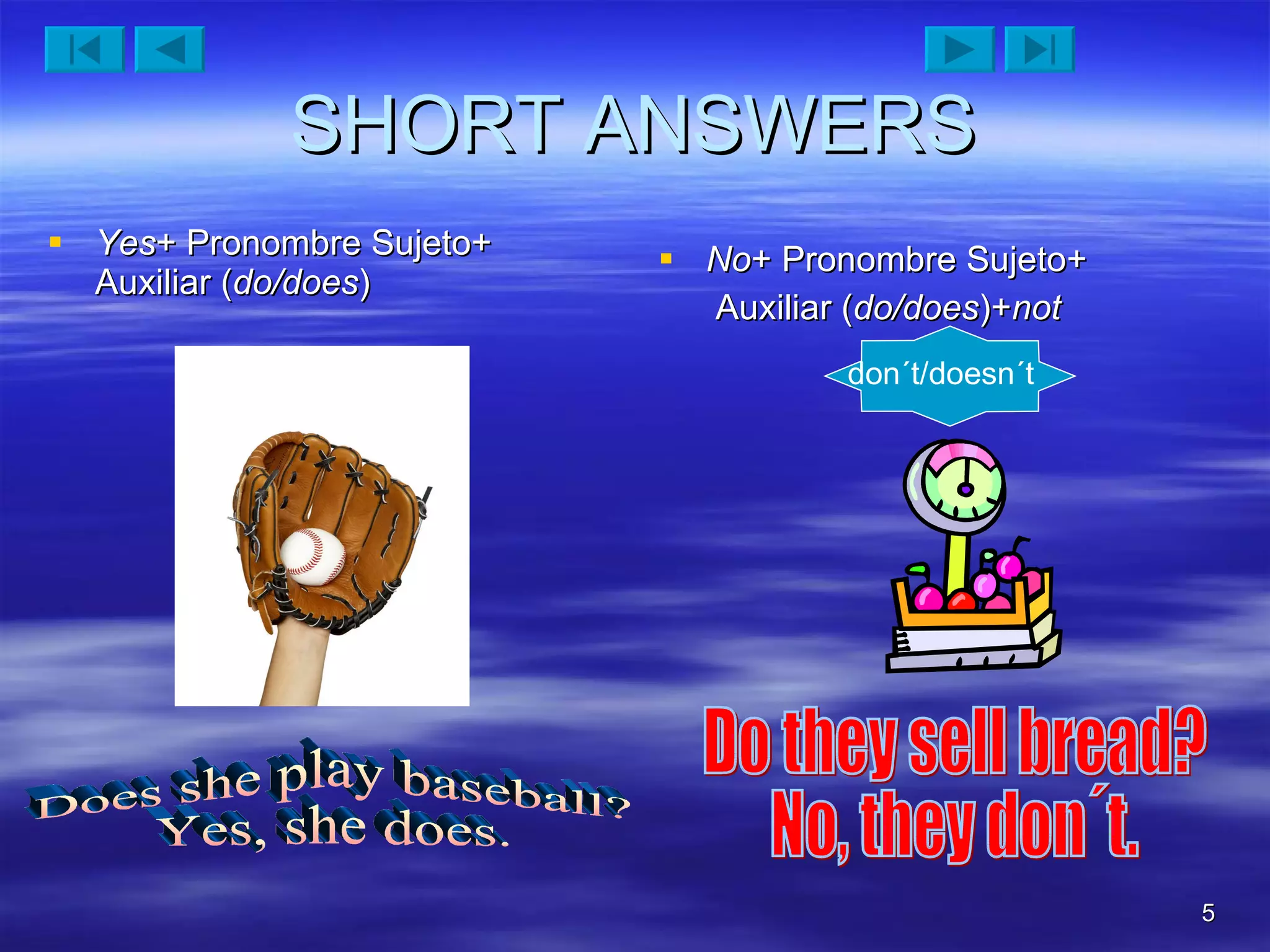
SHORT ANSWERS Yes + Pronombre Sujeto+ Auxiliar ( do/does ) No + Pronombre Sujeto+   Auxiliar ( do/does )+ not Does she play baseball? Yes, she does. don´t/doesn´t Do they sell bread? No, they don´t.
USES Acciones habituales. Horarios. Verdades universales. They go for a picnic at weekends. The library opens from 9 to 5. The sun rises from the east.
ADVERBS OF FREQUENCY  always=siempre usually=habitualmente often= con frecuencia sometimes=algunas veces hardly ever=casi nunca never=nunca REMEMBER En las oraciones afirmativas y las preguntas ,se colocan entre el Sujeto y el Verbo, excepto si éste es el verbo “ to be ”, en cuyo caso van detrás.  They hardly ever play tennis.  Does your brother always study alone?  Our friends are usually happy. En las oraciones negativas van detrás de la negación “ not ”.  We don´t often watch music programmes on tv.
OTHER TIME EXPRESSIONS day week morning Every year evening   .   .   . Once a month Twice a year Three times a day On Saturdays In the evening
EXERCISES I   Click   on the six words which are related to the Present Simple. If your click is  right , you´ll hear  an applause ; if it is  wrong , you´ll hear   an alarm . do never now working every night writes yesterday carries usually did
EXERCISES II: Bob´s daily routine Choose  the correct words to complete Bob´s daily routine. If you are right, you´ll hear    ; if you are wrong, you´ll hear  .  Bob  up at half past seven. He    a cup of coffee  and  a toast. He  to school by bus. Classes  at half past two. In the afternoon, he  his homework and then he  his friends in the park. They  on their skateboards  .  After dinner, Bob  to bed. At weekends he  swimming. get/ gets drink/ drinks eat/ eats gos/ goes finish/ finishes do/ does meet/ meets ride/ rides go/ goes like/ likes

Present Simple

  • 1.
    INGLÉS 1ºESO PresentSimple ☺ Affirmative ☺ Negative ☺ Interrogative ☺ Short answers ☺ Uses ☺ Adverbs of frequency ☺ Time expressions ☺ Exercises I. ☺ Exercises II : Bob´s daily routine
  • 2.
    AFFIRMATIVE FORM ( I/you/we/they )+ Verbo Infinitivo Sujeto + (C) ( he/she/it ) + Verbo Infinitivo+”s” He plays the guitar. John and Susan live in London. ▪ Infinitivos terminados en “s” “sh” ch” “o” “x” añaden “es” al hacer la 3ª p.sg. go goes wash washes ▪ Infinitivos terminados en Consonante +”y”, cambian ésta a “i” y añaden “es”. study studies
  • 3.
    NEGATIVE FORM Sujeto( I/you/we/they) + do+not + Verbo Inf . + (C) Sujeto (he/she/it) + does+not + Verbo Inf. + (C) don´t doesn´t They don´t repair television sets. The cat doesn´t bark.
  • 4.
    INTERROGATIVE FORM Do +Sujeto ( I/you/we/they )+Verbo Inf. +(C)? Does +Sujeto ( he/she/it ) +Verbo Inf. +(C)? Do you live in Gijón? Does your teacher speak English?
  • 5.
    SHORT ANSWERS Yes+ Pronombre Sujeto+ Auxiliar ( do/does ) No + Pronombre Sujeto+ Auxiliar ( do/does )+ not Does she play baseball? Yes, she does. don´t/doesn´t Do they sell bread? No, they don´t.
  • 6.
    USES Acciones habituales.Horarios. Verdades universales. They go for a picnic at weekends. The library opens from 9 to 5. The sun rises from the east.
  • 7.
    ADVERBS OF FREQUENCY always=siempre usually=habitualmente often= con frecuencia sometimes=algunas veces hardly ever=casi nunca never=nunca REMEMBER En las oraciones afirmativas y las preguntas ,se colocan entre el Sujeto y el Verbo, excepto si éste es el verbo “ to be ”, en cuyo caso van detrás. They hardly ever play tennis. Does your brother always study alone? Our friends are usually happy. En las oraciones negativas van detrás de la negación “ not ”. We don´t often watch music programmes on tv.
  • 8.
    OTHER TIME EXPRESSIONSday week morning Every year evening . . . Once a month Twice a year Three times a day On Saturdays In the evening
  • 9.
    EXERCISES I Click on the six words which are related to the Present Simple. If your click is right , you´ll hear an applause ; if it is wrong , you´ll hear an alarm . do never now working every night writes yesterday carries usually did
  • 10.
    EXERCISES II: Bob´sdaily routine Choose the correct words to complete Bob´s daily routine. If you are right, you´ll hear ; if you are wrong, you´ll hear . Bob up at half past seven. He a cup of coffee and a toast. He to school by bus. Classes at half past two. In the afternoon, he his homework and then he his friends in the park. They on their skateboards . After dinner, Bob to bed. At weekends he swimming. get/ gets drink/ drinks eat/ eats gos/ goes finish/ finishes do/ does meet/ meets ride/ rides go/ goes like/ likes