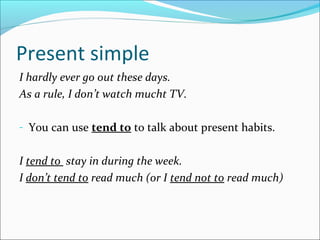
Present simple
I hardly ever go out these days.
As a rule, I don’t watch mucht TV.
- You can use tend to to talk about present habits.
I tend to stay in during the week.
I don’t tend to read much (or I tend not to read much)
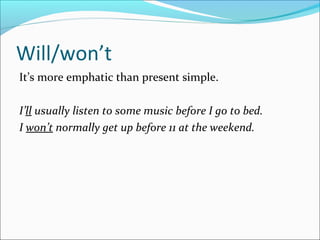
Will/won’t
It’s more emphatic than present simple.
I’ll usually listen to some music before I go to bed.
I won’t normally get up before 11 at the weekend.
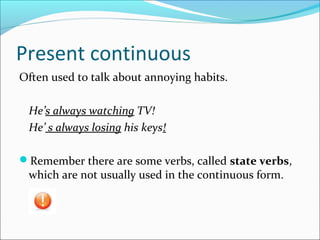
Present continuous
Often used to talk about annoying habits.
He’s always watching TV!
He’ s always losing his keys!
Remember there are some verbs, called state verbs,
which are not usually used in the continuous form.
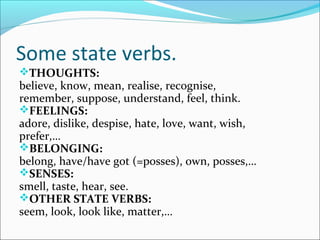
Some state verbs.
THOUGHTS:
believe, know, mean, realise, recognise,
remember, suppose, understand, feel, think.
FEELINGS:
adore, dislike, despise, hate, love, want, wish,
prefer,…
BELONGING:
belong, have/have got (=posses), own, posses,…
SENSES:
smell, taste, hear, see.
OTHER STATE VERBS:
seem, look, look like, matter,…
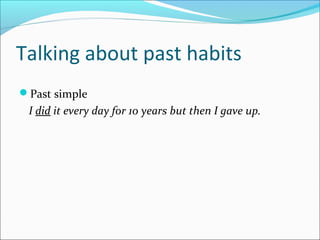
Talking about past habits
Past simple
I did it every day for 10 years but then I gave up.
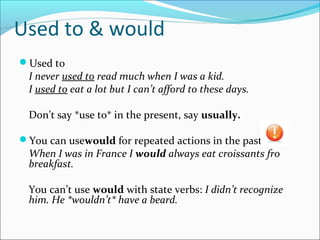
Used to & would
Used to
I never used to read much when I was a kid.
I used to eat a lot but I can’t afford to these days.
Don’t say *use to* in the present, say usually.
You can usewould for repeated actions in the past
When I was in France I would always eat croissants fro
breakfast.
You can’t use would with state verbs: I didn’t recognize
him. He *wouldn’t* have a beard.
How often do you…?
More than before/I used to/should
Not as much as I’d like to/I used to/should
Whenever I can/I get the chance
All the time
(not) as a rule, (not) usually
On the whole, generally
By and large, generally
Now and again, once in a while, from time to time
Once in a blue moon
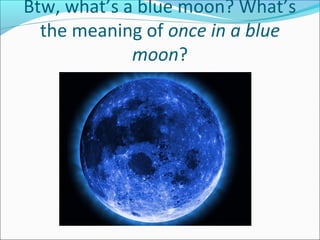
Btw, what’s a blue moon? What’s
the meaning of once in a blue
moon?
Be used to/get used to + ing
Don’t confuse used to with be used to/get used
to + ing.
I am not used to getting up early in the morning
because I work in the evening.
I’m getting used to my new students this year.
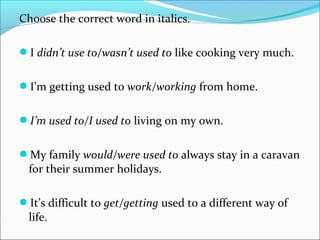
Choose the correct word in italics.
I didn’t use to/wasn’t used to like cooking very much.
I’m getting used to work/working from home.
I’m used to/I used to living on my own.
My family would/were used to always stay in a caravan
for their summer holidays.
It’s difficult to get/getting used to a different way of
life.
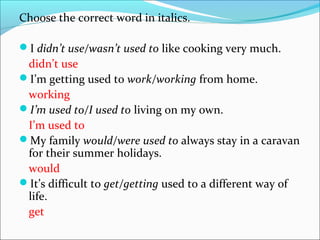
Choose the correct word in italics.
I didn’t use/wasn’t used to like cooking very much.
didn’t use
I’m getting used to work/working from home.
working
I’m used to/I used to living on my own.
I’m used to
My family would/were used to always stay in a caravan
for their summer holidays.
would
It’s difficult to get/getting used to a different way of
life.
get
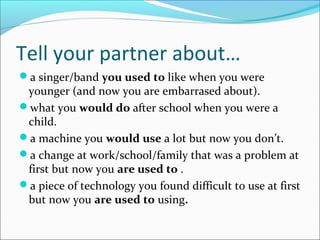
Tell your partner about…
a singer/band you used to like when you were
younger (and now you are embarrased about).
what you would do after school when you were a
child.
a machine you would use a lot but now you don’t.
a change at work/school/family that was a problem at
first but now you are used to .
a piece of technology you found difficult to use at first
but now you are used to using.

Present and past habits

  • 2.
    Present simple I hardlyever go out these days. As a rule, I don’t watch mucht TV. - You can use tend to to talk about present habits. I tend to stay in during the week. I don’t tend to read much (or I tend not to read much)
  • 3.
    Will/won’t It’s more emphaticthan present simple. I’ll usually listen to some music before I go to bed. I won’t normally get up before 11 at the weekend.
  • 4.
    Present continuous Often usedto talk about annoying habits. He’s always watching TV! He’ s always losing his keys! Remember there are some verbs, called state verbs, which are not usually used in the continuous form.
  • 5.
    Some state verbs. THOUGHTS: believe,know, mean, realise, recognise, remember, suppose, understand, feel, think. FEELINGS: adore, dislike, despise, hate, love, want, wish, prefer,… BELONGING: belong, have/have got (=posses), own, posses,… SENSES: smell, taste, hear, see. OTHER STATE VERBS: seem, look, look like, matter,…
  • 6.
    Talking about pasthabits Past simple I did it every day for 10 years but then I gave up.
  • 7.
    Used to &would Used to I never used to read much when I was a kid. I used to eat a lot but I can’t afford to these days. Don’t say *use to* in the present, say usually. You can usewould for repeated actions in the past When I was in France I would always eat croissants fro breakfast. You can’t use would with state verbs: I didn’t recognize him. He *wouldn’t* have a beard.
  • 8.
    How often doyou…? More than before/I used to/should Not as much as I’d like to/I used to/should Whenever I can/I get the chance All the time (not) as a rule, (not) usually On the whole, generally By and large, generally Now and again, once in a while, from time to time Once in a blue moon
  • 9.
    Btw, what’s ablue moon? What’s the meaning of once in a blue moon?
  • 10.
    Be used to/getused to + ing Don’t confuse used to with be used to/get used to + ing. I am not used to getting up early in the morning because I work in the evening. I’m getting used to my new students this year.
  • 12.
    Choose the correctword in italics. I didn’t use to/wasn’t used to like cooking very much. I’m getting used to work/working from home. I’m used to/I used to living on my own. My family would/were used to always stay in a caravan for their summer holidays. It’s difficult to get/getting used to a different way of life.
  • 13.
    Choose the correctword in italics. I didn’t use/wasn’t used to like cooking very much. didn’t use I’m getting used to work/working from home. working I’m used to/I used to living on my own. I’m used to My family would/were used to always stay in a caravan for their summer holidays. would It’s difficult to get/getting used to a different way of life. get
  • 14.
    Tell your partnerabout… a singer/band you used to like when you were younger (and now you are embarrased about). what you would do after school when you were a child. a machine you would use a lot but now you don’t. a change at work/school/family that was a problem at first but now you are used to . a piece of technology you found difficult to use at first but now you are used to using.