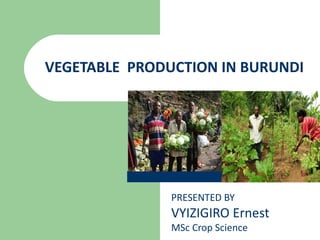
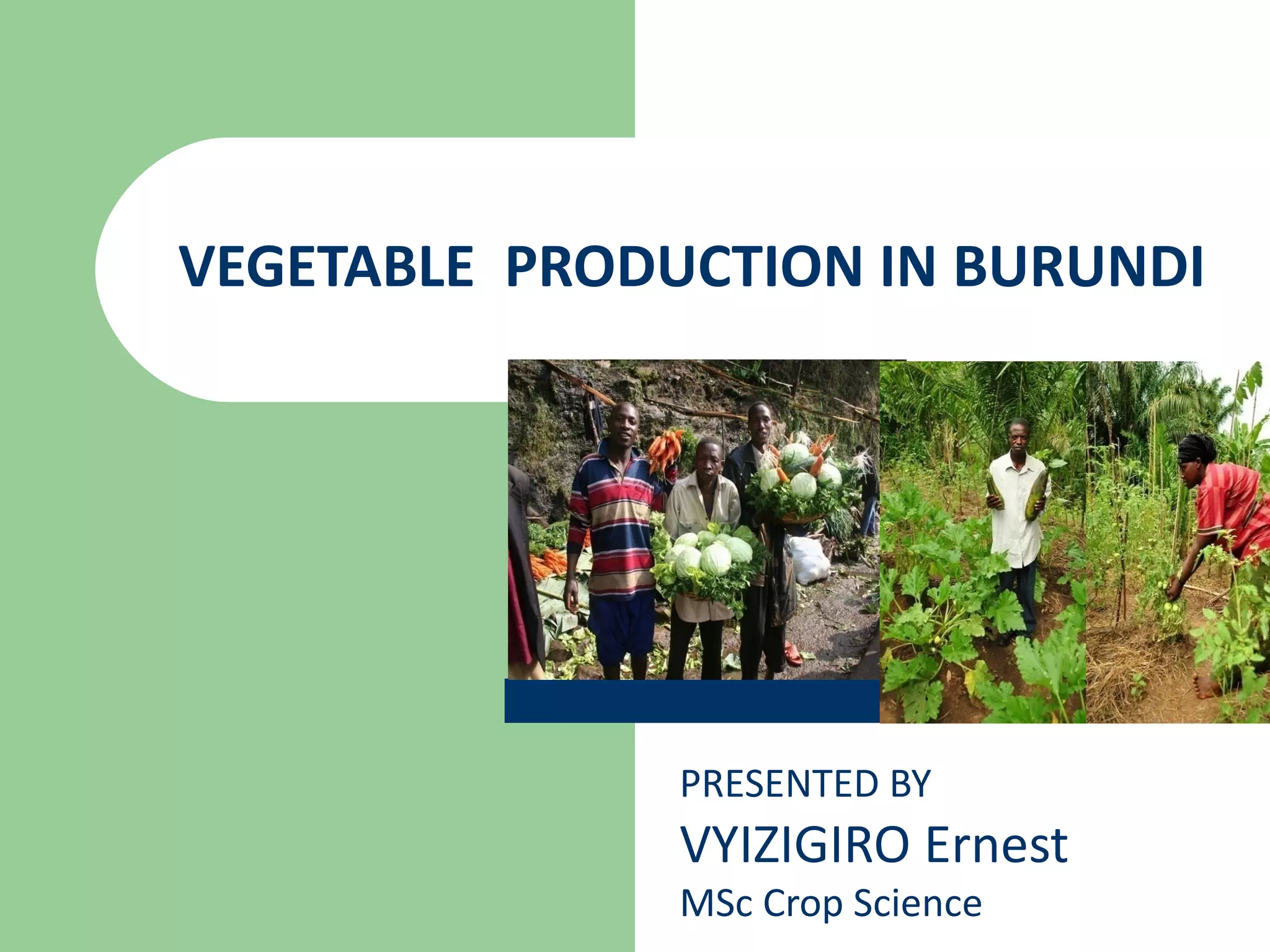
VEGETABLE PRODUCTION IN BURUNDI


               PRESENTED BY
               VYIZIGIRO Ernest
               MSc Crop Science
OUTLINE OF PRESENTATION

   Overview
   Main vegetables
   Production areas
   Production system
   Marketing channels
   Main actors in marketing channels
   Importance of vegetable industry to national
    economy
   Constraints & Solutions
Overview

   27,834 km² of which 23 500 km² for agriculture
   8 million inhabitants
   Density :293,7 inhab/ Sq km
   Unitary Republic with a Presidential Regime
   Official language : French, Kirundi
   others: Swahili and English
   Population: Hutus, Tutsis, Twa
   Over 90% are farmers.
Main vegetables

   Onions, leek, Garlic, celery, carrots, tomatoes,
    peas, a mixture of different types of squash,
    Cucumber,     eggplant,       amaranths,   peppers,
    cabbage, beans (green) fresh vegetables, spinach,
    a variety of leaves - such as cassava leaves, Taro
    leaves, potato leaves, etc.
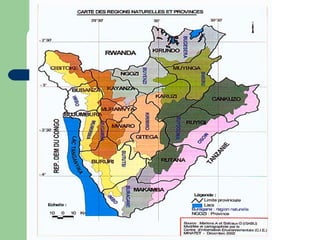
Production Area

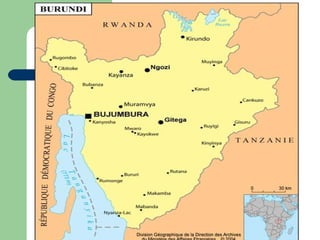
   Cibitoke
   Bubanza
   A long Tanganyika Lake
   Kirundo
   Muramvya
   Kayanza
   Gitega
Production system

   Produced by smallholder growers
   Cooperatives are involved in vegetable production
   Under rain field conditions (some areas are
    irrigate)
   Harvested, transported to rural markets or open-
    air markets
   Consumed locally
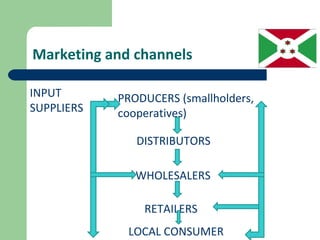
Marketing and channels

INPUT       PRODUCERS (smallholders,
SUPPLIERS   cooperatives)

               DISTRIBUTORS

               WHOLESALERS

                RETAILERS
             LOCAL CONSUMER
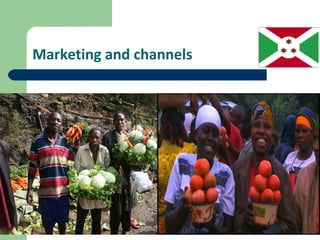
Marketing and channels
Stakeholders involved

   Government
   Input suppliers
   Producers
   Transporters
   Wholesalers
   Retailers
   Consumers
Importance of vegetable industry to national
economy


   Income generation

   Aids in food and nutritional security

   Rural development

   Employment opportinities
Constraints

   Poor infrastructures
   Lack of a good marketing system
   Fluctuation of prices
   Post harvest losses
   Lack of credit and loan
   Seasonal fluctuations
Constraints cont…

   Trucking capacity limited, especially refrigerated
    trucks needed to reach larger markets, such as Kigali,
    Kampala and Nairobi, Mombasa, etc..,

   Limited access to information

   Lack of research

   Lack of experience and technical skills
Opportunities

   Huge market consisting of millions of consumers.
   High population from different ethnic groups with a
    strong demand for exotic products
   Organic and ecological products on high demand
    can be grown in both low and highlands areas of
    Burundi.
   Direct access to supermarkets and major
    wholesalers
   Distances relatively short within the country,
    promoting the transport of perishable goods
Solutions

   Organization of vegetable sector by Government
   Fixation of prices
   Subsidize the sector
    Improvement of infrastructures
   Improved markets
   Encourager investisement (Private Sector)
   Research
Thanks for listening
  Any comments, contributions and questions
  are welcome
Welcome to Burundi

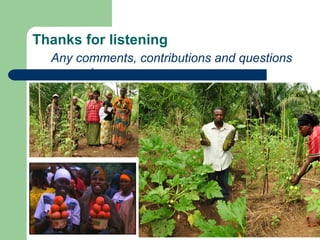
Vegetables growth in burundi

  • 1.
    VEGETABLE PRODUCTION INBURUNDI PRESENTED BY VYIZIGIRO Ernest MSc Crop Science
  • 2.
    OUTLINE OF PRESENTATION  Overview  Main vegetables  Production areas  Production system  Marketing channels  Main actors in marketing channels  Importance of vegetable industry to national economy  Constraints & Solutions
  • 4.
    Overview  27,834 km² of which 23 500 km² for agriculture  8 million inhabitants  Density :293,7 inhab/ Sq km  Unitary Republic with a Presidential Regime  Official language : French, Kirundi  others: Swahili and English  Population: Hutus, Tutsis, Twa  Over 90% are farmers.
  • 5.
    Main vegetables  Onions, leek, Garlic, celery, carrots, tomatoes, peas, a mixture of different types of squash, Cucumber, eggplant, amaranths, peppers, cabbage, beans (green) fresh vegetables, spinach, a variety of leaves - such as cassava leaves, Taro leaves, potato leaves, etc.
  • 7.
    Production Area  Cibitoke  Bubanza  A long Tanganyika Lake  Kirundo  Muramvya  Kayanza  Gitega
  • 9.
    Production system  Produced by smallholder growers  Cooperatives are involved in vegetable production  Under rain field conditions (some areas are irrigate)  Harvested, transported to rural markets or open- air markets  Consumed locally
  • 10.
    Marketing and channels INPUT PRODUCERS (smallholders, SUPPLIERS cooperatives) DISTRIBUTORS WHOLESALERS RETAILERS LOCAL CONSUMER
  • 11.
  • 12.
    Stakeholders involved  Government  Input suppliers  Producers  Transporters  Wholesalers  Retailers  Consumers
  • 13.
    Importance of vegetableindustry to national economy  Income generation  Aids in food and nutritional security  Rural development  Employment opportinities
  • 14.
    Constraints  Poor infrastructures  Lack of a good marketing system  Fluctuation of prices  Post harvest losses  Lack of credit and loan  Seasonal fluctuations
  • 15.
    Constraints cont…  Trucking capacity limited, especially refrigerated trucks needed to reach larger markets, such as Kigali, Kampala and Nairobi, Mombasa, etc..,  Limited access to information  Lack of research  Lack of experience and technical skills
  • 16.
    Opportunities  Huge market consisting of millions of consumers.  High population from different ethnic groups with a strong demand for exotic products  Organic and ecological products on high demand can be grown in both low and highlands areas of Burundi.  Direct access to supermarkets and major wholesalers  Distances relatively short within the country, promoting the transport of perishable goods
  • 17.
    Solutions  Organization of vegetable sector by Government  Fixation of prices  Subsidize the sector  Improvement of infrastructures  Improved markets  Encourager investisement (Private Sector)  Research
  • 18.
    Thanks for listening Any comments, contributions and questions are welcome
  • 19.