Vegetable Cookery
TLE – Grade 10
Vegetable
Is any part of a plant that
is consumed by humans
as food as part of a savory
meal.
Controlling Quality Changes
During Cooking
A. Controlling Texture
Changes
a. Fiber
•The fiber structures of vegetables
(including cellulose and pectins)
give them shape and firmness.
Cooking softens some of these
components
Fiber is made firmer by:
• 1. Acids.
–Lemon juice, vinegar, and tomato
products, when added to cooking
vegetables, extend the cooking time.
• 2. Sugars.
–Sugar strengthens cell structure.
Fiber is softened by:
• 1. Heat.
– In general, longer cooking means softer
vegetables.
• 2. Alkalis.
– Do not add baking soda to green vegetables. Not
only does it destroy vitamins but it also makes the
vegetables unpleasantly mushy.
B. Controlling Color
Changes
White Vegetables
• Pigments called anthoxanthins (an tho
zan thins) and flavonoids range from pale
yellow to white.
• To keep vegetables such as cauliflower
white, add a little lemon juice or
cream of tartar to the cooking water.
Red Vegetables
• Red pigments, called anthocyanins,
are found in only a few vegetables,
mainly red cabbage and beets.
Blueberries also are colored by these
red pigments.
• Acids turn them a brighter red.
Green Vegetables
• Green coloring, or chlorophyll, is
present in all green plants.
• Acids are enemies of green vegetables.
Both acid and long cooking turn green
vegetables a drab olive green.
Yellow and Orange Vegetables
• Yellow and orange pigments, called
carotenoids, are found in carrots, corn, sweet
potatoes, tomatoes, and
• They are little affected by acids.
• Long cooking can dull the color, however.
Short cooking not only prevents dulling of the
color but also preserves vitamins and flavors.
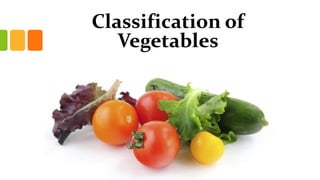
Classification of
Vegetables
A. According to Parts of
Plants Used
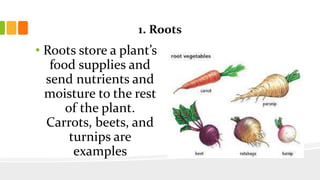
1. Roots
• Roots store a plant’s
food supplies and
send nutrients and
moisture to the rest
of the plant.
Carrots, beets, and
turnips are
examples
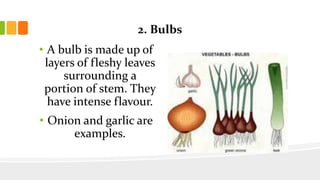
2. Bulbs
• A bulb is made up of
layers of fleshy leaves
surrounding a
portion of stem. They
have intense flavour.
• Onion and garlic are
examples.
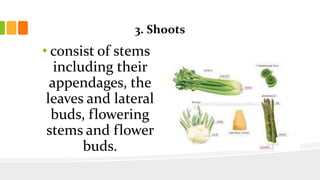
3. Shoots
• consist of stems
including their
appendages, the
leaves and lateral
buds, flowering
stems and flower
buds.
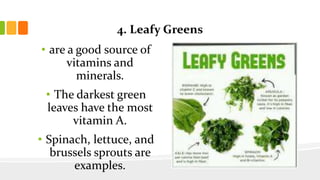
4. Leafy Greens
• are a good source of
vitamins and
minerals.
• The darkest green
leaves have the most
vitamin A.
• Spinach, lettuce, and
brussels sprouts are
examples.
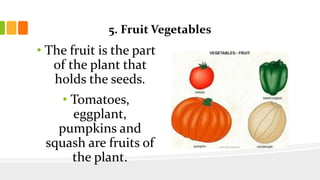
5. Fruit Vegetables
• The fruit is the part
of the plant that
holds the seeds.
• Tomatoes,
eggplant,
pumpkins and
squash are fruits of
the plant.
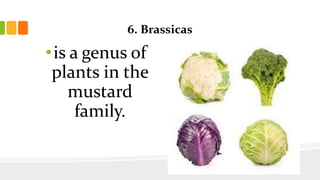
6. Brassicas
•is a genus of
plants in the
mustard
family.
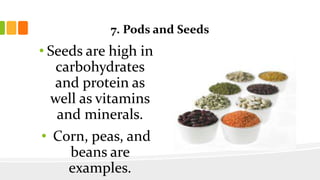
7. Pods and Seeds
• Seeds are high in
carbohydrates
and protein as
well as vitamins
and minerals.
• Corn, peas, and
beans are
examples.
B. According to
Chemical Composition
• Carbohydrate Rich - Potato
• Protein Rich – Broccoli, Sprouts, Mushrooms
• Fat Rich - Nuts
• High Moisture Rich - Cucumber
• Vitamin and Mineral Rich – Leafy Veggies
• Fiber Rich - Malunggay
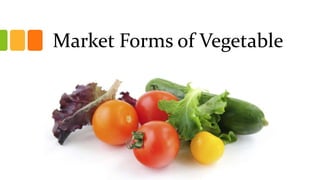
Market Forms of Vegetable
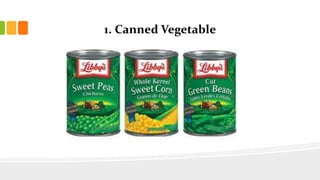
1. Canned Vegetable
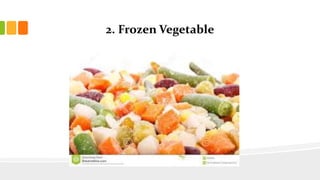
2. Frozen Vegetable
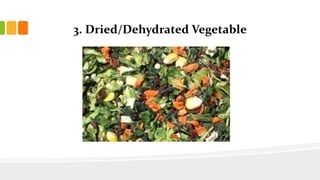
3. Dried/Dehydrated Vegetable
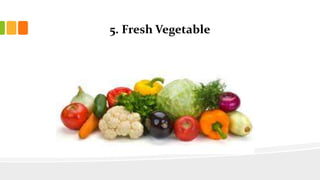
5. Fresh Vegetable

Vegetable cookery grade 10

  • 1.
  • 2.
    Vegetable Is any partof a plant that is consumed by humans as food as part of a savory meal.
  • 3.
  • 4.
  • 5.
    a. Fiber •The fiberstructures of vegetables (including cellulose and pectins) give them shape and firmness. Cooking softens some of these components
  • 6.
    Fiber is madefirmer by: • 1. Acids. –Lemon juice, vinegar, and tomato products, when added to cooking vegetables, extend the cooking time. • 2. Sugars. –Sugar strengthens cell structure.
  • 7.
    Fiber is softenedby: • 1. Heat. – In general, longer cooking means softer vegetables. • 2. Alkalis. – Do not add baking soda to green vegetables. Not only does it destroy vitamins but it also makes the vegetables unpleasantly mushy.
  • 8.
  • 9.
    White Vegetables • Pigmentscalled anthoxanthins (an tho zan thins) and flavonoids range from pale yellow to white. • To keep vegetables such as cauliflower white, add a little lemon juice or cream of tartar to the cooking water.
  • 10.
    Red Vegetables • Redpigments, called anthocyanins, are found in only a few vegetables, mainly red cabbage and beets. Blueberries also are colored by these red pigments. • Acids turn them a brighter red.
  • 11.
    Green Vegetables • Greencoloring, or chlorophyll, is present in all green plants. • Acids are enemies of green vegetables. Both acid and long cooking turn green vegetables a drab olive green.
  • 12.
    Yellow and OrangeVegetables • Yellow and orange pigments, called carotenoids, are found in carrots, corn, sweet potatoes, tomatoes, and • They are little affected by acids. • Long cooking can dull the color, however. Short cooking not only prevents dulling of the color but also preserves vitamins and flavors.
  • 13.
  • 14.
    A. According toParts of Plants Used
  • 15.
    1. Roots • Rootsstore a plant’s food supplies and send nutrients and moisture to the rest of the plant. Carrots, beets, and turnips are examples
  • 16.
    2. Bulbs • Abulb is made up of layers of fleshy leaves surrounding a portion of stem. They have intense flavour. • Onion and garlic are examples.
  • 17.
    3. Shoots • consistof stems including their appendages, the leaves and lateral buds, flowering stems and flower buds.
  • 18.
    4. Leafy Greens •are a good source of vitamins and minerals. • The darkest green leaves have the most vitamin A. • Spinach, lettuce, and brussels sprouts are examples.
  • 19.
    5. Fruit Vegetables •The fruit is the part of the plant that holds the seeds. • Tomatoes, eggplant, pumpkins and squash are fruits of the plant.
  • 20.
    6. Brassicas •is agenus of plants in the mustard family.
  • 21.
    7. Pods andSeeds • Seeds are high in carbohydrates and protein as well as vitamins and minerals. • Corn, peas, and beans are examples.
  • 22.
  • 23.
    • Carbohydrate Rich- Potato • Protein Rich – Broccoli, Sprouts, Mushrooms • Fat Rich - Nuts • High Moisture Rich - Cucumber • Vitamin and Mineral Rich – Leafy Veggies • Fiber Rich - Malunggay
  • 24.
    Market Forms ofVegetable
  • 25.
  • 26.
  • 27.
  • 28.