Sauces
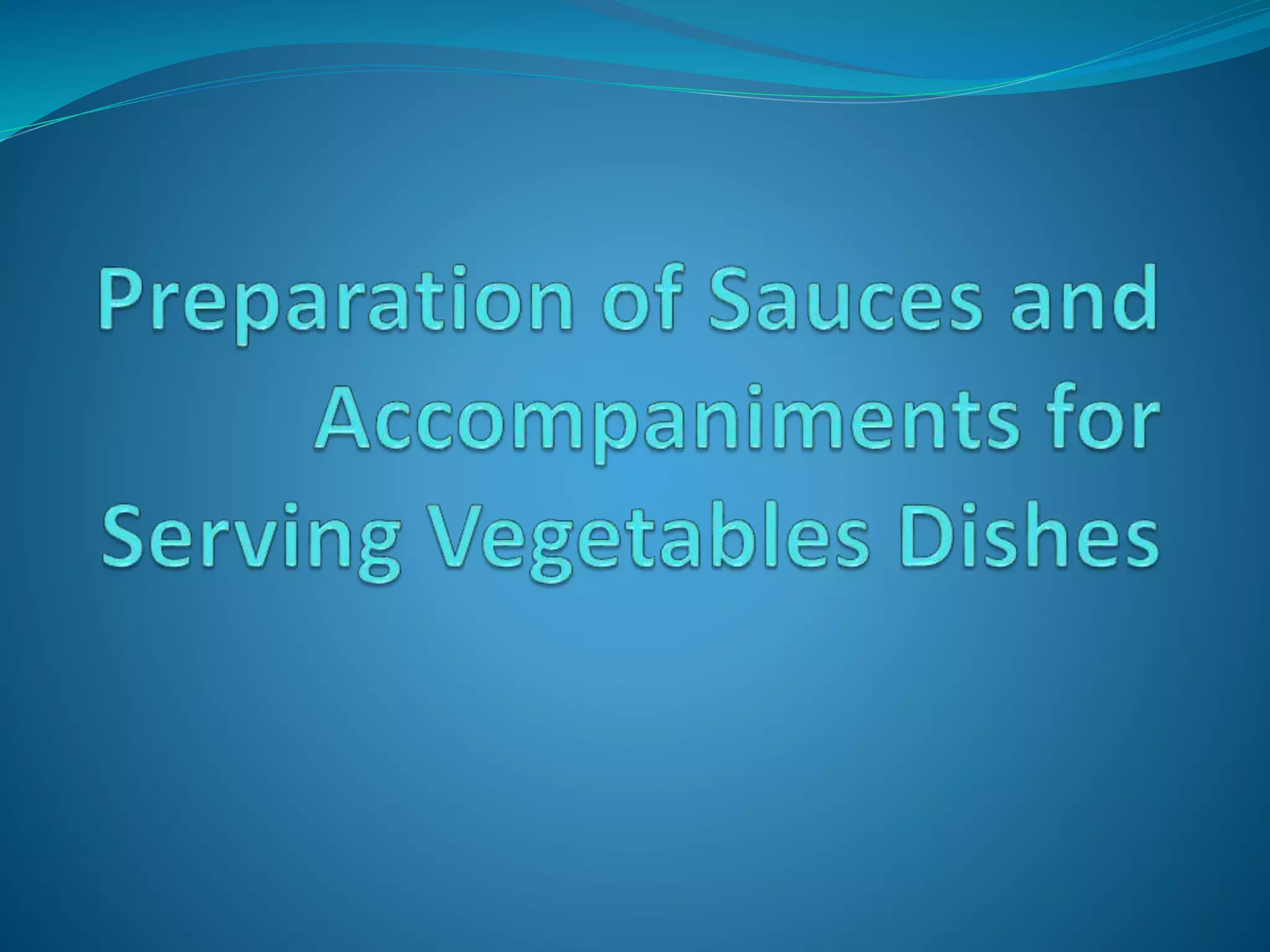
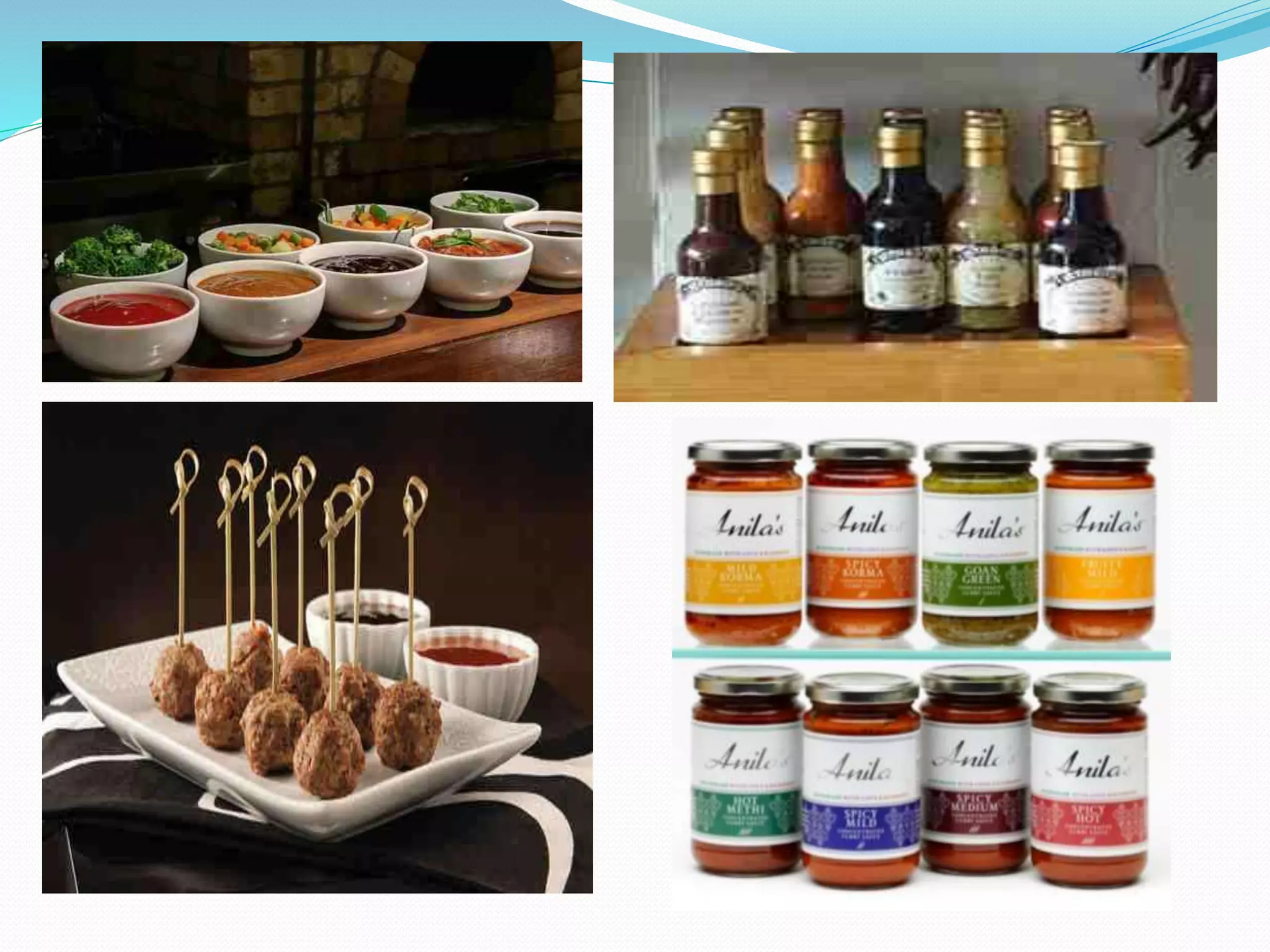
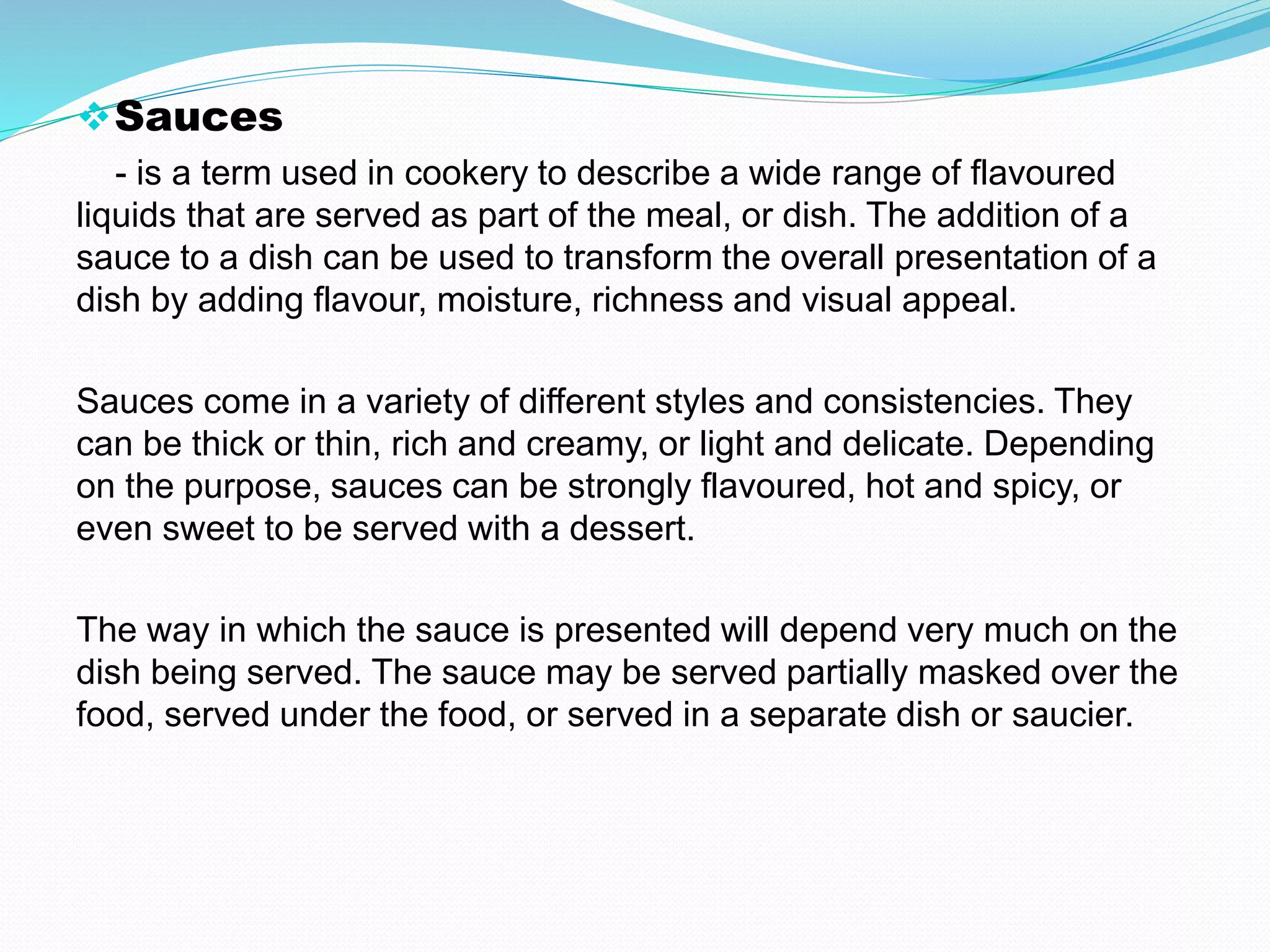
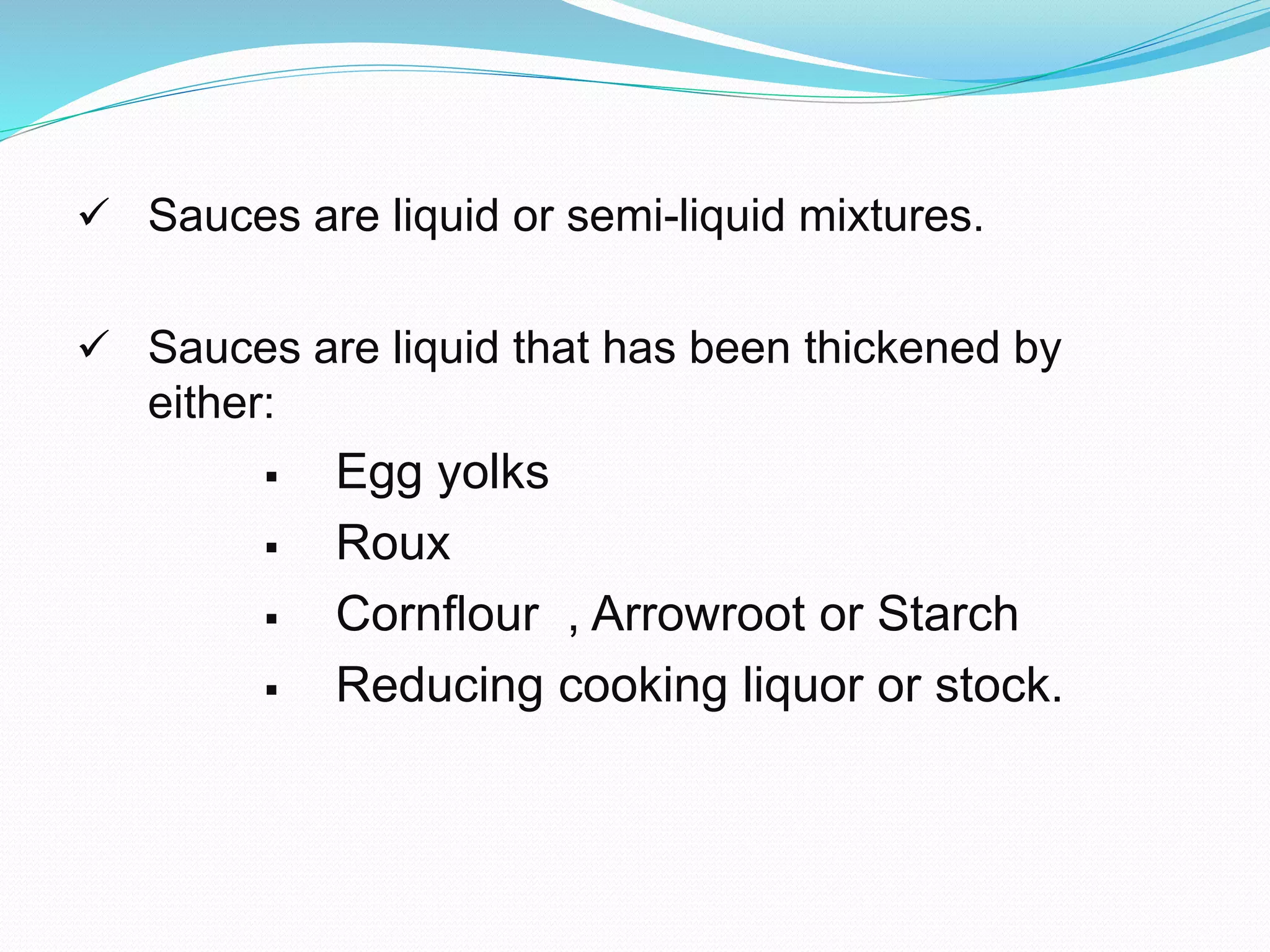
- is a term used in cookery to describe a wide range of flavoured
liquids that are served as part of the meal, or dish. The addition of a
sauce to a dish can be used to transform the overall presentation of a
dish by adding flavour, moisture, richness and visual appeal.
Sauces come in a variety of different styles and consistencies. They
can be thick or thin, rich and creamy, or light and delicate. Depending
on the purpose, sauces can be strongly flavoured, hot and spicy, or
even sweet to be served with a dessert.
The way in which the sauce is presented will depend very much on the
dish being served. The sauce may be served partially masked over the
food, served under the food, or served in a separate dish or saucier.
 Sauces are liquid or semi-liquid mixtures.
 Sauces are liquid that has been thickened by
either:
 Egg yolks
 Roux
 Cornflour , Arrowroot or Starch
 Reducing cooking liquor or stock.
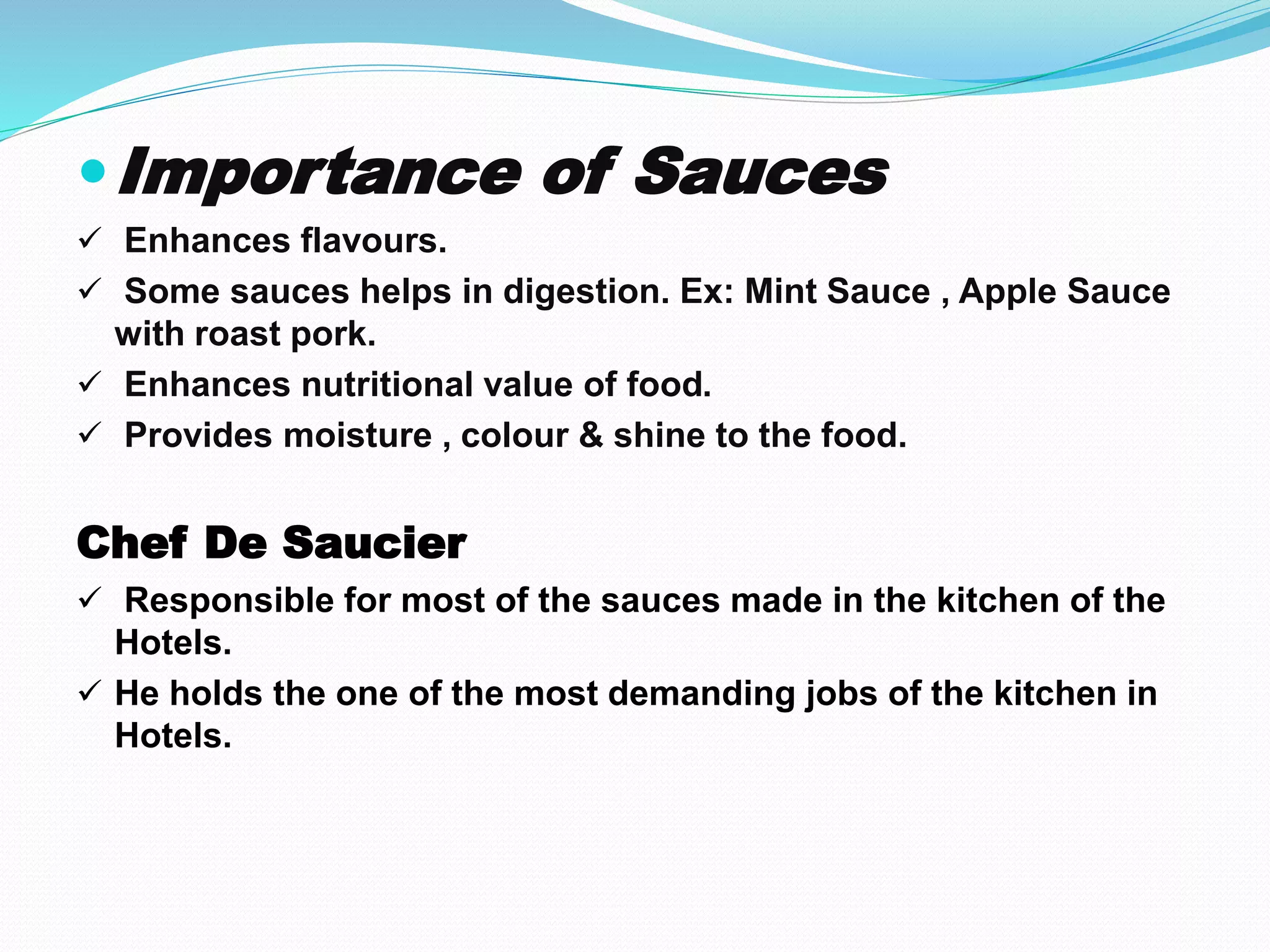
Importance of Sauces
 Enhances flavours.
 Some sauces helps in digestion. Ex: Mint Sauce , Apple Sauce
with roast pork.
 Enhances nutritional value of food.
 Provides moisture , colour & shine to the food.
Chef De Saucier
 Responsible for most of the sauces made in the kitchen of the
Hotels.
 He holds the one of the most demanding jobs of the kitchen in
Hotels.
Accompaniments
- are complementary additions to the main ingredient of a meal.
Accompaniments are typically things like vegetables and side salads
but they also include sauces and relishes. Sometimes the
accompaniment also comes with a garnish of its own.
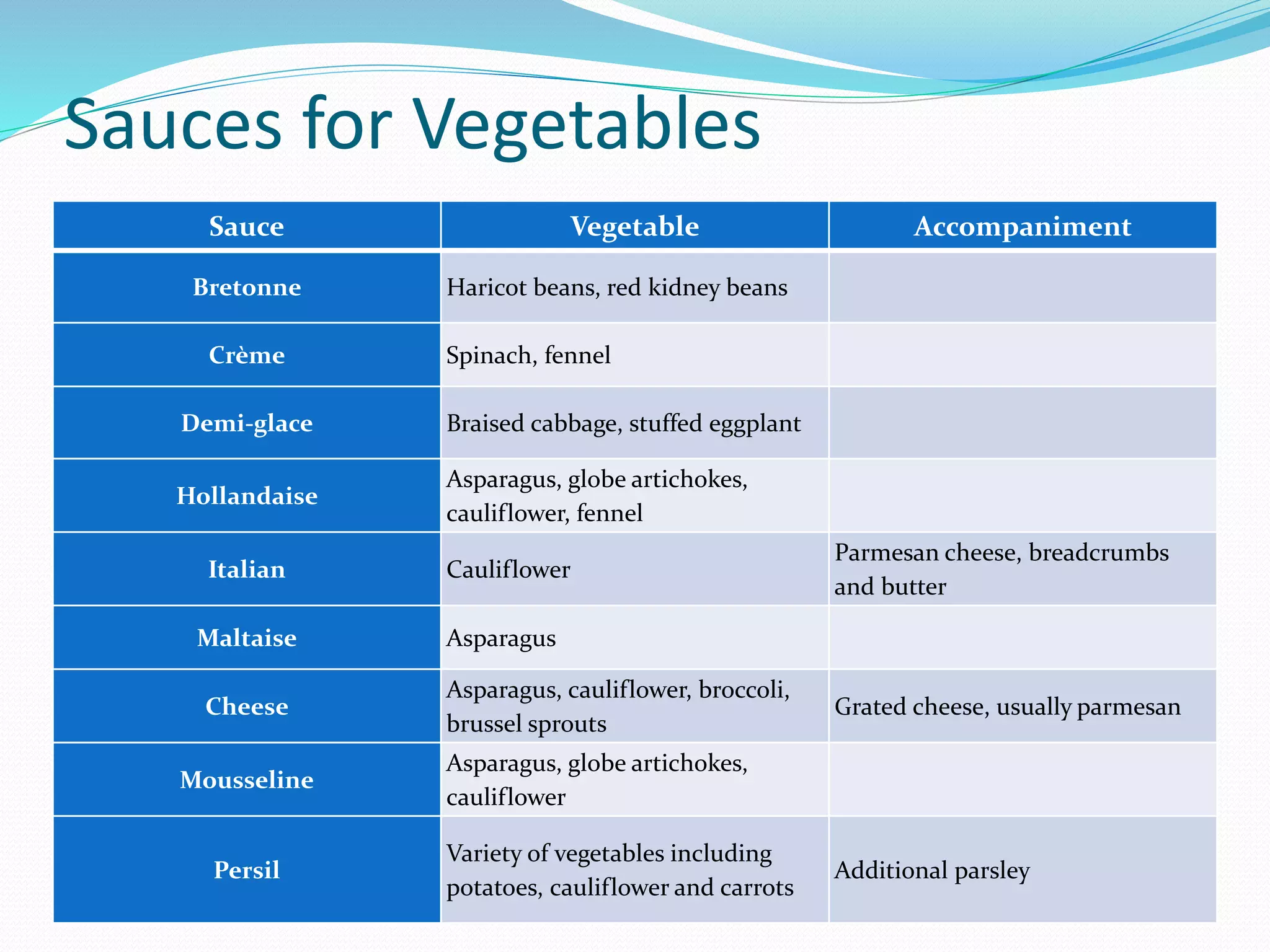
Sauces for Vegetables
Sauce Vegetable Accompaniment
Bretonne Haricot beans, red kidney beans
Crème Spinach, fennel
Demi-glace Braised cabbage, stuffed eggplant
Hollandaise
Asparagus, globe artichokes,
cauliflower, fennel
Italian Cauliflower
Parmesan cheese, breadcrumbs
and butter
Maltaise Asparagus
Cheese
Asparagus, cauliflower, broccoli,
brussel sprouts
Grated cheese, usually parmesan
Mousseline
Asparagus, globe artichokes,
cauliflower
Persil
Variety of vegetables including
potatoes, cauliflower and carrots
Additional parsley
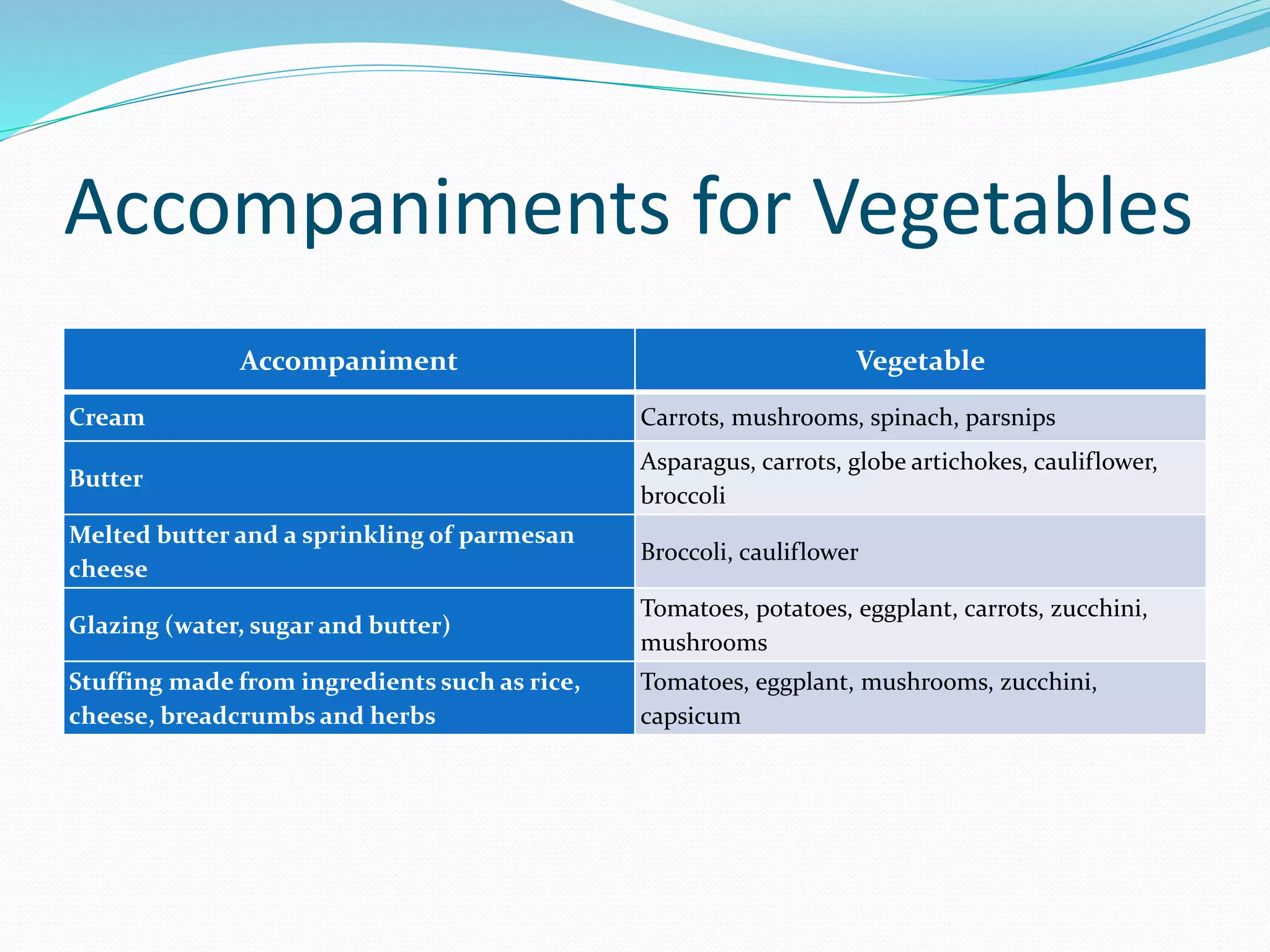
Accompaniments for Vegetables
Accompaniment Vegetable
Cream Carrots, mushrooms, spinach, parsnips
Butter
Asparagus, carrots, globe artichokes, cauliflower,
broccoli
Melted butter and a sprinkling of parmesan
cheese
Broccoli, cauliflower
Glazing (water, sugar and butter)
Tomatoes, potatoes, eggplant, carrots, zucchini,
mushrooms
Stuffing made from ingredients such as rice,
cheese, breadcrumbs and herbs
Tomatoes, eggplant, mushrooms, zucchini,
capsicum
Sauce Boats
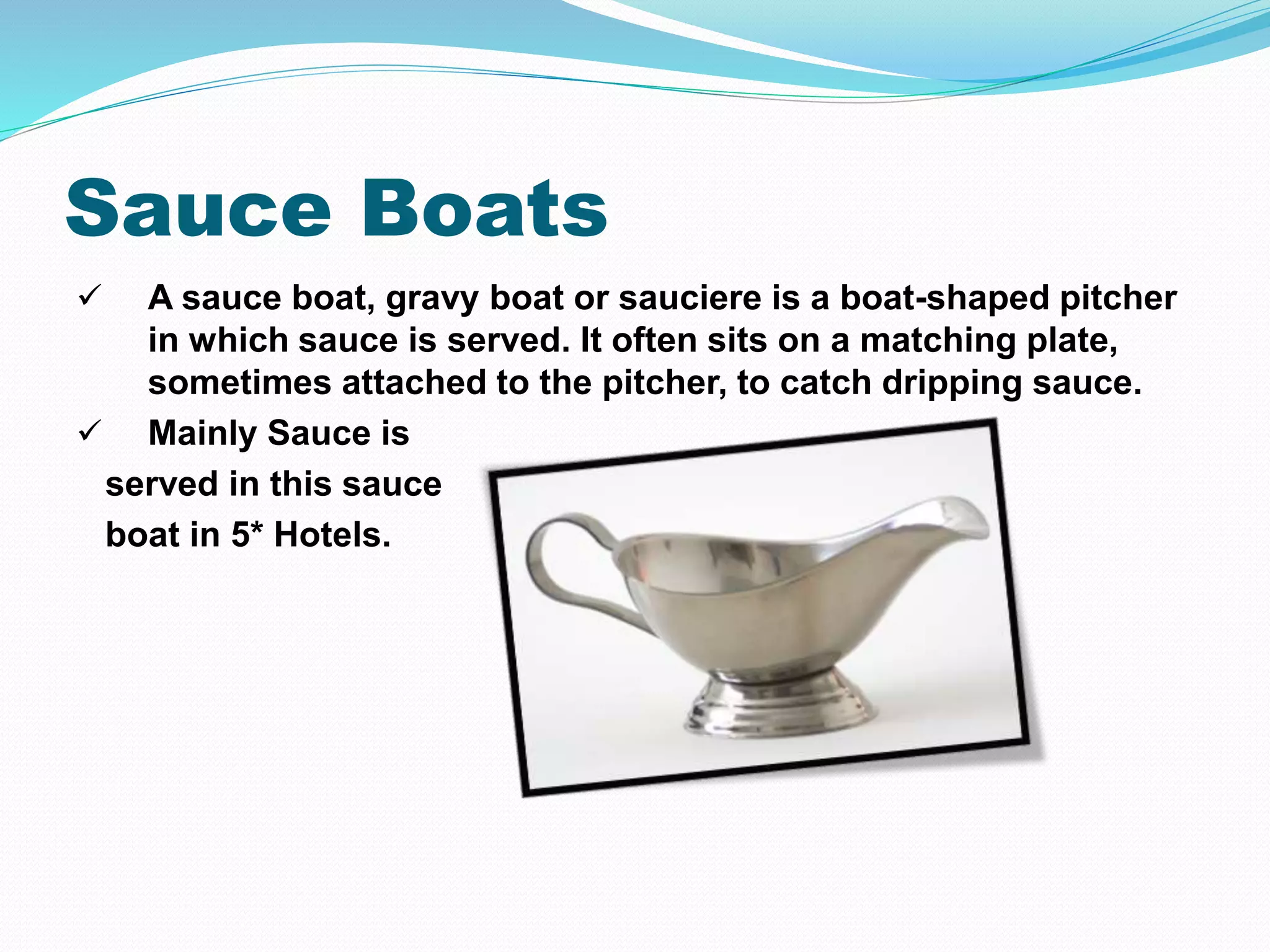
 A sauce boat, gravy boat or sauciere is a boat-shaped pitcher
in which sauce is served. It often sits on a matching plate,
sometimes attached to the pitcher, to catch dripping sauce.
 Mainly Sauce is
served in this sauce
boat in 5* Hotels.
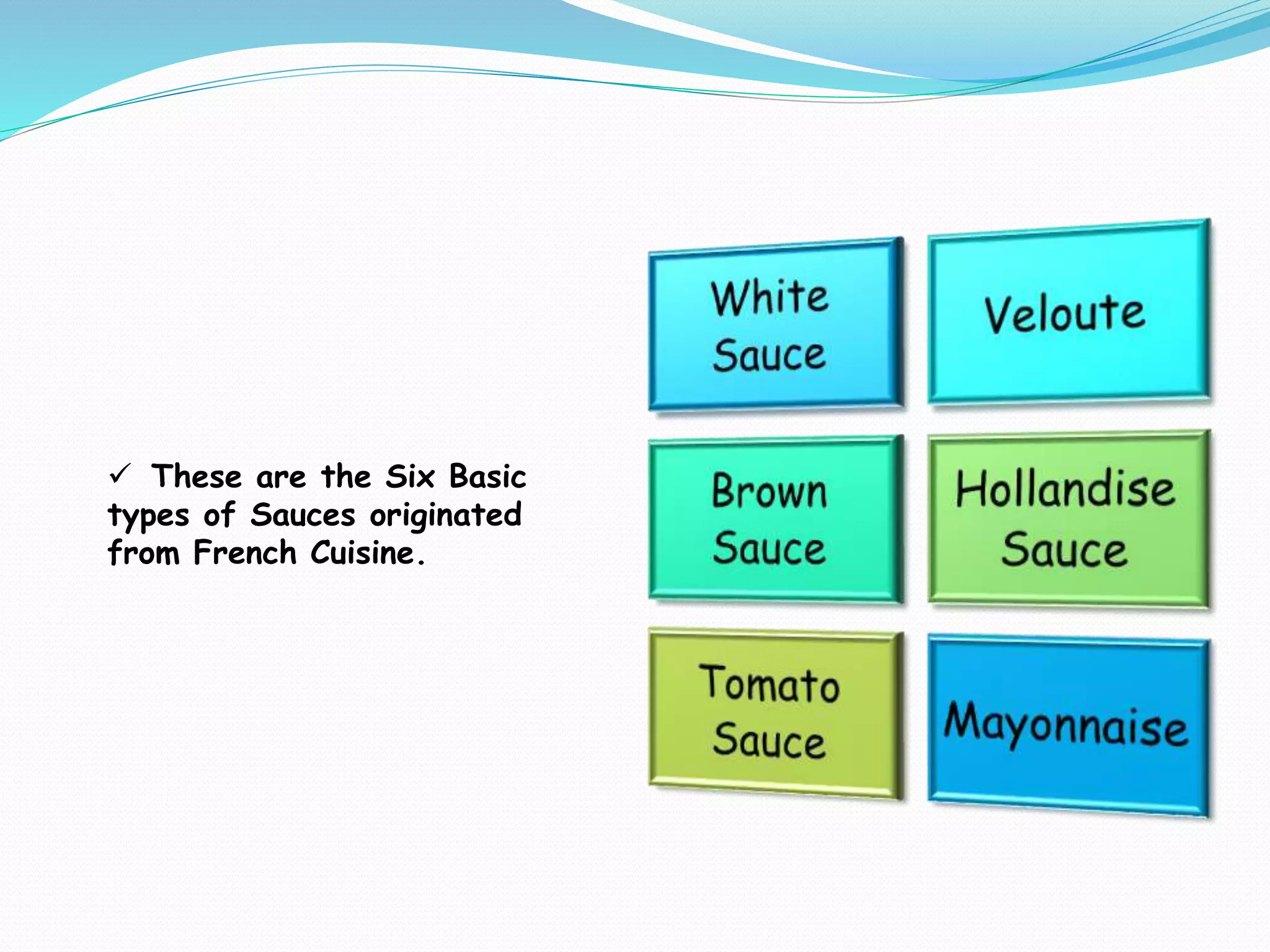
 These are the Six Basic
types of Sauces originated
from French Cuisine.
Preparation of sauces and accompaniments for Serving Vegetables

Preparation of sauces and accompaniments for Serving Vegetables

  • 3.
    Sauces - is aterm used in cookery to describe a wide range of flavoured liquids that are served as part of the meal, or dish. The addition of a sauce to a dish can be used to transform the overall presentation of a dish by adding flavour, moisture, richness and visual appeal. Sauces come in a variety of different styles and consistencies. They can be thick or thin, rich and creamy, or light and delicate. Depending on the purpose, sauces can be strongly flavoured, hot and spicy, or even sweet to be served with a dessert. The way in which the sauce is presented will depend very much on the dish being served. The sauce may be served partially masked over the food, served under the food, or served in a separate dish or saucier.
  • 4.
     Sauces areliquid or semi-liquid mixtures.  Sauces are liquid that has been thickened by either:  Egg yolks  Roux  Cornflour , Arrowroot or Starch  Reducing cooking liquor or stock.
  • 5.
    Importance of Sauces Enhances flavours.  Some sauces helps in digestion. Ex: Mint Sauce , Apple Sauce with roast pork.  Enhances nutritional value of food.  Provides moisture , colour & shine to the food. Chef De Saucier  Responsible for most of the sauces made in the kitchen of the Hotels.  He holds the one of the most demanding jobs of the kitchen in Hotels.
  • 6.
    Accompaniments - are complementaryadditions to the main ingredient of a meal. Accompaniments are typically things like vegetables and side salads but they also include sauces and relishes. Sometimes the accompaniment also comes with a garnish of its own.
  • 7.
    Sauces for Vegetables SauceVegetable Accompaniment Bretonne Haricot beans, red kidney beans Crème Spinach, fennel Demi-glace Braised cabbage, stuffed eggplant Hollandaise Asparagus, globe artichokes, cauliflower, fennel Italian Cauliflower Parmesan cheese, breadcrumbs and butter Maltaise Asparagus Cheese Asparagus, cauliflower, broccoli, brussel sprouts Grated cheese, usually parmesan Mousseline Asparagus, globe artichokes, cauliflower Persil Variety of vegetables including potatoes, cauliflower and carrots Additional parsley
  • 8.
    Accompaniments for Vegetables AccompanimentVegetable Cream Carrots, mushrooms, spinach, parsnips Butter Asparagus, carrots, globe artichokes, cauliflower, broccoli Melted butter and a sprinkling of parmesan cheese Broccoli, cauliflower Glazing (water, sugar and butter) Tomatoes, potatoes, eggplant, carrots, zucchini, mushrooms Stuffing made from ingredients such as rice, cheese, breadcrumbs and herbs Tomatoes, eggplant, mushrooms, zucchini, capsicum
  • 9.
    Sauce Boats  Asauce boat, gravy boat or sauciere is a boat-shaped pitcher in which sauce is served. It often sits on a matching plate, sometimes attached to the pitcher, to catch dripping sauce.  Mainly Sauce is served in this sauce boat in 5* Hotels.
  • 10.
     These arethe Six Basic types of Sauces originated from French Cuisine.