Presented by: Risk Management Issues in Special Events Team Atlanta
Our Presenters Joseph Caruso CIC, SCLA  Area Senior Vice President, 25 years risk management experience, Finance and Claims background. Phone:  678-393-5281 Mobile:  770-845-7075 Email:  [email_address] Jim Linn  Area Senior Vice President, 31 years risk management experience, Finance, Audit, and Underwriting background. Phone:  678-393-5280 Mobile:  770-714-4714 Email:  [email_address]
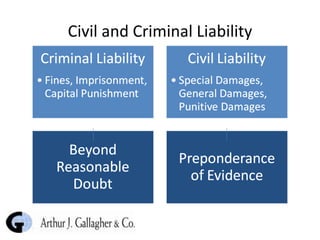
Civil and Criminal Liability
Elements of Negligence Legal duty to act Breach of legal duty Causal connection Actual damages
Risk Management  & The Nonprofit Sector Great Free Resource Online www.nonprofitrisk.org   Nonprofit Risk Management Center
Who are the Stakeholders? Before choosing and executing a risk management plan, the VHA must identify its stakeholders: Patients  Donors Volunteers Employees
Patients and Risk Management The best risk management practices make the organization able to serve patients better Patients are served in an environment that meets their needs more often More patients are served because the organization spends less money responding to negative events Patients are protected from the organization’s negative risk outcomes
Donors and Risk Management Nonprofit organizations are subject to the risk appetites of donors Donors (especially major gifts) must be convinced that the organization will make  prudent  decisions and investments of their contributions Donors will reduce their giving if bad events happen
Volunteers and Risk Management The most valuable volunteers recognize that they are taking risks along with the organization Volunteers who are not concerned about their own risks may actually increase the organization’s risk
Employees and Risk Management Employees should not have to suffer the consequences of poor risk management Budgets limited by poor risk financing tools Working conditions compromised by poor risk choices Unneeded diligence to protect themselves
Role of Risk Management Good stewardship of donor funds, volunteer time, attention to patient needs and employee protection require good risk management practices For a nonprofit organization, these practices do not differ much from a for-profit corporation’s good risk management practices
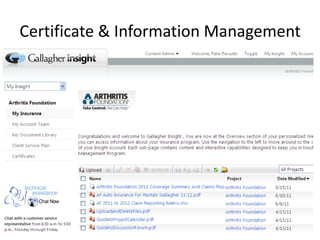
Certificate & Information Management
Contract Review Who Is An Insured? Executive Officers, Directors, Employees and Volunteers of the VHA Additional Insured Status Amends the “Who Is An Insured” section of policy Frequently requested due to litigious society Extent of Coverage afforded is based on Endorsement Waiver of Subrogation Precludes recovery by grantors insurer regardless of liability on the part of the requesting entity  Accident experience becomes part of grantors experience rating impacting future premiums
Event Liability Anyone can be sued
Are You Prepared?  What could go wrong: On premises/location injuries Food poisoning Product liability for prizes Damage to premises/location Adult beverage liability
Indemnification Depending on the contract, you may become liable for the negligence of others: Employees Volunteers Venue Servers Caterers Bartenders
Adult Beverage Liability Impaired decision-making Alcohol-related personal injury Over-serving Serving under age Contributing to DUI accident Contributing to disorderly conduct
Know the Law Familiarize yourself with your jurisdiction’s Dram Shop Act laws Synchronize your best practices with the vendors Be sure bartenders and event managers can identify and cease service to over-served and under-aged patrons Consider a designated driver program Call for help when appropriate
Know Your Contracts Read your contract and any demands for additional insured coverage Identify all parties whose actions you may become liable for Seek indemnification from third parties when appropriate Implement best practices and encourage others to implement as well
Sharing Best Practices Brain storm event hazards both internally and with your Risk Management Advisor and pre-plan response Engage your Insurance Broker in this process!  Give strong consideration to subcontracting hazardous tasks such as food and drink service, amusement operation, and security and seek proper indemnification and waivers Collect participant and volunteer waivers Name an on-site incident response coordinator and communicate contact information to all staff and volunteers Establish accident investigation procedures that include witness statements and pictures
Weather Coverage Coverage for loss of fixed expenses, revenue, and/or profit associated with weather disruption of an event Rain is the most common peril insured but policies can also be written for snow, temperature, wind, hurricane or lightning Rain coverage is generally written with a coverage trigger of rainfall during a set timeframe in hours and common rain increments are .10, .20, .25, .50, .75 or 1 inch The lower the selected rain increment the higher the cost of coverage  Premium rule of thumb is 5%  of coverage limit in the middle of the rain increment spectrum Coverage must be bound at least 7 to 10 days in advance and most policies have a $500 minimum premium

Risk Management and Special Events

  • 1.
    Presented by: RiskManagement Issues in Special Events Team Atlanta
  • 2.
    Our Presenters JosephCaruso CIC, SCLA Area Senior Vice President, 25 years risk management experience, Finance and Claims background. Phone: 678-393-5281 Mobile: 770-845-7075 Email: [email_address] Jim Linn Area Senior Vice President, 31 years risk management experience, Finance, Audit, and Underwriting background. Phone: 678-393-5280 Mobile: 770-714-4714 Email: [email_address]
  • 3.
  • 4.
    Elements of NegligenceLegal duty to act Breach of legal duty Causal connection Actual damages
  • 5.
    Risk Management & The Nonprofit Sector Great Free Resource Online www.nonprofitrisk.org Nonprofit Risk Management Center
  • 6.
    Who are theStakeholders? Before choosing and executing a risk management plan, the VHA must identify its stakeholders: Patients Donors Volunteers Employees
  • 7.
    Patients and RiskManagement The best risk management practices make the organization able to serve patients better Patients are served in an environment that meets their needs more often More patients are served because the organization spends less money responding to negative events Patients are protected from the organization’s negative risk outcomes
  • 8.
    Donors and RiskManagement Nonprofit organizations are subject to the risk appetites of donors Donors (especially major gifts) must be convinced that the organization will make prudent decisions and investments of their contributions Donors will reduce their giving if bad events happen
  • 9.
    Volunteers and RiskManagement The most valuable volunteers recognize that they are taking risks along with the organization Volunteers who are not concerned about their own risks may actually increase the organization’s risk
  • 10.
    Employees and RiskManagement Employees should not have to suffer the consequences of poor risk management Budgets limited by poor risk financing tools Working conditions compromised by poor risk choices Unneeded diligence to protect themselves
  • 11.
    Role of RiskManagement Good stewardship of donor funds, volunteer time, attention to patient needs and employee protection require good risk management practices For a nonprofit organization, these practices do not differ much from a for-profit corporation’s good risk management practices
  • 12.
  • 13.
    Contract Review WhoIs An Insured? Executive Officers, Directors, Employees and Volunteers of the VHA Additional Insured Status Amends the “Who Is An Insured” section of policy Frequently requested due to litigious society Extent of Coverage afforded is based on Endorsement Waiver of Subrogation Precludes recovery by grantors insurer regardless of liability on the part of the requesting entity Accident experience becomes part of grantors experience rating impacting future premiums
  • 14.
  • 15.
    Are You Prepared? What could go wrong: On premises/location injuries Food poisoning Product liability for prizes Damage to premises/location Adult beverage liability
  • 16.
    Indemnification Depending onthe contract, you may become liable for the negligence of others: Employees Volunteers Venue Servers Caterers Bartenders
  • 17.
    Adult Beverage LiabilityImpaired decision-making Alcohol-related personal injury Over-serving Serving under age Contributing to DUI accident Contributing to disorderly conduct
  • 18.
    Know the LawFamiliarize yourself with your jurisdiction’s Dram Shop Act laws Synchronize your best practices with the vendors Be sure bartenders and event managers can identify and cease service to over-served and under-aged patrons Consider a designated driver program Call for help when appropriate
  • 19.
    Know Your ContractsRead your contract and any demands for additional insured coverage Identify all parties whose actions you may become liable for Seek indemnification from third parties when appropriate Implement best practices and encourage others to implement as well
  • 20.
    Sharing Best PracticesBrain storm event hazards both internally and with your Risk Management Advisor and pre-plan response Engage your Insurance Broker in this process! Give strong consideration to subcontracting hazardous tasks such as food and drink service, amusement operation, and security and seek proper indemnification and waivers Collect participant and volunteer waivers Name an on-site incident response coordinator and communicate contact information to all staff and volunteers Establish accident investigation procedures that include witness statements and pictures
  • 21.
    Weather Coverage Coveragefor loss of fixed expenses, revenue, and/or profit associated with weather disruption of an event Rain is the most common peril insured but policies can also be written for snow, temperature, wind, hurricane or lightning Rain coverage is generally written with a coverage trigger of rainfall during a set timeframe in hours and common rain increments are .10, .20, .25, .50, .75 or 1 inch The lower the selected rain increment the higher the cost of coverage Premium rule of thumb is 5%  of coverage limit in the middle of the rain increment spectrum Coverage must be bound at least 7 to 10 days in advance and most policies have a $500 minimum premium

Editor's Notes

  • #11 JH: Yes. It affects the people participating in this webinar now – and their professional colleagues. In addition to legal liability for injuries to others when the AF or its employees are negligent, in the US, employers must pay for employee injuries on the job regardless of fault . PP: Regardless of fault? JH: Indeed. During the industrial revolution, when people were working away from their farm or home in growing numbers, employee injuries would often go uncompensated because employers had the advantage in defending against liability for employee injuries. Witnesses would not testify against their employers for fear of losing their jobs, employers had access to more skilled attorneys, and often had a political advantage in the courtroom. So our workers compensation system emerged to protect worker rights. Employees gave up the right to sue for pain and suffering, but employers must pay medical expenses and lost time for workplace injuries regardless of fault. PP: So how does that affect the employees? JH: Occupational Safety and Health standards have evolved to supplement WC laws. They dictate the workplace safety standards for everything from number of doors in an office to ergonomic standards to prevent repetitive stress injuries like carpal tunnel. Complying with these laws keeps employees safe and makes them more productive, since they lose work time due to injury less frequently.
  • #12 PP: So you’re saying that effective risk management not only protects the AF from lawsuits, but also benefits patients, donors, volunteers and employees? JH: That’s right. I’m looking forward to discussing all the ways this happens over the next few webinars. PP: And I am looking forward to talking about them with you. Dr. Hilliard will return later in the webinar to talk more specifically about liquor liability.