Overview
 Counseling patients
 Contraindications
 Procedure types
 Postoperative follow up
 Short and long term complications
Barriers to Vasectomy
 Cost
 Fears
 Pain of the procedure
 Complications
 Uncertainty about sterility
 Cultural or religious beliefs
 Access to providers
Vasectomy
 Providers
 79% Urologist
 13% Family physicians
 8% General surgeons
 Cost
 $350-$1000
 $385 for uninsured patients at SFMR(70%
discount)
 Jeffco $300
Vasectomy vs Tubal
Ligation
 Tubal ligation
 Vasectomy is more cost effective, shorter
recovery period, less invasive, less
anesthesia than BTL
 Vasectomy cost is one quarter that of tubal
 Incidence
○ 5.7% of men
○ 16.7% of women
 Higher discrepancy outside the US
Preoperative Evaluation
 A preoperative consultation should be
performed in person
 Phone consultation: less desirable
alternative
 We do an in office visit
 History: contraindications, number of children,
relationship status
 Discuss risks/benefits/alternatives
 Physical examination
○ Easily palpable vas deferens
○ Lack of anatomic abnormalities: mass, varicocele
Preoperative Counseling
 Permanent procedure
 Not considered sterile until post-vasectomy
semen analysis
 A backup method of birth control should be
used until sterility confirmed
 Risk of pregnancy is 1 in 2000 for men
after vasectomy with post vasectomy
azoospermia or a PVSA showing rare non-
motile sperm
 Need for repeat vasectomy <1%
Preoperative Counseling
 Vasectomy is not a risk factor for:
 Prostate cancer
 Testicular cancer
 Coronary artery disease
 Stroke
 Hypertension
 Dementia
 Immune dysfunction
 Best candidate is man over 30 in a
stable, committed relationship
Preoperative Counseling
 Relative contraindications
 Varicocele
 Hydrocele
 Cryptorchidism
 Scrotal mass
 Bleeding diathesis
 Absolute contraindications
 Scrotal hematoma
 Genitourinary/groin infection
 Avoid ASA/NSAIDs for 7 days prior
 Diazepam 10mg one hour prior to the procedure
 Relaxes patient
 Relaxes cremasteric muscles
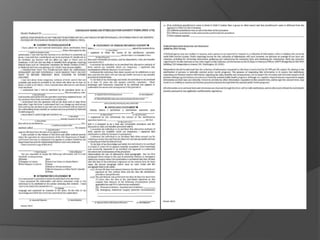
Informed Consent
 Discussion with patient and partner is
recommended
 not required for consent
 Procedural consent and MED 178
 Complete at initial visit as you cannot
consent after the patient has taken
diazepam on the day of the procedure
 Medicaid: MED 178
 30 days prior to the procedure
 Complete last section on day of procedure
Preparation
 Warm the room to 70-80 degrees
 Relaxes cremasteric and dartos muscles
 Prep
 Betadine or chlorhexadine
 Sterile drape
 Equipment
 Thermal cautery or electrocautery with needle tip
 Anesthetic:
○ Skin: 1cc of 1% lidocaine, 30g needle
○ Vasal block: 5cc per side of 1% or2% lidocaine or ropivicaine without
epinephrine, 27g needle
 4-0 absorbable suture (chromic)
 Instruments
○ Vas clamp/towel clamps
○ Sharp hemostat
○ Scissors
○ Pickups
○ Needle holder
Anesthesia
 AUA: Vasectomy should be performed
with local anesthesia +/- oral sedation
 IV or general anesthesia can be
considered for certain patients
 Use of a jet injector (No needle
technique)
 Improved pain with administration of
anesthesia
 No difference in pain during procedure
 Risk of injecting own finger
Anesthesia
 0.5-1ml of lidocaine injected over median
raphe in the middle of the scrotum
 With or without epinephrine
 Vasal nerve block
 Vas deferens brought up under median raphe
 2-5ml of anesthetic injected along vas sheath
 Use smallest caliber needle possible
 Consider EMLA
Isolation of the Vas
Procedure Type
 Traditional vasectomy
 Bilateral skin incisions
 Vas separated, a portion removed and ends
closed with electrocautery, suture or clips
 No-scalpel technique
 Scrotal skin punctured and spread open with
a sharp hemostat <10mm
 Skin opened with vas grasped by vas clamp
 Minimal dissection with vas dissector
 Minimally Invasive Vasectomy
No Scalpel Vasectomy
 Benefits
 Reduces operative time
 Reduces operative complications (2014
Cochrane Review)
○ Bleeding
○ Hematoma
○ Postoperative pain
○ Postsurgical infection
 Hastens resumption of sexual activity
 AUA: The vas deferens should be isolated
using a minimally invasive technique such
as the no scalpel method
Anatomy
 Innervation
 Ilioinguinal and genitofemoral nerves
Isolation of the Vas
 Bring the vas immediately under the
anesthetized wheal and grasp it through
tightly stretched skin with the vas clamp or
towel clamp
 Sharp hemostat used to stab the skin over
vas and spread open
 Vas clamp then repositioned to grasp the
vas without the overlying skin
 The perivasal tissue is dissected free to
expose a loop of vas which is secured with
hemostats
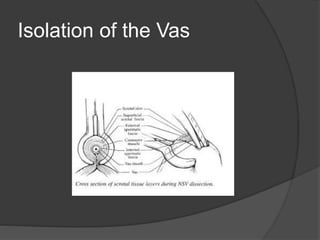
Isolation of the Vas
Dividing the Vas
 The vas is divided
 A segment of 10-15mm may be excised
 Failure rate most related to method of
management of vas ends
 Histologic examination of limited value
 Irrigation of the prostatic end of no value
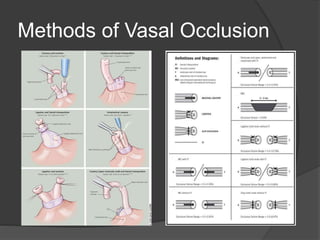
Methods of Vasal Occlusion
 AUA recommended methods
 Mucosal cautery with facial interposition without
ligature or clip placement
 Mucosal cautery without facial interposition, ligature
or clip placement
 Open ended vasectomy, testicular end open,
abdominal end cauterized with facial interposition
 Non-divisional extended electrocautery
 Clips or ligatures with or without excision of a
segment may be used by surgeons whose training
and experience allow for success with this method.
 Acceptable failure rate threshold <1%
Managing the Vas ends
 Fascial interposition without ligation and with
1-1.5cm of intraluminal fulguration of the
prostatic end: ??? most effective method
 Facial interposition significantly reduces risk of
recanalization at 34 weeks
 Ligation of both ends has a failure rate of 1-6%
 Ischemic sloughing of ends leads to recanalization
 Open ended vasectomy
 Leave testicular end open
 Lower rate of congestive epididymitis
Methods of Vasal Occlusion
Other Methods of Managing
Vas Ends
 Folding back and suturing
 Placement of clips
 Marie Stopes International (MSI)
 Non-divisional extended electrocautery
 Destroy 2.5-3cm of vas without dividing
Completing the procedure
 Observe for bleeding and control with
direct pressure and/or cautery
 Return vas to scrotal cavity
 Leave wound open to heal unless
incisional approach used
 Dress with antibiotic ointment and a
sterile dressing with scrotal support
Complications
 Most common
 Hemorrhage
 Infection
 Hematoma
 Chronic pain
 Lowest incidence of complications in
providers performing more than 50
procedures/year
 1-2% have hematoma or infection
 1-2% have chronic scrotal pain
Sperm Granuloma
 Immunologic reaction to extravasation of
sperm
 Thought to be protective
 May play a role in post vasectomy pain
syndrome
 May play a role in recanalization
Post-vasectomy Pain
Syndrome
 Persistent scrotal pain months to years after the
procedure
 Chronic dull pain, worse with ejaculation
 Incidence 1-6%
 Up to 15% report some bothersome pain chronically
 Possible causes:
 Epididymal congestion
 Nerve entrapment
 Treatment
 Mild: NSAIDS, warm baths
 Nerve blocks/steroid injections
 Granuloma excision
 Vasectomy reversal
 Epididymectomy
Post Vasectomy Semen
Analysis
 A fresh, uncentrifuged semen specimen should be examined within 1-2
hours of ejaculation
 <100,000 non-motile sperm per ml
 8-16 weeks post procedure is the ideal time
 WHO: One semen specimen analyzed 3 months and 20 ejaculations
after procedure
 Obtain after abstinence for 2-7 days
 Keep at body temperature
 Transport within 60 minutes/Examine within 4 hours
 Protocol more important when confirmation of motility desired
 19% fail to provide a semen sample for analysis
 Repeat specimen in 1-2 months when sperm seen on 3 month
specimen
 CLIA requires that provider performed microscopy be qualitative
 Cannot quantitate sperm concentration, only presence and motility
 Home PVSA kit
 Sensitive to <250,000/ml
 Does not detect motility
Vasectomy Failure
 Definition (AUA): presence of motile sperm 6
months post procedure
 Causes
 Recanalization: presence of sperm after a sample
previously showing azoospermia
 Aberrant anatomy: third vas deferens
 Technical error ligation of the same side twice
 Presence of motile sperm on the 3 month
sample likely represents vasectomy failure
 Presence of non-motile sperm should be
followed with monthly semen analyses until
azoospermia achieved
Vasectomy Reversal
 Most likely to succeed if done <15 years
after the procedure
 Pregnancy rates post procedure: (patency)
○ <3 years: 76% (97%)
○ 3-8 years: 53% (88%)
○ 9-14 years: 44% (79%)
○ >15 years: 30% (71%)
 Vasovastomy
 Pregnancy rate 45-70%
 Vasoepididymostomy
 Done in cases of epididymal obstruction
 Pregnancy rate 10-50%
Vasectomy Reversal
 Cost: $16,000-$30,000
 Factors associated with an increased
risk of desiring reversal
 Age: 12.5% increased risk in 20’s
 Change in marital status
 Men with children
 Alternative: sperm retrieval with IVF
Postoperative Counseling
 Refrain from ejaculation for one week
 No prophylactic antibiotics
 No protection against STI’s
 Use another method of contraception
until azoospermia confirmed
 Ice and scrotal support for 48 hours
 NSAIDs/Hydrocodone for pain control
Postoperative Counseling
 Normal
 Mild pain, swelling, bruising for 2-3 days
 Blood in the ejaculate
 Observe for
 Increasing pain
 Swelling
 Drainage
 Fevers
 Bleeding
 Return to work
 Light duty in 2-3 days
 No heavy lifting for 7 days
 Need someone to drive patient home
 Keep the area dry for 24 hours, then may shower and
wash gently
Alternative Procedures
 Vasal occlusion
 Injected plugs
○ Medical-grade polyurethane or silicone rubber
○ Intra-vas device: polyurethane or silicone plug
 ? Better chance at reversal
 Longer time to sterility
 Percutaneous injection
 Temporary: polymer
 Permanent: sclerosing agent
Summary
 Patient selection and counseling
 Proper equipment
 No scalpel vasectomy is preferred
 Follow up PVSA to ensure sterility
Questions?

Vasectomy.pptx

  • 2.
    Overview  Counseling patients Contraindications  Procedure types  Postoperative follow up  Short and long term complications
  • 3.
    Barriers to Vasectomy Cost  Fears  Pain of the procedure  Complications  Uncertainty about sterility  Cultural or religious beliefs  Access to providers
  • 4.
    Vasectomy  Providers  79%Urologist  13% Family physicians  8% General surgeons  Cost  $350-$1000  $385 for uninsured patients at SFMR(70% discount)  Jeffco $300
  • 5.
    Vasectomy vs Tubal Ligation Tubal ligation  Vasectomy is more cost effective, shorter recovery period, less invasive, less anesthesia than BTL  Vasectomy cost is one quarter that of tubal  Incidence ○ 5.7% of men ○ 16.7% of women  Higher discrepancy outside the US
  • 6.
    Preoperative Evaluation  Apreoperative consultation should be performed in person  Phone consultation: less desirable alternative  We do an in office visit  History: contraindications, number of children, relationship status  Discuss risks/benefits/alternatives  Physical examination ○ Easily palpable vas deferens ○ Lack of anatomic abnormalities: mass, varicocele
  • 7.
    Preoperative Counseling  Permanentprocedure  Not considered sterile until post-vasectomy semen analysis  A backup method of birth control should be used until sterility confirmed  Risk of pregnancy is 1 in 2000 for men after vasectomy with post vasectomy azoospermia or a PVSA showing rare non- motile sperm  Need for repeat vasectomy <1%
  • 8.
    Preoperative Counseling  Vasectomyis not a risk factor for:  Prostate cancer  Testicular cancer  Coronary artery disease  Stroke  Hypertension  Dementia  Immune dysfunction  Best candidate is man over 30 in a stable, committed relationship
  • 9.
    Preoperative Counseling  Relativecontraindications  Varicocele  Hydrocele  Cryptorchidism  Scrotal mass  Bleeding diathesis  Absolute contraindications  Scrotal hematoma  Genitourinary/groin infection  Avoid ASA/NSAIDs for 7 days prior  Diazepam 10mg one hour prior to the procedure  Relaxes patient  Relaxes cremasteric muscles
  • 10.
    Informed Consent  Discussionwith patient and partner is recommended  not required for consent  Procedural consent and MED 178  Complete at initial visit as you cannot consent after the patient has taken diazepam on the day of the procedure  Medicaid: MED 178  30 days prior to the procedure  Complete last section on day of procedure
  • 12.
    Preparation  Warm theroom to 70-80 degrees  Relaxes cremasteric and dartos muscles  Prep  Betadine or chlorhexadine  Sterile drape  Equipment  Thermal cautery or electrocautery with needle tip  Anesthetic: ○ Skin: 1cc of 1% lidocaine, 30g needle ○ Vasal block: 5cc per side of 1% or2% lidocaine or ropivicaine without epinephrine, 27g needle  4-0 absorbable suture (chromic)  Instruments ○ Vas clamp/towel clamps ○ Sharp hemostat ○ Scissors ○ Pickups ○ Needle holder
  • 13.
    Anesthesia  AUA: Vasectomyshould be performed with local anesthesia +/- oral sedation  IV or general anesthesia can be considered for certain patients  Use of a jet injector (No needle technique)  Improved pain with administration of anesthesia  No difference in pain during procedure  Risk of injecting own finger
  • 14.
    Anesthesia  0.5-1ml oflidocaine injected over median raphe in the middle of the scrotum  With or without epinephrine  Vasal nerve block  Vas deferens brought up under median raphe  2-5ml of anesthetic injected along vas sheath  Use smallest caliber needle possible  Consider EMLA
  • 15.
  • 16.
    Procedure Type  Traditionalvasectomy  Bilateral skin incisions  Vas separated, a portion removed and ends closed with electrocautery, suture or clips  No-scalpel technique  Scrotal skin punctured and spread open with a sharp hemostat <10mm  Skin opened with vas grasped by vas clamp  Minimal dissection with vas dissector  Minimally Invasive Vasectomy
  • 17.
    No Scalpel Vasectomy Benefits  Reduces operative time  Reduces operative complications (2014 Cochrane Review) ○ Bleeding ○ Hematoma ○ Postoperative pain ○ Postsurgical infection  Hastens resumption of sexual activity  AUA: The vas deferens should be isolated using a minimally invasive technique such as the no scalpel method
  • 18.
  • 19.
    Isolation of theVas  Bring the vas immediately under the anesthetized wheal and grasp it through tightly stretched skin with the vas clamp or towel clamp  Sharp hemostat used to stab the skin over vas and spread open  Vas clamp then repositioned to grasp the vas without the overlying skin  The perivasal tissue is dissected free to expose a loop of vas which is secured with hemostats
  • 20.
  • 21.
    Dividing the Vas The vas is divided  A segment of 10-15mm may be excised  Failure rate most related to method of management of vas ends  Histologic examination of limited value  Irrigation of the prostatic end of no value
  • 22.
    Methods of VasalOcclusion  AUA recommended methods  Mucosal cautery with facial interposition without ligature or clip placement  Mucosal cautery without facial interposition, ligature or clip placement  Open ended vasectomy, testicular end open, abdominal end cauterized with facial interposition  Non-divisional extended electrocautery  Clips or ligatures with or without excision of a segment may be used by surgeons whose training and experience allow for success with this method.  Acceptable failure rate threshold <1%
  • 23.
    Managing the Vasends  Fascial interposition without ligation and with 1-1.5cm of intraluminal fulguration of the prostatic end: ??? most effective method  Facial interposition significantly reduces risk of recanalization at 34 weeks  Ligation of both ends has a failure rate of 1-6%  Ischemic sloughing of ends leads to recanalization  Open ended vasectomy  Leave testicular end open  Lower rate of congestive epididymitis
  • 24.
  • 25.
    Other Methods ofManaging Vas Ends  Folding back and suturing  Placement of clips  Marie Stopes International (MSI)  Non-divisional extended electrocautery  Destroy 2.5-3cm of vas without dividing
  • 26.
    Completing the procedure Observe for bleeding and control with direct pressure and/or cautery  Return vas to scrotal cavity  Leave wound open to heal unless incisional approach used  Dress with antibiotic ointment and a sterile dressing with scrotal support
  • 27.
    Complications  Most common Hemorrhage  Infection  Hematoma  Chronic pain  Lowest incidence of complications in providers performing more than 50 procedures/year  1-2% have hematoma or infection  1-2% have chronic scrotal pain
  • 28.
    Sperm Granuloma  Immunologicreaction to extravasation of sperm  Thought to be protective  May play a role in post vasectomy pain syndrome  May play a role in recanalization
  • 29.
    Post-vasectomy Pain Syndrome  Persistentscrotal pain months to years after the procedure  Chronic dull pain, worse with ejaculation  Incidence 1-6%  Up to 15% report some bothersome pain chronically  Possible causes:  Epididymal congestion  Nerve entrapment  Treatment  Mild: NSAIDS, warm baths  Nerve blocks/steroid injections  Granuloma excision  Vasectomy reversal  Epididymectomy
  • 30.
    Post Vasectomy Semen Analysis A fresh, uncentrifuged semen specimen should be examined within 1-2 hours of ejaculation  <100,000 non-motile sperm per ml  8-16 weeks post procedure is the ideal time  WHO: One semen specimen analyzed 3 months and 20 ejaculations after procedure  Obtain after abstinence for 2-7 days  Keep at body temperature  Transport within 60 minutes/Examine within 4 hours  Protocol more important when confirmation of motility desired  19% fail to provide a semen sample for analysis  Repeat specimen in 1-2 months when sperm seen on 3 month specimen  CLIA requires that provider performed microscopy be qualitative  Cannot quantitate sperm concentration, only presence and motility  Home PVSA kit  Sensitive to <250,000/ml  Does not detect motility
  • 31.
    Vasectomy Failure  Definition(AUA): presence of motile sperm 6 months post procedure  Causes  Recanalization: presence of sperm after a sample previously showing azoospermia  Aberrant anatomy: third vas deferens  Technical error ligation of the same side twice  Presence of motile sperm on the 3 month sample likely represents vasectomy failure  Presence of non-motile sperm should be followed with monthly semen analyses until azoospermia achieved
  • 32.
    Vasectomy Reversal  Mostlikely to succeed if done <15 years after the procedure  Pregnancy rates post procedure: (patency) ○ <3 years: 76% (97%) ○ 3-8 years: 53% (88%) ○ 9-14 years: 44% (79%) ○ >15 years: 30% (71%)  Vasovastomy  Pregnancy rate 45-70%  Vasoepididymostomy  Done in cases of epididymal obstruction  Pregnancy rate 10-50%
  • 33.
    Vasectomy Reversal  Cost:$16,000-$30,000  Factors associated with an increased risk of desiring reversal  Age: 12.5% increased risk in 20’s  Change in marital status  Men with children  Alternative: sperm retrieval with IVF
  • 34.
    Postoperative Counseling  Refrainfrom ejaculation for one week  No prophylactic antibiotics  No protection against STI’s  Use another method of contraception until azoospermia confirmed  Ice and scrotal support for 48 hours  NSAIDs/Hydrocodone for pain control
  • 35.
    Postoperative Counseling  Normal Mild pain, swelling, bruising for 2-3 days  Blood in the ejaculate  Observe for  Increasing pain  Swelling  Drainage  Fevers  Bleeding  Return to work  Light duty in 2-3 days  No heavy lifting for 7 days  Need someone to drive patient home  Keep the area dry for 24 hours, then may shower and wash gently
  • 36.
    Alternative Procedures  Vasalocclusion  Injected plugs ○ Medical-grade polyurethane or silicone rubber ○ Intra-vas device: polyurethane or silicone plug  ? Better chance at reversal  Longer time to sterility  Percutaneous injection  Temporary: polymer  Permanent: sclerosing agent
  • 37.
    Summary  Patient selectionand counseling  Proper equipment  No scalpel vasectomy is preferred  Follow up PVSA to ensure sterility
  • 38.