VARIOUS TYPES
OF PRESSURE
PIPE
1
Depending upon the construction material, the
pressure pipes are the following types:
Cast iron pipes
Steel pipes
Reinforced cement concrete pipes
Hume steel pipes
Vitrified clay pipes
Asbestos cement pipes
Miscellaneous types of pipes
2
CAST IRON PIPES
 Its used in water supply schemes, and
 Highly resident to corrosion
 Long life upto 100 years or so
 Manufactured in lengths of about 3.5m, and upto
6m.
 Joined together by bell and spigot joint or
expansion joint or flanged or threaded joint.
 Available in sizes up 1.20m or more dia.
3
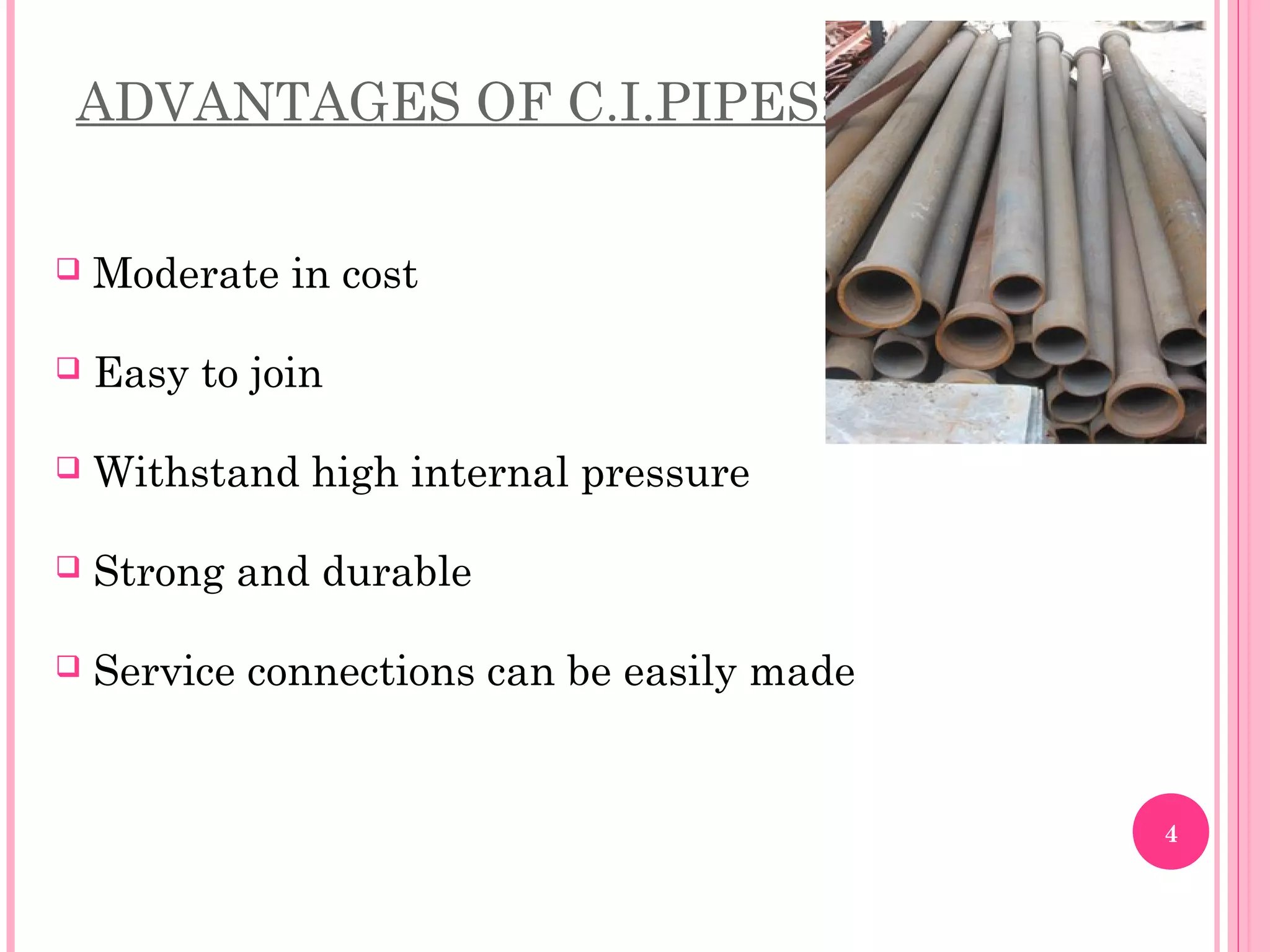
ADVANTAGES OF C.I.PIPES:
 Moderate in cost
 Easy to join
 Withstand high internal pressure
 Strong and durable
 Service connections can be easily made
4
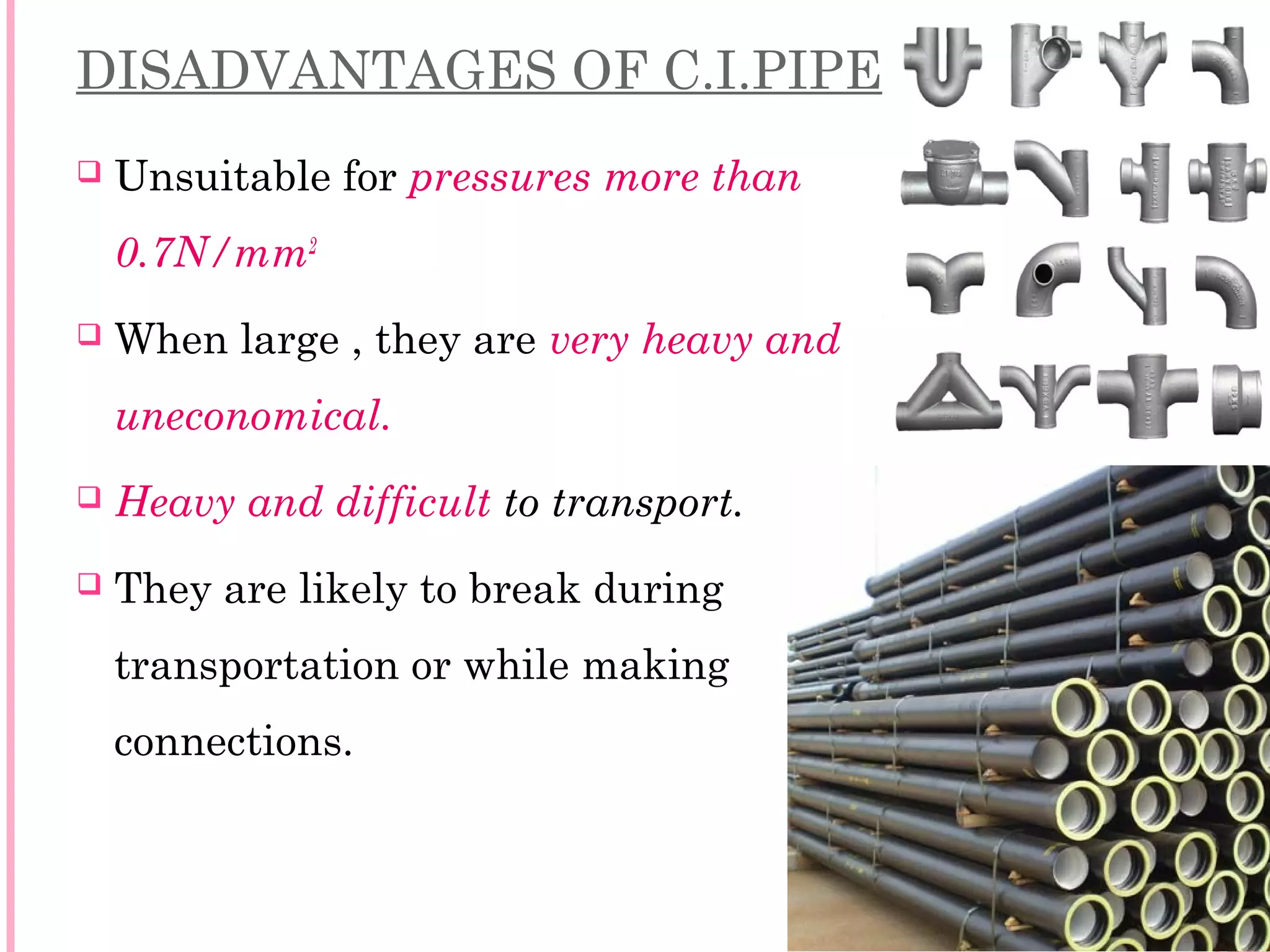
DISADVANTAGES OF C.I.PIPES:
 Unsuitable for pressures more than
0.7N/mm2
 When large , they are very heavy and
uneconomical.
 Heavy and difficult to transport.
 They are likely to break during
transportation or while making
connections.
5
STEEL PIPES
 Steel pipes of various thickness for with standing
different pressures
 Steel is strong in tension, even large size dia
pipes(say upto 6m or so) are withstanding high
internal pressures.
 Its frequently used for raw water mains, or
pumping mains.
 Difficult to making connections, its used for
distribution mains 6
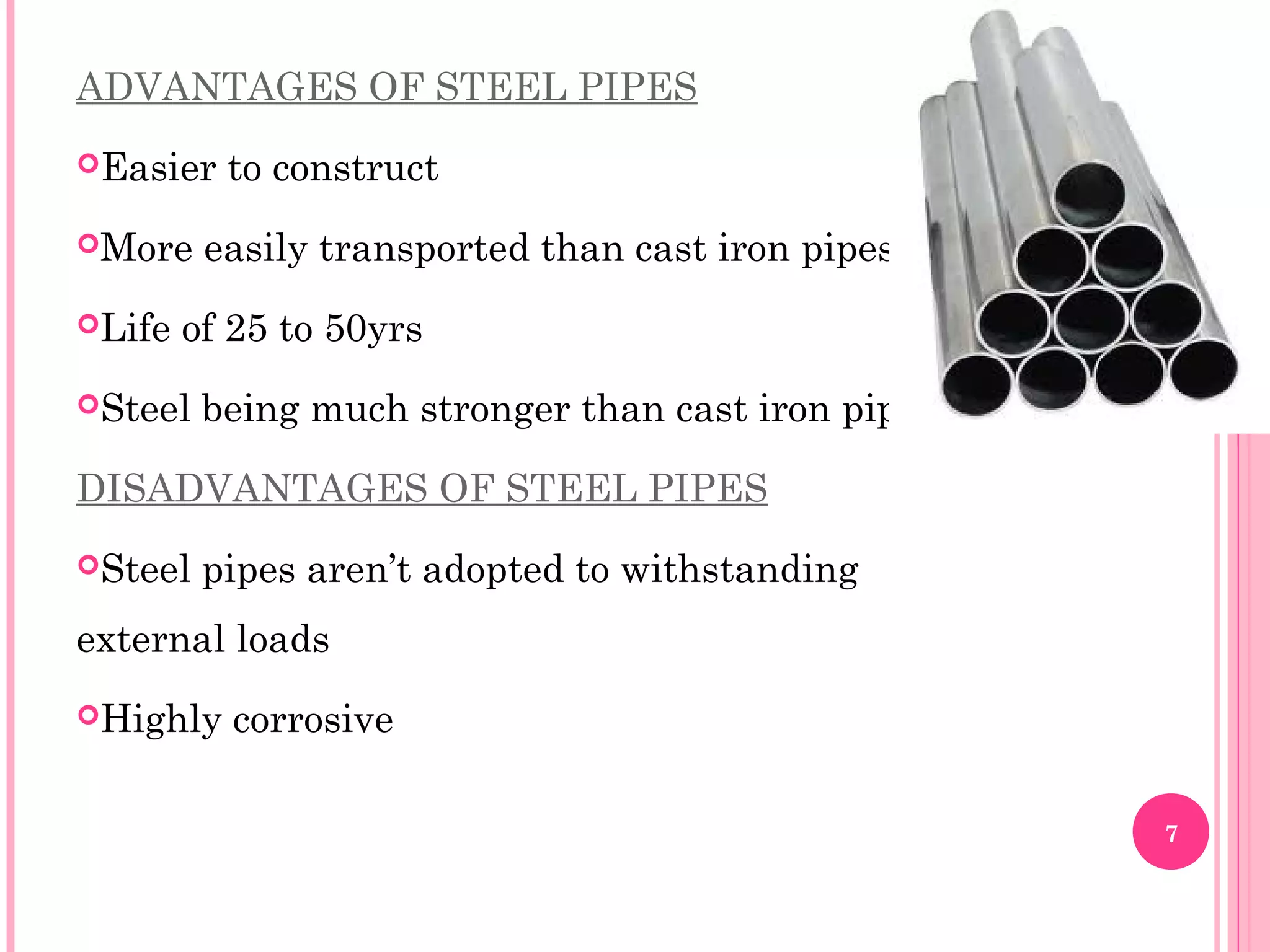
ADVANTAGES OF STEEL PIPES
Easier to construct
More easily transported than cast iron pipes.
Life of 25 to 50yrs
Steel being much stronger than cast iron pipes
DISADVANTAGES OF STEEL PIPES
Steel pipes aren’t adopted to withstanding
external loads
Highly corrosive
7
CEMENT CONCRETE PIPES:
 It may be precast or cast-in-situ.
 P.C.C pipes are manufactured in small
size( upto a max of 0.6m dia)
 Cast in situ pipes are useful when the
site conditions are difficult and
difficult to carry the pipes.
 When pipes are cast at site, lesser
supervision and check is possible and
gets greater quality control. 8
ADVANTAGES OF C.C. PIPES
Inside surface can be smooth.
Low maintenance cost.
No corrosion and long life( about 75years)
Cast-in-situ pipes eliminate transport charges.
Easily cast either in factories or at site.
DISADVANTAGES OF C.C. PIPES
Affected by acids and salty waters.
Very difficult to repair and to make connections.
Cannot withstand high pressures and tensile stresses.
May crack during handling and transport operations
Porosity may cause leakages
9
R.C.C. PIPES
R.c.c pipes can be manufactured by
Pipes having bar and mesh
reinforcement
Pipes are made by lining thin cylinder
steel shells both internally and externally
with rich cement concrete.
10
HUME STEEL PIPES
 It consist of thin steel shell coated from inside
with C.M
 Tk of the inside coating varies from 1.2 to 3.75cm
depending upon the size of the pipe.
 And also coated from outside, to protect the steel
from external weather or soil action.
 The tk of steel shell depends upon the size of the
pipes and also pressure to be born by the pipe.
11
VITRIFIED CLAY PIPES:
 Generally not used as pressure pipes for carrying
water, used for carrying sewage and drainage.
 They are manufactured by moulding special quality
clay.
 They aren’t used as pressure pipes because clay is
very weak in tension, and formation of watertight
joints becomes difficult on them. 12
ASBESTOS PIPES:
 The asbestos fibre which is thoroughly mixed
with cement, serves as reinforcement.
 Available in diff sizes, say from 10 to 90 cm in dia
in about 4m lengths.
 Its withstand pressures of 350kN/m2
to
1400kN/m2
13
MISCELLANEOUS TYPES OF PIPES:
Various other materials which may be used for manufacturing
pipe conduits are
 Copper pipes
 Wrought iron pipes
 Plastic pipes
Copper pipes:
very costly and highly resistant to acidic as well as alkaline
waters.
They can be bent easily and don’t sag due to heat.
Therefore it is very useful for carrying hot water in the
interior of the building.
14
CONT…
Wrought iron pipes:
It is lighter than cast iron pipes and easily cut,
threaded and worked.
More costly but neat in appearance.
Generally manufactured in small sizes and useful
for indoor works.
Corrode quickly and less durable.
Plastic pipes:
Lighter and free from corrosion
Low strength and less durable.
They can’t withstand high temps exceeding 600
c
or so. 15

Various types of pressure pipes

  • 1.
  • 2.
    Depending upon theconstruction material, the pressure pipes are the following types: Cast iron pipes Steel pipes Reinforced cement concrete pipes Hume steel pipes Vitrified clay pipes Asbestos cement pipes Miscellaneous types of pipes 2
  • 3.
    CAST IRON PIPES Its used in water supply schemes, and  Highly resident to corrosion  Long life upto 100 years or so  Manufactured in lengths of about 3.5m, and upto 6m.  Joined together by bell and spigot joint or expansion joint or flanged or threaded joint.  Available in sizes up 1.20m or more dia. 3
  • 4.
    ADVANTAGES OF C.I.PIPES: Moderate in cost  Easy to join  Withstand high internal pressure  Strong and durable  Service connections can be easily made 4
  • 5.
    DISADVANTAGES OF C.I.PIPES: Unsuitable for pressures more than 0.7N/mm2  When large , they are very heavy and uneconomical.  Heavy and difficult to transport.  They are likely to break during transportation or while making connections. 5
  • 6.
    STEEL PIPES  Steelpipes of various thickness for with standing different pressures  Steel is strong in tension, even large size dia pipes(say upto 6m or so) are withstanding high internal pressures.  Its frequently used for raw water mains, or pumping mains.  Difficult to making connections, its used for distribution mains 6
  • 7.
    ADVANTAGES OF STEELPIPES Easier to construct More easily transported than cast iron pipes. Life of 25 to 50yrs Steel being much stronger than cast iron pipes DISADVANTAGES OF STEEL PIPES Steel pipes aren’t adopted to withstanding external loads Highly corrosive 7
  • 8.
    CEMENT CONCRETE PIPES: It may be precast or cast-in-situ.  P.C.C pipes are manufactured in small size( upto a max of 0.6m dia)  Cast in situ pipes are useful when the site conditions are difficult and difficult to carry the pipes.  When pipes are cast at site, lesser supervision and check is possible and gets greater quality control. 8
  • 9.
    ADVANTAGES OF C.C.PIPES Inside surface can be smooth. Low maintenance cost. No corrosion and long life( about 75years) Cast-in-situ pipes eliminate transport charges. Easily cast either in factories or at site. DISADVANTAGES OF C.C. PIPES Affected by acids and salty waters. Very difficult to repair and to make connections. Cannot withstand high pressures and tensile stresses. May crack during handling and transport operations Porosity may cause leakages 9
  • 10.
    R.C.C. PIPES R.c.c pipescan be manufactured by Pipes having bar and mesh reinforcement Pipes are made by lining thin cylinder steel shells both internally and externally with rich cement concrete. 10
  • 11.
    HUME STEEL PIPES It consist of thin steel shell coated from inside with C.M  Tk of the inside coating varies from 1.2 to 3.75cm depending upon the size of the pipe.  And also coated from outside, to protect the steel from external weather or soil action.  The tk of steel shell depends upon the size of the pipes and also pressure to be born by the pipe. 11
  • 12.
    VITRIFIED CLAY PIPES: Generally not used as pressure pipes for carrying water, used for carrying sewage and drainage.  They are manufactured by moulding special quality clay.  They aren’t used as pressure pipes because clay is very weak in tension, and formation of watertight joints becomes difficult on them. 12
  • 13.
    ASBESTOS PIPES:  Theasbestos fibre which is thoroughly mixed with cement, serves as reinforcement.  Available in diff sizes, say from 10 to 90 cm in dia in about 4m lengths.  Its withstand pressures of 350kN/m2 to 1400kN/m2 13
  • 14.
    MISCELLANEOUS TYPES OFPIPES: Various other materials which may be used for manufacturing pipe conduits are  Copper pipes  Wrought iron pipes  Plastic pipes Copper pipes: very costly and highly resistant to acidic as well as alkaline waters. They can be bent easily and don’t sag due to heat. Therefore it is very useful for carrying hot water in the interior of the building. 14
  • 15.
    CONT… Wrought iron pipes: Itis lighter than cast iron pipes and easily cut, threaded and worked. More costly but neat in appearance. Generally manufactured in small sizes and useful for indoor works. Corrode quickly and less durable. Plastic pipes: Lighter and free from corrosion Low strength and less durable. They can’t withstand high temps exceeding 600 c or so. 15