Variability in plant pathogens
 The property or ability of an organism to change its characteristics from one
generation to other is called Variability (Agrios)
 Individuals have different characteristics, not fixed i.e. phenomenon of variation
 Individuals produced by sexual process including Sexual spores, higher Parasitic
plants, Nematodes, Bacteria, Cultivated Plants differ among themselves and
from their parents
 Low in asexually reproducing ones, however, some have much higher
variability
e.g C. lindemuthianum
What is Pathogen Variability
 Genus- A group of species having common characters
 Species- Organisms with common morphological and phenotypical characters
 Variety or forma specialis (f.sp.)- Individuals attacking only one crop
e.g only wheat or barley or oats
 Race- Individuals infecting only some varieties of host
 Variant- Offspring of race attacking a new variety
 Biotype- The identical individuals produced asexually by the variant
Stagesof variationin pathogens
i. Mutation
ii. Recombination
iii. Heterokaryosis
iv. Parasexualism
v. Heteroploidy
vi. Cytoplasmic adaptation
vii. Hybridization
Variability in Fungi
 Sudden heritable change in genetic material of an organism
 Mutation represent change in sequences of the bases in DNA either by –
substitution or by deletion or addition
 Mutations are spontaneous
 May occur due to:
i. Improper cell division
ii. Abnormalities during division
iii. Physical radiations
iv. Mutagenic chemicals
MUTATION
 Most changes in the characteristics of pathogens are the result of
recombination occurs during sexual processes.
 When two haploid nuclei (1N) containing different genetic material unite to
form diploid (2N) nucleus called a Zygote, when under go meiotic division
produce new haploid . Recombination of genetic factor occurs during meiotic
division of zygote as a result of cross over in which part of chromatid of one
chromosome of a pair are expressed with that of the other.
 Recombination can also occur during mitotic division of cell in the course of
growth of the individual and is important in fungi Puccinia graminis
Recombination
 Hyphal anastomosis between mycelia of two parental genotypes.
 Heterokaryons can arise in following ways
a) Mutation in any bi or multi-nucleate cell
b) Formation of bi-nucleate sexual spores
 Reported in Colletotrichum lagenarium, Helminthosporium
sativaum, Alternaria solani, Fusarium solani, Fusarium oxysporum,
Rhizoctonia solani, Verticillium albo-atrum, Phytophthora infestans,
Botrytis cinerea
Heterokaryosis
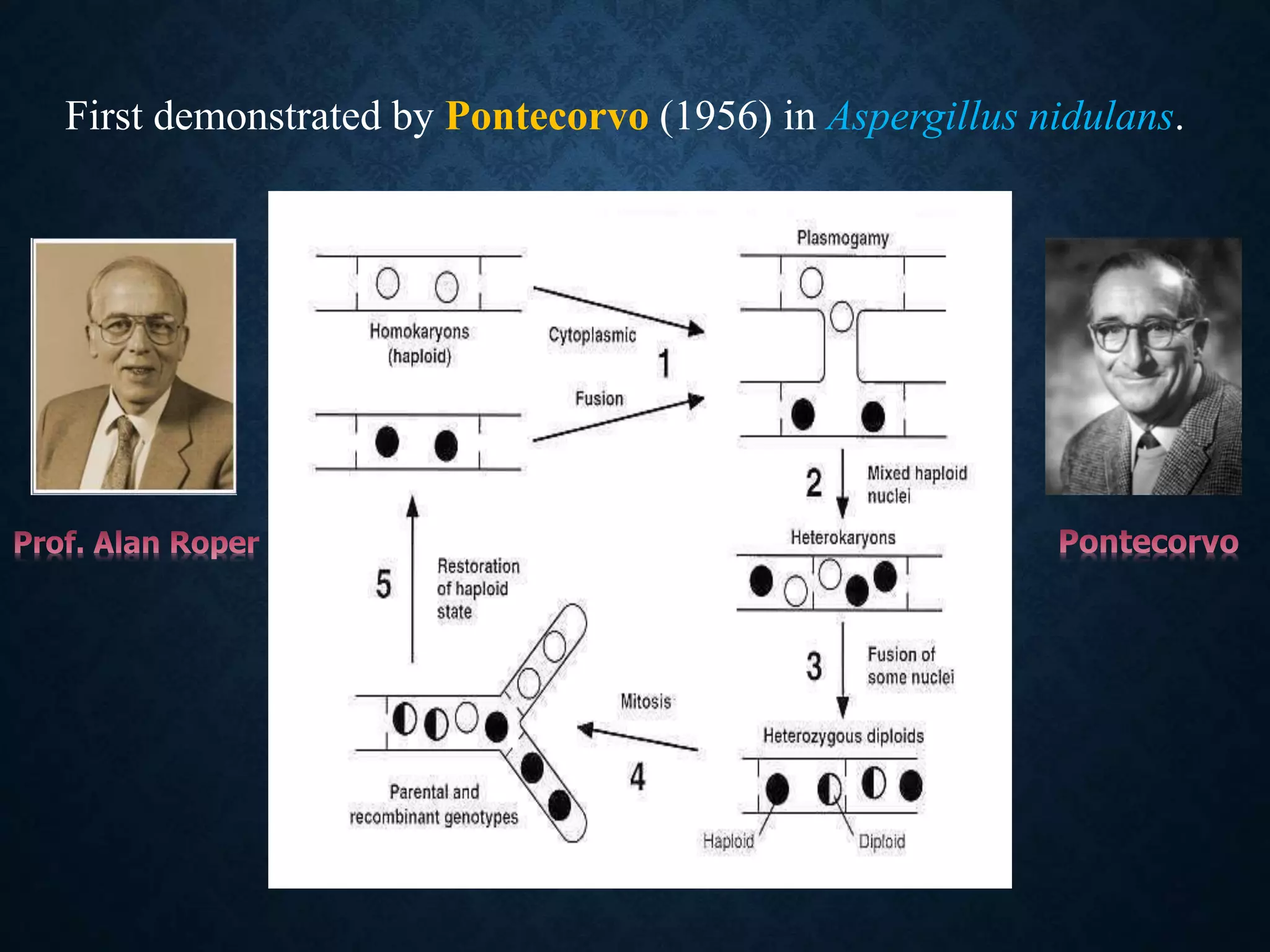
 Process by which genetic recombination can occur within fungal heterokaryons
 Occasional fusion of two nuclei and formation of diploid nucleus results in
parasexuality
 During multiplication,crossing over occurs in a few mitotic divisions and results in
appearance of genetic recombinants
 Steps in parasexual cycle-:
a) Heterokaryosis
b) Fusion of unlike nucleus to form heterozygotes
c) Segregation and recombination at mitosis
Parasexuality
First demonstrated by Pontecorvo (1956) in Aspergillus nidulans.
 Existence of cell,tissues or whole organism with chromosome number
different from 1N or 2N complement for the particular organism
 Heteroploids may be haploids, diploids, triploids, tetraploids or aneuploids
For eg. Verticilium albo-atrum, cause of wilt in cotton,lose ability to infect
cotton plant even when derived from highly virulent haploids
Heteroploidy
 Capacity of pathogen to perform biochemical reactions not present earlier, by
utilizing protoplasm of unfavorable host
 Types of adaptability
a) Pathogen acquire tolerance to toxic materials
b) Utilization of new type of cytoplasm
c) Change in virulence
 Common in all the pathogens except viruses and viroids
CytoplasmicAdaptation
 Mating of different strains, varieties or species results in new
recombination of genes
 New biotypes or races are produced by combination of two haploid
nuclei to form a zygote
 Transfer of genetic material to the progeny takes place when diploid
nucleus undergoes meiosis
Hybridization
 Conjugation
 Transformation
 Transduction
Variability in Bacteria
 Transfer of DNA from one bacterial cell to
another Donor cell (F+) transfers DNA to
recipient cell (F- )
 In this two compatible bacteria come in
contact and exchange the portion of plasmid
or chromosome through conjugation bridge or
pilus
CONJUGATION
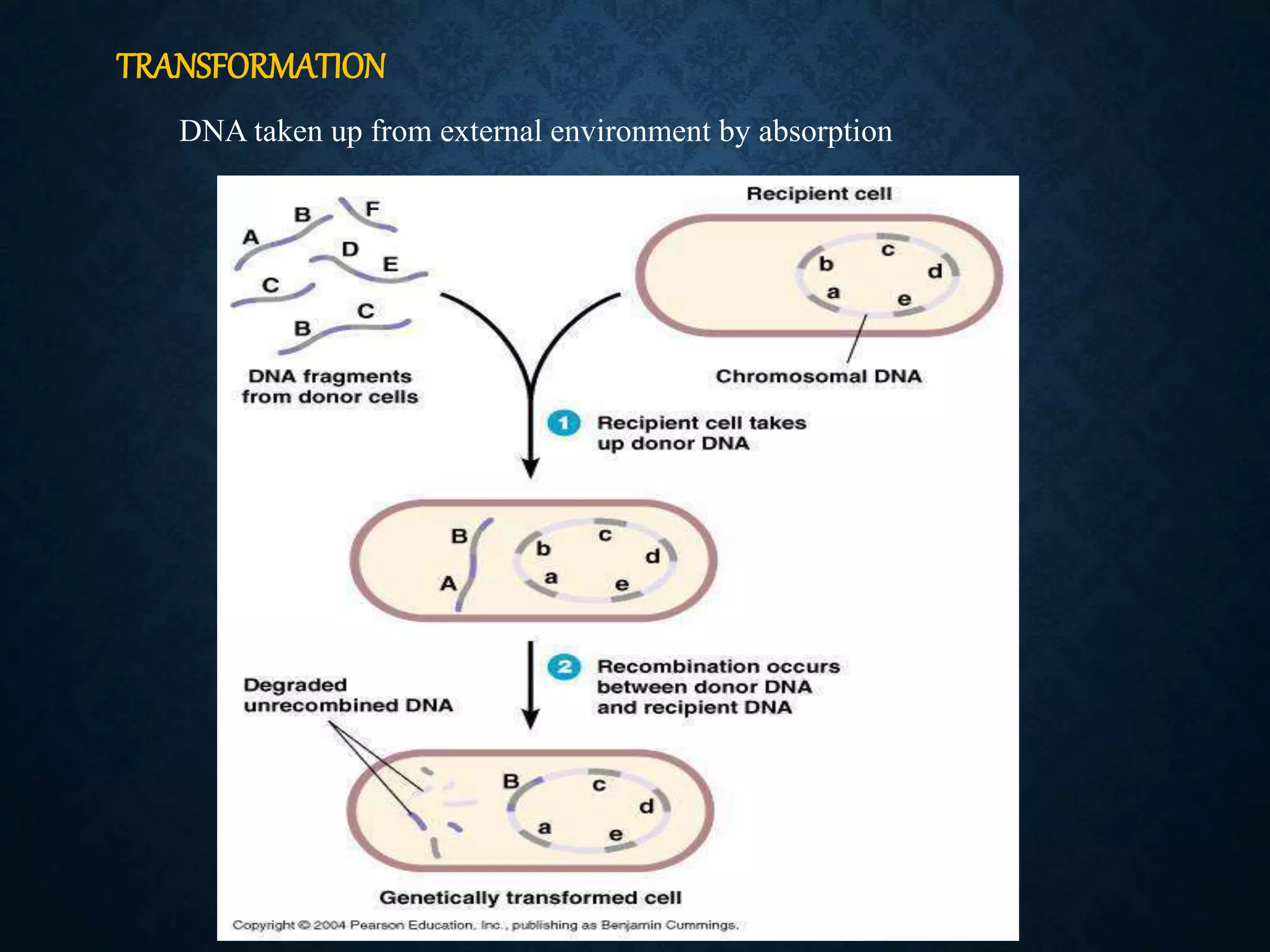
DNA taken up from external environment by absorption
TRANSFORMATION
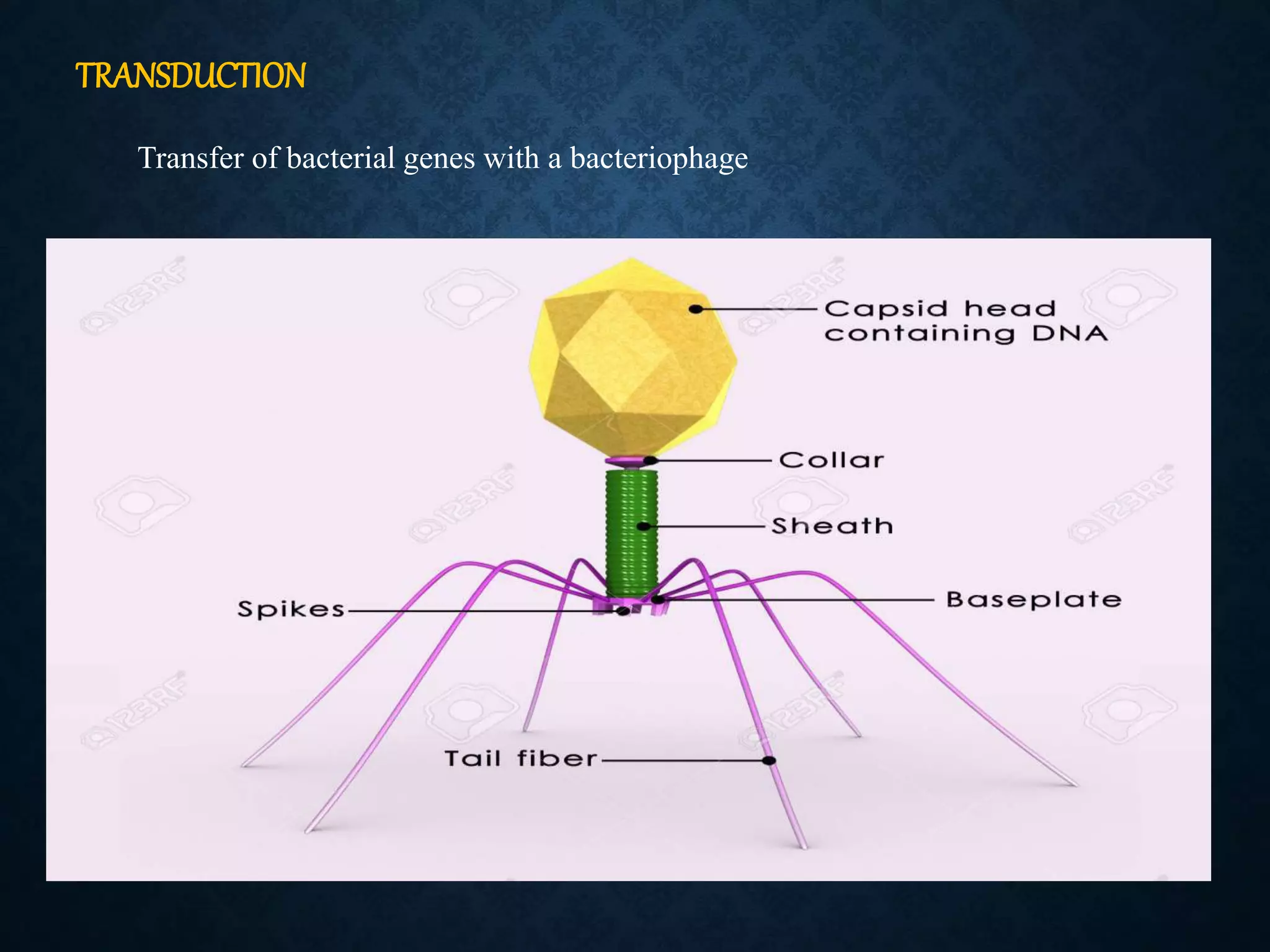
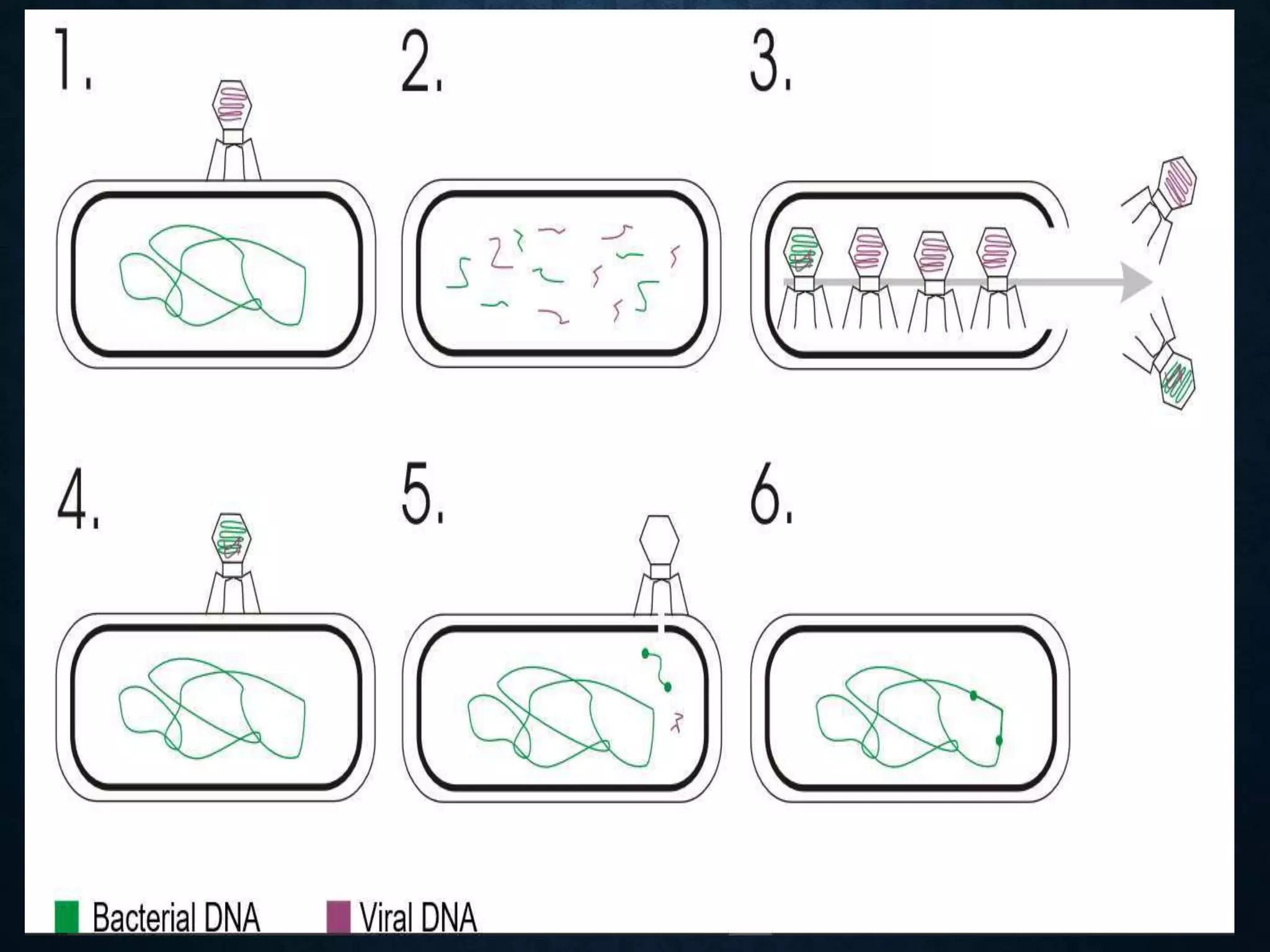
Transfer of bacterial genes with a bacteriophage
TRANSDUCTION
VARIABILITY IN VIRUSES
I. Mutation
II. Mixed Inoculation
a) Pseudo-recombination
b) Heterologous Encapsidation or Genome Masking
Sudden, Large, hereditable variations
Represents changes in sequences of nucleotide bases due to
Deletion, Substitution and Addition
When a virus maintained continuously on same susceptible
host is passed on through resistant cultivars of host ,it induces
mutation
Virus having different characters from original are known as
virus mutants
Mutation
Presence of many strains or genetic material in the same environment may
lead to following consequences
a) Pseudo-recombination:
Fragments of genome aggregate, reassemble forming new type of
progeny in viruses with split genome.
b) Heterologous encapsidation or genome masking :
Direct interaction between viruses in mixed inoculation in which
genome of one virus is encapsidated in protein of other strain of
virus.
Mixed Inoculations
Variability in plant pathogens

Variability in plant pathogens

  • 1.
  • 2.
     The propertyor ability of an organism to change its characteristics from one generation to other is called Variability (Agrios)  Individuals have different characteristics, not fixed i.e. phenomenon of variation  Individuals produced by sexual process including Sexual spores, higher Parasitic plants, Nematodes, Bacteria, Cultivated Plants differ among themselves and from their parents  Low in asexually reproducing ones, however, some have much higher variability e.g C. lindemuthianum What is Pathogen Variability
  • 3.
     Genus- Agroup of species having common characters  Species- Organisms with common morphological and phenotypical characters  Variety or forma specialis (f.sp.)- Individuals attacking only one crop e.g only wheat or barley or oats  Race- Individuals infecting only some varieties of host  Variant- Offspring of race attacking a new variety  Biotype- The identical individuals produced asexually by the variant Stagesof variationin pathogens
  • 5.
    i. Mutation ii. Recombination iii.Heterokaryosis iv. Parasexualism v. Heteroploidy vi. Cytoplasmic adaptation vii. Hybridization Variability in Fungi
  • 6.
     Sudden heritablechange in genetic material of an organism  Mutation represent change in sequences of the bases in DNA either by – substitution or by deletion or addition  Mutations are spontaneous  May occur due to: i. Improper cell division ii. Abnormalities during division iii. Physical radiations iv. Mutagenic chemicals MUTATION
  • 7.
     Most changesin the characteristics of pathogens are the result of recombination occurs during sexual processes.  When two haploid nuclei (1N) containing different genetic material unite to form diploid (2N) nucleus called a Zygote, when under go meiotic division produce new haploid . Recombination of genetic factor occurs during meiotic division of zygote as a result of cross over in which part of chromatid of one chromosome of a pair are expressed with that of the other.  Recombination can also occur during mitotic division of cell in the course of growth of the individual and is important in fungi Puccinia graminis Recombination
  • 8.
     Hyphal anastomosisbetween mycelia of two parental genotypes.  Heterokaryons can arise in following ways a) Mutation in any bi or multi-nucleate cell b) Formation of bi-nucleate sexual spores  Reported in Colletotrichum lagenarium, Helminthosporium sativaum, Alternaria solani, Fusarium solani, Fusarium oxysporum, Rhizoctonia solani, Verticillium albo-atrum, Phytophthora infestans, Botrytis cinerea Heterokaryosis
  • 9.
     Process bywhich genetic recombination can occur within fungal heterokaryons  Occasional fusion of two nuclei and formation of diploid nucleus results in parasexuality  During multiplication,crossing over occurs in a few mitotic divisions and results in appearance of genetic recombinants  Steps in parasexual cycle-: a) Heterokaryosis b) Fusion of unlike nucleus to form heterozygotes c) Segregation and recombination at mitosis Parasexuality
  • 10.
    First demonstrated byPontecorvo (1956) in Aspergillus nidulans.
  • 11.
     Existence ofcell,tissues or whole organism with chromosome number different from 1N or 2N complement for the particular organism  Heteroploids may be haploids, diploids, triploids, tetraploids or aneuploids For eg. Verticilium albo-atrum, cause of wilt in cotton,lose ability to infect cotton plant even when derived from highly virulent haploids Heteroploidy
  • 12.
     Capacity ofpathogen to perform biochemical reactions not present earlier, by utilizing protoplasm of unfavorable host  Types of adaptability a) Pathogen acquire tolerance to toxic materials b) Utilization of new type of cytoplasm c) Change in virulence  Common in all the pathogens except viruses and viroids CytoplasmicAdaptation
  • 13.
     Mating ofdifferent strains, varieties or species results in new recombination of genes  New biotypes or races are produced by combination of two haploid nuclei to form a zygote  Transfer of genetic material to the progeny takes place when diploid nucleus undergoes meiosis Hybridization
  • 14.
     Conjugation  Transformation Transduction Variability in Bacteria
  • 15.
     Transfer ofDNA from one bacterial cell to another Donor cell (F+) transfers DNA to recipient cell (F- )  In this two compatible bacteria come in contact and exchange the portion of plasmid or chromosome through conjugation bridge or pilus CONJUGATION
  • 17.
    DNA taken upfrom external environment by absorption TRANSFORMATION
  • 18.
    Transfer of bacterialgenes with a bacteriophage TRANSDUCTION
  • 20.
    VARIABILITY IN VIRUSES I.Mutation II. Mixed Inoculation a) Pseudo-recombination b) Heterologous Encapsidation or Genome Masking
  • 21.
    Sudden, Large, hereditablevariations Represents changes in sequences of nucleotide bases due to Deletion, Substitution and Addition When a virus maintained continuously on same susceptible host is passed on through resistant cultivars of host ,it induces mutation Virus having different characters from original are known as virus mutants Mutation
  • 22.
    Presence of manystrains or genetic material in the same environment may lead to following consequences a) Pseudo-recombination: Fragments of genome aggregate, reassemble forming new type of progeny in viruses with split genome. b) Heterologous encapsidation or genome masking : Direct interaction between viruses in mixed inoculation in which genome of one virus is encapsidated in protein of other strain of virus. Mixed Inoculations