Immunogenecity of viral vaccines in
relation to vit. D and vit.A status
BY
Amal Gaber Mohamed ,Assisstant prof. of pediatrics, faculty of medicine (girls)
Al-Azhar university
2018
Immunization
Immunization is the a process where by a person is made immune or
resistant to an infection, typically by administration of
vaccines
Immunization is a proven tool for controlling and elimination life-
threatening infectious disease .
• Vaccines save lives: A public health success story
• Vaccines are safe and effective: The diseases they prevent can
cause permanent disability or even death
• It’s a small world: Travel can spread rare diseases quickly
• Many vaccine-preventable diseases have no effective treatments
• For some diseases, like tetanus, infection does not produce
immunity: Vaccines produce immunity
… Last, but not least …
Why we immunize
© 2010 Canadian Paediatric Society I www.cps.ca
…Vaccines protect everyone
• Directly: the person vaccinated, and
• Indirectly: people who are vulnerable to disease, eg., babies,
children, the elderly, people with a weak immune system
• Vaccines keep communities healthier: children in school,
parents working, people interacting normally
© 2010 Canadian Paediatric Society I www.cps.ca
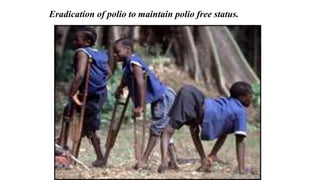
Eradication of polio to maintain polio free status.
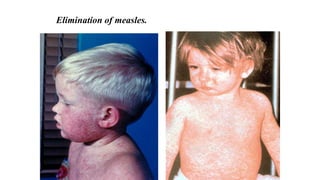
Elimination of measles.
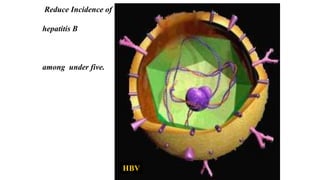
Reduce Incidence of
hepatitis B
among under five.
HBV
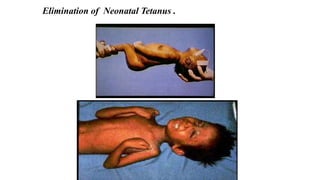
Elimination of Neonatal Tetanus .
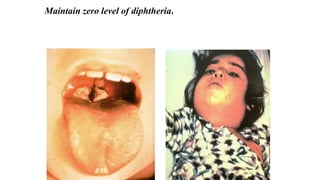
Maintain zero level of diphtheria.
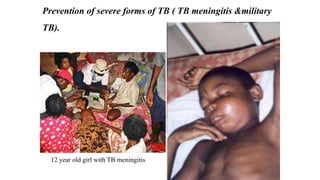
Prevention of severe forms of TB ( TB meningitis &military
TB).
12 year old girl with TB meningitis
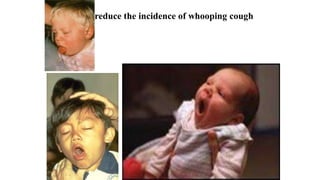
reduce the incidence of whooping cough
.
• Long-lasting immunity depends on memory cells. Immune
memory is the ability the immune system acquires to identify the
presence of a germ and destroy it
• Two ways to achieve immunity: Natural infection or
immunization
– Natural infection causes illness and can lead to complications,
permanent damage, even death
– Vaccines protect without causing severe illness
Immunity
© 2010 Canadian Paediatric Society I www.cps.ca
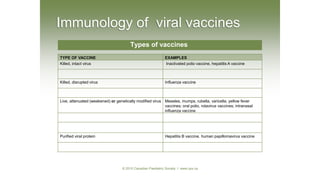
Types of vaccines
TYPE OF VACCINE EXAMPLES
Killed, intact virus Inactivated polio vaccine, hepatitis A vaccine
Killed, disrupted virus Influenza vaccine
Live, attenuated (weakened) or genetically modified virus Measles, mumps, rubella, varicella, yellow fever
vaccines; oral polio, rotavirus vaccines; intranasal
influenza vaccine
Purified viral protein Hepatitis B vaccine, human papillomavirus vaccine
Immunology of viral vaccines
© 2010 Canadian Paediatric Society I www.cps.ca
• The Evolution of Vaccines
The history of vaccination extends as far back as a
millennium. Records suggest that the Chinese used
inoculation (or “variolation”) techniques against smallpox as
early as 900 AD
Vitamin D and Impact on the Immune
System
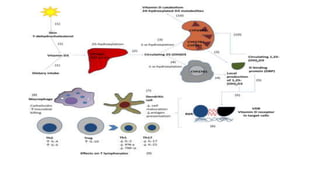
Vitamin D’s non-skeletal actions, including immunomodulatory
role, have been increasingly recognized. Of significance, many
immune cells are able to synthesize a biologically active form of
vitamin D from circulating 25-(OH) D with subsequent
intracrine actions, and the vitamin D receptor (VDR) is broadly
distributed.
Influenza Vaccine
Vitamin D serostatus had no association
with the achieving seroprotection or
seroconversion in either season
Measles Vaccine and Rubella Vaccine
• Vitamin D levels were not assessed in
• The RXRA gene is a moderator of vitamin D signaling
pathway and is involved in both B cell antibody production
and cytokine responses to measles and rubella vaccine
Hepatitis B vaccine
Studying the role of vitamin D (and effectiveness of
supplementation) in hepatitis B vaccine immune response in
this population is highly relevant due to the high incidence of
deficiency. It is also important to determine if vitamin D levels
are associated with sub-optimal hepatitis B vaccine response in
other populations.
Vitamin A Deficiency Impairs Vaccine-
Responsce
Vitamin A deficiency is highly prevalent in much of
the developing world, where vaccination programs
are of paramount importance to public health.
However, the impact of vitamin A deficiency on the
immunogenicity and protective efficacy of vaccines
has not been defined previously.
The World Health Organization
estimates that vitamin A
deficiency affects >20% of
preschool-age children and >10%
of pregnant women in >50
countries, including much of
Africa and southern and central
Asia
oral vitamin A supplementation may be important for optimizing the
success of vaccines against HIV-1 and other mucosal pathogens in the
developing world, highlighting a critical relationship between host
nutritional status and vaccine efficacy.
Conclusions
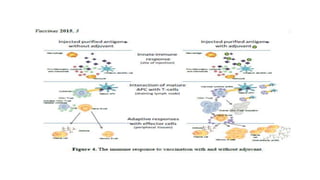
Adjuvants have been used in vaccines for more than 90 years.
Adjuvants were initially used in an empirical fashion to enhance the
immune response to antigen, but became necessary components of
many vaccines as purified antigens with lower immunogenicity were
selected more and more frequently, as compared to live attenuated and
whole-pathogen vaccine
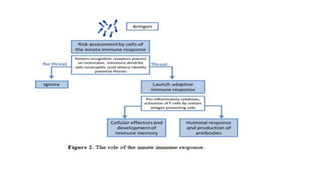
Our understanding of the potential of
adjuvants to promote the activities of
APCs and thus potentiate downstream
adaptive immune responses is evolving
. This information can enable the development
of new vaccines targeting diseases against
which older vaccine technologies were
ineffective. The right match of antigens and
adjuvants has a key role to play in these
developments. New adjuvants have already
contributed to more effective influenza vaccines,
Vaccinations

Vaccinations

  • 1.
    Immunogenecity of viralvaccines in relation to vit. D and vit.A status BY Amal Gaber Mohamed ,Assisstant prof. of pediatrics, faculty of medicine (girls) Al-Azhar university 2018
  • 2.
    Immunization Immunization is thea process where by a person is made immune or resistant to an infection, typically by administration of vaccines Immunization is a proven tool for controlling and elimination life- threatening infectious disease .
  • 3.
    • Vaccines savelives: A public health success story • Vaccines are safe and effective: The diseases they prevent can cause permanent disability or even death • It’s a small world: Travel can spread rare diseases quickly • Many vaccine-preventable diseases have no effective treatments • For some diseases, like tetanus, infection does not produce immunity: Vaccines produce immunity … Last, but not least … Why we immunize © 2010 Canadian Paediatric Society I www.cps.ca
  • 4.
    …Vaccines protect everyone •Directly: the person vaccinated, and • Indirectly: people who are vulnerable to disease, eg., babies, children, the elderly, people with a weak immune system • Vaccines keep communities healthier: children in school, parents working, people interacting normally © 2010 Canadian Paediatric Society I www.cps.ca
  • 5.
    Eradication of polioto maintain polio free status.
  • 6.
  • 7.
    Reduce Incidence of hepatitisB among under five. HBV
  • 8.
  • 9.
    Maintain zero levelof diphtheria.
  • 10.
    Prevention of severeforms of TB ( TB meningitis &military TB). 12 year old girl with TB meningitis
  • 11.
    reduce the incidenceof whooping cough .
  • 12.
    • Long-lasting immunitydepends on memory cells. Immune memory is the ability the immune system acquires to identify the presence of a germ and destroy it • Two ways to achieve immunity: Natural infection or immunization – Natural infection causes illness and can lead to complications, permanent damage, even death – Vaccines protect without causing severe illness Immunity © 2010 Canadian Paediatric Society I www.cps.ca
  • 13.
    Types of vaccines TYPEOF VACCINE EXAMPLES Killed, intact virus Inactivated polio vaccine, hepatitis A vaccine Killed, disrupted virus Influenza vaccine Live, attenuated (weakened) or genetically modified virus Measles, mumps, rubella, varicella, yellow fever vaccines; oral polio, rotavirus vaccines; intranasal influenza vaccine Purified viral protein Hepatitis B vaccine, human papillomavirus vaccine Immunology of viral vaccines © 2010 Canadian Paediatric Society I www.cps.ca
  • 14.
    • The Evolutionof Vaccines The history of vaccination extends as far back as a millennium. Records suggest that the Chinese used inoculation (or “variolation”) techniques against smallpox as early as 900 AD
  • 15.
    Vitamin D andImpact on the Immune System Vitamin D’s non-skeletal actions, including immunomodulatory role, have been increasingly recognized. Of significance, many immune cells are able to synthesize a biologically active form of vitamin D from circulating 25-(OH) D with subsequent intracrine actions, and the vitamin D receptor (VDR) is broadly distributed.
  • 17.
    Influenza Vaccine Vitamin Dserostatus had no association with the achieving seroprotection or seroconversion in either season
  • 18.
    Measles Vaccine andRubella Vaccine • Vitamin D levels were not assessed in • The RXRA gene is a moderator of vitamin D signaling pathway and is involved in both B cell antibody production and cytokine responses to measles and rubella vaccine
  • 19.
    Hepatitis B vaccine Studyingthe role of vitamin D (and effectiveness of supplementation) in hepatitis B vaccine immune response in this population is highly relevant due to the high incidence of deficiency. It is also important to determine if vitamin D levels are associated with sub-optimal hepatitis B vaccine response in other populations.
  • 22.
    Vitamin A DeficiencyImpairs Vaccine- Responsce Vitamin A deficiency is highly prevalent in much of the developing world, where vaccination programs are of paramount importance to public health. However, the impact of vitamin A deficiency on the immunogenicity and protective efficacy of vaccines has not been defined previously.
  • 23.
    The World HealthOrganization estimates that vitamin A deficiency affects >20% of preschool-age children and >10% of pregnant women in >50 countries, including much of Africa and southern and central Asia
  • 24.
    oral vitamin Asupplementation may be important for optimizing the success of vaccines against HIV-1 and other mucosal pathogens in the developing world, highlighting a critical relationship between host nutritional status and vaccine efficacy.
  • 25.
    Conclusions Adjuvants have beenused in vaccines for more than 90 years. Adjuvants were initially used in an empirical fashion to enhance the immune response to antigen, but became necessary components of many vaccines as purified antigens with lower immunogenicity were selected more and more frequently, as compared to live attenuated and whole-pathogen vaccine
  • 26.
    Our understanding ofthe potential of adjuvants to promote the activities of APCs and thus potentiate downstream adaptive immune responses is evolving
  • 27.
    . This informationcan enable the development of new vaccines targeting diseases against which older vaccine technologies were ineffective. The right match of antigens and adjuvants has a key role to play in these developments. New adjuvants have already contributed to more effective influenza vaccines,