


Strategy and the
UX Strategy Blueprint
@JimKalbach
AGENDA
• Understanding strategy & UX Strategy
• Blueprint Exercise & discussion
• Break
• Facilitating strategy
• Planning
• Communicating Strategy
What is strategy?
“Air Sandwich“
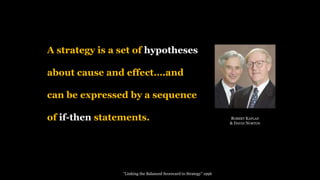
A strategy is a set of hypotheses
about cause and effect….and
can be expressed by a sequence
of if-then statements. ROBERT KAPLAN
& DAVID NORTON
“Linking the Balanced Scorecard to Strategy” 1996
“Air Sandwich“
A good strategy honestly
acknowledges the challenges
being faced and provides an
approach to overcoming them.
“Air Sandwich“
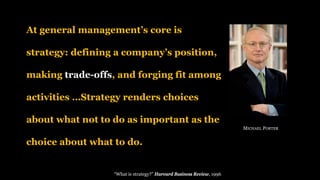
At general management’s core is
strategy: defining a company’s position,
making trade-offs, and forging fit among
activities …Strategy renders choices
about what not to do as important as the
choice about what to do.
MICHAEL PORTER
“What is strategy?” Harvard Business Review, 1996
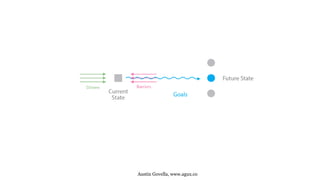
Austin Govella, www.agux.co
Building strategy is a
creative exercise to design
a way of overcoming your
key challenges to reach a
desired outcome with an
interlocking set of choices
for consistency in action.
So, what the heck is UX strategy?
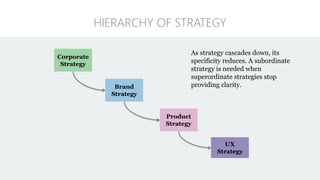
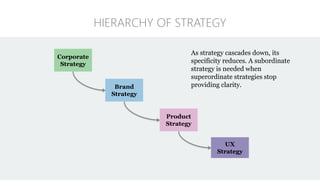
HIERARCHY OF STRATEGY
Corporate
Strategy
Brand
Strategy
Product
Strategy
UX
Strategy
As strategy cascades down, its
specificity reduces. A subordinate
strategy is needed when
superordinate strategies stop
providing clarity.
UX STRATEGY
UX strategy helps the business solve
its problems through an interlocking
set of choices that coordinates UX
activity for a desired experience.
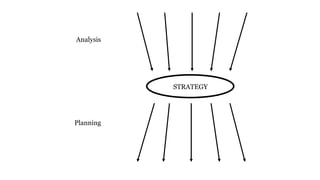
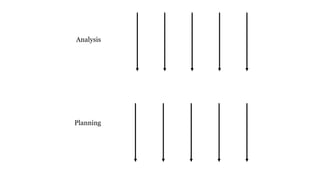
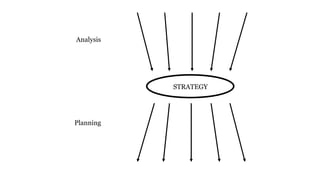
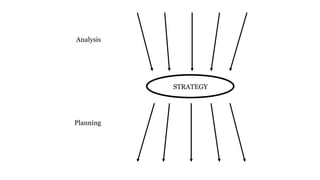
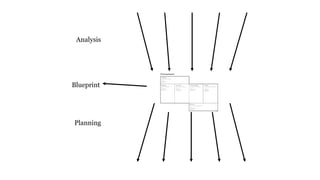
Analysis
Planning
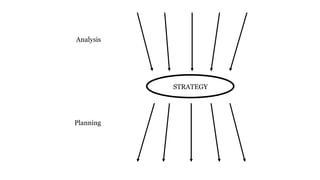
Analysis
STRATEGY
Planning
What are some types of activities you
might perform for strategic analysis?
EXERCISE: STRATEGIC ANALYSIS
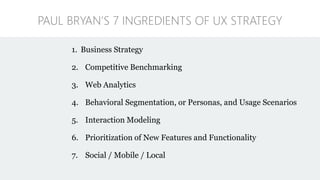
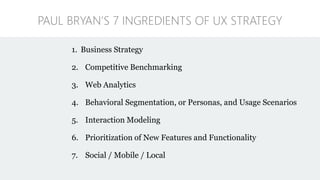
1. Business Strategy
2. Competitive Benchmarking
3. Web Analytics
4. Behavioral Segmentation, or Personas, and Usage Scenarios
5. Interaction Modeling
6. Prioritization of New Features and Functionality
7. Social / Mobile / Local
PAUL BRYAN’S 7 INGREDIENTS OF UX STRATEGY
Analysis
STRATEGY
Planning
CORE ELEMENTS OF STRATEGY
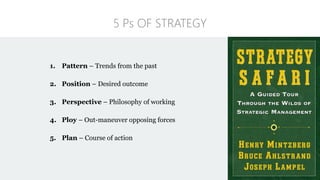
5 Ps OF STRATEGY
1. Pattern – Trends from the past
2. Position – Desired outcome
3. Perspective – Philosophy of working
4. Ploy – Out-maneuver opposing forces
5. Plan – Course of action
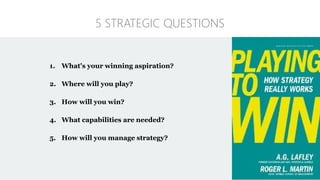
1. What's your winning aspiration?
2. Where will you play?
3. How will you win?
4. What capabilities are needed?
5. How will you manage strategy?
5 STRATEGIC QUESTIONS
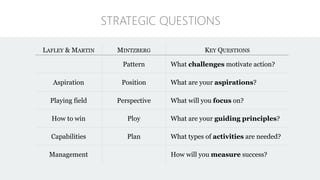
LAFLEY & MARTIN MINTZBERG KEY QUESTIONS
Pattern What challenges motivate action?
Aspiration Position What are your aspirations?
Playing field Perspective What will you focus on?
How to win Ploy What are your guiding principles?
Capabilities Plan What types of activities are needed?
Management How will you measure success?
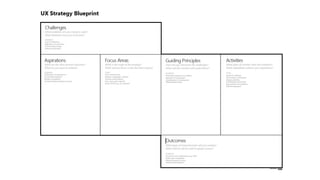
STRATEGIC QUESTIONS
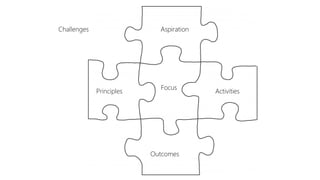
Aspiration
Principles
Focus
Activities
Outcomes
Challenges
Analysis
STRATEGY
Planning
Analysis
Planning
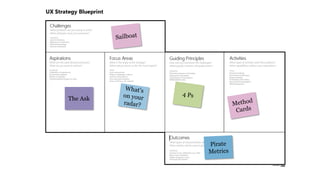
Blueprint
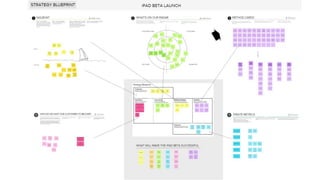
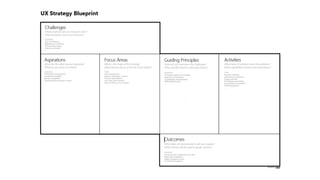
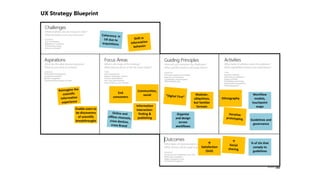
STRATEGY BLUEPRINT
www.experiencinginformation.com
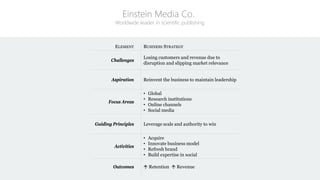
ELEMENT BUSINESS STRATEGY
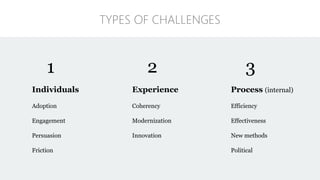
Challenges
Losing customers and revenue due to
disruption and slipping market relevance
Aspiration Reinvent the business to maintain leadership
Focus Areas
• Global
• Research institutions
• Online channels
• Social media
Guiding Principles Leverage scale and authority to win
Activities
• Acquire
• Innovate business model
• Refresh brand
• Build expertise in social
Outcomes  Retention  Revenue
Einstein Media Co.
Worldwide leader in scientific publishing
Ethnography
Workflow
models,
touchpoint
maps
Guidelines and
governance
Enable users to
be discoverers
of scientific
breakthroughs
Modular,
ubiquitous,
but familiar
formats
Organize
and design
across
workflows

Satisfaction
(SUS)

% of UIs that
comply to
guidelines
End
consumers
Communities,
social
Information
interaction:
finding &
publishing
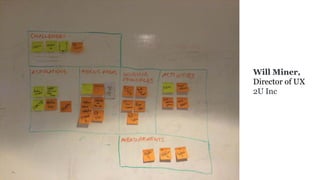
Will Miner,
Director of UX
2U Inc
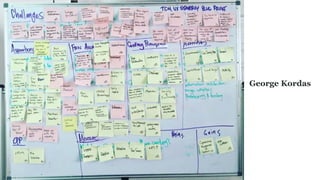
George Kordas
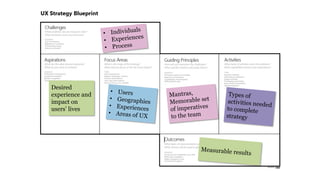
Desired
experience and
impact on
users’ lives
Experience
Coherency
Modernization
Innovation
Individuals
Adoption
Engagement
Persuasion
Friction
Process (internal)
Efficiency
Effectiveness
New methods
Political
1 2 3
TYPES OF CHALLENGES
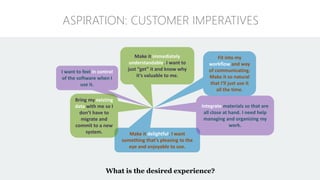
ASPIRATION: CUSTOMER IMPERATIVES
Make it immediately
understandable. I want to
just “get” it and know why
it’s valuable to me.
I want to feel in control
of the software when I
use it.
Fit into my
workflow and way
of communicating.
Make it so natural
that I’ll just use it
all the time.
Make it delightful. I want
something that’s pleasing to the
eye and enjoyable to use.
Bring my existing
data with me so I
don’t have to
migrate and
commit to a new
system.
Integrate materials so that are
all close at hand. I need help
managing and organizing my
work.
What is the desired experience?
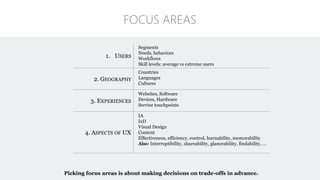
1. USERS
Segments
Needs, behaviors
Workflows
Skill levels: average vs extreme users
2. GEOGRAPHY
Countries
Languages
Cultures
3. EXPERIENCES
Websites, Software
Devices, Hardware
Service touchpoints
4. ASPECTS OF UX
IA
IxD
Visual Design
Content
Effectiveness, efficiency, control, learnability, memorability
Also: Interruptibility, shareability, glanceability, findability, …
FOCUS AREAS
Picking focus areas is about making decisions on trade-offs in advance.
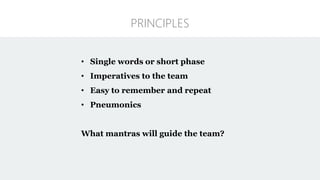
PRINCIPLES
• Single words or short phase
• Imperatives to the team
• Easy to remember and repeat
• Pneumonics
What mantras will guide the team?
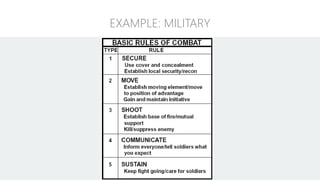
EXAMPLE: MILITARY
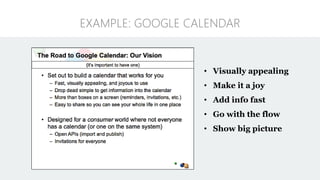
EXAMPLE: GOOGLE CALENDAR
• Visually appealing
• Make it a joy
• Add info fast
• Go with the flow
• Show big picture
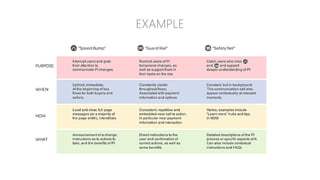
EXAMPLE
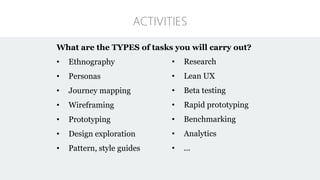
What are the TYPES of tasks you will carry out?
• Ethnography
• Personas
• Journey mapping
• Wireframing
• Prototyping
• Design exploration
• Pattern, style guides
• Research
• Lean UX
• Beta testing
• Rapid prototyping
• Benchmarking
• Analytics
• ...
ACTIVITIES
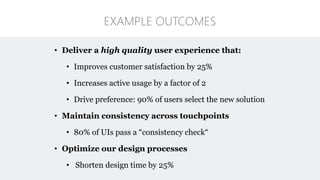
EXAMPLE OUTCOMES
• Deliver a high quality user experience that:
• Improves customer satisfaction by 25%
• Increases active usage by a factor of 2
• Drive preference: 90% of users select the new solution
• Maintain consistency across touchpoints
• 80% of UIs pass a “consistency check“
• Optimize our design processes
• Shorten design time by 25%
EXERCISE – DEFINE CORE UX STRATEGY
In groups
1. Refer to the scenario of the business strategy
2. On the UX Strategy Blueprint, record key points for each element of
the UX strategy.
Write down a few keywords or phrase for each that reflect a viable
approach.
3. Skip elements that are unknown or make assumptions as needed.
HIERARCHY OF STRATEGY
Corporate
Strategy
Brand
Strategy
Product
Strategy
UX
Strategy
As strategy cascades down, its
specificity reduces. A subordinate
strategy is needed when
superordinate strategies stop
providing clarity.
EXERCISE – DEFINE CORE UX STRATEGY
In groups
1. Refer to the scenario of the business strategy
2. On the UX Strategy Blueprint, record key points for each element of
the UX strategy.
Write down a few keywords or phrase for each that reflect a viable
approach.
3. Skip elements that are unknown or make assumptions as needed.
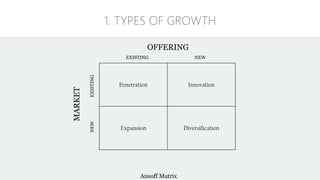
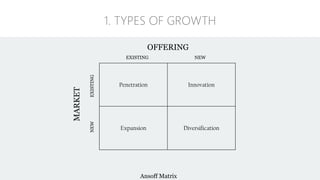
EXISTING NEW
EXISTINGNEW
Penetration Innovation
Expansion Diversification
MARKET
OFFERING
Ansoff Matrix
1. TYPES OF GROWTH
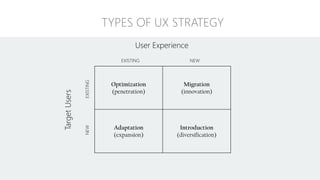
EXISTING NEW
EXISTINGNEW
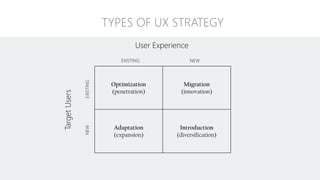
TYPES OF UX STRATEGY
Optimization
(penetration)
Migration
(innovation)
Adaptation
(expansion)
Introduction
(diversification)
TargetUsers
User Experience
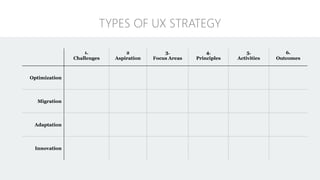
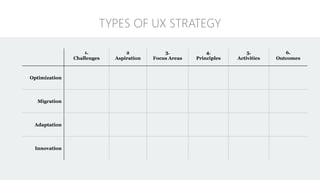
1.
Challenges
2
Aspiration
3.
Focus Areas
4.
Principles
5.
Activities
6.
Outcomes
Optimization
Migration
Adaptation
Innovation
TYPES OF UX STRATEGY
FACILITATING STRATEGY
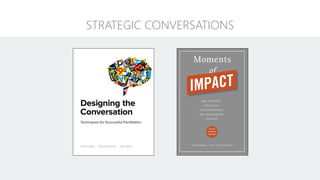
STRATEGIC CONVERSATIONS
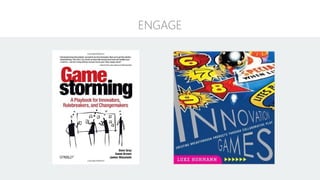
ENGAGE
The Ask
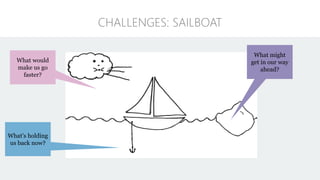
CHALLENGES: SAILBOAT
What’s holding
us back now?
What would
make us go
faster?
What might
get in our way
ahead?
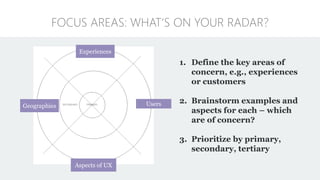
FOCUS AREAS: WHAT‘S ON YOUR RADAR?
1. Define the key areas of
concern, e.g., experiences
or customers
2. Brainstorm examples and
aspects for each – which
are of concern?
3. Prioritize by primary,
secondary, tertiary
Users
Experiences
Geographies
Aspects of UX
PRINCIPLES: 4 Ps
In marketing, the 4 Ps describe the key factors to consider
• Product
• Price
• Promotion
• Place (distribution)
Find a letter than can be used for 3-5 words in your key
considerations.
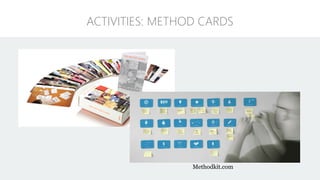
ACTIVITIES: METHOD CARDS
Methodkit.com
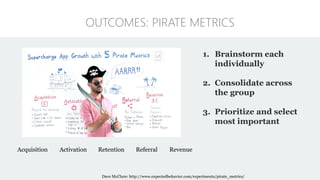
OUTCOMES: PIRATE METRICS
Acquisition Activation Retention Referral Revenue
1. Brainstorm each
individually
2. Consolidate across
the group
3. Prioritize and select
most important
Dave McClure: http://www.expectedbehavior.com/experiments/pirate_metrics/
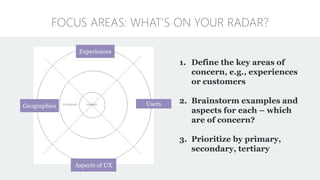
FOCUS AREAS: WHAT‘S ON YOUR RADAR?
1. Define the key areas of
concern, e.g., experiences
or customers
2. Brainstorm examples and
aspects for each – which
are of concern?
3. Prioritize by primary,
secondary, tertiary
Users
Experiences
Geographies
Aspects of UX
ASPIRATIONS
The Ask
[EASTMAN] recognized that his roll film could lead to a
revolution if he focused on the experience he wanted to
deliver, an experience captured in his advertising slogan,
“You press the button, we do the rest.”
PHOTOGRAPHERS
THE ASK
Solutions that merely please, serve, meet
the needs/specs, or delight customers don’t
go far enough. They represent yesterday’s
marketing and design paradigms. They
misunderstand innovation’s real impact –
transforming customers.
ENTREPRENEURS
Who does Google ask us to become?
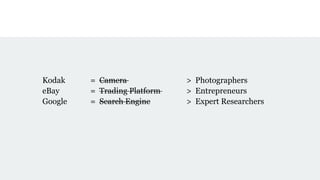
Kodak = Camera > Photographers
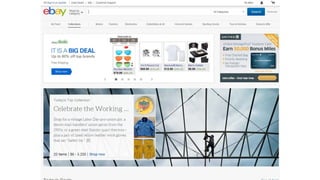
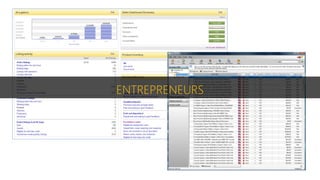
eBay = Trading Platform > Entrepreneurs
Google = Search Engine > Expert Researchers
WIERDO
Supersize
UNHEALTHY
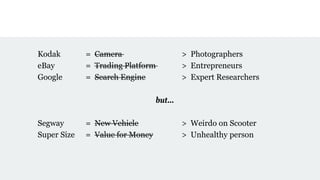
Kodak = Camera > Photographers
eBay = Trading Platform > Entrepreneurs
Google = Search Engine > Expert Researchers
but…
Segway = New Vehicle > Weirdo on Scooter
Super Size = Value for Money > Unhealthy person
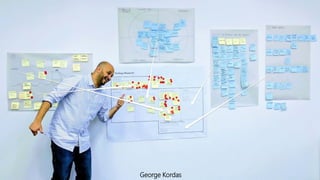
George Kordas
PLANNING
What are some types of planning you might
perform as output of a UX strategy?
What are some specific examples of each?
EXERCISE 7: PLANNING
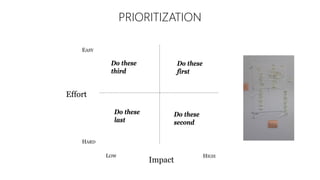
PRIORITIZATION
Effort
EASY
HARD
Impact
LOW HIGH
Do these
first
Do these
last
Do these
second
Do these
third
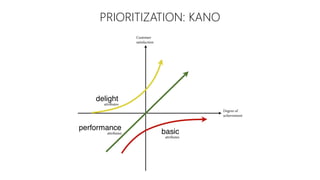
PRIORITIZATION: KANO
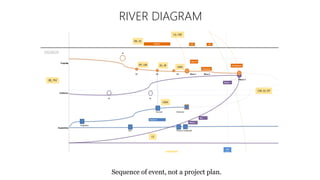
RIVER DIAGRAM
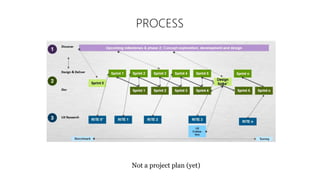
Sequence of event, not a project plan.
Not a project plan (yet)
PROCESS
UX PLAYBOOK
What types of information go into a UX playbook?
What would a table of contents look like for your
UX playbook?
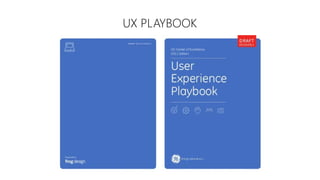
UX PLAYBOOK
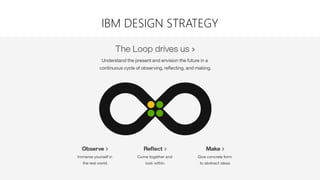
IBM DESIGN STRATEGY
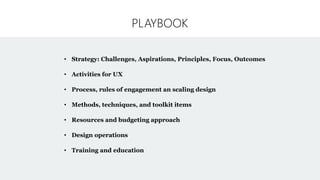
PLAYBOOK
• Strategy: Challenges, Aspirations, Principles, Focus, Outcomes
• Activities for UX
• Process, rules of engagement an scaling design
• Methods, techniques, and toolkit items
• Resources and budgeting approach
• Design operations
• Training and education
COMMUNICATING STRATEGY
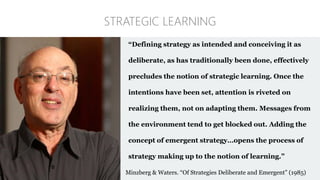
“Defining strategy as intended and conceiving it as
deliberate, as has traditionally been done, effectively
precludes the notion of strategic learning. Once the
intentions have been set, attention is riveted on
realizing them, not on adapting them. Messages from
the environment tend to get blocked out. Adding the
concept of emergent strategy…opens the process of
strategy making up to the notion of learning.”
Minzberg & Waters. “Of Strategies Deliberate and Emergent” (1985)
STRATEGIC LEARNING
“Air Sandwich“
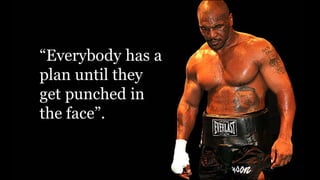
Everyone has a plan until you get
punched in the mouth.
MIKE TYSON
STAYING ON TRACK
It’s a dirty little secret: most executives cannot articulate the
objective, scope, and advantage of their business in a
simple statement. If they can’t, neither can anyone else.
DAVID J. COLLIS AND MICHAEL G. RUKSTAD “Can You Say What Your Strategy Is?” Harvard Business Review (2008)
Strategy is about telling a persuasive story.
If your product team isn’t first
aligned around a well-defined story—
that is, if the people who prioritize
your feature backlog don’t have a
crystal clear understanding about
whose lives they’re trying to
transform, how, and why— how can
they build a great product?
ANDY RASKIN, Strategic Messaging Consultant
“What I’ve Learned Positioning 40 Companies”
https://medium.com/firm-narrative/what-i-ve-learned-positioning-40-companies-21dbfddfca6d
1. Discuss
2. Diagram
3. Document
4. Illustrate
Multiple forms and repetition are essential
COMMUNICATING STRATEGY
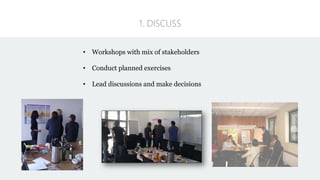
• Workshops with mix of stakeholders
• Conduct planned exercises
• Lead discussions and make decisions
1. DISCUSS
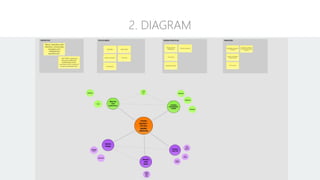
2. DIAGRAM
G2W = G2M,
people don‘t
know what
broadcasting is
Make attendee
experience
awesome
Awareness,
education,
socialize
Customer
G2MTW
confusion
Synch and asynch
to cover the
length and
breadth of
market
Mobile
Not easy to video
broadcast
Roles not clear,
labels not clear
Streaming provider
crowding our space
We‘re not preventing
threat of new entry
Space is evolving quickly,
speed and velocity
We don’t capture value
of live event, market not
sustainable
We only extract value
from organizer, not
looking at value chain
Need to learn the
“what”, uncertain
solutions
Expand breadth
to broadcasting
tool
Be integral part
of marketing,
sales flows
Self service
As relevant as
twitter in terms
of being a
megaphone to
the world
People can speak
to the world for
free
Disrupt media,
demand gen
R&D
Infrastructure to
big and
expernsive
Overall attendee
experience
- Easy join;
- Any, any, all;
- Interaction
Agile, iterative
work, better
teamwork
GEO: US, with
some
international
6 languages
Organizers:
content creation,
capturing and
sharing
Iterative
delivery
Acquisitions
Re-invent the
webinar/webcast
/livestream
category
G2MTW
technical
dependenciesDon’t move quick
enough to capture
market value
Superflexible
solutions that
anyone can
develop on
Love the low end
Highlight the
unique value of
G2W
Increase
attendee tNPS
G2W outgrows SF
and G2M
APIs
Separate layers
Explore
Freemium
Tell the G2W
story
Fast, but smart
delivery
Process
Lean Startup and
“true”, iterative
agile
Market
CX / Product
Process / Development
Biz / Steering Team
Oranizers
become
broadcasters
Clarify event
roles
Risk averse
Lack of strategy
Lack of discipline
n teams have
experienced the
G2W roadshow
n new
innovations,
features,
products
launched
Redesign
organizer
experience
R&D
Past and future
vision of G2W
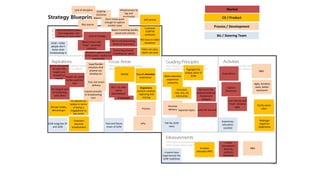
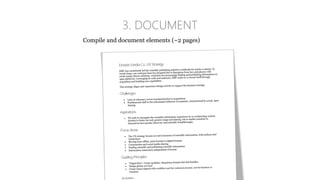
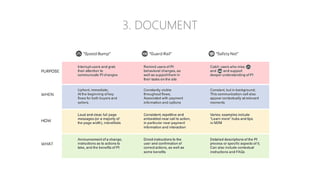
Compile and document elements (~2 pages)
3. DOCUMENT
3. DOCUMENT
ANALYSIS
Analysis
STRATEGY
Planning
What are some types of activities you
might perform for strategic analysis?
EXERCISE 6: STRATEGIC ANALYSIS
1. Business Strategy
2. Competitive Benchmarking
3. Web Analytics
4. Behavioral Segmentation, or Personas, and Usage Scenarios
5. Interaction Modeling
6. Prioritization of New Features and Functionality
7. Social / Mobile / Local
PAUL BRYAN’S 7 INGREDIENTS OF UX STRATEGY
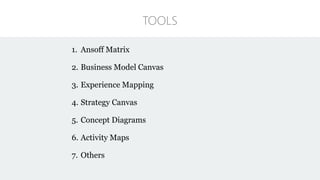
1. Ansoff Matrix
2. Business Model Canvas
3. Experience Mapping
4. Strategy Canvas
5. Concept Diagrams
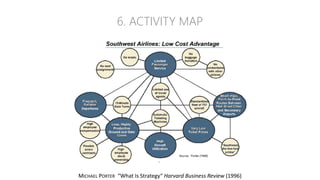
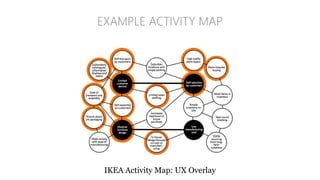
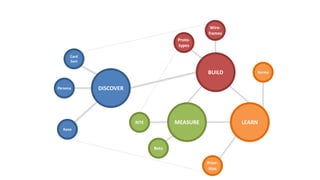
6. Activity Maps
7. Others
TOOLS
EXISTING NEW
EXISTINGNEW
Penetration Innovation
Expansion Diversification
MARKET
OFFERING
Ansoff Matrix
1. TYPES OF GROWTH
EXISTING NEW
EXISTINGNEW
TYPES OF UX STRATEGY
Optimization
(penetration)
Migration
(innovation)
Adaptation
(expansion)
Introduction
(diversification)
TargetUsers
User Experience
1.
Challenges
2
Aspiration
3.
Focus Areas
4.
Principles
5.
Activities
6.
Outcomes
Optimization
Migration
Adaptation
Innovation
TYPES OF UX STRATEGY
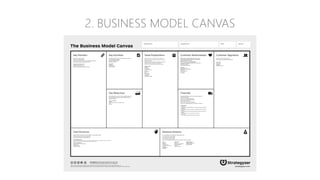
2. BUSINESS MODEL CANVAS
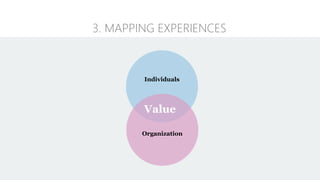
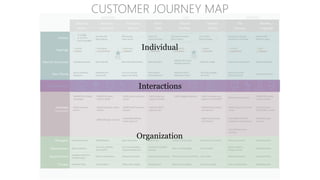
3. MAPPING EXPERIENCES
Individuals
Organization
Value
Individual
Organization
Interactions
CUSTOMER JOURNEY MAP
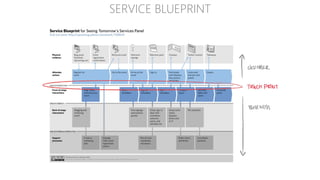
SERVICE BLUEPRINT
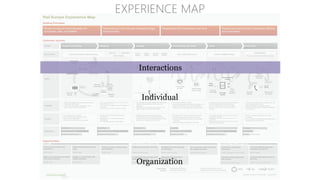
EXPERIENCE MAP
Individual
Organization
Interactions
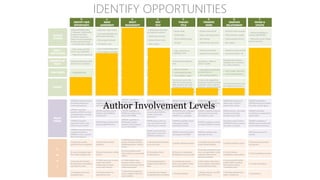
Author Involvement Levels
IDENTIFY OPPORTUNITIES
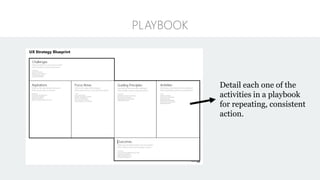
PLAYBOOK
Detail each one of the
activities in a playbook
for repeating, consistent
action.
Create artifacts that embody key elements of your strategy
• Prototypes
• Scenarios
• Storyboards
• Videos
4. ILLUSTRATE
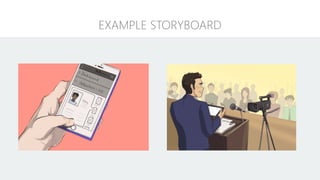
EXAMPLE STORYBOARD
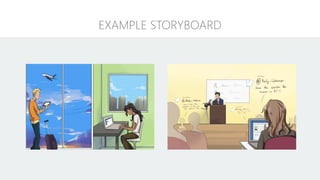
EXAMPLE STORYBOARD
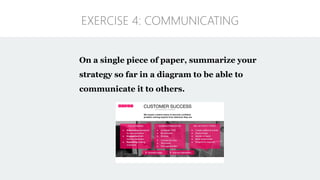
On a single piece of paper, summarize your
strategy so far in a diagram to be able to
communicate it to others.
EXERCISE 4: COMMUNICATING
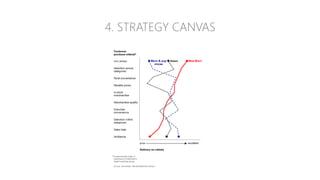
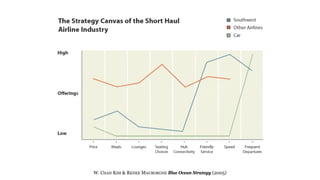
4. STRATEGY CANVAS
W. CHAN KIM & RENEE MAUBORGNE Blue Ocean Strategy (2005)
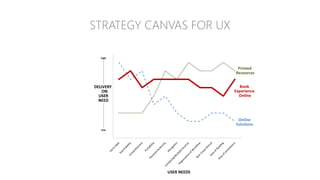
STRATEGY CANVAS FOR UX
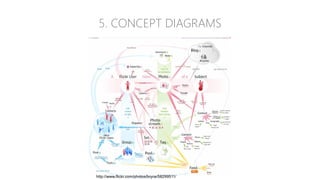
5. CONCEPT DIAGRAMS
http://www.flickr.com/photos/bryce/58299511/
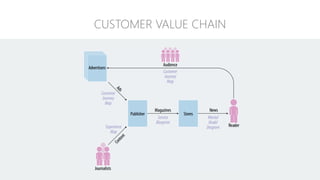
CUSTOMER VALUE CHAIN
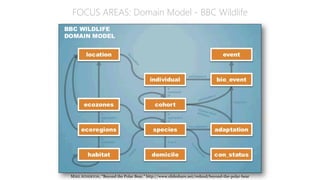
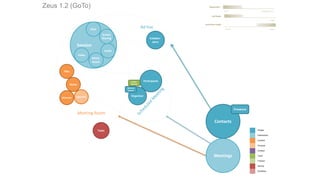
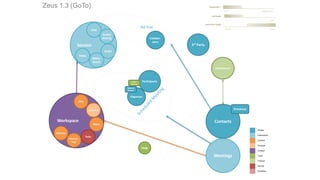
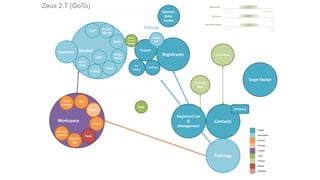
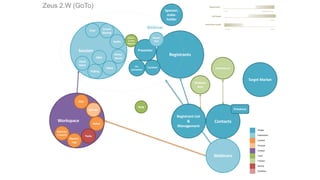
FOCUS AREAS: Domain Model - BBC Wildlife
MIKE ATHERTON, “Beyond the Polar Bear.” http://www.slideshare.net/reduxd/beyond-the-polar-bear
Ad hoc
Session
Audio
Video
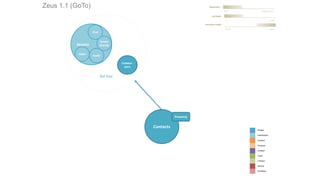
Zeus 1.1 (GoTo)
Collabor-
ators
Screen
Sharing
Contacts
Presence
Chat
People
Interactions
Content
Purpose
Context
Tools
Finance
Activity
Workflow
FLAT HIERARCHICAL
1 > 1000
SHORT LONG
# of People
Organization
Interaction Length
Ad hoc
Session
Audio
Video
Zeus 1.2 (GoTo)
Screen
Sharing
Contacts
Presence
Meeting Room
Organizer
Collabor-
ators
Participants
White-
board
Files
Agendas
Notes
Tasks
Meetings
Chat
People
Interactions
Content
Purpose
Context
Tools
Finance
Activity
Workflow
Histories
FLAT HIERARCHICAL
1 > 1000
SHORT LONG
# of People
Organization
Interaction Length
Leave-
Behind
Referral
System
Workspace
Ad hoc
Session
Audio
Video
Zeus 1.3 (GoTo)
Screen
Sharing
Contacts
Presence
Organizer
Collabor-
ators
Participants
White-
board
Files
Agendas
Notes
Tasks
Meetings
Chat
Record-
ings
Leave-
Behind
eCommerce
People
Interactions
Content
Purpose
Context
Tools
Finance
Activity
Workflow
Histories
FLAT HIERARCHICAL
1 > 1000
SHORT LONG
# of People
Organization
Help
Referral
System
Interaction Length
3rd Party
Workspace
Session
Audio
Video
Zeus 2.T (GoTo)
Screen
Sharing
Contacts
Presence
Trainer
RegistrantsWhite-
board
Files
Agendas
Notes
Tasks
Trainings
Co-
trainer
Polling
Histories
/ reports
Hand
Raise
Q&A
Attent-
tion
Others’
screen
displays
Tests,
Surveys
Chat
Record-
ings
eCommerce
Breakouts
Training
Faciliator
People
Interactions
Content
Purpose
Context
Tools
Finance
Activity
Workflow
FLAT HIERARCHICAL
1 > 1000
SHORT LONG
# of People
Organization
Help
Registrant List
&
Management
Interaction Length
Training
fees
Target Market
Sponsor,
stake-
holder
Workspace
Session
Audio
Video
Zeus 2.W (GoTo)
Screen
Sharing
Contacts
Presence
Presenter
RegistrantsWhite-
board
Files
Agendas
Notes
Tasks
Webinars
Co-
presenter
Polling
Histories
/ reports
Hand
Raise
Q&A
Attent-
tion
Chat
Record-
ings
eCommerce
Others’
screen
displays
Faciliator
Webinar
People
Interactions
Content
Purpose
Context
Tools
Finance
Activity
Workflow
FLAT HIERARCHICAL
1 > 1000
SHORT LONG
# of People
Organization
Help
Registrant List
&
Management
Interaction Length
Webinar
fees
Target Market
Sponsor,
stake-
holder
MICHAEL PORTER “What Is Strategy“ Harvard Business Review (1996)
6. ACTIVITY MAP
IKEA Activity Map: UX Overlay
EXAMPLE ACTIVITY MAP
BUILD
MEASURE LEARN
DISCOVER
Card
Sort
Persona
Proto-
types
Wire-
frames
RITE
Prior-
itize
Beta
Kano
Iterate
1. Competitor review
2. Metric analysis
3. Resource assessment
4. Budget review
…
7. OTHER TECHNIQUES
FINAL THOUGHTS & DISCUSSION
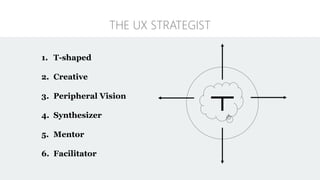
THE UX STRATEGIST
1. T-shaped
2. Creative
3. Peripheral Vision
4. Synthesizer
5. Mentor
6. Facilitator
“Air Sandwich“
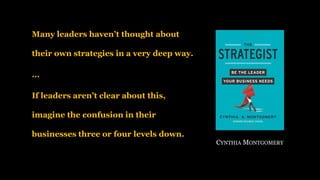
Many leaders haven’t thought about
their own strategies in a very deep way.
…
If leaders aren’t clear about this,
imagine the confusion in their
businesses three or four levels down.
CYNTHIA MONTGOMERY
What arguments would you make for UX Strategy?
What arguments would you make against it?
EXERCISE 8: ARGUMENTS
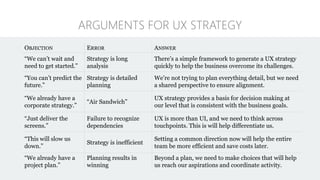
OBJECTION ERROR ANSWER
“We can’t wait and
need to get started.”
Strategy is long
analysis
There’s a simple framework to generate a UX strategy
quickly to help the business overcome its challenges.
“You can’t predict the
future.”
Strategy is detailed
planning
We’re not trying to plan everything detail, but we need
a shared perspective to ensure alignment.
“We already have a
corporate strategy.”
“Air Sandwich”
UX strategy provides a basis for decision making at
our level that is consistent with the business goals.
“Just deliver the
screens.”
Failure to recognize
dependencies
UX is more than UI, and we need to think across
touchpoints. This is will help differentiate us.
“This will slow us
down.”
Strategy is inefficient
Setting a common direction now will help the entire
team be more efficient and save costs later.
“We already have a
project plan.”
Planning results in
winning
Beyond a plan, we need to make choices that will help
us reach our aspirations and coordinate activity.
ARGUMENTS FOR UX STRATEGY
Danke schön
@JimKalbach

UX Strategy Blueprint