Jenny Gray, Leading Technical Developer open learn, The Open University 7 May 2010
Using Moodle VLE integration single code base shared functionality Open content, open source philosophy  Good initial product Easy to set up Simple content display Easy to extend Good basic tool set for learners
 
 
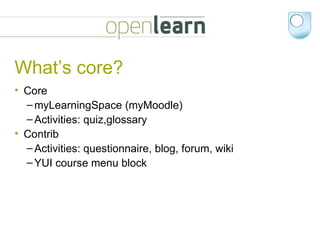
What’s core? Core myLearningSpace (myMoodle) Activities: quiz,glossary Contrib Activities: questionnaire, blog, forum, wiki YUI course menu block
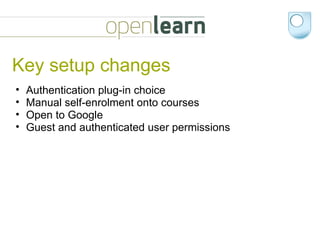
Key setup changes Authentication plug-in choice Manual self-enrolment onto courses Open to Google Guest and authenticated user permissions
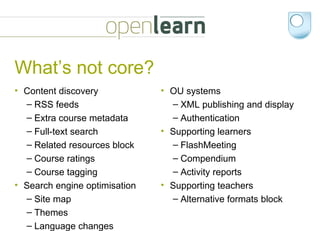
What’s not core? Content discovery RSS feeds Extra course metadata Full-text search Related resources block Course ratings Course tagging Search engine optimisation Site map Themes Language changes OU systems XML publishing and display Authentication  Supporting learners FlashMeeting Compendium Activity reports Supporting teachers Alternative formats block
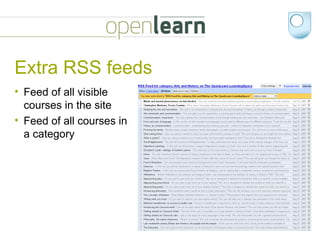
Extra RSS feeds Feed of all visible courses in the site Feed of all courses in a category
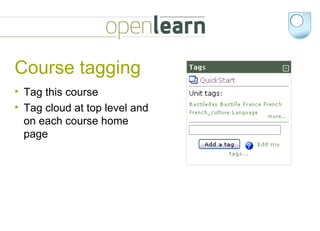
Course tagging Tag this course Tag cloud at top level and on each course home page
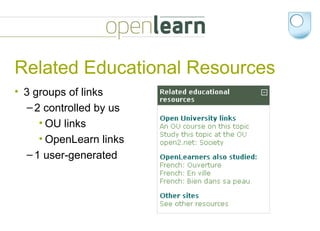
Related Educational Resources 3 groups of links 2 controlled by us  OU links OpenLearn links 1 user-generated
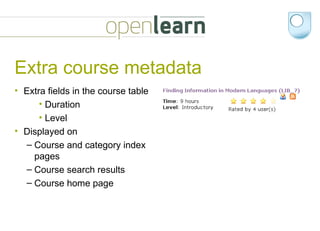
Extra course metadata Extra fields in the course table Duration Level Displayed on Course and category index pages Course search results Course home page
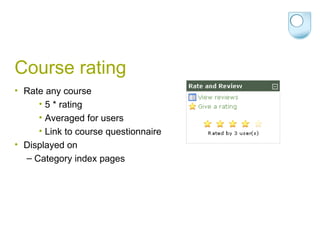
Course rating Rate any course 5 * rating Averaged for users Link to course questionnaire Displayed on Category index pages
Search Engine Optimisation Open to more than just Google Altered <title> tag structure in our themes Unit tags and descriptions in <meta> in our themes New URLs http://openlearn.open.ac.uk/Plate tectonics/S279_1   XML Site map pushed to Google weekly
What’s reusable? Moodle 2.? RSS feeds  Course tagging  Contrib FlashMeeting  Compendium  Related resources block (maybe) Course ratings Advice Extra course metadata Activity reports Full-text search Alternative formats Themes Language changes Site map
Lessons learned – the good Good framework to build on Plug-in infrastructure Roles and permissions flexibility Good community Plenty of support developments coming “for free” availability of lead developers to discuss plans success in contributing back to core product
Lessons learned – the bad Time consuming to keep up-to-date Poor core code quality Plug-in framework doesn’t always go far enough Principles of openness not embedded

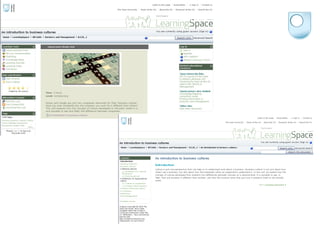
Using Moodle for OpenLearn

  • 1.
    Jenny Gray, LeadingTechnical Developer open learn, The Open University 7 May 2010
  • 2.
    Using Moodle VLEintegration single code base shared functionality Open content, open source philosophy Good initial product Easy to set up Simple content display Easy to extend Good basic tool set for learners
  • 3.
  • 4.
  • 5.
    What’s core? CoremyLearningSpace (myMoodle) Activities: quiz,glossary Contrib Activities: questionnaire, blog, forum, wiki YUI course menu block
  • 6.
    Key setup changesAuthentication plug-in choice Manual self-enrolment onto courses Open to Google Guest and authenticated user permissions
  • 7.
    What’s not core?Content discovery RSS feeds Extra course metadata Full-text search Related resources block Course ratings Course tagging Search engine optimisation Site map Themes Language changes OU systems XML publishing and display Authentication Supporting learners FlashMeeting Compendium Activity reports Supporting teachers Alternative formats block
  • 8.
    Extra RSS feedsFeed of all visible courses in the site Feed of all courses in a category
  • 9.
    Course tagging Tagthis course Tag cloud at top level and on each course home page
  • 10.
    Related Educational Resources3 groups of links 2 controlled by us OU links OpenLearn links 1 user-generated
  • 11.
    Extra course metadataExtra fields in the course table Duration Level Displayed on Course and category index pages Course search results Course home page
  • 12.
    Course rating Rateany course 5 * rating Averaged for users Link to course questionnaire Displayed on Category index pages
  • 13.
    Search Engine OptimisationOpen to more than just Google Altered <title> tag structure in our themes Unit tags and descriptions in <meta> in our themes New URLs http://openlearn.open.ac.uk/Plate tectonics/S279_1 XML Site map pushed to Google weekly
  • 14.
    What’s reusable? Moodle2.? RSS feeds Course tagging Contrib FlashMeeting Compendium Related resources block (maybe) Course ratings Advice Extra course metadata Activity reports Full-text search Alternative formats Themes Language changes Site map
  • 15.
    Lessons learned –the good Good framework to build on Plug-in infrastructure Roles and permissions flexibility Good community Plenty of support developments coming “for free” availability of lead developers to discuss plans success in contributing back to core product
  • 16.
    Lessons learned –the bad Time consuming to keep up-to-date Poor core code quality Plug-in framework doesn’t always go far enough Principles of openness not embedded

Editor's Notes

  • #2 How we’ve used Moodle to create the OU’s ocw site.
  • #3 how Moodle meets OCI needs Vle integration is important for the future sustainability of OpenLearn. Single code base = single development team. No brainer. Initial product choice rationale similar to those made by the VLE but initially OpenLearn used more of the basic software even than VLE particularly re authentication, content display, forums, blogs. That’s changing now because of the need to support a smaller set of functionality, so OpenLearn is swapping over to VLE choices for all those things (though we are hoping that many will make a future core version of Moodle one day). It was only as I updated this presentation that I realised how far we’ve changed over the last year! Basic tool set: (forums, blogs, quizzes, wiki …) Currently running 1.9.8 and investigating the cost/benefits of early upgrade to Moodle 2.0 when released in a few months.
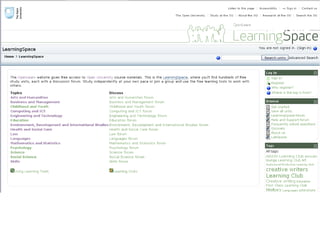
  • #4 For learners Log in or browse Structure based on disciplines &gt; subjects
  • #5 Range of activities (forums, quizzes, wikis) Collaboration tools : video conf, knowledge mapping Learner tools: personal blog, activity reports
  • #6 Its heavily customised isn’t it? Yes, and its getting worse because of mainstreaming efforts. Most of the contrib activities used have been written by the OU and made available more widely.
  • #7 Nb – now we have authentication linked in with wider OU websites so we’re not using email authentication any more but instead an external auth plug-n. maybe refer briefly to vital here.
  • #8 These things all fill a need which the original Moodle product did not address OU production based on authors writing in structured content xml OU authentication system (external sign up and login) Language e.g. learning journal = blog, user description = about me Themes – OU brand styling, improved navigation and meta tagging for SEO
  • #9 Rationale: pulling people back to the site, getting our content aggregated into ocw search facilities.
  • #10 Rationale: improved finding of related material. Users don’t all understand our topic categories, some units fit in several places. Extends that and tags block. Had hoped would be in moodle 2.0, but doesn’t seem to have made the cut.
  • #11 Rationale: pathways to other related material. User contributions are possible There are other blocks in contrib that do similar things, but often at site level not course, or not quite how we wanted. Includes Folksemantic integration from those nice people at COSL.
  • #12 Rationale: aids users locating suitable material for their abilities. Course home page display is as a label added by our publishing method, nothing clever!
  • #14 Open to our own search engine spider as well, and this allows us to skin our search results within the Moodle site. Focus is on getting the keywords in the right place Sharable? Maybe. Trap 404 errors and run through DB lookup to convert to real Moodle url. (text entry is ignored – shortcode is all important).
  • #16 As you can see we’ve felt the need to change a significant amount of the product, but done within the plug-in framework wherever possible so we can take advantage of many of the underpinnings that Moodle gives us
  • #17 Should make it clear that many of the criticisms I have about the code quality and framework are being addressed in Moodle 2.0 so hopefully this will be an easier platform to build upon. Because oppenness wasn’t in the plan for the original product it doesn’t do RSS feed, search engine access &amp; optimisation, friendly urls etc which make for a large number of fundamental changes to make a really successful OCW site.