Using Technology for
Presentations
Muttahir Ahmed Khan
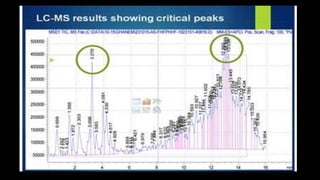
Clarity and Space of Graphs
Slides can be improved by showing the graphs on
separate slides to improve each slide’s clarity and
simplicity. One slide must show only one of the
graphs, add a more descriptive title, and add
circles to direct attention to places on the slide
having the most importance.
Visibility
And the foremost point is that your slides
and visials must be clearly seen. Obviously a
visual aid must be visible to be effective, but
how many times have you seen a presenter
display a computer-generated slide and say,
“I know you can’t read this, but let me tell
you what it says.”
TIPS
Here are some tips to help you meet the criteria of simplicity
and visibility while using computer-generated visual aids:
 Each slide should convey ONE main concept. Complicated
slides lead to audience confusion.
 Try to avoid text slides but if you must use them, limit the
number of words per line to 5 and the number of lines per
slide to 5.
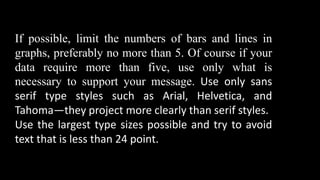
If possible, limit the numbers of bars and lines in
graphs, preferably no more than 5. Of course if your
data require more than five, use only what is
necessary to support your message. Use only sans
serif type styles such as Arial, Helvetica, and
Tahoma—they project more clearly than serif styles.
Use the largest type sizes possible and try to avoid
text that is less than 24 point.
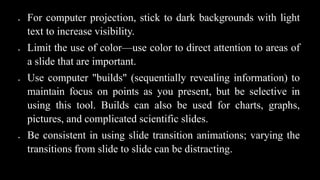
 For computer projection, stick to dark backgrounds with light
text to increase visibility.
 Limit the use of color—use color to direct attention to areas of
a slide that are important.
 Use computer "builds" (sequentially revealing information) to
maintain focus on points as you present, but be selective in
using this tool. Builds can also be used for charts, graphs,
pictures, and complicated scientific slides.
 Be consistent in using slide transition animations; varying the
transitions from slide to slide can be distracting.
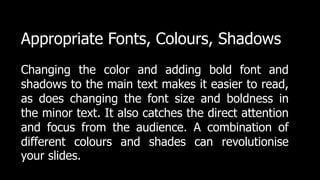
Appropriate Fonts, Colours, Shadows
Changing the color and adding bold font and
shadows to the main text makes it easier to read,
as does changing the font size and boldness in
the minor text. It also catches the direct attention
and focus from the audience. A combination of
different colours and shades can revolutionise
your slides.
Pros and Cond
Nowadays when technical professionals are asked to
give a presentation, they typically begin their
preparation by creating some slides using a popular
software program that will be projected when
speaking to an audience. But is this technology
improving presentations or creating a barrier between
the speaker and the audience?
Planning and organisation
While technology has created exciting tools for
speakers, the fundamental elements of a
presentation have not changed since the days of
Aristotle. Any successful presentation must be well
organized, delivered by a credible speaker, and
customized to a specific audience.
Logical Connection
Customizing your presentation requires information
gathering. Speak to the meeting planner to learn about who is
expected to attend, and talk with colleagues who have
presented to this group in the past. Ask questions related to
audience expectations and the technical background of the
typical attendee. It's also a good idea to know who is
speaking before or after you as you may want to look for tie-
ins with your subject matter.
Role of Technology
So what about the technology? Technology is simply a
tool. YOU are the presentation, not the technology. Great
technology will not overcome poor content. A great
presentation can be delivered without a single
slide. Abraham Lincoln, Winston Churchill, Martin Luther
King Jr., John F. Kennedy … they all crafted memorable
speeches without a laptop computer. The key is using the
technology correctly to enhance your spoken words.
Logical Importance
Any visual aid needs to meet certain criteria in
order to be successful. First, it has to be
necessary. In other words, you have reached the
conclusion that a visual aid will be helpful in
delivering your message. Lotherwise, people
will be distracted if couldn’t serve your purpose
and desire.
Appropriate format
Next, decide on the most appropriate format that will meet
the criterion of clarity—the best way to show an idea.
There are infinite ways to create effective visual aids, not
all of which require technology. Demonstrations, displays,
and photographs are all low-tech approaches. Be selective
and continually ask if this is the best way to support your
spoken words. The third criterion is simplicity—the best
visual aids are simple.
Conclusion
Computers are the most valuable presentation tool yet
to be invented, but speakers need to realize that they
are just a tool. There is no substitute for solid content
delivered with confidence and conviction. By applying
the ideas presented in this article, you will maximize
the use of technology in achieving success with all of
your presentations.

Use of technology in presentation

  • 1.
  • 2.
    Clarity and Spaceof Graphs Slides can be improved by showing the graphs on separate slides to improve each slide’s clarity and simplicity. One slide must show only one of the graphs, add a more descriptive title, and add circles to direct attention to places on the slide having the most importance.
  • 3.
    Visibility And the foremostpoint is that your slides and visials must be clearly seen. Obviously a visual aid must be visible to be effective, but how many times have you seen a presenter display a computer-generated slide and say, “I know you can’t read this, but let me tell you what it says.”
  • 4.
    TIPS Here are sometips to help you meet the criteria of simplicity and visibility while using computer-generated visual aids:  Each slide should convey ONE main concept. Complicated slides lead to audience confusion.  Try to avoid text slides but if you must use them, limit the number of words per line to 5 and the number of lines per slide to 5.
  • 5.
    If possible, limitthe numbers of bars and lines in graphs, preferably no more than 5. Of course if your data require more than five, use only what is necessary to support your message. Use only sans serif type styles such as Arial, Helvetica, and Tahoma—they project more clearly than serif styles. Use the largest type sizes possible and try to avoid text that is less than 24 point.
  • 6.
     For computerprojection, stick to dark backgrounds with light text to increase visibility.  Limit the use of color—use color to direct attention to areas of a slide that are important.  Use computer "builds" (sequentially revealing information) to maintain focus on points as you present, but be selective in using this tool. Builds can also be used for charts, graphs, pictures, and complicated scientific slides.  Be consistent in using slide transition animations; varying the transitions from slide to slide can be distracting.
  • 8.
    Appropriate Fonts, Colours,Shadows Changing the color and adding bold font and shadows to the main text makes it easier to read, as does changing the font size and boldness in the minor text. It also catches the direct attention and focus from the audience. A combination of different colours and shades can revolutionise your slides.
  • 9.
    Pros and Cond Nowadayswhen technical professionals are asked to give a presentation, they typically begin their preparation by creating some slides using a popular software program that will be projected when speaking to an audience. But is this technology improving presentations or creating a barrier between the speaker and the audience?
  • 10.
    Planning and organisation Whiletechnology has created exciting tools for speakers, the fundamental elements of a presentation have not changed since the days of Aristotle. Any successful presentation must be well organized, delivered by a credible speaker, and customized to a specific audience.
  • 11.
    Logical Connection Customizing yourpresentation requires information gathering. Speak to the meeting planner to learn about who is expected to attend, and talk with colleagues who have presented to this group in the past. Ask questions related to audience expectations and the technical background of the typical attendee. It's also a good idea to know who is speaking before or after you as you may want to look for tie- ins with your subject matter.
  • 12.
    Role of Technology Sowhat about the technology? Technology is simply a tool. YOU are the presentation, not the technology. Great technology will not overcome poor content. A great presentation can be delivered without a single slide. Abraham Lincoln, Winston Churchill, Martin Luther King Jr., John F. Kennedy … they all crafted memorable speeches without a laptop computer. The key is using the technology correctly to enhance your spoken words.
  • 13.
    Logical Importance Any visualaid needs to meet certain criteria in order to be successful. First, it has to be necessary. In other words, you have reached the conclusion that a visual aid will be helpful in delivering your message. Lotherwise, people will be distracted if couldn’t serve your purpose and desire.
  • 14.
    Appropriate format Next, decideon the most appropriate format that will meet the criterion of clarity—the best way to show an idea. There are infinite ways to create effective visual aids, not all of which require technology. Demonstrations, displays, and photographs are all low-tech approaches. Be selective and continually ask if this is the best way to support your spoken words. The third criterion is simplicity—the best visual aids are simple.
  • 15.
    Conclusion Computers are themost valuable presentation tool yet to be invented, but speakers need to realize that they are just a tool. There is no substitute for solid content delivered with confidence and conviction. By applying the ideas presented in this article, you will maximize the use of technology in achieving success with all of your presentations.