



USA During War World II
• Accomplished by:
Students gr. 1LM2 Daniela Budcenco
Luminița Oțel
• Checked: Irina Pomazanovschi
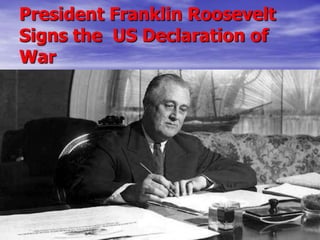
President Franklin Roosevelt
Signs the US Declaration of
War
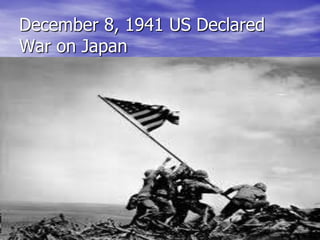
December 8, 1941 US Declared
War on Japan
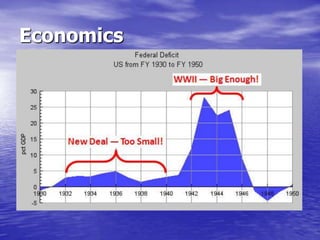
Economics
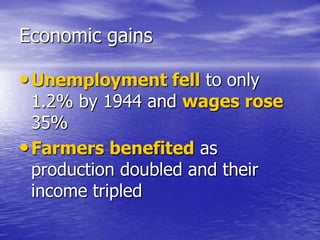
Economic gains
•Unemployment fell to only
1.2% by 1944 and wages rose
35%
•Farmers benefited as
production doubled and their
income tripled
Industry
• Americans converted their auto
industry into a war industry
• The nation’s automobile plants began
to produce tanks, planes, boats, and
command cars
• Many other industries also converted
to war-related supplies
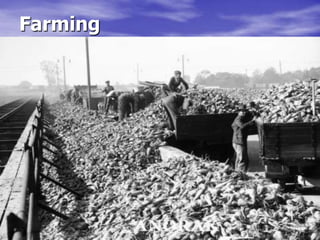
Farming
Women
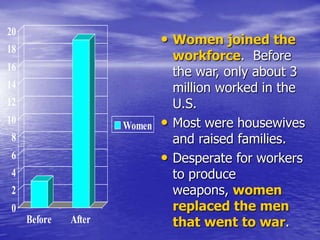
• Women joined the
workforce. Before
the war, only about 3
million worked in the
U.S.
• Most were housewives
and raised families.
• Desperate for workers
to produce
weapons, women
replaced the men
that went to war.
0
2
4
6
8
10
12
14
16
18
20
Before After
Women
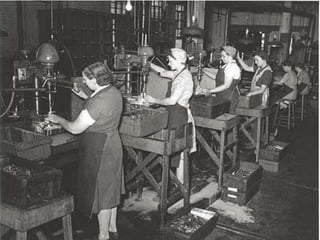
Rosie the Riveter
• 1940-1945 - the female percentage of the
U.S. workforce increased 27%-37%
• 1942 - Congress instituted the Women's
Auxiliary Army Corps, later upgraded to
the Women's Army Corps (WACs)
which had full military status.
• By 1945 - nearly one out of every four
married women worked outside the home.
Teenagers
U.S. DROPS TWO
ATOMIC BOMBS
ON JAPAN
• Truman warned
Japan in late July
1945 that
without a
immediate
Japanese surrender,
it faced “prompt
and utter
destruction”
• On August 6
(Hiroshima) and
August 9
(Nagasaki) a B-29
bomber dropped
Atomic Bombs on
Japan
The plane and crew that dropped
an atomic bomb on
Hiroshima, Japan
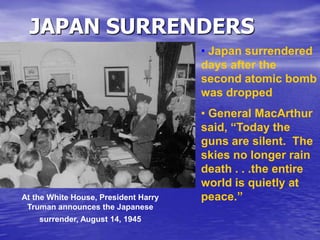
JAPAN SURRENDERS
At the White House, President Harry
Truman announces the Japanese
surrender, August 14, 1945
• Japan surrendered
days after the
second atomic bomb
was dropped
• General MacArthur
said, “Today the
guns are silent. The
skies no longer rain
death . . .the entire
world is quietly at
peace.”
Usa during the world war ii

Usa during the world war ii

  • 1.
    USA During WarWorld II • Accomplished by: Students gr. 1LM2 Daniela Budcenco Luminița Oțel • Checked: Irina Pomazanovschi
  • 5.
    President Franklin Roosevelt Signsthe US Declaration of War
  • 6.
    December 8, 1941US Declared War on Japan
  • 9.
  • 10.
    Economic gains •Unemployment fellto only 1.2% by 1944 and wages rose 35% •Farmers benefited as production doubled and their income tripled
  • 11.
    Industry • Americans convertedtheir auto industry into a war industry • The nation’s automobile plants began to produce tanks, planes, boats, and command cars • Many other industries also converted to war-related supplies
  • 12.
  • 13.
  • 14.
    • Women joinedthe workforce. Before the war, only about 3 million worked in the U.S. • Most were housewives and raised families. • Desperate for workers to produce weapons, women replaced the men that went to war. 0 2 4 6 8 10 12 14 16 18 20 Before After Women
  • 15.
    Rosie the Riveter •1940-1945 - the female percentage of the U.S. workforce increased 27%-37% • 1942 - Congress instituted the Women's Auxiliary Army Corps, later upgraded to the Women's Army Corps (WACs) which had full military status. • By 1945 - nearly one out of every four married women worked outside the home.
  • 17.
  • 19.
    U.S. DROPS TWO ATOMICBOMBS ON JAPAN • Truman warned Japan in late July 1945 that without a immediate Japanese surrender, it faced “prompt and utter destruction” • On August 6 (Hiroshima) and August 9 (Nagasaki) a B-29 bomber dropped Atomic Bombs on Japan The plane and crew that dropped an atomic bomb on Hiroshima, Japan
  • 20.
    JAPAN SURRENDERS At theWhite House, President Harry Truman announces the Japanese surrender, August 14, 1945 • Japan surrendered days after the second atomic bomb was dropped • General MacArthur said, “Today the guns are silent. The skies no longer rain death . . .the entire world is quietly at peace.”