OPENING ASSIGNMENT
• After Japan’s attack on Pearl Harbor, the US
entered the war. Americans needed to mobilize a
depressed peacetime country for war. The US
needed to produce the workers, soldiers,
weapons, and equipment that will help win the
war.
• How can the United States use its resources to
achieve victory?
• How can government encourage businesses to
convert to wartime production?
• What sacrifices will Americans be willing to
make?
• How can the military attract recruits?
• Essential Learning Goal:
• The Second World War caused dramatic changes for
the citizens of the US and to the US’ position as a
world power.
• Learning Targets:
• I can explain how volunteerism, the Selective Service
System, and the Women’s Auxiliary Army Corps
(WAAC) helped provide necessary military personnel.
• I can identify the impact of industry in converting from
a peacetime economy to a wartime economy.
• I can explain how the Office of Scientific Research and
Development (OSRD) begins to shape a brave new
world.
• I can identify the importance of the Office of Price
Administration (OPA), War Production Board (WPB),
and rationing in preparing the US for wartime.
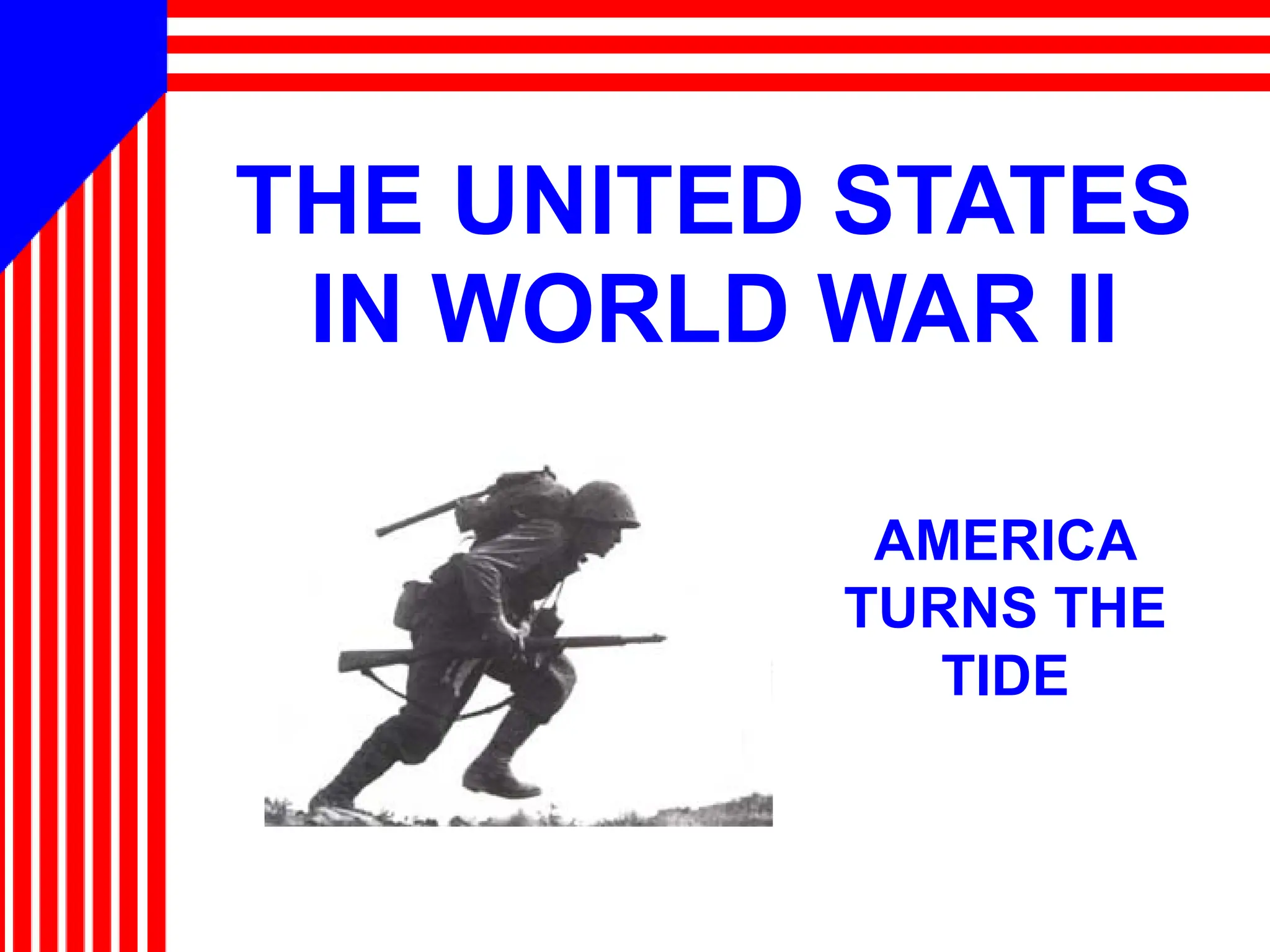
THE UNITED STATES
IN WORLD WAR II
AMERICA
TURNS THE
TIDE
SECTION 1: MOBILIZING FOR
DEFENSE
• After Japan attacked Pearl
Harbor, they thought
America would avoid
further conflict with them.
• The Japan Times
newspaper said America
was “trembling in their
shoes”.
• But if America was
trembling, it was with rage,
not fear.
• “Remember Pearl Harbor”
was the rallying cry as
America entered WWII
AMERICANS RUSH TO ENLIST
• After Pearl Harbor five million Americans enlisted to
fight in the war.
• The Selective Service expanded the draft and
eventually provided an additional 10 million soldiers.
WOMEN JOIN THE FIGHT
• Army Chief of Staff
General George
Marshall pushed for the
formation of the
Women’s Auxiliary
Army Corps (WAAC).
• Under this program
women worked in non-
combat roles such as
nurses, ambulance
drivers, radio
operators, and pilots.
ALL AMERICANS FOUGHT
Despite discrimination at
home, minority populations
contributed to the war effort.
•1,000,000 African Americans
served in the military.
•300,000 Mexican-Americans.
•33,000 Japanese Americans.
The most decorated American
combat unit in WWII, the 442nd
Regimental Combat Team.
•25,000 Native Americans.
•13,000 Chinese Americans. 1/5
of all Chinese American men
served.
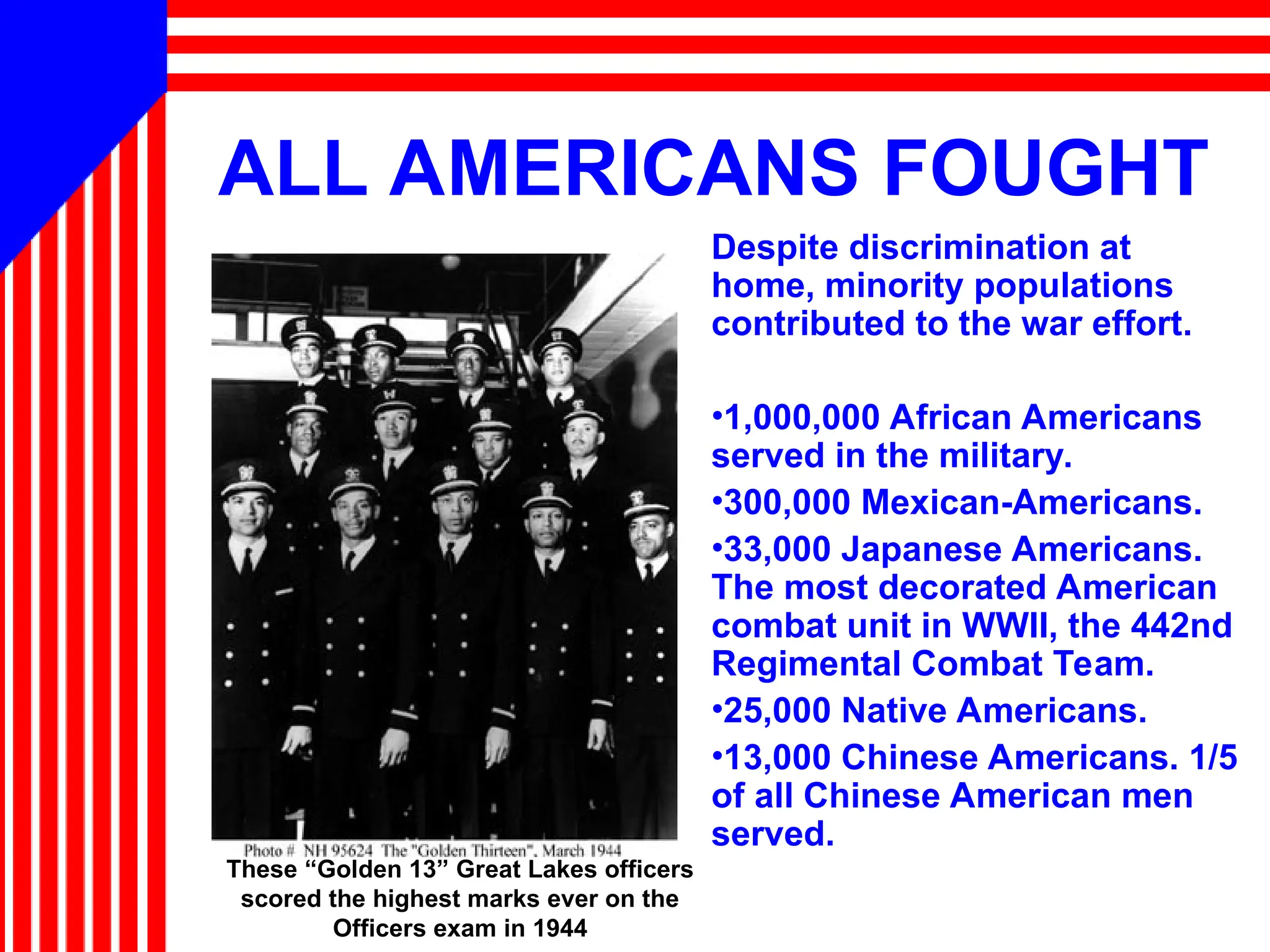
These “Golden 13” Great Lakes officers
scored the highest marks ever on the
Officers exam in 1944
A PRODUCTION MIRACLE
• Americans converted
their auto industry into
a war industry.
• The nation’s
automobile plants
began to produce
tanks, planes, boats,
and command cars.
• Many other industries
also converted to war-
related supplies.
LABOR’S CONTRIBUTION
• By 1944, nearly 18
million workers were
laboring in war
industries (3x the
number in 1941).
• More than 6 million
of these were
women and nearly 2
million were
minority.
MOBILIZATION OF SCIENTISTS
• In 1941, FDR created the Office of Scientific
Research and Development (OSRD) to bring
scientists into the war effort.
• Focus was on radar and sonar to locate
submarines.
• Also the scientists worked on penicillin and
pesticides like DDT.
MANHATTAN PROJECT
• The most important
achievement of the
OSRD was the secret
development of the
atomic bomb.
• Einstein wrote to FDR
warning him that the
Germans were
attempting to develop
such a weapon.
• The code name for the
American efforts to
build the bomb was
the “Manhattan
Project”.
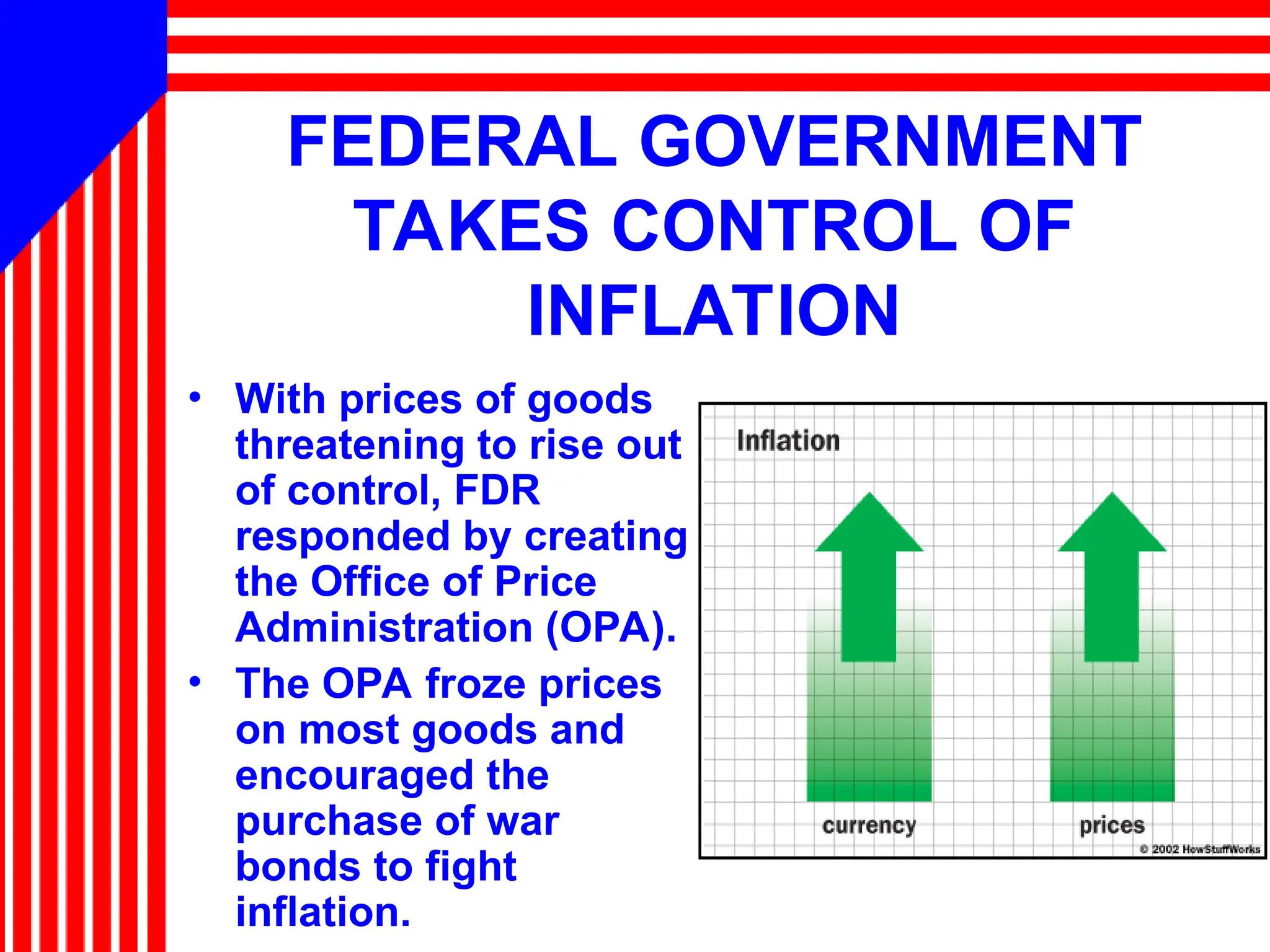
FEDERAL GOVERNMENT
TAKES CONTROL OF
INFLATION
• With prices of goods
threatening to rise out
of control, FDR
responded by creating
the Office of Price
Administration (OPA).
• The OPA froze prices
on most goods and
encouraged the
purchase of war
bonds to fight
inflation.
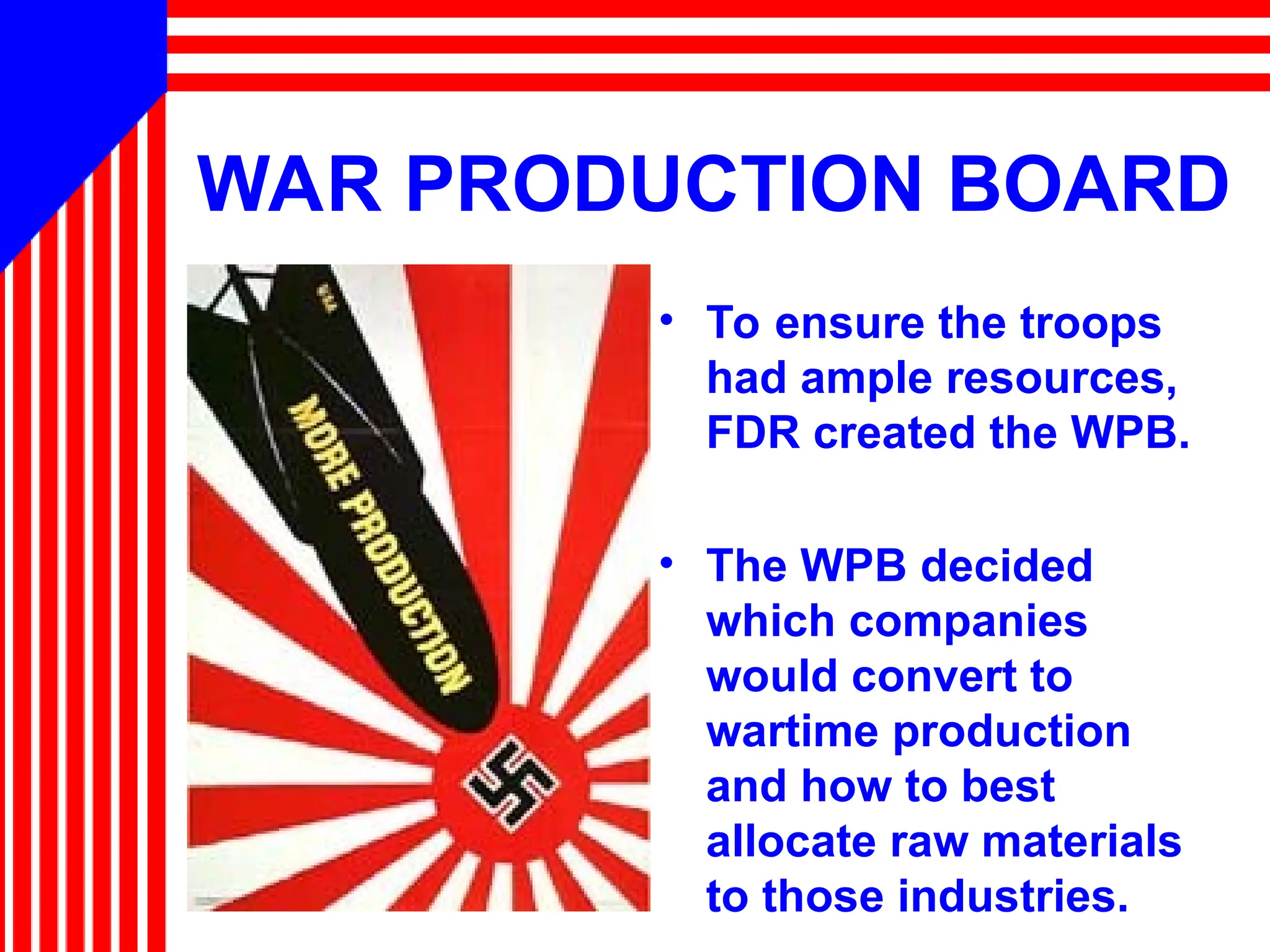
WAR PRODUCTION BOARD
• To ensure the troops
had ample resources,
FDR created the WPB.
• The WPB decided
which companies
would convert to
wartime production
and how to best
allocate raw materials
to those industries.
COLLECTION DRIVES
• The WPB also
organized nationwide
drives to collect scrap
iron, tin cans, paper,
rags and cooking fat
for recycling.
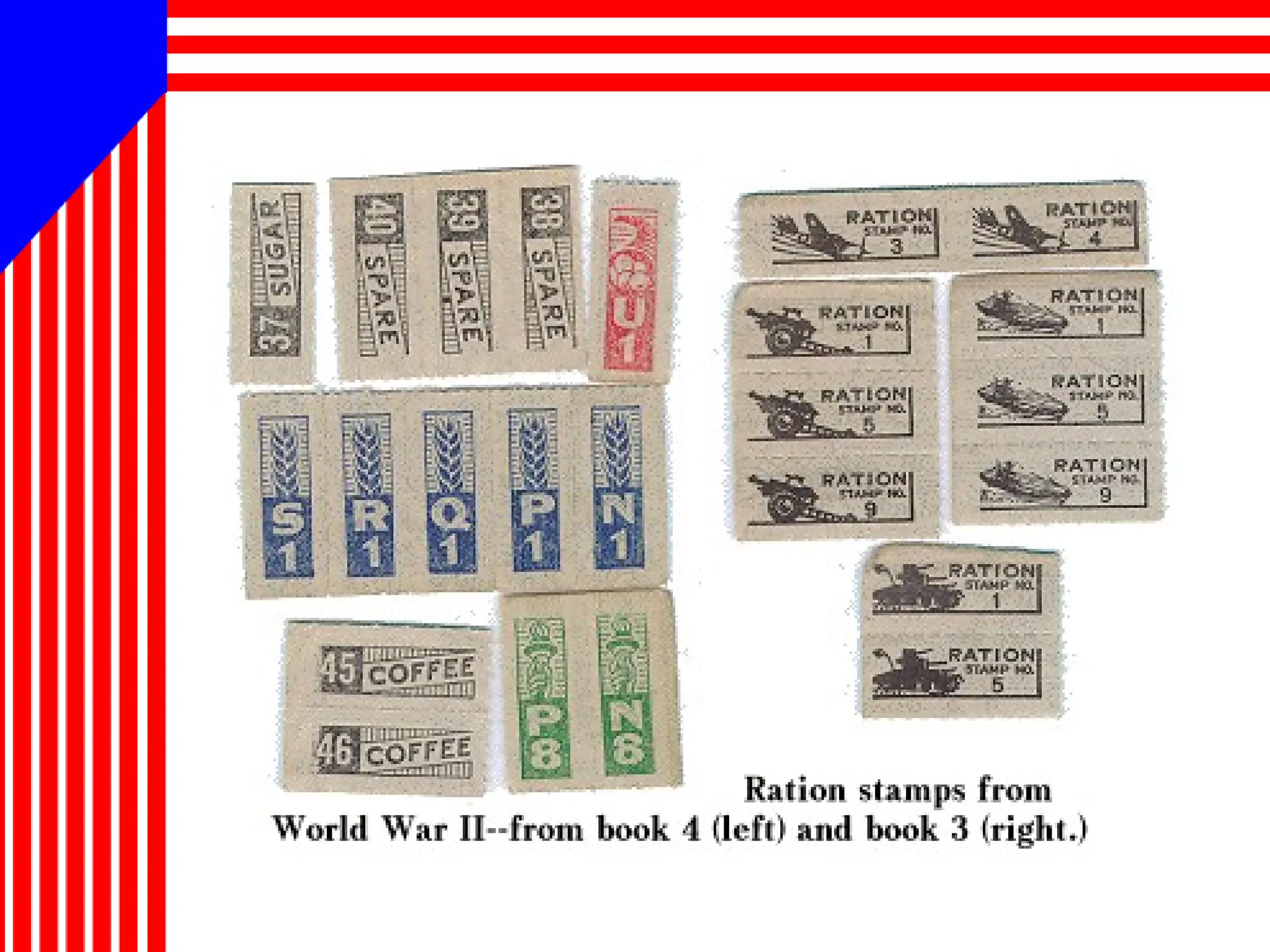
• Additionally, the OPA
set up a system of
rationing.
• Households had set
allocations of scarce
goods – gas, meat,
shoes, sugar, and
coffee.
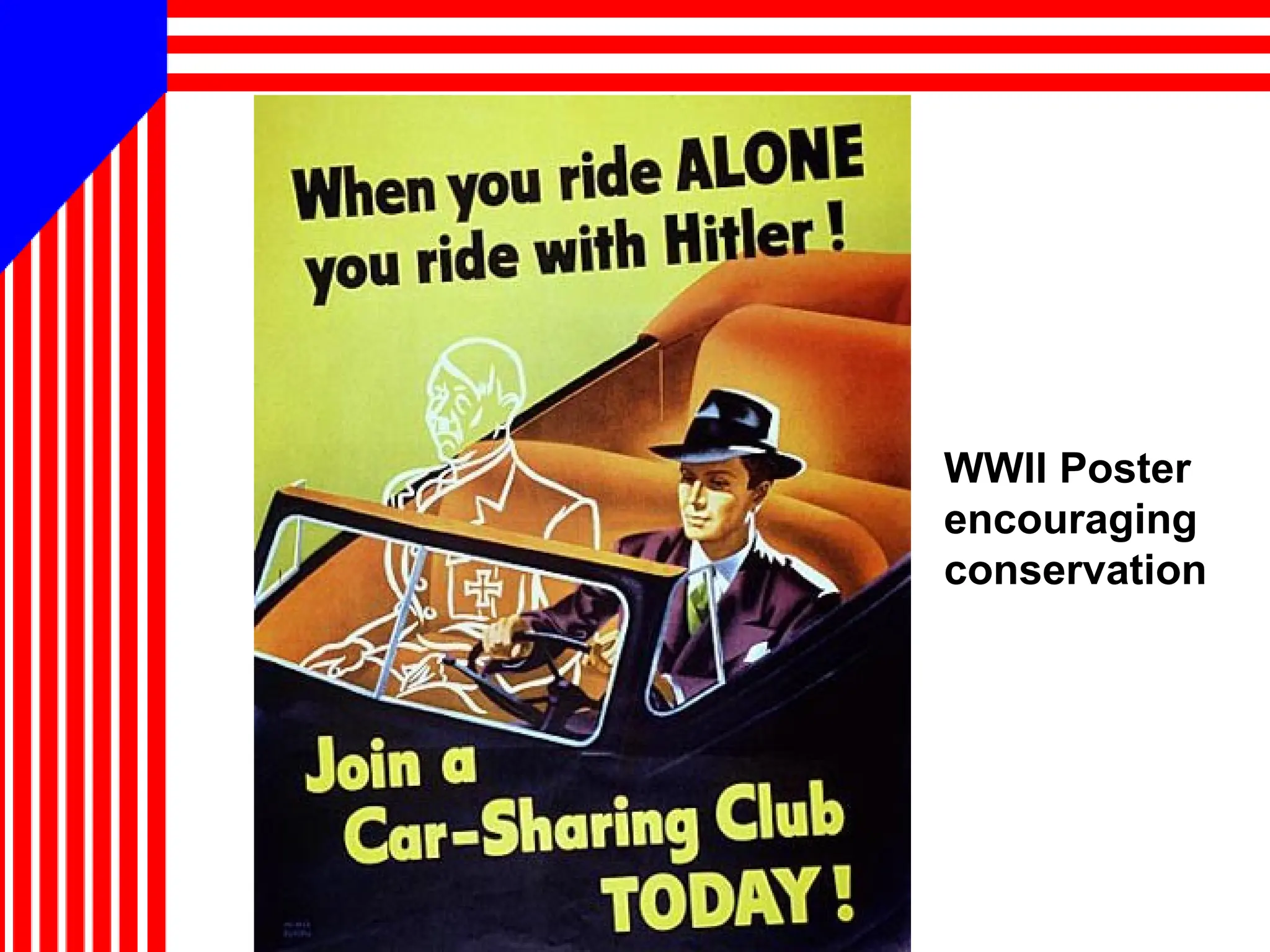
WWII Poster
encouraging
conservation
Daily Review
1. Why were the Selective Service System and the
Women’s Auxiliary Army Corps necessary supplements
to the volunteers who entered the US military during
WWII.
2. How did the US economy transition from peacetime to
wartime?
3. How did the US government assist in regulating the
economy?
4. What types of items were rationed during the war?
5. How did the Office of Scientific Research and
Development help create a new wonder weapon?
HOMEWORK
• Complete the Daily Review #1-5 from the
previous slide.
• Chapter 17 Section 2
• Read Pages 569 – 577
• Main Ideas A – F
• SkillBuilder Page 572 #1 – 2
• SkillBuilder Page 575 #1 – 2
• Define the Terms & Names into your notebook.

Involvement of US in major battle of world war 2

  • 1.
    OPENING ASSIGNMENT • AfterJapan’s attack on Pearl Harbor, the US entered the war. Americans needed to mobilize a depressed peacetime country for war. The US needed to produce the workers, soldiers, weapons, and equipment that will help win the war. • How can the United States use its resources to achieve victory? • How can government encourage businesses to convert to wartime production? • What sacrifices will Americans be willing to make? • How can the military attract recruits?
  • 2.
    • Essential LearningGoal: • The Second World War caused dramatic changes for the citizens of the US and to the US’ position as a world power. • Learning Targets: • I can explain how volunteerism, the Selective Service System, and the Women’s Auxiliary Army Corps (WAAC) helped provide necessary military personnel. • I can identify the impact of industry in converting from a peacetime economy to a wartime economy. • I can explain how the Office of Scientific Research and Development (OSRD) begins to shape a brave new world. • I can identify the importance of the Office of Price Administration (OPA), War Production Board (WPB), and rationing in preparing the US for wartime.
  • 3.
    THE UNITED STATES INWORLD WAR II AMERICA TURNS THE TIDE
  • 4.
    SECTION 1: MOBILIZINGFOR DEFENSE • After Japan attacked Pearl Harbor, they thought America would avoid further conflict with them. • The Japan Times newspaper said America was “trembling in their shoes”. • But if America was trembling, it was with rage, not fear. • “Remember Pearl Harbor” was the rallying cry as America entered WWII
  • 5.
    AMERICANS RUSH TOENLIST • After Pearl Harbor five million Americans enlisted to fight in the war. • The Selective Service expanded the draft and eventually provided an additional 10 million soldiers.
  • 6.
    WOMEN JOIN THEFIGHT • Army Chief of Staff General George Marshall pushed for the formation of the Women’s Auxiliary Army Corps (WAAC). • Under this program women worked in non- combat roles such as nurses, ambulance drivers, radio operators, and pilots.
  • 7.
    ALL AMERICANS FOUGHT Despitediscrimination at home, minority populations contributed to the war effort. •1,000,000 African Americans served in the military. •300,000 Mexican-Americans. •33,000 Japanese Americans. The most decorated American combat unit in WWII, the 442nd Regimental Combat Team. •25,000 Native Americans. •13,000 Chinese Americans. 1/5 of all Chinese American men served. These “Golden 13” Great Lakes officers scored the highest marks ever on the Officers exam in 1944
  • 8.
    A PRODUCTION MIRACLE •Americans converted their auto industry into a war industry. • The nation’s automobile plants began to produce tanks, planes, boats, and command cars. • Many other industries also converted to war- related supplies.
  • 9.
    LABOR’S CONTRIBUTION • By1944, nearly 18 million workers were laboring in war industries (3x the number in 1941). • More than 6 million of these were women and nearly 2 million were minority.
  • 10.
    MOBILIZATION OF SCIENTISTS •In 1941, FDR created the Office of Scientific Research and Development (OSRD) to bring scientists into the war effort. • Focus was on radar and sonar to locate submarines. • Also the scientists worked on penicillin and pesticides like DDT.
  • 11.
    MANHATTAN PROJECT • Themost important achievement of the OSRD was the secret development of the atomic bomb. • Einstein wrote to FDR warning him that the Germans were attempting to develop such a weapon. • The code name for the American efforts to build the bomb was the “Manhattan Project”.
  • 12.
    FEDERAL GOVERNMENT TAKES CONTROLOF INFLATION • With prices of goods threatening to rise out of control, FDR responded by creating the Office of Price Administration (OPA). • The OPA froze prices on most goods and encouraged the purchase of war bonds to fight inflation.
  • 14.
    WAR PRODUCTION BOARD •To ensure the troops had ample resources, FDR created the WPB. • The WPB decided which companies would convert to wartime production and how to best allocate raw materials to those industries.
  • 15.
    COLLECTION DRIVES • TheWPB also organized nationwide drives to collect scrap iron, tin cans, paper, rags and cooking fat for recycling. • Additionally, the OPA set up a system of rationing. • Households had set allocations of scarce goods – gas, meat, shoes, sugar, and coffee.
  • 16.
  • 18.
    Daily Review 1. Whywere the Selective Service System and the Women’s Auxiliary Army Corps necessary supplements to the volunteers who entered the US military during WWII. 2. How did the US economy transition from peacetime to wartime? 3. How did the US government assist in regulating the economy? 4. What types of items were rationed during the war? 5. How did the Office of Scientific Research and Development help create a new wonder weapon?
  • 19.
    HOMEWORK • Complete theDaily Review #1-5 from the previous slide. • Chapter 17 Section 2 • Read Pages 569 – 577 • Main Ideas A – F • SkillBuilder Page 572 #1 – 2 • SkillBuilder Page 575 #1 – 2 • Define the Terms & Names into your notebook.