URINARY TRACT
INFECTIONS
Pathophysiology presentation
Introduction:
 Name : Kiran Raju Wahule
 Class : FY- B-pharm
 Div : B
 Roll no : 107
 Subject: Pathophysiology
 Topic : Urinary tract infections
Content :
What is Urinary tract infection?
Types of urinary tract infections.
Risk factors
Symptoms
Prevention
Treatment
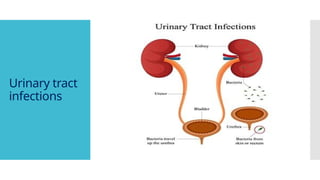
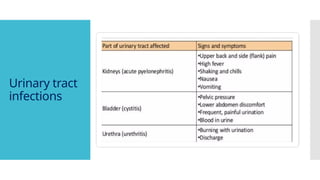
Urinary tract
infections
Urinary tract
infection
 A urinary tract infection (UTI) is an
infection that affects any part of the
urinary system, including the kidneys,
ureters, bladder, and urethra.
 UTIs are common type of bacterial
infection, with women being more
susceptible than men.
 Infections can range from mild and
localised to severe and potentially
damaging to the kidneys if left untreated.
Urinary tract
infection
 Types of urinary tract infections.
UTIs are caused by micro-organisms
or germs, usually bacteria. The different
types of UTI can include:
 Urethritis – infection of the urethra
 Cystitis – infection of the bladder
 Pyelonephritis – infection of the kidneys
 Vaginitis – infection of the vagina.
Risk factors
Some people are at greater risk than others of
developing UTIs.
These include:
women sexually active women are vulnerable.
people with urinary catheters – such as people
who are critically ill, who can’t empty their own
bladder
people with diabetes – changes to the immune
system make a person with diabetes more
vulnerable to infection
men with prostate problems such as an enlarged
prostate gland that can cause the bladder to only
partially empty
 babies – especially those born with physical
problems (congenital abnormalities) of the
urinary system.
Symptoms
A burning feeling when you pee.
A frequent or intense urge to pee, even though
little comes out when you do
Cloudy, dark, bloody, or strange-smelling pee
Feeling tired or shaky
Fever or chills (a sign that the infection may have
reached your kidneys)
 Pain or pressure in your back or lower abdomen
Urinary tract
infections
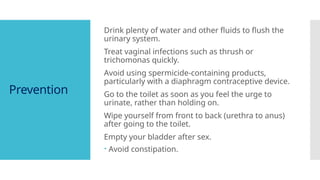
Prevention
Drink plenty of water and other fluids to flush the
urinary system.
Treat vaginal infections such as thrush or
trichomonas quickly.
Avoid using spermicide-containing products,
particularly with a diaphragm contraceptive device.
Go to the toilet as soon as you feel the urge to
urinate, rather than holding on.
Wipe yourself from front to back (urethra to anus)
after going to the toilet.
Empty your bladder after sex.
 Avoid constipation.
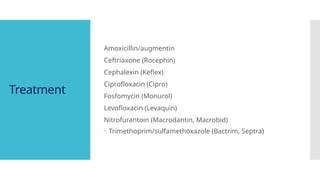
Treatment
Amoxicillin/augmentin
Ceftriaxone (Rocephin)
Cephalexin (Keflex)
Ciprofloxacin (Cipro)
Fosfomycin (Monurol)
Levofloxacin (Levaquin)
Nitrofurantoin (Macrodantin, Macrobid)
 Trimethoprim/sulfamethoxazole (Bactrim, Septra)
Thank you!

URINARY TRACT INFECTIONS, PATHOPYSIOLOGY

  • 1.
  • 2.
    Introduction:  Name :Kiran Raju Wahule  Class : FY- B-pharm  Div : B  Roll no : 107  Subject: Pathophysiology  Topic : Urinary tract infections
  • 3.
    Content : What isUrinary tract infection? Types of urinary tract infections. Risk factors Symptoms Prevention Treatment
  • 4.
  • 5.
    Urinary tract infection  Aurinary tract infection (UTI) is an infection that affects any part of the urinary system, including the kidneys, ureters, bladder, and urethra.  UTIs are common type of bacterial infection, with women being more susceptible than men.  Infections can range from mild and localised to severe and potentially damaging to the kidneys if left untreated.
  • 6.
    Urinary tract infection  Typesof urinary tract infections. UTIs are caused by micro-organisms or germs, usually bacteria. The different types of UTI can include:  Urethritis – infection of the urethra  Cystitis – infection of the bladder  Pyelonephritis – infection of the kidneys  Vaginitis – infection of the vagina.
  • 7.
    Risk factors Some peopleare at greater risk than others of developing UTIs. These include: women sexually active women are vulnerable. people with urinary catheters – such as people who are critically ill, who can’t empty their own bladder people with diabetes – changes to the immune system make a person with diabetes more vulnerable to infection men with prostate problems such as an enlarged prostate gland that can cause the bladder to only partially empty  babies – especially those born with physical problems (congenital abnormalities) of the urinary system.
  • 8.
    Symptoms A burning feelingwhen you pee. A frequent or intense urge to pee, even though little comes out when you do Cloudy, dark, bloody, or strange-smelling pee Feeling tired or shaky Fever or chills (a sign that the infection may have reached your kidneys)  Pain or pressure in your back or lower abdomen
  • 9.
  • 10.
    Prevention Drink plenty ofwater and other fluids to flush the urinary system. Treat vaginal infections such as thrush or trichomonas quickly. Avoid using spermicide-containing products, particularly with a diaphragm contraceptive device. Go to the toilet as soon as you feel the urge to urinate, rather than holding on. Wipe yourself from front to back (urethra to anus) after going to the toilet. Empty your bladder after sex.  Avoid constipation.
  • 11.
    Treatment Amoxicillin/augmentin Ceftriaxone (Rocephin) Cephalexin (Keflex) Ciprofloxacin(Cipro) Fosfomycin (Monurol) Levofloxacin (Levaquin) Nitrofurantoin (Macrodantin, Macrobid)  Trimethoprim/sulfamethoxazole (Bactrim, Septra)
  • 12.