INTRODUCTION
The Urinary system maintains homeostasis
by regulating the composition, pH and volume
of body fluids. It does this by producing urine.
The urinary system includes-
Kidneys - 2
Ureters - 2
Urinary Bladder - 1
Urethra - 1
Functions of the Urinary System
 Excretion of wastes product
 Regulation of blood ionic composition
 Regulation of blood PH
 Regulation of blood volume
 Regulation of blood pressure
 Maintenance of blood Osmolarity
 Production of hormones
 Regulation of blood glucose Level
Cont....
 Size – 10 - 12 cm (4 – 5 Inch in) long, 5–7 cm (2–3 Inch)
wide and about 2.5 - 3 cm (1 Inch) thick.
 Like a bar of bath soap
 Weight – 130 – 150 gm (4.5 – 5 oz)
 Location - T12 to L3 vertebrae in retroperitoneal (behind
the peritoneum)
 The right kidney is slightly lower than the left because of
the presence of the liver.
 The kidney is surrounded by a renal capsule, adipose
tissue/capsule and the renal fascia.
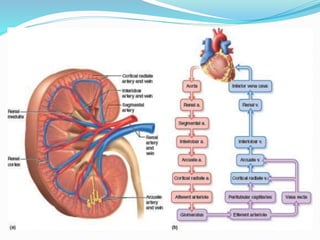
Renal Blood Vessels
 Although the kidneys constitute less than 0.5% of total body
mass, they receive 20–25% of the resting cardiac output via the
right and left renal arteries (Abdominal aorta)
 Blood leaves the kidney through renal vein (Inferior vena
cava)
Renal Nerve Supply
 Renal nerves pass through the renal plexus into the
kidneys along with the renal arteries.
 Most are vasomotor nerves
that regulate the flow of blood
through the kidney by causing
vasodilation or vasoconstriction
of renal arterioles.
INTERNAL ANATOMY OF KIDNEY
RENAL PAPILA
RENAL PYRAMID
RENAL
COLUMN
Cortical & Juxta-medullary Nephrons
 Although 85% of the nephrons are located in the cortex,
15% of the nephrons are located in the junction of the
cortex and the medulla.
 Cortical nephrons are the most numerous and near the
surface of the kidney.
 Juxta-medullary nephrons are near the medulla.
Nephron
 A Nephron is the functional unit of the kidney.
 It consists of a renal corpuscle and a renal tubule.
 The corpuscle consists of a glomerulus and a
glomerular capsule.
 Parts of the renal tubule include the proximal
convoluted tubule, the nephron loop (ascending and
descending limbs), and the distal convoluted tubule.
 The nephron joins a collecting duct, which
empties into a minor calyx.
Blood supply of a nephron
 The Glomerular capillary receives blood from
the afferent arteriole and passes it to the
efferent arteriole.
 The Efferent arteriole gives rise to the
peritubular capillary system, which surrounds
the renal tubule.
RENAL PHYSIOLOGY
 By filtering, reabsorbing, and secreting, nephrons help maintain
homeostasis of the blood’s volume and composition.
 The situation is somewhat analogous to a recycling center: Garbage
trucks dump garbage into an input hopper, where the smaller
garbage passes onto a conveyor belt (glomerular filtration of
plasma).
 As the conveyor belt carries the garbage along, workers remove
useful items, such as aluminum cans, plastics, and glass containers
(reabsorption).
 Other workers place additional garbage left at the center and larger
items onto the conveyor belt (secretion). At the end of the belt, all
remaining garbage falls into a truck for transport to the landfill
(excretion of wastes in urine).
1. Glomerular filtration
In the first step of urine production, water and most
solutes in blood plasma move across the wall of glomerular
capillaries, where they are filtered and move into the
glomerular capsule and then into the renal tubule.
 Fenestration (pore) of glomerular endothelial cell :
prevents filtration of blood cells but allows all components of
blood plasma to pass through
 Basement membrane of glomerulus : prevents filtration of
larger proteins
 Slit membrane between pedicels : prevents filtration of
medium-sized proteins
2. Tubular Re-absorption
As filtered fluid flows through the renal tubules
and through the collecting ducts, tubule cells reabsorb
about 99% of the filtered water and many useful
solutes. The water and solutes return to the blood as it
flows through the peritubularcapillaries and vasa
recta. Note that the term reabsorption refers to the
return of substances to the bloodstream. The term
absorption, by contrast, means entry of new
substances into the body, as occurs in the
gastrointestinal tract.
3. Tubular Secretion/Excretion
As filtered fluid flows through the renal
tubules and collecting ducts, the renal tubule
and duct cells excrete other materials also, such
as wastes, drugs, and excess ions, into the
fluid.
Net Filtration Pressure
 Glomerular filtration depends on three main pressures. One pressure
promotes filtration and two pressures oppose filtration
1. Glomerular blood hydrostatic pressure (GBHP) is the blood
pressure in glomerular capillaries. Generally, GBHP is about 55
mmHg. It promotes filtration by forcing water and solutes in blood
plasma through the filtration membrane.
2. Capsular hydrostatic pressure (CHP) is the hydrostatic pressure
exerted against the filtration membrane by fluid already in the
capsular space and renal tubule. CHP opposes filtration and represents
a “back pressure” of about 15 mmHg.
3. Blood colloid osmotic pressure (BCOP), which is due to the
presence of proteins such as albumin, globulins, and fibrinogen in
blood plasma, also opposes filtration. The average BCOP in
glomerular capillaries is 30 mmHg.
 Net filtration pressure (NFP), the total pressure that promotes filtration,
is determined as follows:
Net filtration pressure (NFP) = GBHP − CHP − BCOP
Glomerular Filtration Rate
 The amount of filtrate formed in all renal corpuscles of both
kidneys each minute is the glomerular filtration rate (GFR).
 In adults, the GFR averages 125 mL/min in males and 105
mL/min in females.
 Homeostasis of body fluids requires that the kidneys maintain a
relatively constant GFR.
 If the GFR is too high, needed substances may pass so quickly
through the renal tubules that some are not reabsorbed and are
lost in the urine.
 If the GFR is too low, nearly all the filtrate may be reabsorbed
and certain waste products may not be adequately excreted.
REGULATION OF GFR
 HANDOUT
REGULATION OF TUBULAR REABSORPTION &
SECRETION
The total amount of filtered water reabsorbed in the renal
tubule and collecting duct is 99%:
 65% in the proximal tubule
 15% in the nephron loop
 19% in the late distal tubule and collecting duct.
The remaining 1% of the filtered water (about 1.5–2
L/day) is excreted in urine. Therefore, when the body is
normally hydrated, the kidneys produce about 1.5–2 L of
urine on a daily basis and the urine is slightly
hyperosmotic (slightly concentrated) compared to blood.
 Most of the sodium ions are reabsorbed before the urine is
excreted.
 The countercurrent mechanism concentrates sodium ions in the
renal medulla.
 The distal convoluted tubule and collecting duct are
impermeable to water, which therefore is excreted in urine.
 ADH from the posterior pituitary gland promotes water
reabsorption by increasing the permeability of the distal
convoluted tubule and collecting duct.
 Urea and uric acid excretion
 Urea is a by-product of amino acid metabolism.
 Uric acid results from the metabolism of nucleic acids.
Urine concentration & volume
Urine Movement
 The walls of the ureter and urinary bladder consist of the
epithelium, the lamina propria, a muscular coat, and a
fibrous adventitia.
 The all these permits changes in size.
 Contraction of the smooth muscle moves urine.
 The urethra is lined with transitional and stratified
squamous epithelium.
 Males have an internal urethral sphincter of smooth muscle
that prevents retrograde ejaculation of semen.
 An external urethral sphincter of skeletal muscle allows
voluntary control of urination.
CONT..
 Urine Flow through the Nephron and Ureters
 1. A pressure gradient causes urine to fl ow from the Bowman
capsule to the ureters.
 2. Peristalsis moves urine through the ureters.
 Micturition Reflex
 Stretch of the urinary bladder stimulates a reflex that causes
the urinary bladder to contract and inhibits the external
urethral sphincter.
 But brain centers can also stimulate or inhibit the micturition
reflex for voluntary urination.
Ureters
 The ureter is a tubular organ that extends from each
kidney to the urinary bladder.
 Its wall has mucous, muscular, and fi brous layers.
 Peristaltic waves in the ureter force urine to the urinary
bladder.
 Obstruction in the ureter stimulates strong peristaltic
waves and a refl ex that decreases urine production.
Urinary bladder
 a. The urinary bladder is a distensible organ that stores
urine and forces it into the urethra.
 b. The ureters and urethra open at the three angles of
the trigone in the floor of the urinary bladder.
 c. Muscle fibers in the wall form the detrusor muscle.
 d. A portion of the detrusor muscle forms an internal
urethral sphincter.
Urethra
 The urethra conveys urine from the urinary bladder to
the outside.
 In females, it located between the labia minora.
 In males, it conveys products of reproductive organs as
well as urine-
 Three portions of the male urethra are prostatic,
membranous, and penile.
 The urethra orifice located at the tip of the penis.
 Micturition is the process of expelling urine.
Effects of Aging on the Kidneys
 The kidneys, ureters, and urethra change with age, but
nephrons are so numerous that a healthy person is usually
unaware of kidney shrinkage and slowed cleansing of the
Blood.
 With age, the kidneys appear grainy and scarred.
 GFR drops significantly with age as glomeruli atrophy, fill with
connective tissue.
 Renal tubules accumulate fat on their outsides and become
asymmetric. Re-absorption and secretion may slow or become
impaired.
 Changes in the cardiovascular system slow the rate of processing
through the urinary system. The kidneys slow in their response to
changes and are less efficient at activating vitamin D.
 The urinary bladder, ureters, and urethra lose elasticity, with
effects on the urge and timing of urination.
FOCUS ON
HOMEOSTASIS
Homeostasis refers to stability, balance, or equilibrium
within a cell or the body. It can be thought of as a
dynamic equilibrium rather than a constant,
unchanging state.
History Details
 Assessment is Dynamic Process. It begin your
assessment with a thorough history, including-
 Current
 Past health,
 Family history
 Lifestyle patterns
Current Health Status
 To Determine the patient’s chief complaint, ask “what
made you seek medical help?” Document the reason
for seeking care in the Patient’s own words. When a
patient has a renal disorder, expect these common
complaints:
 Urinary frequency and urgency
 Pain on urination
 Difficulty urinating
 Flank pain.
Previous Health Status
 Explore all of the patient’s previous major illnesses,
recurrent minor illnesses, accidents or injuries, surgical
procedures and allergies. Ask about a history of urologic-
related disorders such as hyper tension. Other questions to
ask include:
 Have you ever had a urinary infection?
 Are you taking herbal medications or prescription, over-
the-counter or recreational drugs?
 Do you have pain or burning on urination?
 Is initiating urination difficult?
 What color is your urine?
 Are you allergic to drugs, foods, or other products? If yes,
describe the reaction you experienced.
 Have you ever had a sexually transmitted disease (STD)
Cont…
 Family history-
 For clues to risk factors, ask if blood relatives have ever
been treated for renal or cardiovascular disorders,
diabetes, cancer, or other chronic illness.
 Lifestyle patterns-
 Investigate psychosocial factors that may affect the
way the patient deals with his condition. Marital
problems, unstable living conditions, job insecurity,
and other stresses can strongly affect how he
Physical examination
Begin the physical examination by documenting baseline vital signs and
weighing the patient. Ask the patient to urinate into a specimen cup. Assess the
specimen for color, odor, and clarity. Because the renal system affects many
body functions, a thorough assessment includes examination of multiple
related body systems using inspection, auscultation, percussion, and palpation
techniques.
 Observation
 General appearance
 Does the client lie quality in bed or is he or she restless & moving about
continuously.
 What is client‘s posture? Can she /he tolerate & sitting, supine position?
 facial expression
 sign of pallor or cyanosis.
 dysnea during the interview.
 Level of consciousness
 This important assessment reflect the adequacy of cerebral perfusion &
oxygenation .
 GCS score .
 Fainting during interview
Vital Sign
 Obtain temperature
 Determine heart rate & rhythm.
 Assess pulse rate & rhythm using radial artery for
complete 1 min .
 Compare apical & radial heart rate (pulse deficit).
 Rhythm should be noted as regular, regularly irregular
or irregularly irregular.
 If Possible take blood pressure from both hands, notes
difference Upto 5-10 mm hg (normal).
Inspection
Renal System inspection includes examination of the
abdomen and urethral meatus.
 Abdomen
 Help the Patient assume a supine position with his arms relaxed
at his sides. Expose the patient’s abdomen from the xiphoid
process to the symphysis pubis, and inspect the abdomen for
gross enlargements or fullness by comparing the left and right
sides, noting asymmetrical areas. In a normal adult, the
abdomen is smooth, flat or scaphoid (concave), and
symmetrical. Ask about scars, lesions, bruises, or discolorations
found on abdominal skin.
 Urethral Meatus
 Help the Patient feel more at ease during your inspection by
examining the urethral meatus last and by explaining
beforehand how you’ll assess this area. Be sure to wear gloves.
Auscultation
Auscultate the renal arteries in the left and right
upper abdominal quadrants by pressing the
stethoscope bell lightly against the abdomen and
instructing the patient to exhale deeply. Begin
auscultating at the midline and work to the left. Then
return to the midline and work to the right. Systolic
bruits (whooshing sounds) or other unusual sounds
are potentially significant abnormalities.
Percussion
After auscultating the renal arteries, percuss the
patient’s kidneys to detect any tenderness or pain and
percuss the bladder to evaluateIts position and
contents.
Palpation
Palpation of the Kidneys and bladder is next.
Through palpation, you can detect any lumps, masses,
or tenderness. To achieve optimalResults, ask the
patient to relax his abdomen by taking deep breaths
through his mouth.
Nutritional Assessment
 Weight of the patients (any sudden change or increase
in weight.)
 BMI of the patients
 Dietary history – caloric intake /day, h/o cholesterol
rich diet ,)
 Addiction history – smoking, tobacco, areca catechu,
caffeine .
Investigation & Diagnostic Assessment
NON-INVASIVE TESTS
 Blood studies-
 BUN
 Serum Creatinine
 Clearance Tests
 Creatinine Clearance
 Urea Clearance
 Radiologic and imaging
studies-
 CT SCAN
 Excretory Urography
 KUB Radiography
 MRI
 Radionuclide Renal Scan
 Renal Angiography
 Ultrasonography
 Voiding
Cystourethrography
 Urine Studies-
 Urinalysis
 Urine Osmolality
INVASIVE TESTS
 Cystometry
 Percutaneous Renal Biopsy
 Uroflowmetry
Advanced Technology
Advanced Technology — including improved
computer processing and imaging techniques —
allows noninvasive assessment of renal And urologic
problems that were previously detectable only by
invasive techniques. These diagnostic tests can help
evaluate the Patient’s renal and urologic status.
 NON-INVASIVE TESTS
 INVASIVE TESTS
NON-INVASIVE TESTS
 Blood Studies
When considered with urinalysis findings, blood studies help
the doctor diagnose genitourinary disease and evaluate kidney function.Blood
studies include blood urea nitrogen (bun) and serum creatinine.
 BUN
Urea, the chief end product of protein metabolism, constitutes
40% to 50% of the blood’s nonprotein nitrogen. It’s formed fromAmmonia in
the liver, filtered by the glomeruli, reabsorbed (to a limited degree) in the
tubules, and finally excreted. InsufficientUrea excretion elevates the bun level.
Normal bun levels range from 7 to 20 mg/dl for adults. For the most accurate
interpretation of test results, examine bun levels in conjunction with serum
creatinine levels and in light of the patient’s underlying condition.
 Nursing Considerations
 Tell the patient that the test requires a blood sample.
 Check the patient’s medication history for drugs that may influence bun levels.
(Chloramphenicol may depress levels; aminoglycosides and amphotericin b can
elevate levels.)
 If a hematoma develops at the venipuncture site, apply warm soaks.
Serum Creatinine
Creatinine, another nitrogenous waste, results from muscle
metabolism of creatine. Normal serum creatinine values for
adult Males range from 0.6 to 1.2 mg/dl; for adult females, 0.4 to
1 mg/dl. Diet and fluid intake don’t affect serum creatinine
levels, but Muscle mass does. This test measures renal damage
more reliably than bun level measurements because severe,
persistent renal impairment is virtually the only reason that
creatinine levels rise significantly. Creatinine levels greater than
1.5 mg/dl indicate 66% or greater loss of renal function; levels
greater than 2 mg/dl indicate renal insufficiency.
 Nursing Considerations
 Tell the patient that the test requires a blood sample.
 Check the patient’s medication history for drugs that may influence
serum creatinine levels (ascorbic acid, barbiturates, and diuretics
may raise serum creatinine levels).
 If a hematoma develops at the venipuncture site, apply warm soaks.
Clearance Tests
Clearance tests for filtration, reabsorption, and
secretion permit a precise evaluation of renal function.
These tests measure the volume of plasma that can be
cleared of a substance (such as creatinine) per unit of
time, thus helping evaluate urine-forming mechanisms.
They also measure renal blood flow, which renal disease
may reduce.
Creatinine Clearance
The creatinine clearance test, commonly used to
assess glomerular filtration rate (gfr), determines how
efficiently the kidneys clear creatinine from the blood.
Normal values depend on the patient’s age.
 Nursing Considerations
 Tell the patient the test requires a timed urine specimen and
at least one blood sample.
 A high-protein diet before the test and strenuous physical
exercise during the collection period may increase creatinine
excretion.Inform the patient that he shouldn’t eat an excessive
amount of meat before the test and should avoid strenuous
physical exercise during the collection period.
Urea Clearance
The Urea Clearance Test measures urine levels of urea,
the chief end product of protein metabolism and the chief
nitrogenous component of urine. The urea clearance rate
usually ranges from 64 to 100 ml/minute at a urine flow
rate of 2 ml/minute or more. At flow rates of less than 2
ml/minute, the normal range decreases to 40 to 70
ml/minute.
 Nursing Considerations
 Tell the patient that the test requires two timed urine
specimens and one blood sample.
 Instruct him to fast after midnight before the test and to
abstain from exercise before and during the test.
Radiologic and Imaging Studies
Radiologic and Imaging studies help screen for renal
and urologic abnormalities. These studies include
computed tomography (CT) scan, excretory urography,
kidney-ureter-bladder (KUB) radiography, magnetic
resonance imaging (MRI), radionuclide renal scans, renal
angiography, ultrasonography, and voiding
cystourethrography.
 CT SCAN
 Excretory Urography
 KUB Radiography
 MRI
 Radionuclide Renal Scan
 Renal Angiography
 Ultrasonography
 Voiding Cystourethrography
CT SCAN
In a renal ct scan, the image’s density reflects the amount of
radiation absorbed by renal tissue, thus permitting identification
of masses and other lesions.
 Nursing Considerations
 if contrast enhancement isn’t scheduled, inform the patient that he
need not restrict food or fluids. If a contrast medium will be used,
instruct him to fast for 4 hours before the test.
 if contrast enhancement is ordered, check the patient’s history for
an allergy to iodine, shellfish, or previous contrast media.
 inform the patient that he’ll be positioned on an x-ray table and that
a scanner will take films of his kidneys. Warn him that he may hear
loud, clacking sounds as the scanner rotates around his body.
 just before the procedure, instruct the patient to put on a hospital
gown and to remove any metallic objects that could interfere with
the scan.
Excretory Urography
 After I.V. administration of a contrast medium, this common procedure
(also known as i.v. pyelography) allows visualization of the renal
parenchyma, calyces, pelvises, ureters, bladder and, in some cases, the
urethra. In the 1st minute after injection (the nephrographic stage), the
contrast medium delineates the size and shape of the kidneys. After 3
to 5 minutes (the pyelographic stage), the contrast mediumMoves into
the calyces and pelvises, allowing visualization of cysts, tumors, and
other obstructions.
 Nursing Considerations
 check the patient’s history for hypersensitivity to iodine,
iodinecontaining foods, or contrast media containing iodine.
 check the patient’s laboratory results for elevated bun and creatinine
levels. Excretory urography is contraindicated in patients with renal
insufficiency.
 ensure that the patient is well hydrated, and instruct him to fast for 8
hours before the test.
 inform the patient that he may experience a transient burning
sensation and metallic taste when the contrast medium is injected.
KUB Radiography
KUB radiography is the main radiologic study
used for the urinary system. The kub study, consisting
of plain, contrast-free x-rays, shows kidney size,
position, and structure as well as calculi and other
lesions. Before performing a renal biopsy, the doctor
may use this test to determine kidney placement. For
diagnostic purposes, however, the kub study provides
limited information.
 Nursing Considerations
 Inform the patient that he need not restrict food or
fluids before the test.
 No specific posttest care is necessary.
MRI
MRI Provides tomographic images that reflect the differing
hydrogen densities of body tissues. Physical, chemical, and
cellular microenvironments modify these densities, as do the
fluid characteristics of tissues. MRI can provide precise images
of anatomic detail and important biochemical information
about the tissue examined and can efficiently visualize and stage
kidney, bladder, and prostate tumors.
 Nursing Considerations
 Before the patient enters the MRI chamber, make sure he has
removed all metal objects, such as earrings, watch, necklace,
bracelets, and rings. Patients with internal metal objects, such as
pacemakers or aneurysm clips, can’t undergo MRI testing.
 If you’re accompanying the patient, be sure to remove metal objects
from your pockets, such as scissors, forceps, a penlight, metal pens,
and your credit cards (the magnetic field will erase the numerical
information in the code strips).
 Tell the patient that he must remain still throughout the test, which
takes about 45 minutes. If the patient complains of claustrophobia,
 Reassure him and provide emotional support.
Radionuclide Renal Scan
A Radionuclide renal scan, which may be substituted
for excretory urography in patients who are hypersensitive
to contrast media,Involves i.v. injection of a radionuclide,
followed by scintiphotography. Observation of the uptake
concentration and radionuclideTransit during the
procedure allows assessment of renal blood flow, nephron
and collecting system function, and renal structure.
 Nursing Considerations
 Inform the patient that he’ll receive an injection of a
radionuclide and may experience transient flushing and
nausea. Emphasize that he’ll receive only a small amount of
radionuclide, which is usually excreted within 24 hours.
 After the test, instruct the patient to flush the toilet
immediately every time he urinates for 24 hours as a radiation
precaution.
Renal Angiography
 Renal angiography permits radiographic examination of
the renal vasculature and parenchyma after arterial
injection of a contrast medium. Renal venography
(angiography of the veins) may be performed to detect
renal vein thrombosis and venous extension of renal cell
carcinoma.
 Nursing Considerations
 Check the patient’s history for hypersensitivity to iodine-
based contrast media or iodine-containing foods such as
shellfish.
 Instruct him to fast for 8 hours before the test and drink extra
fluids the day before and after the test to maintain adequate
hydration (or start an i.V. Line if needed).
 Keep the patient flat in bed after the procedure; keep the leg
on the affected side straight for at least 6 hours or as ordered.
Ultra-sonography
Ultrasonography uses high-frequency sound waves to
reveal internal structures. The pulse-echo transmission
technique of this testDetermines the kidney’s size, shape,
and position. It also reveals internal structures and
perirenal tissue and helps the practitioner diagnose
complications after kidney transplantation. Doppler
ultrasonography allows the evaluation of the speed,
direction, and patterns of blood flow.
 Nursing Considerations
 tell the patient that he’ll either be prone or supine during the
test.
 explain that a technician will apply a water-based conductive
gel on the patient’s skin and then press a probe or transducer
against the skin and move it across the area being tested.
Voiding Cysto-urethrography
In voiding cystourethrography, a urinary catheter inserted
into the bladder allows instillation of a contrast medium by
gentle syringe pressure or gravity. Fluoroscopic films or overhead
radiographs demonstrate bladder filling and then show excretion
of the contrast medium as the patient voids.
 Nursing considerations
 Check the patient’s history for hypersensitivity to contrast media or
iodine-containing foods such as shellfish.
 Inform the patient that a catheter will be inserted into his bladder
and a contrast medium will be instilled through the catheter. Tell
him he may experience a feeling of fullness and an urge to void
when the contrast is instilled.
 After the test, instruct the patient to drink lots of fluids to reduce
burning on urination and to flush out any residual contrast dye.
 Monitor for chills and fever related to extravasation of contrast
material or urinary sepsis.
Urine Studies
Urine studies, such as urinalysis and urine osmolality, can indicate urinary tract
infection (UTI) and other disorders.
 Urinalysis
Performed on a urine specimen of at least 10 ml, urinalysis can indicate urinary or
systemic disorders, warranting further investigation.
 Nursing Considerations
 • collect a random urine specimen, preferably the first-voided morning specimen. Send the
specimen to the laboratory immediately.
 • refrigerate the specimen if analysis will be delayed longer than 1 hour.
 Urine Osmolality
Urine osmolality evaluates the diluting and concentrating ability of the kidneys. It
may aid in the differential diagnosis of polyuria,Oliguria, or syndrome of inappropriate
antidiuretic hormone secretion. To gather more information about the patient’s renal
function,Compare the urine specific gravity with urine osmolality.
 Nursing considerations
 • obtain a random urine specimen.
 • keep in mind that urine osmolality typically ranges from 50 to 1,400 mosm/kg, with the
average being 300 to 800 mosm/kg.
INVASIVE TESTS
Further diagnostic tests can help evaluate urologic structure and
function. These include cystometry, percutaneous renal biopsy and
uroflowmetry.
1. Cystometry
 Used to help determine the cause of bladder dysfunction, cystometry assesses
the bladder’s neuromuscular function by measuring the efficiency of the
detrusor muscle reflex, intravesicular pressure and capacity, and the bladder’s
reaction to thermal stimulation. Abnormal test results may indicate a lower
urinary tract obstruction.
 Nursing Considerations
 Explain to the patient the different steps of the test and what will happen in
each. Let him know that a urinary catheter will need to be inserted.
 Tell the patient that, if no more tests are needed, the catheter will be removed
after the test. Warn him that he may experience
 Transient burning or urinary frequency after the test but that a sitz bath may
alleviate discomfort.
Percutaneous Renal Biopsy
Histologic examination can help differentiate glomerular
from tubular renal disease, monitor the disorder’s progress, and
assess the effectiveness of therapy. It can also reveal a malignant
tumor such as wilms’ tumor. Histologic studies can help the
doctor diagnose disseminated lupus erythematosus, amyloid
infiltration, acute and chronic glomerulonephritis, renal vein
thrombosis, and pyelonephritis.
 Nursing considerations
 Instruct the patient to restrict food and fluids for 8 hours before the
test. Inform him that he’ll receive a mild sedative before thetest to
help him relax.
 After the test, tell him that pressure will be applied to the biopsy
site to stop superficial bleeding and then a pressure dressing willbe
applied.
 Instruct him to lie flat on his back without moving for at least 12
hours to prevent bleeding.
 Tell him he should avoid strenuous activity for at least 2 weeks.
URINARY SYSTEM PPT.pptx

URINARY SYSTEM PPT.pptx

  • 2.
    INTRODUCTION The Urinary systemmaintains homeostasis by regulating the composition, pH and volume of body fluids. It does this by producing urine. The urinary system includes- Kidneys - 2 Ureters - 2 Urinary Bladder - 1 Urethra - 1
  • 3.
    Functions of theUrinary System  Excretion of wastes product  Regulation of blood ionic composition  Regulation of blood PH  Regulation of blood volume  Regulation of blood pressure  Maintenance of blood Osmolarity  Production of hormones  Regulation of blood glucose Level
  • 5.
    Cont....  Size –10 - 12 cm (4 – 5 Inch in) long, 5–7 cm (2–3 Inch) wide and about 2.5 - 3 cm (1 Inch) thick.  Like a bar of bath soap  Weight – 130 – 150 gm (4.5 – 5 oz)  Location - T12 to L3 vertebrae in retroperitoneal (behind the peritoneum)  The right kidney is slightly lower than the left because of the presence of the liver.  The kidney is surrounded by a renal capsule, adipose tissue/capsule and the renal fascia.
  • 6.
    Renal Blood Vessels Although the kidneys constitute less than 0.5% of total body mass, they receive 20–25% of the resting cardiac output via the right and left renal arteries (Abdominal aorta)  Blood leaves the kidney through renal vein (Inferior vena cava)
  • 8.
    Renal Nerve Supply Renal nerves pass through the renal plexus into the kidneys along with the renal arteries.  Most are vasomotor nerves that regulate the flow of blood through the kidney by causing vasodilation or vasoconstriction of renal arterioles.
  • 9.
  • 10.
  • 11.
    Cortical & Juxta-medullaryNephrons  Although 85% of the nephrons are located in the cortex, 15% of the nephrons are located in the junction of the cortex and the medulla.  Cortical nephrons are the most numerous and near the surface of the kidney.  Juxta-medullary nephrons are near the medulla.
  • 12.
    Nephron  A Nephronis the functional unit of the kidney.  It consists of a renal corpuscle and a renal tubule.  The corpuscle consists of a glomerulus and a glomerular capsule.  Parts of the renal tubule include the proximal convoluted tubule, the nephron loop (ascending and descending limbs), and the distal convoluted tubule.  The nephron joins a collecting duct, which empties into a minor calyx.
  • 14.
    Blood supply ofa nephron  The Glomerular capillary receives blood from the afferent arteriole and passes it to the efferent arteriole.  The Efferent arteriole gives rise to the peritubular capillary system, which surrounds the renal tubule.
  • 15.
    RENAL PHYSIOLOGY  Byfiltering, reabsorbing, and secreting, nephrons help maintain homeostasis of the blood’s volume and composition.  The situation is somewhat analogous to a recycling center: Garbage trucks dump garbage into an input hopper, where the smaller garbage passes onto a conveyor belt (glomerular filtration of plasma).  As the conveyor belt carries the garbage along, workers remove useful items, such as aluminum cans, plastics, and glass containers (reabsorption).  Other workers place additional garbage left at the center and larger items onto the conveyor belt (secretion). At the end of the belt, all remaining garbage falls into a truck for transport to the landfill (excretion of wastes in urine).
  • 16.
    1. Glomerular filtration Inthe first step of urine production, water and most solutes in blood plasma move across the wall of glomerular capillaries, where they are filtered and move into the glomerular capsule and then into the renal tubule.  Fenestration (pore) of glomerular endothelial cell : prevents filtration of blood cells but allows all components of blood plasma to pass through  Basement membrane of glomerulus : prevents filtration of larger proteins  Slit membrane between pedicels : prevents filtration of medium-sized proteins
  • 18.
    2. Tubular Re-absorption Asfiltered fluid flows through the renal tubules and through the collecting ducts, tubule cells reabsorb about 99% of the filtered water and many useful solutes. The water and solutes return to the blood as it flows through the peritubularcapillaries and vasa recta. Note that the term reabsorption refers to the return of substances to the bloodstream. The term absorption, by contrast, means entry of new substances into the body, as occurs in the gastrointestinal tract.
  • 19.
    3. Tubular Secretion/Excretion Asfiltered fluid flows through the renal tubules and collecting ducts, the renal tubule and duct cells excrete other materials also, such as wastes, drugs, and excess ions, into the fluid.
  • 20.
    Net Filtration Pressure Glomerular filtration depends on three main pressures. One pressure promotes filtration and two pressures oppose filtration 1. Glomerular blood hydrostatic pressure (GBHP) is the blood pressure in glomerular capillaries. Generally, GBHP is about 55 mmHg. It promotes filtration by forcing water and solutes in blood plasma through the filtration membrane. 2. Capsular hydrostatic pressure (CHP) is the hydrostatic pressure exerted against the filtration membrane by fluid already in the capsular space and renal tubule. CHP opposes filtration and represents a “back pressure” of about 15 mmHg. 3. Blood colloid osmotic pressure (BCOP), which is due to the presence of proteins such as albumin, globulins, and fibrinogen in blood plasma, also opposes filtration. The average BCOP in glomerular capillaries is 30 mmHg.  Net filtration pressure (NFP), the total pressure that promotes filtration, is determined as follows: Net filtration pressure (NFP) = GBHP − CHP − BCOP
  • 22.
    Glomerular Filtration Rate The amount of filtrate formed in all renal corpuscles of both kidneys each minute is the glomerular filtration rate (GFR).  In adults, the GFR averages 125 mL/min in males and 105 mL/min in females.  Homeostasis of body fluids requires that the kidneys maintain a relatively constant GFR.  If the GFR is too high, needed substances may pass so quickly through the renal tubules that some are not reabsorbed and are lost in the urine.  If the GFR is too low, nearly all the filtrate may be reabsorbed and certain waste products may not be adequately excreted.
  • 23.
  • 24.
    REGULATION OF TUBULARREABSORPTION & SECRETION The total amount of filtered water reabsorbed in the renal tubule and collecting duct is 99%:  65% in the proximal tubule  15% in the nephron loop  19% in the late distal tubule and collecting duct. The remaining 1% of the filtered water (about 1.5–2 L/day) is excreted in urine. Therefore, when the body is normally hydrated, the kidneys produce about 1.5–2 L of urine on a daily basis and the urine is slightly hyperosmotic (slightly concentrated) compared to blood.
  • 26.
     Most ofthe sodium ions are reabsorbed before the urine is excreted.  The countercurrent mechanism concentrates sodium ions in the renal medulla.  The distal convoluted tubule and collecting duct are impermeable to water, which therefore is excreted in urine.  ADH from the posterior pituitary gland promotes water reabsorption by increasing the permeability of the distal convoluted tubule and collecting duct.  Urea and uric acid excretion  Urea is a by-product of amino acid metabolism.  Uric acid results from the metabolism of nucleic acids. Urine concentration & volume
  • 27.
    Urine Movement  Thewalls of the ureter and urinary bladder consist of the epithelium, the lamina propria, a muscular coat, and a fibrous adventitia.  The all these permits changes in size.  Contraction of the smooth muscle moves urine.  The urethra is lined with transitional and stratified squamous epithelium.  Males have an internal urethral sphincter of smooth muscle that prevents retrograde ejaculation of semen.  An external urethral sphincter of skeletal muscle allows voluntary control of urination.
  • 29.
    CONT..  Urine Flowthrough the Nephron and Ureters  1. A pressure gradient causes urine to fl ow from the Bowman capsule to the ureters.  2. Peristalsis moves urine through the ureters.  Micturition Reflex  Stretch of the urinary bladder stimulates a reflex that causes the urinary bladder to contract and inhibits the external urethral sphincter.  But brain centers can also stimulate or inhibit the micturition reflex for voluntary urination.
  • 30.
    Ureters  The ureteris a tubular organ that extends from each kidney to the urinary bladder.  Its wall has mucous, muscular, and fi brous layers.  Peristaltic waves in the ureter force urine to the urinary bladder.  Obstruction in the ureter stimulates strong peristaltic waves and a refl ex that decreases urine production.
  • 32.
    Urinary bladder  a.The urinary bladder is a distensible organ that stores urine and forces it into the urethra.  b. The ureters and urethra open at the three angles of the trigone in the floor of the urinary bladder.  c. Muscle fibers in the wall form the detrusor muscle.  d. A portion of the detrusor muscle forms an internal urethral sphincter.
  • 34.
    Urethra  The urethraconveys urine from the urinary bladder to the outside.  In females, it located between the labia minora.  In males, it conveys products of reproductive organs as well as urine-  Three portions of the male urethra are prostatic, membranous, and penile.  The urethra orifice located at the tip of the penis.  Micturition is the process of expelling urine.
  • 35.
    Effects of Agingon the Kidneys  The kidneys, ureters, and urethra change with age, but nephrons are so numerous that a healthy person is usually unaware of kidney shrinkage and slowed cleansing of the Blood.  With age, the kidneys appear grainy and scarred.  GFR drops significantly with age as glomeruli atrophy, fill with connective tissue.  Renal tubules accumulate fat on their outsides and become asymmetric. Re-absorption and secretion may slow or become impaired.  Changes in the cardiovascular system slow the rate of processing through the urinary system. The kidneys slow in their response to changes and are less efficient at activating vitamin D.  The urinary bladder, ureters, and urethra lose elasticity, with effects on the urge and timing of urination.
  • 36.
    FOCUS ON HOMEOSTASIS Homeostasis refersto stability, balance, or equilibrium within a cell or the body. It can be thought of as a dynamic equilibrium rather than a constant, unchanging state.
  • 37.
    History Details  Assessmentis Dynamic Process. It begin your assessment with a thorough history, including-  Current  Past health,  Family history  Lifestyle patterns
  • 38.
    Current Health Status To Determine the patient’s chief complaint, ask “what made you seek medical help?” Document the reason for seeking care in the Patient’s own words. When a patient has a renal disorder, expect these common complaints:  Urinary frequency and urgency  Pain on urination  Difficulty urinating  Flank pain.
  • 39.
    Previous Health Status Explore all of the patient’s previous major illnesses, recurrent minor illnesses, accidents or injuries, surgical procedures and allergies. Ask about a history of urologic- related disorders such as hyper tension. Other questions to ask include:  Have you ever had a urinary infection?  Are you taking herbal medications or prescription, over- the-counter or recreational drugs?  Do you have pain or burning on urination?  Is initiating urination difficult?  What color is your urine?  Are you allergic to drugs, foods, or other products? If yes, describe the reaction you experienced.  Have you ever had a sexually transmitted disease (STD)
  • 40.
    Cont…  Family history- For clues to risk factors, ask if blood relatives have ever been treated for renal or cardiovascular disorders, diabetes, cancer, or other chronic illness.  Lifestyle patterns-  Investigate psychosocial factors that may affect the way the patient deals with his condition. Marital problems, unstable living conditions, job insecurity, and other stresses can strongly affect how he
  • 41.
    Physical examination Begin thephysical examination by documenting baseline vital signs and weighing the patient. Ask the patient to urinate into a specimen cup. Assess the specimen for color, odor, and clarity. Because the renal system affects many body functions, a thorough assessment includes examination of multiple related body systems using inspection, auscultation, percussion, and palpation techniques.  Observation  General appearance  Does the client lie quality in bed or is he or she restless & moving about continuously.  What is client‘s posture? Can she /he tolerate & sitting, supine position?  facial expression  sign of pallor or cyanosis.  dysnea during the interview.  Level of consciousness  This important assessment reflect the adequacy of cerebral perfusion & oxygenation .  GCS score .  Fainting during interview
  • 42.
    Vital Sign  Obtaintemperature  Determine heart rate & rhythm.  Assess pulse rate & rhythm using radial artery for complete 1 min .  Compare apical & radial heart rate (pulse deficit).  Rhythm should be noted as regular, regularly irregular or irregularly irregular.  If Possible take blood pressure from both hands, notes difference Upto 5-10 mm hg (normal).
  • 43.
    Inspection Renal System inspectionincludes examination of the abdomen and urethral meatus.  Abdomen  Help the Patient assume a supine position with his arms relaxed at his sides. Expose the patient’s abdomen from the xiphoid process to the symphysis pubis, and inspect the abdomen for gross enlargements or fullness by comparing the left and right sides, noting asymmetrical areas. In a normal adult, the abdomen is smooth, flat or scaphoid (concave), and symmetrical. Ask about scars, lesions, bruises, or discolorations found on abdominal skin.  Urethral Meatus  Help the Patient feel more at ease during your inspection by examining the urethral meatus last and by explaining beforehand how you’ll assess this area. Be sure to wear gloves.
  • 44.
    Auscultation Auscultate the renalarteries in the left and right upper abdominal quadrants by pressing the stethoscope bell lightly against the abdomen and instructing the patient to exhale deeply. Begin auscultating at the midline and work to the left. Then return to the midline and work to the right. Systolic bruits (whooshing sounds) or other unusual sounds are potentially significant abnormalities.
  • 45.
    Percussion After auscultating therenal arteries, percuss the patient’s kidneys to detect any tenderness or pain and percuss the bladder to evaluateIts position and contents.
  • 46.
    Palpation Palpation of theKidneys and bladder is next. Through palpation, you can detect any lumps, masses, or tenderness. To achieve optimalResults, ask the patient to relax his abdomen by taking deep breaths through his mouth.
  • 47.
    Nutritional Assessment  Weightof the patients (any sudden change or increase in weight.)  BMI of the patients  Dietary history – caloric intake /day, h/o cholesterol rich diet ,)  Addiction history – smoking, tobacco, areca catechu, caffeine .
  • 48.
    Investigation & DiagnosticAssessment NON-INVASIVE TESTS  Blood studies-  BUN  Serum Creatinine  Clearance Tests  Creatinine Clearance  Urea Clearance  Radiologic and imaging studies-  CT SCAN  Excretory Urography  KUB Radiography  MRI  Radionuclide Renal Scan  Renal Angiography  Ultrasonography  Voiding Cystourethrography  Urine Studies-  Urinalysis  Urine Osmolality INVASIVE TESTS  Cystometry  Percutaneous Renal Biopsy  Uroflowmetry
  • 49.
    Advanced Technology Advanced Technology— including improved computer processing and imaging techniques — allows noninvasive assessment of renal And urologic problems that were previously detectable only by invasive techniques. These diagnostic tests can help evaluate the Patient’s renal and urologic status.  NON-INVASIVE TESTS  INVASIVE TESTS
  • 50.
    NON-INVASIVE TESTS  BloodStudies When considered with urinalysis findings, blood studies help the doctor diagnose genitourinary disease and evaluate kidney function.Blood studies include blood urea nitrogen (bun) and serum creatinine.  BUN Urea, the chief end product of protein metabolism, constitutes 40% to 50% of the blood’s nonprotein nitrogen. It’s formed fromAmmonia in the liver, filtered by the glomeruli, reabsorbed (to a limited degree) in the tubules, and finally excreted. InsufficientUrea excretion elevates the bun level. Normal bun levels range from 7 to 20 mg/dl for adults. For the most accurate interpretation of test results, examine bun levels in conjunction with serum creatinine levels and in light of the patient’s underlying condition.  Nursing Considerations  Tell the patient that the test requires a blood sample.  Check the patient’s medication history for drugs that may influence bun levels. (Chloramphenicol may depress levels; aminoglycosides and amphotericin b can elevate levels.)  If a hematoma develops at the venipuncture site, apply warm soaks.
  • 51.
    Serum Creatinine Creatinine, anothernitrogenous waste, results from muscle metabolism of creatine. Normal serum creatinine values for adult Males range from 0.6 to 1.2 mg/dl; for adult females, 0.4 to 1 mg/dl. Diet and fluid intake don’t affect serum creatinine levels, but Muscle mass does. This test measures renal damage more reliably than bun level measurements because severe, persistent renal impairment is virtually the only reason that creatinine levels rise significantly. Creatinine levels greater than 1.5 mg/dl indicate 66% or greater loss of renal function; levels greater than 2 mg/dl indicate renal insufficiency.  Nursing Considerations  Tell the patient that the test requires a blood sample.  Check the patient’s medication history for drugs that may influence serum creatinine levels (ascorbic acid, barbiturates, and diuretics may raise serum creatinine levels).  If a hematoma develops at the venipuncture site, apply warm soaks.
  • 52.
    Clearance Tests Clearance testsfor filtration, reabsorption, and secretion permit a precise evaluation of renal function. These tests measure the volume of plasma that can be cleared of a substance (such as creatinine) per unit of time, thus helping evaluate urine-forming mechanisms. They also measure renal blood flow, which renal disease may reduce.
  • 53.
    Creatinine Clearance The creatinineclearance test, commonly used to assess glomerular filtration rate (gfr), determines how efficiently the kidneys clear creatinine from the blood. Normal values depend on the patient’s age.  Nursing Considerations  Tell the patient the test requires a timed urine specimen and at least one blood sample.  A high-protein diet before the test and strenuous physical exercise during the collection period may increase creatinine excretion.Inform the patient that he shouldn’t eat an excessive amount of meat before the test and should avoid strenuous physical exercise during the collection period.
  • 54.
    Urea Clearance The UreaClearance Test measures urine levels of urea, the chief end product of protein metabolism and the chief nitrogenous component of urine. The urea clearance rate usually ranges from 64 to 100 ml/minute at a urine flow rate of 2 ml/minute or more. At flow rates of less than 2 ml/minute, the normal range decreases to 40 to 70 ml/minute.  Nursing Considerations  Tell the patient that the test requires two timed urine specimens and one blood sample.  Instruct him to fast after midnight before the test and to abstain from exercise before and during the test.
  • 55.
    Radiologic and ImagingStudies Radiologic and Imaging studies help screen for renal and urologic abnormalities. These studies include computed tomography (CT) scan, excretory urography, kidney-ureter-bladder (KUB) radiography, magnetic resonance imaging (MRI), radionuclide renal scans, renal angiography, ultrasonography, and voiding cystourethrography.  CT SCAN  Excretory Urography  KUB Radiography  MRI  Radionuclide Renal Scan  Renal Angiography  Ultrasonography  Voiding Cystourethrography
  • 56.
    CT SCAN In arenal ct scan, the image’s density reflects the amount of radiation absorbed by renal tissue, thus permitting identification of masses and other lesions.  Nursing Considerations  if contrast enhancement isn’t scheduled, inform the patient that he need not restrict food or fluids. If a contrast medium will be used, instruct him to fast for 4 hours before the test.  if contrast enhancement is ordered, check the patient’s history for an allergy to iodine, shellfish, or previous contrast media.  inform the patient that he’ll be positioned on an x-ray table and that a scanner will take films of his kidneys. Warn him that he may hear loud, clacking sounds as the scanner rotates around his body.  just before the procedure, instruct the patient to put on a hospital gown and to remove any metallic objects that could interfere with the scan.
  • 57.
    Excretory Urography  AfterI.V. administration of a contrast medium, this common procedure (also known as i.v. pyelography) allows visualization of the renal parenchyma, calyces, pelvises, ureters, bladder and, in some cases, the urethra. In the 1st minute after injection (the nephrographic stage), the contrast medium delineates the size and shape of the kidneys. After 3 to 5 minutes (the pyelographic stage), the contrast mediumMoves into the calyces and pelvises, allowing visualization of cysts, tumors, and other obstructions.  Nursing Considerations  check the patient’s history for hypersensitivity to iodine, iodinecontaining foods, or contrast media containing iodine.  check the patient’s laboratory results for elevated bun and creatinine levels. Excretory urography is contraindicated in patients with renal insufficiency.  ensure that the patient is well hydrated, and instruct him to fast for 8 hours before the test.  inform the patient that he may experience a transient burning sensation and metallic taste when the contrast medium is injected.
  • 58.
    KUB Radiography KUB radiographyis the main radiologic study used for the urinary system. The kub study, consisting of plain, contrast-free x-rays, shows kidney size, position, and structure as well as calculi and other lesions. Before performing a renal biopsy, the doctor may use this test to determine kidney placement. For diagnostic purposes, however, the kub study provides limited information.  Nursing Considerations  Inform the patient that he need not restrict food or fluids before the test.  No specific posttest care is necessary.
  • 59.
    MRI MRI Provides tomographicimages that reflect the differing hydrogen densities of body tissues. Physical, chemical, and cellular microenvironments modify these densities, as do the fluid characteristics of tissues. MRI can provide precise images of anatomic detail and important biochemical information about the tissue examined and can efficiently visualize and stage kidney, bladder, and prostate tumors.  Nursing Considerations  Before the patient enters the MRI chamber, make sure he has removed all metal objects, such as earrings, watch, necklace, bracelets, and rings. Patients with internal metal objects, such as pacemakers or aneurysm clips, can’t undergo MRI testing.  If you’re accompanying the patient, be sure to remove metal objects from your pockets, such as scissors, forceps, a penlight, metal pens, and your credit cards (the magnetic field will erase the numerical information in the code strips).  Tell the patient that he must remain still throughout the test, which takes about 45 minutes. If the patient complains of claustrophobia,  Reassure him and provide emotional support.
  • 60.
    Radionuclide Renal Scan ARadionuclide renal scan, which may be substituted for excretory urography in patients who are hypersensitive to contrast media,Involves i.v. injection of a radionuclide, followed by scintiphotography. Observation of the uptake concentration and radionuclideTransit during the procedure allows assessment of renal blood flow, nephron and collecting system function, and renal structure.  Nursing Considerations  Inform the patient that he’ll receive an injection of a radionuclide and may experience transient flushing and nausea. Emphasize that he’ll receive only a small amount of radionuclide, which is usually excreted within 24 hours.  After the test, instruct the patient to flush the toilet immediately every time he urinates for 24 hours as a radiation precaution.
  • 61.
    Renal Angiography  Renalangiography permits radiographic examination of the renal vasculature and parenchyma after arterial injection of a contrast medium. Renal venography (angiography of the veins) may be performed to detect renal vein thrombosis and venous extension of renal cell carcinoma.  Nursing Considerations  Check the patient’s history for hypersensitivity to iodine- based contrast media or iodine-containing foods such as shellfish.  Instruct him to fast for 8 hours before the test and drink extra fluids the day before and after the test to maintain adequate hydration (or start an i.V. Line if needed).  Keep the patient flat in bed after the procedure; keep the leg on the affected side straight for at least 6 hours or as ordered.
  • 62.
    Ultra-sonography Ultrasonography uses high-frequencysound waves to reveal internal structures. The pulse-echo transmission technique of this testDetermines the kidney’s size, shape, and position. It also reveals internal structures and perirenal tissue and helps the practitioner diagnose complications after kidney transplantation. Doppler ultrasonography allows the evaluation of the speed, direction, and patterns of blood flow.  Nursing Considerations  tell the patient that he’ll either be prone or supine during the test.  explain that a technician will apply a water-based conductive gel on the patient’s skin and then press a probe or transducer against the skin and move it across the area being tested.
  • 63.
    Voiding Cysto-urethrography In voidingcystourethrography, a urinary catheter inserted into the bladder allows instillation of a contrast medium by gentle syringe pressure or gravity. Fluoroscopic films or overhead radiographs demonstrate bladder filling and then show excretion of the contrast medium as the patient voids.  Nursing considerations  Check the patient’s history for hypersensitivity to contrast media or iodine-containing foods such as shellfish.  Inform the patient that a catheter will be inserted into his bladder and a contrast medium will be instilled through the catheter. Tell him he may experience a feeling of fullness and an urge to void when the contrast is instilled.  After the test, instruct the patient to drink lots of fluids to reduce burning on urination and to flush out any residual contrast dye.  Monitor for chills and fever related to extravasation of contrast material or urinary sepsis.
  • 64.
    Urine Studies Urine studies,such as urinalysis and urine osmolality, can indicate urinary tract infection (UTI) and other disorders.  Urinalysis Performed on a urine specimen of at least 10 ml, urinalysis can indicate urinary or systemic disorders, warranting further investigation.  Nursing Considerations  • collect a random urine specimen, preferably the first-voided morning specimen. Send the specimen to the laboratory immediately.  • refrigerate the specimen if analysis will be delayed longer than 1 hour.  Urine Osmolality Urine osmolality evaluates the diluting and concentrating ability of the kidneys. It may aid in the differential diagnosis of polyuria,Oliguria, or syndrome of inappropriate antidiuretic hormone secretion. To gather more information about the patient’s renal function,Compare the urine specific gravity with urine osmolality.  Nursing considerations  • obtain a random urine specimen.  • keep in mind that urine osmolality typically ranges from 50 to 1,400 mosm/kg, with the average being 300 to 800 mosm/kg.
  • 65.
    INVASIVE TESTS Further diagnostictests can help evaluate urologic structure and function. These include cystometry, percutaneous renal biopsy and uroflowmetry. 1. Cystometry  Used to help determine the cause of bladder dysfunction, cystometry assesses the bladder’s neuromuscular function by measuring the efficiency of the detrusor muscle reflex, intravesicular pressure and capacity, and the bladder’s reaction to thermal stimulation. Abnormal test results may indicate a lower urinary tract obstruction.  Nursing Considerations  Explain to the patient the different steps of the test and what will happen in each. Let him know that a urinary catheter will need to be inserted.  Tell the patient that, if no more tests are needed, the catheter will be removed after the test. Warn him that he may experience  Transient burning or urinary frequency after the test but that a sitz bath may alleviate discomfort.
  • 66.
    Percutaneous Renal Biopsy Histologicexamination can help differentiate glomerular from tubular renal disease, monitor the disorder’s progress, and assess the effectiveness of therapy. It can also reveal a malignant tumor such as wilms’ tumor. Histologic studies can help the doctor diagnose disseminated lupus erythematosus, amyloid infiltration, acute and chronic glomerulonephritis, renal vein thrombosis, and pyelonephritis.  Nursing considerations  Instruct the patient to restrict food and fluids for 8 hours before the test. Inform him that he’ll receive a mild sedative before thetest to help him relax.  After the test, tell him that pressure will be applied to the biopsy site to stop superficial bleeding and then a pressure dressing willbe applied.  Instruct him to lie flat on his back without moving for at least 12 hours to prevent bleeding.  Tell him he should avoid strenuous activity for at least 2 weeks.