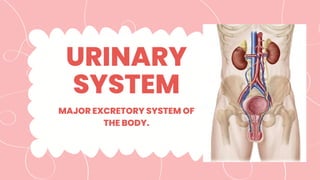
URINARY
SYSTEM
MAJOR EXCRETORY SYSTEM OF
THE BODY.
Agenda
01
Introduction
02
System Function
03
Three-step
Process
04
Organs
05
Diseases
06
Medical
Treatment
Introduction
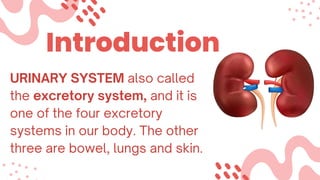
URINARY SYSTEM also called
the excretory system, and it is
one of the four excretory
systems in our body. The other
three are bowel, lungs and skin.
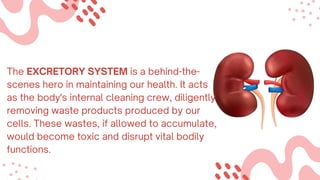
The EXCRETORY SYSTEM is a behind-the-
scenes hero in maintaining our health. It acts
as the body's internal cleaning crew, diligently
removing waste products produced by our
cells. These wastes, if allowed to accumulate,
would become toxic and disrupt vital bodily
functions.
EXCRETORY SYSTEM
The primary function of the excretory system is to eliminate excess water, salts,
and nitrogenous wastes. These wastes include:
Urea: Produced by the breakdown of proteins in the liver
Uric Acid: Produced by the breakdown of purines, found in some foods and
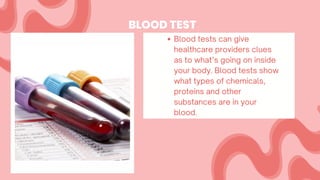
natural components of the body
Creatinine: A waste product from muscle metabolism
Carbon Dioxide: Removed by the respiratory system (although not technically
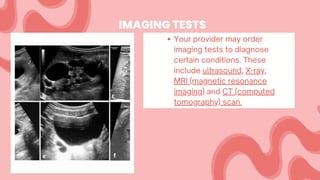
part of the excretory system)
HOW DOES EXCRETORY
SYSTEM WORK?
URINARY SYSTEM
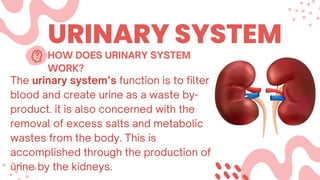
The urinary system’s function is to filter
blood and create urine as a waste by-
product. it is also concerned with the
removal of excess salts and metabolic
wastes from the body. This is
accomplished through the production of
urine by the kidneys.
HOW DOES URINARY SYSTEM
WORK?
URINARY SYSTEM
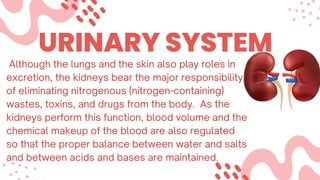
Although the lungs and the skin also play roles in
excretion, the kidneys bear the major responsibility
of eliminating nitrogenous (nitrogen-containing)
wastes, toxins, and drugs from the body. As the
kidneys perform this function, blood volume and the
chemical makeup of the blood are also regulated
so that the proper balance between water and salts
and between acids and bases are maintained.
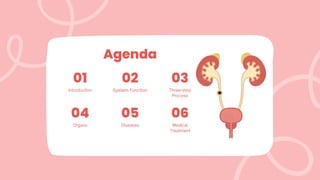
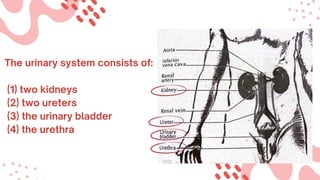
The urinary system consists of:
(1) two kidneys
(2) two ureters
(3) the urinary bladder
(4) the urethra
The urinary system operates in a well-coordinated
three-step process or the Urine Formation:
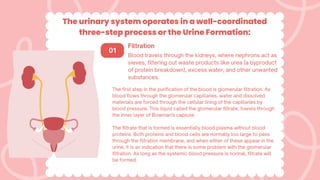
Filtration
Blood travels through the kidneys, where nephrons act as
sieves, filtering out waste products like urea (a byproduct
of protein breakdown), excess water, and other unwanted
substances.
01
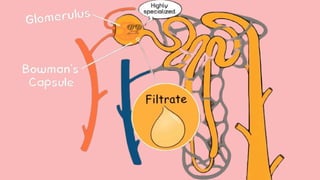
The first step in the purification of the blood is glomerular filtration. As
blood flows through the glomerular capillaries, water and dissolved
materials are forced through the cellular lining of the capillaries by
blood pressure. This liquid called the glomerular filtrate, travels through
the inner layer of Bowman's capsule.
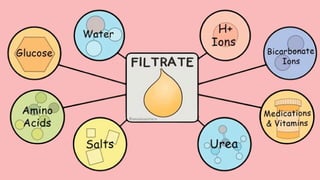
The filtrate that is formed is essentially blood plasma without blood
proteins. Both proteins and blood cells are normally too large to pass
through the filtration membrane, and when either of these appear in the
urine, it is an indication that there is some problem with the glomerular
filtration. As long as the systemic blood pressure is normal, filtrate will
be formed.
The urinary system operates in a well-coordinated
three-step process or the Urine Formation:
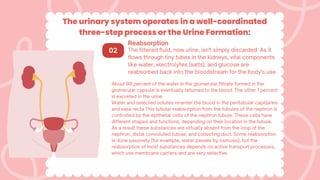
Reabsorption
The filtered fluid, now urine, isn't simply discarded. As it
flows through tiny tubes in the kidneys, vital components
like water, electrolytes (salts), and glucose are
reabsorbed back into the bloodstream for the body's use.
02
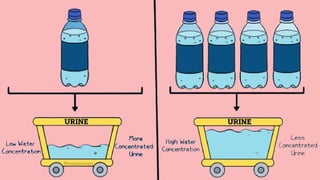
About 99 percent of the water in the glomerular filtrate formed in the
glomerular capsule is eventually returned to the blood. The other 1 percent
is excreted in the urine.
Water and selected solutes re-enter the blood in the peritubular capillaries
and vasa recta This tubular reabsorption from the tubules of the nephron is
controlled by the epithelial cells of the nephron tubule. These cells have
different shapes and functions, depending on their location in the tubule.
As a result these substances are virtually absent from the loop of the
nephron, distal convoluted tubule, and collecting duct. Some reabsorption
is done passively (for example, water passes by osmosis), but the
reabsorption of most substances depends on active transport processes,
which use membrane carriers and are very selective.
The urinary system operates in a well-coordinated
three-step process or the Urine Formation:
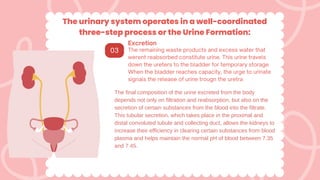
Excretion
The remaining waste products and excess water that
werent reabsorbed constitute urine. This urine travels
down the ureters to the bladder for temporary storage
When the bladder reaches capacity, the urge to urinate
signals the release of urine trougn the uretra
03
The final composition of the urine excreted from the body
depends not only on filtration and reabsorption, but also on the
secretion of certain substances from the blood into the filtrate.
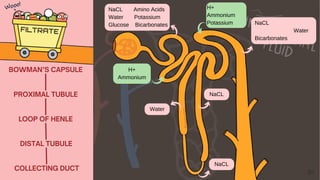
This tubular secretion, which takes place in the proximal and
distal convoluted tubule and collecting duct, allows the kidneys to
increase their efficiency in clearing certain substances from blood
plasma and helps maintain the normal pH of blood between 7.35
and 7.45.
PARTS AND FUNCTIONS OF
THE URINARY SYSTEM
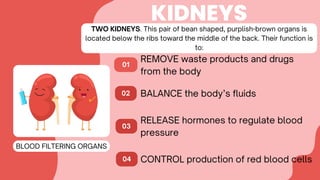
TWO KIDNEYS. This pair of bean shaped, purplish-brown organs is
located below the ribs toward the middle of the back. Their function is
to:
02
01
KIDNEYS
REMOVE waste products and drugs
from the body
03
04
BALANCE the body’s fluids
RELEASE hormones to regulate blood
pressure
CONTROL production of red blood cells
BLOOD FILTERING ORGANS
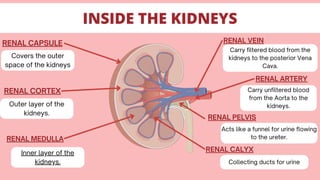
INSIDE THE KIDNEYS
RENAL CAPSULE
RENAL CORTEX
RENAL MEDULLA
RENAL VEIN
RENAL ARTERY
Covers the outer
space of the kidneys
Outer layer of the
kidneys.
Inner layer of the
kidneys.
Carry filtered blood from the
kidneys to the posterior Vena
Cava.
Carry unfiltered blood
from the Aorta to the
kidneys.
RENAL CALYX
RENAL PELVIS
Acts like a funnel for urine flowing
to the ureter.
Collecting ducts for urine
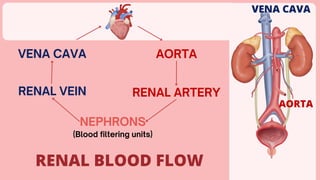
VENA CAVA
AORTA
VENA CAVA AORTA
RENAL VEIN RENAL ARTERY
NEPHRONS
RENAL BLOOD FLOW
(Blood filtering units)
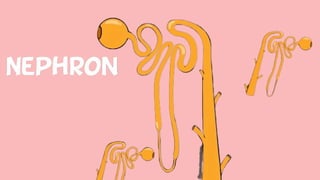
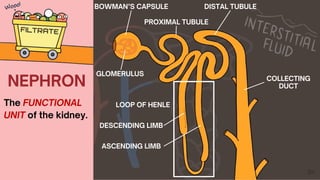
NEPHRON
The FUNCTIONAL
UNIT of the kidney.
BOWMAN’S CAPSULE
PROXIMAL TUBULE
LOOP OF HENLE
DISTAL TUBULE
DESCENDING LIMB
ASCENDING LIMB
COLLECTING
DUCT
GLOMERULUS
LOOP OF HENLE
DISTAL TUBULE
COLLECTING DUCT
NaCL
BOWMAN’S CAPSULE
PROXIMAL TUBULE
Water
NaCL Amino Acids
Water Potassium
Glucose Bicarbonates NaCL
Water
Bicarbonates
H+
Ammonium
H+
Ammonium
Potassium
NaCL
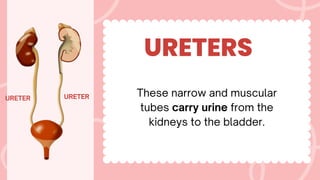
URETERS
URETER
URETER
These narrow and muscular
tubes carry urine from the
kidneys to the bladder.
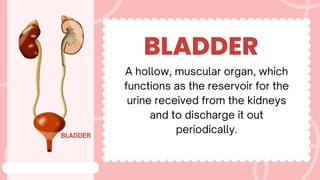
BLADDER
BLADDER
A hollow, muscular organ, which
functions as the reservoir for the
urine received from the kidneys
and to discharge it out
periodically.
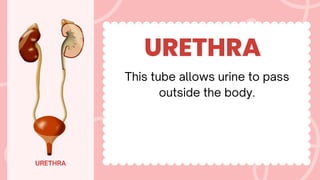
URETHRA
URETHRA
This tube allows urine to pass
outside the body.
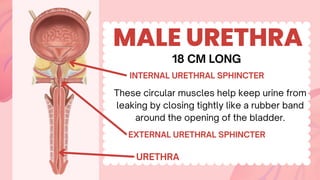
MALE URETHRA
URETHRA
INTERNAL URETHRAL SPHINCTER
EXTERNAL URETHRAL SPHINCTER
18 CM LONG
These circular muscles help keep urine from
leaking by closing tightly like a rubber band
around the opening of the bladder.
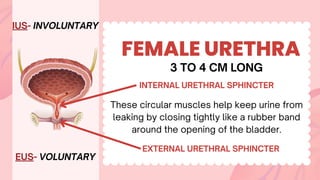
FEMALE URETHRA
INTERNAL URETHRAL SPHINCTER
EXTERNAL URETHRAL SPHINCTER
3 TO 4 CM LONG
These circular muscles help keep urine from
leaking by closing tightly like a rubber band
around the opening of the bladder.
IUS- INVOLUNTARY
EUS- VOLUNTARY
Diseases that can
affect the Urinary
and Excretory
System
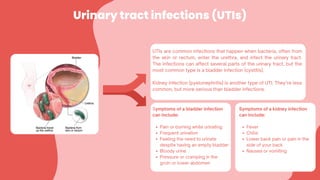
Urinary tract infections (UTIs)
UTIs are common infections that happen when bacteria, often from
the skin or rectum, enter the urethra, and infect the urinary tract.
The infections can affect several parts of the urinary tract, but the
most common type is a bladder infection (cystitis).
Kidney infection (pyelonephritis) is another type of UTI. They’re less
common, but more serious than bladder infections.
Symptoms of a bladder infection
can include:
Pain or burning while urinating
Frequent urination
Feeling the need to urinate
despite having an empty bladder
Bloody urine
Pressure or cramping in the
groin or lower abdomen
Symptoms of a kidney infection
can include:
Fever
Chills
Lower back pain or pain in the
side of your back
Nausea or vomiting
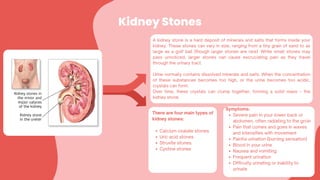
Kidney Stones
A kidney stone is a hard deposit of minerals and salts that forms inside your
kidney. These stones can vary in size, ranging from a tiny grain of sand to as
large as a golf ball (though larger stones are rare). While small stones may
pass unnoticed, larger stones can cause excruciating pain as they travel
through the urinary tract.
Urine normally contains dissolved minerals and salts. When the concentration
of these substances becomes too high, or the urine becomes too acidic,
crystals can form.
Over time, these crystals can clump together, forming a solid mass – the
kidney stone.
There are four main types of
kidney stones:
Calcium oxalate stones
Uric acid stones
Struvite stones.
Cystine stones
Symptoms:
Severe pain in your lower back or
abdomen, often radiating to the groin
Pain that comes and goes in waves
and intensifies with movement
Painful urination (burning sensation)
Blood in your urine
Nausea and vomiting
Frequent urination
Difficulty urinating or inability to
urinate
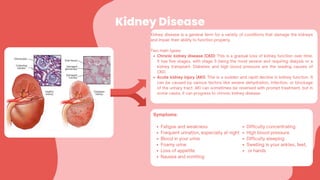
Kidney Disease
Kidney disease is a general term for a variety of conditions that damage the kidneys
and impair their ability to function properly.
Two main types:
Chronic kidney disease (CKD): This is a gradual loss of kidney function over time.
It has five stages, with stage 5 being the most severe and requiring dialysis or a
kidney transplant. Diabetes and high blood pressure are the leading causes of
CKD.
Acute kidney injury (AKI): This is a sudden and rapid decline in kidney function. It
can be caused by various factors like severe dehydration, infection, or blockage
of the urinary tract. AKI can sometimes be reversed with prompt treatment, but in
some cases, it can progress to chronic kidney disease.
Symptoms:
Fatigue and weakness
Frequent urination, especially at night
Blood in your urine
Foamy urine
Loss of appetite
Nausea and vomiting
Difficulty concentrating
High blood pressure
Difficulty sleeping
Swelling in your ankles, feet,
or hands
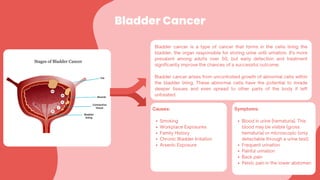
Bladder Cancer
Bladder cancer is a type of cancer that forms in the cells lining the
bladder, the organ responsible for storing urine until urination. It's more
prevalent among adults over 50, but early detection and treatment
significantly improve the chances of a successful outcome.
Bladder cancer arises from uncontrolled growth of abnormal cells within
the bladder lining. These abnormal cells have the potential to invade
deeper tissues and even spread to other parts of the body if left
untreated.
Causes:
Smoking
Workplace Exposures
Family History
Chronic Bladder Irritation
Arsenic Exposure
Symptoms:
Blood in urine (hematuria). This
blood may be visible (gross
hematuria) or microscopic (only
detectable through a urine test).
Frequent urination
Painful urination
Back pain
Pelvic pain in the lower abdomen
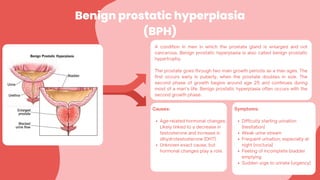
Benign prostatic hyperplasia
(BPH)
A condition in men in which the prostate gland is enlarged and not
cancerous. Benign prostatic hyperplasia is also called benign prostatic
hypertrophy.
The prostate goes through two main growth periods as a man ages. The
first occurs early in puberty, when the prostate doubles in size. The
second phase of growth begins around age 25 and continues during
most of a man’s life. Benign prostatic hyperplasia often occurs with the
second growth phase.
Causes:
Age-related hormonal changes:
Likely linked to a decrease in
testosterone and increase in
dihydrotestosterone (DHT).
Unknown exact cause, but
hormonal changes play a role.
Symptoms:
Difficulty starting urination
(hesitation)
Weak urine stream
Frequent urination, especially at
night (nocturia)
Feeling of incomplete bladder
emptying
Sudden urge to urinate (urgency)
COMMON TEST FOR
URINARY SYSTEM
CONDITIONS
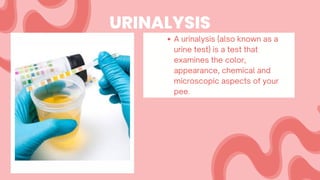
URINALYSIS
A urinalysis (also known as a
urine test) is a test that
examines the color,
appearance, chemical and
microscopic aspects of your
pee.
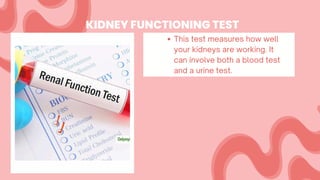
KIDNEY FUNCTIONING TEST
This test measures how well
your kidneys are working. It
can involve both a blood test
and a urine test.
BLOOD TEST
Blood tests can give
healthcare providers clues
as to what’s going on inside
your body. Blood tests show
what types of chemicals,
proteins and other
substances are in your
blood.
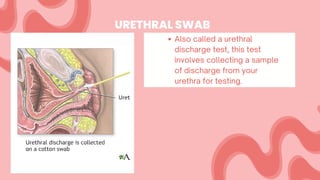
URETHRAL SWAB
Also called a urethral
discharge test, this test
involves collecting a sample
of discharge from your
urethra for testing.
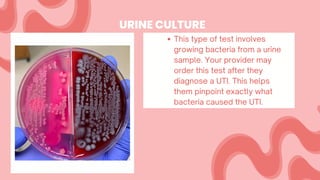
This type of test involves
growing bacteria from a urine
sample. Your provider may
order this test after they
diagnose a UTI. This helps
them pinpoint exactly what
bacteria caused the UTI.
URINE CULTURE
IMAGING TESTS
Your provider may order
imaging tests to diagnose
certain conditions. These
include ultrasound, X-ray,
MRI (magnetic resonance
imaging) and CT (computed
tomography) scan.
MEDICAL AND
PHARMACEUTICAL
TREATMENT
Urinary Tract Infection (UTI)
Diagnosis:
Urinalysis
Urine culture
SIMPLE INFECTION
Medicines commonly used for simple UTIs include:
Trimethoprim and sulfamethoxazole (Bactrim,
Bactrim DS)
Fosfomycin (Monurol)
Nitrofurantoin (Macrodantin, Macrobid,
Furadantin)
Cephalexin
Ceftriaxone
FREQUENT INFECTION
Low-dose antibiotics. You might take them for
six months or longer.
Diagnosing and treating yourself when
symptoms occur. You'll also be asked to stay in
touch with your provider.
Taking a single dose of antibiotic after sex if UTIs
are related to sexual activity.
Vaginal estrogen therapy if you've reached
menopause.
SEVERE INFECTION
IV antibiotics in a hospital
Kidney Stones
Diagnosis:
Urine Testing
Blood Testing
Medication
Alpha Blockers
Potassium Citrate
Thiazide Diuretics
Allopurinol
Kidney Stone Procedure
Shockwave lithotripsy
Ureteroscopy
Percutaneous nephrolithotomy
Laparoscopic surgery
Imaging
Analysis of passed stones
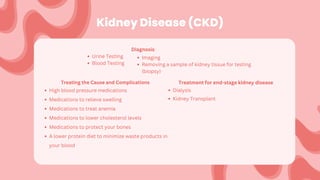
Kidney Disease (CKD)
Diagnosis:
Urine Testing
Blood Testing
Treating the Cause and Complications
High blood pressure medications
Medications to relieve swelling
Medications to treat anemia
Medications to lower cholesterol levels
Medications to protect your bones
A lower protein diet to minimize waste products in
your blood
Treatment for end-stage kidney disease
Dialysis
Kidney Transplant
Imaging
Removing a sample of kidney tissue for testing
(biopsy)
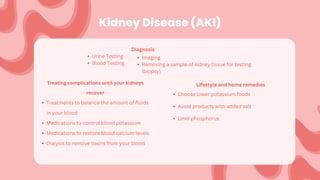
Kidney Disease (AKI)
Diagnosis:
Urine Testing
Blood Testing
Treating complications until your kidneys
recover
Treatments to balance the amount of fluids
in your blood
Medications to control blood potassium
Medications to restore blood calcium levels
Dialysis to remove toxins from your blood
Lifestyle and home remedies
Choose lower potassium foods
Avoid products with added salt
Limit phosphorus
Imaging
Removing a sample of kidney tissue for testing
(biopsy)
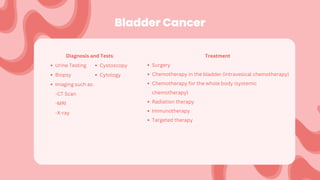
Bladder Cancer
Diagnosis and Tests:
Urine Testing
Biopsy
Imaging such as:
-CT Scan
-MRI
-X-ray
Treatment
Surgery
Chemotherapy in the bladder (intravesical chemotherapy)
Chemotherapy for the whole body (systemic
chemotherapy)
Radiation therapy
Immunotherapy
Targeted therapy
Cystoscopy
Cytology
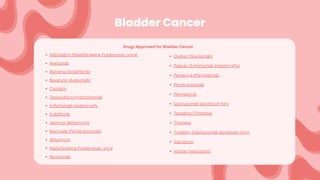
Bladder Cancer
Drugs Approved for Bladder Cancer
Adstiladrin (Nadofaragene Firadenovec-vncg)
Avelumab
Balversa (Erdafitinib)
Bavencio (Avelumab)
Cisplatin
Doxorubicin Hydrochloride
Enfortumab Vedotin-ejfv
Erdafitinib
Jelmyto (Mitomycin)
Keytruda (Pembrolizumab)
Mitomycin
Nadofaragene Firadenovec-vncg
Nivolumab
Opdivo (Nivolumab)
Padcev (Enfortumab Vedotin-ejfv)
Pemazyre (Pemigatinib)
Pembrolizumab
Pemigatinib
Sacituzumab Govitecan-hziy
Tepadina (Thiotepa)
Thiotepa
Trodelvy (Sacituzumab Govitecan-hziy)
Valrubicin
Valstar (Valrubicin)
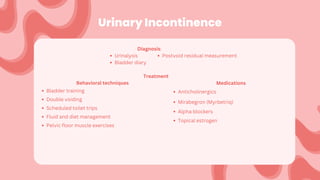
Urinary Incontinence
Behavioral techniques
Bladder training
Double voiding
Scheduled toilet trips
Fluid and diet management
Pelvic floor muscle exercises
Medications
Anticholinergics
Mirabegron (Myrbetriq)
Alpha blockers
Topical estrogen
Postvoid residual measurement
Diagnosis:
Urinalysis
Bladder diary
Treatment
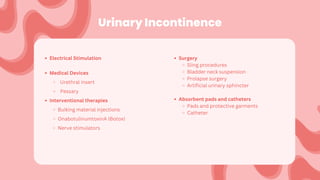
Urinary Incontinence
Electrical Stimulation
Medical Devices
Urethral insert
Pessary
Interventional therapies
Bulking material injections
OnabotulinumtoxinA (Botox)
Nerve stimulators
Surgery
Sling procedures
Bladder neck suspension
Prolapse surgery
Artificial urinary sphincter
Absorbent pads and catheters
Pads and protective garments
Catheter
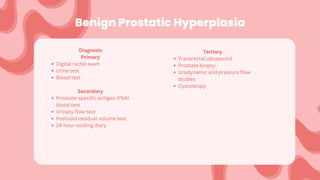
Benign Prostatic Hyperplasia
Diagnosis:
Primary
Digital rectal exam
Urine test
Blood test
Secondary
Prostate-specific antigen (PSA)
blood test
Urinary flow test
Postvoid residual volume test
24-hour voiding diary
Tertiary
Transrectal ultrasound
Prostate biopsy
Urodynamic and pressure flow
studies
Cystoscopy
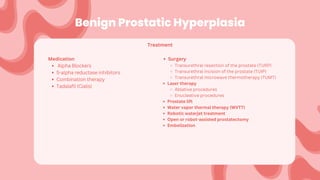
Benign Prostatic Hyperplasia
Medication
Alpha Blockers
5-alpha reductase inhibitors
Combination therapy
Tadalafil (Cialis)
Treatment
Surgery
Transurethral resection of the prostate (TURP)
Transurethral incision of the prostate (TUIP)
Transurethral microwave thermotherapy (TUMT)
Laser therapy
Ablative procedures
Enucleative procedures
Prostate lift
Water vapor thermal therapy (WVTT)
Robotic waterjet treatment
Open or robot-assisted prostatectomy
Embolization
Our Team
Emata, Sandra Espino, Jinky Mendoza, Justin Tabubuca, Kate
References:
Suffering from a urinary tract infection? (2022, January 14). Centers for Disease Control and Prevention.
https://www.cdc.gov/antibiotic-
use/uti.html#:~:text=What%20is%20a%20urinary%20tract,a%20bladder%20infection%20(cystitis).
Kidney stones - Symptoms and causes - Mayo Clinic. (2022, June 3). Mayo Clinic.
https://www.mayoclinic.org/diseases-conditions/kidney-stones/symptoms-causes/syc-
20355755#:~:text=Kidney%20stones%20(also%20called%20renal,many%20causes%20of%20kidney%20stones.
Anatomy of the Urinary System. (2023, November 29). Johns Hopkins Medicine.
https://www.hopkinsmedicine.org/health/wellness-and-prevention/anatomy-of-the-urinary-system
Professional, C. C. M. (n.d.). Urinary System. Cleveland Clinic. https://my.clevelandclinic.org/health/body/21197-
urinary-system
Chronic kidney disease - Symptoms and causes - Mayo Clinic. (2023, September 6). Mayo Clinic.
https://www.mayoclinic.org/diseases-conditions/chronic-kidney-disease/symptoms-causes/syc-20354521
Drugwatch. (2024, March 28). Bladder Cancer | Symptoms, causes, survival rate and treatment. Drugwatch.com.
https://www.drugwatch.com/health/cancer/bladder-cancer/
Benign prostatic hyperplasia (BPH) - Symptoms and causes - Mayo Clinic. (2024, March 1). Mayo Clinic.
https://www.mayoclinic.org/diseases-conditions/benign-prostatic-hyperplasia/symptoms-causes/syc-
20370087#:~:text=Benign%20prostatic%20hyperplasia%20(BPH)%20is,bigger%20as%20you%20get%20older.
References:
Professional, C. C. M. (n.d.). Urinary system. Cleveland Clinic.
https://my.clevelandclinic.org/health/body/21197- urinary-system
Urinary tract infection (UTI) - Diagnosis and treatment - Mayo Clinic. (2022, September 14).
https://www.mayoclinic.org/diseases-conditions/urinary-tract-infection/diagnosis-treatment/drc-20353453
Medications & dietary changes for kidney stones. (n.d.). NYU Langone Health.
https://nyulangone.org/conditions/kidney-stones/treatments/medications-dietary-changes-for-kidney-stones
Kidney stones - Diagnosis and treatment - Mayo Clinic. (2022, June 3).
https://www.mayoclinic.org/diseases-conditions/kidney-stones/diagnosis-treatment/drc-20355759
Professional, C. C. M. (n.d.-a). Kidney Stones. Cleveland Clinic.
https://my.clevelandclinic.org/health/diseases/15604-kidney-stones
Chronic kidney disease - Diagnosis and treatment - Mayo Clinic. (2023, September 6).
https://www.mayoclinic.org/diseases-conditions/chronic-kidney-disease/diagnosis-treatment/drc-20354527
Acute kidney failure - Diagnosis and treatment - Mayo Clinic. (2022, July 30).
https://www.mayoclinic.org/diseases-conditions/kidney-failure/diagnosis-treatment/drc-20369053
Bladder cancer - Diagnosis and treatment - Mayo Clinic. (2024, March 29).
https://www.mayoclinic.org/diseases-conditions/bladder-cancer/diagnosis-treatment/drc-20356109
Professional, C. C. M. (n.d.-a). Bladder cancer. Cleveland Clinic.
https://my.clevelandclinic.org/health/diseases/14326-bladder-cancer
Drugs approved for bladder cancer. (2023, January 23). Cancer.gov.
https://www.cancer.gov/about-cancer/treatment/drugs/bladder
References:
Bladder control: Medications for urinary problems. (2023, September 20). Mayo Clinic.
https://www.mayoclinic.org/diseases-conditions/urinary-incontinence/in-depth/bladder-control-problems/art-
20044220
Urinary incontinence - Diagnosis and treatment - Mayo Clinic. (2023, February 9).
https://www.mayoclinic.org/diseases-conditions/urinary-incontinence/diagnosis-treatment/drc-
20352814#:~:text=Anticholinergics.,(Vesicare)%20and%20trospium%20chloride.
Benign prostatic hyperplasia (BPH) - Diagnosis and treatment - Mayo Clinic. (2024, March 1).
https://www.mayoclinic.org/diseases-conditions/benign-prostatic-hyperplasia/diagnosis-treatment/drc-
20370093#:~:text=5%2Dalpha%20reductase%20inhibitors.,can%20cause%20sexual%20side%20effects.
Professional, C. C. M. (n.d.-a). Benign prostatic hyperplasia. Cleveland Clinic.
https://my.clevelandclinic.org/health/diseases/9100-benign-prostatic-hyperplasia
THANK
YOU
To see this presentation

Urinary-Excretory-System.pdfasadasdasdfasdasda

  • 1.
  • 2.
  • 3.
    Introduction URINARY SYSTEM alsocalled the excretory system, and it is one of the four excretory systems in our body. The other three are bowel, lungs and skin.
  • 4.
    The EXCRETORY SYSTEMis a behind-the- scenes hero in maintaining our health. It acts as the body's internal cleaning crew, diligently removing waste products produced by our cells. These wastes, if allowed to accumulate, would become toxic and disrupt vital bodily functions.
  • 5.
    EXCRETORY SYSTEM The primaryfunction of the excretory system is to eliminate excess water, salts, and nitrogenous wastes. These wastes include: Urea: Produced by the breakdown of proteins in the liver Uric Acid: Produced by the breakdown of purines, found in some foods and natural components of the body Creatinine: A waste product from muscle metabolism Carbon Dioxide: Removed by the respiratory system (although not technically part of the excretory system) HOW DOES EXCRETORY SYSTEM WORK?
  • 6.
    URINARY SYSTEM The urinarysystem’s function is to filter blood and create urine as a waste by- product. it is also concerned with the removal of excess salts and metabolic wastes from the body. This is accomplished through the production of urine by the kidneys. HOW DOES URINARY SYSTEM WORK?
  • 7.
    URINARY SYSTEM Although thelungs and the skin also play roles in excretion, the kidneys bear the major responsibility of eliminating nitrogenous (nitrogen-containing) wastes, toxins, and drugs from the body. As the kidneys perform this function, blood volume and the chemical makeup of the blood are also regulated so that the proper balance between water and salts and between acids and bases are maintained.
  • 8.
    The urinary systemconsists of: (1) two kidneys (2) two ureters (3) the urinary bladder (4) the urethra
  • 9.
    The urinary systemoperates in a well-coordinated three-step process or the Urine Formation: Filtration Blood travels through the kidneys, where nephrons act as sieves, filtering out waste products like urea (a byproduct of protein breakdown), excess water, and other unwanted substances. 01 The first step in the purification of the blood is glomerular filtration. As blood flows through the glomerular capillaries, water and dissolved materials are forced through the cellular lining of the capillaries by blood pressure. This liquid called the glomerular filtrate, travels through the inner layer of Bowman's capsule. The filtrate that is formed is essentially blood plasma without blood proteins. Both proteins and blood cells are normally too large to pass through the filtration membrane, and when either of these appear in the urine, it is an indication that there is some problem with the glomerular filtration. As long as the systemic blood pressure is normal, filtrate will be formed.
  • 10.
    The urinary systemoperates in a well-coordinated three-step process or the Urine Formation: Reabsorption The filtered fluid, now urine, isn't simply discarded. As it flows through tiny tubes in the kidneys, vital components like water, electrolytes (salts), and glucose are reabsorbed back into the bloodstream for the body's use. 02 About 99 percent of the water in the glomerular filtrate formed in the glomerular capsule is eventually returned to the blood. The other 1 percent is excreted in the urine. Water and selected solutes re-enter the blood in the peritubular capillaries and vasa recta This tubular reabsorption from the tubules of the nephron is controlled by the epithelial cells of the nephron tubule. These cells have different shapes and functions, depending on their location in the tubule. As a result these substances are virtually absent from the loop of the nephron, distal convoluted tubule, and collecting duct. Some reabsorption is done passively (for example, water passes by osmosis), but the reabsorption of most substances depends on active transport processes, which use membrane carriers and are very selective.
  • 11.
    The urinary systemoperates in a well-coordinated three-step process or the Urine Formation: Excretion The remaining waste products and excess water that werent reabsorbed constitute urine. This urine travels down the ureters to the bladder for temporary storage When the bladder reaches capacity, the urge to urinate signals the release of urine trougn the uretra 03 The final composition of the urine excreted from the body depends not only on filtration and reabsorption, but also on the secretion of certain substances from the blood into the filtrate. This tubular secretion, which takes place in the proximal and distal convoluted tubule and collecting duct, allows the kidneys to increase their efficiency in clearing certain substances from blood plasma and helps maintain the normal pH of blood between 7.35 and 7.45.
  • 12.
    PARTS AND FUNCTIONSOF THE URINARY SYSTEM
  • 13.
    TWO KIDNEYS. Thispair of bean shaped, purplish-brown organs is located below the ribs toward the middle of the back. Their function is to: 02 01 KIDNEYS REMOVE waste products and drugs from the body 03 04 BALANCE the body’s fluids RELEASE hormones to regulate blood pressure CONTROL production of red blood cells BLOOD FILTERING ORGANS
  • 14.
    INSIDE THE KIDNEYS RENALCAPSULE RENAL CORTEX RENAL MEDULLA RENAL VEIN RENAL ARTERY Covers the outer space of the kidneys Outer layer of the kidneys. Inner layer of the kidneys. Carry filtered blood from the kidneys to the posterior Vena Cava. Carry unfiltered blood from the Aorta to the kidneys. RENAL CALYX RENAL PELVIS Acts like a funnel for urine flowing to the ureter. Collecting ducts for urine
  • 15.
    VENA CAVA AORTA VENA CAVAAORTA RENAL VEIN RENAL ARTERY NEPHRONS RENAL BLOOD FLOW (Blood filtering units)
  • 18.
    NEPHRON The FUNCTIONAL UNIT ofthe kidney. BOWMAN’S CAPSULE PROXIMAL TUBULE LOOP OF HENLE DISTAL TUBULE DESCENDING LIMB ASCENDING LIMB COLLECTING DUCT GLOMERULUS
  • 21.
    LOOP OF HENLE DISTALTUBULE COLLECTING DUCT NaCL BOWMAN’S CAPSULE PROXIMAL TUBULE Water NaCL Amino Acids Water Potassium Glucose Bicarbonates NaCL Water Bicarbonates H+ Ammonium H+ Ammonium Potassium NaCL
  • 23.
    URETERS URETER URETER These narrow andmuscular tubes carry urine from the kidneys to the bladder.
  • 24.
    BLADDER BLADDER A hollow, muscularorgan, which functions as the reservoir for the urine received from the kidneys and to discharge it out periodically.
  • 25.
    URETHRA URETHRA This tube allowsurine to pass outside the body.
  • 26.
    MALE URETHRA URETHRA INTERNAL URETHRALSPHINCTER EXTERNAL URETHRAL SPHINCTER 18 CM LONG These circular muscles help keep urine from leaking by closing tightly like a rubber band around the opening of the bladder.
  • 27.
    FEMALE URETHRA INTERNAL URETHRALSPHINCTER EXTERNAL URETHRAL SPHINCTER 3 TO 4 CM LONG These circular muscles help keep urine from leaking by closing tightly like a rubber band around the opening of the bladder. IUS- INVOLUNTARY EUS- VOLUNTARY
  • 28.
    Diseases that can affectthe Urinary and Excretory System
  • 29.
    Urinary tract infections(UTIs) UTIs are common infections that happen when bacteria, often from the skin or rectum, enter the urethra, and infect the urinary tract. The infections can affect several parts of the urinary tract, but the most common type is a bladder infection (cystitis). Kidney infection (pyelonephritis) is another type of UTI. They’re less common, but more serious than bladder infections. Symptoms of a bladder infection can include: Pain or burning while urinating Frequent urination Feeling the need to urinate despite having an empty bladder Bloody urine Pressure or cramping in the groin or lower abdomen Symptoms of a kidney infection can include: Fever Chills Lower back pain or pain in the side of your back Nausea or vomiting
  • 30.
    Kidney Stones A kidneystone is a hard deposit of minerals and salts that forms inside your kidney. These stones can vary in size, ranging from a tiny grain of sand to as large as a golf ball (though larger stones are rare). While small stones may pass unnoticed, larger stones can cause excruciating pain as they travel through the urinary tract. Urine normally contains dissolved minerals and salts. When the concentration of these substances becomes too high, or the urine becomes too acidic, crystals can form. Over time, these crystals can clump together, forming a solid mass – the kidney stone. There are four main types of kidney stones: Calcium oxalate stones Uric acid stones Struvite stones. Cystine stones Symptoms: Severe pain in your lower back or abdomen, often radiating to the groin Pain that comes and goes in waves and intensifies with movement Painful urination (burning sensation) Blood in your urine Nausea and vomiting Frequent urination Difficulty urinating or inability to urinate
  • 31.
    Kidney Disease Kidney diseaseis a general term for a variety of conditions that damage the kidneys and impair their ability to function properly. Two main types: Chronic kidney disease (CKD): This is a gradual loss of kidney function over time. It has five stages, with stage 5 being the most severe and requiring dialysis or a kidney transplant. Diabetes and high blood pressure are the leading causes of CKD. Acute kidney injury (AKI): This is a sudden and rapid decline in kidney function. It can be caused by various factors like severe dehydration, infection, or blockage of the urinary tract. AKI can sometimes be reversed with prompt treatment, but in some cases, it can progress to chronic kidney disease. Symptoms: Fatigue and weakness Frequent urination, especially at night Blood in your urine Foamy urine Loss of appetite Nausea and vomiting Difficulty concentrating High blood pressure Difficulty sleeping Swelling in your ankles, feet, or hands
  • 32.
    Bladder Cancer Bladder canceris a type of cancer that forms in the cells lining the bladder, the organ responsible for storing urine until urination. It's more prevalent among adults over 50, but early detection and treatment significantly improve the chances of a successful outcome. Bladder cancer arises from uncontrolled growth of abnormal cells within the bladder lining. These abnormal cells have the potential to invade deeper tissues and even spread to other parts of the body if left untreated. Causes: Smoking Workplace Exposures Family History Chronic Bladder Irritation Arsenic Exposure Symptoms: Blood in urine (hematuria). This blood may be visible (gross hematuria) or microscopic (only detectable through a urine test). Frequent urination Painful urination Back pain Pelvic pain in the lower abdomen
  • 33.
    Benign prostatic hyperplasia (BPH) Acondition in men in which the prostate gland is enlarged and not cancerous. Benign prostatic hyperplasia is also called benign prostatic hypertrophy. The prostate goes through two main growth periods as a man ages. The first occurs early in puberty, when the prostate doubles in size. The second phase of growth begins around age 25 and continues during most of a man’s life. Benign prostatic hyperplasia often occurs with the second growth phase. Causes: Age-related hormonal changes: Likely linked to a decrease in testosterone and increase in dihydrotestosterone (DHT). Unknown exact cause, but hormonal changes play a role. Symptoms: Difficulty starting urination (hesitation) Weak urine stream Frequent urination, especially at night (nocturia) Feeling of incomplete bladder emptying Sudden urge to urinate (urgency)
  • 34.
    COMMON TEST FOR URINARYSYSTEM CONDITIONS
  • 35.
    URINALYSIS A urinalysis (alsoknown as a urine test) is a test that examines the color, appearance, chemical and microscopic aspects of your pee.
  • 36.
    KIDNEY FUNCTIONING TEST Thistest measures how well your kidneys are working. It can involve both a blood test and a urine test.
  • 37.
    BLOOD TEST Blood testscan give healthcare providers clues as to what’s going on inside your body. Blood tests show what types of chemicals, proteins and other substances are in your blood.
  • 38.
    URETHRAL SWAB Also calleda urethral discharge test, this test involves collecting a sample of discharge from your urethra for testing.
  • 39.
    This type oftest involves growing bacteria from a urine sample. Your provider may order this test after they diagnose a UTI. This helps them pinpoint exactly what bacteria caused the UTI. URINE CULTURE
  • 40.
    IMAGING TESTS Your providermay order imaging tests to diagnose certain conditions. These include ultrasound, X-ray, MRI (magnetic resonance imaging) and CT (computed tomography) scan.
  • 41.
  • 42.
    Urinary Tract Infection(UTI) Diagnosis: Urinalysis Urine culture SIMPLE INFECTION Medicines commonly used for simple UTIs include: Trimethoprim and sulfamethoxazole (Bactrim, Bactrim DS) Fosfomycin (Monurol) Nitrofurantoin (Macrodantin, Macrobid, Furadantin) Cephalexin Ceftriaxone FREQUENT INFECTION Low-dose antibiotics. You might take them for six months or longer. Diagnosing and treating yourself when symptoms occur. You'll also be asked to stay in touch with your provider. Taking a single dose of antibiotic after sex if UTIs are related to sexual activity. Vaginal estrogen therapy if you've reached menopause. SEVERE INFECTION IV antibiotics in a hospital
  • 43.
    Kidney Stones Diagnosis: Urine Testing BloodTesting Medication Alpha Blockers Potassium Citrate Thiazide Diuretics Allopurinol Kidney Stone Procedure Shockwave lithotripsy Ureteroscopy Percutaneous nephrolithotomy Laparoscopic surgery Imaging Analysis of passed stones
  • 44.
    Kidney Disease (CKD) Diagnosis: UrineTesting Blood Testing Treating the Cause and Complications High blood pressure medications Medications to relieve swelling Medications to treat anemia Medications to lower cholesterol levels Medications to protect your bones A lower protein diet to minimize waste products in your blood Treatment for end-stage kidney disease Dialysis Kidney Transplant Imaging Removing a sample of kidney tissue for testing (biopsy)
  • 45.
    Kidney Disease (AKI) Diagnosis: UrineTesting Blood Testing Treating complications until your kidneys recover Treatments to balance the amount of fluids in your blood Medications to control blood potassium Medications to restore blood calcium levels Dialysis to remove toxins from your blood Lifestyle and home remedies Choose lower potassium foods Avoid products with added salt Limit phosphorus Imaging Removing a sample of kidney tissue for testing (biopsy)
  • 46.
    Bladder Cancer Diagnosis andTests: Urine Testing Biopsy Imaging such as: -CT Scan -MRI -X-ray Treatment Surgery Chemotherapy in the bladder (intravesical chemotherapy) Chemotherapy for the whole body (systemic chemotherapy) Radiation therapy Immunotherapy Targeted therapy Cystoscopy Cytology
  • 47.
    Bladder Cancer Drugs Approvedfor Bladder Cancer Adstiladrin (Nadofaragene Firadenovec-vncg) Avelumab Balversa (Erdafitinib) Bavencio (Avelumab) Cisplatin Doxorubicin Hydrochloride Enfortumab Vedotin-ejfv Erdafitinib Jelmyto (Mitomycin) Keytruda (Pembrolizumab) Mitomycin Nadofaragene Firadenovec-vncg Nivolumab Opdivo (Nivolumab) Padcev (Enfortumab Vedotin-ejfv) Pemazyre (Pemigatinib) Pembrolizumab Pemigatinib Sacituzumab Govitecan-hziy Tepadina (Thiotepa) Thiotepa Trodelvy (Sacituzumab Govitecan-hziy) Valrubicin Valstar (Valrubicin)
  • 48.
    Urinary Incontinence Behavioral techniques Bladdertraining Double voiding Scheduled toilet trips Fluid and diet management Pelvic floor muscle exercises Medications Anticholinergics Mirabegron (Myrbetriq) Alpha blockers Topical estrogen Postvoid residual measurement Diagnosis: Urinalysis Bladder diary Treatment
  • 49.
    Urinary Incontinence Electrical Stimulation MedicalDevices Urethral insert Pessary Interventional therapies Bulking material injections OnabotulinumtoxinA (Botox) Nerve stimulators Surgery Sling procedures Bladder neck suspension Prolapse surgery Artificial urinary sphincter Absorbent pads and catheters Pads and protective garments Catheter
  • 50.
    Benign Prostatic Hyperplasia Diagnosis: Primary Digitalrectal exam Urine test Blood test Secondary Prostate-specific antigen (PSA) blood test Urinary flow test Postvoid residual volume test 24-hour voiding diary Tertiary Transrectal ultrasound Prostate biopsy Urodynamic and pressure flow studies Cystoscopy
  • 51.
    Benign Prostatic Hyperplasia Medication AlphaBlockers 5-alpha reductase inhibitors Combination therapy Tadalafil (Cialis) Treatment Surgery Transurethral resection of the prostate (TURP) Transurethral incision of the prostate (TUIP) Transurethral microwave thermotherapy (TUMT) Laser therapy Ablative procedures Enucleative procedures Prostate lift Water vapor thermal therapy (WVTT) Robotic waterjet treatment Open or robot-assisted prostatectomy Embolization
  • 52.
    Our Team Emata, SandraEspino, Jinky Mendoza, Justin Tabubuca, Kate
  • 53.
    References: Suffering from aurinary tract infection? (2022, January 14). Centers for Disease Control and Prevention. https://www.cdc.gov/antibiotic- use/uti.html#:~:text=What%20is%20a%20urinary%20tract,a%20bladder%20infection%20(cystitis). Kidney stones - Symptoms and causes - Mayo Clinic. (2022, June 3). Mayo Clinic. https://www.mayoclinic.org/diseases-conditions/kidney-stones/symptoms-causes/syc- 20355755#:~:text=Kidney%20stones%20(also%20called%20renal,many%20causes%20of%20kidney%20stones. Anatomy of the Urinary System. (2023, November 29). Johns Hopkins Medicine. https://www.hopkinsmedicine.org/health/wellness-and-prevention/anatomy-of-the-urinary-system Professional, C. C. M. (n.d.). Urinary System. Cleveland Clinic. https://my.clevelandclinic.org/health/body/21197- urinary-system Chronic kidney disease - Symptoms and causes - Mayo Clinic. (2023, September 6). Mayo Clinic. https://www.mayoclinic.org/diseases-conditions/chronic-kidney-disease/symptoms-causes/syc-20354521 Drugwatch. (2024, March 28). Bladder Cancer | Symptoms, causes, survival rate and treatment. Drugwatch.com. https://www.drugwatch.com/health/cancer/bladder-cancer/ Benign prostatic hyperplasia (BPH) - Symptoms and causes - Mayo Clinic. (2024, March 1). Mayo Clinic. https://www.mayoclinic.org/diseases-conditions/benign-prostatic-hyperplasia/symptoms-causes/syc- 20370087#:~:text=Benign%20prostatic%20hyperplasia%20(BPH)%20is,bigger%20as%20you%20get%20older.
  • 54.
    References: Professional, C. C.M. (n.d.). Urinary system. Cleveland Clinic. https://my.clevelandclinic.org/health/body/21197- urinary-system Urinary tract infection (UTI) - Diagnosis and treatment - Mayo Clinic. (2022, September 14). https://www.mayoclinic.org/diseases-conditions/urinary-tract-infection/diagnosis-treatment/drc-20353453 Medications & dietary changes for kidney stones. (n.d.). NYU Langone Health. https://nyulangone.org/conditions/kidney-stones/treatments/medications-dietary-changes-for-kidney-stones Kidney stones - Diagnosis and treatment - Mayo Clinic. (2022, June 3). https://www.mayoclinic.org/diseases-conditions/kidney-stones/diagnosis-treatment/drc-20355759 Professional, C. C. M. (n.d.-a). Kidney Stones. Cleveland Clinic. https://my.clevelandclinic.org/health/diseases/15604-kidney-stones Chronic kidney disease - Diagnosis and treatment - Mayo Clinic. (2023, September 6). https://www.mayoclinic.org/diseases-conditions/chronic-kidney-disease/diagnosis-treatment/drc-20354527 Acute kidney failure - Diagnosis and treatment - Mayo Clinic. (2022, July 30). https://www.mayoclinic.org/diseases-conditions/kidney-failure/diagnosis-treatment/drc-20369053 Bladder cancer - Diagnosis and treatment - Mayo Clinic. (2024, March 29). https://www.mayoclinic.org/diseases-conditions/bladder-cancer/diagnosis-treatment/drc-20356109 Professional, C. C. M. (n.d.-a). Bladder cancer. Cleveland Clinic. https://my.clevelandclinic.org/health/diseases/14326-bladder-cancer Drugs approved for bladder cancer. (2023, January 23). Cancer.gov. https://www.cancer.gov/about-cancer/treatment/drugs/bladder
  • 55.
    References: Bladder control: Medicationsfor urinary problems. (2023, September 20). Mayo Clinic. https://www.mayoclinic.org/diseases-conditions/urinary-incontinence/in-depth/bladder-control-problems/art- 20044220 Urinary incontinence - Diagnosis and treatment - Mayo Clinic. (2023, February 9). https://www.mayoclinic.org/diseases-conditions/urinary-incontinence/diagnosis-treatment/drc- 20352814#:~:text=Anticholinergics.,(Vesicare)%20and%20trospium%20chloride. Benign prostatic hyperplasia (BPH) - Diagnosis and treatment - Mayo Clinic. (2024, March 1). https://www.mayoclinic.org/diseases-conditions/benign-prostatic-hyperplasia/diagnosis-treatment/drc- 20370093#:~:text=5%2Dalpha%20reductase%20inhibitors.,can%20cause%20sexual%20side%20effects. Professional, C. C. M. (n.d.-a). Benign prostatic hyperplasia. Cleveland Clinic. https://my.clevelandclinic.org/health/diseases/9100-benign-prostatic-hyperplasia
  • 56.