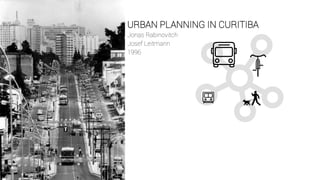
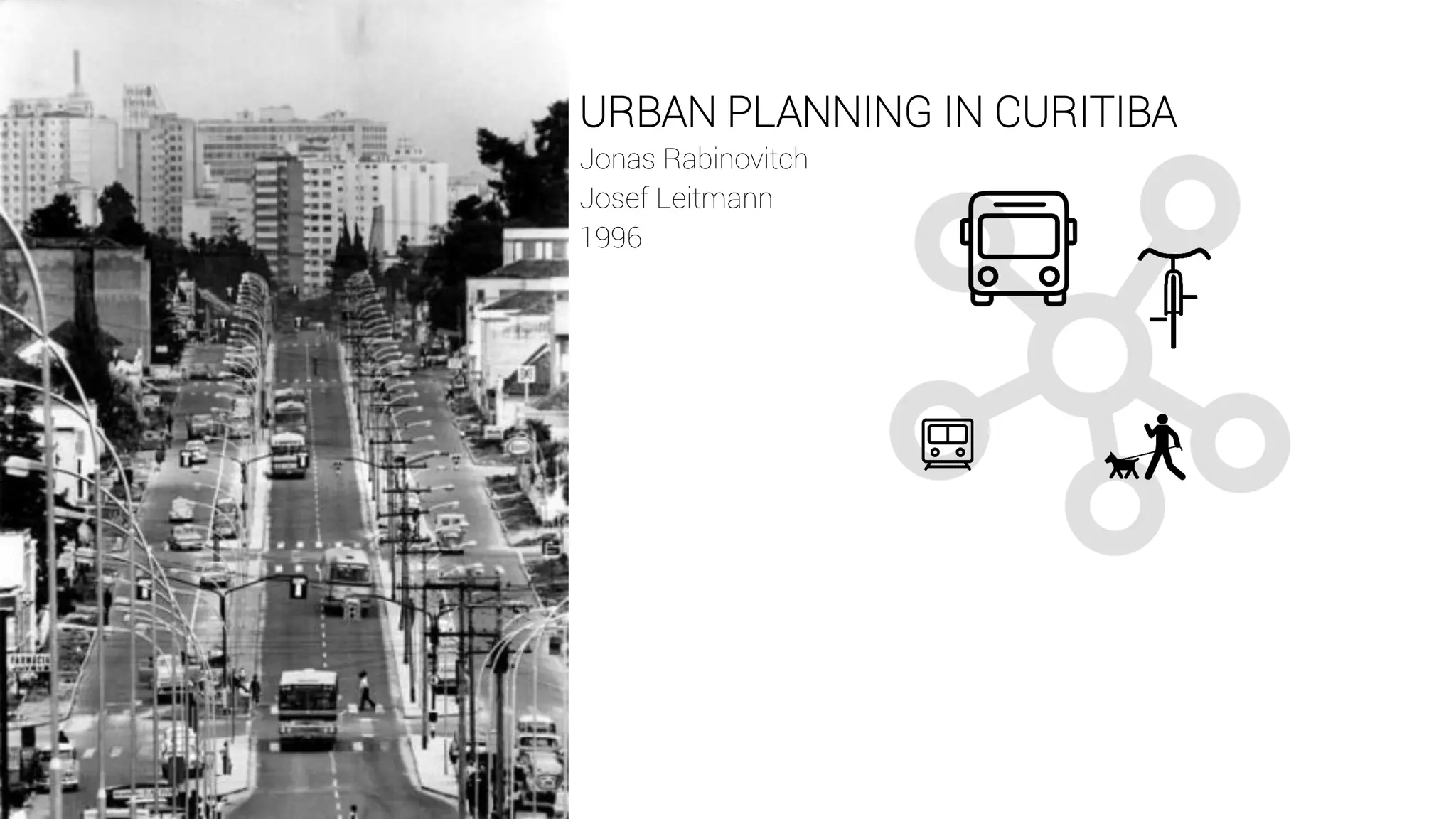
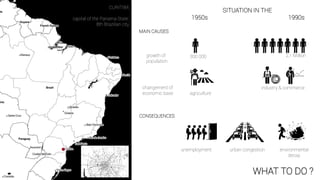
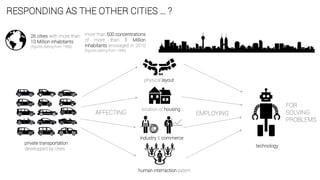
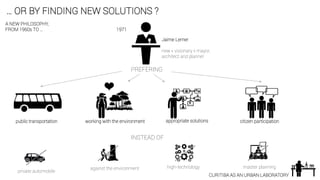
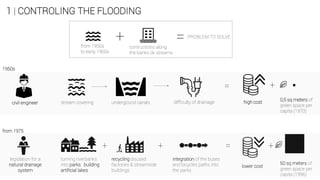
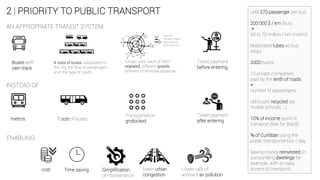
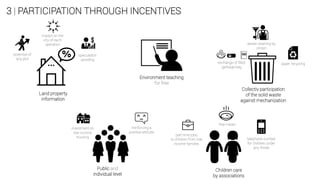
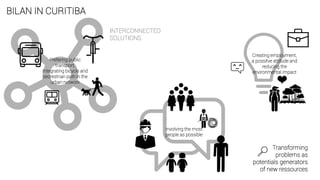
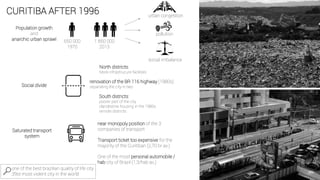
This document summarizes the urban planning approach taken in Curitiba, Brazil from the 1950s to the 1990s. Faced with problems of rapid population growth, unemployment, and environmental decay, Curitiba prioritized public transportation over private vehicles, integrated bus and bicycle paths into parks, and involved citizens through incentives to participate in waste collection and other programs. This comprehensive approach created an interconnected system that transformed problems into opportunities, focused on employment, positive attitudes, and reducing environmental impact. However, continued population growth since 1996 has led to new challenges of urban sprawl, congestion, pollution, and social imbalance in Curitiba.