i


Origin
The Urban Growth
The Guilds
The Development of Trade
The Appearance of Banking
Elements of Gothic Art
Examples of Gothic Cathedrals
Current Example of this Task
i


• Gothic art was a Medieval Art movement that developed in France in 
  the mid-12th century, led by the concurrent development of Gothic 
  architecture. It spread to all of Western Europe.
• Primary media in the Gothic period included sculpture, panel 
  painting, stained glass, fresco and illuminated manuscript. 
• The earliest Gothic art was monumental sculpture, on the walls of 
  Cathedrals and churches. Christian art was often typological in nature: 
  the New Testament, the Old Testament,  Saints' lives, Virgin Mary,... 
• Secular art came during this period with the rise of cities, foundation 
  of universities, increase in trade, the establishment of a money-based 
  economy and the creation of a bourgeois class who could pay to 
  patronize the arts and workers.
• With the growth of cities, trade guilds were formed. Artists were often 
  required to be members of a painters’ guild. More artists are known 
  because they signed their names.
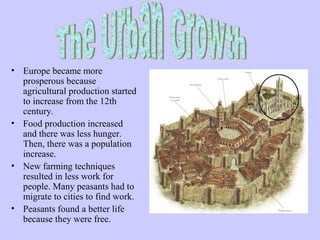
The urban growth


• Europe became more 
  prosperous because 
  agricultural production started 
  to increase from the 12th 
  century.
• Food production increased 
  and there was less hunger. 
  Then, there was a population 
  increase.
• New farming techniques 
  resulted in less work for 
  people. Many peasants had to 
  migrate to cities to find work.
• Peasants found a better life 
  because they were free.
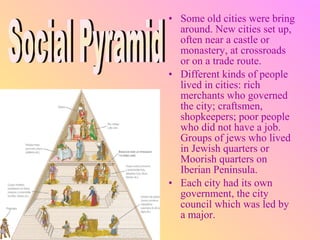
• Some old cities were bring
  around. New cities set up,
  often near a castle or
  monastery, at crossroads
  or on a trade route.
• Different kinds of people
  lived in cities: rich
  merchants who governed
  the city; craftsmen,
  shopkeepers; poor people
  who did not have a job.
  Groups of jews who lived
  in Jewish quarters or
  Moorish quarters on
  Iberian Peninsula.
• Each city had its own
  government, the city
  council which was led by
  a major.
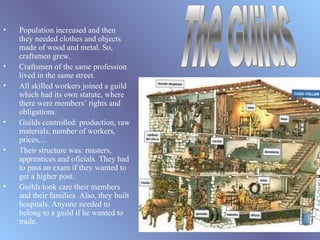
•   Population increased and then
    they needed clothes and objects        i


    made of wood and metal. So,
    craftsmen grew.
•   Craftsmen of the same profession
    lived in the same street.
•   All skilled workers joined a guild
    which had its own statute, where
    there were members’ rights and
    obligations.
•   Guilds controlled: production, raw
    materials, number of workers,
    prices,...
•   Their structure was: masters,
    apprentices and oficials. They had
    to pass an exam if they wanted to
    get a higher post.
•   Guilds took care their members
    and their families. Also, they built
    hospitals. Anyone needed to
    belong to a guild if he wanted to
    trade.
i


    •   There was an evolution and
        improvement of the land routes.
    •   The enhancement of sea routes and
        trade ships did a better navigation.
    •   The birth of a new social class:
        bourgeois, which did not have to
        obbey lords.
    •   Consequently, cities did not offer
        all the products that bourgeois
        needed. Then, luxury goods were
        obtained through trade.
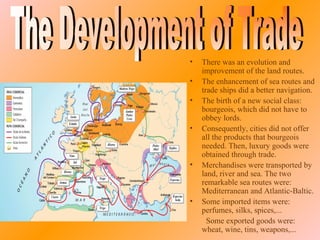
    •   Merchandises were transported by
        land, river and sea. The two
        remarkable sea routes were:
        Mediterranean and Atlantic-Baltic.
    •   Some imported items were:
        perfumes, silks, spices,...
          Some exported goods were:
        wheat, wine, tins, weapons,...
i


•   Consequently, banking came to
    light due to the development of
    trade and the fixing of
    international fairs every year.
•   WHY DID BANKING
    APPEAR? Money was
    necessary apart from barter.
    Banking was an economy’s
    instrument.
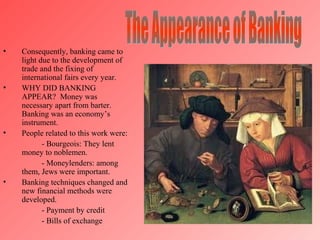
•   People related to this work were:
           - Bourgeois: They lent
    money to noblemen.
           - Moneylenders: among
    them, Jews were important.
•   Banking techniques changed and
    new financial methods were
    developed.
           - Payment by credit
           - Bills of exchange
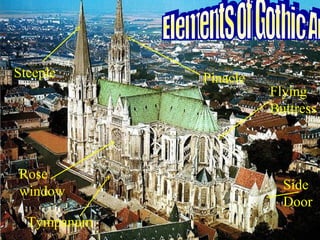
Steeple      Pinacle
                       Flying
                       Buttress


Rose
window                   Side
                         Door
  Tympanum
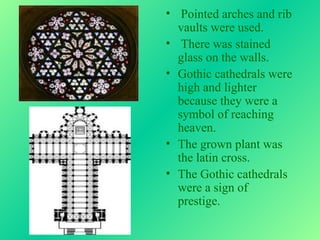
• Pointed arches and rib
  vaults were used.
• There was stained
  glass on the walls.
• Gothic cathedrals were
  high and lighter
  because they were a
  symbol of reaching
  heaven.
• The grown plant was
  the latin cross.
• The Gothic cathedrals
  were a sign of
  prestige.
i


• This book was written
  by Ken Follet. Its
  story is about the
  building of a Gothic
  cathedral in the
  Middle Ages.
• There is a film based
  on this novel.
• Both of them have
  been well received by
  the critics.

Urban growth and gothic cathedrals

  • 1.
  • 2.
  • 3.
    i • Gothic art was a Medieval Art movement that developed in France in  the mid-12th century, led by the concurrent development of Gothic  architecture. It spread to all of Western Europe. • Primary media in the Gothic period included sculpture, panel  painting, stained glass, fresco and illuminated manuscript.  • The earliest Gothic art was monumental sculpture, on the walls of  Cathedrals and churches. Christian art was often typological in nature:  the New Testament, the Old Testament,  Saints' lives, Virgin Mary,...  • Secular art came during this period with the rise of cities, foundation  of universities, increase in trade, the establishment of a money-based  economy and the creation of a bourgeois class who could pay to  patronize the arts and workers. • With the growth of cities, trade guilds were formed. Artists were often  required to be members of a painters’ guild. More artists are known  because they signed their names.
  • 4.
    The urban growth • Europe became more  prosperous because  agricultural production started  to increase from the 12th  century. • Food production increased  and there was less hunger.  Then, there was a population  increase. • New farming techniques  resulted in less work for  people. Many peasants had to  migrate to cities to find work. • Peasants found a better life  because they were free.
  • 5.
    • Some oldcities were bring around. New cities set up, often near a castle or monastery, at crossroads or on a trade route. • Different kinds of people lived in cities: rich merchants who governed the city; craftsmen, shopkeepers; poor people who did not have a job. Groups of jews who lived in Jewish quarters or Moorish quarters on Iberian Peninsula. • Each city had its own government, the city council which was led by a major.
  • 6.
    Population increased and then they needed clothes and objects i made of wood and metal. So, craftsmen grew. • Craftsmen of the same profession lived in the same street. • All skilled workers joined a guild which had its own statute, where there were members’ rights and obligations. • Guilds controlled: production, raw materials, number of workers, prices,... • Their structure was: masters, apprentices and oficials. They had to pass an exam if they wanted to get a higher post. • Guilds took care their members and their families. Also, they built hospitals. Anyone needed to belong to a guild if he wanted to trade.
  • 7.
    i • There was an evolution and improvement of the land routes. • The enhancement of sea routes and trade ships did a better navigation. • The birth of a new social class: bourgeois, which did not have to obbey lords. • Consequently, cities did not offer all the products that bourgeois needed. Then, luxury goods were obtained through trade. • Merchandises were transported by land, river and sea. The two remarkable sea routes were: Mediterranean and Atlantic-Baltic. • Some imported items were: perfumes, silks, spices,... Some exported goods were: wheat, wine, tins, weapons,...
  • 8.
    i • Consequently, banking came to light due to the development of trade and the fixing of international fairs every year. • WHY DID BANKING APPEAR? Money was necessary apart from barter. Banking was an economy’s instrument. • People related to this work were: - Bourgeois: They lent money to noblemen. - Moneylenders: among them, Jews were important. • Banking techniques changed and new financial methods were developed. - Payment by credit - Bills of exchange
  • 9.
    Steeple Pinacle Flying Buttress Rose window Side Door Tympanum
  • 10.
    • Pointed archesand rib vaults were used. • There was stained glass on the walls. • Gothic cathedrals were high and lighter because they were a symbol of reaching heaven. • The grown plant was the latin cross. • The Gothic cathedrals were a sign of prestige.
  • 13.
    i • This bookwas written by Ken Follet. Its story is about the building of a Gothic cathedral in the Middle Ages. • There is a film based on this novel. • Both of them have been well received by the critics.