+


    Universal Design

    By Mamie Hobbs
+
    Universal Design Overview

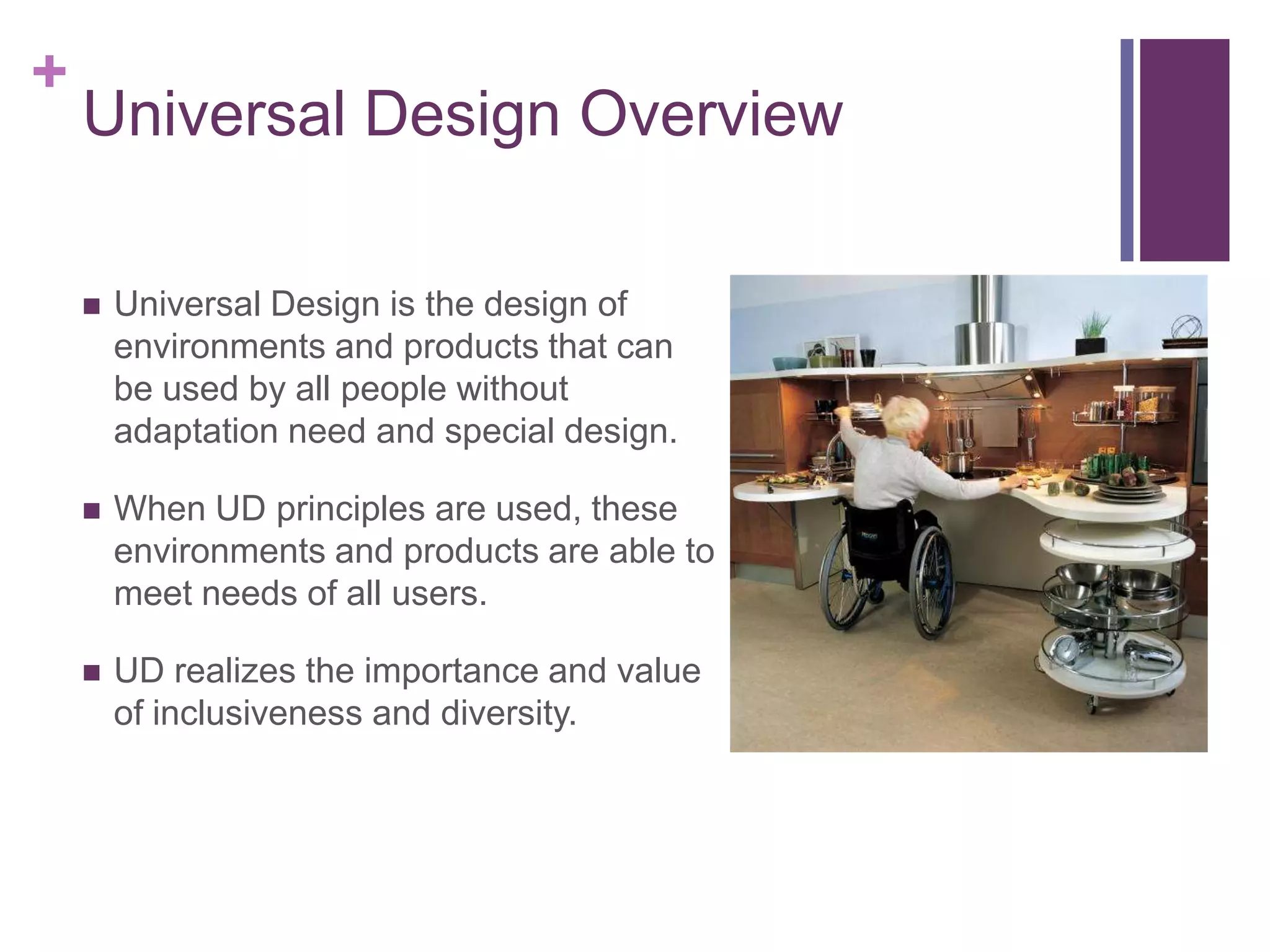
       Universal Design is the design of
        environments and products that can
        be used by all people without
        adaptation need and special design.

       When UD principles are used, these
        environments and products are able to
        meet needs of all users.

       UD realizes the importance and value
        of inclusiveness and diversity.
+
    Universal Design For Learning

       Many classrooms are designed
        around the needs of an “average
        student.” Studies have shown that
        there really aren’t any “average
        students.”

       Universal Design for Learning is
        focused on the idea of creating
        curriculum that meets all learners
        needs. This includes every student-
        bilingual, gifted, struggling, etc.

       UDL is designed to create
        experiences in learning for a variety of
        students in which all learners can be
        successful.
+
    Curriculum Designed For All
    Learners
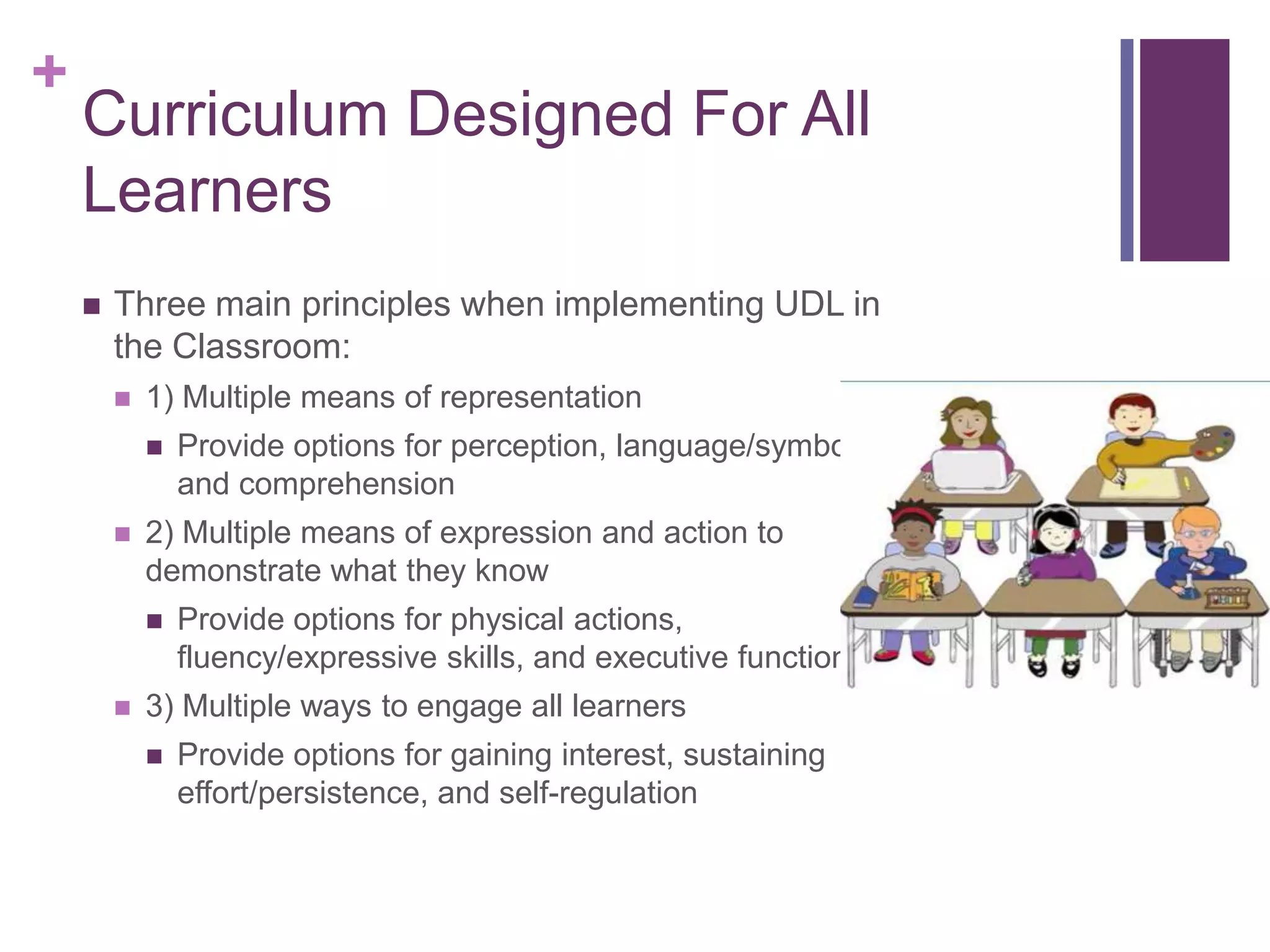
       Three main principles when implementing UDL in
        the Classroom:
           1) Multiple means of representation
               Provide options for perception, language/symbols,
                and comprehension
           2) Multiple means of expression and action to
            demonstrate what they know
               Provide options for physical actions,
                fluency/expressive skills, and executive functions
           3) Multiple ways to engage all learners
               Provide options for gaining interest, sustaining
                effort/persistence, and self-regulation
+
    Using UDL In Your Classroom

       Incorporating UDL in a school or
        specific classroom takes courage to
        step out of the box by challenging
        others beliefs and your own.

       Working together with other teachers
        is a great tool when first implementing
        UDL and sustaining it within your
        classroom and school.

       While planning:
           Identify the different learning styles of
            your students
           Identify possible barriers

Universal design

  • 1.
    + Universal Design By Mamie Hobbs
  • 2.
    + Universal Design Overview  Universal Design is the design of environments and products that can be used by all people without adaptation need and special design.  When UD principles are used, these environments and products are able to meet needs of all users.  UD realizes the importance and value of inclusiveness and diversity.
  • 3.
    + Universal Design For Learning  Many classrooms are designed around the needs of an “average student.” Studies have shown that there really aren’t any “average students.”  Universal Design for Learning is focused on the idea of creating curriculum that meets all learners needs. This includes every student- bilingual, gifted, struggling, etc.  UDL is designed to create experiences in learning for a variety of students in which all learners can be successful.
  • 4.
    + Curriculum Designed For All Learners  Three main principles when implementing UDL in the Classroom:  1) Multiple means of representation  Provide options for perception, language/symbols, and comprehension  2) Multiple means of expression and action to demonstrate what they know  Provide options for physical actions, fluency/expressive skills, and executive functions  3) Multiple ways to engage all learners  Provide options for gaining interest, sustaining effort/persistence, and self-regulation
  • 5.
    + Using UDL In Your Classroom  Incorporating UDL in a school or specific classroom takes courage to step out of the box by challenging others beliefs and your own.  Working together with other teachers is a great tool when first implementing UDL and sustaining it within your classroom and school.  While planning:  Identify the different learning styles of your students  Identify possible barriers