The Importance of
  Being Earnest
    By Oscar Wilde
     (1854-1900)
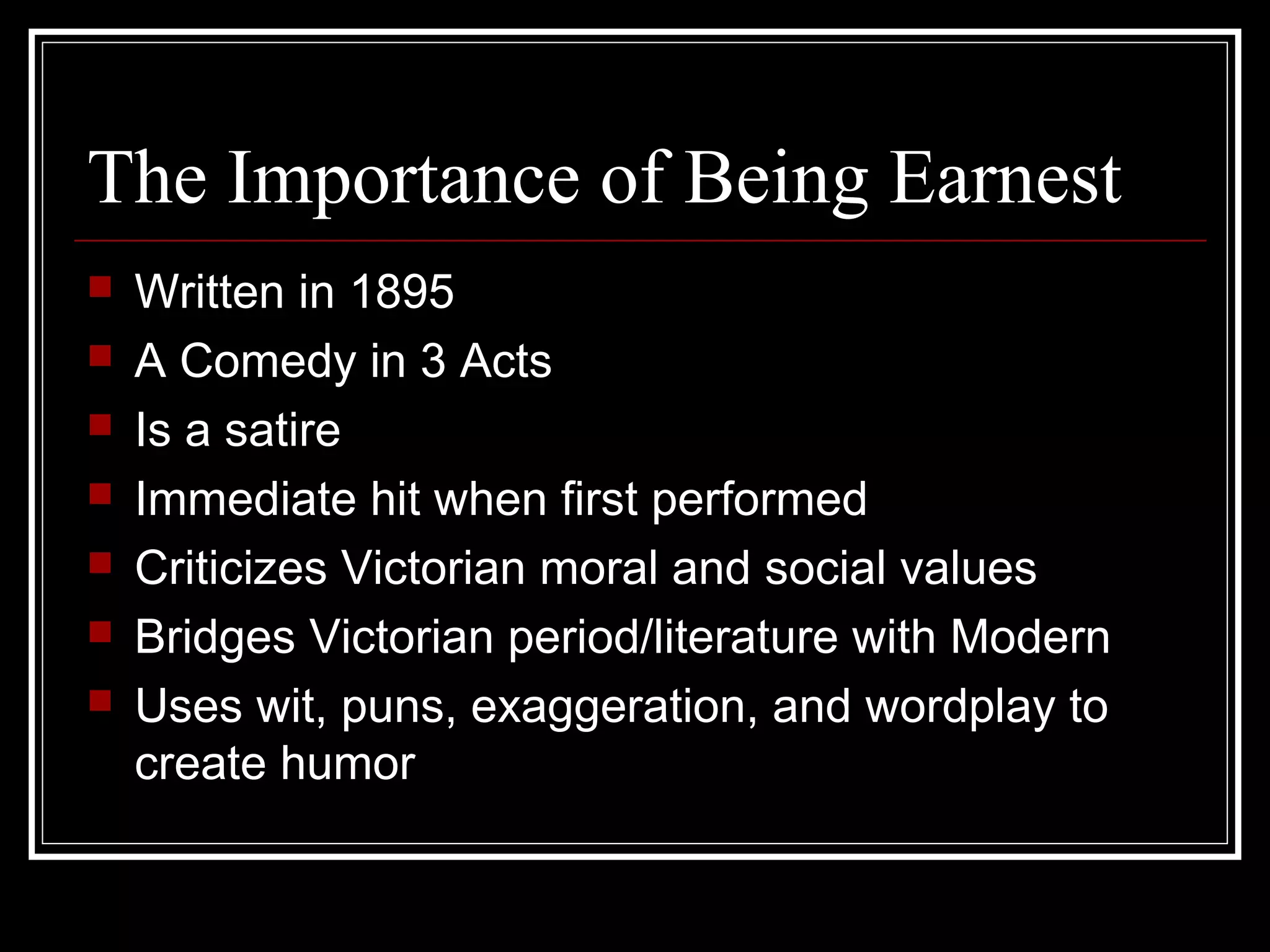
The Importance of Being Earnest
   Written in 1895
   A Comedy in 3 Acts
   Is a satire
   Immediate hit when first performed
   Criticizes Victorian moral and social values
   Bridges Victorian period/literature with Modern
   Uses wit, puns, exaggeration, and wordplay to
    create humor
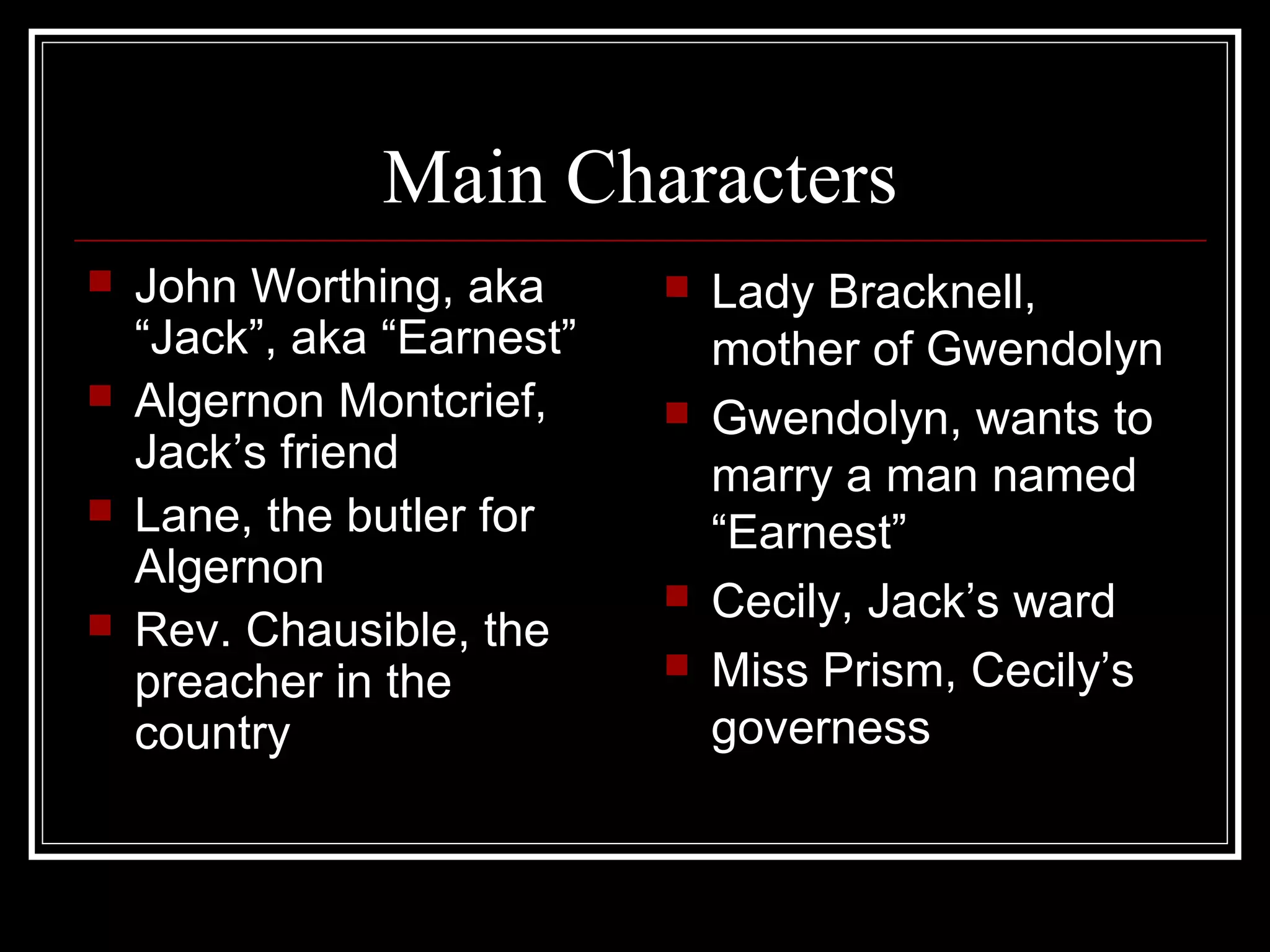
Main Characters
   John Worthing, aka         Lady Bracknell,
    “Jack”, aka “Earnest”       mother of Gwendolyn
   Algernon Montcrief,        Gwendolyn, wants to
    Jack’s friend               marry a man named
   Lane, the butler for        “Earnest”
    Algernon
                               Cecily, Jack’s ward
   Rev. Chausible, the
    preacher in the            Miss Prism, Cecily’s
    country                     governess
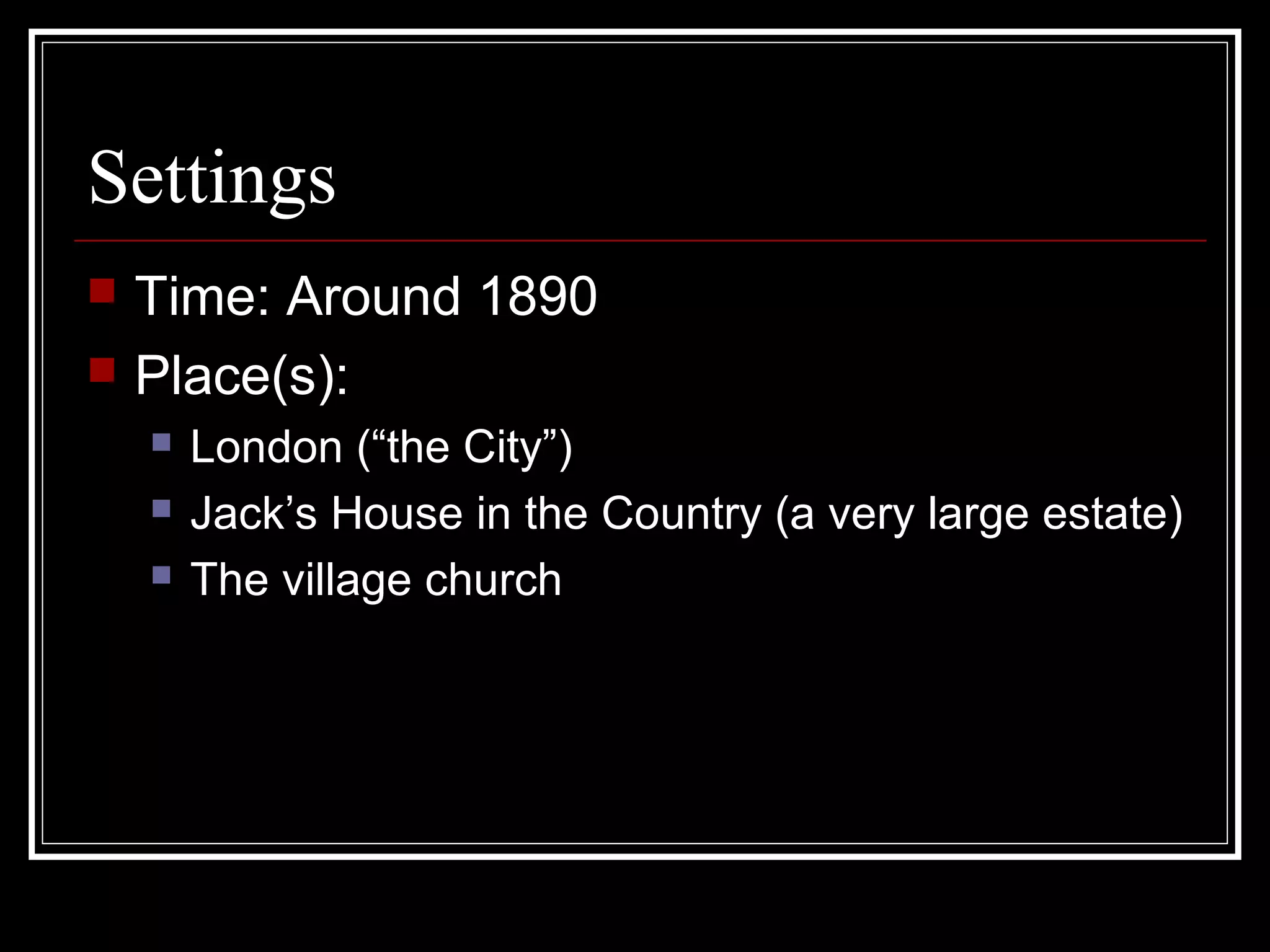
Settings
   Time: Around 1890
   Place(s):
       London (“the City”)
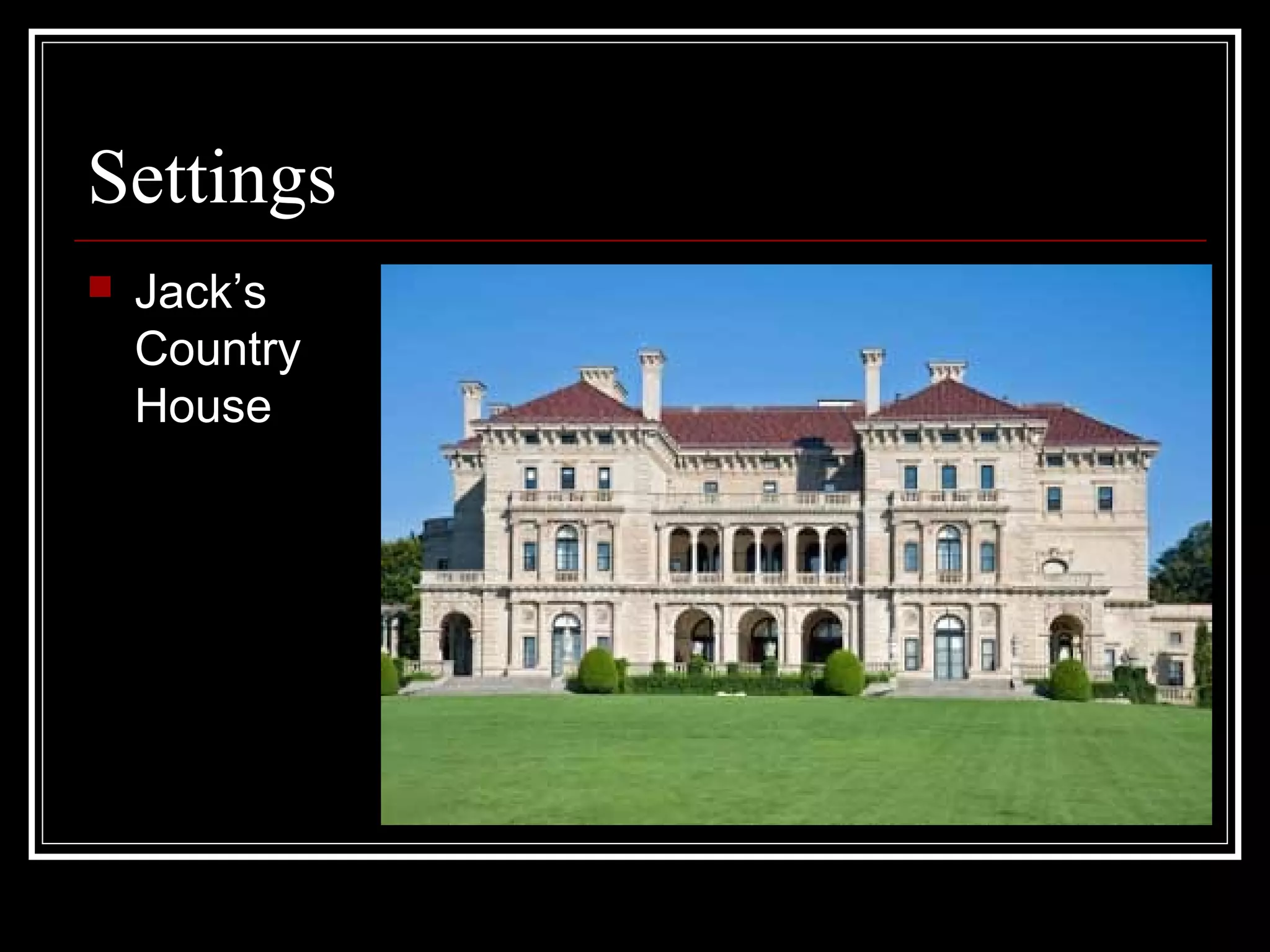
       Jack’s House in the Country (a very large estate)
       The village church
Settings
   Jack’s
    Country
    House
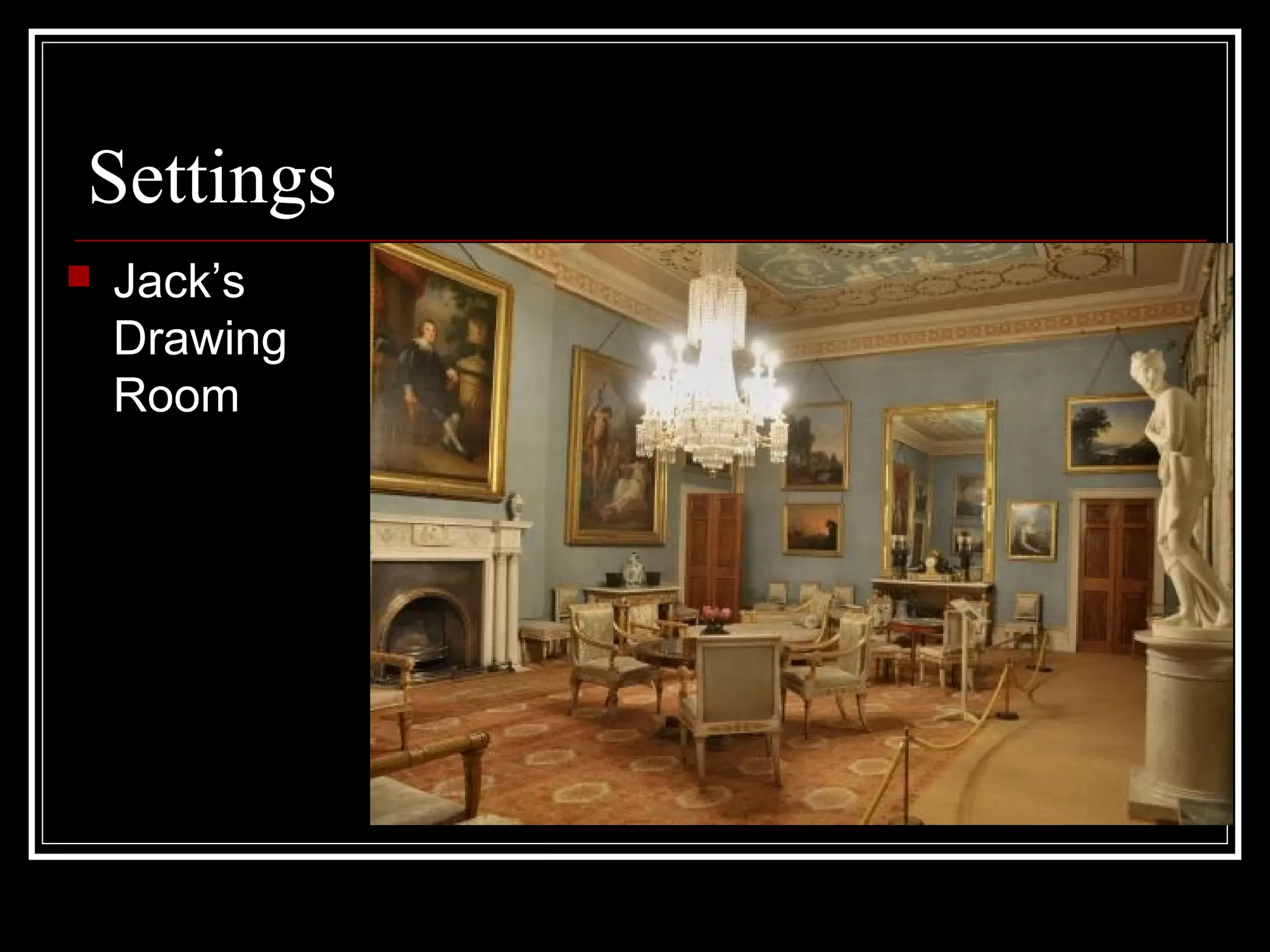
Settings
   Jack’s
    Drawing
    Room
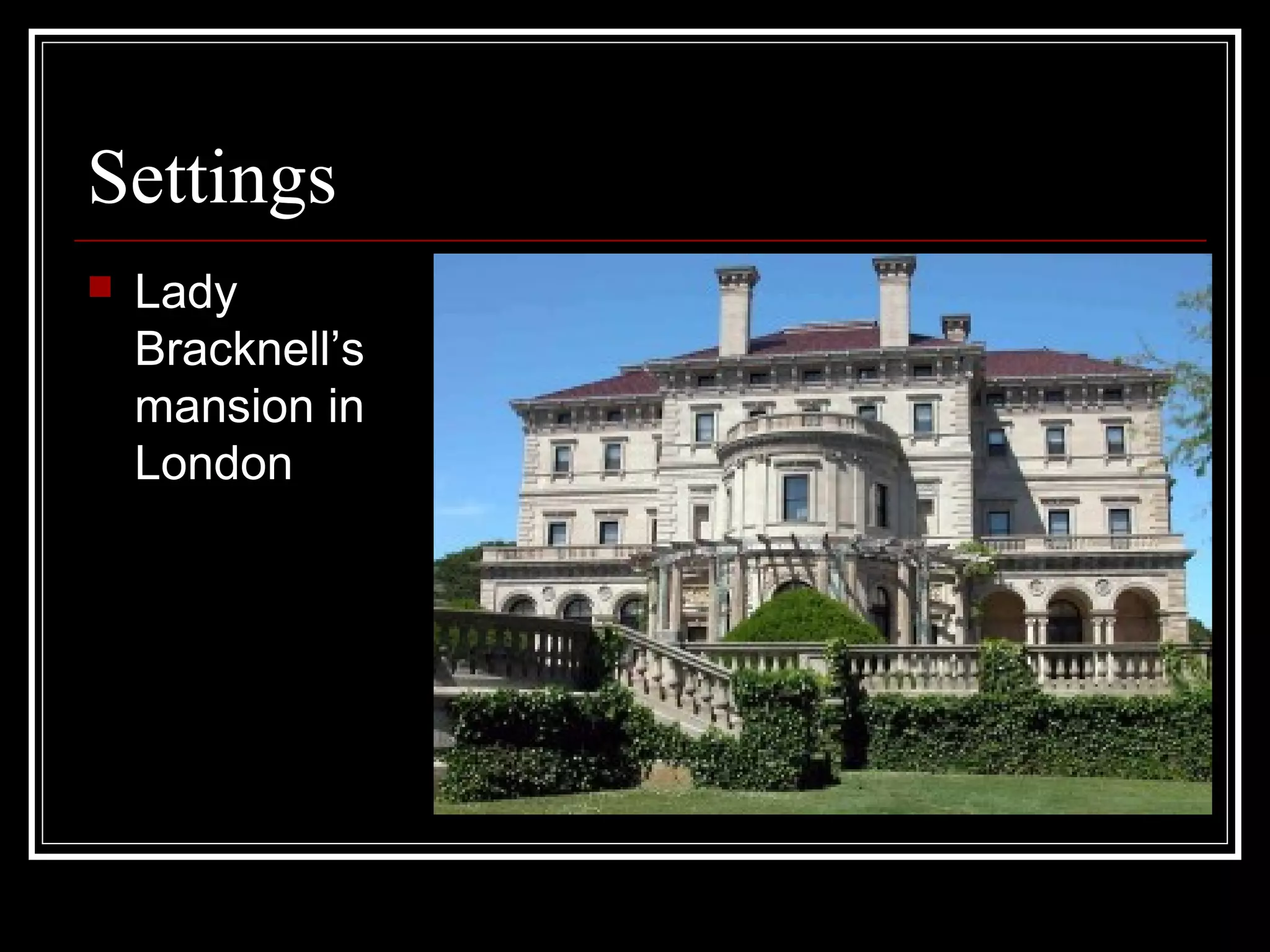
Settings
   Lady
    Bracknell’s
    mansion in
    London
Victorian Period
   Named for Queen Victoria of England
   Was Queen from 1837-1901
   Followed the reign of “Mad” King George
   The culture was very moral and serious
   Women were expected to be the “angel in
    the house” - to take care of their husband
    and family
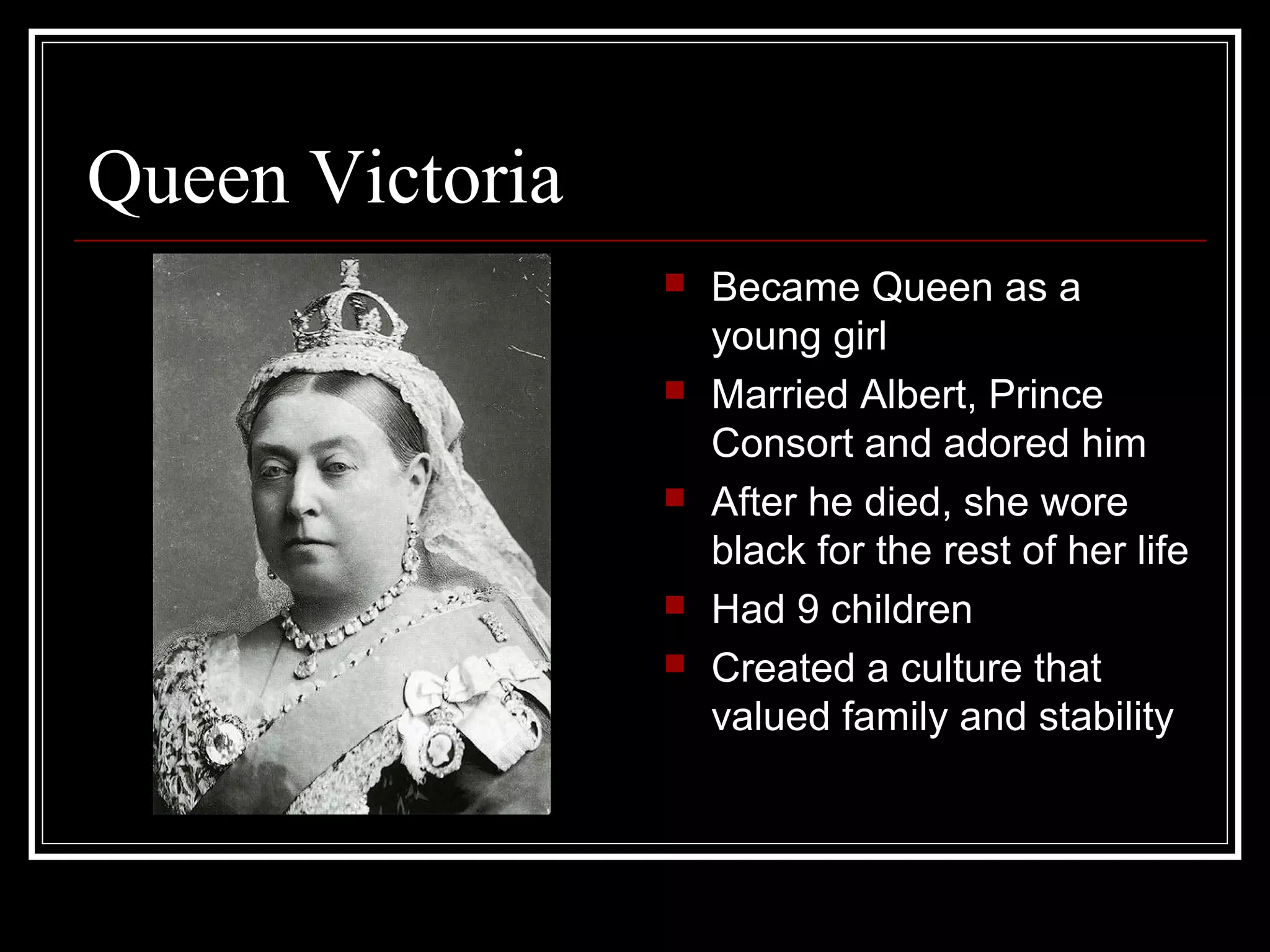
Queen Victoria
                    Became Queen as a
                     young girl
                    Married Albert, Prince
                     Consort and adored him
                    After he died, she wore
                     black for the rest of her life
                    Had 9 children
                    Created a culture that
                     valued family and stability
Victorian Period
   Manners were supremely important
   English society was divided into classes
   The Upper-class was well-educated, came
    from a rich and respected family (“old
    money”), and having good manners
    mattered more than anything else
   Considered bad manners to flaunt wealth
Victorian Period
   Young women were always chaperoned until they
    were married
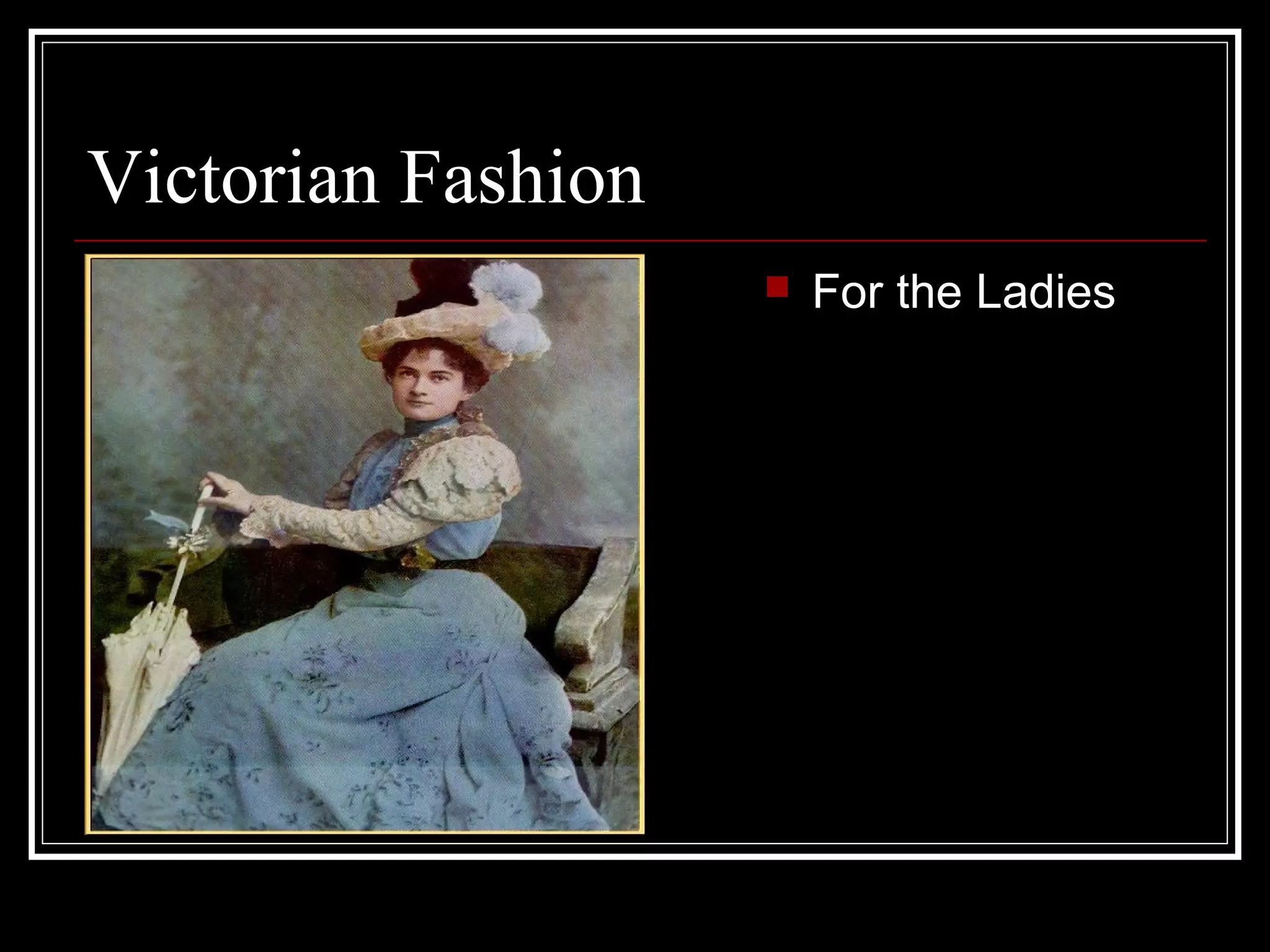
   Women’s clothing covered them from neck to
    ankle; clothes had to be modest
   In the upper classes, people with a bad reputation
    were outcasts no matter how much money they
    had
   Good manners were extremely important
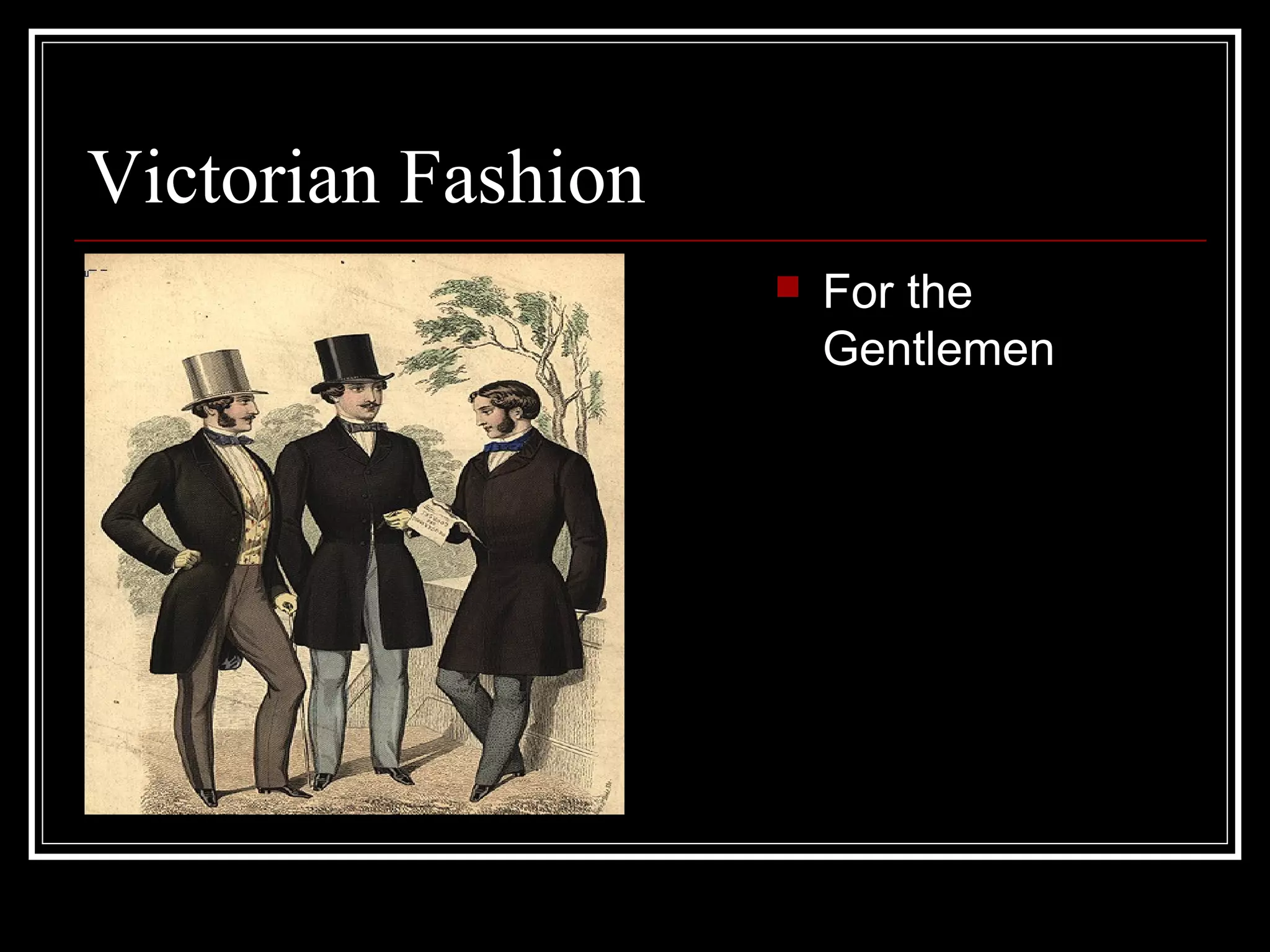
Victorian Fashion
                       For the
                        Gentlemen
Victorian Fashion
                       For the Ladies
Victorian Period
   People did not just “drop in” to visit - they
    made formal appointments
   Refreshments were expected when visitors
    came to “call” (visit) - usually tea and cake
    or tiny, elegant cucumber sandwiches
   Men were expected to be well-educated
   Women were expected to marry well
Oscar Wilde - Author
   Born in Ireland; lived in England and abroad
   Attended Trinity College in Ireland and Oxford
    University in England
   Very witty and funny
   Believed in the value of “art for art’s sake” - art
    (literature) should not be concerned with political
    issues
   Wrote several plays, but only one novel
   Novel: The Picture of Dorian Gray
Oscar Wilde
   With other writers and artists, rebelled against the
    prim, moral, religious culture of Victorian England
   Was known to be wild, flamboyant, witty
   Although homosexual, married and had children
   Being homosexual was illegal, and he served
    time in prison for it
Oscar Wilde
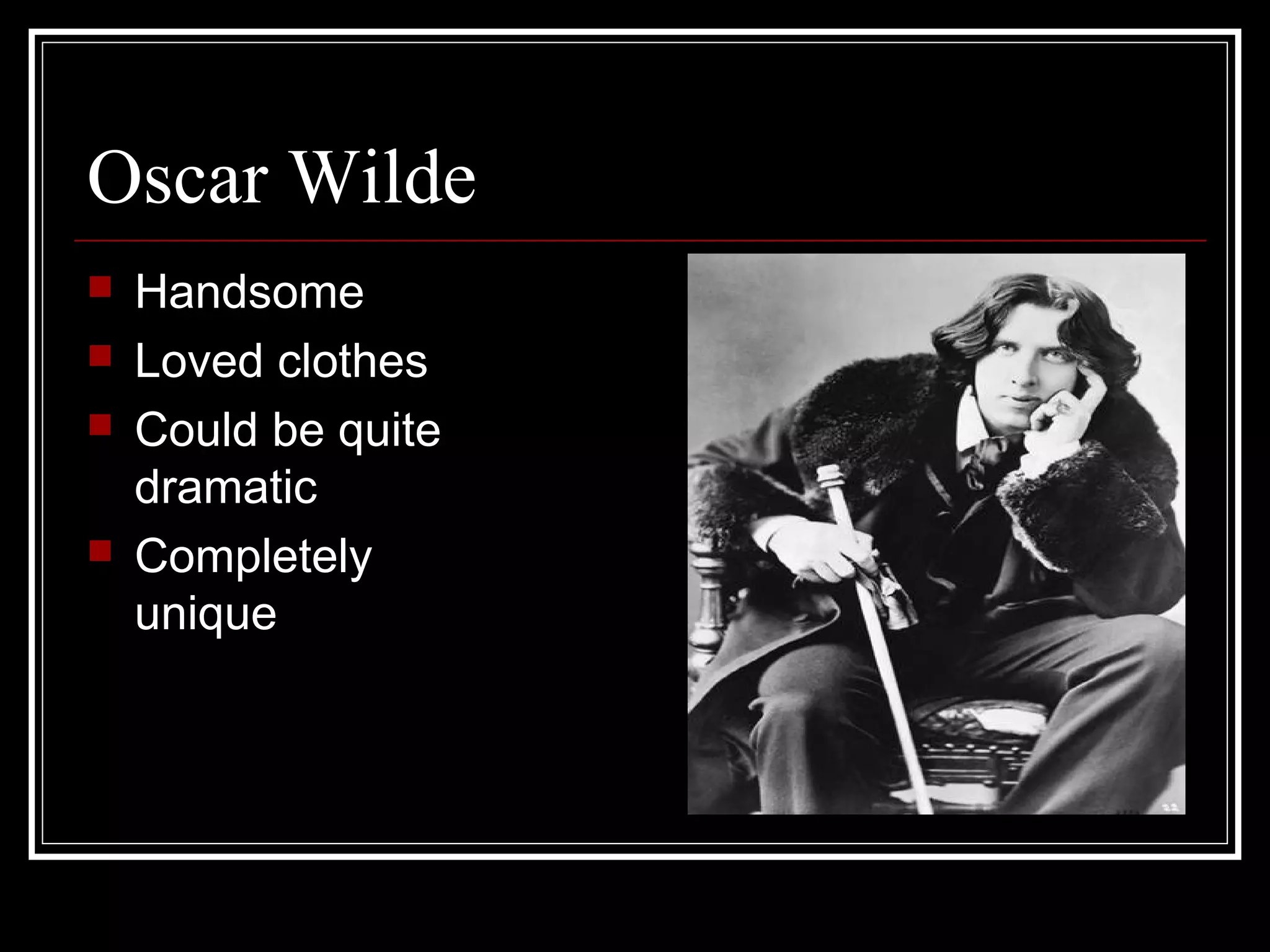
   Handsome
   Loved clothes
   Could be quite
    dramatic
   Completely
    unique
Oscar Wilde
   Came from upper-class family
   Brilliant writer
   Loved to shock people
   “Bad Boy” of his time
   Never allowed to see his family again
   Spent the remainder of his life in Paris
   Died alone and poor in Paris
Literary Vocabulary
   Comedy - light-hearted literature with
    humor and a happy ending
   Satire - literary writing that makes fun of or
    criticizes the faults of people or groups.
    Purpose is to point out flaws
   Wit - using words to be clever and funny
    with language
   Pun - a play on words
Literary Vocabulary
   Protagonist - the main character
   Foil - the character who contrasts the main
    character (the foil “reflects” the traits of the main
    character)
   Blocking figure - A character, often old and
    cranky, who interferes with the romantic desires
    or the other main characters and provides comic
    action
Literary Vocabulary
   Motif - a recurring character or element
    repeated in a literary work. Food is a motif
    in The Importance of Being Earnest
   Protagonist - the main character
The Importance of Being Earnest
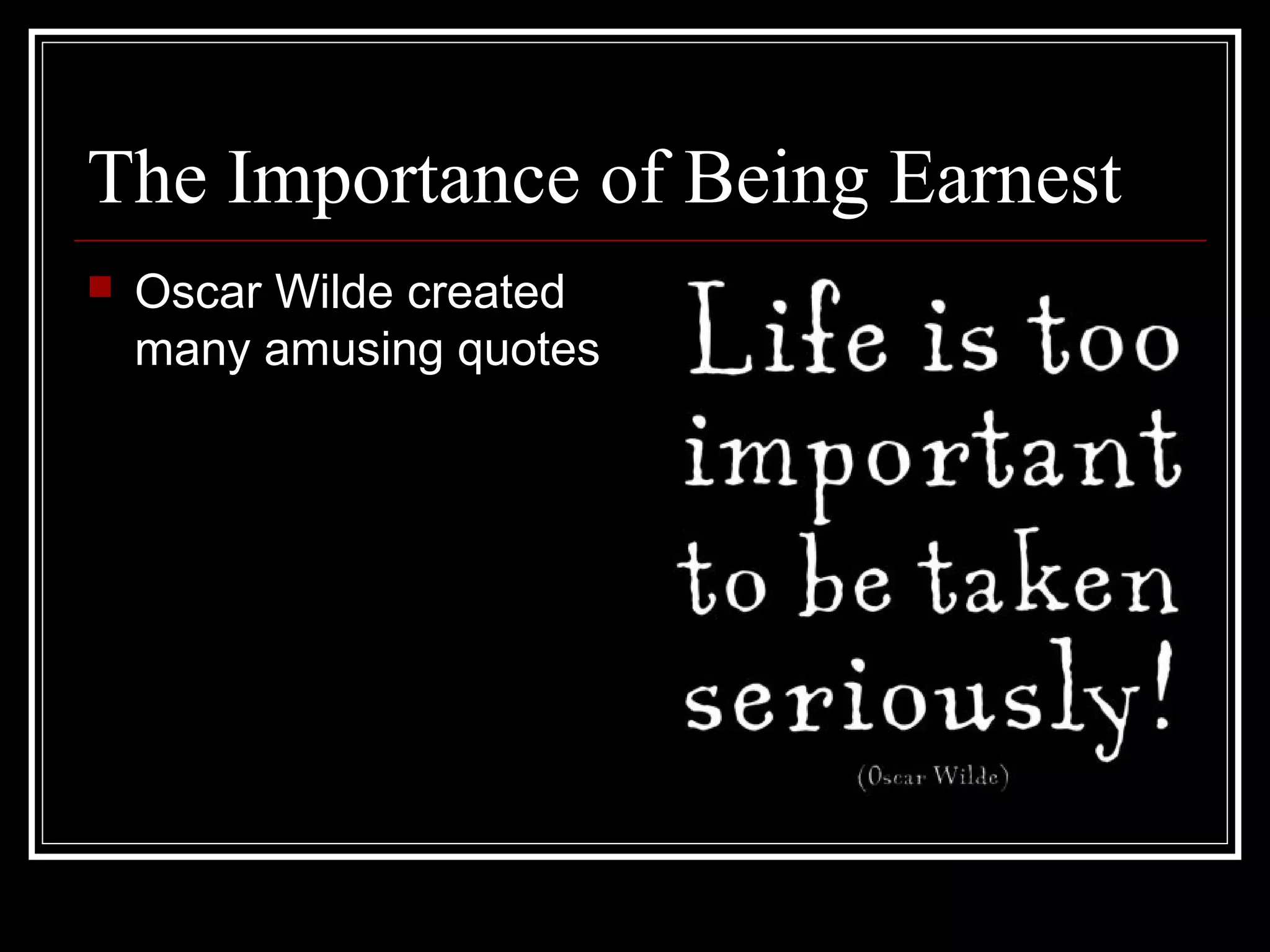
   Oscar Wilde created
    many amusing quotes
Oscar Wilde Quotes
   “I always pass on good advice. It is
    the only thing to do with it. It is never
    of any use to oneself. “
   “I can resist everything except
    temptation. “
Oscar Wilde Quotes
   “I never travel without my diary. One
    should always have something
    sensational to read in the train. “
   “To lose one parent may be regarded
    as a misfortune; to lose both looks
    like carelessness.”
The Importance of Being Earnest
   Even though this play was written more
    than 100 years ago, it continues to be very
    popular
   More than one movie has been made of
    this play, the most recent in the past 5-10
    years
   This play is currently being performed on
    Broadway in New York City (through June)
Importance of Being Earnest
   The title of the play is a pun.

   To be “earnest” means to be serious, and
    the main character (John/Jack) uses the
    name “Earnest” when he is in the city

   “Bunburying” is using an alias to “get away
    with” avoiding social obligatioins
Importance of Being Earnest
   What have you learned so far?
   Know the characters, the setting, the plot
   Know the basic facts about the author
   Know the basic facts of Victorian England
   Know the literary vocabulary required
   Understand that this play is a comedy
Importance of Being Earnest
   You have come to the end of the
    PowerPoint
   You are ready to begin the play!

Importance of Being Earnest Power Point

  • 1.
    The Importance of Being Earnest By Oscar Wilde (1854-1900)
  • 2.
    The Importance ofBeing Earnest  Written in 1895  A Comedy in 3 Acts  Is a satire  Immediate hit when first performed  Criticizes Victorian moral and social values  Bridges Victorian period/literature with Modern  Uses wit, puns, exaggeration, and wordplay to create humor
  • 3.
    Main Characters  John Worthing, aka  Lady Bracknell, “Jack”, aka “Earnest” mother of Gwendolyn  Algernon Montcrief,  Gwendolyn, wants to Jack’s friend marry a man named  Lane, the butler for “Earnest” Algernon  Cecily, Jack’s ward  Rev. Chausible, the preacher in the  Miss Prism, Cecily’s country governess
  • 4.
    Settings  Time: Around 1890  Place(s):  London (“the City”)  Jack’s House in the Country (a very large estate)  The village church
  • 5.
    Settings  Jack’s Country House
  • 6.
    Settings  Jack’s Drawing Room
  • 7.
    Settings  Lady Bracknell’s mansion in London
  • 8.
    Victorian Period  Named for Queen Victoria of England  Was Queen from 1837-1901  Followed the reign of “Mad” King George  The culture was very moral and serious  Women were expected to be the “angel in the house” - to take care of their husband and family
  • 9.
    Queen Victoria  Became Queen as a young girl  Married Albert, Prince Consort and adored him  After he died, she wore black for the rest of her life  Had 9 children  Created a culture that valued family and stability
  • 10.
    Victorian Period  Manners were supremely important  English society was divided into classes  The Upper-class was well-educated, came from a rich and respected family (“old money”), and having good manners mattered more than anything else  Considered bad manners to flaunt wealth
  • 11.
    Victorian Period  Young women were always chaperoned until they were married  Women’s clothing covered them from neck to ankle; clothes had to be modest  In the upper classes, people with a bad reputation were outcasts no matter how much money they had  Good manners were extremely important
  • 12.
    Victorian Fashion  For the Gentlemen
  • 13.
    Victorian Fashion  For the Ladies
  • 14.
    Victorian Period  People did not just “drop in” to visit - they made formal appointments  Refreshments were expected when visitors came to “call” (visit) - usually tea and cake or tiny, elegant cucumber sandwiches  Men were expected to be well-educated  Women were expected to marry well
  • 15.
    Oscar Wilde -Author  Born in Ireland; lived in England and abroad  Attended Trinity College in Ireland and Oxford University in England  Very witty and funny  Believed in the value of “art for art’s sake” - art (literature) should not be concerned with political issues  Wrote several plays, but only one novel  Novel: The Picture of Dorian Gray
  • 16.
    Oscar Wilde  With other writers and artists, rebelled against the prim, moral, religious culture of Victorian England  Was known to be wild, flamboyant, witty  Although homosexual, married and had children  Being homosexual was illegal, and he served time in prison for it
  • 17.
    Oscar Wilde  Handsome  Loved clothes  Could be quite dramatic  Completely unique
  • 18.
    Oscar Wilde  Came from upper-class family  Brilliant writer  Loved to shock people  “Bad Boy” of his time  Never allowed to see his family again  Spent the remainder of his life in Paris  Died alone and poor in Paris
  • 19.
    Literary Vocabulary  Comedy - light-hearted literature with humor and a happy ending  Satire - literary writing that makes fun of or criticizes the faults of people or groups. Purpose is to point out flaws  Wit - using words to be clever and funny with language  Pun - a play on words
  • 20.
    Literary Vocabulary  Protagonist - the main character  Foil - the character who contrasts the main character (the foil “reflects” the traits of the main character)  Blocking figure - A character, often old and cranky, who interferes with the romantic desires or the other main characters and provides comic action
  • 21.
    Literary Vocabulary  Motif - a recurring character or element repeated in a literary work. Food is a motif in The Importance of Being Earnest  Protagonist - the main character
  • 22.
    The Importance ofBeing Earnest  Oscar Wilde created many amusing quotes
  • 23.
    Oscar Wilde Quotes  “I always pass on good advice. It is the only thing to do with it. It is never of any use to oneself. “  “I can resist everything except temptation. “
  • 24.
    Oscar Wilde Quotes  “I never travel without my diary. One should always have something sensational to read in the train. “  “To lose one parent may be regarded as a misfortune; to lose both looks like carelessness.”
  • 25.
    The Importance ofBeing Earnest  Even though this play was written more than 100 years ago, it continues to be very popular  More than one movie has been made of this play, the most recent in the past 5-10 years  This play is currently being performed on Broadway in New York City (through June)
  • 26.
    Importance of BeingEarnest  The title of the play is a pun.  To be “earnest” means to be serious, and the main character (John/Jack) uses the name “Earnest” when he is in the city  “Bunburying” is using an alias to “get away with” avoiding social obligatioins
  • 27.
    Importance of BeingEarnest  What have you learned so far?  Know the characters, the setting, the plot  Know the basic facts about the author  Know the basic facts of Victorian England  Know the literary vocabulary required  Understand that this play is a comedy
  • 28.
    Importance of BeingEarnest  You have come to the end of the PowerPoint  You are ready to begin the play!