Universal Design for
     Learning


       By: Briana Marsh
What is UDL?
• Universal design is the design of products and
  environments to be usable by all people, to
  the greatest extent possible, without the
  need for adaptation or specialized design.
        -Ron Mace
Examples:

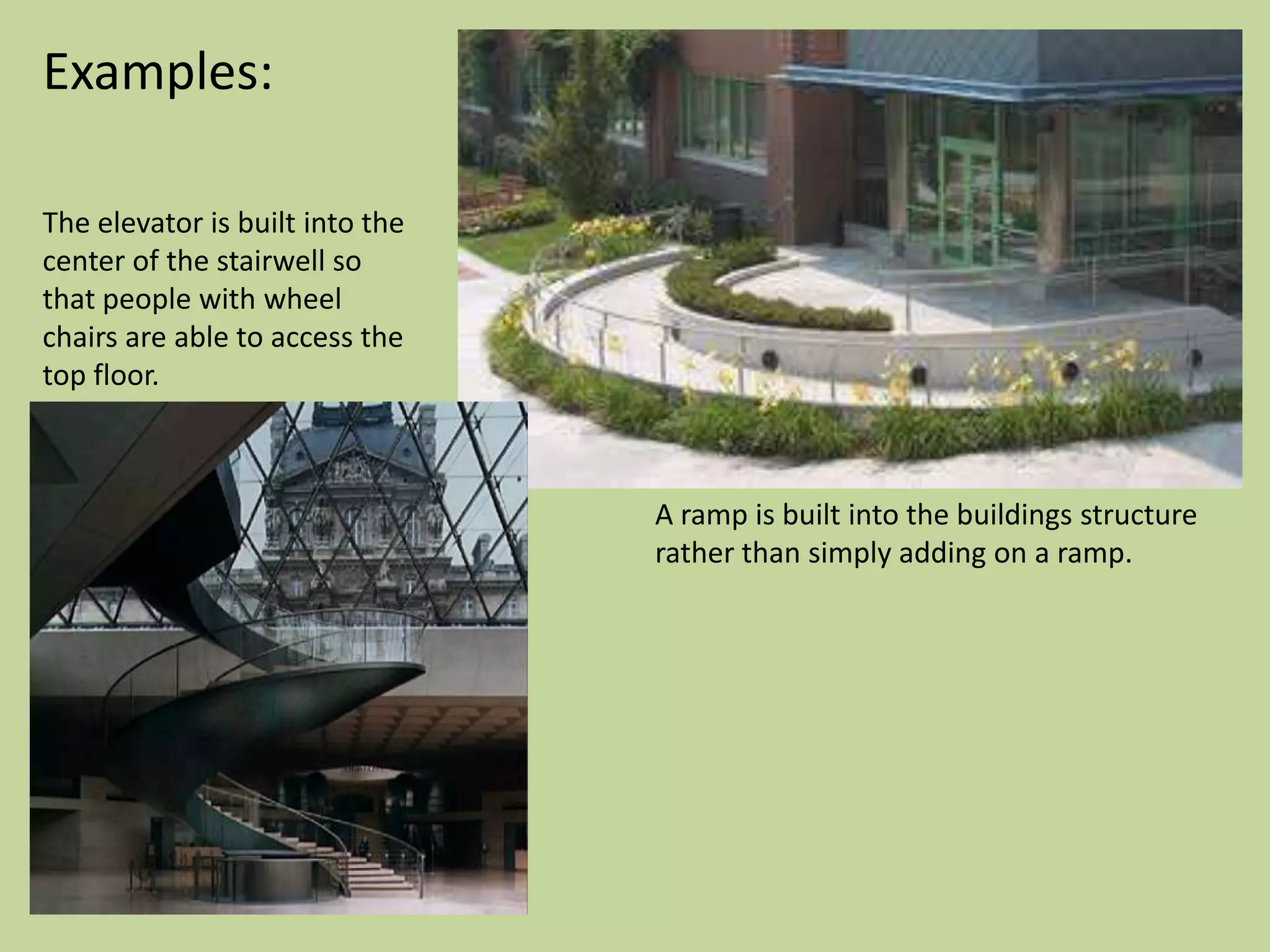
The elevator is built into the
center of the stairwell so
that people with wheel
chairs are able to access the
top floor.


                                 A ramp is built into the buildings structure
                                 rather than simply adding on a ramp.
Guidelines for UDL:
               Provide Multiple Means
                  of Representation

               Provide Multiple means
               of Action and Expression

               Provide Multiple Means
                   of Engagement
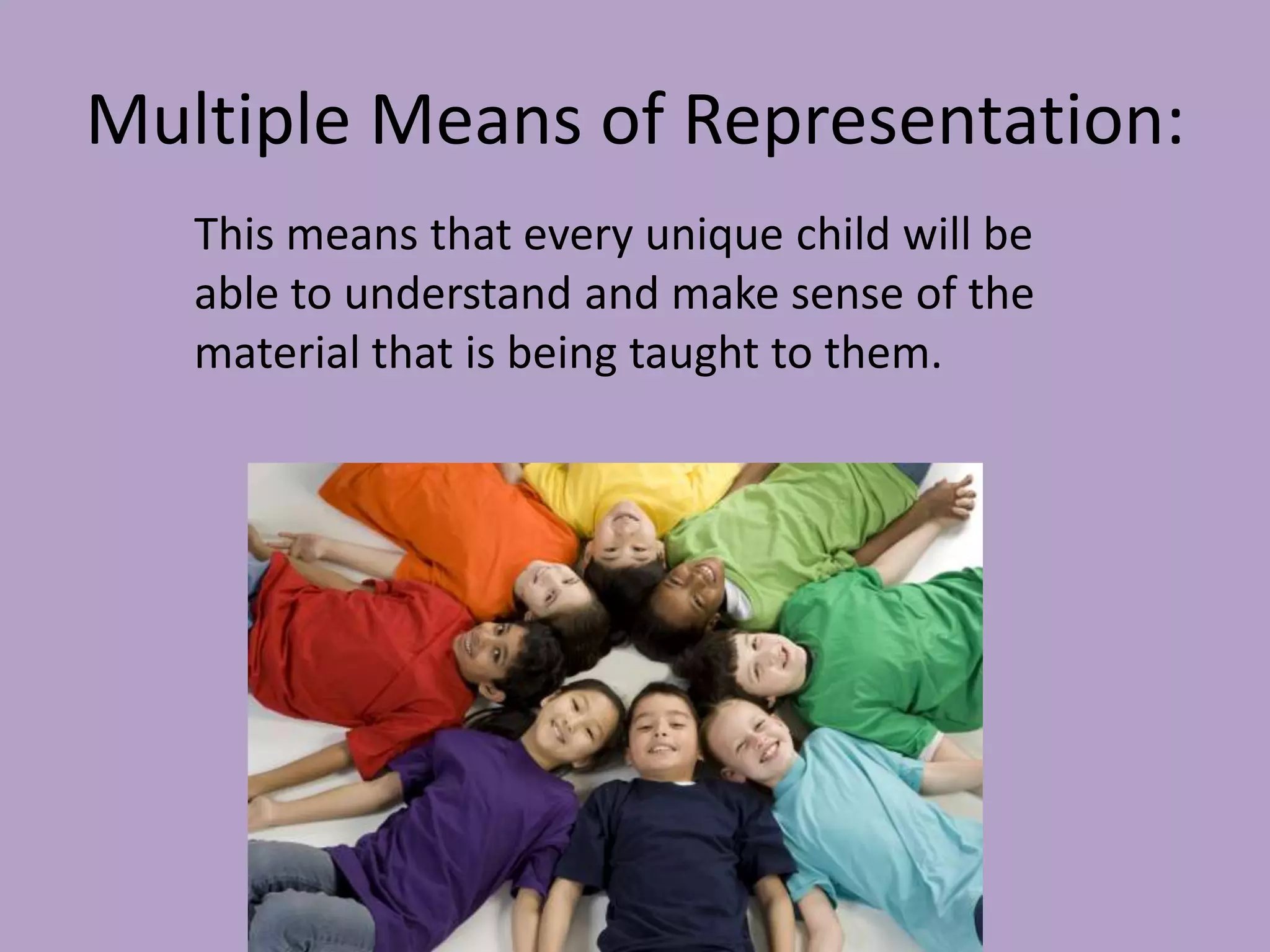
Multiple Means of Representation:
   This means that every unique child will be
   able to understand and make sense of the
   material that is being taught to them.
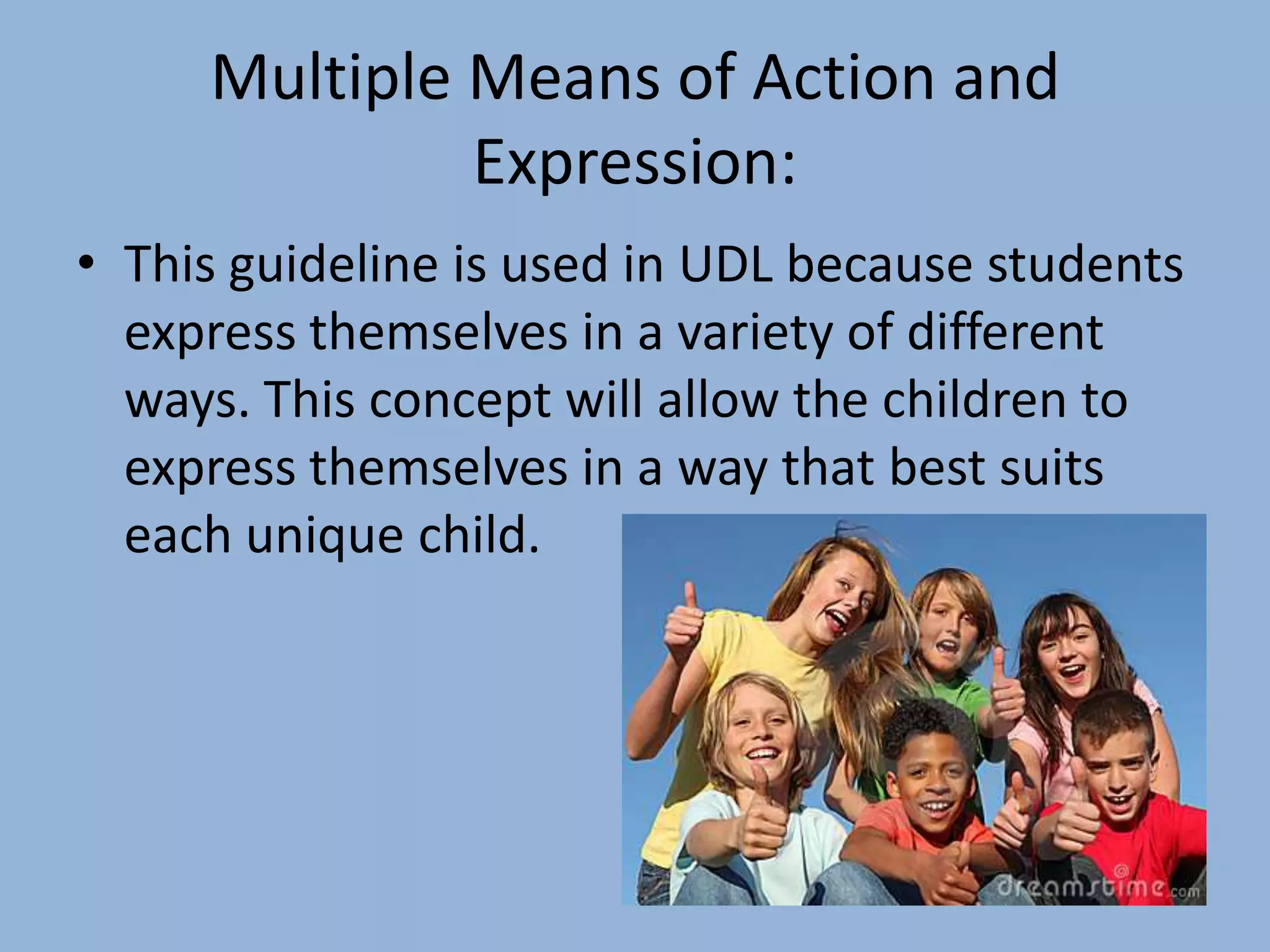
Multiple Means of Action and
              Expression:
• This guideline is used in UDL because students
  express themselves in a variety of different
  ways. This concept will allow the children to
  express themselves in a way that best suits
  each unique child.
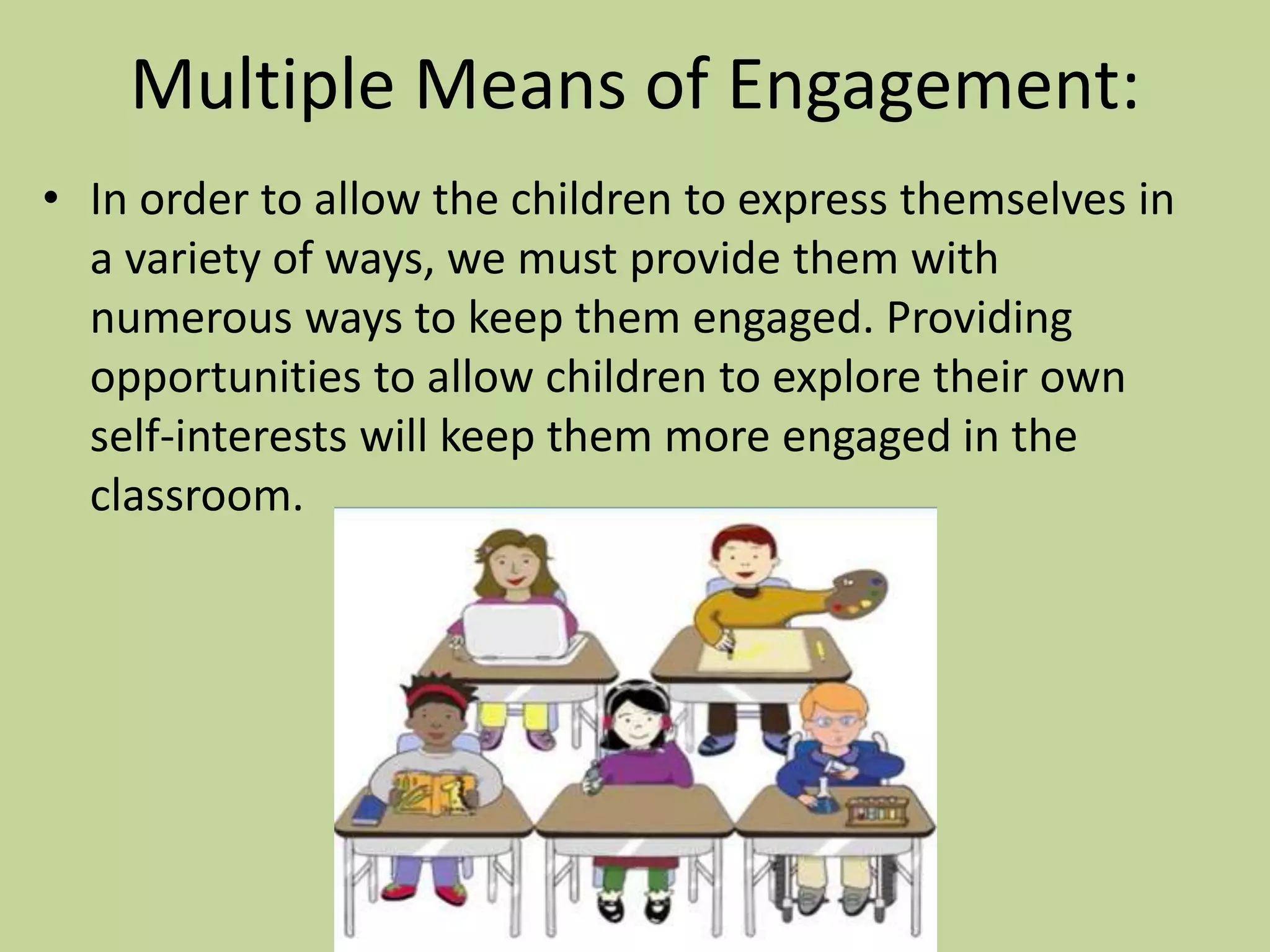
Multiple Means of Engagement:
• In order to allow the children to express themselves in
  a variety of ways, we must provide them with
  numerous ways to keep them engaged. Providing
  opportunities to allow children to explore their own
  self-interests will keep them more engaged in the
  classroom.
Components of UDL:
• What are the goals of UDL?
- How do we translate standards into the this custom curriculum?

• What are the materials that are going to be used
  in the classroom
- Are these materials key to learning and are they universally designed?

• What are the methods used?
- Does the teacher use collaborative group projects, lectures, and or provide
   the students with real life experiences?

• What are the means of assessment?
- How can you be sure that the students are truly learning?
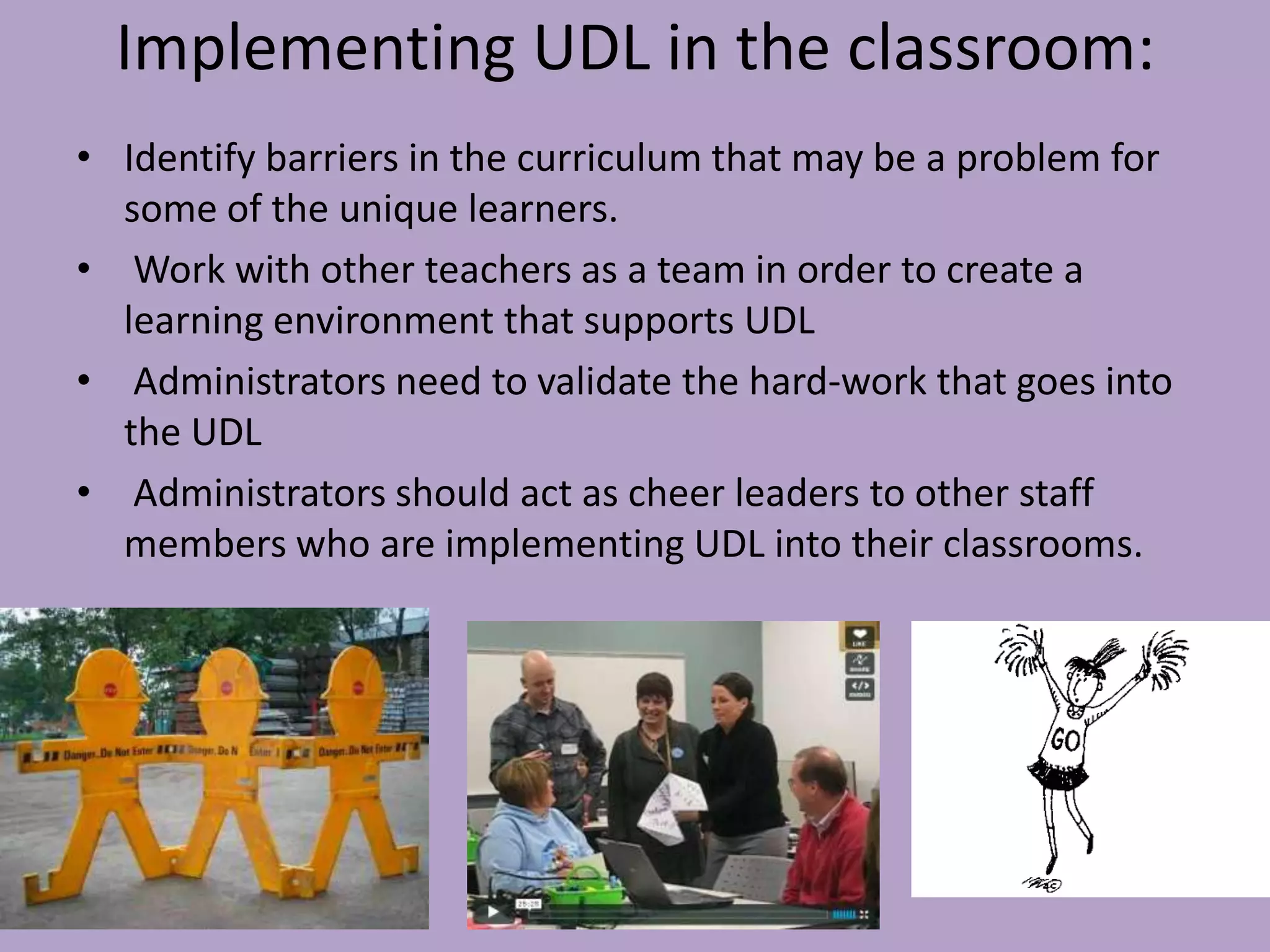
Implementing UDL in the classroom:
• Identify barriers in the curriculum that may be a problem for
  some of the unique learners.
• Work with other teachers as a team in order to create a
  learning environment that supports UDL
• Administrators need to validate the hard-work that goes into
  the UDL
• Administrators should act as cheer leaders to other staff
  members who are implementing UDL into their classrooms.
UDL Presentation

UDL Presentation

  • 1.
    Universal Design for Learning By: Briana Marsh
  • 2.
    What is UDL? •Universal design is the design of products and environments to be usable by all people, to the greatest extent possible, without the need for adaptation or specialized design. -Ron Mace
  • 3.
    Examples: The elevator isbuilt into the center of the stairwell so that people with wheel chairs are able to access the top floor. A ramp is built into the buildings structure rather than simply adding on a ramp.
  • 4.
    Guidelines for UDL: Provide Multiple Means of Representation Provide Multiple means of Action and Expression Provide Multiple Means of Engagement
  • 5.
    Multiple Means ofRepresentation: This means that every unique child will be able to understand and make sense of the material that is being taught to them.
  • 6.
    Multiple Means ofAction and Expression: • This guideline is used in UDL because students express themselves in a variety of different ways. This concept will allow the children to express themselves in a way that best suits each unique child.
  • 7.
    Multiple Means ofEngagement: • In order to allow the children to express themselves in a variety of ways, we must provide them with numerous ways to keep them engaged. Providing opportunities to allow children to explore their own self-interests will keep them more engaged in the classroom.
  • 8.
    Components of UDL: •What are the goals of UDL? - How do we translate standards into the this custom curriculum? • What are the materials that are going to be used in the classroom - Are these materials key to learning and are they universally designed? • What are the methods used? - Does the teacher use collaborative group projects, lectures, and or provide the students with real life experiences? • What are the means of assessment? - How can you be sure that the students are truly learning?
  • 9.
    Implementing UDL inthe classroom: • Identify barriers in the curriculum that may be a problem for some of the unique learners. • Work with other teachers as a team in order to create a learning environment that supports UDL • Administrators need to validate the hard-work that goes into the UDL • Administrators should act as cheer leaders to other staff members who are implementing UDL into their classrooms.