UNITY
SENTENCE UNITY
 Asentence has
   unity if it
 expresses only
 one main idea.
HOW TO ACHIEVE
SENTENCE UNITY?
Consistent
Use of Tenses
  A verb in an
  adverbial clause
  generally agrees
  with the tense of
the verb in the main
       clause.
EXAMPLE:


We  finished
 our work before
 we watched
 “GGV”.
   The verb in the adjective
     clause doesn’t need to
    agree in the tense with
      the verb in the main
      clause when the two
         actions are not
     necessarily related in
       time of occurrence.
EXAMPLE:

Ms. Dragona, who
was my teacher in
elementary, is now
 in Antarctica.
 The verb takes the
 present tense of the
verb if the idea being
    expressed is a
 universal truth or a
relatively permanent
      condition.
EXAMPLE:


   The    sun rises
       in the east.
Use   the tense
 form of the word
that tells the time
   of action one
wishes to express.
EXAMPLE:


      He was in
    Manila last
  week, but now
  he is in Baguio.
Consistent
  use of
 Number
Avoid  unnecessary
 shifting from first
  person to third
person or vice versa
EXAMPLE:


If
  the students pass
  their project on
  time, they will
obtain a good mark.
Consistent
Use of Persons
 of pronouns
Shifting persons of
   pronouns will
 destroy unity. The
  pronouns must
  agree with their
    antecedents.
EXAMPLES:

Everybody    is entitled
 to his own opinion.
She is inviting us to
 attend her
 celebration.
Consistent
  Use of
  Subject
Donot shift
subject in a
 sentence.
EXAMPLE:


Students    stay up
 late at night but the
 projects are not
 usually
 accomplished.
Consistent
use of Voice
Voice  is the aspect
 of a verb that tells
whether the subject
performs or receives
     the action.
EXAMPLES:
             Active
   The department chair held a
   meeting and discussed some
    important matters for the
        upcoming seminar.

             Passive
An inspirational message is given.
Consistent
use of Mood
Mood   is an aspect of the
   verb which indicates
  whether the action or
    condition is factual
 (indicative) or contrary
   to fact (subjunctive)
Consistent
   use of
 Language
Use  the same language
     throughout the
sentence. Avoid the use
  of foreign terms and
phrases which have not
been incorporated into
      the language.
COHERENCE
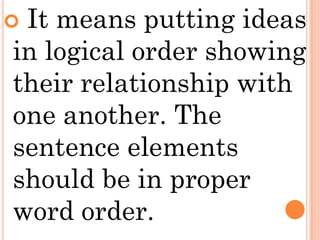
It means putting ideas
in logical order showing
their relationship with
one another. The
sentence elements
should be in proper
word order.
HOW TO ACHIEVE
COHERENCE IN
THE SENTENCE?
Avoid
misplaced and
  dangling
  modifier.
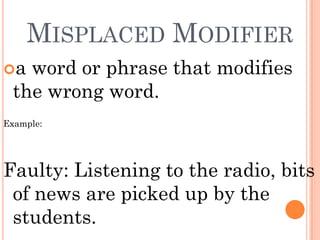
MISPLACED MODIFIER
a word or phrase that modifies
 the wrong word.
Example:


Faulty: Listening to the radio, bits
 of news are picked up by the
 students.
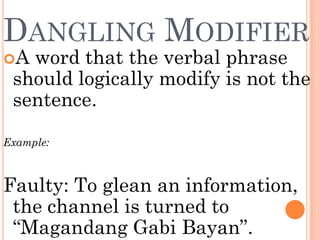
DANGLING MODIFIER
A word that the verbal phrase
 should logically modify is not the
 sentence.

Example:


Faulty: To glean an information,
 the channel is turned to
 “Magandang Gabi Bayan”.
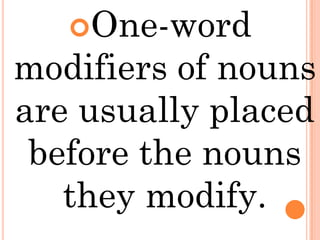
One-word
modifiers of nouns
are usually placed
 before the nouns
   they modify.
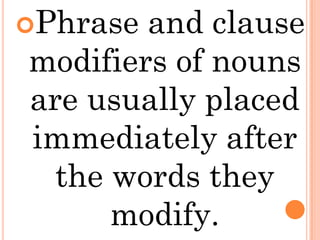
Phrase and clause
modifiers of nouns
are usually placed
immediately after
  the words they
      modify.
EXAMPLES:

The  child, playing with his
 playmates, called his
 nursemaid to bring them
 his toys.
I met the man who
 painted this exquisite
 artwork.
Phrase  modifiers may
be placed at the
beginning of the
sentence that the noun
or pronoun that follows
is the subject of the
word modified.
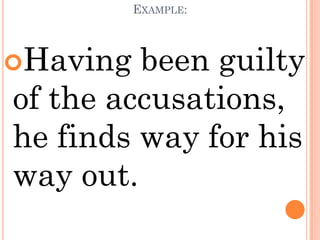
EXAMPLE:


Having  been guilty
of the accusations,
he finds way for his
way out.
Two  phrases or clauses
which are parallel in
form and which modify
the same word may be
placed either before or
after the word they
modify.
EXAMPLE:


She is studying hard
because she wants to
please her parents
and because she aims
for higher grades.
Having   gone to
Baguio and having
visited some of its
places, I wished to
have a house in one of
those places.
ORDER IN
PARAGRAPHS
CHRONOLOGICAL ORDER
itis time
order, the order
in which events
happen.
EXAMPLE:

Papier mache sculpture can be
made from a few items. First, cut
newspaper into one or two inch
strips. Then, dip the paper into a
mixture of water and white
paste. Finally, mold the strips
over a box, a hanger, or wadded
newspaper. The shape you create
will soon harden.
SPATIAL ORDER
one describes the
position of one part
or object in relation
to another.
 Entering city hall is like
traveling in a time machine.
Outside, the century old
marble steps and columns
greet you like an ancient
caretaker. But once inside the
majestic doors, you are met by
clicking typewriters and
beeping computers.
ORDER OF IMPORTANCE
One  begins with the most
important details and end
 with the least important
details. You can also begin
 with the least important
  and end with the most
         important.
Example:

Glenda Almo was more fortunate
than the
motherless, fatherless, little child
scavenging for food on streets. She
had a father. She had a warm
house. - And she had a friend- her
grandmother. She was very old and
not strong, but she loved Glenda
and took care of her. Glenda’s
father was too busy to pay much
attention to her, but her
grandmother was always there

Unity, coherence, emphasis

  • 1.
  • 2.
    SENTENCE UNITY Asentencehas unity if it expresses only one main idea.
  • 3.
  • 4.
  • 5.
     Averb in an adverbial clause generally agrees with the tense of the verb in the main clause.
  • 6.
    EXAMPLE: We finished our work before we watched “GGV”.
  • 7.
    The verb in the adjective clause doesn’t need to agree in the tense with the verb in the main clause when the two actions are not necessarily related in time of occurrence.
  • 8.
    EXAMPLE: Ms. Dragona, who wasmy teacher in elementary, is now in Antarctica.
  • 9.
     The verbtakes the present tense of the verb if the idea being expressed is a universal truth or a relatively permanent condition.
  • 10.
    EXAMPLE: The sun rises in the east.
  • 11.
    Use the tense form of the word that tells the time of action one wishes to express.
  • 12.
    EXAMPLE: He was in Manila last week, but now he is in Baguio.
  • 13.
  • 14.
    Avoid unnecessary shifting from first person to third person or vice versa
  • 15.
    EXAMPLE: If thestudents pass their project on time, they will obtain a good mark.
  • 16.
  • 17.
    Shifting persons of pronouns will destroy unity. The pronouns must agree with their antecedents.
  • 18.
    EXAMPLES: Everybody is entitled to his own opinion. She is inviting us to attend her celebration.
  • 19.
  • 20.
  • 21.
    EXAMPLE: Students stay up late at night but the projects are not usually accomplished.
  • 22.
  • 23.
    Voice isthe aspect of a verb that tells whether the subject performs or receives the action.
  • 24.
    EXAMPLES: Active The department chair held a meeting and discussed some important matters for the upcoming seminar. Passive An inspirational message is given.
  • 25.
  • 26.
    Mood is an aspect of the verb which indicates whether the action or condition is factual (indicative) or contrary to fact (subjunctive)
  • 27.
    Consistent use of Language
  • 28.
    Use thesame language throughout the sentence. Avoid the use of foreign terms and phrases which have not been incorporated into the language.
  • 29.
  • 30.
    It means puttingideas in logical order showing their relationship with one another. The sentence elements should be in proper word order.
  • 31.
    HOW TO ACHIEVE COHERENCEIN THE SENTENCE?
  • 32.
    Avoid misplaced and dangling modifier.
  • 33.
    MISPLACED MODIFIER a wordor phrase that modifies the wrong word. Example: Faulty: Listening to the radio, bits of news are picked up by the students.
  • 34.
    DANGLING MODIFIER A wordthat the verbal phrase should logically modify is not the sentence. Example: Faulty: To glean an information, the channel is turned to “Magandang Gabi Bayan”.
  • 35.
    One-word modifiers of nouns areusually placed before the nouns they modify.
  • 36.
    Phrase and clause modifiersof nouns are usually placed immediately after the words they modify.
  • 37.
    EXAMPLES: The child,playing with his playmates, called his nursemaid to bring them his toys. I met the man who painted this exquisite artwork.
  • 38.
    Phrase modifiersmay be placed at the beginning of the sentence that the noun or pronoun that follows is the subject of the word modified.
  • 39.
    EXAMPLE: Having beenguilty of the accusations, he finds way for his way out.
  • 40.
    Two phrasesor clauses which are parallel in form and which modify the same word may be placed either before or after the word they modify.
  • 41.
    EXAMPLE: She is studyinghard because she wants to please her parents and because she aims for higher grades.
  • 42.
    Having gone to Baguio and having visited some of its places, I wished to have a house in one of those places.
  • 43.
  • 44.
    CHRONOLOGICAL ORDER itis time order,the order in which events happen.
  • 45.
    EXAMPLE: Papier mache sculpturecan be made from a few items. First, cut newspaper into one or two inch strips. Then, dip the paper into a mixture of water and white paste. Finally, mold the strips over a box, a hanger, or wadded newspaper. The shape you create will soon harden.
  • 46.
    SPATIAL ORDER one describesthe position of one part or object in relation to another.
  • 47.
     Entering cityhall is like traveling in a time machine. Outside, the century old marble steps and columns greet you like an ancient caretaker. But once inside the majestic doors, you are met by clicking typewriters and beeping computers.
  • 48.
    ORDER OF IMPORTANCE One begins with the most important details and end with the least important details. You can also begin with the least important and end with the most important.
  • 49.
    Example: Glenda Almo wasmore fortunate than the motherless, fatherless, little child scavenging for food on streets. She had a father. She had a warm house. - And she had a friend- her grandmother. She was very old and not strong, but she loved Glenda and took care of her. Glenda’s father was too busy to pay much attention to her, but her grandmother was always there