Literal
&
Figurative
Language
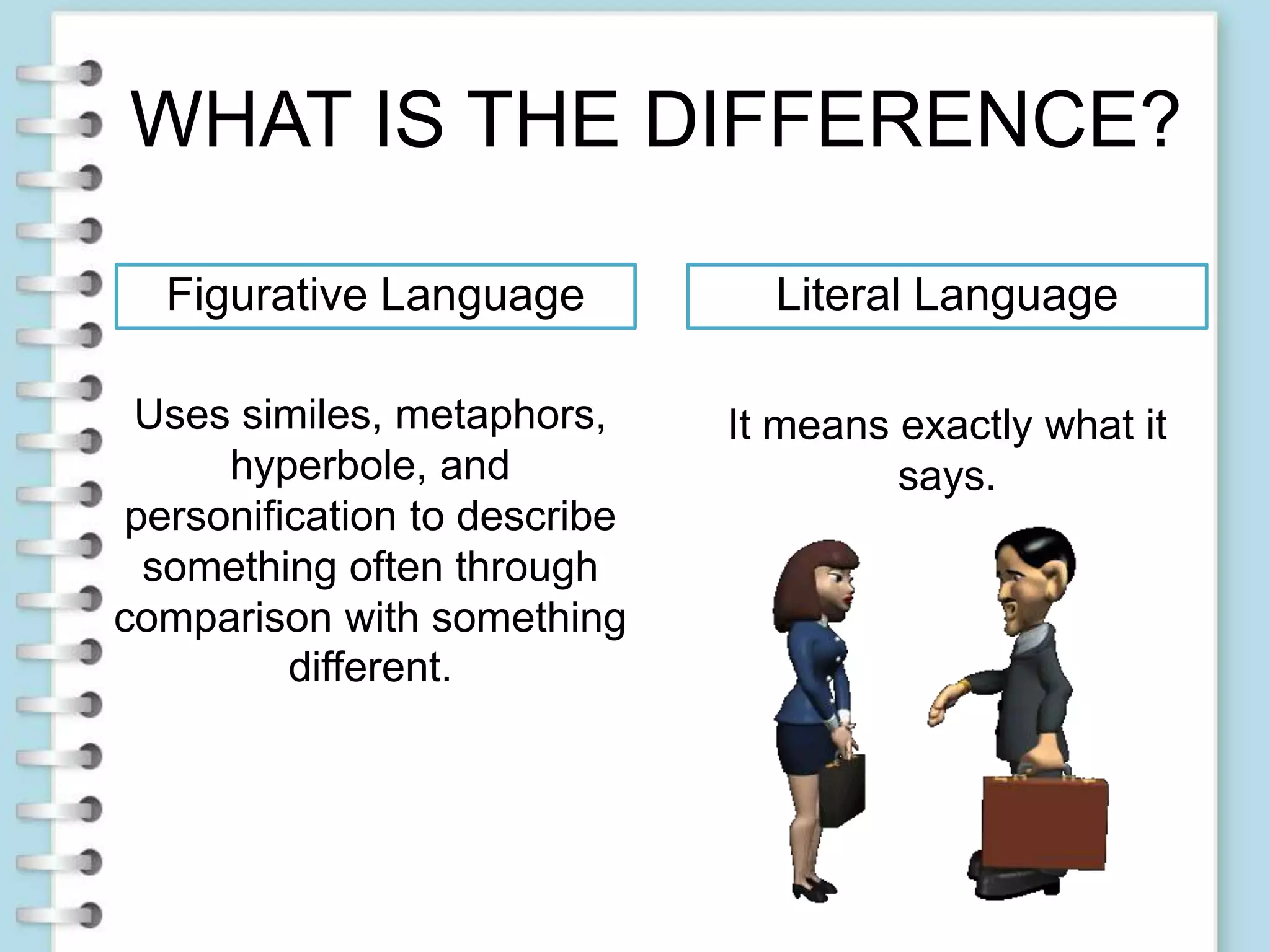
WHAT IS THE DIFFERENCE?
Literal Language
Uses similes, metaphors,
hyperbole, and
personification to describe
something often through
comparison with something
different.
It means exactly what it
says.
Figurative Language
Figurative Language
Figurative language is more elaborate than
literal language, and this type of writing
is commonly used in works of literature.
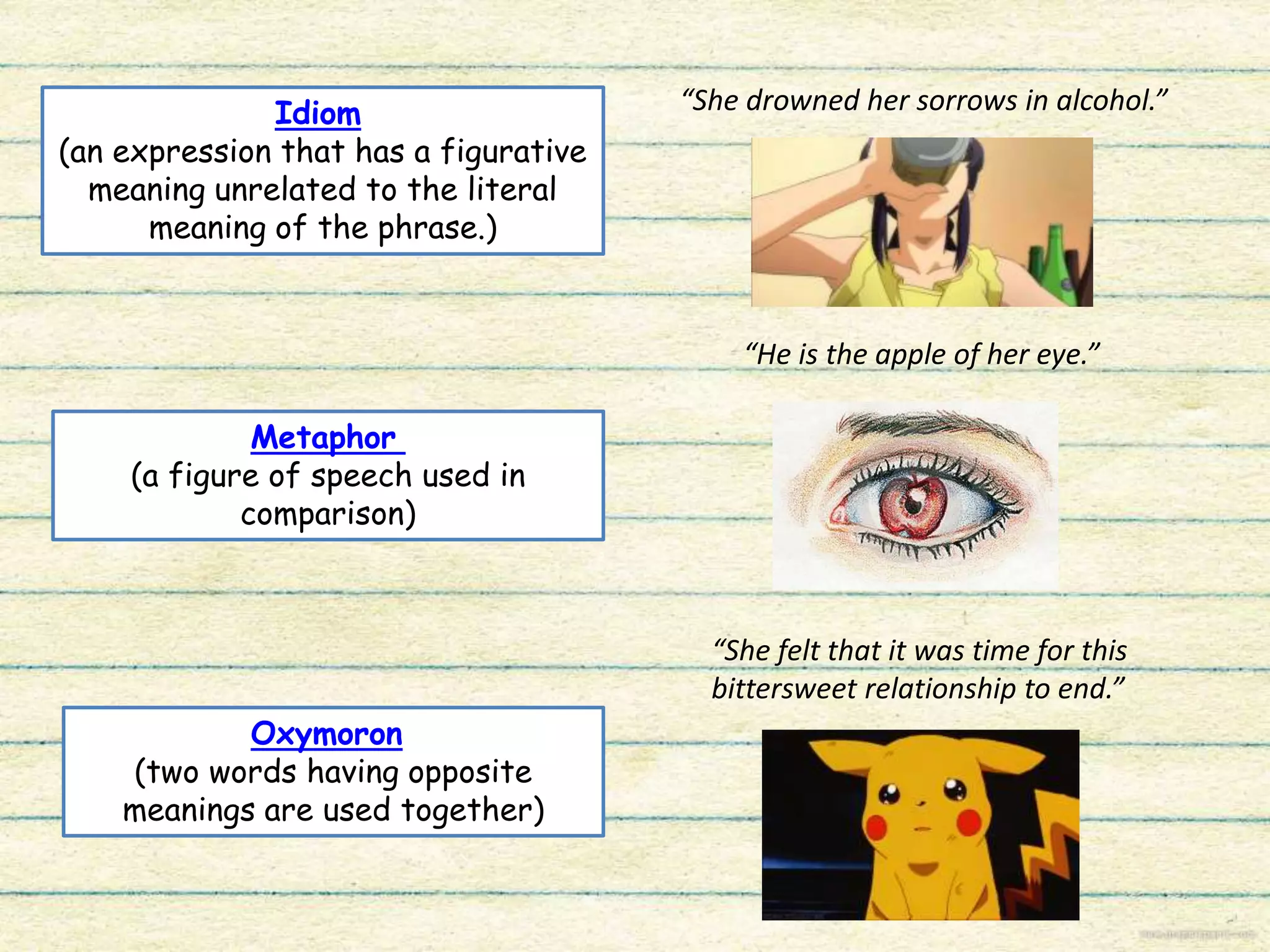
Idiom
(an expression that has a figurative
meaning unrelated to the literal
meaning of the phrase.)
“She drowned her sorrows in alcohol.”
Metaphor
(a figure of speech used in
comparison)
“He is the apple of her eye.”
Oxymoron
(two words having opposite
meanings are used together)
“She felt that it was time for this
bittersweet relationship to end.”
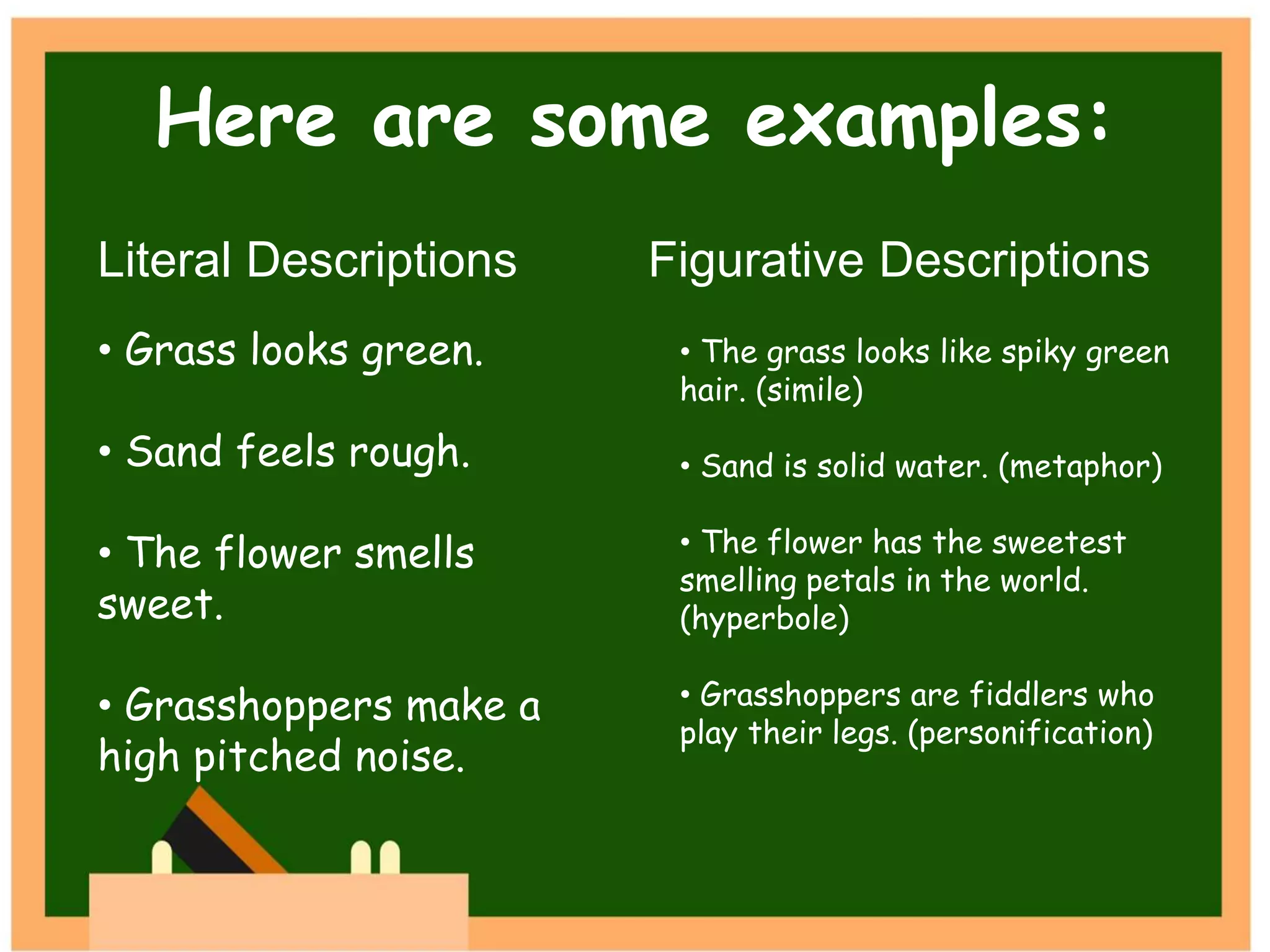
“Her eyes were like the
deep pools to her soul.”
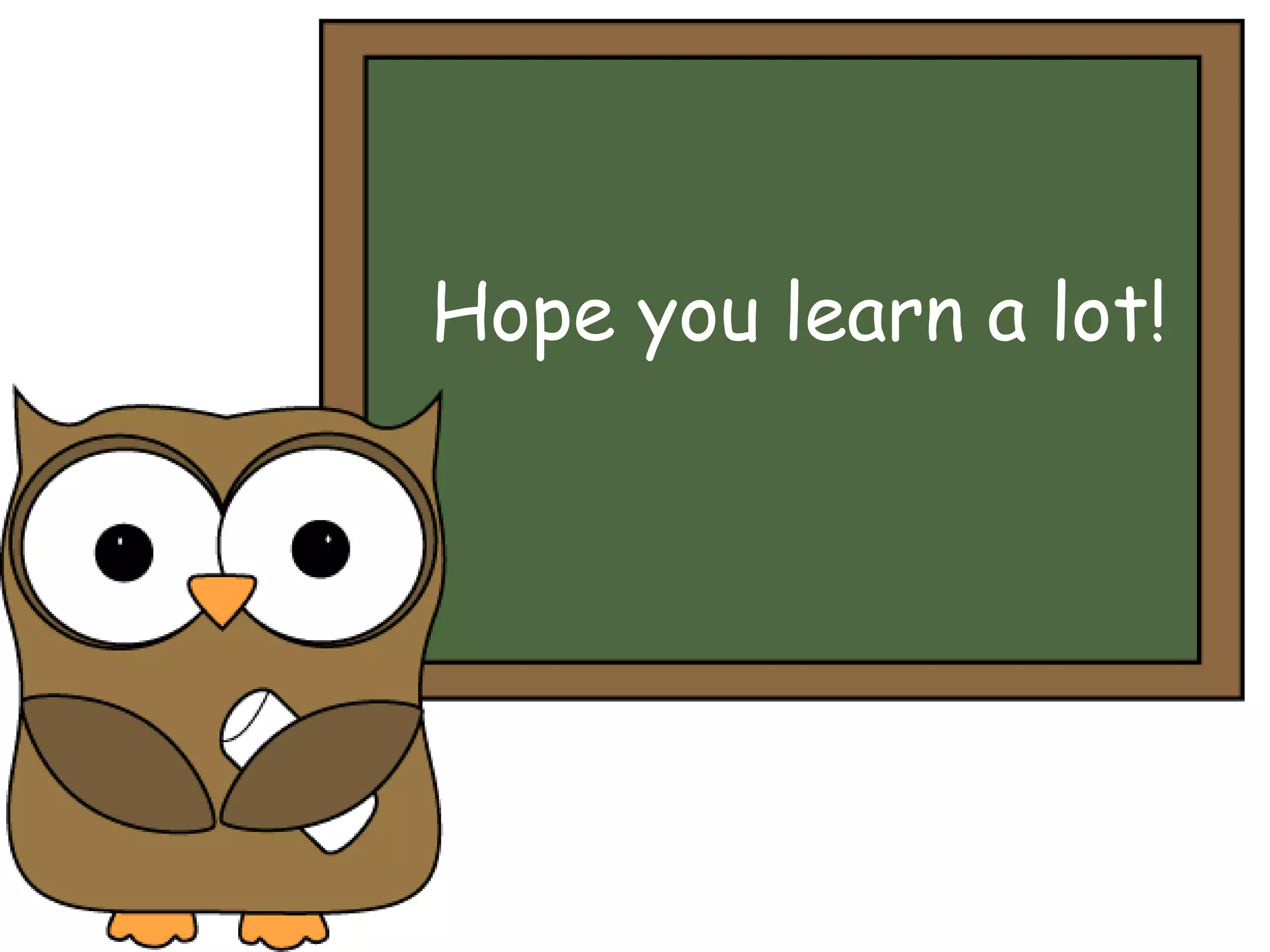
“The old man waited for Death
to come to him.”
Simile
(compares two things)
Personification
(giving human characteristics to
a non-living thing)
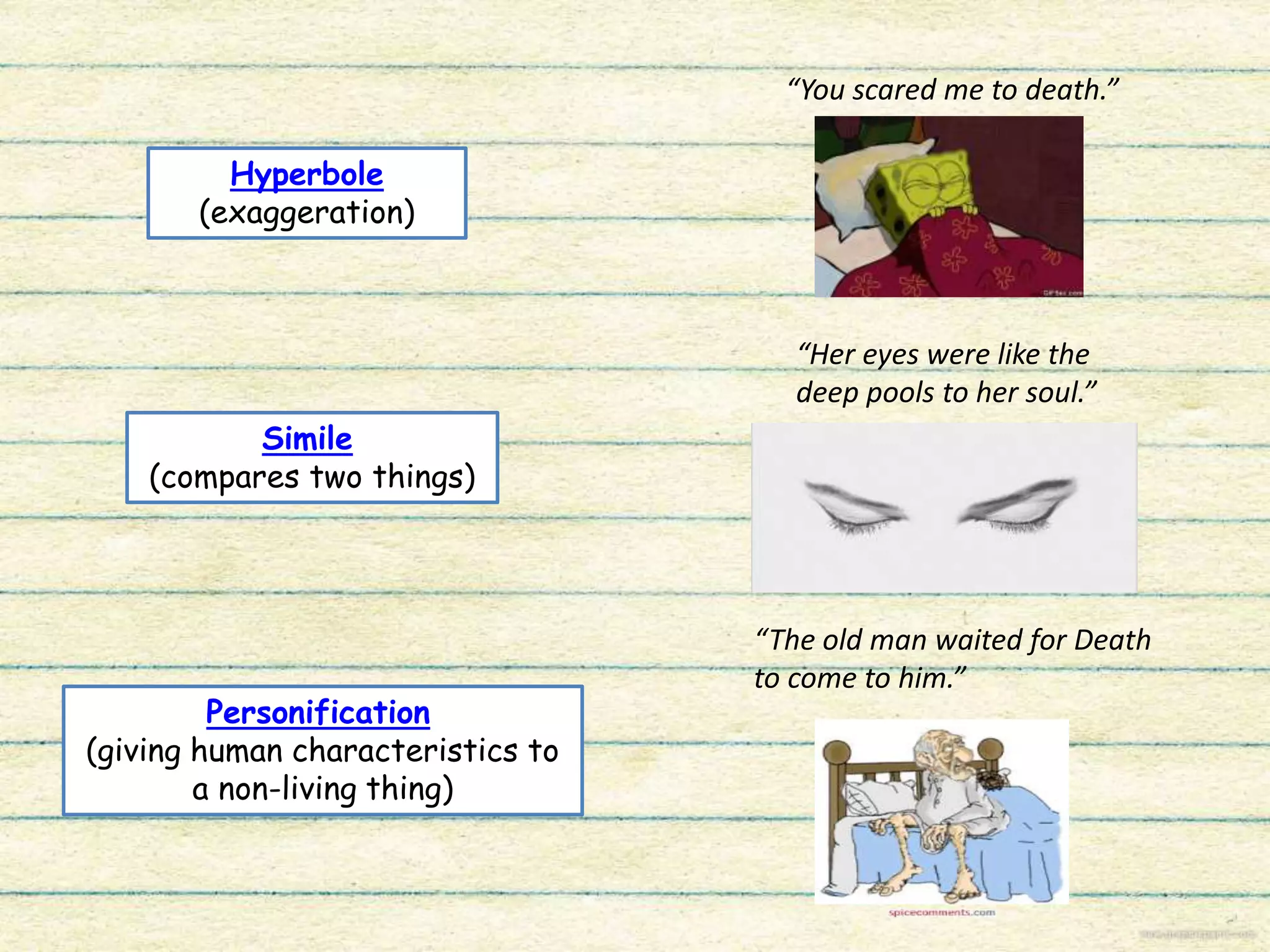
Hyperbole
(exaggeration)
“You scared me to death.”
Here are some examples:
Literal Descriptions Figurative Descriptions
• Grass looks green.
• Sand feels rough.
• The flower smells
sweet.
• Grasshoppers make a
high pitched noise.
• The grass looks like spiky green
hair. (simile)
• Sand is solid water. (metaphor)
• The flower has the sweetest
smelling petals in the world.
(hyperbole)
• Grasshoppers are fiddlers who
play their legs. (personification)
Hope you learn a lot!
SOURCES
• http://pediaa.com/difference-between-literal-
and-figurative-language/
• http://www.readwritethink.org/files/resource
s/lesson-docs/LiteralFigurativeHandout.pdf

Literal and Figurative Language

  • 1.
  • 2.
    WHAT IS THEDIFFERENCE? Literal Language Uses similes, metaphors, hyperbole, and personification to describe something often through comparison with something different. It means exactly what it says. Figurative Language
  • 3.
    Figurative Language Figurative languageis more elaborate than literal language, and this type of writing is commonly used in works of literature.
  • 4.
    Idiom (an expression thathas a figurative meaning unrelated to the literal meaning of the phrase.) “She drowned her sorrows in alcohol.” Metaphor (a figure of speech used in comparison) “He is the apple of her eye.” Oxymoron (two words having opposite meanings are used together) “She felt that it was time for this bittersweet relationship to end.”
  • 5.
    “Her eyes werelike the deep pools to her soul.” “The old man waited for Death to come to him.” Simile (compares two things) Personification (giving human characteristics to a non-living thing) Hyperbole (exaggeration) “You scared me to death.”
  • 6.
    Here are someexamples: Literal Descriptions Figurative Descriptions • Grass looks green. • Sand feels rough. • The flower smells sweet. • Grasshoppers make a high pitched noise. • The grass looks like spiky green hair. (simile) • Sand is solid water. (metaphor) • The flower has the sweetest smelling petals in the world. (hyperbole) • Grasshoppers are fiddlers who play their legs. (personification)
  • 7.
  • 8.