• Being a consumer involves building your consumer
knowledge on health, which can help you make wise
decisions when buying goods and services.
• It refers to the decisions you make about the purchase
and use of health information, products and services that
will have a direct effect on your health.
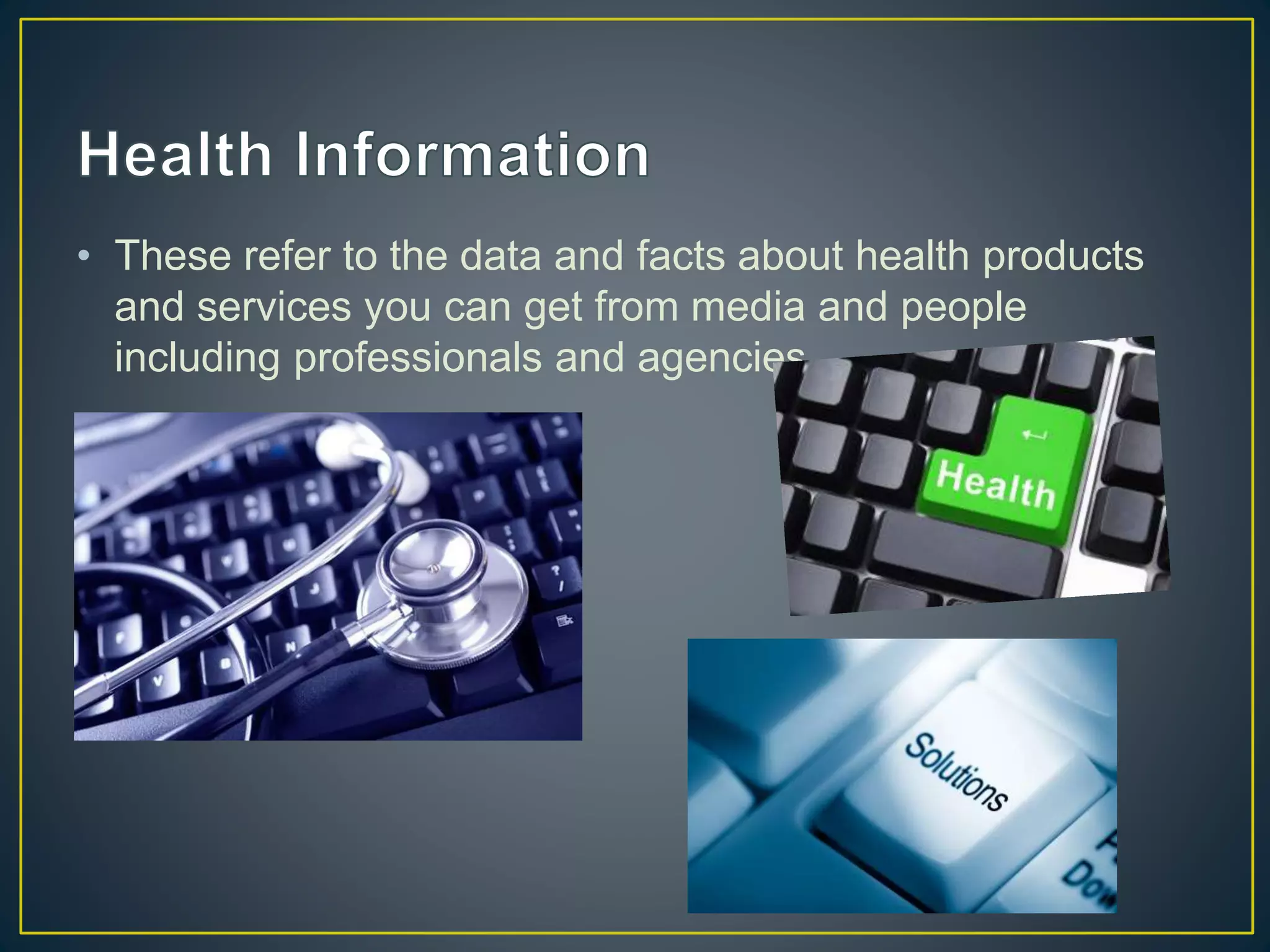
• These refer to the data and facts about health products
and services you can get from media and people
including professionals and agencies.
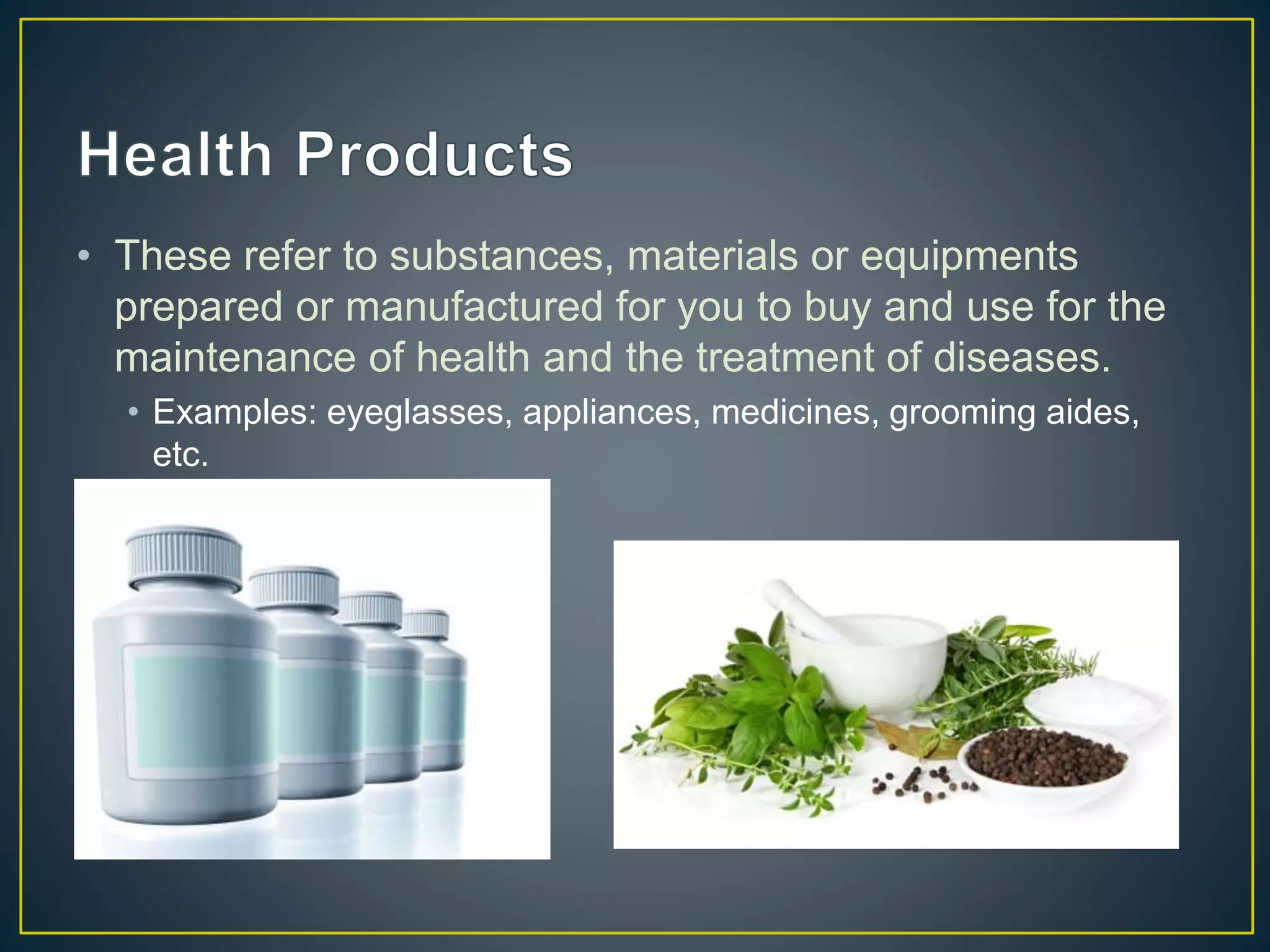
• These refer to substances, materials or equipments
prepared or manufactured for you to buy and use for the
maintenance of health and the treatment of diseases.
• Examples: eyeglasses, appliances, medicines, grooming aides,
etc.
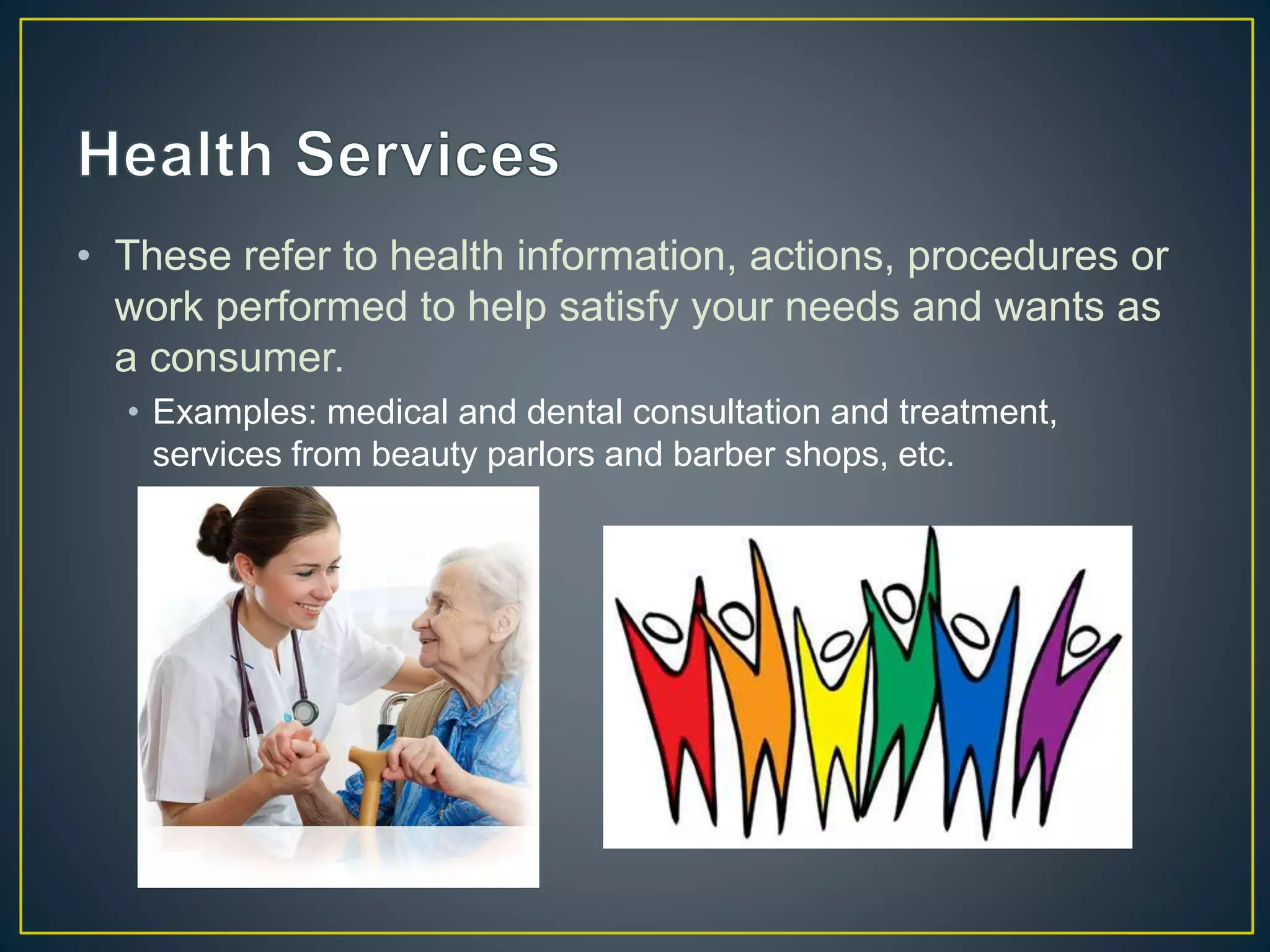
• These refer to health information, actions, procedures or
work performed to help satisfy your needs and wants as
a consumer.
• Examples: medical and dental consultation and treatment,
services from beauty parlors and barber shops, etc.
• It is the process of assisting you to acquire the correct
information and understanding so that you will be able to
make a wise decision about a certain health item.
1.) Judge which products and services will be beneficial,
harmful or useless.
2.) Know the local laws and regulations that protect
consumers.
3.) Locate dependable medical, dental and nursing
services.
4.) Apply knowledge acquired with respect to personal and
environmental health in the purchase of personal goods
and services.
1.) Friends, neighbors, relatives – they are reliable sources
because the information they will give is true and who will
not let us buy products that may harm us.
2.) Professionals such as physicians, scientists, teachers –
they are reliable because their information will be based on
research and studies.
3.) Educational institutions – they are schools, colleges or
universities which will give us the right information.
• 4.) Media such as radio and television - their information
is screened first before they are aired so they cannot give
wrong information.
• 5.) Print materials such as magazines, journals,
newspapers, books, pamphlets, posters, etc. – their
information is screened and edited before they are
published.
1.) Customs and superstitions
2.) Information based on ignorance and prejudice
3.) Commercialized health information
1.) Assist consumers in choosing better health products
and services;
2.) Provide information regarding health products the
consumers wish to buy and the health services they wish to
avail of;
3.) Help consumers recognize reliable sources of health
information; and
4.) Guide consumers in buying health products and
services.
• Activity 1 Surveys Says !
a) What Should I do when my head and body ache ?
b) How many times should i take vitmanins and mineral
suplllement?
c) What is the best way to make my skin smooth ?
d). When is the best time to trim my fingernails?
e) What is the most effective way to lose weight?
• 1. Write a short reflection about activity 1
Possible points for reflection:
• 1. Where do you think did your classmate accquire thier
answer?
• 2. How well do you trust your classmates about health
concerns?
Unit I consumer health grade 10

Unit I consumer health grade 10

  • 2.
    • Being aconsumer involves building your consumer knowledge on health, which can help you make wise decisions when buying goods and services.
  • 3.
    • It refersto the decisions you make about the purchase and use of health information, products and services that will have a direct effect on your health.
  • 4.
    • These referto the data and facts about health products and services you can get from media and people including professionals and agencies.
  • 5.
    • These referto substances, materials or equipments prepared or manufactured for you to buy and use for the maintenance of health and the treatment of diseases. • Examples: eyeglasses, appliances, medicines, grooming aides, etc.
  • 6.
    • These referto health information, actions, procedures or work performed to help satisfy your needs and wants as a consumer. • Examples: medical and dental consultation and treatment, services from beauty parlors and barber shops, etc.
  • 7.
    • It isthe process of assisting you to acquire the correct information and understanding so that you will be able to make a wise decision about a certain health item.
  • 8.
    1.) Judge whichproducts and services will be beneficial, harmful or useless. 2.) Know the local laws and regulations that protect consumers. 3.) Locate dependable medical, dental and nursing services. 4.) Apply knowledge acquired with respect to personal and environmental health in the purchase of personal goods and services.
  • 9.
    1.) Friends, neighbors,relatives – they are reliable sources because the information they will give is true and who will not let us buy products that may harm us. 2.) Professionals such as physicians, scientists, teachers – they are reliable because their information will be based on research and studies. 3.) Educational institutions – they are schools, colleges or universities which will give us the right information.
  • 10.
    • 4.) Mediasuch as radio and television - their information is screened first before they are aired so they cannot give wrong information. • 5.) Print materials such as magazines, journals, newspapers, books, pamphlets, posters, etc. – their information is screened and edited before they are published.
  • 11.
    1.) Customs andsuperstitions 2.) Information based on ignorance and prejudice 3.) Commercialized health information
  • 12.
    1.) Assist consumersin choosing better health products and services; 2.) Provide information regarding health products the consumers wish to buy and the health services they wish to avail of; 3.) Help consumers recognize reliable sources of health information; and 4.) Guide consumers in buying health products and services.
  • 13.
    • Activity 1Surveys Says ! a) What Should I do when my head and body ache ? b) How many times should i take vitmanins and mineral suplllement? c) What is the best way to make my skin smooth ? d). When is the best time to trim my fingernails? e) What is the most effective way to lose weight?
  • 14.
    • 1. Writea short reflection about activity 1 Possible points for reflection: • 1. Where do you think did your classmate accquire thier answer? • 2. How well do you trust your classmates about health concerns?