Unit 5 - ERGONOMICS: Introduction, areas of study under
ergonomics, system approach to ergonomics model, man-
machine system. Components of man-machine system and
their functions work capabilities of industrial worker, study of
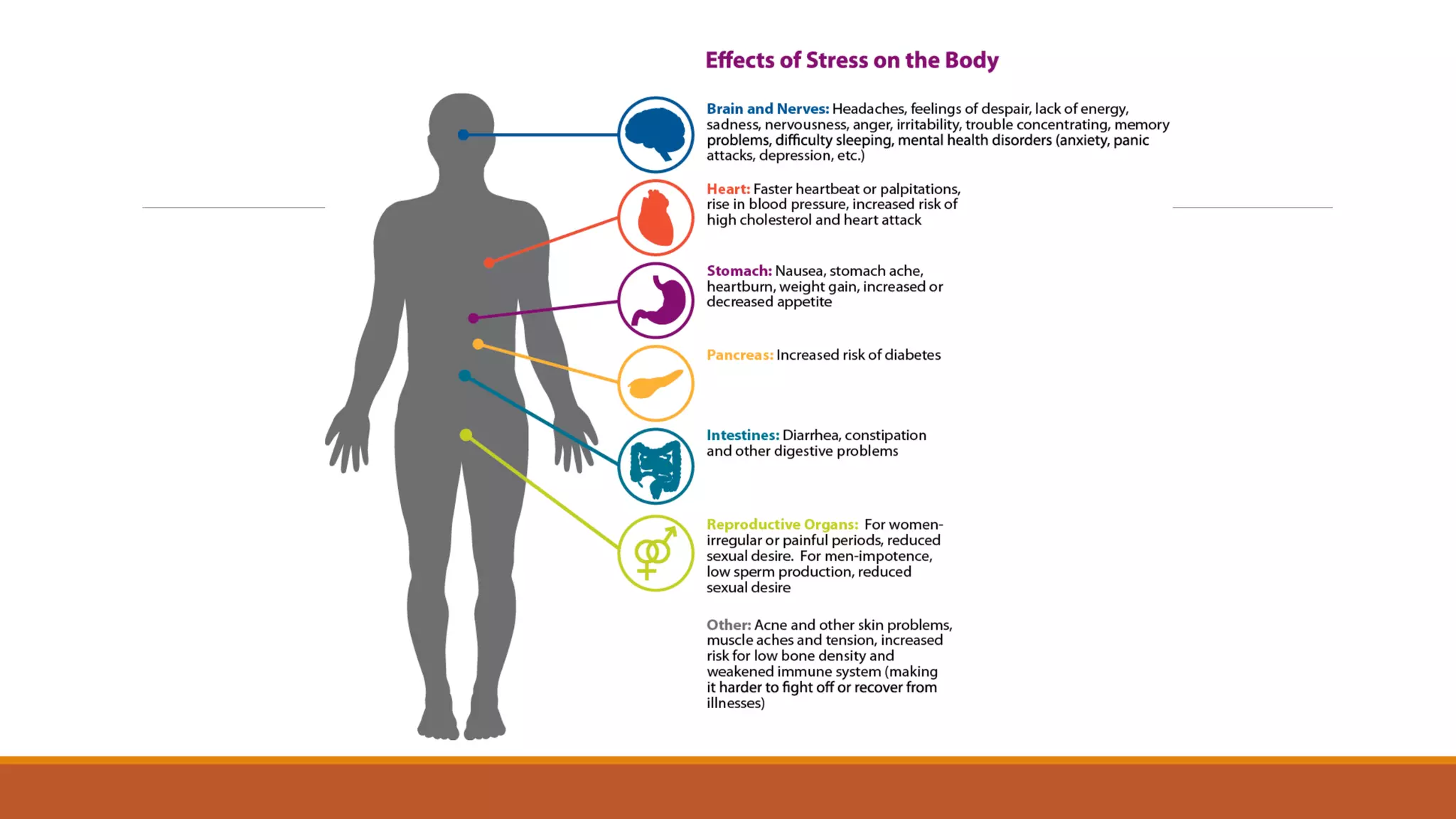
development of stress in human body and their consequences.
Computer based ergonomics.
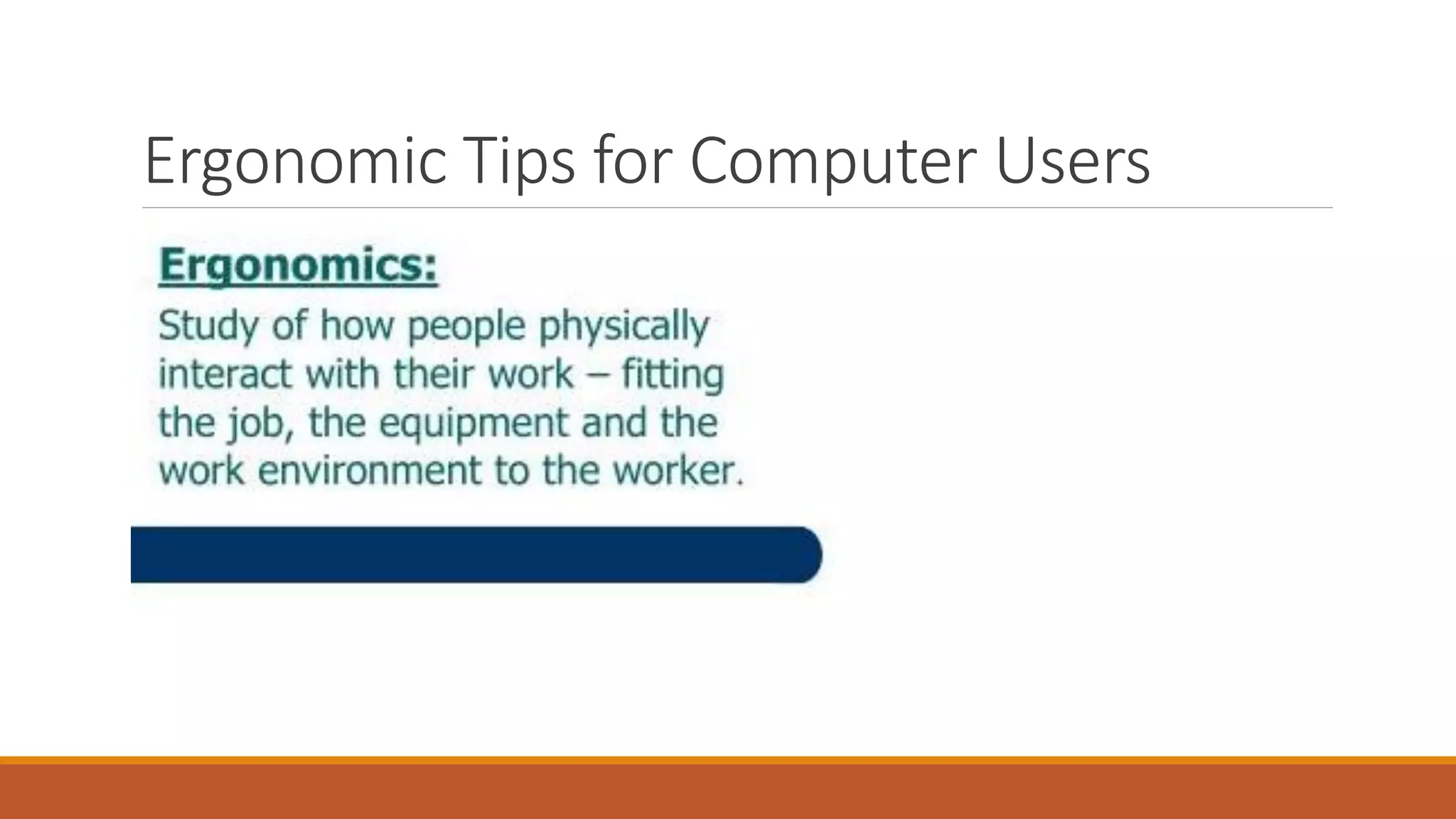
What is Ergonomics
Common Definitions:
“Ergonomics is essentially fitting the workplace to the worker. The
better the fit, the higher the level of safety and worker efficiency.”
Fitting the Task to the Human ~ Grandjean 1990
“ Ergonomics removes barriers to quality, productivity and human
performance by fitting products, tasks, and environments to
people.” ErgoWeb.com
Areas of study under ergonomics
Major Disciplines contributing to Ergo
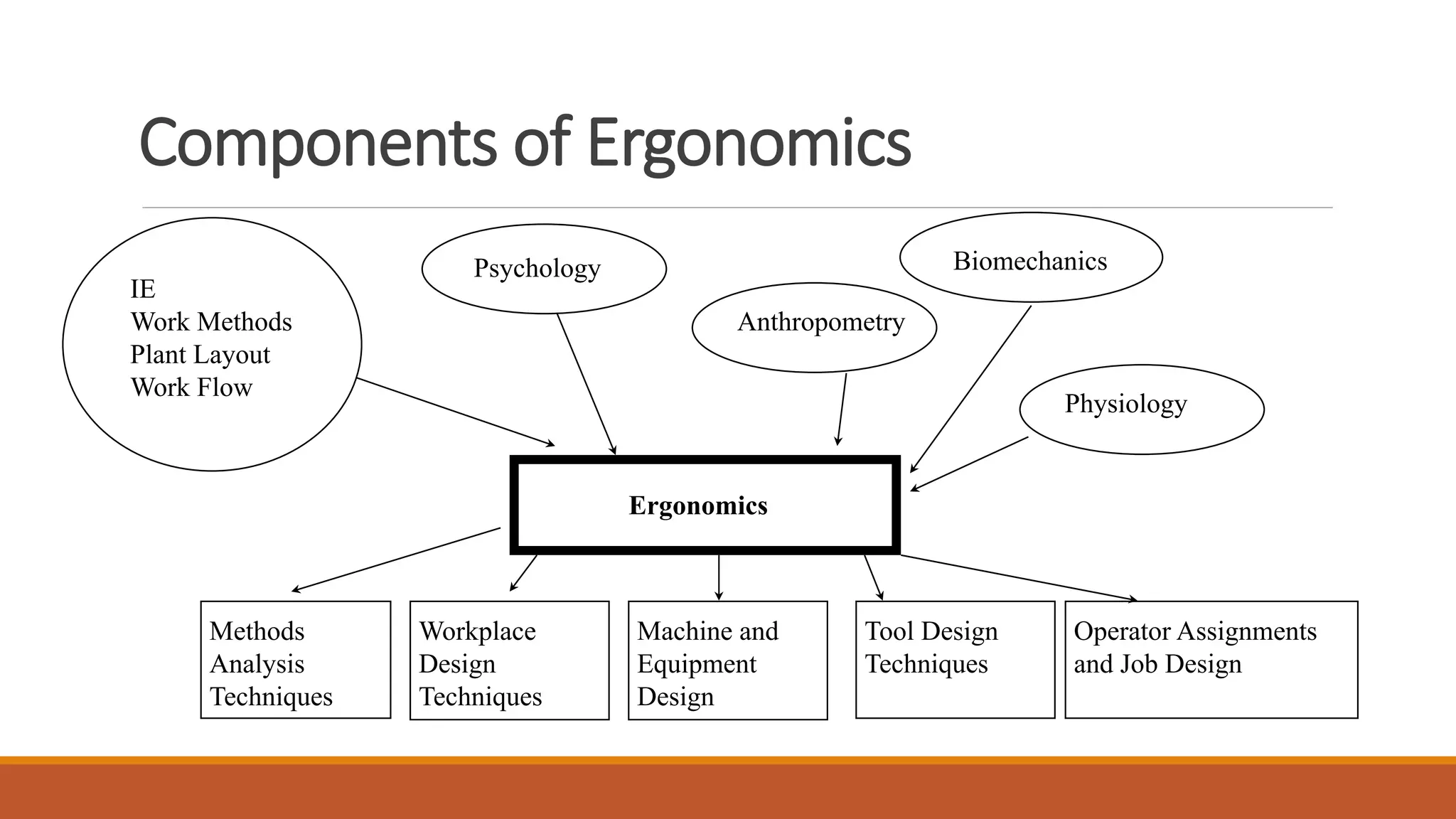
Components of Ergonomics
Ergonomics
IE
Work Methods
Plant Layout
Work Flow
Psychology
Anthropometry
Biomechanics
Physiology
Methods
Analysis
Techniques
Workplace
Design
Techniques
Machine and
Equipment
Design
Tool Design
Techniques
Operator Assignments
and Job Design
System approach to ergonomics model
Systems Approach
Ergonomics uses a holistic systemic approach to apply theory,
principles and data from many relevant disciplines,
◦ To design and evaluate tasks, jobs, products, environment and systems
Systems Approach
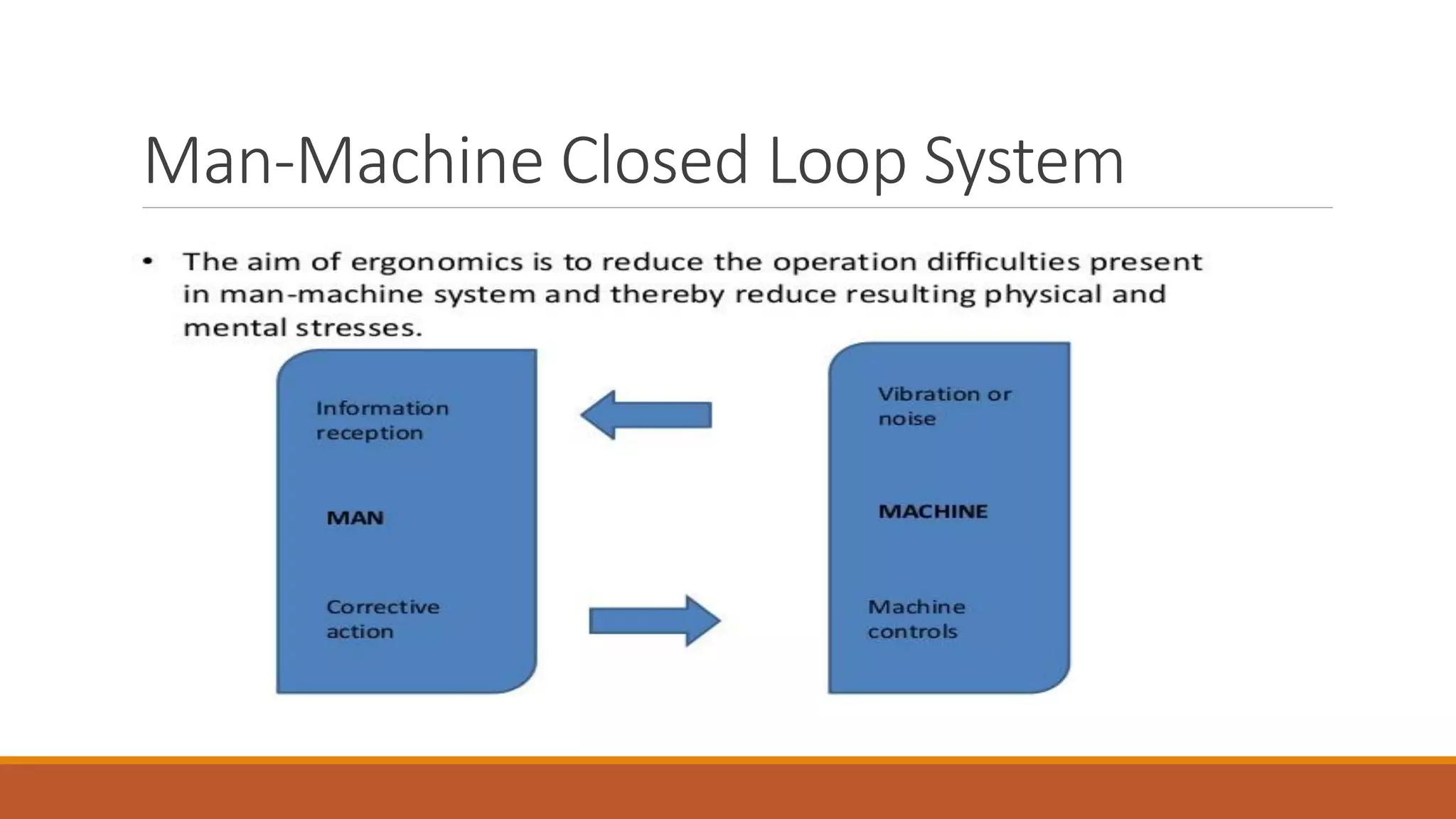
Man-Machine system
Man Machine System-Intro
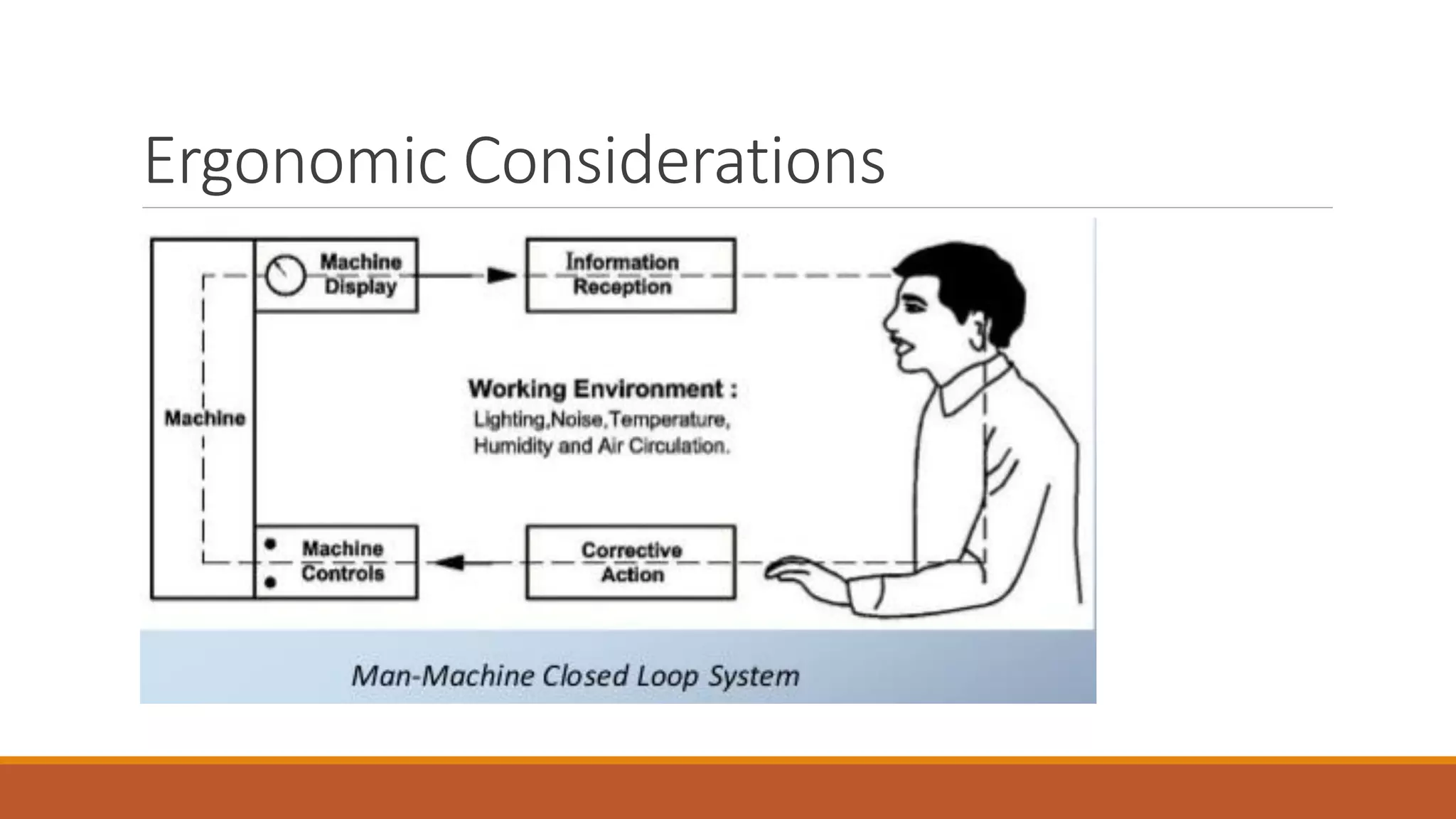
Man-Machine Closed Loop System
Ergonomic Considerations
Components of man-machine system
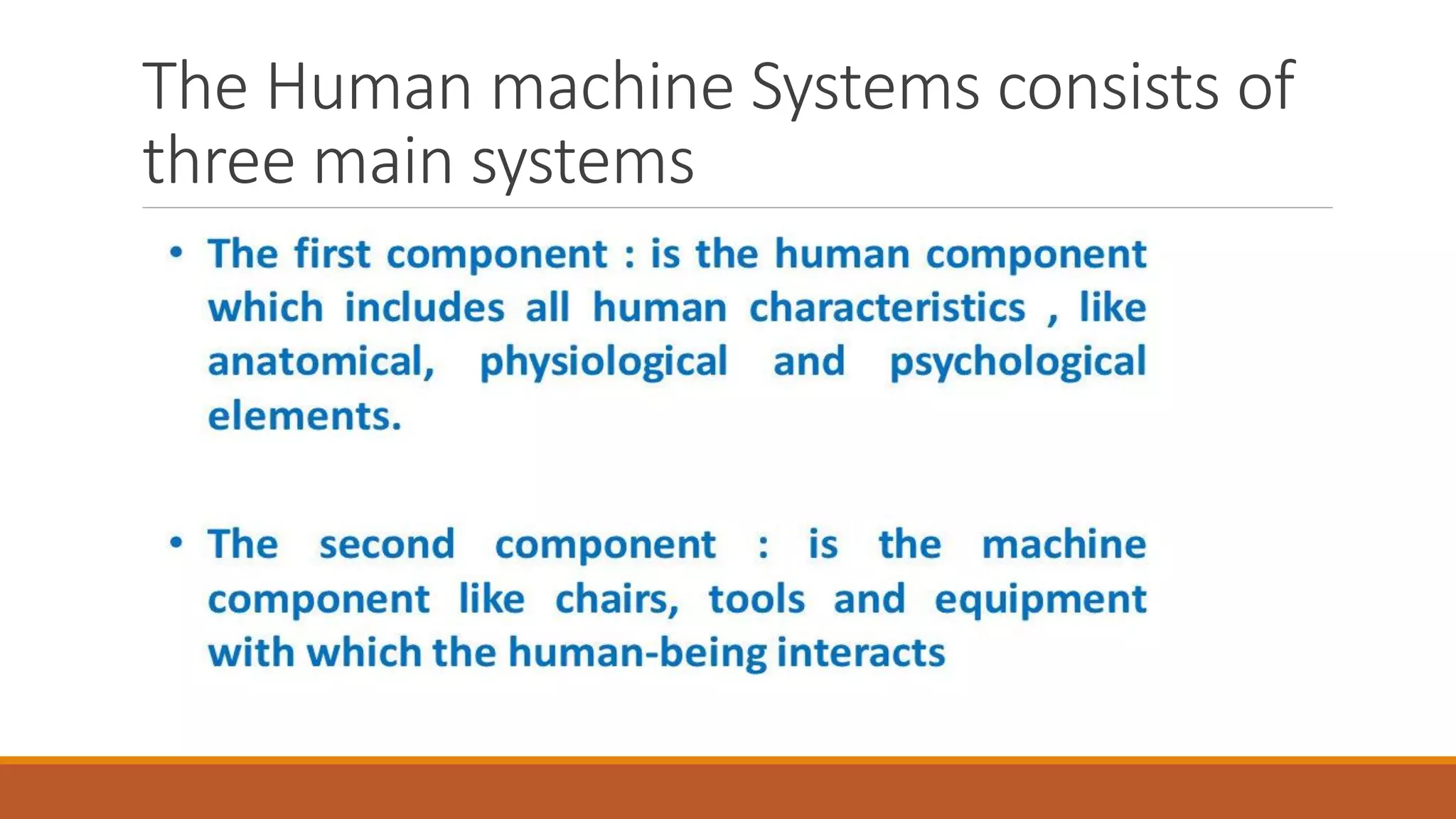
The Human machine Systems consists of
three main systems
The machine components of the Ergosystem
The Human machine Systems consists of
three main systems
work capabilities of industrial worker
Efficiency of Man Machine System is
affected by the following
Work Capabilities of Worker
Functions of Man as a Productive Element
Functions performed by man are unique and better:
• Ability to select his own inputs.
• Sensitive to wide variety of stimuli
• Reasoning
• Innovation and creativity
• Discriminating relevant from irrelevant signals
• Selective recall of old information
Human Factors: A definition
Stress in human body
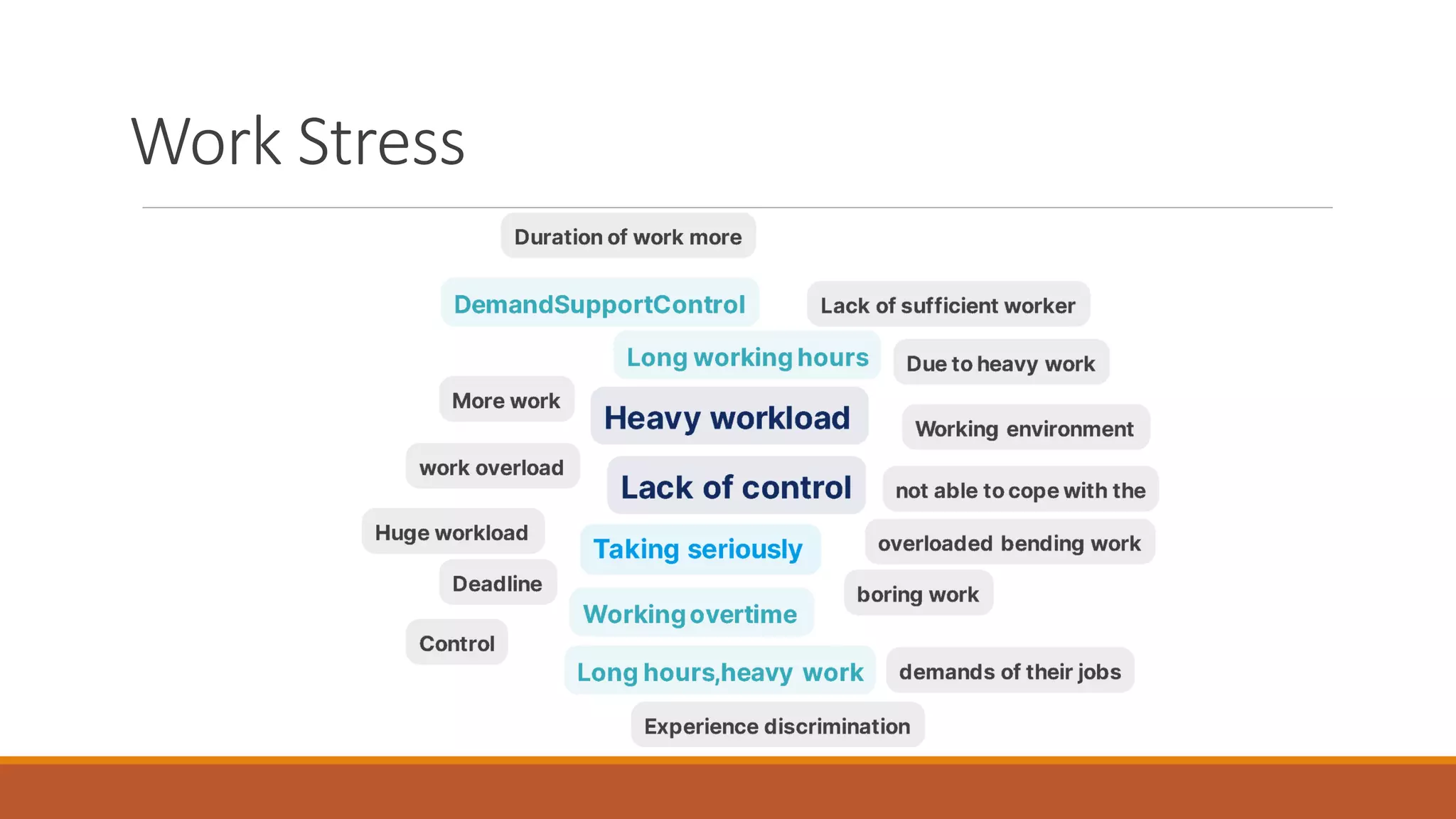
Work stress
Demands exceed ability to cope
Most likely if individuals experience:
•Lack of control
•Lack of social support
•Lack of direction
•Lack of information
•Conflict with others
•Physical work environment problems
•Violence or aggression
Signs of stress…
Psych: Physical: Behavioural:
•Anxiety
•Depression
•Aggression
•Confusion
•Increased blood pressure
•Increased heart rate
•Muscle tension
•Headaches
•Smoking
•Alcohol abuse
•Drug abuse
•Absenteeism
•Poor performance
Work stress
How should organisations manage stress
at work?
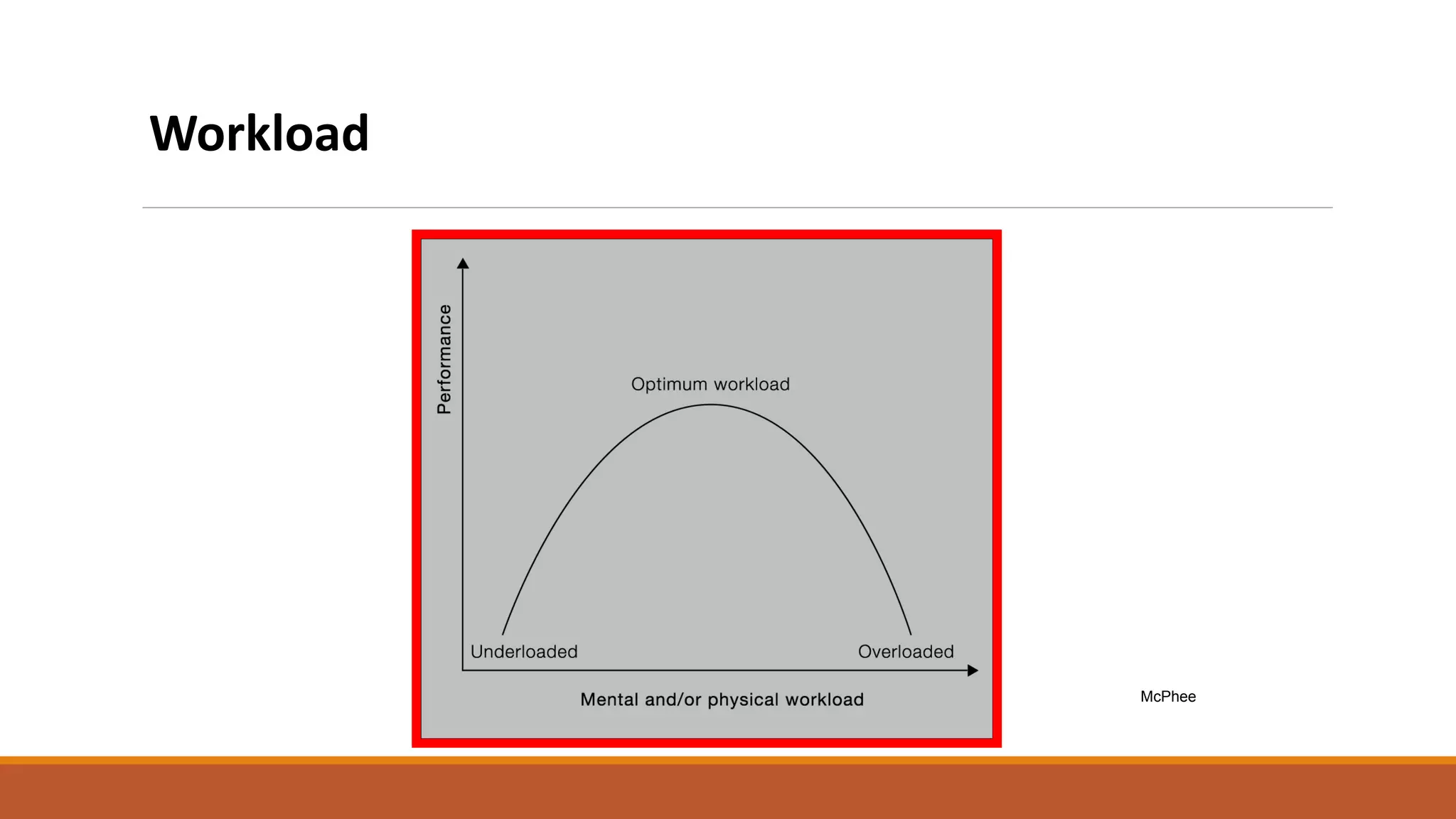
McPhee
Workload
Work Stress
Computer based ergonomics
Computer Ergonomics
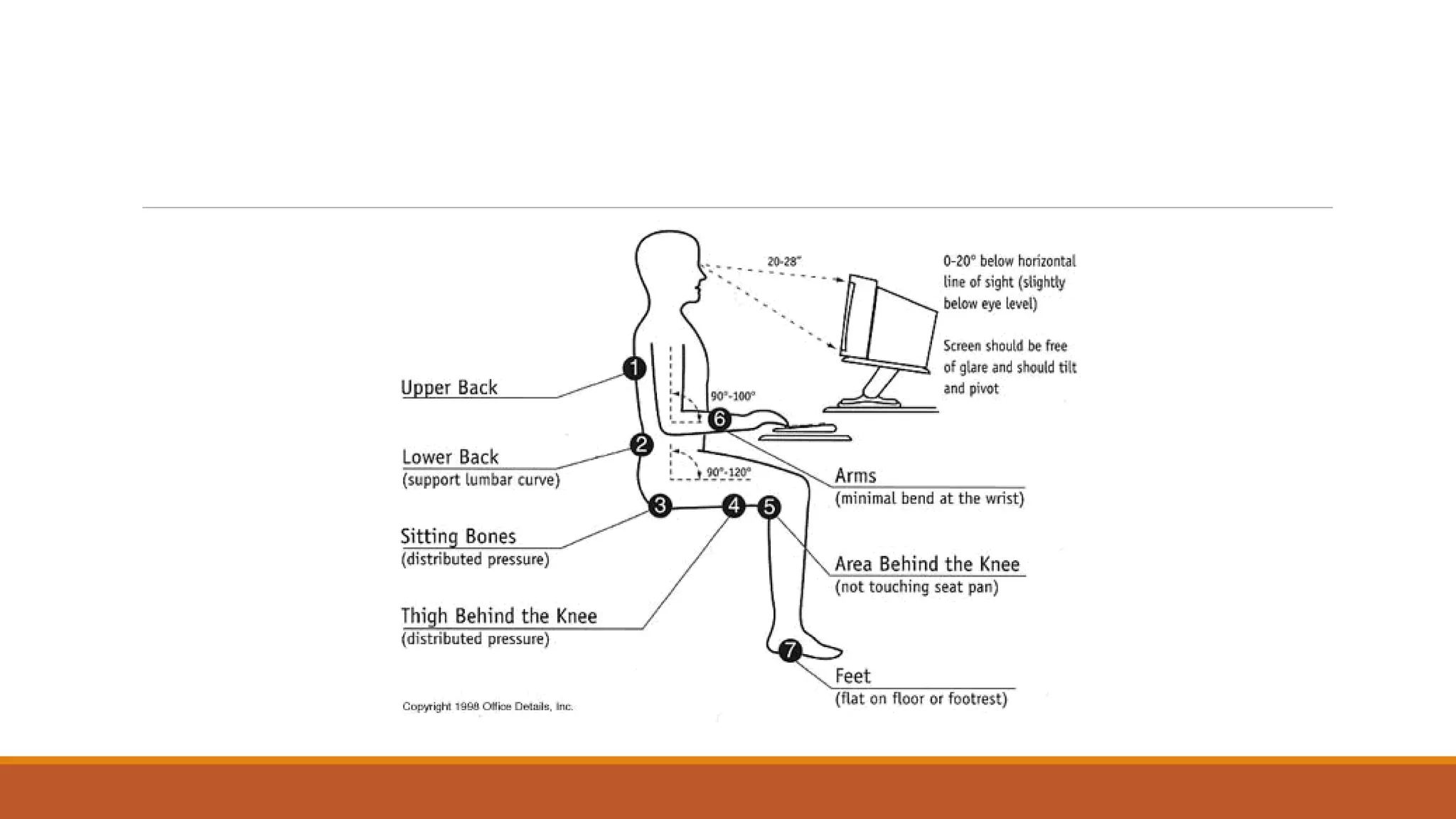
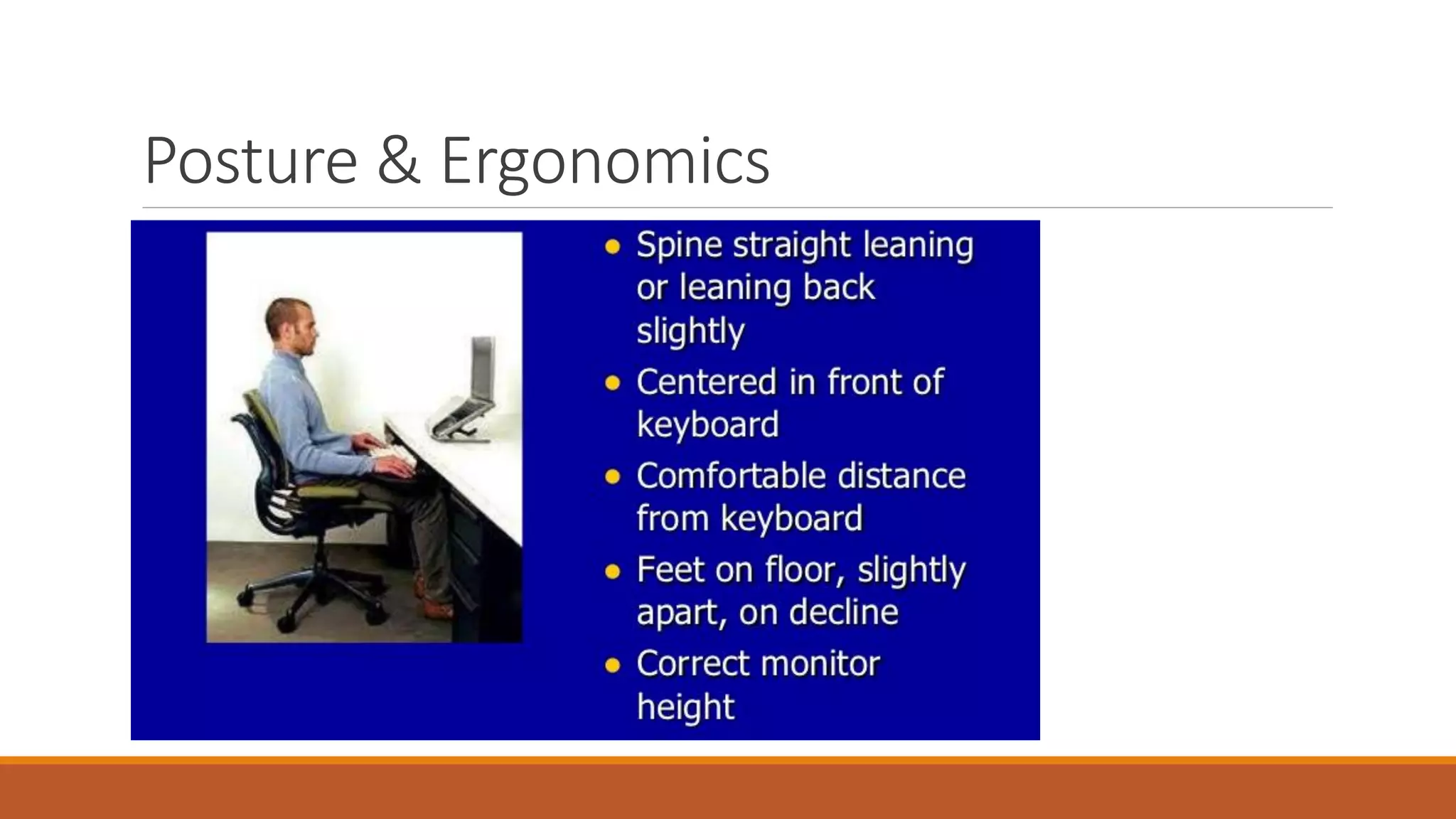
Correct Sitting Posture
The Benefits of ergonomics
Stress Management
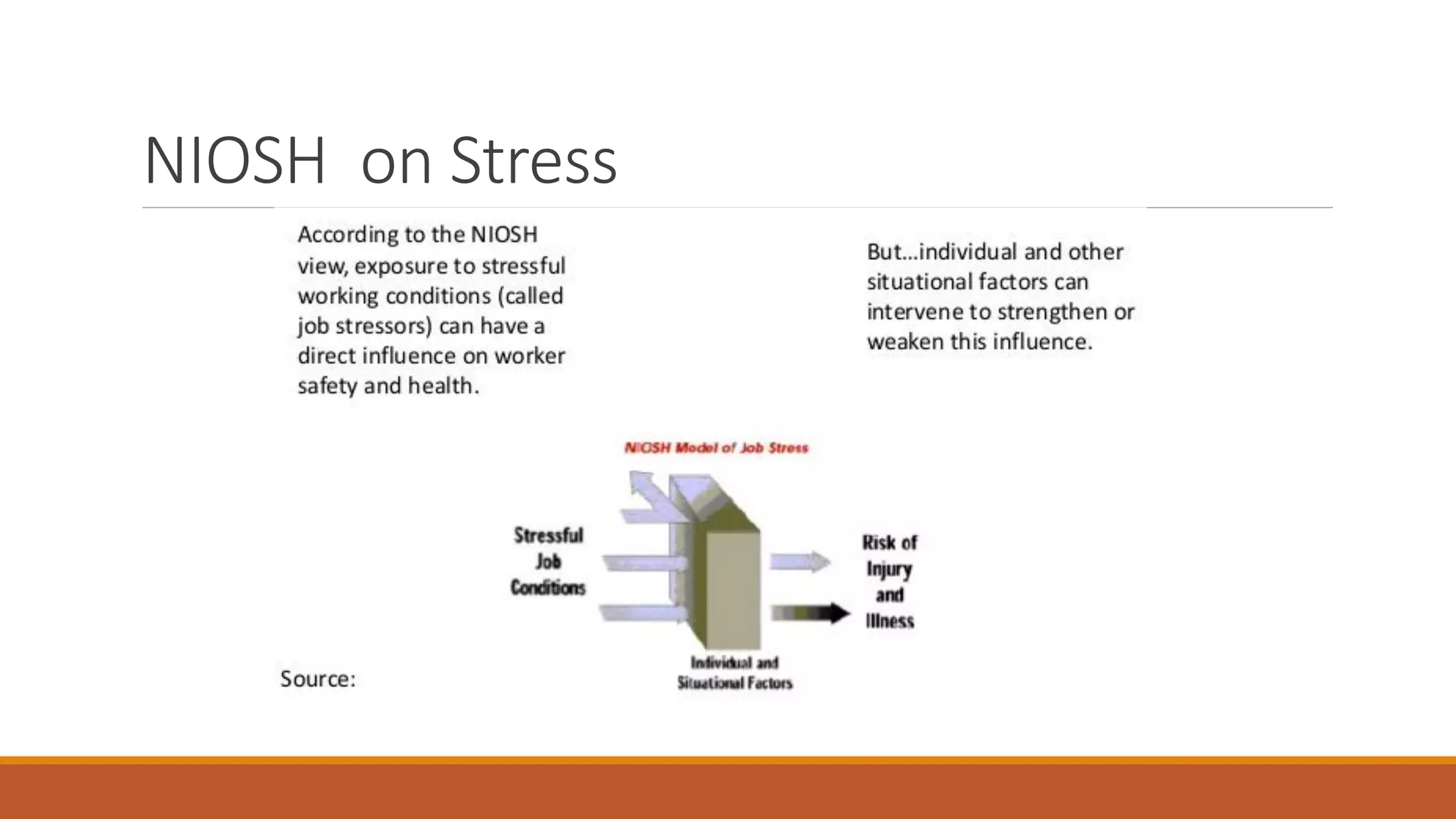
NIOSH on Stress
Ergonomic Tips for Computer Users
What is Computer Ergonomics?
Computer Ergonomics
What are Computer Ergonomics?
Posture & Ergonomics
Ergonomic requirements may Include:
Ideal Office

Unit 5.pdf