HajarRabhiFilali
Unit 57 – Task 2 – Shadows
Photographers tend to pay a lot of attention to light. In fact, we often think of light as one of the most
important aspects of photography. On the other hand, shadows may seem to be less important – simply a
lack of light. This would be a major mistake — for light is nothing without shadows.
Shadows are not simply a dark mass that borders the light. Rather, shadows are an entity as alive as the light.
It is the shadows that shape the light, draw attention to the light, and integratewith the light to produce
striking photographic opportunities. If we areto reach our full potential as photographers, we must think as
much in terms of mastering the shadows as we do of mastering the light.
Contrast and Drama
One of the most powerful uses of shadows is for the creation of contrast to produce a dramatic effect.
People’s attention is automatically drawn to areas of high tonal contrast. However, tonal contrast can not
occur without shadows. Thus, it is the interplay of light and shadows that creates the attention grabbing
contrast. An example of this use of shadows would be a dramatic sunset where the sun punches through
gaps in the clouds creating areas of light which aresurrounded by dark areas where the cloud cover is heavy.
Focus
Shadows can be effectively used to focus a viewer’s attention. The shadows help focus the viewer’s attention
by removing detail from the less important parts of the image. An example of this would be a dramatic
portrait that uses light to illuminate the eyes of the subject but allows the rest of the face to fall into deep
shadow. The shadow would help to hide the detail of the face. Thus, the viewer’s attention would be drawn
to the eyes of the subject.
Directing theattention
Shadows can be used to direct the viewer’s attention. This is because shadows often have a shape. When a
shaped shadow points to the center of interest in a photo, the shadow will direct the viewer’s attention to
the center of interest. Conversely, the shadows can surround an area of light that points to the center of
interest. In either case, the photo is strengthened as the center of interest is reinforced by the use of shadow.
Revealing form
One of the most common uses of shadows is for revealing form. This often involves the sun, at a low angle to
the horizon, casting long shadows across the terrain. Any irregularities in the shape of the subject or terrain
will be magnified. An example of this use of shadow would be a low sun casting long shadows across sand
dunes just before sunset.
Revealing Texture
Similar to revealing form, shadows can be used to reveal texture. Again, this often involves the sun, at a low
angle to the horizon, casting shadows across the subject or terrain. The main difference is that the
photographer moves in close to emphasize the texture of an object rather that the form. An example of using
shadows to reveal texture would be using setting sun to emphasize the ripples in the sand of a beach.
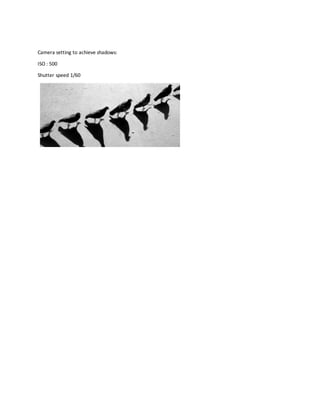
Camera setting to achieve shadows:
ISO : 500
Shutter speed 1/60

Unit 57 - Task 2

  • 1.
    HajarRabhiFilali Unit 57 –Task 2 – Shadows Photographers tend to pay a lot of attention to light. In fact, we often think of light as one of the most important aspects of photography. On the other hand, shadows may seem to be less important – simply a lack of light. This would be a major mistake — for light is nothing without shadows. Shadows are not simply a dark mass that borders the light. Rather, shadows are an entity as alive as the light. It is the shadows that shape the light, draw attention to the light, and integratewith the light to produce striking photographic opportunities. If we areto reach our full potential as photographers, we must think as much in terms of mastering the shadows as we do of mastering the light. Contrast and Drama One of the most powerful uses of shadows is for the creation of contrast to produce a dramatic effect. People’s attention is automatically drawn to areas of high tonal contrast. However, tonal contrast can not occur without shadows. Thus, it is the interplay of light and shadows that creates the attention grabbing contrast. An example of this use of shadows would be a dramatic sunset where the sun punches through gaps in the clouds creating areas of light which aresurrounded by dark areas where the cloud cover is heavy. Focus Shadows can be effectively used to focus a viewer’s attention. The shadows help focus the viewer’s attention by removing detail from the less important parts of the image. An example of this would be a dramatic portrait that uses light to illuminate the eyes of the subject but allows the rest of the face to fall into deep shadow. The shadow would help to hide the detail of the face. Thus, the viewer’s attention would be drawn to the eyes of the subject. Directing theattention Shadows can be used to direct the viewer’s attention. This is because shadows often have a shape. When a shaped shadow points to the center of interest in a photo, the shadow will direct the viewer’s attention to the center of interest. Conversely, the shadows can surround an area of light that points to the center of interest. In either case, the photo is strengthened as the center of interest is reinforced by the use of shadow. Revealing form One of the most common uses of shadows is for revealing form. This often involves the sun, at a low angle to the horizon, casting long shadows across the terrain. Any irregularities in the shape of the subject or terrain will be magnified. An example of this use of shadow would be a low sun casting long shadows across sand dunes just before sunset. Revealing Texture Similar to revealing form, shadows can be used to reveal texture. Again, this often involves the sun, at a low angle to the horizon, casting shadows across the subject or terrain. The main difference is that the photographer moves in close to emphasize the texture of an object rather that the form. An example of using shadows to reveal texture would be using setting sun to emphasize the ripples in the sand of a beach.
  • 2.
    Camera setting toachieve shadows: ISO : 500 Shutter speed 1/60