Svjetlo na filmu
• Light is an integral part of cinematography and is largely
responsible for the look of the film. It can easily set the tone
of a scene and make or break how "good" a movie looks. It
can also be used artistically. Light can represent a feeling or a
presence. Coloured lights can hold meaning or highlight the
tone of a scene.
An example of a creative, artistic use of light. In this scene in Close
Encounters of the Third Kind The bright light blinds the characters and
keeps the aliens a foggy mystery.
In Silence of the Lambs during this end scene the audience is able
to see what is happening in the supposed pitch black basement
through the eyes of Buffalo Bill. this is a creative use of light and
creates cognitive coherence.
On a technical level positioning the lights is usually about creating a scene that
looks good while staying contextual with the environment. However it can also
be used artistically. Where are you casting your shadows? What do you want
to show the audience or hide in darkness?
This set up is called 3 point lighting,
it's the most basic and the most used
set up in cinema. It can be broken
down into 3 parts. 1. Key light, the
primary source of light in a shot. 2. Fill
light, the secondary light, fills in the
shadows cast by the key. 3. Back light,
used to make an object pop from the
background. The 3 point system lights
objects in a three dimensional way
creating a fuller more interesting
image. However using it by the book
often ends up in a "sitcom" look, most
cinematographers us variations on this
system using only one light, only two
or adjusting the brightness of the
lights.
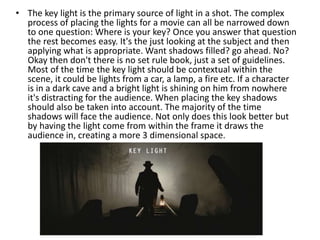
• The key light is the primary source of light in a shot. The complex
process of placing the lights for a movie can all be narrowed down
to one question: Where is your key? Once you answer that question
the rest becomes easy. It's the just looking at the subject and then
applying what is appropriate. Want shadows filled? go ahead. No?
Okay then don't there is no set rule book, just a set of guidelines.
Most of the time the key light should be contextual within the
scene, it could be lights from a car, a lamp, a fire etc. If a character
is in a dark cave and a bright light is shining on him from nowhere
it's distracting for the audience. When placing the key shadows
should also be taken into account. The majority of the time
shadows will face the audience. Not only does this look better but
by having the light come from within the frame it draws the
audience in, creating a more 3 dimensional space.
• Once the question Where is your key? is answered focus is
put on the shadows. When lighting objects with the key
shadows are a must; highlights and low lights are the basis
of good photography. So the fill light basically is the light
used to fill in these shadows and varies wildly based on the
amount of shadow you want. More dramatic movies like
The Godfather will have darker shadows while comedies
will have almost none. By casting shadows and filling them
texture and detail is created with the light. In this still the
lamp sitting behind the character is creating back light
around the head and shoulders. Back light makes objects
pop from the background and prevents them from getting
lost in darkness. A back light will also prevent an image
from looking two dimensional.
• Here we can see 3 pont in action. Despite the fact that
Daniel Day Lewis is most likely lit just fine by just the
sun through the clouds (casts no shadows)
cinematographer Robert Elswit has placed a key light
and a back light on Lewis. Not only does it make him
pop, it creates more texture highlighting the sweat and
oil on his face.
• In this still we have both strong key
light and back light. A dark shadow is
cast with little to no fill in place.
Lightin cinema
Lightin cinema
Lightin cinema
Lightin cinema
Lightin cinema
Lightin cinema
Lightin cinema
Lightin cinema
Lightin cinema

Lightin cinema

  • 1.
  • 2.
    • Light isan integral part of cinematography and is largely responsible for the look of the film. It can easily set the tone of a scene and make or break how "good" a movie looks. It can also be used artistically. Light can represent a feeling or a presence. Coloured lights can hold meaning or highlight the tone of a scene.
  • 3.
    An example ofa creative, artistic use of light. In this scene in Close Encounters of the Third Kind The bright light blinds the characters and keeps the aliens a foggy mystery.
  • 4.
    In Silence ofthe Lambs during this end scene the audience is able to see what is happening in the supposed pitch black basement through the eyes of Buffalo Bill. this is a creative use of light and creates cognitive coherence.
  • 5.
    On a technicallevel positioning the lights is usually about creating a scene that looks good while staying contextual with the environment. However it can also be used artistically. Where are you casting your shadows? What do you want to show the audience or hide in darkness?
  • 6.
    This set upis called 3 point lighting, it's the most basic and the most used set up in cinema. It can be broken down into 3 parts. 1. Key light, the primary source of light in a shot. 2. Fill light, the secondary light, fills in the shadows cast by the key. 3. Back light, used to make an object pop from the background. The 3 point system lights objects in a three dimensional way creating a fuller more interesting image. However using it by the book often ends up in a "sitcom" look, most cinematographers us variations on this system using only one light, only two or adjusting the brightness of the lights.
  • 7.
    • The keylight is the primary source of light in a shot. The complex process of placing the lights for a movie can all be narrowed down to one question: Where is your key? Once you answer that question the rest becomes easy. It's the just looking at the subject and then applying what is appropriate. Want shadows filled? go ahead. No? Okay then don't there is no set rule book, just a set of guidelines. Most of the time the key light should be contextual within the scene, it could be lights from a car, a lamp, a fire etc. If a character is in a dark cave and a bright light is shining on him from nowhere it's distracting for the audience. When placing the key shadows should also be taken into account. The majority of the time shadows will face the audience. Not only does this look better but by having the light come from within the frame it draws the audience in, creating a more 3 dimensional space.
  • 8.
    • Once thequestion Where is your key? is answered focus is put on the shadows. When lighting objects with the key shadows are a must; highlights and low lights are the basis of good photography. So the fill light basically is the light used to fill in these shadows and varies wildly based on the amount of shadow you want. More dramatic movies like The Godfather will have darker shadows while comedies will have almost none. By casting shadows and filling them texture and detail is created with the light. In this still the lamp sitting behind the character is creating back light around the head and shoulders. Back light makes objects pop from the background and prevents them from getting lost in darkness. A back light will also prevent an image from looking two dimensional.
  • 10.
    • Here wecan see 3 pont in action. Despite the fact that Daniel Day Lewis is most likely lit just fine by just the sun through the clouds (casts no shadows) cinematographer Robert Elswit has placed a key light and a back light on Lewis. Not only does it make him pop, it creates more texture highlighting the sweat and oil on his face.
  • 11.
    • In thisstill we have both strong key light and back light. A dark shadow is cast with little to no fill in place.