Nutrition
• Nutrients give our cells the energy they need.

• The digestive system, the respiratory system, the circulatory
system and the excretory system carry out the fuction of
nutrition.
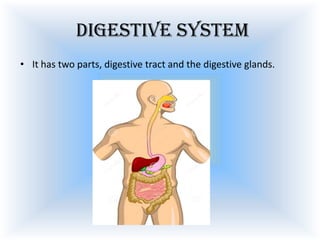
digestive system
• It has two parts, digestive tract and the digestive glands.
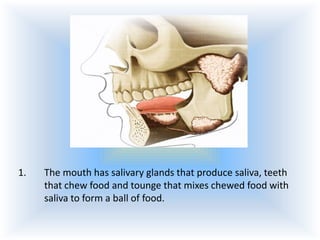
1.

The mouth has salivary glands that produce saliva, teeth
that chew food and tounge that mixes chewed food with
saliva to form a ball of food.
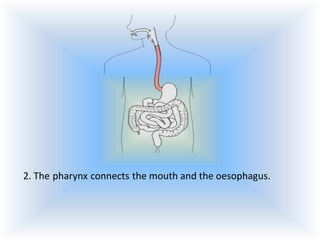
2. The pharynx connects the mouth and the oesophagus.
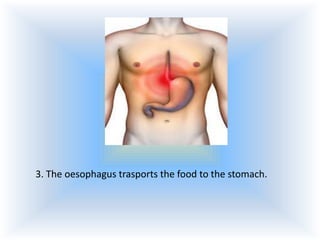
3. The oesophagus trasports the food to the stomach.
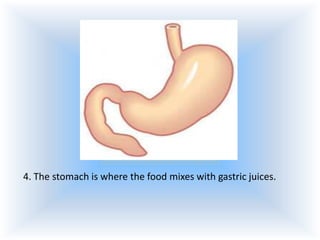
4. The stomach is where the food mixes with gastric juices.
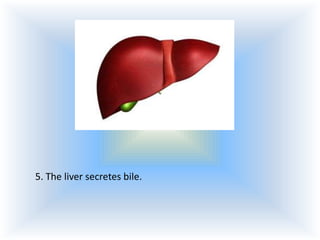
5. The liver secretes bile.
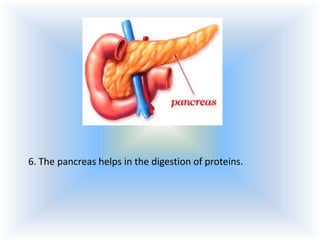
6. The pancreas helps in the digestion of proteins.
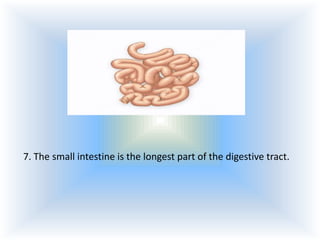
7. The small intestine is the longest part of the digestive tract.
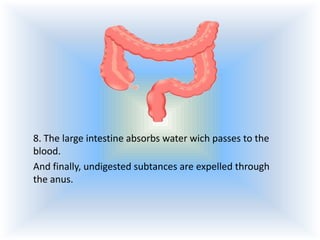
8. The large intestine absorbs water wich passes to the
blood.
And finally, undigested subtances are expelled through
the anus.
The respiratory
system
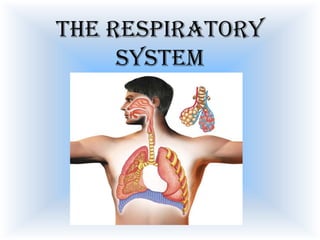
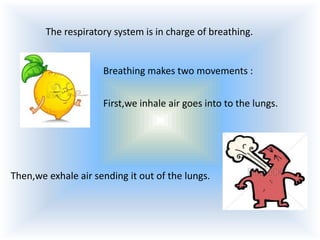
The respiratory system is in charge of breathing.

Breathing makes two movements :
First,we inhale air goes into to the lungs.

Then,we exhale air sending it out of the lungs.
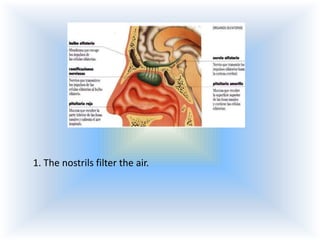
1. The nostrils filter the air.
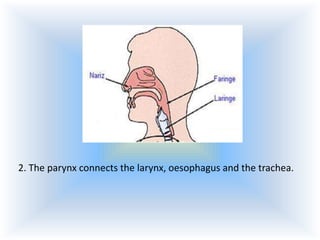
2. The parynx connects the larynx, oesophagus and the trachea.
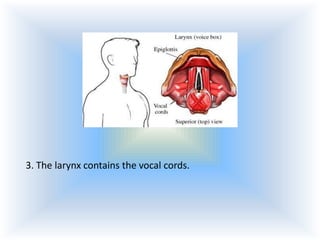
3. The larynx contains the vocal cords.
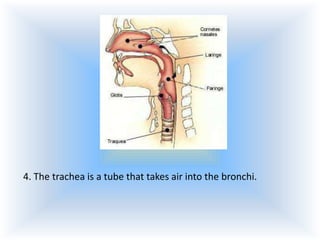
4. The trachea is a tube that takes air into the bronchi.
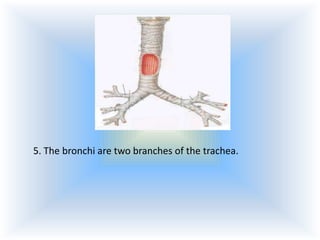
5. The bronchi are two branches of the trachea.
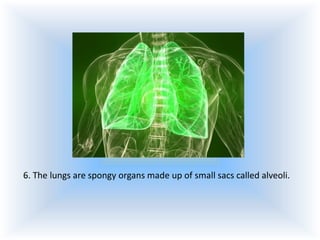
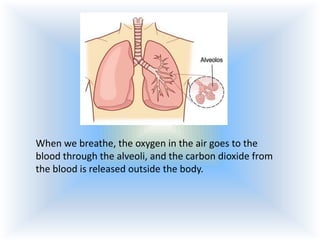
6. The lungs are spongy organs made up of small sacs called alveoli.
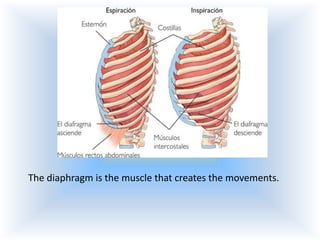
The diaphragm is the muscle that creates the movements.
When we breathe, the oxygen in the air goes to the
blood through the alveoli, and the carbon dioxide from
the blood is released outside the body.
The excretory system
The excretory system filters waste subtances from the blood.
It removes them from the body through excretion.
The excretory system is made up of :
Sweat glands.
Urinary system. This is made up of the kidneys and the
urinary tract.
The urinary system

1. The kidneys remove waste subtances from the
blood and they make urine.
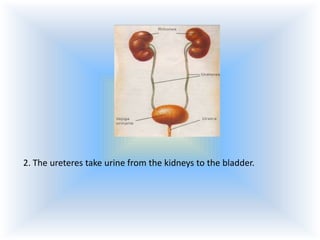
2. The ureteres take urine from the kidneys to the bladder.
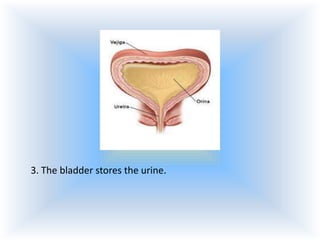
3. The bladder stores the urine.
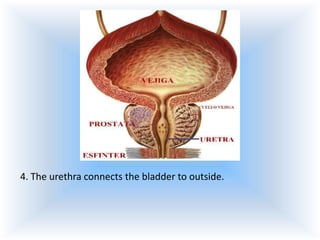
4. The urethra connects the bladder to outside.
The circulatory system
The circulatory system transports nutrients and oxygen to our cells. It is
made up of the heart, blood and blood vessels.
The heart is a muscular organ that pumps blood around the body.
The blood collects oxygen and nutrients and transports them to all the
cells. It also collects waste subtances and takes them to the sweat
glands and the urinary system.
The blood vessels. There are three types:
Arteries, veins and capillaries.
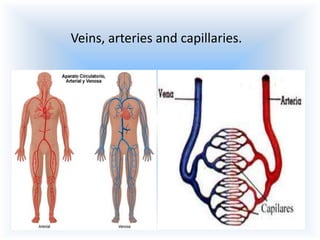
Veins, arteries and capillaries.
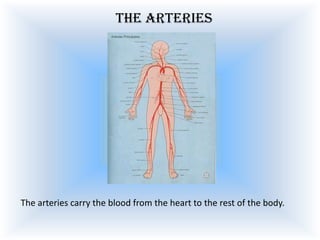
The arteries

The arteries carry the blood from the heart to the rest of the body.
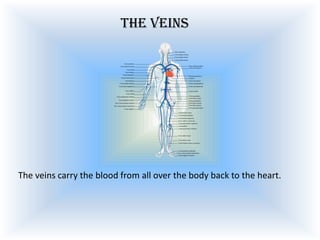
The veins

The veins carry the blood from all over the body back to the heart.
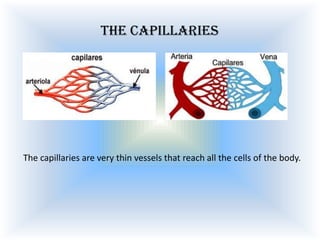
The capillaries

The capillaries are very thin vessels that reach all the cells of the body.
The blood
• Blood is a red liquid tissue made up of cells that float in a
liquid called plasma.
• There are three types of blood cells, red blood cells, white
blood cells and platelets.
• Red blood cells carry oxygen.
• White blood cells remove bacteria and viruses from the blood.
• Platelets are small fragments of cells that form blood clots.
The heart
The heart uses rhytmic systole and diastole movements to
pump the blood around the body.
1. Blood enters the atria through the veins.
2. Passes to the ventricles.
3. Blood comes out of the ventricles, through the arteries.
4. Travels all over the body.
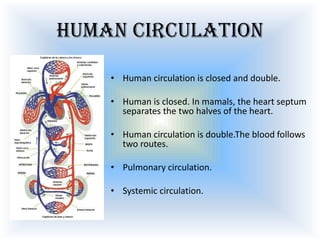
Human circulation
• Human circulation is closed and double.
• Human is closed. In mamals, the heart septum
separates the two halves of the heart.
• Human circulation is double.The blood follows
two routes.
• Pulmonary circulation.
• Systemic circulation.
The End

Unit 3 nutrition alberto s

  • 1.
    Nutrition • Nutrients giveour cells the energy they need. • The digestive system, the respiratory system, the circulatory system and the excretory system carry out the fuction of nutrition.
  • 2.
    digestive system • Ithas two parts, digestive tract and the digestive glands.
  • 3.
    1. The mouth hassalivary glands that produce saliva, teeth that chew food and tounge that mixes chewed food with saliva to form a ball of food.
  • 4.
    2. The pharynxconnects the mouth and the oesophagus.
  • 5.
    3. The oesophagustrasports the food to the stomach.
  • 6.
    4. The stomachis where the food mixes with gastric juices.
  • 7.
    5. The liversecretes bile.
  • 8.
    6. The pancreashelps in the digestion of proteins.
  • 9.
    7. The smallintestine is the longest part of the digestive tract.
  • 10.
    8. The largeintestine absorbs water wich passes to the blood. And finally, undigested subtances are expelled through the anus.
  • 11.
  • 12.
    The respiratory systemis in charge of breathing. Breathing makes two movements : First,we inhale air goes into to the lungs. Then,we exhale air sending it out of the lungs.
  • 13.
    1. The nostrilsfilter the air.
  • 14.
    2. The parynxconnects the larynx, oesophagus and the trachea.
  • 15.
    3. The larynxcontains the vocal cords.
  • 16.
    4. The tracheais a tube that takes air into the bronchi.
  • 17.
    5. The bronchiare two branches of the trachea.
  • 18.
    6. The lungsare spongy organs made up of small sacs called alveoli.
  • 19.
    The diaphragm isthe muscle that creates the movements.
  • 20.
    When we breathe,the oxygen in the air goes to the blood through the alveoli, and the carbon dioxide from the blood is released outside the body.
  • 21.
    The excretory system Theexcretory system filters waste subtances from the blood. It removes them from the body through excretion. The excretory system is made up of : Sweat glands. Urinary system. This is made up of the kidneys and the urinary tract.
  • 22.
    The urinary system 1.The kidneys remove waste subtances from the blood and they make urine.
  • 23.
    2. The ureterestake urine from the kidneys to the bladder.
  • 24.
    3. The bladderstores the urine.
  • 25.
    4. The urethraconnects the bladder to outside.
  • 26.
    The circulatory system Thecirculatory system transports nutrients and oxygen to our cells. It is made up of the heart, blood and blood vessels. The heart is a muscular organ that pumps blood around the body. The blood collects oxygen and nutrients and transports them to all the cells. It also collects waste subtances and takes them to the sweat glands and the urinary system. The blood vessels. There are three types: Arteries, veins and capillaries.
  • 27.
    Veins, arteries andcapillaries.
  • 28.
    The arteries The arteriescarry the blood from the heart to the rest of the body.
  • 29.
    The veins The veinscarry the blood from all over the body back to the heart.
  • 30.
    The capillaries The capillariesare very thin vessels that reach all the cells of the body.
  • 31.
    The blood • Bloodis a red liquid tissue made up of cells that float in a liquid called plasma. • There are three types of blood cells, red blood cells, white blood cells and platelets. • Red blood cells carry oxygen. • White blood cells remove bacteria and viruses from the blood. • Platelets are small fragments of cells that form blood clots.
  • 32.
    The heart The heartuses rhytmic systole and diastole movements to pump the blood around the body. 1. Blood enters the atria through the veins. 2. Passes to the ventricles. 3. Blood comes out of the ventricles, through the arteries. 4. Travels all over the body.
  • 33.
    Human circulation • Humancirculation is closed and double. • Human is closed. In mamals, the heart septum separates the two halves of the heart. • Human circulation is double.The blood follows two routes. • Pulmonary circulation. • Systemic circulation.
  • 34.