Unit Three
Engagement | Synchronous vs. Asynchronous |
Discussions Collaboration
Engagement
● There are three forms of engagement that are essential:
○ Student-student (presentations, class discussions, collaborative projects)
○ Student-instructor (virtual office hours, email interactions, screencasts)
○ Student-content (talking to materials, taking notes, creating a mind map)
Discussions
● Make the most of discussions by participating as you would in the
traditional classroom.
● Communicate expectations:
○ Utilize a rubric for discussions.
○ Create an announcement that describes expectations.
○ Set an early due date for the main post, such as Wednesday or Thursday, which
helps keep the discussion flowing.
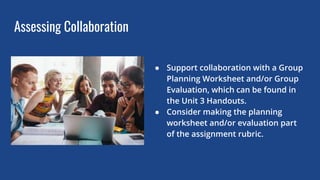
Assessing Collaboration
● Support collaboration with a Group
Planning Worksheet and/or Group
Evaluation, which can be found in
the Unit 3 Handouts.
● Consider making the planning
worksheet and/or evaluation part
of the assignment rubric.
Example Rubric for Assessing Collaboration
Proficient Needs Improvement Not Evident
Participates fully in group collaboration,
including attending all meetings.
Participates in group collaboration, but
may miss one meeting.
Did not participate in meetings.
Participates fully by contributing to the
meeting discussion.
Participates, did not fully contribute to
meeting discussions.
Did not participate in meeting
discussions.
Participates fully by contributing to the
final product.
Participates, but assigned portion of the
final product is incomplete.
Did not contribute to the final product.

Unit 3 Lecture Summary

  • 1.
    Unit Three Engagement |Synchronous vs. Asynchronous | Discussions Collaboration
  • 2.
    Engagement ● There arethree forms of engagement that are essential: ○ Student-student (presentations, class discussions, collaborative projects) ○ Student-instructor (virtual office hours, email interactions, screencasts) ○ Student-content (talking to materials, taking notes, creating a mind map)
  • 3.
    Discussions ● Make themost of discussions by participating as you would in the traditional classroom. ● Communicate expectations: ○ Utilize a rubric for discussions. ○ Create an announcement that describes expectations. ○ Set an early due date for the main post, such as Wednesday or Thursday, which helps keep the discussion flowing.
  • 4.
    Assessing Collaboration ● Supportcollaboration with a Group Planning Worksheet and/or Group Evaluation, which can be found in the Unit 3 Handouts. ● Consider making the planning worksheet and/or evaluation part of the assignment rubric.
  • 5.
    Example Rubric forAssessing Collaboration Proficient Needs Improvement Not Evident Participates fully in group collaboration, including attending all meetings. Participates in group collaboration, but may miss one meeting. Did not participate in meetings. Participates fully by contributing to the meeting discussion. Participates, did not fully contribute to meeting discussions. Did not participate in meeting discussions. Participates fully by contributing to the final product. Participates, but assigned portion of the final product is incomplete. Did not contribute to the final product.