2013 NC3ADL Session
Presented by Karen Lynden
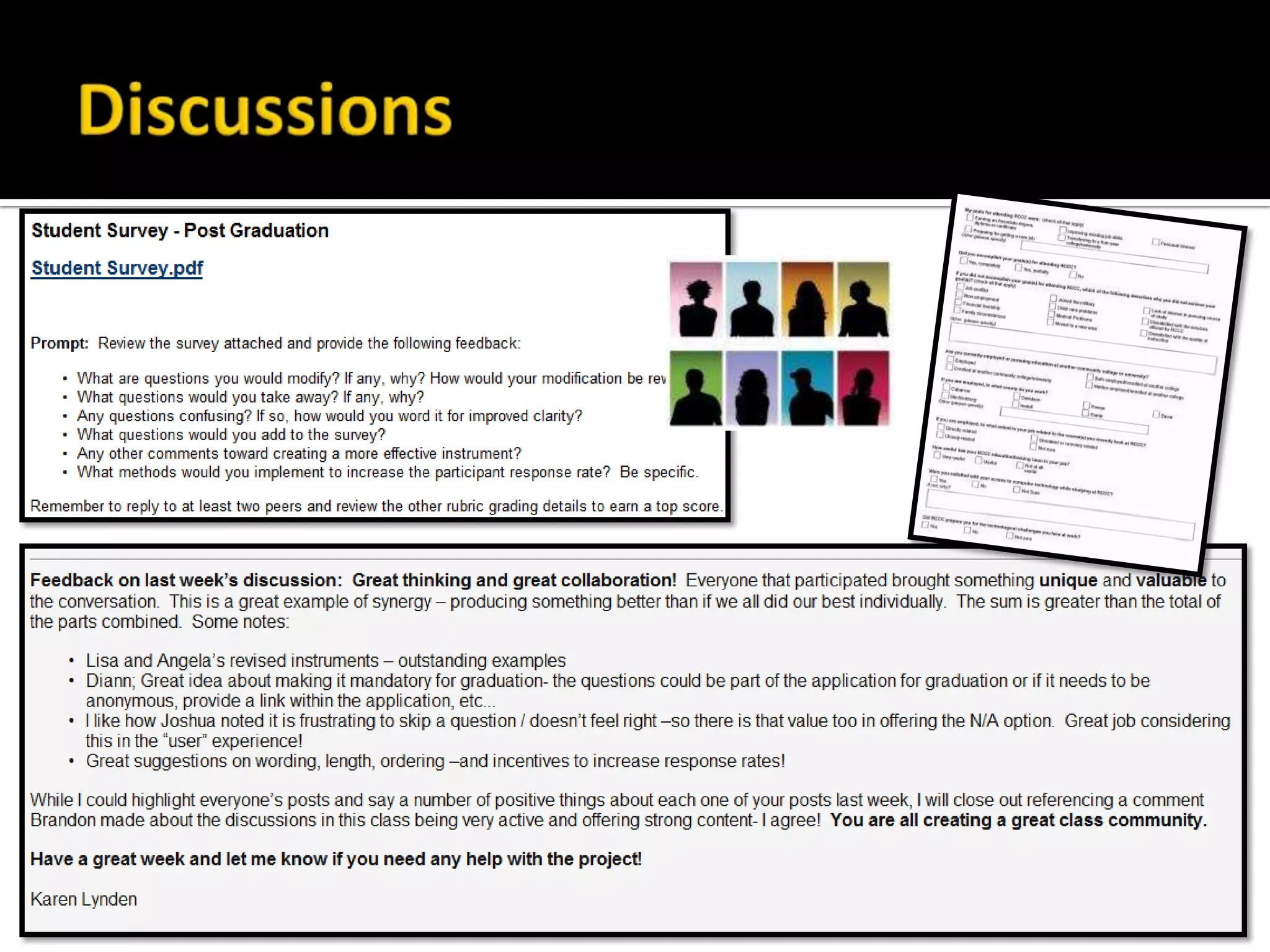
 Discuss how to create community and
collaboration in the online classroom.
 Techniques explored:
 Discussion assignments
 Dynamic group projects
 Service-learning projects
 Share implementation strategies & assignment examples.
karen.lynden@rccc.edu
Join my linkedin
network!
Please share your…
 Name
 Institution
 Role / Title
 Interest in this session topic
1. Lack of personal connection between student
and teacher
2. Lack of personal connection - peer to peer
3. Lack of real-world experience for the student
4. Lack of personal expression / opportunity to
question and debate
5. Lack of ability to verify test validity
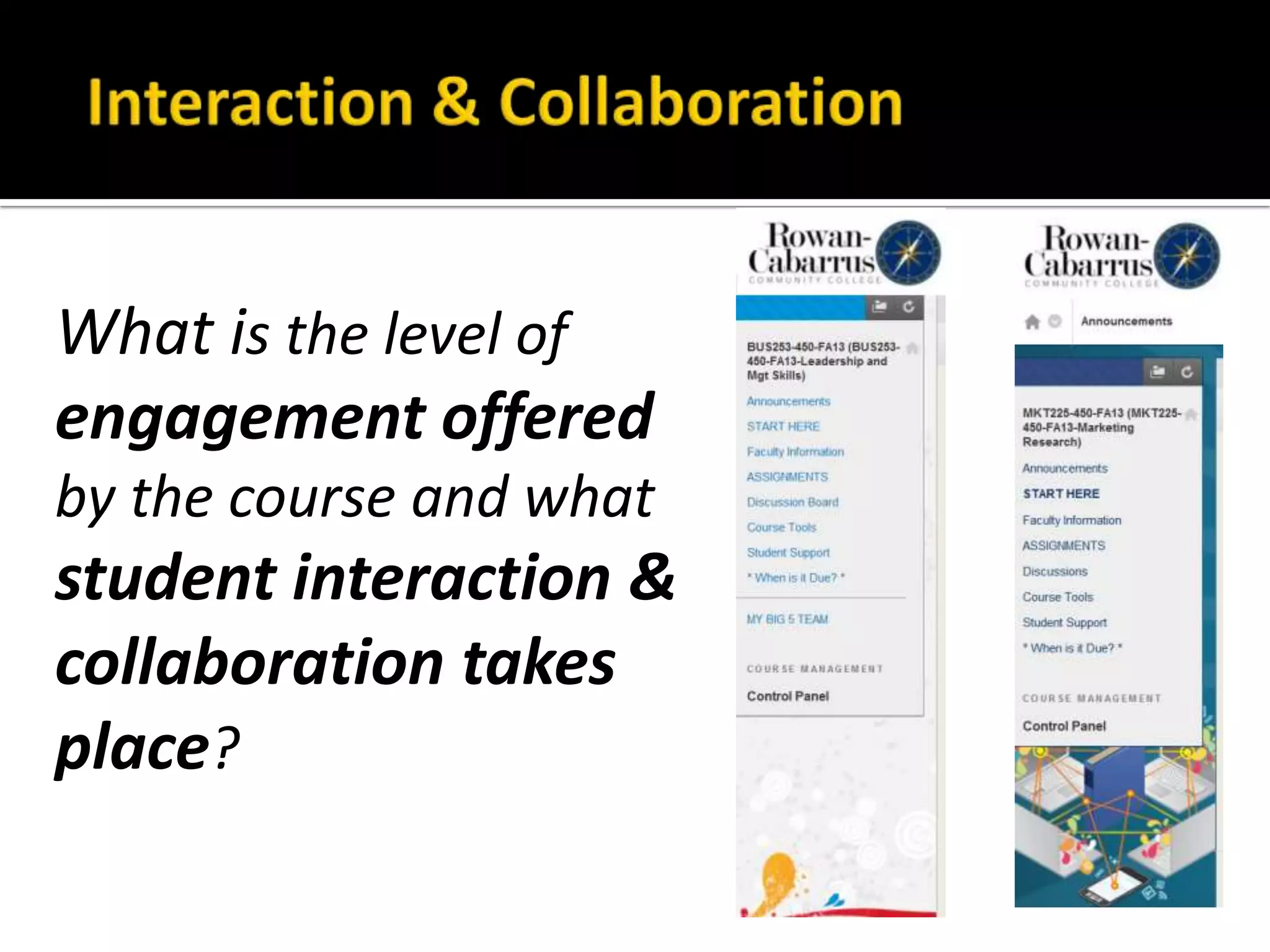
What is the level of
engagement offered
by the course and what
student interaction &
collaboration takes
place?
 Instructions:
 Gather into groups
 Select a scribe & spokesperson
 Answer the following questions & prepare to share your group’s answers
Questions:
What are the obstacles in creating “an engaging online
student community in a course?”
How do you know a “an engaging student community” was
created?
What elements of your course(s) have been most effective
in supporting / creating “an engaging online student
community in a course?”
Creating Engaging Student Communities
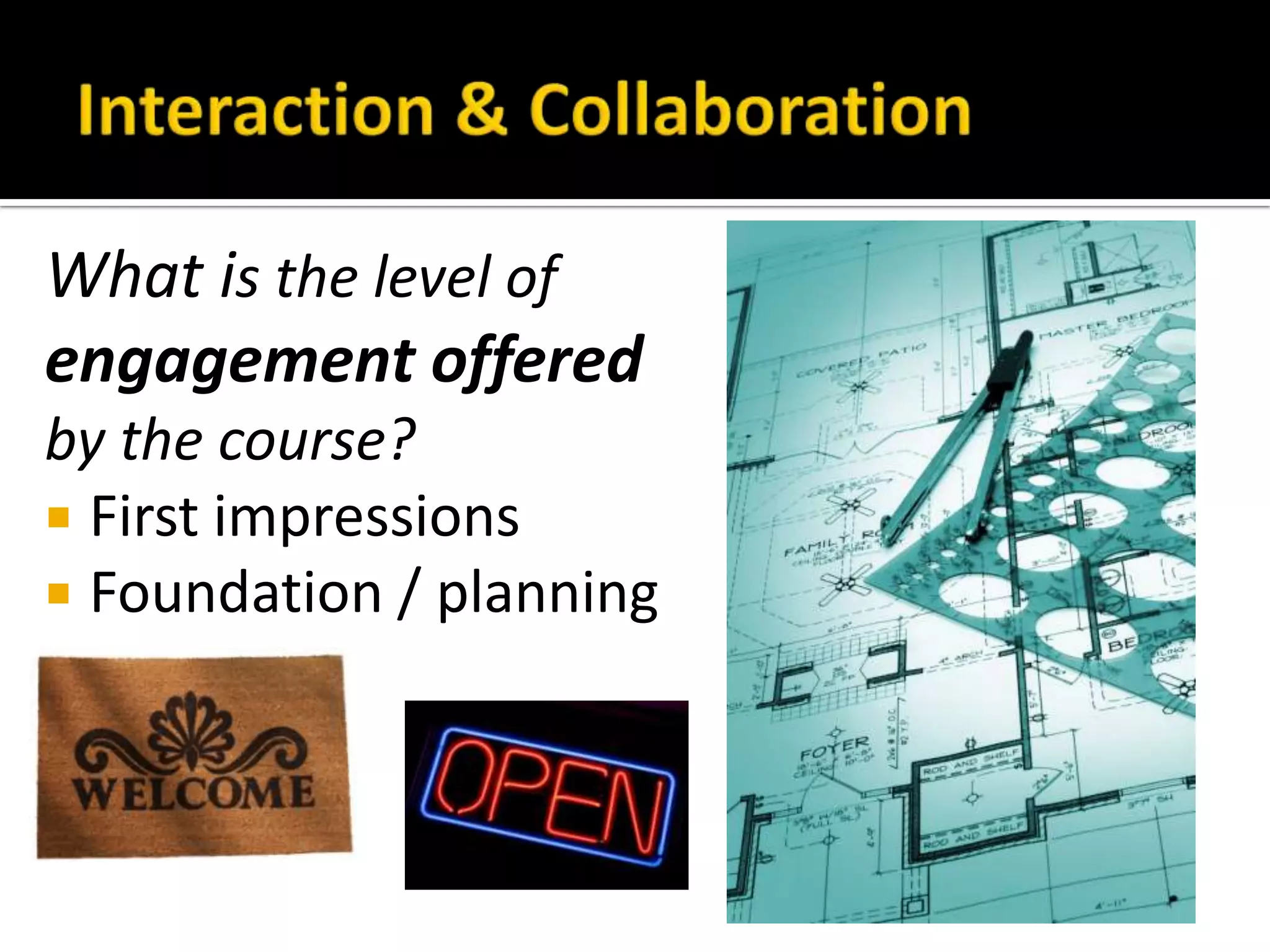
What is the level of
engagement offered
by the course?
 First impressions
 Foundation / planning
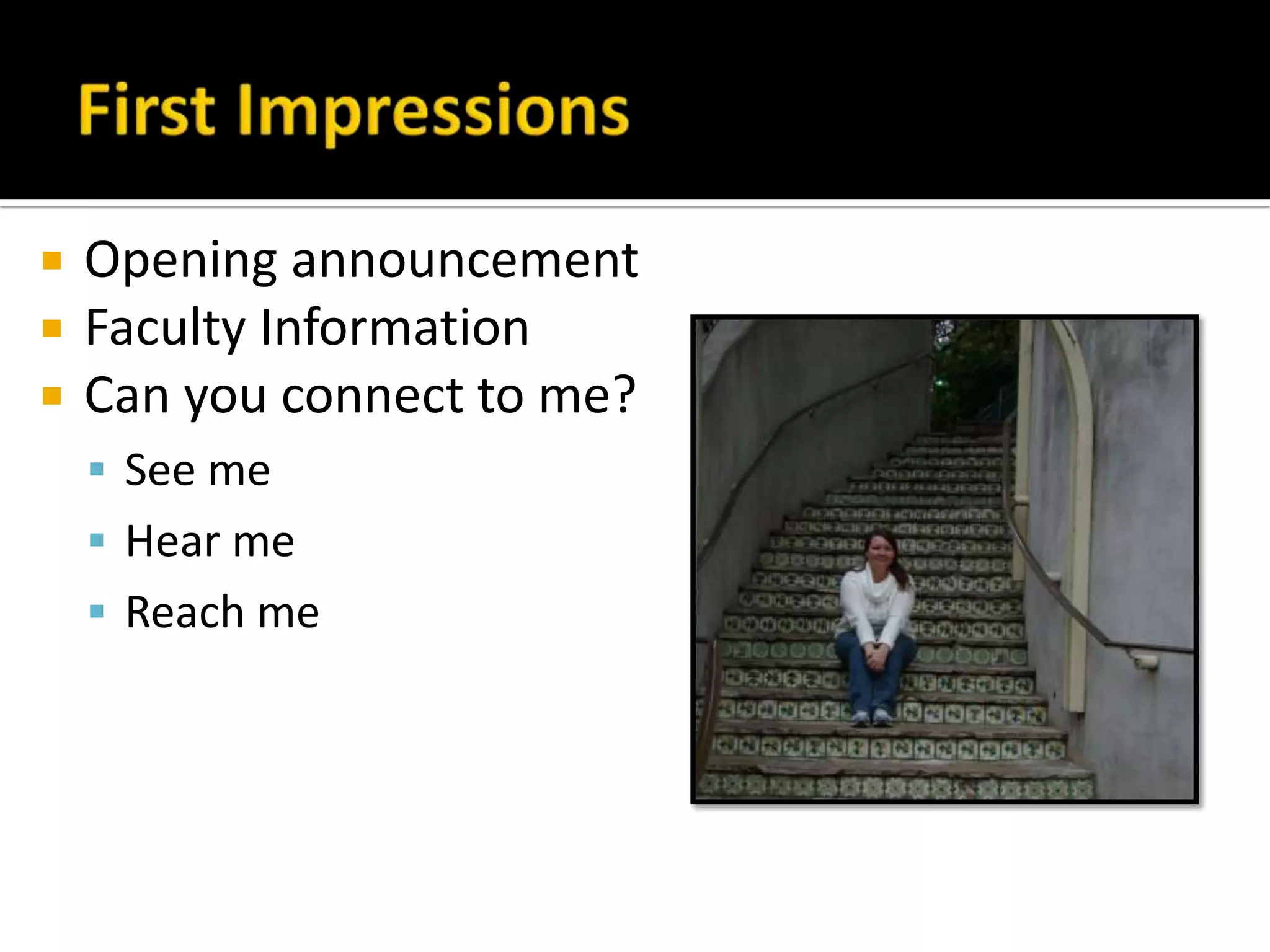
 Opening announcement
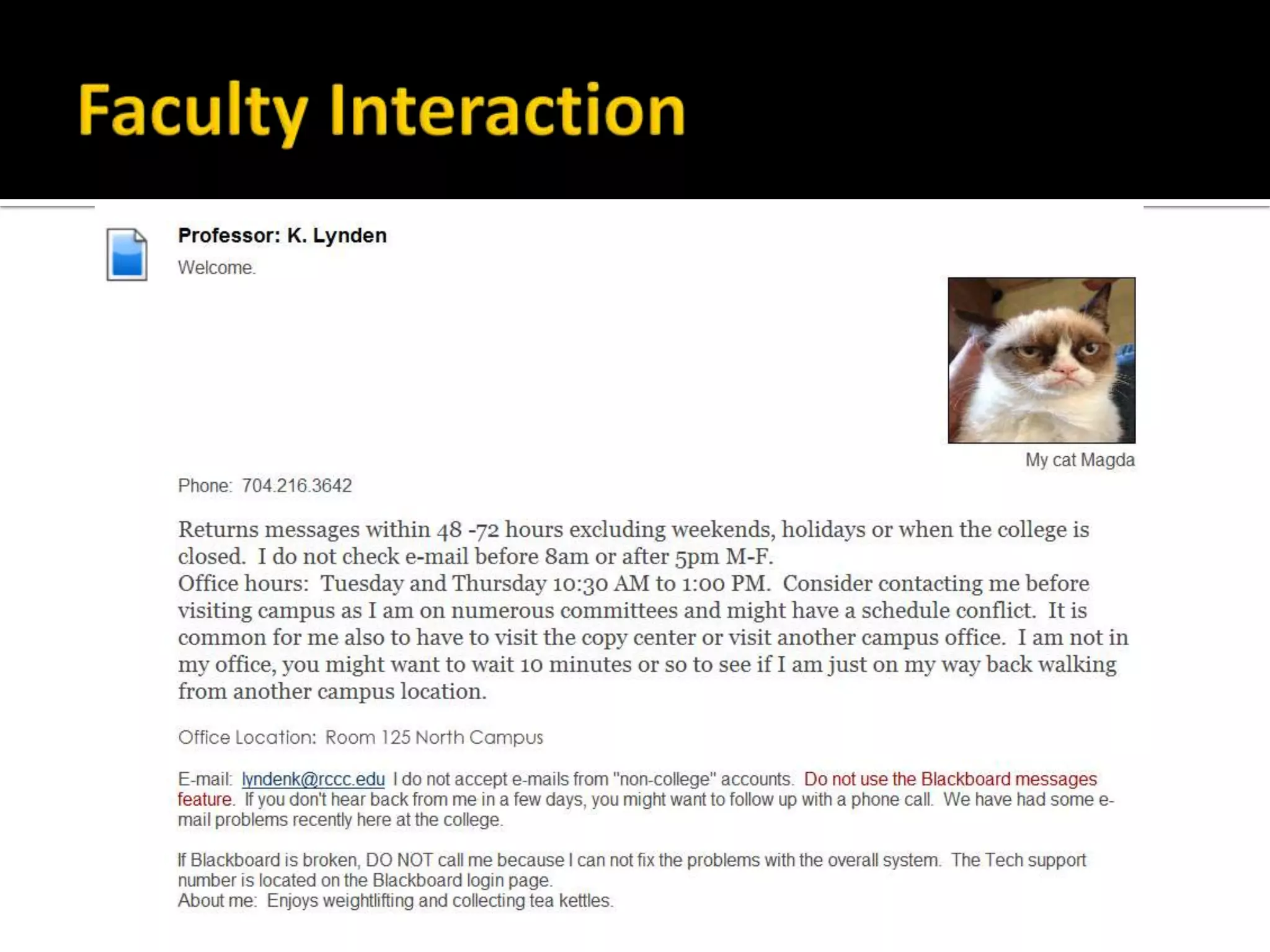
 Faculty Information
 Can you connect to me?
 See me
 Hear me
 Reach me
 And so are you!
 Students get to know my voice from the beginning:
▪ Audio introduction
▪ Jing presentations
▪ Interviews for projects
▪ Tone of written communication
 I get to know you too:
▪ Discussion boards
▪ Reports and projects
▪ Encouraging phone calls (or office meetings if that works for the student)
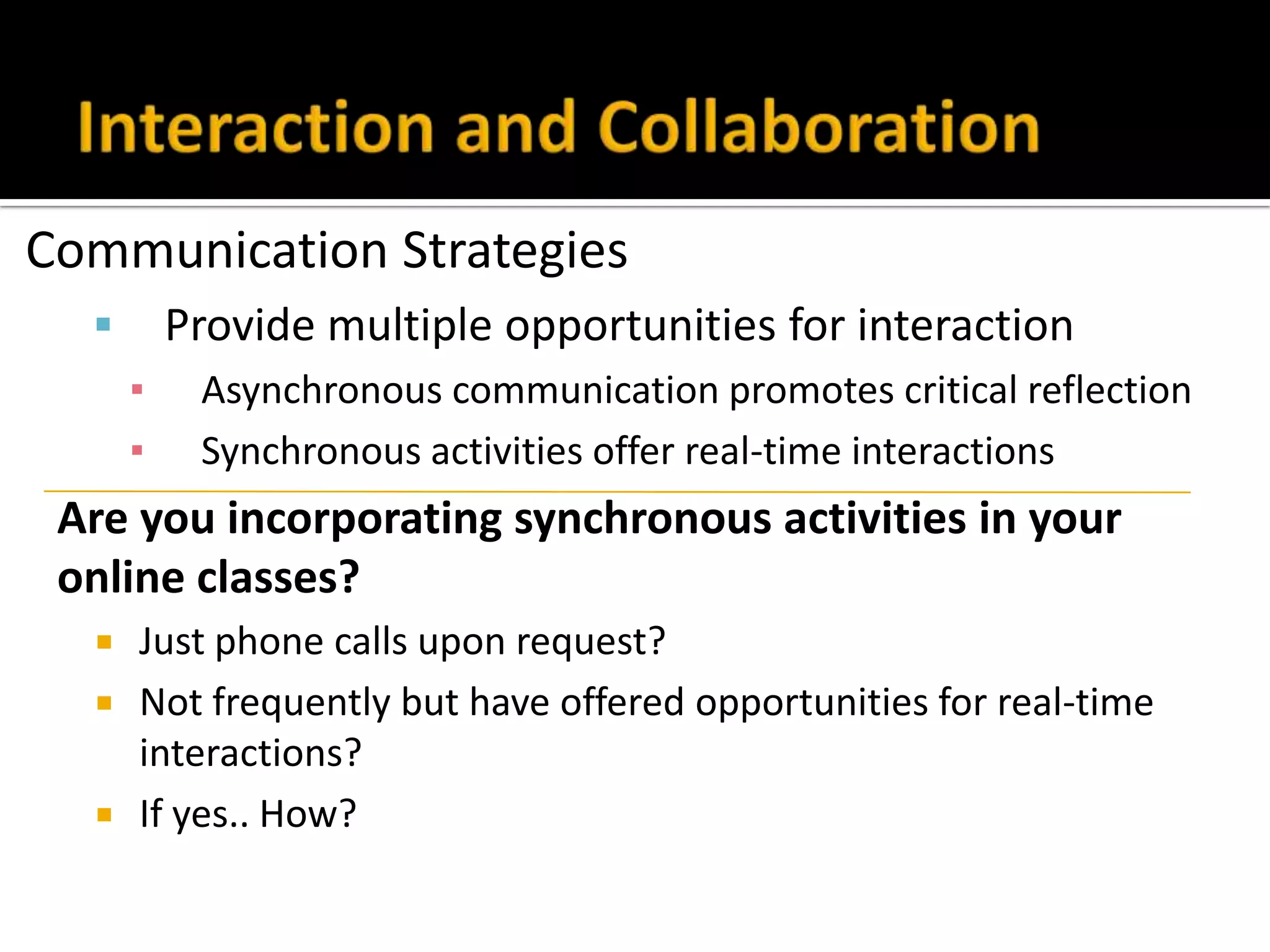
Communication Strategies
 Provide multiple opportunities for interaction
▪ Asynchronous communication promotes critical reflection
▪ Synchronous activities offer real-time interactions
Are you incorporating synchronous activities in your
online classes?
 Just phone calls upon request?
 Not frequently but have offered opportunities for real-time
interactions?
 If yes.. How?
14
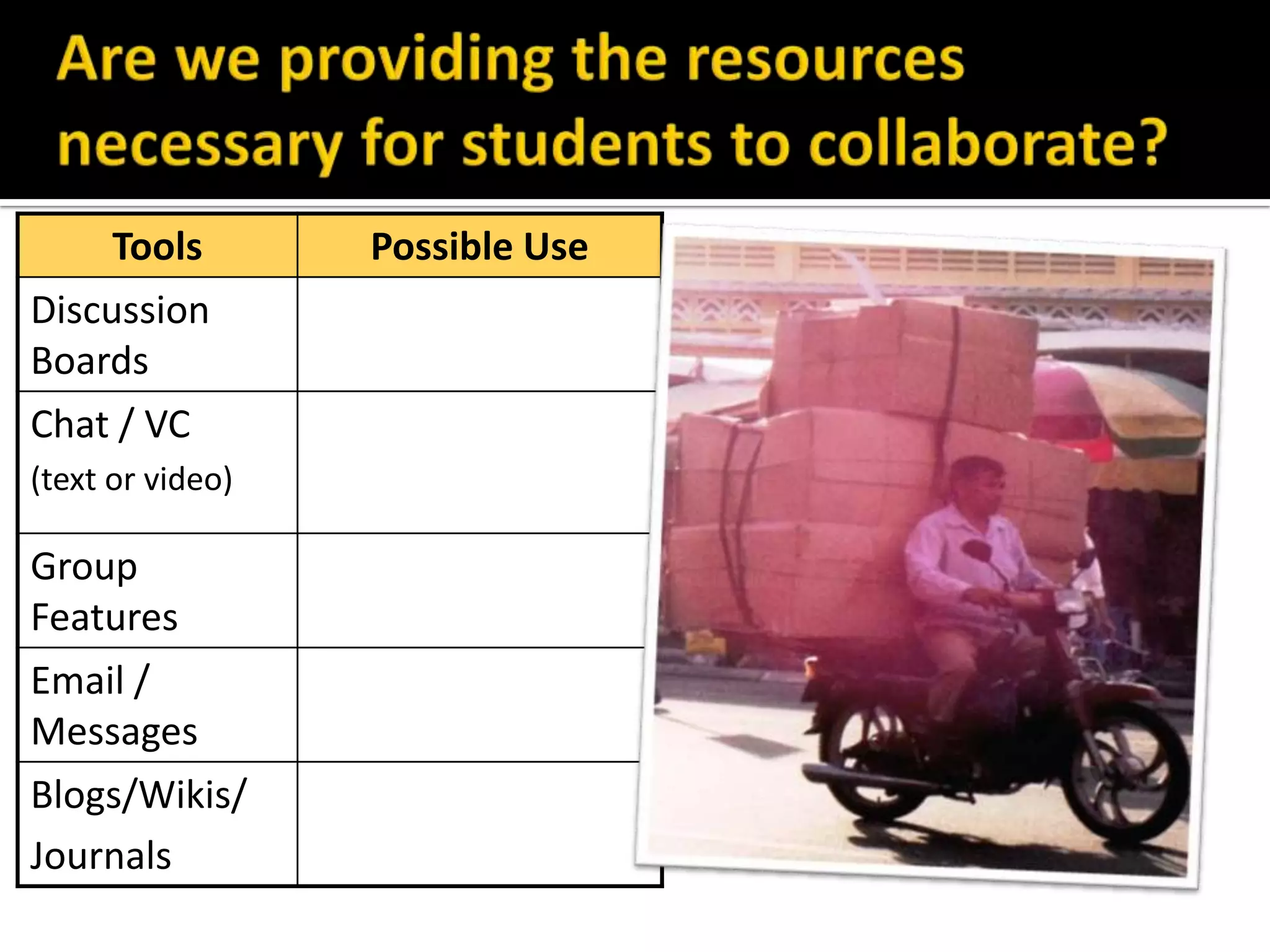
Tools Possible Use
Discussion
Boards
Chat / VC
(text or video)
Group
Features
Email /
Messages
Blogs/Wikis/
Journals
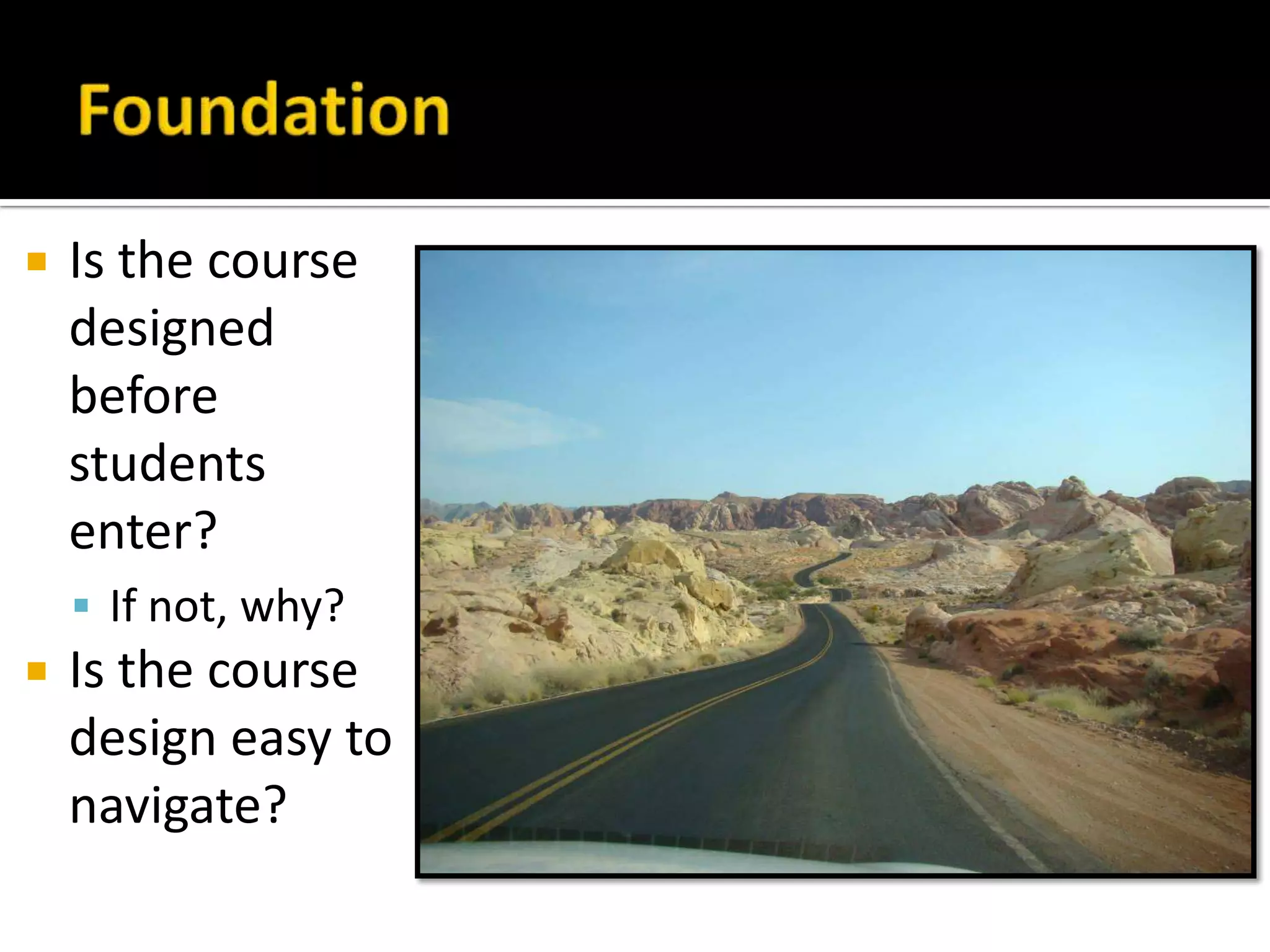
 Is the course
designed
before
students
enter?
 If not, why?
 Is the course
design easy to
navigate?
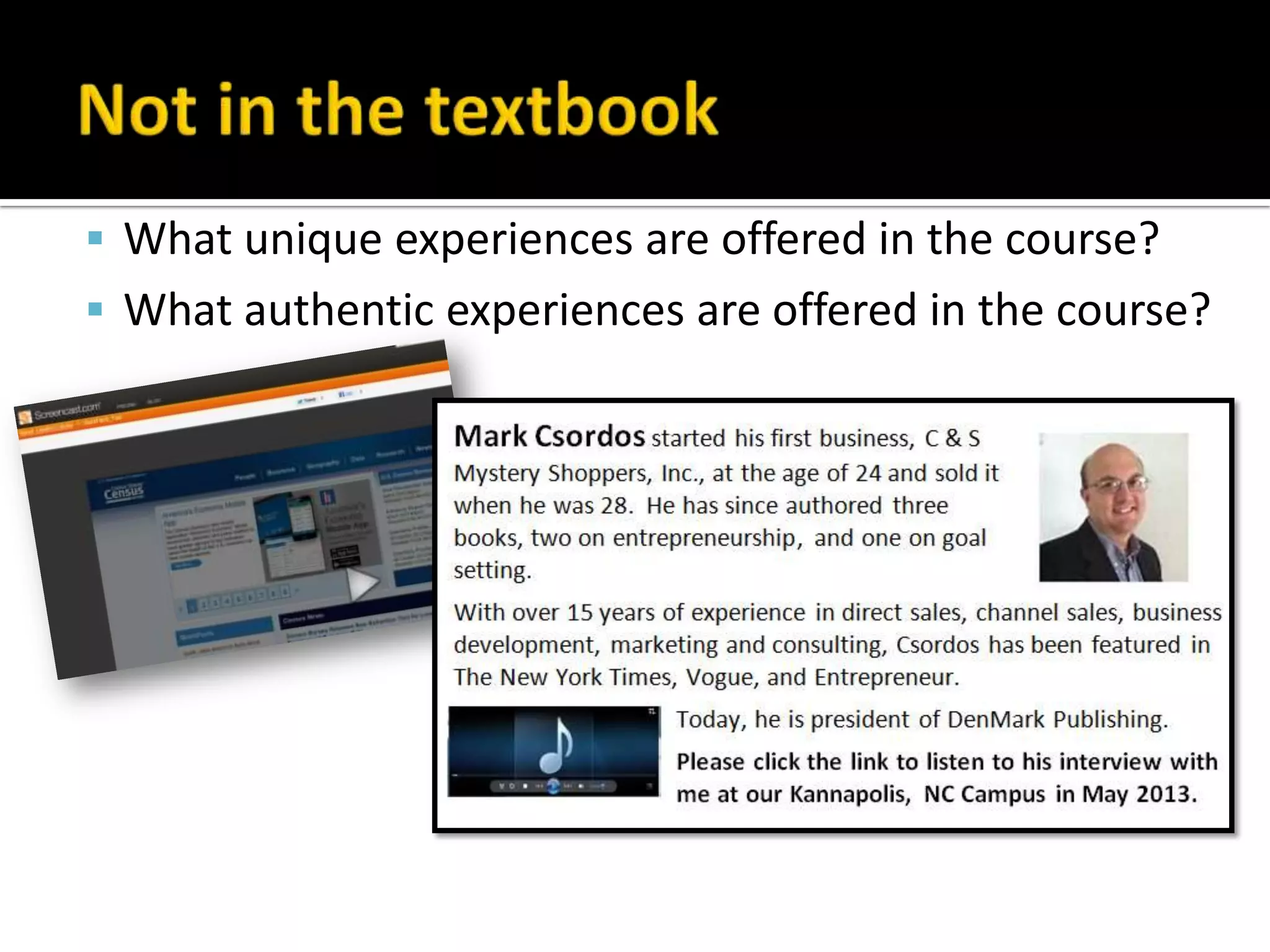
 What unique experiences are offered in the course?
 What authentic experiences are offered in the course?
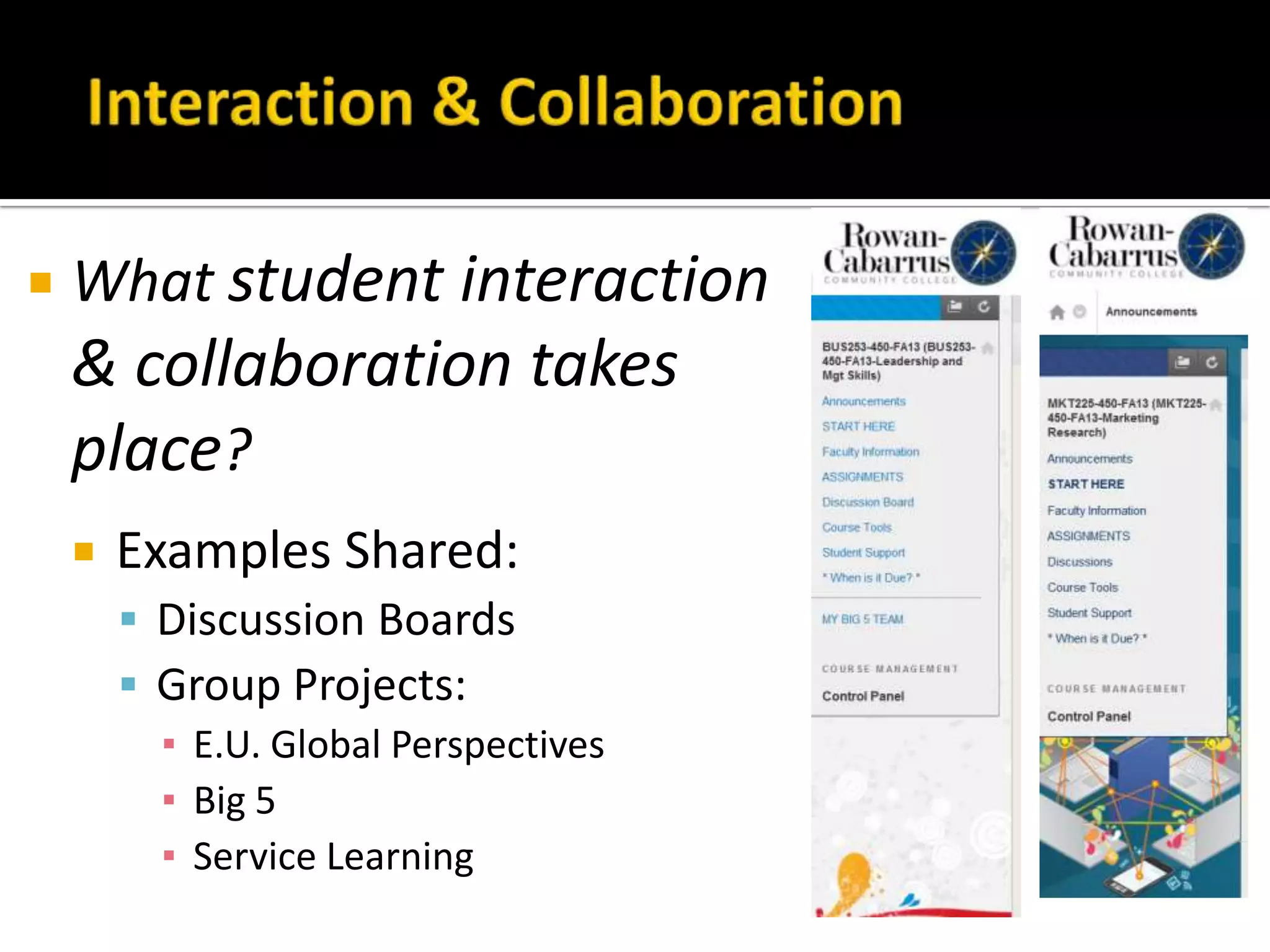
 What student interaction
& collaboration takes
place?
 Examples Shared:
 Discussion Boards
 Group Projects:
▪ E.U. Global Perspectives
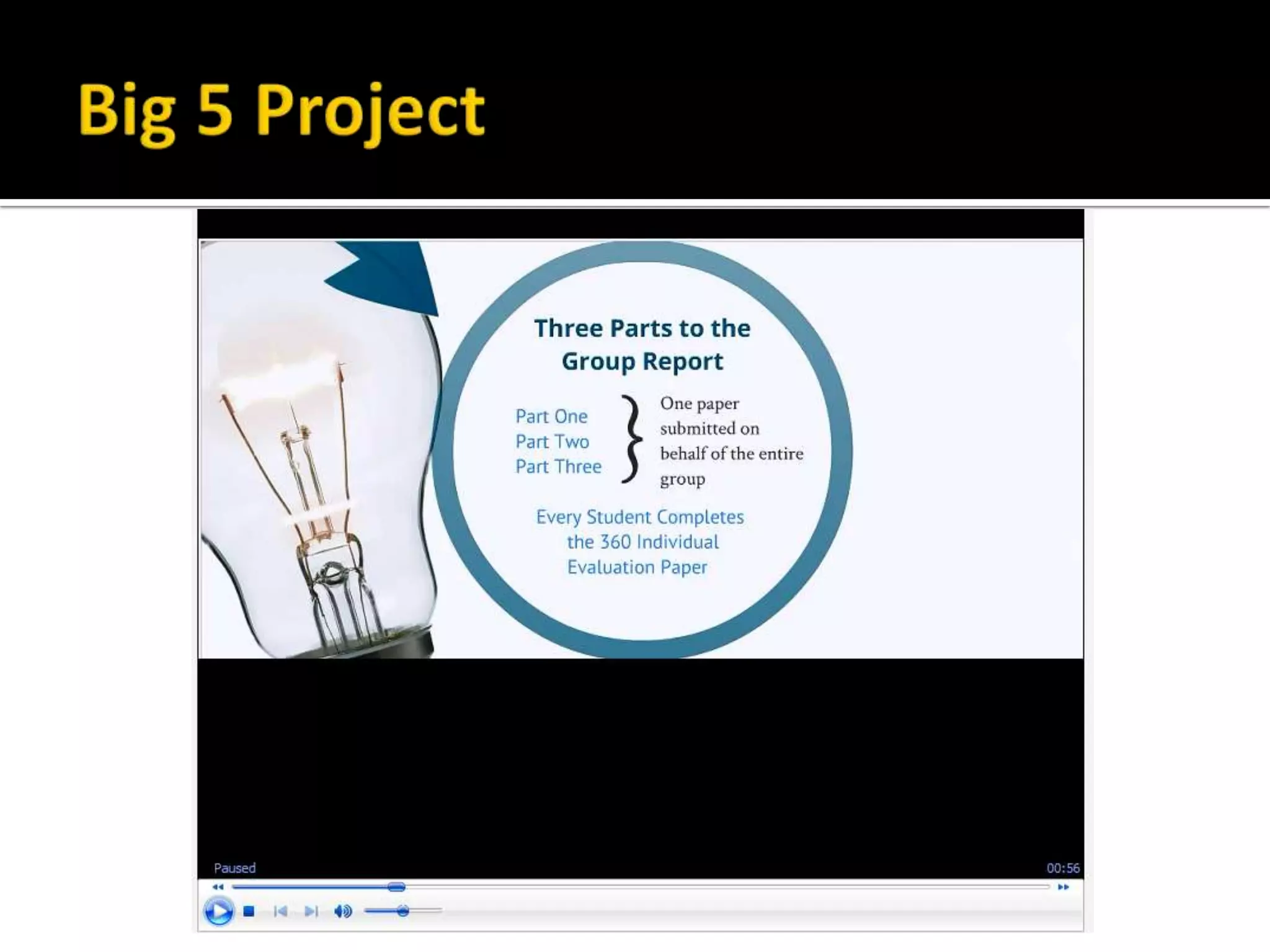
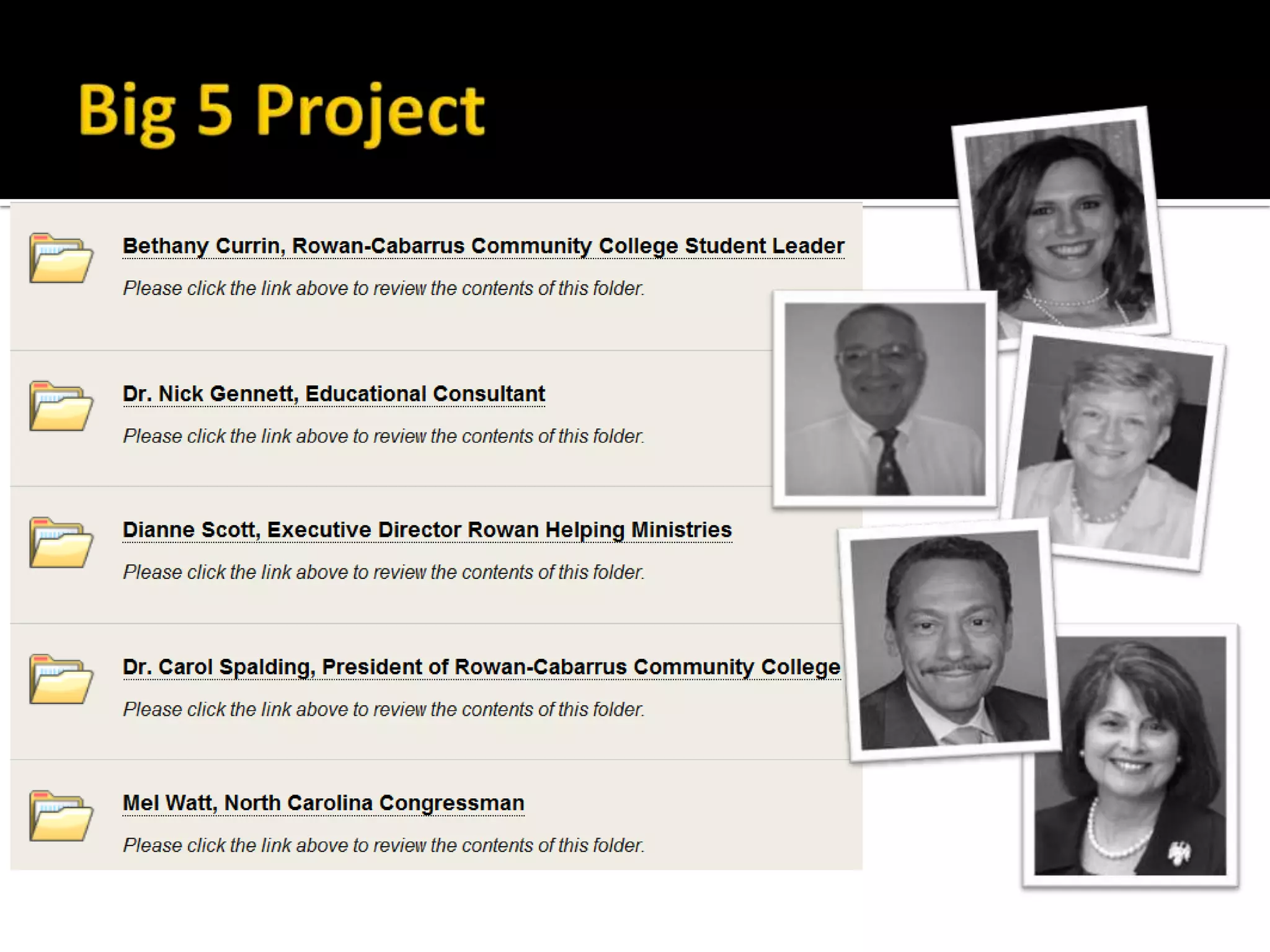
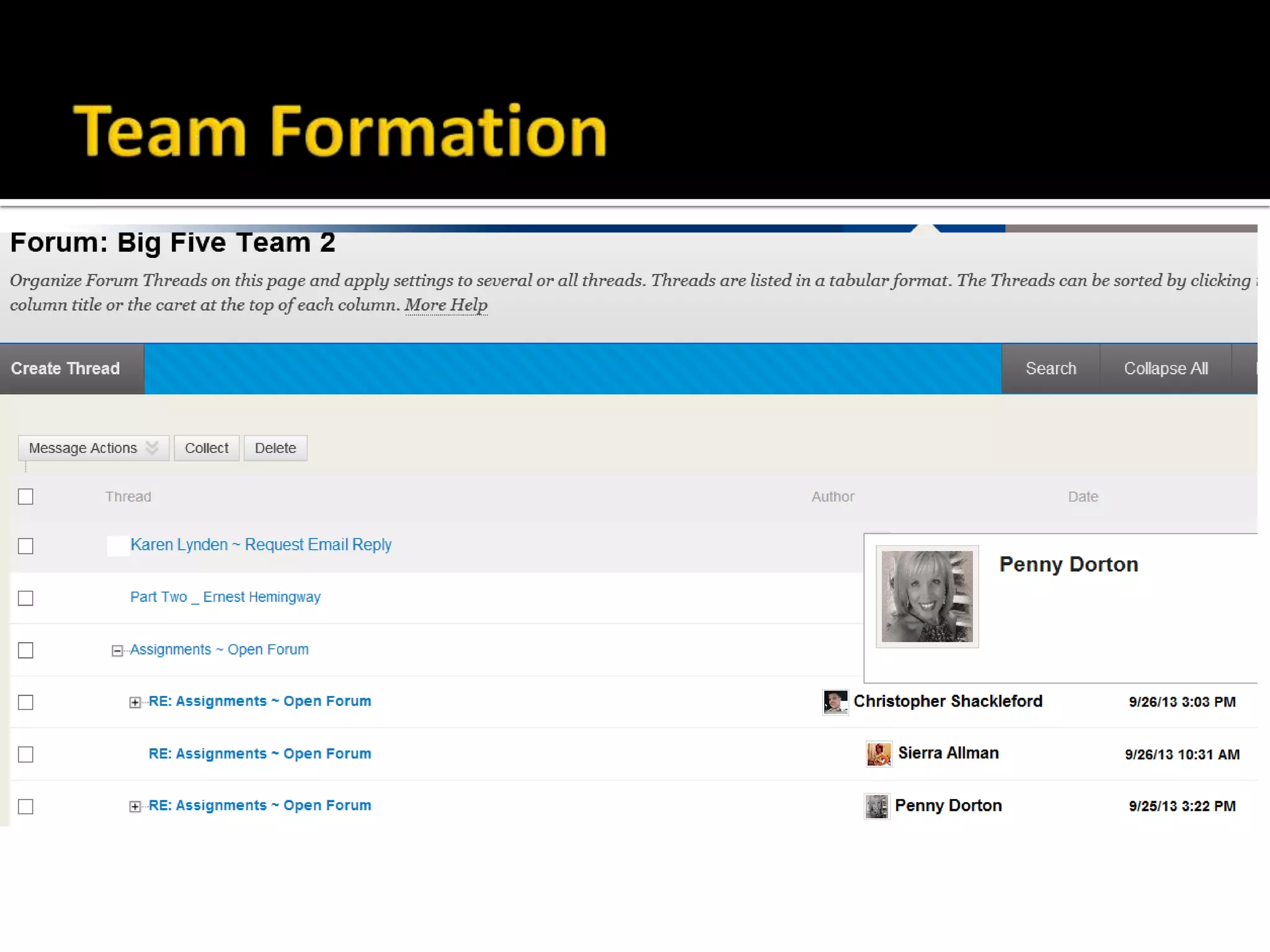
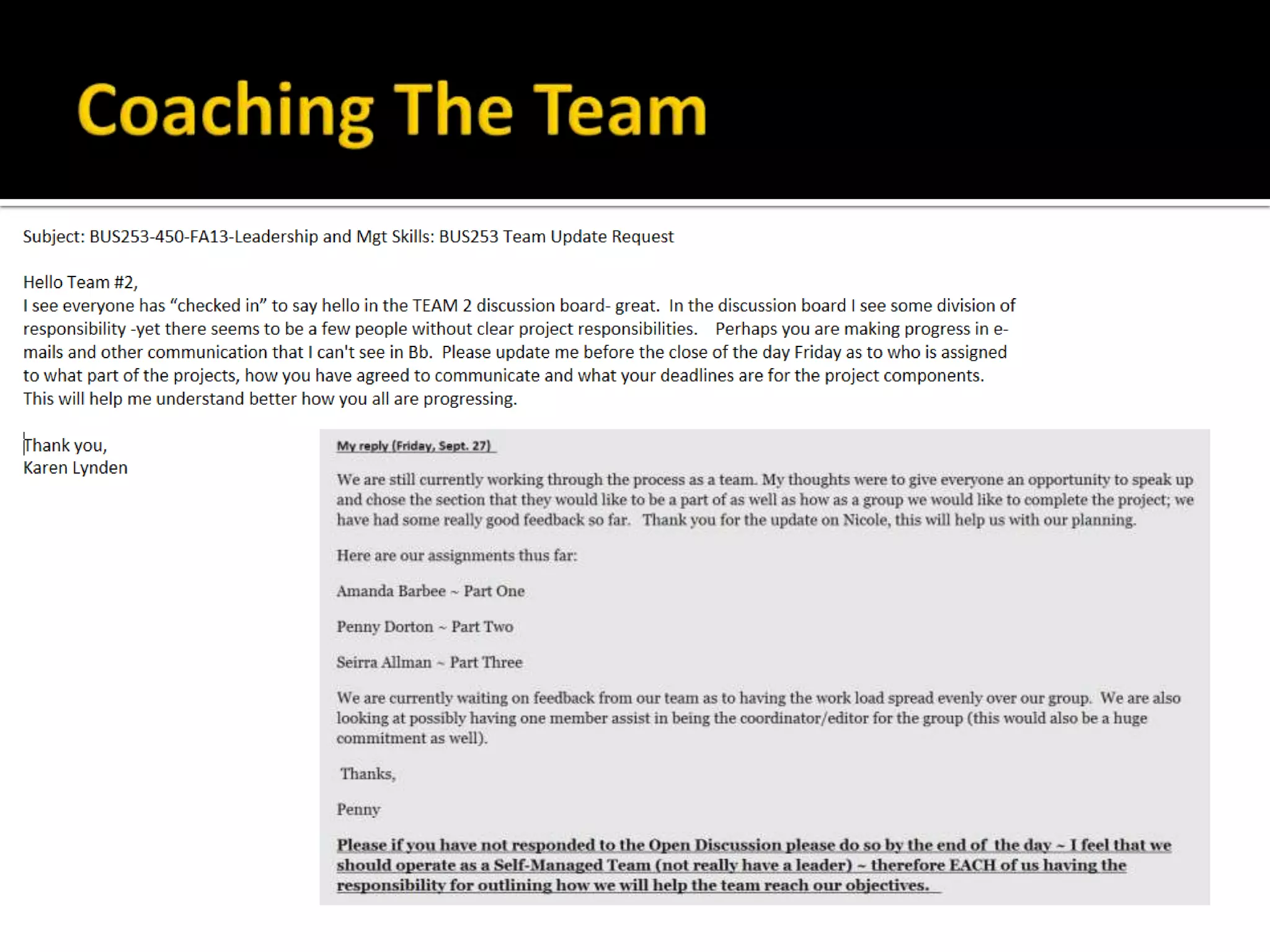
▪ Big 5
▪ Service Learning
20
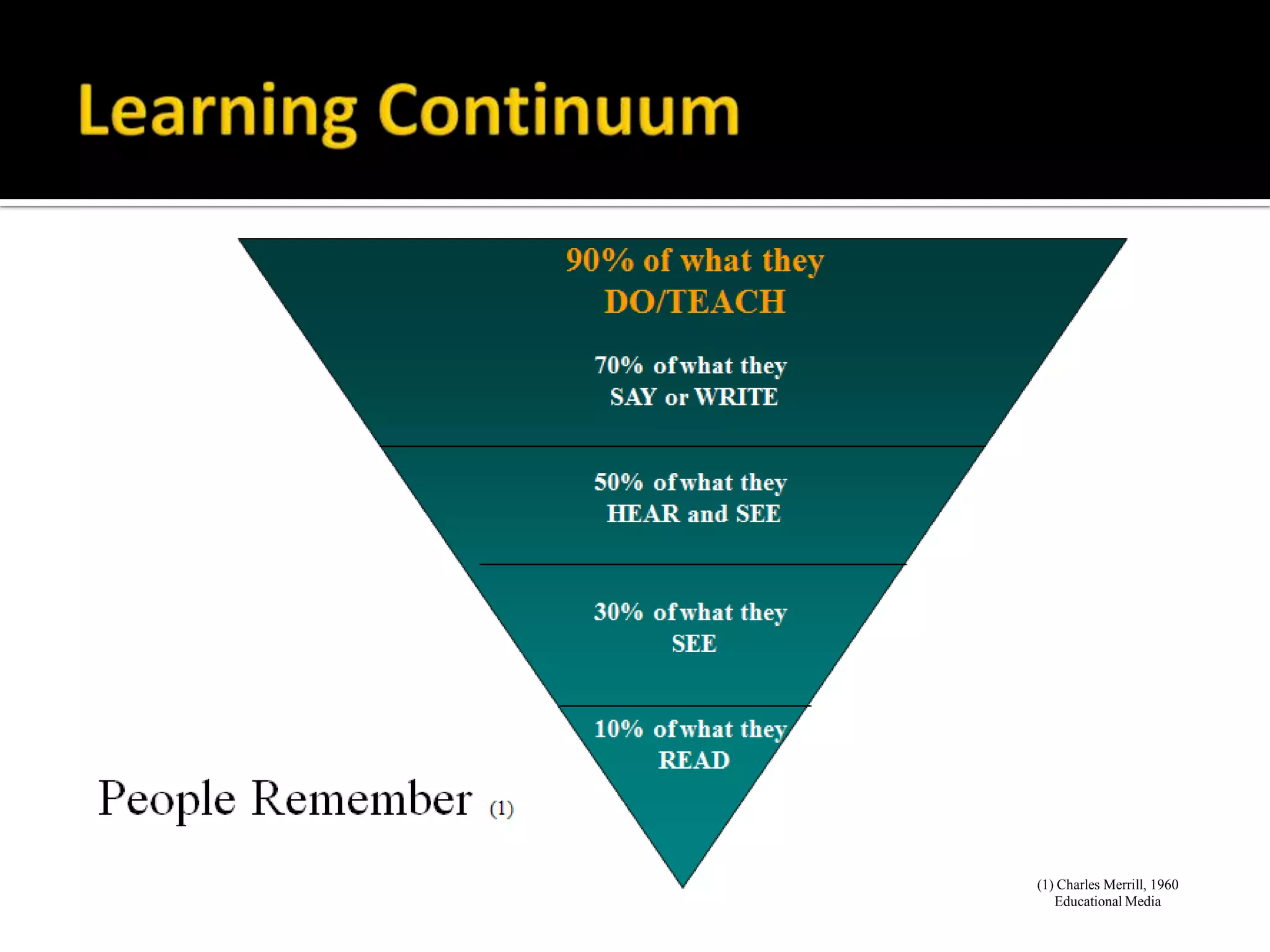
(1) Charles Merrill, 1960
Educational Media
Development of Learning Community
 Communication activities build a sense of
community
▪ Student-student interaction
▪ Student-instructor interaction
 Collaboration activities reinforce course content
and learning outcomes
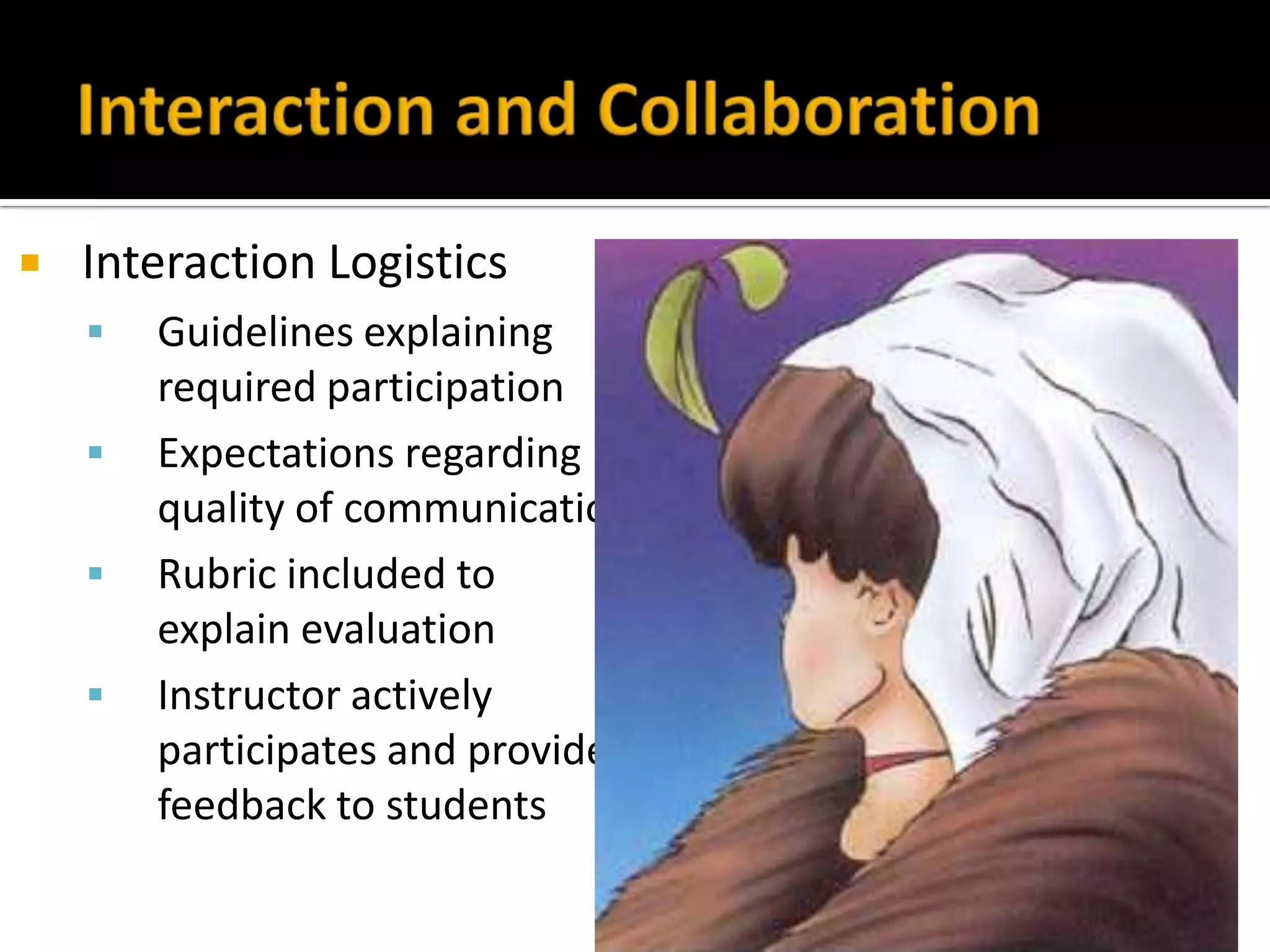
 Interaction Logistics
 Guidelines explaining
required participation
 Expectations regarding
quality of communication
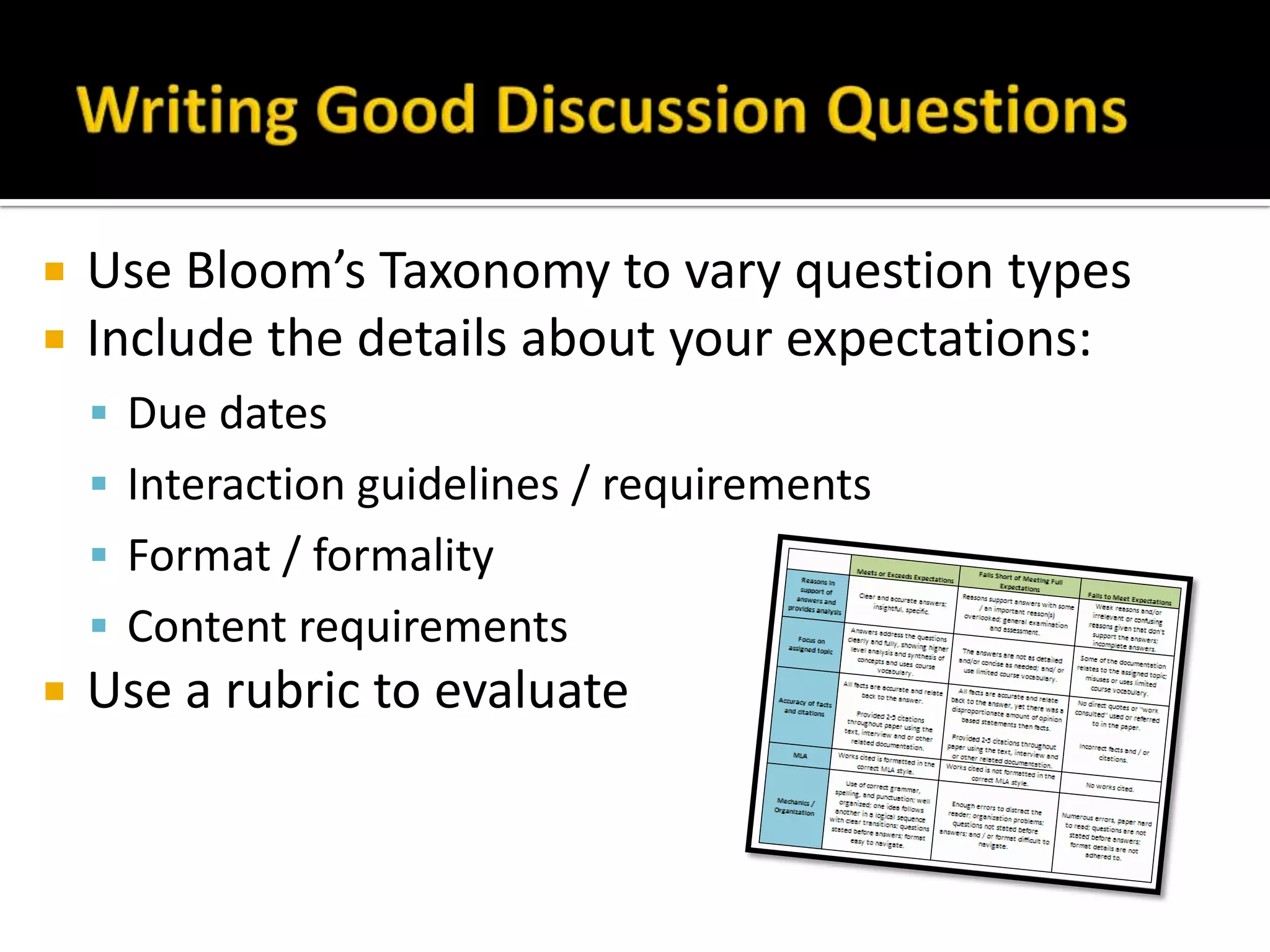
 Rubric included to
explain evaluation
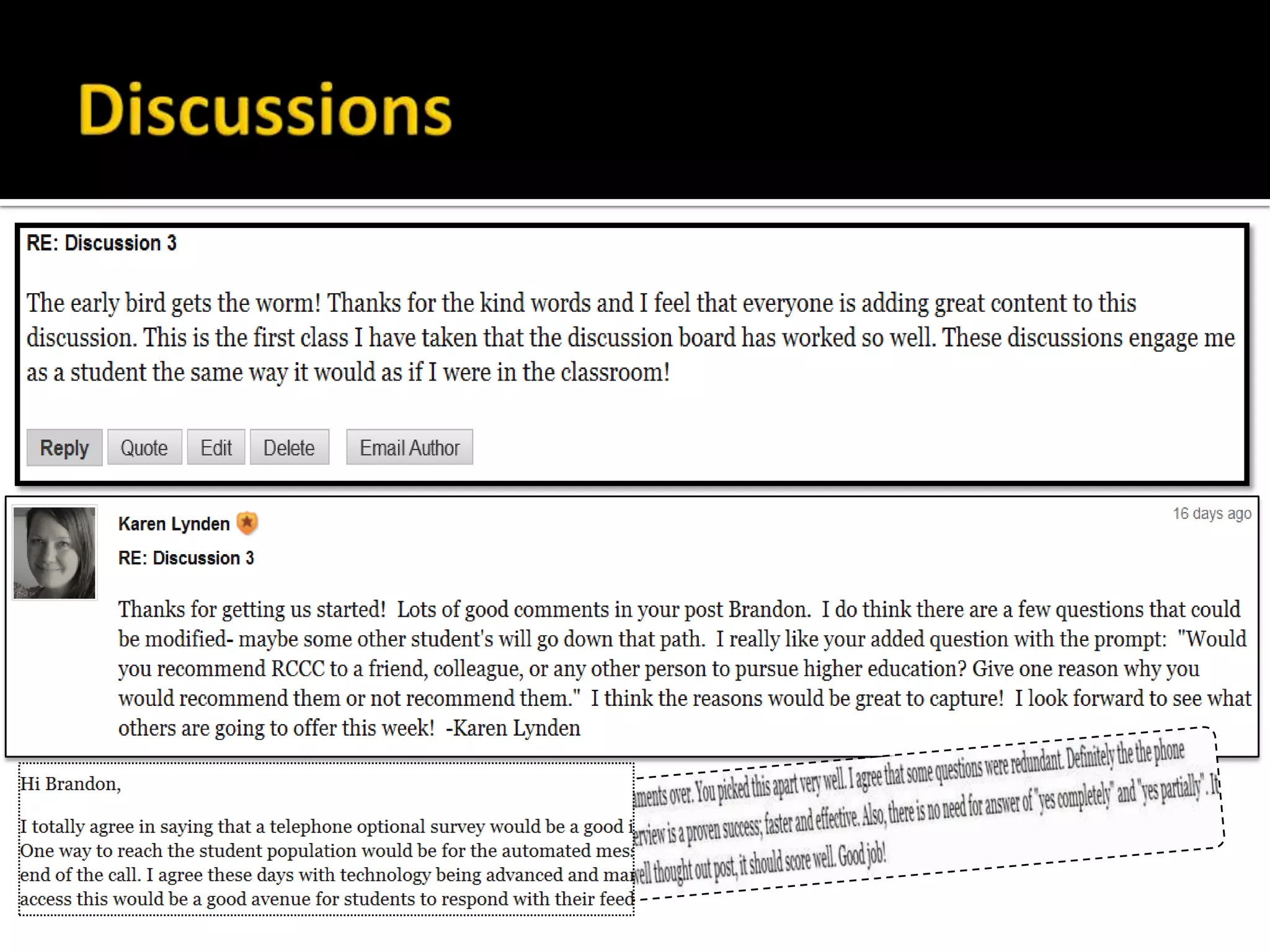
 Instructor actively
participates and provides
feedback to students
 Clearly communicate expectations
for participation in the groups and
criteria for evaluation
 Use discussion boards and other
interactive activities to encourage
critical thinking and inquiry
 Establish rubrics for evaluation of
discussion posts
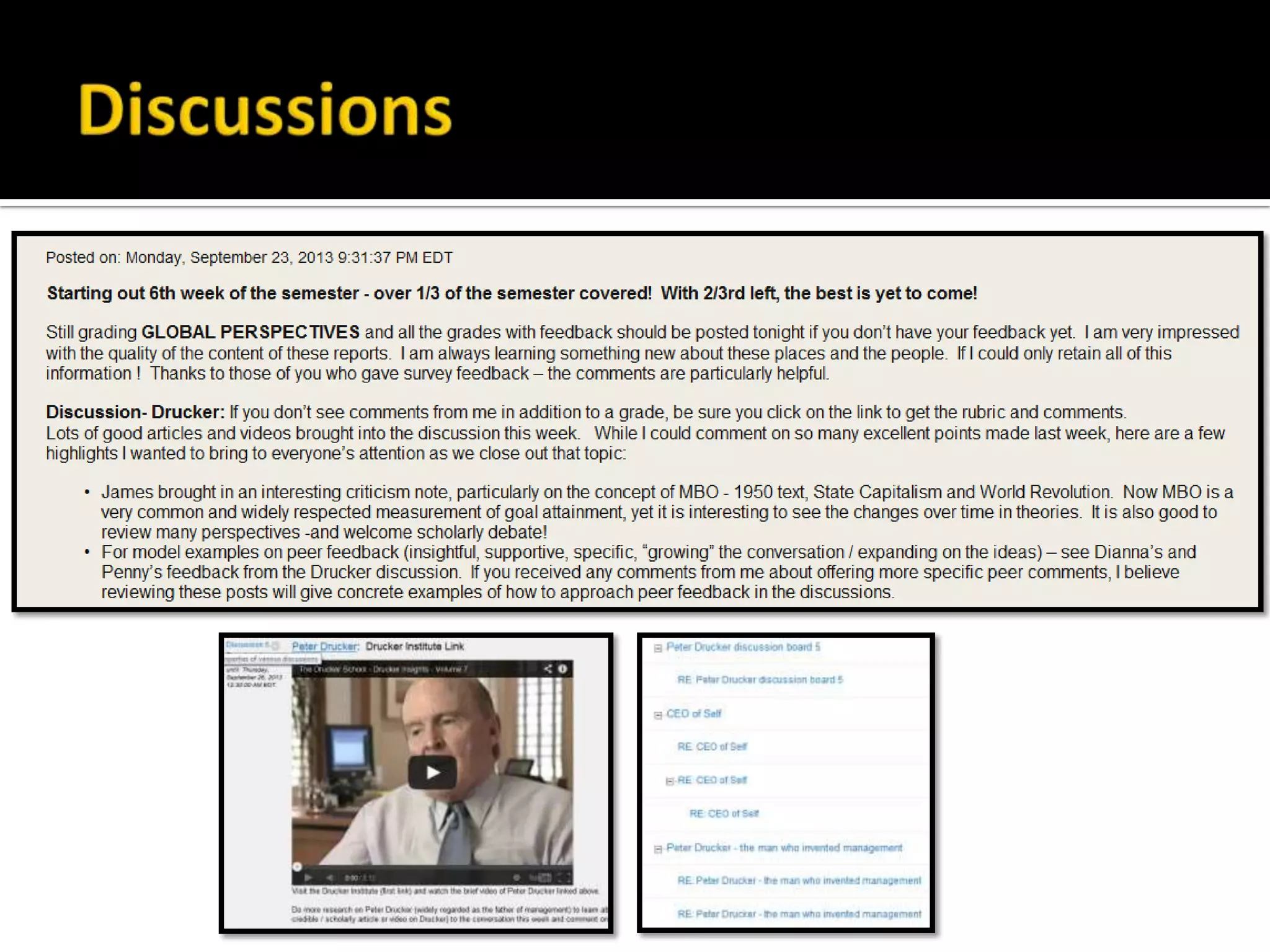
 Provide feedback to students via
announcements and email as
appropriate
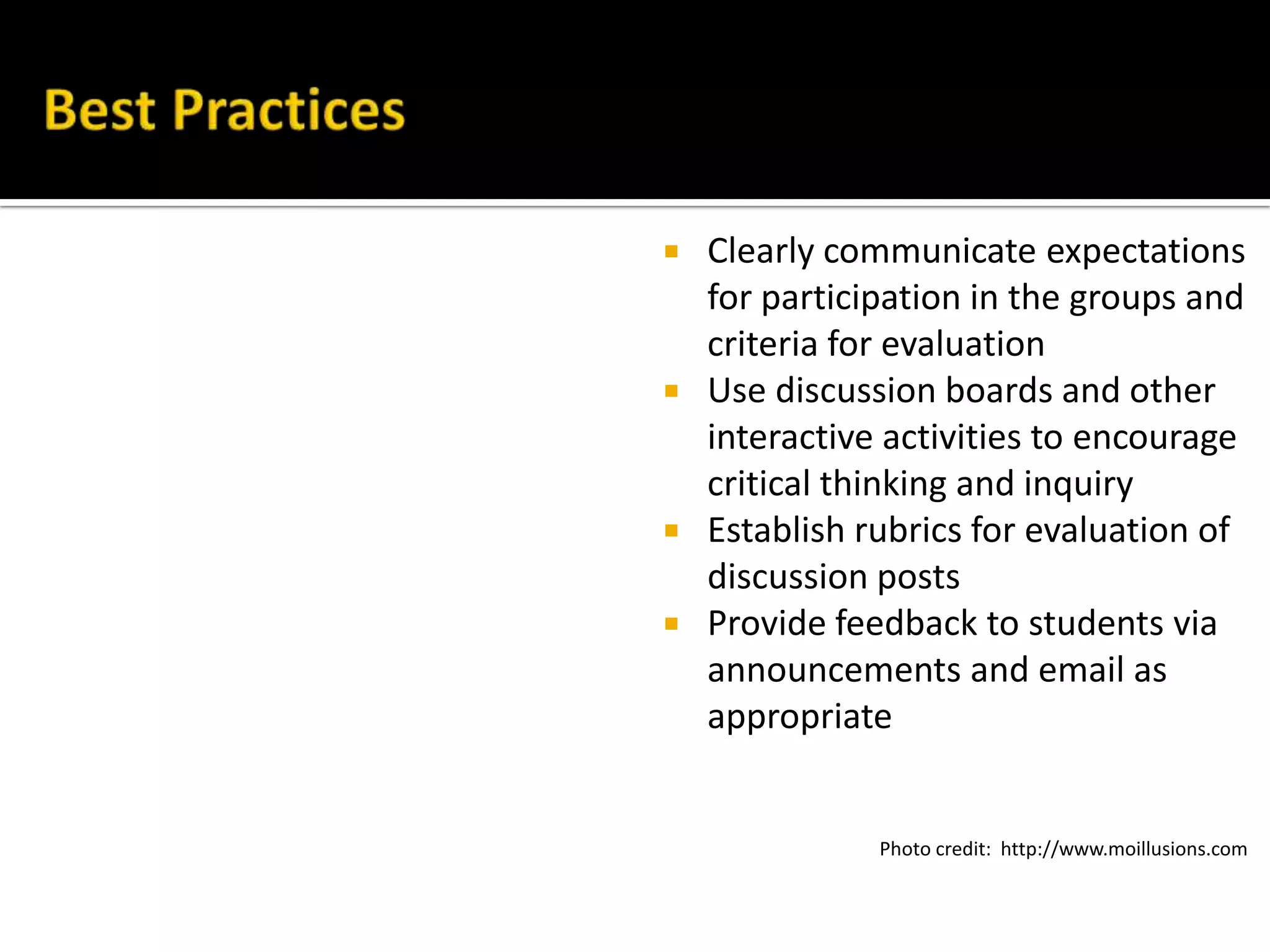
Photo credit: http://www.moillusions.com
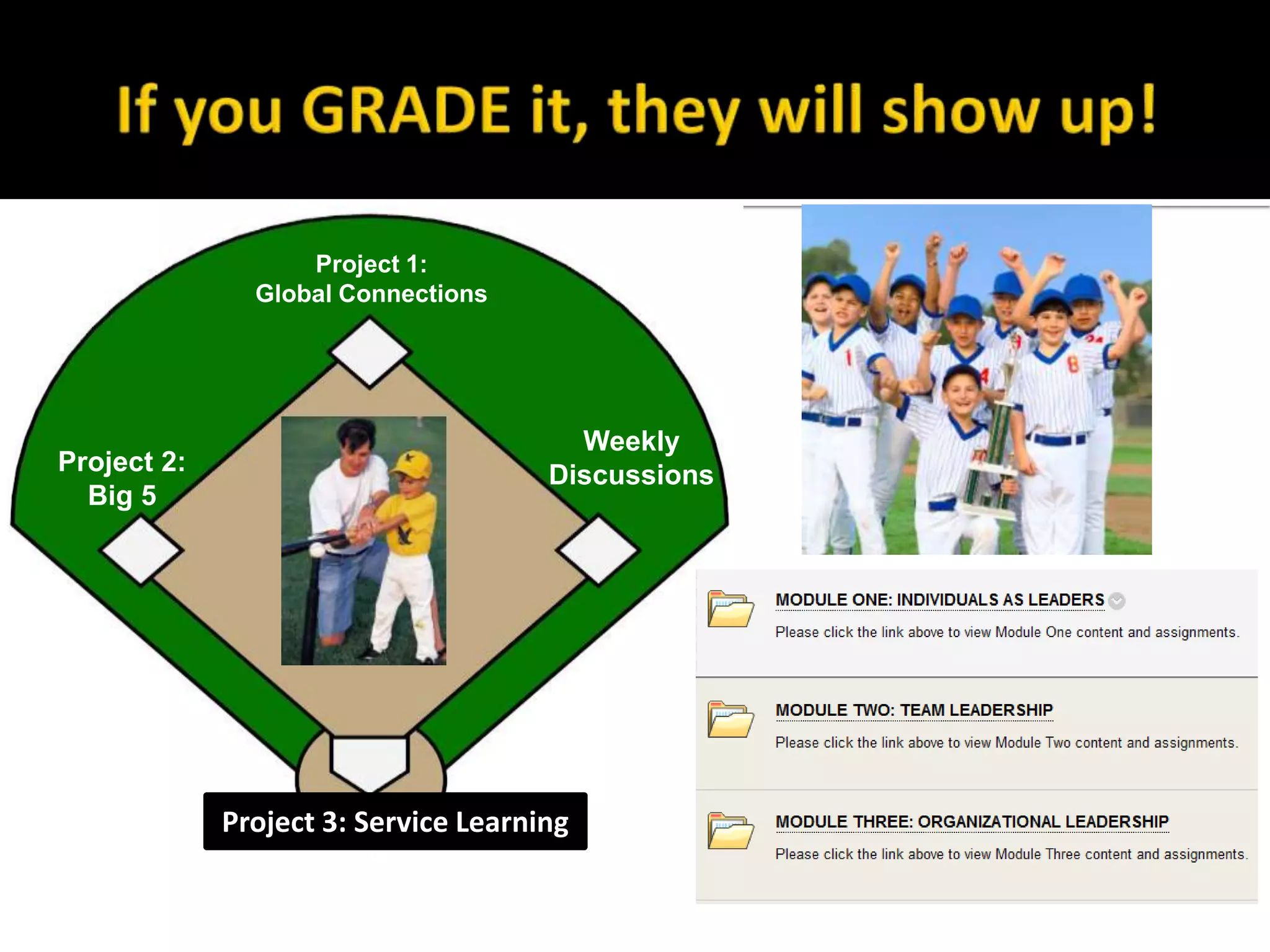
Weekly
Discussions
Project 1:
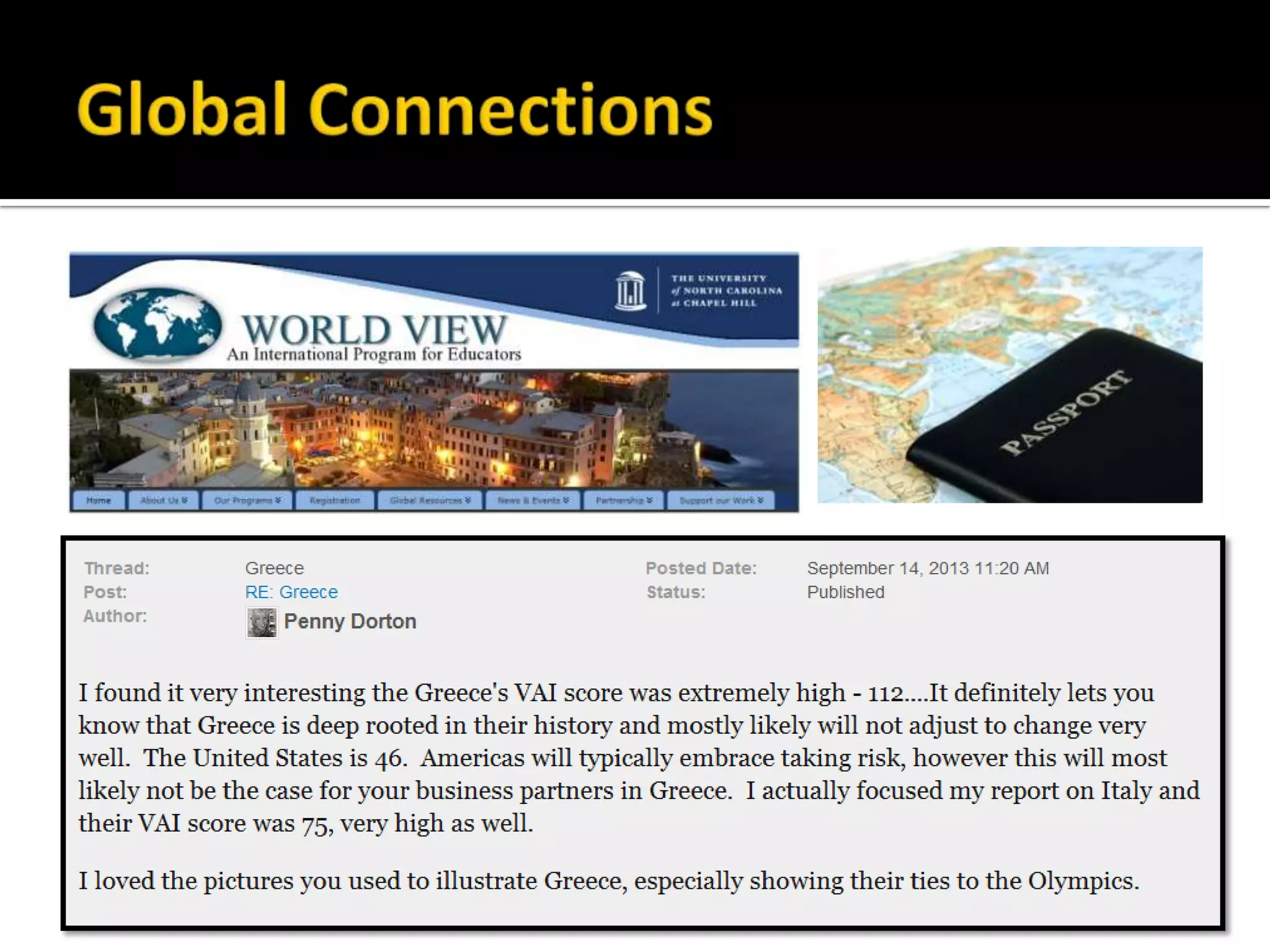
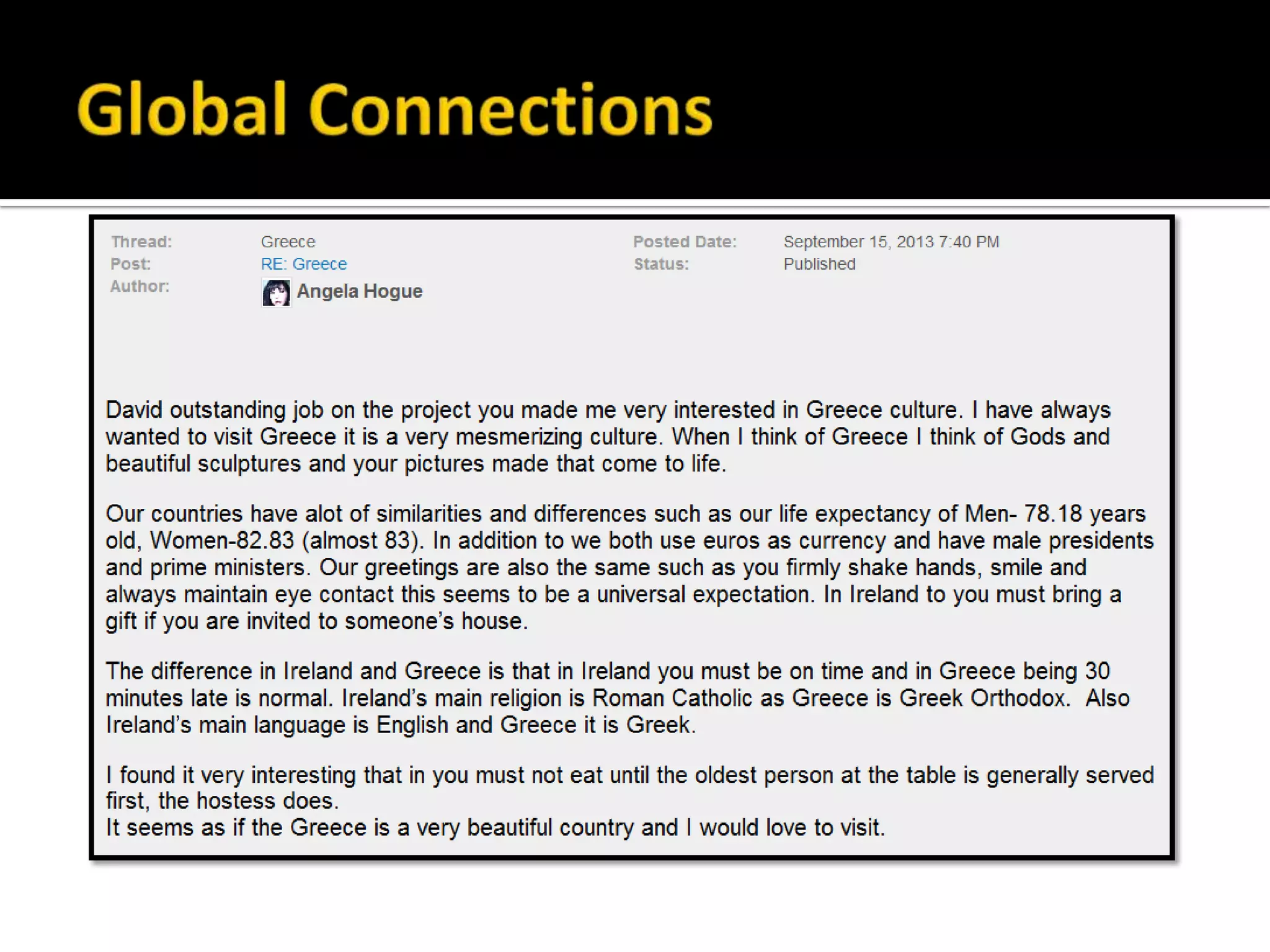
Global Connections
Project 2:
Big 5
Project 3: Service Learning
 Use Bloom’s Taxonomy to vary question types
 Include the details about your expectations:
 Due dates
 Interaction guidelines / requirements
 Format / formality
 Content requirements
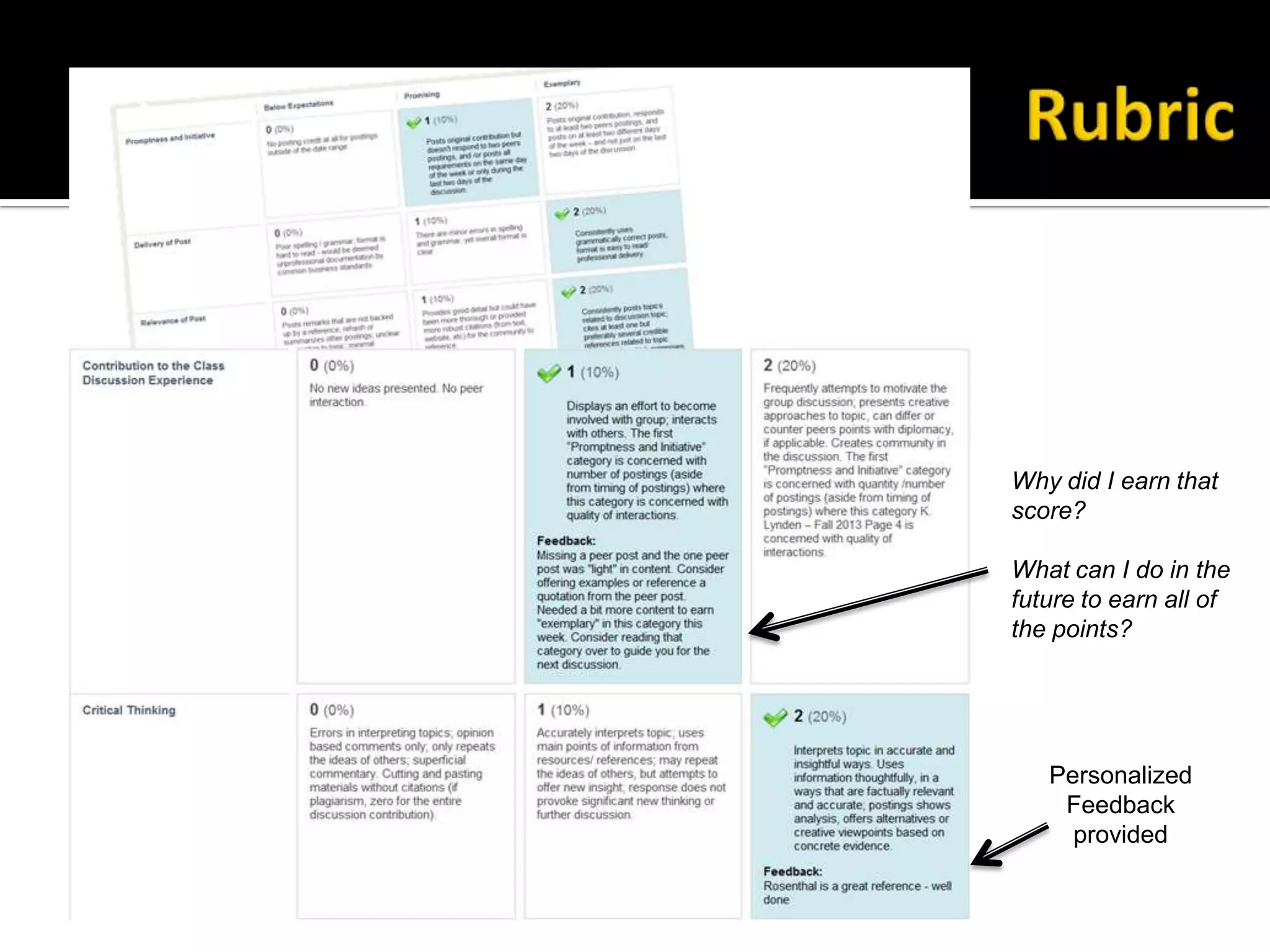
 Use a rubric to evaluate
Why did I earn that
score?
What can I do in the
future to earn all of
the points?
Personalized
Feedback
provided
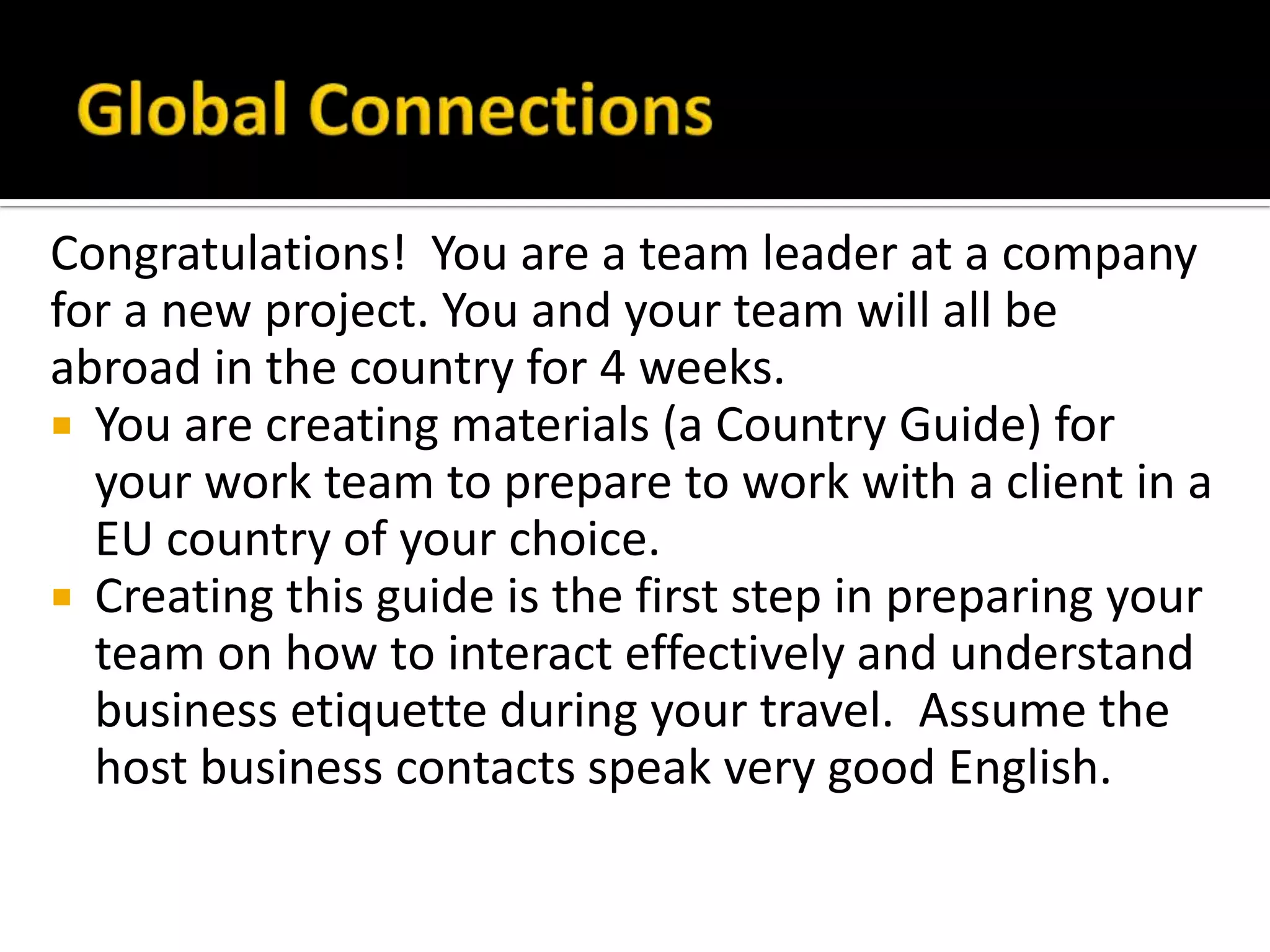
Congratulations! You are a team leader at a company
for a new project. You and your team will all be
abroad in the country for 4 weeks.
 You are creating materials (a Country Guide) for
your work team to prepare to work with a client in a
EU country of your choice.

 Creating this guide is the first step in preparing your
team on how to interact effectively and understand
business etiquette during your travel. Assume the
host business contacts speak very good English.
Photo credit: http://www.flickr.com/photos/cdossett/7173791471/
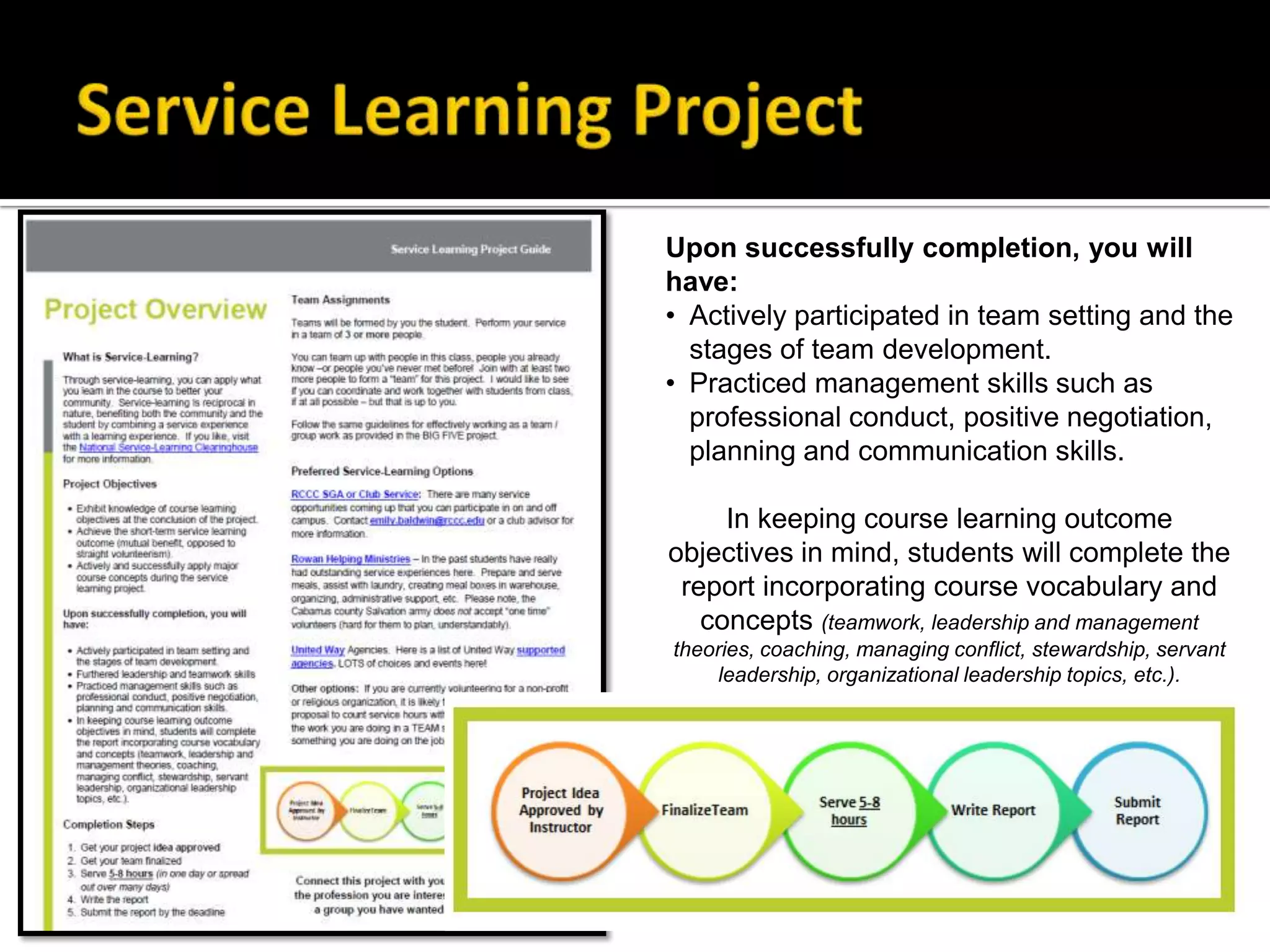
Upon successfully completion, you will
have:
• Actively participated in team setting and the
stages of team development.
• Practiced management skills such as
professional conduct, positive negotiation,
planning and communication skills.
In keeping course learning outcome
objectives in mind, students will complete the
report incorporating course vocabulary and
concepts (teamwork, leadership and management
theories, coaching, managing conflict, stewardship, servant
leadership, organizational leadership topics, etc.).
41
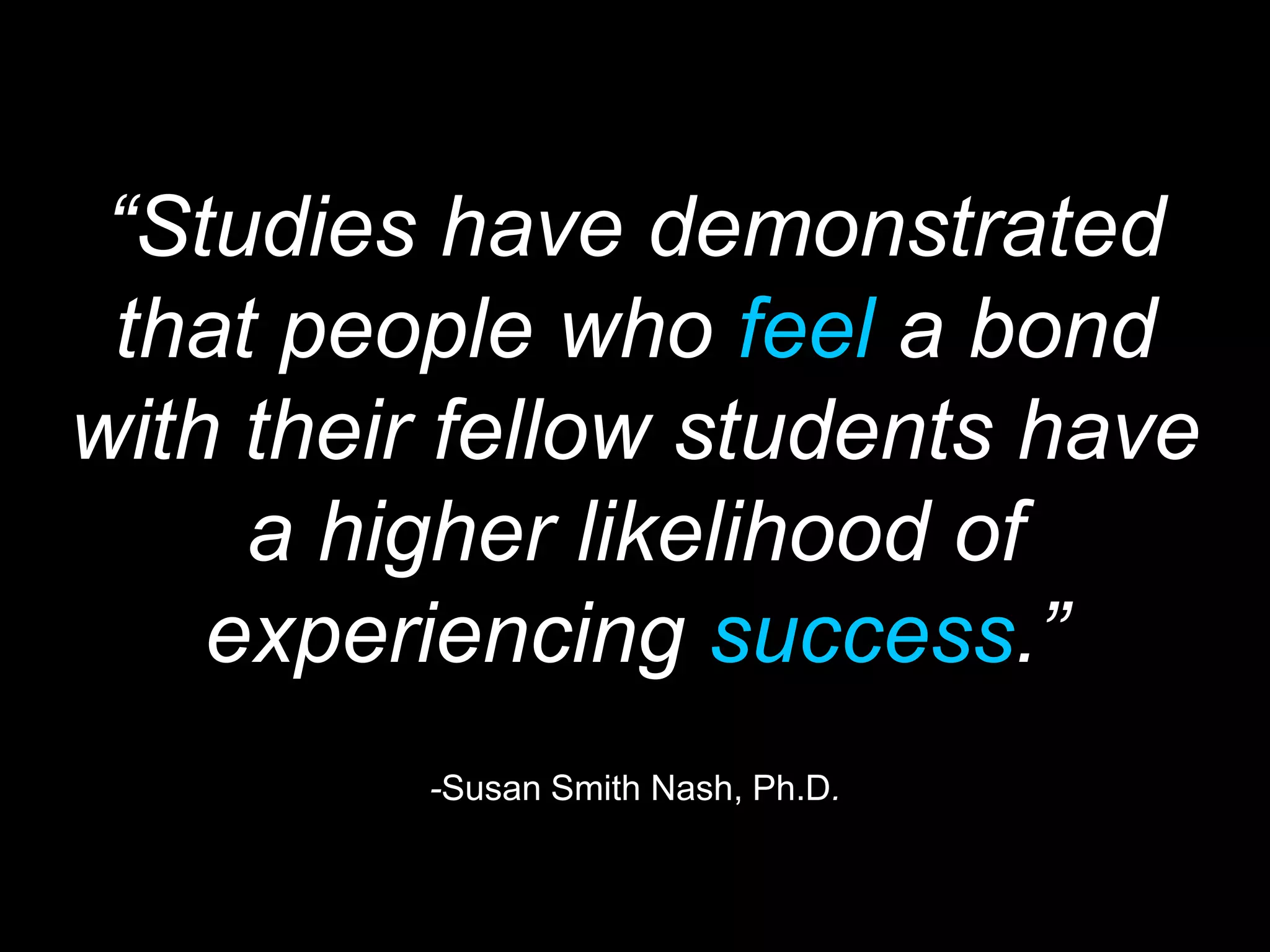
“Studies have demonstrated
that people who feel a bond
with their fellow students have
a higher likelihood of
experiencing success.”
-Susan Smith Nash, Ph.D.
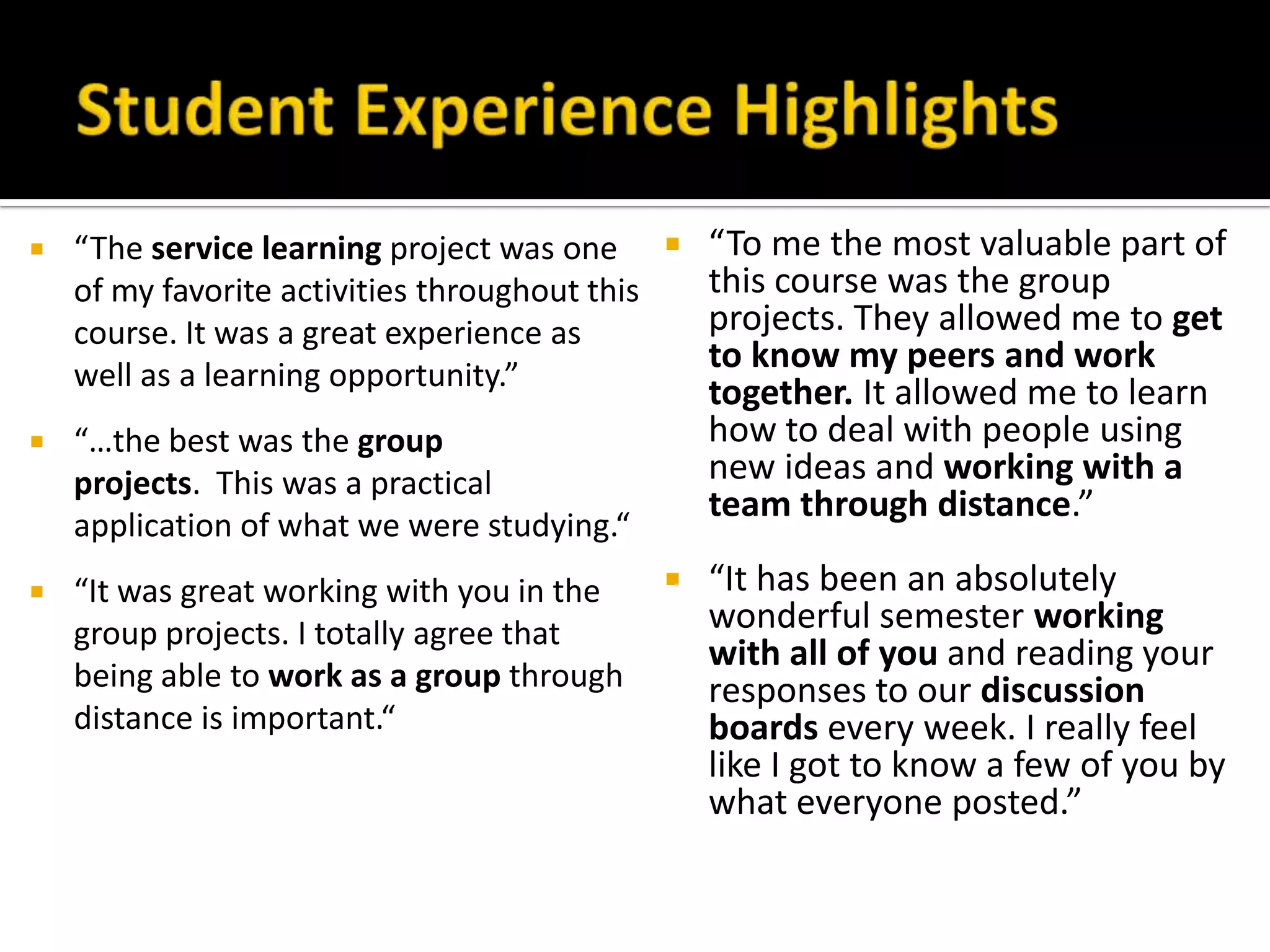
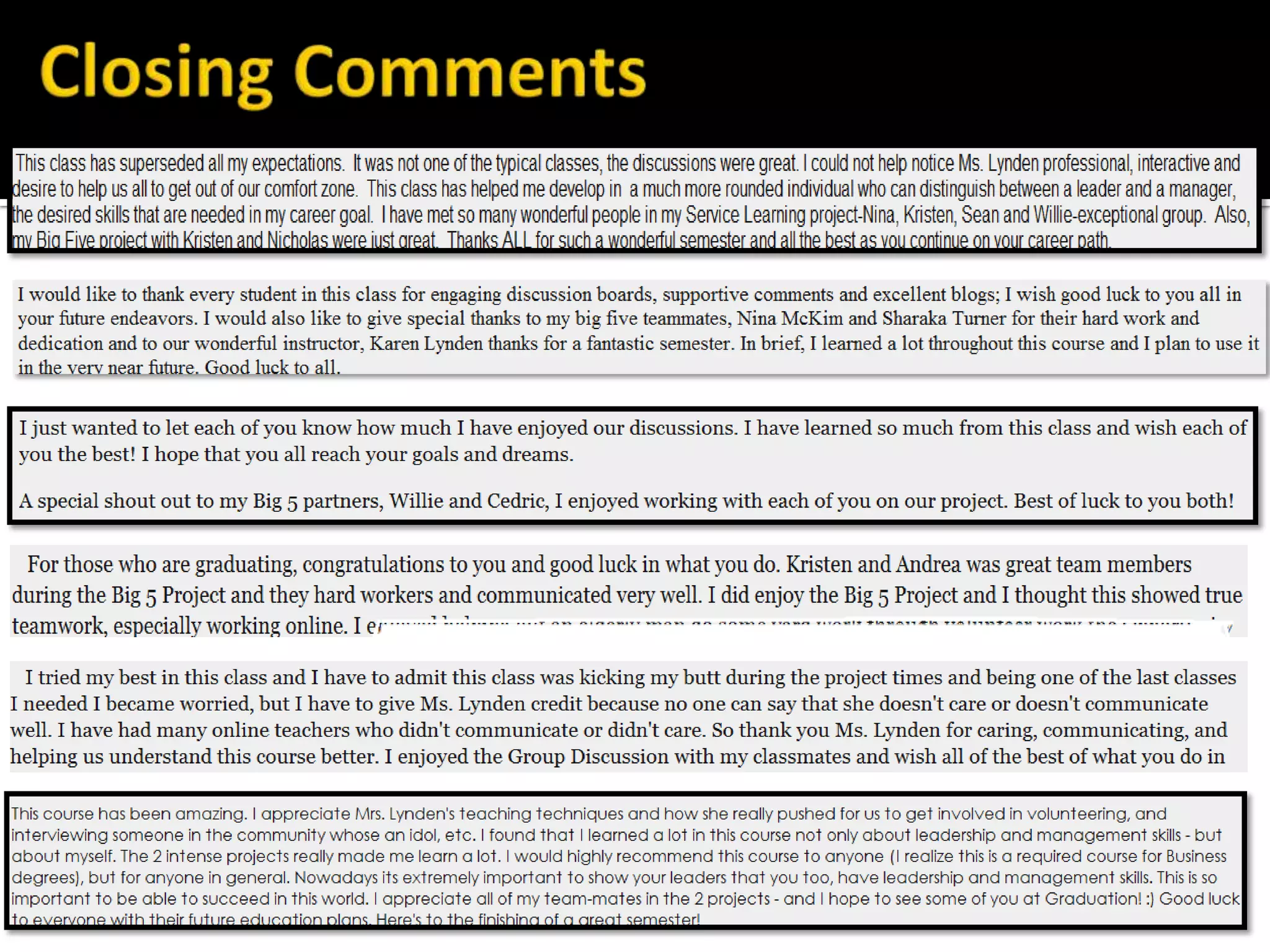
 “The service learning project was one
of my favorite activities throughout this
course. It was a great experience as
well as a learning opportunity.”
 “…the best was the group
projects. This was a practical
application of what we were studying.“
 “It was great working with you in the
group projects. I totally agree that
being able to work as a group through
distance is important.“
 “To me the most valuable part of
this course was the group
projects. They allowed me to get
to know my peers and work
together. It allowed me to learn
how to deal with people using
new ideas and working with a
team through distance.”
 “It has been an absolutely
wonderful semester working
with all of you and reading your
responses to our discussion
boards every week. I really feel
like I got to know a few of you by
what everyone posted.”
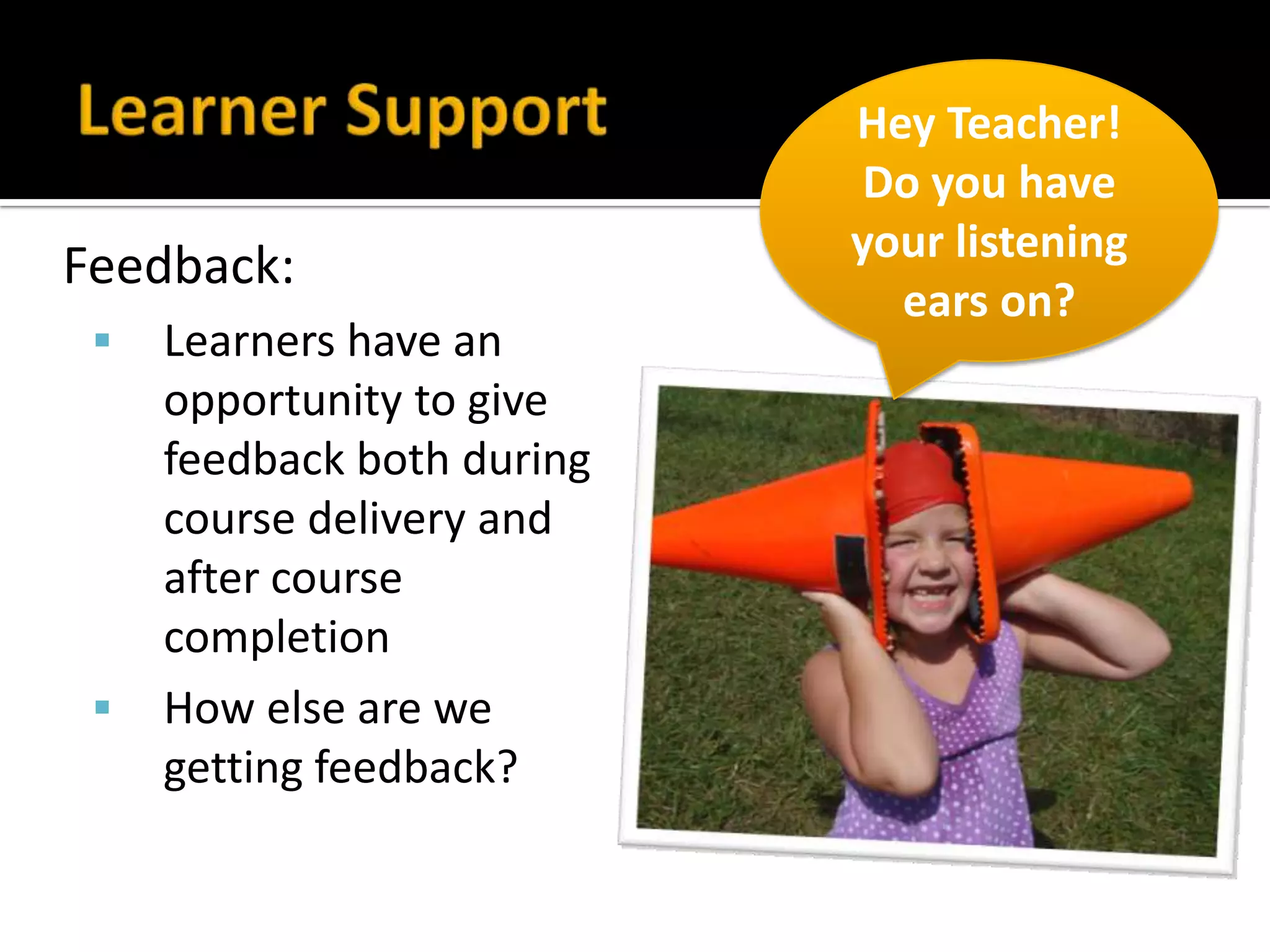
Feedback:
 Learners have an
opportunity to give
feedback both during
course delivery and
after course
completion
 How else are we
getting feedback?
Hey Teacher!
Do you have
your listening
ears on?
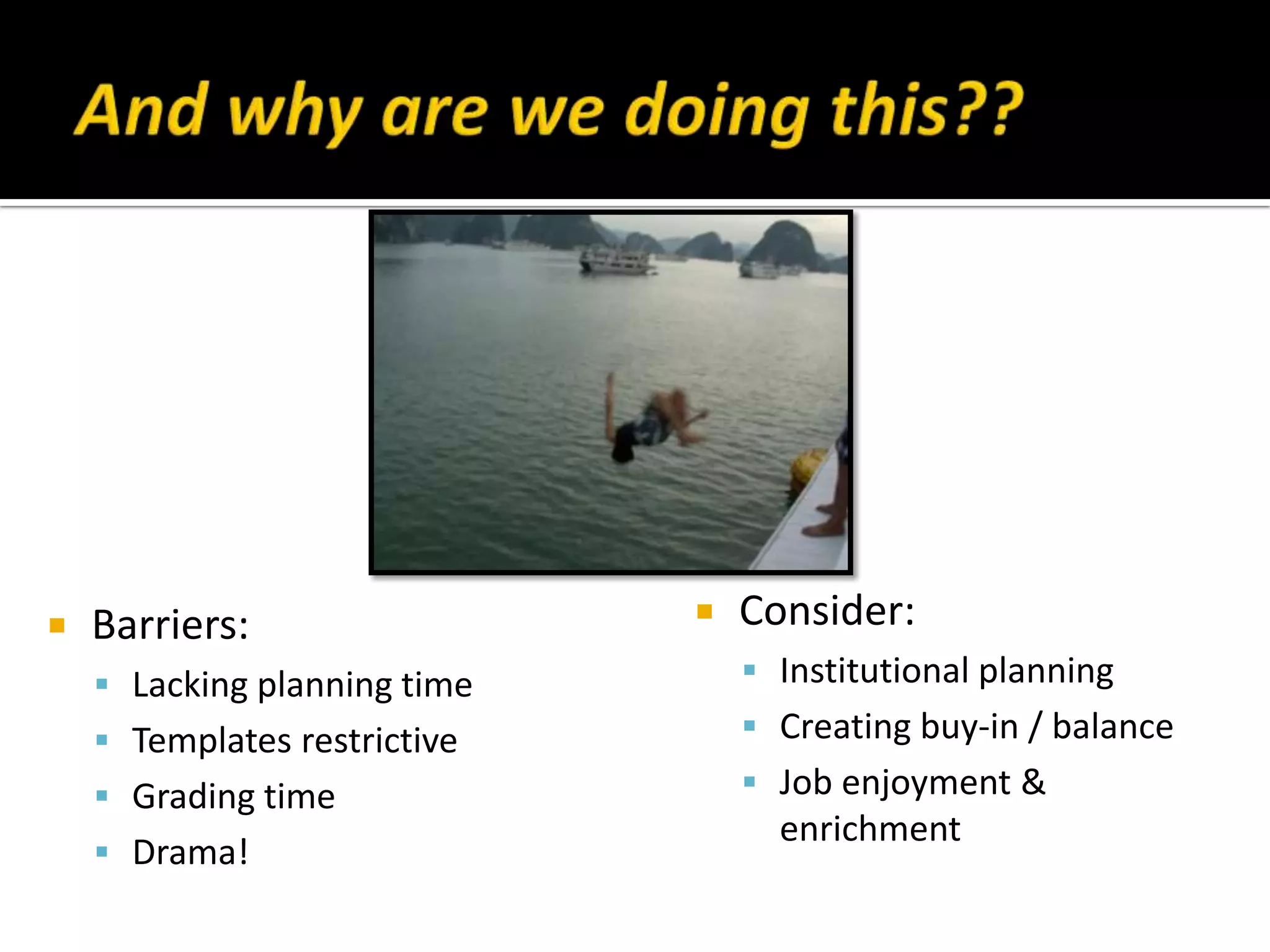
 Barriers:
 Lacking planning time
 Templates restrictive
 Grading time
 Drama!
 Consider:
 Institutional planning
 Creating buy-in / balance
 Job enjoyment &
enrichment
Idea! When? Notes
Creating Engaging Student Communities in the Online Classroom, Karen Lynden

Creating Engaging Student Communities in the Online Classroom, Karen Lynden

  • 1.
  • 2.
     Discuss howto create community and collaboration in the online classroom.  Techniques explored:  Discussion assignments  Dynamic group projects  Service-learning projects  Share implementation strategies & assignment examples.
  • 3.
  • 4.
    Please share your… Name  Institution  Role / Title  Interest in this session topic
  • 5.
    1. Lack ofpersonal connection between student and teacher 2. Lack of personal connection - peer to peer 3. Lack of real-world experience for the student 4. Lack of personal expression / opportunity to question and debate 5. Lack of ability to verify test validity
  • 6.
    What is thelevel of engagement offered by the course and what student interaction & collaboration takes place?
  • 7.
     Instructions:  Gatherinto groups  Select a scribe & spokesperson  Answer the following questions & prepare to share your group’s answers Questions: What are the obstacles in creating “an engaging online student community in a course?” How do you know a “an engaging student community” was created? What elements of your course(s) have been most effective in supporting / creating “an engaging online student community in a course?”
  • 8.
  • 9.
    What is thelevel of engagement offered by the course?  First impressions  Foundation / planning
  • 10.
     Opening announcement Faculty Information  Can you connect to me?  See me  Hear me  Reach me
  • 12.
     And soare you!  Students get to know my voice from the beginning: ▪ Audio introduction ▪ Jing presentations ▪ Interviews for projects ▪ Tone of written communication  I get to know you too: ▪ Discussion boards ▪ Reports and projects ▪ Encouraging phone calls (or office meetings if that works for the student)
  • 13.
    Communication Strategies  Providemultiple opportunities for interaction ▪ Asynchronous communication promotes critical reflection ▪ Synchronous activities offer real-time interactions Are you incorporating synchronous activities in your online classes?  Just phone calls upon request?  Not frequently but have offered opportunities for real-time interactions?  If yes.. How?
  • 14.
    14 Tools Possible Use Discussion Boards Chat/ VC (text or video) Group Features Email / Messages Blogs/Wikis/ Journals
  • 15.
     Is thecourse designed before students enter?  If not, why?  Is the course design easy to navigate?
  • 18.
     What uniqueexperiences are offered in the course?  What authentic experiences are offered in the course?
  • 19.
     What studentinteraction & collaboration takes place?  Examples Shared:  Discussion Boards  Group Projects: ▪ E.U. Global Perspectives ▪ Big 5 ▪ Service Learning
  • 20.
    20 (1) Charles Merrill,1960 Educational Media
  • 21.
    Development of LearningCommunity  Communication activities build a sense of community ▪ Student-student interaction ▪ Student-instructor interaction  Collaboration activities reinforce course content and learning outcomes
  • 22.
     Interaction Logistics Guidelines explaining required participation  Expectations regarding quality of communication  Rubric included to explain evaluation  Instructor actively participates and provides feedback to students
  • 23.
     Clearly communicateexpectations for participation in the groups and criteria for evaluation  Use discussion boards and other interactive activities to encourage critical thinking and inquiry  Establish rubrics for evaluation of discussion posts  Provide feedback to students via announcements and email as appropriate Photo credit: http://www.moillusions.com
  • 24.
  • 25.
     Use Bloom’sTaxonomy to vary question types  Include the details about your expectations:  Due dates  Interaction guidelines / requirements  Format / formality  Content requirements  Use a rubric to evaluate
  • 26.
    Why did Iearn that score? What can I do in the future to earn all of the points? Personalized Feedback provided
  • 30.
    Congratulations! You area team leader at a company for a new project. You and your team will all be abroad in the country for 4 weeks.  You are creating materials (a Country Guide) for your work team to prepare to work with a client in a EU country of your choice.  Creating this guide is the first step in preparing your team on how to interact effectively and understand business etiquette during your travel. Assume the host business contacts speak very good English.
  • 39.
  • 40.
    Upon successfully completion,you will have: • Actively participated in team setting and the stages of team development. • Practiced management skills such as professional conduct, positive negotiation, planning and communication skills. In keeping course learning outcome objectives in mind, students will complete the report incorporating course vocabulary and concepts (teamwork, leadership and management theories, coaching, managing conflict, stewardship, servant leadership, organizational leadership topics, etc.).
  • 41.
    41 “Studies have demonstrated thatpeople who feel a bond with their fellow students have a higher likelihood of experiencing success.” -Susan Smith Nash, Ph.D.
  • 43.
     “The servicelearning project was one of my favorite activities throughout this course. It was a great experience as well as a learning opportunity.”  “…the best was the group projects. This was a practical application of what we were studying.“  “It was great working with you in the group projects. I totally agree that being able to work as a group through distance is important.“  “To me the most valuable part of this course was the group projects. They allowed me to get to know my peers and work together. It allowed me to learn how to deal with people using new ideas and working with a team through distance.”  “It has been an absolutely wonderful semester working with all of you and reading your responses to our discussion boards every week. I really feel like I got to know a few of you by what everyone posted.”
  • 44.
    Feedback:  Learners havean opportunity to give feedback both during course delivery and after course completion  How else are we getting feedback? Hey Teacher! Do you have your listening ears on?
  • 47.
     Barriers:  Lackingplanning time  Templates restrictive  Grading time  Drama!  Consider:  Institutional planning  Creating buy-in / balance  Job enjoyment & enrichment
  • 48.