Unit-1:
Concepts & Components of HRM
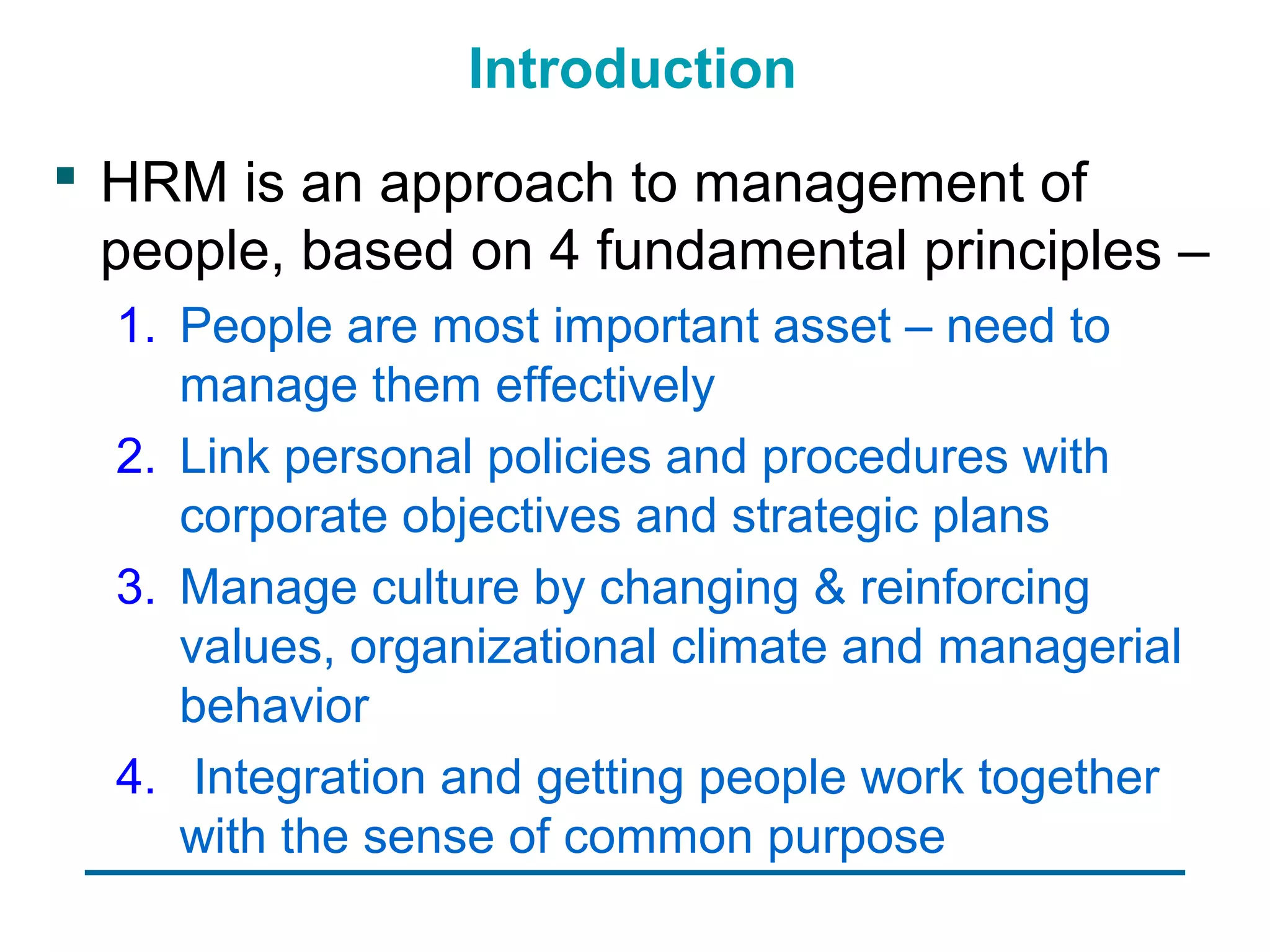
Introduction
 HRM is an approach to management of
  people, based on 4 fundamental principles –
  1. People are most important asset – need to
     manage them effectively
  2. Link personal policies and procedures with
     corporate objectives and strategic plans
  3. Manage culture by changing & reinforcing
     values, organizational climate and managerial
     behavior
  4. Integration and getting people work together
     with the sense of common purpose
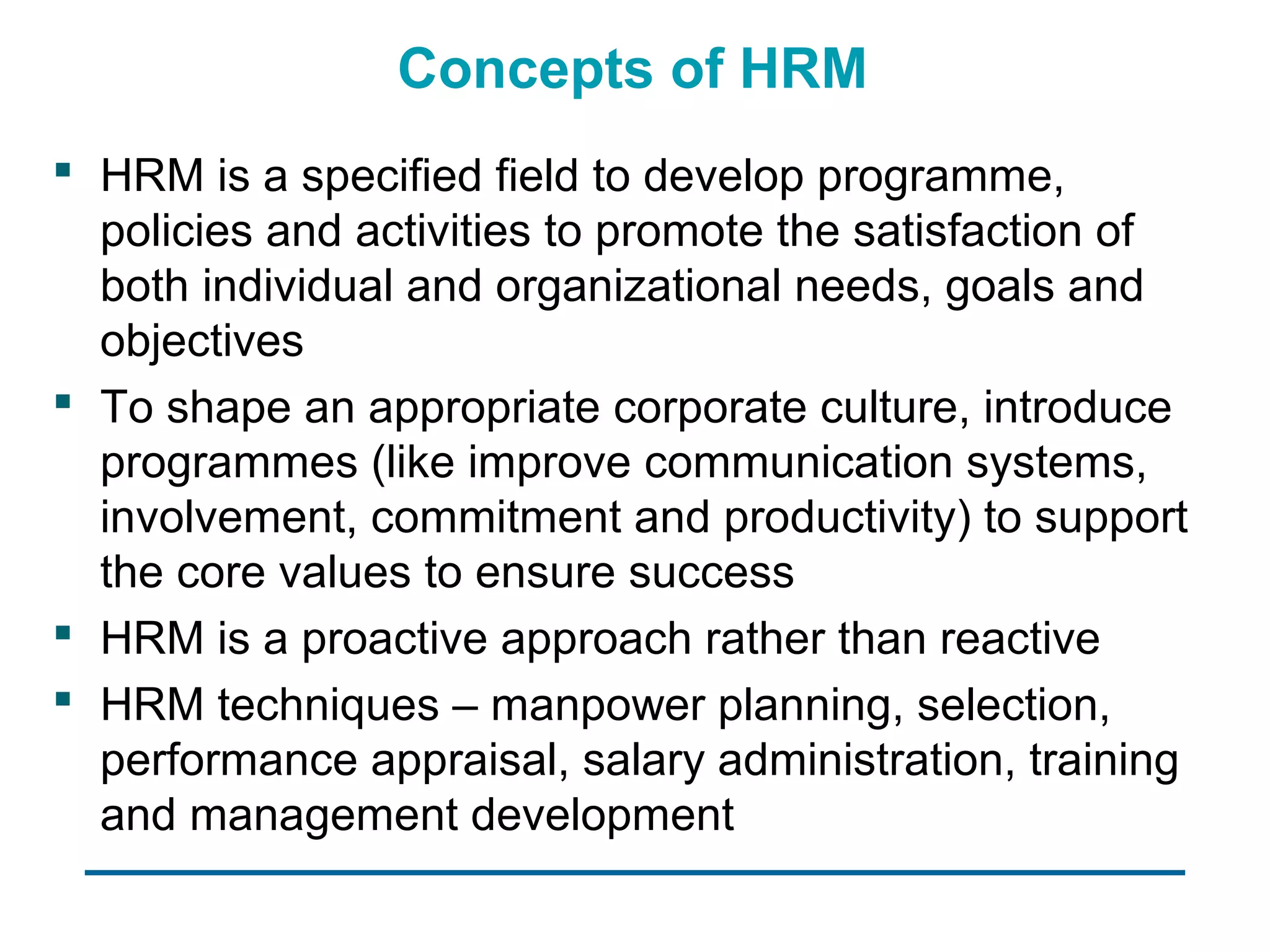
Concepts of HRM
 HRM is a specified field to develop programme,
  policies and activities to promote the satisfaction of
  both individual and organizational needs, goals and
  objectives
 To shape an appropriate corporate culture, introduce
  programmes (like improve communication systems,
  involvement, commitment and productivity) to support
  the core values to ensure success
 HRM is a proactive approach rather than reactive
 HRM techniques – manpower planning, selection,
  performance appraisal, salary administration, training
  and management development
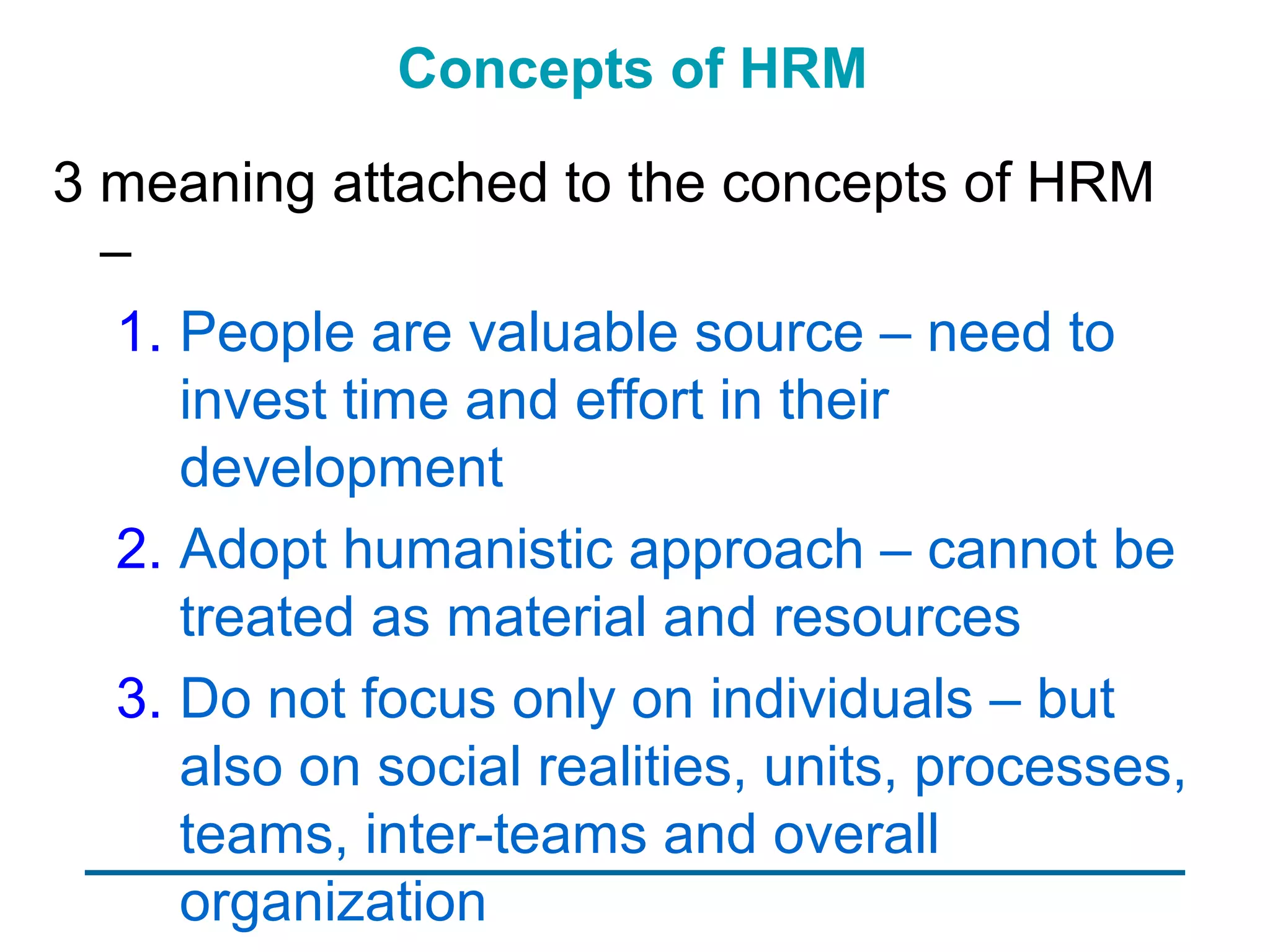
Concepts of HRM

3 meaning attached to the concepts of HRM
  –
   1. People are valuable source – need to
      invest time and effort in their
      development
   2. Adopt humanistic approach – cannot be
      treated as material and resources
   3. Do not focus only on individuals – but
      also on social realities, units, processes,
      teams, inter-teams and overall
      organization
Concepts of HRM
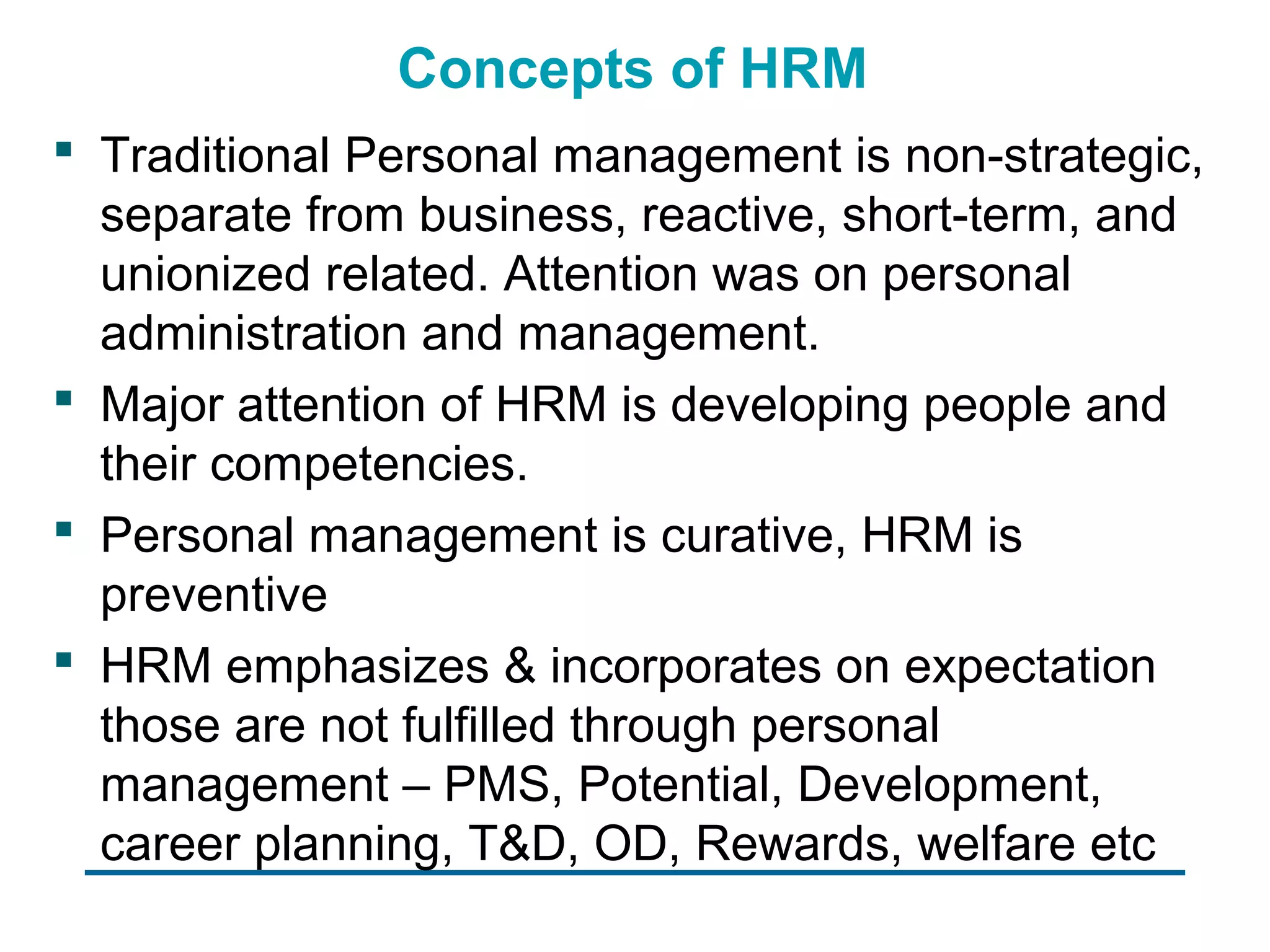
 Traditional Personal management is non-strategic,
  separate from business, reactive, short-term, and
  unionized related. Attention was on personal
  administration and management.
 Major attention of HRM is developing people and
  their competencies.
 Personal management is curative, HRM is
  preventive
 HRM emphasizes & incorporates on expectation
  those are not fulfilled through personal
  management – PMS, Potential, Development,
  career planning, T&D, OD, Rewards, welfare etc
Objectives of HRM
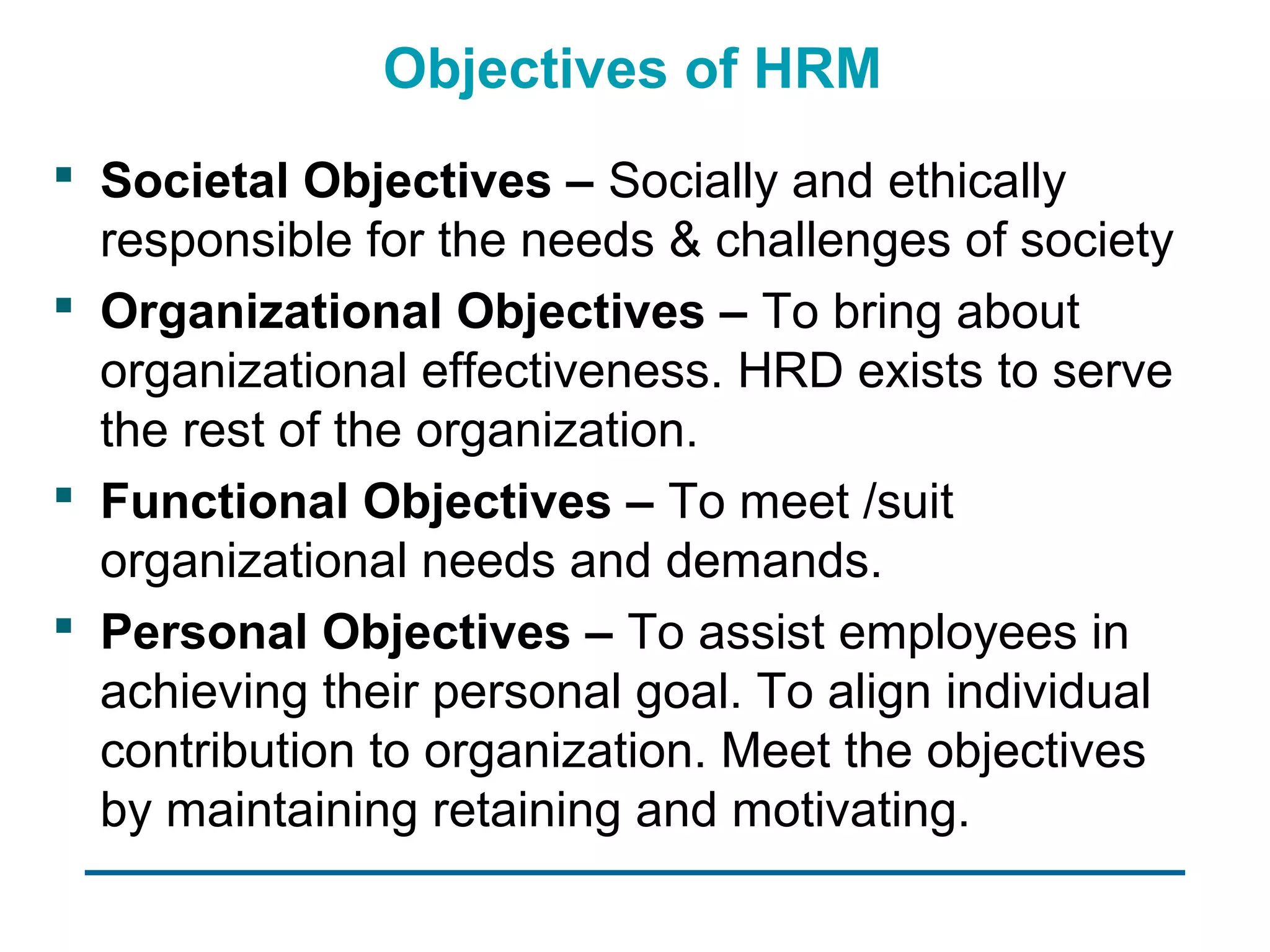
 Societal Objectives – Socially and ethically
  responsible for the needs & challenges of society
 Organizational Objectives – To bring about
  organizational effectiveness. HRD exists to serve
  the rest of the organization.
 Functional Objectives – To meet /suit
  organizational needs and demands.
 Personal Objectives – To assist employees in
  achieving their personal goal. To align individual
  contribution to organization. Meet the objectives
  by maintaining retaining and motivating.
Activity
    List out the objectives of HR
  department and their supporting
functions in your organization or an
  organization with which you are
                familiar
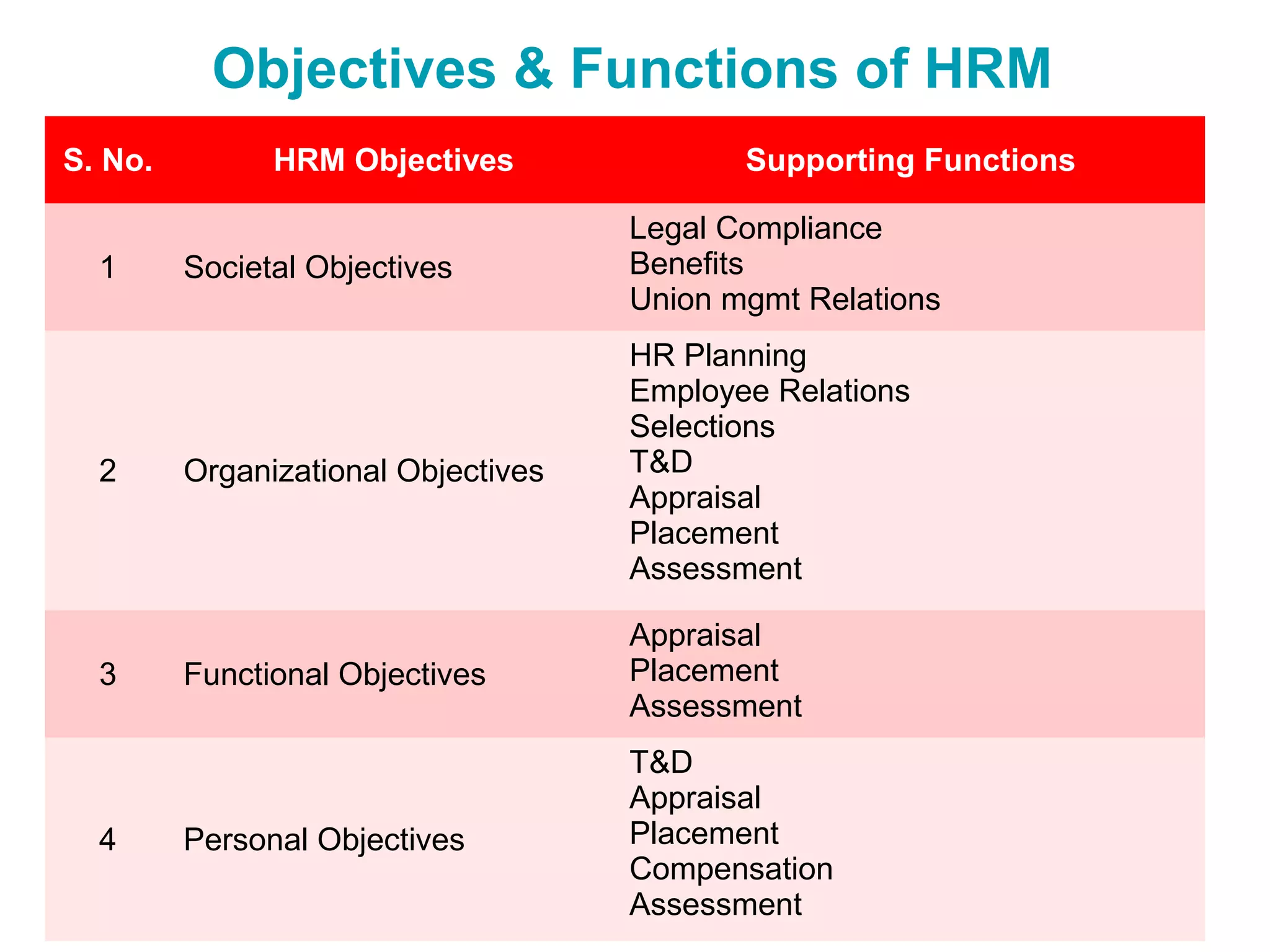
Objectives & Functions of HRM
S. No.         HRM Objectives               Supporting Functions

                                     Legal Compliance
  1      Societal Objectives         Benefits
                                     Union mgmt Relations
                                     HR Planning
                                     Employee Relations
                                     Selections
  2      Organizational Objectives   T&D
                                     Appraisal
                                     Placement
                                     Assessment

                                     Appraisal
  3      Functional Objectives       Placement
                                     Assessment
                                     T&D
                                     Appraisal
  4      Personal Objectives         Placement
                                     Compensation
                                     Assessment
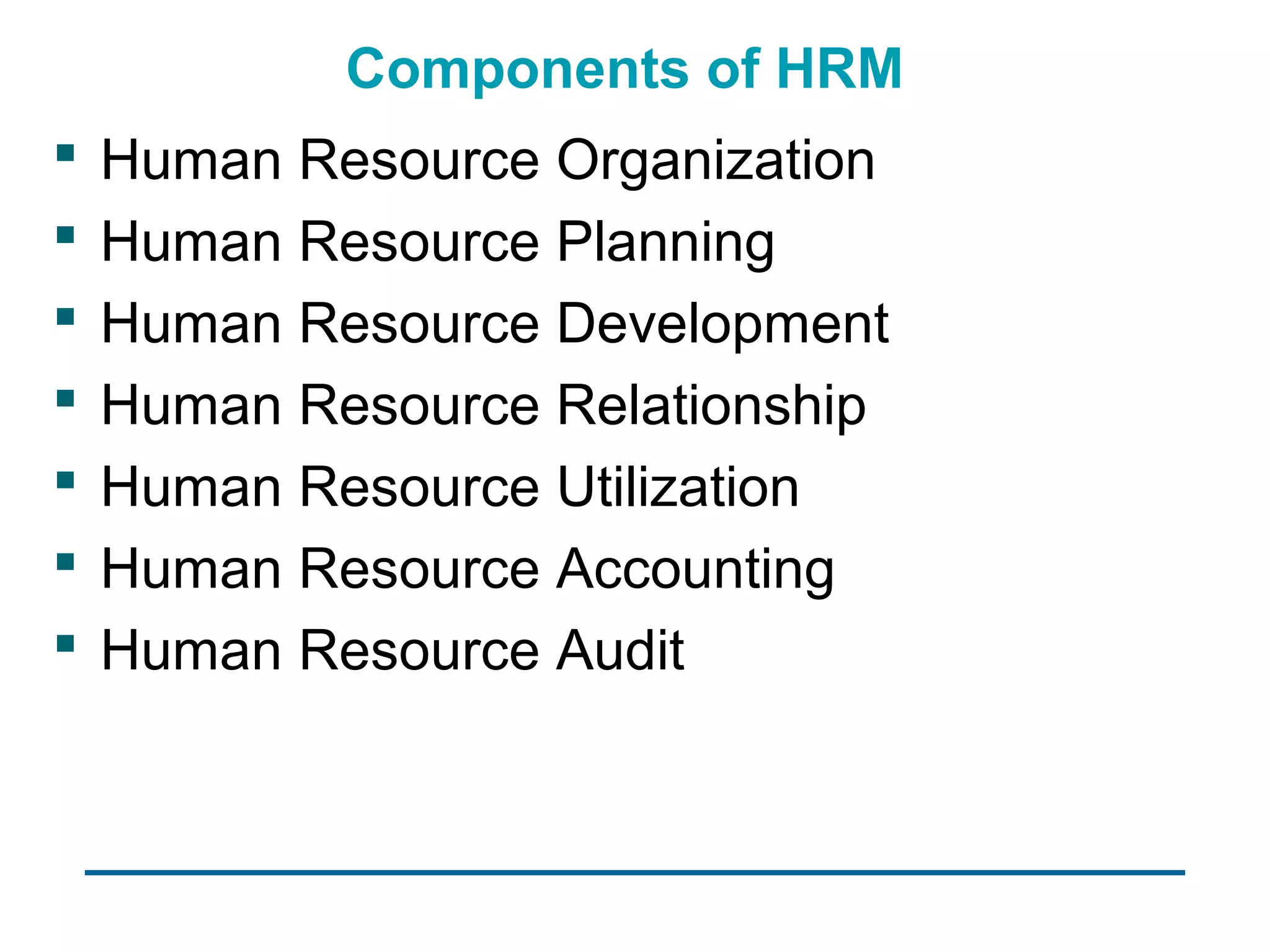
Components of HRM
   Human Resource Organization
   Human Resource Planning
   Human Resource Development
   Human Resource Relationship
   Human Resource Utilization
   Human Resource Accounting
   Human Resource Audit
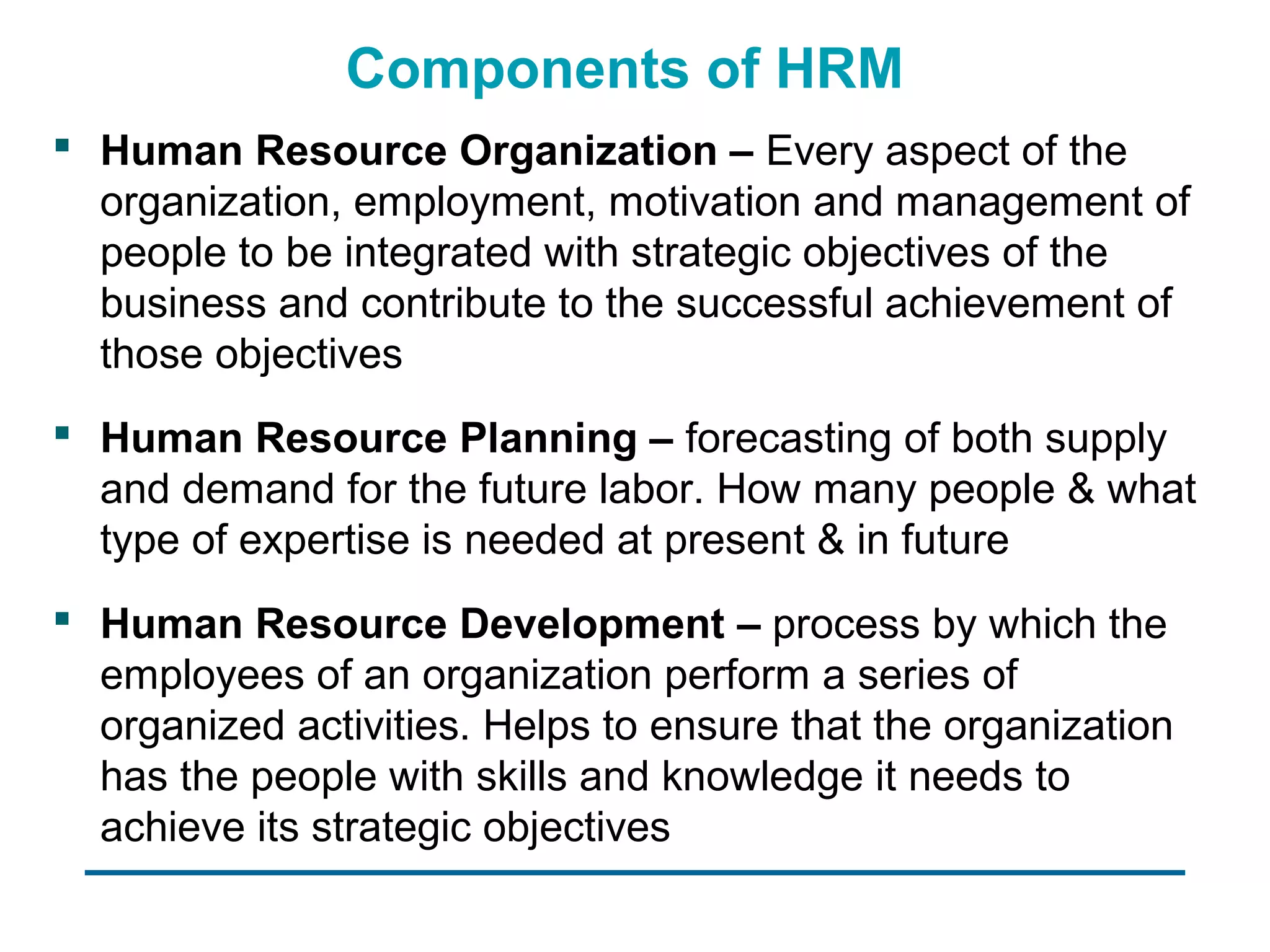
Components of HRM
 Human Resource Organization – Every aspect of the
  organization, employment, motivation and management of
  people to be integrated with strategic objectives of the
  business and contribute to the successful achievement of
  those objectives
 Human Resource Planning – forecasting of both supply
  and demand for the future labor. How many people & what
  type of expertise is needed at present & in future
 Human Resource Development – process by which the
  employees of an organization perform a series of
  organized activities. Helps to ensure that the organization
  has the people with skills and knowledge it needs to
  achieve its strategic objectives
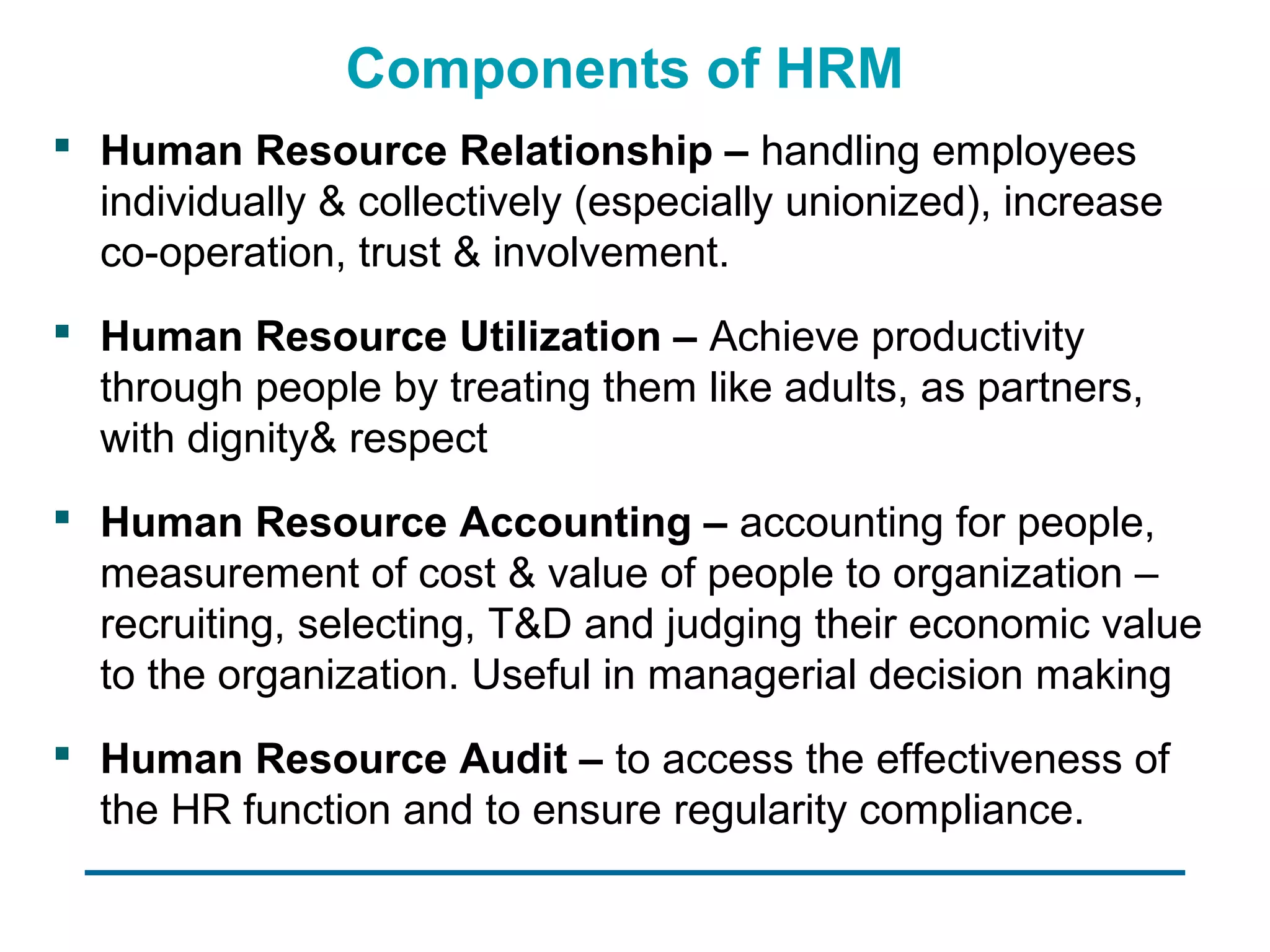
Components of HRM
 Human Resource Relationship – handling employees
  individually & collectively (especially unionized), increase
  co-operation, trust & involvement.
 Human Resource Utilization – Achieve productivity
  through people by treating them like adults, as partners,
  with dignity& respect
 Human Resource Accounting – accounting for people,
  measurement of cost & value of people to organization –
  recruiting, selecting, T&D and judging their economic value
  to the organization. Useful in managerial decision making
 Human Resource Audit – to access the effectiveness of
  the HR function and to ensure regularity compliance.
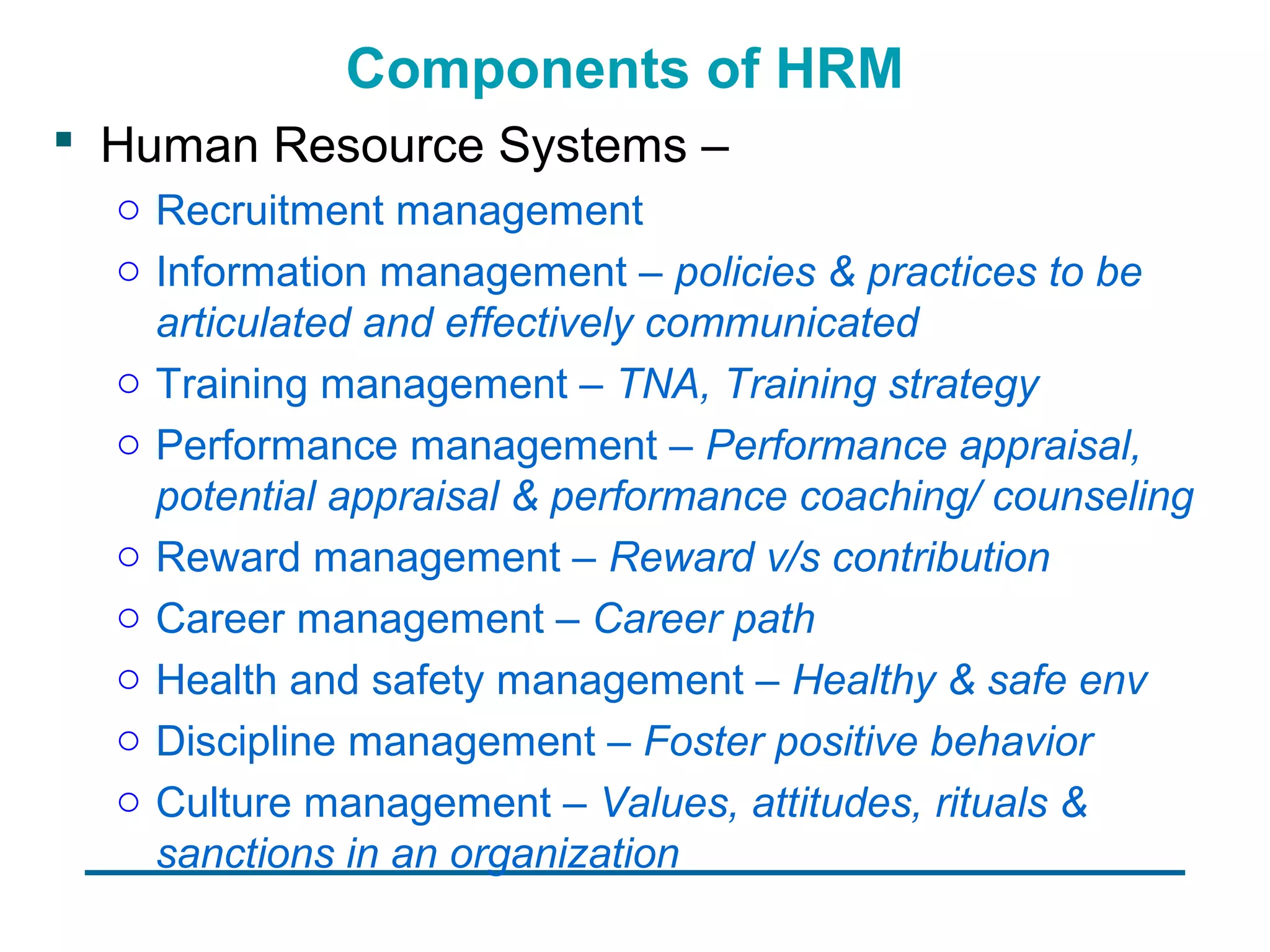
Components of HRM
 Human Resource Systems –
  o Recruitment management
  o Information management – policies & practices to be
    articulated and effectively communicated
  o Training management – TNA, Training strategy
  o Performance management – Performance appraisal,
    potential appraisal & performance coaching/ counseling
  o Reward management – Reward v/s contribution
  o Career management – Career path
  o Health and safety management – Healthy & safe env
  o Discipline management – Foster positive behavior
  o Culture management – Values, attitudes, rituals &
    sanctions in an organization
Debate
Giving regular/futuristic training to
   employees is an investment
Thank You

Unit 1

  • 1.
  • 2.
    Introduction  HRM isan approach to management of people, based on 4 fundamental principles – 1. People are most important asset – need to manage them effectively 2. Link personal policies and procedures with corporate objectives and strategic plans 3. Manage culture by changing & reinforcing values, organizational climate and managerial behavior 4. Integration and getting people work together with the sense of common purpose
  • 3.
    Concepts of HRM HRM is a specified field to develop programme, policies and activities to promote the satisfaction of both individual and organizational needs, goals and objectives  To shape an appropriate corporate culture, introduce programmes (like improve communication systems, involvement, commitment and productivity) to support the core values to ensure success  HRM is a proactive approach rather than reactive  HRM techniques – manpower planning, selection, performance appraisal, salary administration, training and management development
  • 4.
    Concepts of HRM 3meaning attached to the concepts of HRM – 1. People are valuable source – need to invest time and effort in their development 2. Adopt humanistic approach – cannot be treated as material and resources 3. Do not focus only on individuals – but also on social realities, units, processes, teams, inter-teams and overall organization
  • 5.
    Concepts of HRM Traditional Personal management is non-strategic, separate from business, reactive, short-term, and unionized related. Attention was on personal administration and management.  Major attention of HRM is developing people and their competencies.  Personal management is curative, HRM is preventive  HRM emphasizes & incorporates on expectation those are not fulfilled through personal management – PMS, Potential, Development, career planning, T&D, OD, Rewards, welfare etc
  • 6.
    Objectives of HRM Societal Objectives – Socially and ethically responsible for the needs & challenges of society  Organizational Objectives – To bring about organizational effectiveness. HRD exists to serve the rest of the organization.  Functional Objectives – To meet /suit organizational needs and demands.  Personal Objectives – To assist employees in achieving their personal goal. To align individual contribution to organization. Meet the objectives by maintaining retaining and motivating.
  • 7.
    Activity List out the objectives of HR department and their supporting functions in your organization or an organization with which you are familiar
  • 8.
    Objectives & Functionsof HRM S. No. HRM Objectives Supporting Functions Legal Compliance 1 Societal Objectives Benefits Union mgmt Relations HR Planning Employee Relations Selections 2 Organizational Objectives T&D Appraisal Placement Assessment Appraisal 3 Functional Objectives Placement Assessment T&D Appraisal 4 Personal Objectives Placement Compensation Assessment
  • 9.
    Components of HRM  Human Resource Organization  Human Resource Planning  Human Resource Development  Human Resource Relationship  Human Resource Utilization  Human Resource Accounting  Human Resource Audit
  • 10.
    Components of HRM Human Resource Organization – Every aspect of the organization, employment, motivation and management of people to be integrated with strategic objectives of the business and contribute to the successful achievement of those objectives  Human Resource Planning – forecasting of both supply and demand for the future labor. How many people & what type of expertise is needed at present & in future  Human Resource Development – process by which the employees of an organization perform a series of organized activities. Helps to ensure that the organization has the people with skills and knowledge it needs to achieve its strategic objectives
  • 11.
    Components of HRM Human Resource Relationship – handling employees individually & collectively (especially unionized), increase co-operation, trust & involvement.  Human Resource Utilization – Achieve productivity through people by treating them like adults, as partners, with dignity& respect  Human Resource Accounting – accounting for people, measurement of cost & value of people to organization – recruiting, selecting, T&D and judging their economic value to the organization. Useful in managerial decision making  Human Resource Audit – to access the effectiveness of the HR function and to ensure regularity compliance.
  • 12.
    Components of HRM Human Resource Systems – o Recruitment management o Information management – policies & practices to be articulated and effectively communicated o Training management – TNA, Training strategy o Performance management – Performance appraisal, potential appraisal & performance coaching/ counseling o Reward management – Reward v/s contribution o Career management – Career path o Health and safety management – Healthy & safe env o Discipline management – Foster positive behavior o Culture management – Values, attitudes, rituals & sanctions in an organization
  • 13.
    Debate Giving regular/futuristic trainingto employees is an investment
  • 14.